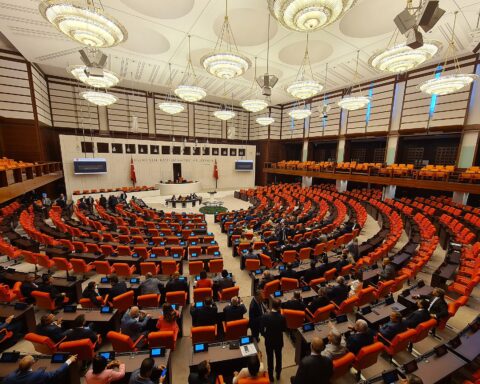
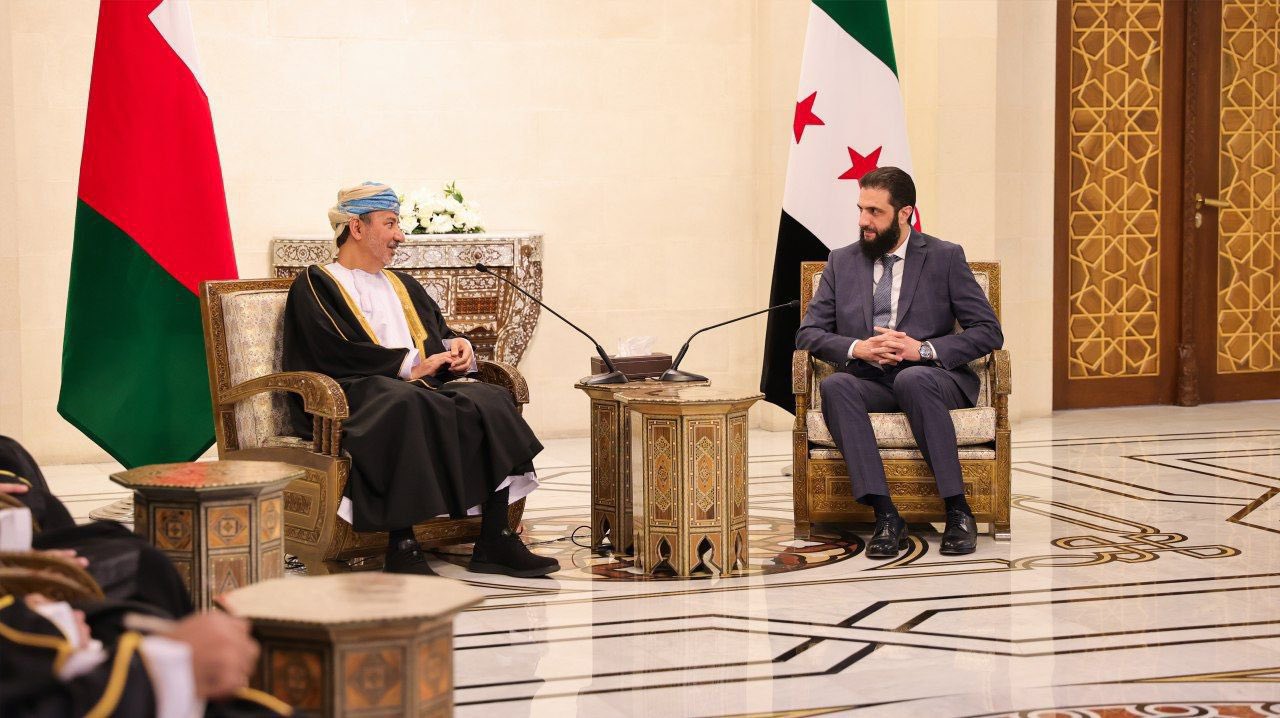
RIYADH — Saudi Arabia and Syria signed a bilateral defense cooperation agreement and six concessional development loans worth $403 million during Syrian President Ahmed al-Sharaa’s state visit to Riyadh on November 4, 2026 — his second trip to the Saudi capital in less than a month, according to the Saudi Press Agency and the Saudi Fund for Development. The agreements, witnessed by Crown Prince Mohammed bin Salman and President al-Sharaa, mark the first defense pact between Riyadh and Syria’s post-Assad government, according to Breaking Defense.
The pact arrived during a week that reshaped the kingdom’s security architecture: Turkey completed ratification of the Makkah joint defence treaty the following day, Houthi missiles struck Aramco’s KAFD tower in Riyadh within days, and Reuters reported that Syrian military personnel were already on Saudi soil advising forces under attack. Syria’s Foreign Ministry called the defense agreement the “most notable” of the deals signed during the visit, according to Al Jazeera.
The House of Saud Daily Briefing
Saudi Arabia's news in 3 minutes, every morning. Free. See today's issue
Table of Contents
What Does the Defense Agreement Cover?
Neither government has published the terms of the defense cooperation agreement, which was signed between the two countries’ defense ministries on November 4 and witnessed by Crown Prince Mohammed bin Salman and President al-Sharaa, according to the Saudi Press Agency via Al-Monitor. Syrian Defense Minister Murhaf Abu Qasra, who was part of al-Sharaa’s delegation, held meetings with Saudi Defense Minister Prince Khalid bin Salman and the Crown Prince during which “several agreements and memorandums of understanding were signed,” Yeni Safak reported, citing Anadolu Agency.
An unnamed Syrian diplomat told Reuters that the bilateral agreement amounts to a “broad framework for military cooperation” that “specifically includes advisory support, training and exchange of expertise.” The framing from the Saudi side carried a different emphasis — a senior Saudi official told Reuters the aim is “mainly to restructure the Syrian forces,” a formulation that positions the agreement as nation-building rather than an operational military alliance.
That distinction matters more than it might appear. Syria’s military, hollowed out by more than a decade of civil war and the collapse of the Assad regime in December 2024, needs institutional reconstruction before it needs a new patron — and Riyadh, already stretched by Houthi ballistic missile attacks on the Eastern Province and the mounting human cost of the Hormuz crisis, has limited bandwidth for another operational commitment. The two-way framing — advisory from Damascus, restructuring from Riyadh — suggests both governments understood the limits before they sat down.
The $403 Million Development Package
The development financing was more specific than the defense deal. The Saudi Fund for Development signed six concessional loan agreements with Syria’s Finance Ministry totaling over $403 million, according to an SFD press release distributed by Business Wire. SFD CEO Sultan bin Abdulrahman Al-Marshad and Syrian Finance Minister Mohammed Yusr Barniyeh signed the documents.
| Project | Amount |
|---|---|
| 25 civil defence centres | $105 million |
| Hospitals and health centres | $100 million |
| Aleppo Thermal Power Plant rehabilitation | $90 million |
| Repair of up to 10,000 damaged homes | $60 million |
| 300,000 smart water meters (Damascus and Idlib) | $30 million |
| Digital transformation, Syria Ministry of Finance | $18 million |
The allocation tells you where Riyadh thinks Syria’s reconstruction needs are most pressing — and where Saudi influence will be most visible on the ground. The Aleppo power plant alone, if rehabilitated, would restore electricity to a city that became the defining image of the civil war. The 25 civil defence centres, the largest single tranche at $105 million, amount to a basic emergency services infrastructure that most post-conflict states lack for years after fighting ends, and the $100 million health package targets hospitals and clinics across a country where medical infrastructure was systematically destroyed during the war.
The $30 million allocation for 300,000 smart water meters in Damascus and Idlib addresses a different kind of damage — the slow infrastructure decay that continued even after the fighting stopped, in cities where water systems were built for a population that no longer lives where it used to. The $18 million for digital transformation at Syria’s Finance Ministry, the smallest of the six loans, signals something quieter: Riyadh wants a Syrian government that can track its own money before more money arrives. Three additional memorandums of understanding — covering industrial cooperation, agriculture and environmental protection — were also signed during the visit, Al Jazeera reported.
Are Syrian Forces Already in Saudi Arabia?
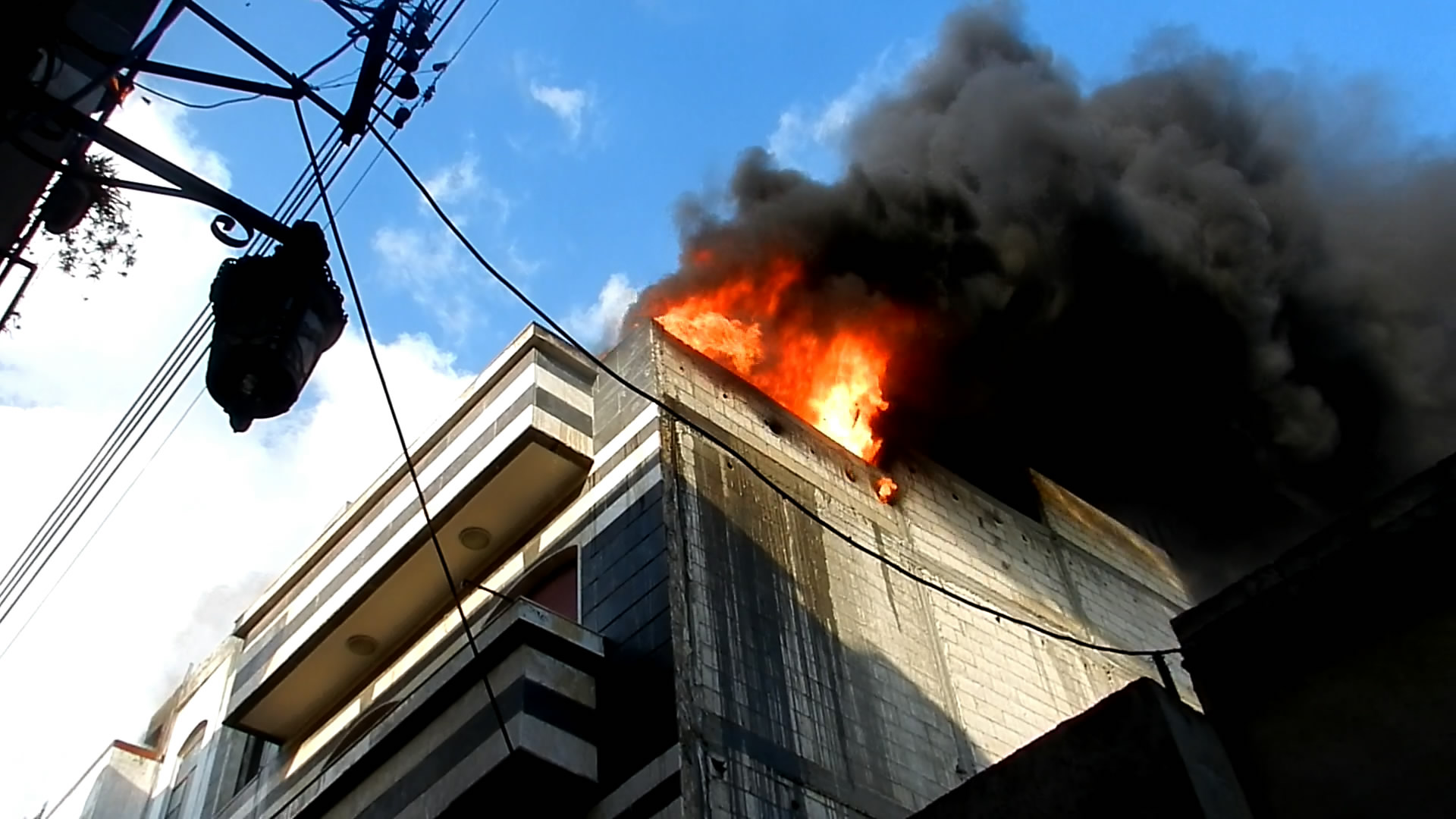
Reuters, citing two Syrian military sources and a senior US official, reported that Syria had sent a limited number of military personnel — described as “scores” — to Saudi Arabia in recent weeks to advise and train Saudi forces amid Houthi attacks. If accurate, that means the bilateral relationship had moved beyond diplomacy before the defense agreement was even signed.
Syria denied plans to send troops to Yemen. An unnamed Syrian diplomatic source told Reuters that any suggestion of military deployments at this stage is “premature,” and SANA, Syria’s official news agency, carried a similar denial reported by the Jerusalem Post. There is a meaningful gap between “scores” of advisers already in the kingdom and a full troop deployment to a combat zone hundreds of kilometres to the south — and the Syrian denial was carefully worded to address the latter without contradicting the former.
Syrian Foreign Minister Asaad al-Shaibani, speaking to Reuters, said that “Syria considers the security of the Arab Gulf part of regional security,” a phrase that stops well short of a combat commitment but opens the door to the kind of advisory cooperation that the unnamed sources described. Freddy Khoueiry, a MENA and defence analyst at RANE, told Breaking Defense that the prospect of Syrian personnel in Yemen is “speculative and unlikely in the near term,” reinforcing the distinction between training cooperation and combat deployment.
“Syria considers the security of the Arab Gulf part of regional security.”
— Asaad al-Shaibani, Syrian Foreign Minister, to Reuters, November 5, 2026
Could Syria Join the Makkah Pact?
Al-Shaibani told the IISS Manama Dialogue in Bahrain on October 31 — four days before the defense pact was signed — that “discussions are currently under way to evaluate Syria’s entry into the Mecca alliance,” according to Breaking Defense and Al Jazeera. He added that the pact “does not explicitly bar other countries from joining” but that membership decisions rest with its founding members’ leaders, Dunya News reported.
The Makkah Pact, signed on August 7, 2026, by Saudi Arabia, Turkey and Pakistan, treats an attack on one member as an attack on all. Turkey ratified it on November 5, the day after the Syria loans were signed, completing the three-nation treaty. No Saudi official has publicly offered Syria membership — an unnamed Syrian diplomat told Reuters that cooperation “could develop” toward Makkah Pact membership “depending on shared interests,” and that is as far as any attributed statement goes.
Khoueiry told Breaking Defense that Syria could “potentially join the Mecca Pact by early 2027, depending on negotiations with members and Damascus’s willingness to take on collective defense obligations,” though Serhat Süha Çubukçuoğlu of TRENDS Research and Advisory has identified Israel’s continued military presence in parts of southern Syria as a structural obstacle. The bilateral defense agreement, in this reading, functions as a prerequisite to an eventual multilateral commitment — but the multilateral commitment itself is not yet on the table from the Saudi side, and the gap between an aspirational statement at a Bahrain conference and a formal membership offer from three governments remains wide.
How the Relationship Got Here
Al-Sharaa’s November 4 visit was his second to Riyadh in less than a month — he had previously visited on October 6 to discuss reconstruction, according to The National. His delegation this time included the foreign, defence, finance and industry ministers and the head of Syria’s General Intelligence Directorate, a lineup that reflected the breadth of the agreements under negotiation. Ahmed Qassem, a Syrian political researcher, told Al Jazeera that the second visit “in such a short time indicates the magnitude of the security challenges in the region.”
Saudi Arabia restored diplomatic ties with Syria in May 2023, days after the Arab League readmitted Damascus following a decade of suspension. When the Assad regime fell in December 2024, Riyadh moved quickly to back al-Sharaa’s new government and positioned itself as a primary financier of reconstruction — in April 2025, Saudi Arabia and Qatar jointly paid off Syria’s $15 million World Bank debt to unlock international grants, according to Arab News. The $403 million in SFD loans came with a defense pact attached — a combination that makes the relationship strategic rather than charitable.
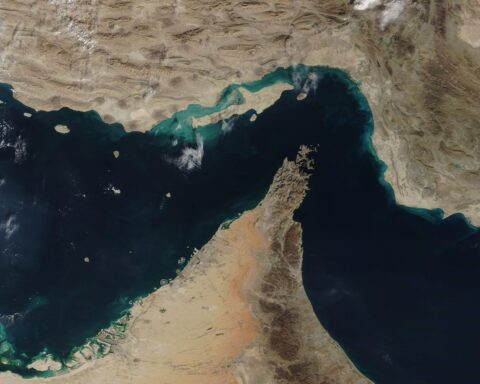
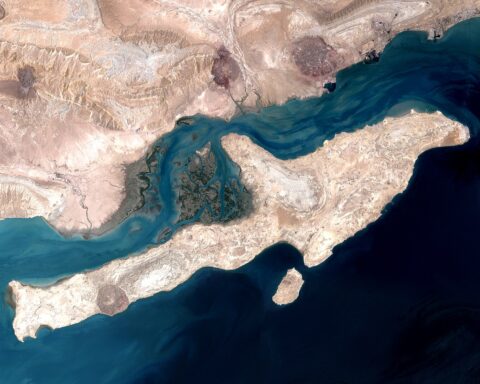
Both leaders also called for the “immediate cessation of all actions that threaten maritime security” in the Red Sea, Bab al-Mandab and the Strait of Hormuz, according to Asharq Al-Awsat — language that places Syria alongside Saudi Arabia on the two maritime fronts where the kingdom is currently under pressure. With US strikes on Iranian positions near Qeshm Island and Qatar pressing a 48-hour diplomatic plan, Syria’s alignment with Riyadh on maritime security adds another voice to the coalition — even if that voice, for now, carries more diplomatic weight than military capability.
Iranian state media had not directly addressed the bilateral defense agreement as of publication. Tehran has previously characterized the Makkah Pact as an instrument to draw Turkey and Pakistan into the Saudi-Yemeni conflict, and Ebrahim Rezaei, Secretary of Iran’s Supreme National Security Council, has argued that the pact alone cannot guarantee Saudi Arabia’s security. If Syria moves closer to formal Makkah Pact membership, that line of criticism will almost certainly extend to Damascus.
Frequently Asked Questions
Who is Ahmed al-Sharaa?
Ahmed al-Sharaa, formerly known by his nom de guerre Abu Mohammed al-Julani, led the armed group Hayat Tahrir al-Sham during the final phase of the Syrian civil war before the collapse of the Assad regime in December 2024. He transitioned from rebel commander to head of state, rebranding himself as a technocratic leader focused on reconstruction and international legitimacy rather than revolutionary politics. His government has secured recognition from most Arab states and several Western governments, and his two visits to Riyadh within a month of each other — on October 6 and November 4 — reflect the speed at which both Syria’s diplomatic reintegration and the kingdom’s own security needs are accelerating.
What is the Makkah Pact and who are its current members?
The Makkah Pact is a collective defense treaty signed on August 7, 2026, by Saudi Arabia, Turkey and Pakistan, modelled loosely on NATO’s Article 5 — its core provision treats an armed attack on any member as an attack on all three. Pakistan ratified it on October 23, 2026, and Turkey’s parliament followed on November 5. No additional countries are currently members, though Syria’s foreign minister publicly expressed interest in joining at the IISS Manama Dialogue on October 31, and RANE analyst Freddy Khoueiry told Breaking Defense that Damascus could “potentially join” by early 2027 if negotiations proceed.
How does Israel’s presence in southern Syria complicate Makkah Pact membership?
Israel has maintained a military presence in parts of southern Syria since the fall of the Assad regime, occupying a buffer zone that extends beyond the Golan Heights. Serhat Süha Çubukçuoğlu of TRENDS Research and Advisory told Breaking Defense that this occupation creates a structural obstacle to Syria’s Makkah Pact membership — it is “inconceivable,” he argued, that the pact’s members would go to war with Israel to retake Syrian territory. Any collective defense commitment that included Syria would, by definition, potentially obligate Saudi Arabia, Turkey and Pakistan to defend Syrian sovereignty against Israeli forces, a scenario none of the four governments appears willing to test.
What was Assad’s relationship with Saudi Arabia before the regime fell?
Saudi Arabia severed diplomatic relations with Syria in 2012 and backed rebel groups during the civil war, including factions that fought Assad’s forces in the north. Riyadh restored ties in May 2023, when the Arab League readmitted Syria after a decade-long suspension, but the relationship remained limited to diplomatic gestures and modest aid through 2024. The fall of the Assad regime in December 2024 removed the primary obstacle to deeper engagement, and within months Riyadh had backed al-Sharaa’s new government diplomatically and begun expanding financial support — a shift that culminated in the November 4 agreements.
The House of Saud Daily Briefing
Saudi Arabia's news in 3 minutes, every morning. Free. See today's issue