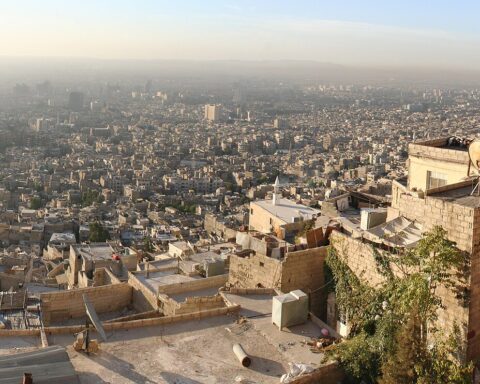
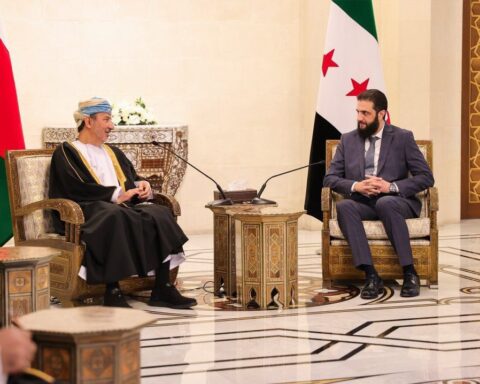
RIYADH — Syria has sent military advisers and logistics specialists to Saudi Arabia, the first operational step from a defense cooperation pact signed during President Ahmad al-Sharaa’s Riyadh visit in early November. Associated Press reported approximately 600 Syrian special forces are expected to arrive within a week of the signing, led by a delegation under Khaled Khattab, commander of Syria’s 82nd Division, while conflict correspondent Levent Kemal placed the first arrivals as early as October 20–25.
The deployment carries a contradiction neither capital has publicly addressed. Syria’s military was, until fourteen months ago, structurally entwined with Iran’s Islamic Revolutionary Guard Corps — with thousands of IRGC officers embedded across its command structure before the December 2024 withdrawal.
Charles Lister of the Middle East Institute characterized the Syrian personnel’s role as “advisory and logistics — mainly drones, transport, and ISR,” and added: “They are not combat troops — that was the compromise.” Syria’s Foreign Minister Asaad al-Shaibani denied any deployment to Yemen. Tehran has said nothing at all.
The House of Saud Daily Briefing
Saudi Arabia's news in 3 minutes, every morning. Free. See today's issue
Table of Contents
- What Syria Has Sent — and What Damascus Denies
- How Did the Deployment Happen Before the Pact Was Signed?
- The IRGC Inheritance
- What Can Syrian Forces Offer Saudi Arabia?
- Riyadh’s Coalition Arithmetic
- Why Has Tehran Said Nothing?
- The Price of Realignment
- Can Syria Join the Makkah Pact?
- Frequently Asked Questions
What Syria Has Sent — and What Damascus Denies
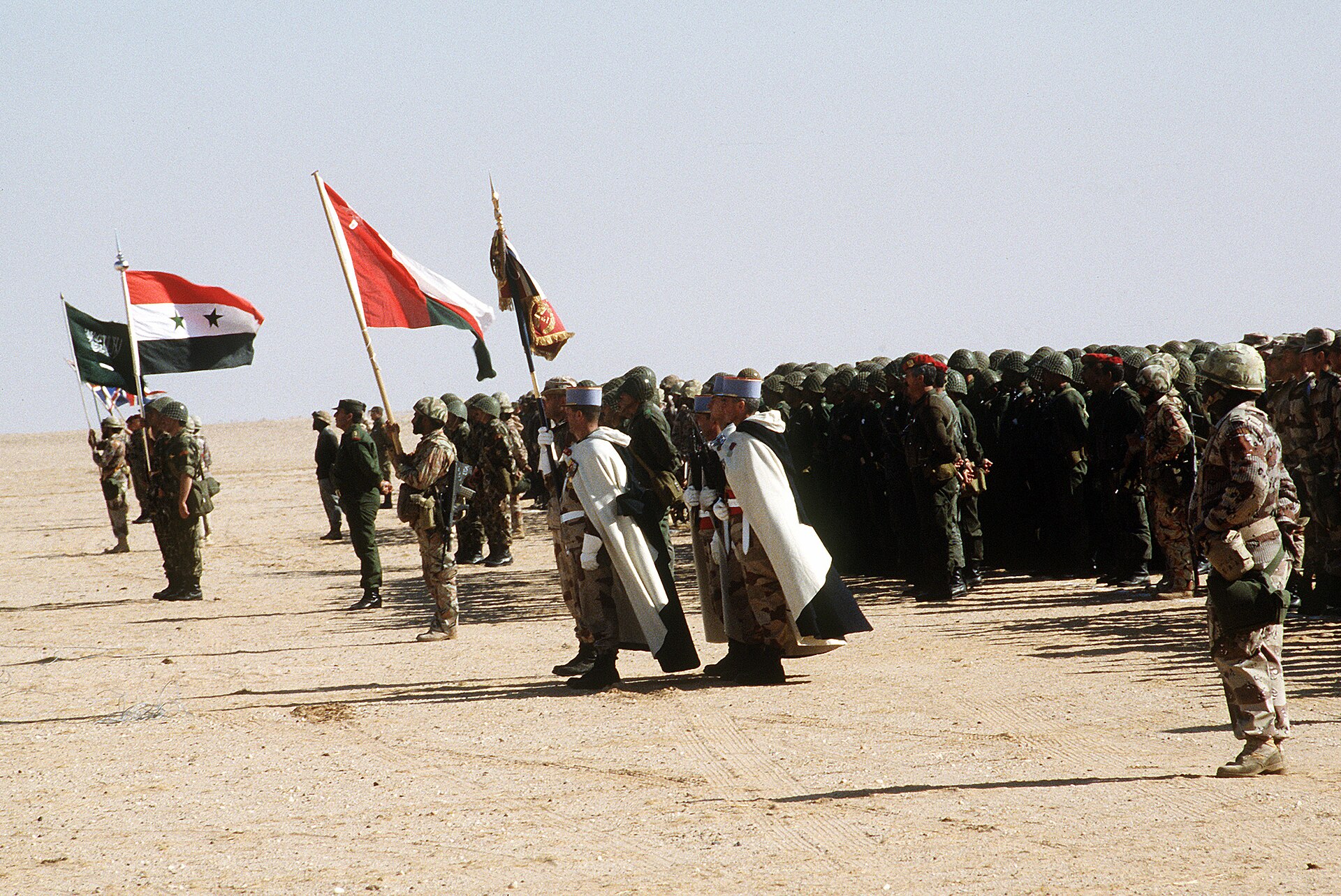
The scale of Syria’s deployment remains contested across at least four distinct source lines. Reuters, citing a Saudi source, described a “limited number” of Syrian advisers and training teams — the most conservative account in public reporting. Associated Press, drawing on Syrian officials, reported roughly 600 special forces expected to arrive within a week of the pact’s signing, with the delegation led by Khaled Khattab, commander of Syria’s 82nd Division. AFP, citing multiple Yemeni officials including a Presidential Leadership Council source, put the total at up to 3,000 non-combat personnel, with one unnamed official mentioning as many as 10,000 — a figure disputed by other sources and by Damascus itself.
The range — from Reuters’ “limited number” to AFP’s 10,000 — is unusually wide for a deployment that all parties acknowledge in some form. None of the three governments directly involved have released official figures. AP’s 600 special forces, the most specific Western account, came from unnamed Syrian officials and has not been confirmed by Riyadh. The Saudi government has not publicly commented on the deployment, its scale, or its operational mandate.
Syria’s Foreign Minister Asaad al-Shaibani, at a November 9 press conference, was categorical: “There is no deployment of troops in Yemen, nor is there even a plan to do so in the near future.” Any operations beyond Syria’s borders, he said, “would certainly be announced and discussed publicly” and “would not be carried out in secret.”
The denial is precise in its scope. Al-Shaibani said nothing about personnel inside Saudi Arabia — he denied deployment to Yemen. Lister’s advisory framing — personnel on Saudi soil providing technical rather than combat support — suggests troops who remain in the kingdom rather than entering Yemeni terrain. Analyst Nanar Hawach told Al Jazeera that a training or support role would “likely satisfy Riyadh,” and that Damascus may avoid acknowledging involvement “to prevent retaliation.”
“They are not combat troops — that was the compromise.”
Charles Lister, Senior Fellow and Director, Syria Initiative, Middle East Institute (November 9, 2026)
Al-Shaibani, in a separate portion of his remarks, confirmed that Syria “certainly supports the legitimate government in Yemen” and condemns “the threats posed by the Houthi militia against Saudi Arabia,” calling the attacks “unjustified and unlawful.” He said Syria needs Saudi assistance “in rebuilding its army, defense industries and technical training,” with Saudi coordination visits to Damascus due to begin in December. Syria had already publicly condemned Houthi attacks on Riyadh the previous day, pledging full support for the kingdom. A Saudi source told Reuters that Riyadh is also actively helping Syria restructure its armed forces.
How Did the Deployment Happen Before the Pact Was Signed?
Syrian military advisers arrived in Saudi Arabia between approximately October 20 and 25, according to conflict correspondent Levent Kemal — more than a week before the defense cooperation pact was signed on November 4–5 during President al-Sharaa’s Riyadh visit. The pre-pact timeline indicates the agreement’s operational elements were negotiated well before the formal signing ceremony.
The pact’s terms have not been publicly disclosed by either government. Syria’s Foreign Ministry called its defense ministry component “the most notable” of the bilateral deals concluded during the visit. AP described the contingent as special forces expected within a week of the signing — suggesting a phased deployment with initial advisory teams already in place and a larger force following.
The pre-pact arrival — at least ten days before the signing, per Kemal’s reporting — indicates the formal agreement codified an operational reality already taking shape. Neither Damascus nor Riyadh has explained the legal or diplomatic framework under which the initial personnel entered the kingdom before any defense pact existed.
Aron Lund, an analyst at Sweden’s FOI (Defense Research Agency), observed that prior Syrian military operations abroad since the change of government had been organized by Turkey or by Turkish security firms. The Saudi deployment appears to be the first time Syria’s new leadership has sent forces to a partner state on its own authority, without Ankara as intermediary. Lund noted that the deployment follows both the bilateral defense agreement and Turkey’s own Makkah Pact ratification on November 5.
The 82nd Division, which AP identified as providing the deployment’s leadership, is one of more than 20 active divisions in Syria’s restructured army. Carnegie Endowment, in a June 2026 assessment, described the new force as drawing on more than 60 factions, with the former Military Intelligence oversight structure dismantled and no equivalent replacement yet established.
The IRGC Inheritance
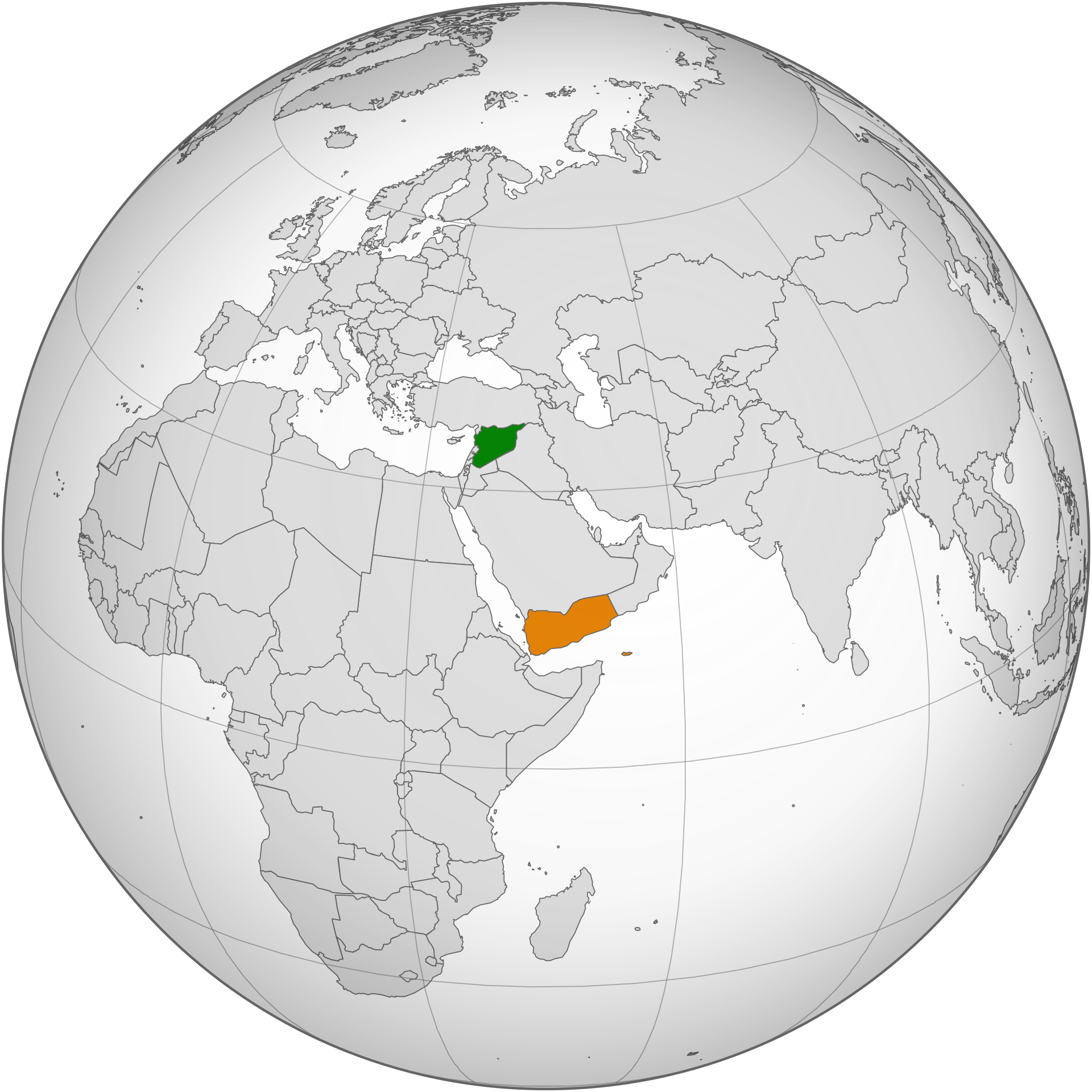
For more than a decade, Iran’s military presence in Syria was not supplementary — it was structural. Between 2,000 and 3,000 IRGC officers operated across Syria’s defense establishment: Quds Force command nodes, proxy militia networks, intelligence coordination centers, and arms transit routes running to Hezbollah in Lebanon. Tehran funded religious seminaries in Tartus and Latakia that served as both ideological outposts and logistical staging points for the broader IRGC architecture.
The withdrawal came abruptly. On December 6, 2024, following the rebel offensives that toppled the Assad government, IRGC forces and allied proxies left Syria. By May 2025, the Syrian Observatory for Human Rights reported that more than 60 percent of Iranian-backed armed group positions had been either closed or integrated into Syria’s regular military. A confidential United Nations memo, cited by Le Monde, assessed that Iran’s operational presence in the country had fallen by at least 40 percent since January 2025.
Syria’s new government has taken deliberate steps to sever the institutional connection. Damascus canceled licenses for the IRGC-linked religious seminaries in Tartus and Latakia. At least $178 million in Iranian contracts remain unpaid and under a national audit, according to Shafaq News. The United States reportedly conditioned partial sanctions relief for Syria on the new government designating the IRGC as a terrorist organization.
But institutional severance is not the same as institutional erasure. The officer corps that remains — the same personnel pool from which Riyadh is now drawing advisers — was trained, promoted, and shaped operationally inside a system the IRGC built over a decade. As recently as August 2026, Damascus was still evicting civil-war-era factional commanders: Mohammed al-Jassem, known as “Abu Amsha,” who led the 62nd Division, was removed through a forced administrative promotion, according to The National.
No public reporting describes any Saudi vetting process or security screening applied to arriving Syrian personnel. Whether Riyadh manages the contamination risk through intelligence review, operational compartmentalization, or a calculation that the risk is worth accepting given the need for experienced manpower — the question is entirely absent from the record.
What Can Syrian Forces Offer Saudi Arabia?
Syrian forces bring more than a decade of continuous ground combat experience, including expertise in drone operations, counterinsurgency, and urban warfare. Charles Lister of the Middle East Institute identified the operational focus as advisory, with drone, transport, and intelligence-surveillance-reconnaissance support as the principal roles. Rob Geist Pinfold, a lecturer in defense studies at King’s College London and senior non-resident fellow at the Gulf International Forum, described the personnel as “combat-experienced and cohesive.”
The drone dimension is particularly relevant. Syrian forces operated alongside Iranian-supplied drone systems during the civil war and developed field-level countermeasures when those same platforms were turned against them by opposition groups. That advisory profile suggests Riyadh is specifically seeking this expertise, at a time when Houthi drone attacks on Saudi cities, airports, and energy infrastructure have tested the kingdom’s conventional air-defense architecture.
Syria’s broader experience operating and defending against small combat drones during the civil war has direct relevance to the Saudi theater. Houthi drone and missile attacks on Saudi cities and airports have forced the cancellation of over a third of Saudi flights and struck targets as prominent as the Aramco tower in Riyadh’s KAFD district. AFP, citing Yemeni officials, reported that Syrian personnel were already leading drone operations inside Yemen — a claim Damascus specifically denied and no independent source has confirmed.
The advisory model follows what other coalition partners have provided, though the capability profile differs. France deployed troops, radars, and air defenses to the Yanbu petrochemical corridor. Britain deployed Typhoon fighter jets for defensive counter-air missions and an RAF Voyager tanker for aerial refueling. More than 100 US military advisers arrived in September for intelligence support, according to CNN.
Pakistan’s approximately 8,000 troops, JF-17 aircraft, drone squadrons, and an HQ-9 air-defense system — financed by Riyadh — remain the largest single foreign deployment, according to Reuters. Samy Akil of The Syria Report told Al Jazeera that Syria’s entry “signals willingness to support regional partners.”
Riyadh’s Coalition Arithmetic
Saudi Arabia’s coalition-building since the Houthi escalation has been fast and eclectic. The Makkah Pact, signed August 7 with Pakistan and Turkey, treats an attack on one member as an attack on all. Turkey’s parliament ratified the pact on November 5, voting 279 to 119. Pakistan’s troops had been on the ground since April.
The bilateral arrangements with France, Britain, and the United States — none of them pact members — added further layers. Syria now enters as the newest bilateral partner.
| Partner | Personnel and Assets | Framework | Source |
|---|---|---|---|
| Pakistan | ~8,000 troops, JF-17 aircraft, drone squadrons, HQ-9 air defense | Makkah Pact (signed Aug 7) | Reuters, May 2026 |
| Turkey | Forces deploying (parliament ratified 279–119) | Makkah Pact (ratified Nov 5) | Anadolu Agency, Nov 5 |
| France | Troops, radars, air defenses at Yanbu | Bilateral | Al Jazeera, Sep 25 |
| United Kingdom | Typhoon fighter jets (counter-air), RAF Voyager tanker (refuelling), A400M transport, military advisers | Bilateral | MoD, Oct 20; The National, Sep 22 |
| United States | 100+ military advisers (intelligence) | Bilateral | CNN, Sep 10 |
| Syria | Advisers, logistics — drones, transport, ISR | Bilateral defense pact (Nov 4–5) | AP, JPost, Nov 2026 |
The breadth of this network marks a departure for Riyadh, which historically relied on Washington as its primary security guarantor and treated coalition-building as politically costly. The acceleration came after President Trump declined Crown Prince Mohammed bin Salman’s direct appeals for US strikes against the Houthis in September — first reported by Axios on September 10 and later confirmed by CNN. Within weeks, Pakistan invoked the Makkah Pact, Turkey voted to ratify, and France began deploying to Yanbu.
On October 5, Saudi Defense Minister Prince Khalid bin Salman announced that the Makkah Pact committee had agreed to “activate collective deterrence measures, within the framework of the Alliance.” Two days later, asked about the Turkish and Pakistani deployments, Trump told Gulf News: “I think they want to help Saudi Arabia, and I think that’s good.” Within a month of that exchange, French air-defense systems were arriving at Yanbu, Turkey had formally ratified, and Syria had signed a bilateral defense agreement.
Syria’s entry adds a dimension the other partners lack: ground-level familiarity with Iranian military doctrine. The Pakistani contingent brings heavy equipment and conventional air power. The French contribute air-defense technology and intelligence infrastructure. The American advisers provide signals intelligence. Syrian personnel, having fought within and against IRGC-organized formations for over a decade, bring an operational familiarity with Iranian tactical patterns — a capacity the coalition’s ongoing operations against Houthi launch infrastructure could leverage, given the Houthis’ reliance on Iranian-supplied weapons and guidance.
Why Has Tehran Said Nothing?
Iranian state media — IRNA, PressTV, and Tasnim — have published no statement on Syria’s military deployment to Saudi Arabia. In a region where Tehran has historically responded to perceived shifts in the balance of power with official commentary, the absence of any reaction is itself a data point.
The closest available signal predates the deployment by months. Iranian member of parliament Mojtaba Zolnouri told Tasnim in February 2025 that Gulf states were pursuing “soft coups and seduction politics” toward Syria — language aimed squarely at the kind of realignment now underway. Earlier, Iranian state media characterized the Makkah Pact as Turkey and Pakistan “joining the Saudi war against the Yemeni people.”
Iran’s posture toward Syria’s new government has been one of managed disengagement rather than open confrontation. Tehran has not withdrawn recognition of Syria’s post-Assad leadership. Its embassy in Damascus remains open and staffed. The IRGC withdrawal in December 2024, while precipitated by military collapse rather than diplomatic agreement, has not been followed by public recrimination from Tehran — at least not at the state level.
Syria was the geographic corridor in Iran’s regional architecture — the link connecting Tehran to Hezbollah’s positions on the Mediterranean coast. The IRGC’s December 2024 withdrawal severed that overland connection. Syria’s military reorientation toward Riyadh compounds the loss: officers who served within the IRGC framework now provide advisory services to the Saudi-led coalition fighting Iran’s Houthi proxy.
Iran is simultaneously managing US strikes on its military infrastructure, an ongoing Hormuz confrontation, and the political transition under Supreme Leader Mojtaba Khamenei, who assumed the office in March after Ali Khamenei was killed in the February 28 strikes. The Houthis, Tehran’s most active regional proxy, have not commented on Syria’s deployment either. A coalition partner whose officer corps carries an Iranian institutional pedigree — arriving to fight Iran’s proxy — is a development that, for now, all parties on the Iranian side have declined to address publicly. The silence extends to Ansar Allah’s own media channels, which have not mentioned the Syrian deployment in their Arabic or English-language output through November 9.
The Price of Realignment
Syria’s defense reorientation toward Riyadh rests on a financial foundation that has grown rapidly since the fall of the Assad government. Saudi Arabia signed 47 investment agreements with Syria totaling $6.4 billion in July 2025, according to The National. The November defense pact included $403 million in Saudi loans. Saudi Arabia and Qatar jointly paid off Syria’s $15.5 million World Bank arrears, restoring Damascus’s access to reconstruction grants.
| Financial Flow | Value | Date | Source |
|---|---|---|---|
| Saudi investment agreements with Syria | $6.4 billion (47 deals) | July 2025 | The National |
| Saudi loans under defense pact | $403 million | November 2026 | Al Jazeera, Nov 5 |
| Saudi-Qatar payment of Syria’s World Bank arrears | $15.5 million | May 2025 | World Bank press release, May 16, 2025 |
| Unpaid Iranian contracts under Syrian audit | $178 million | Ongoing | Shafaq News |
Syria’s new government cannot fund its own military reconstruction without external capital. The country emerged from the civil war with its industrial base largely destroyed and no access to international capital markets. Even its World Bank arrears were sufficient to block Damascus from reconstruction grants until Gulf partners cleared them. The defense pact is the latest in a series of Saudi financial commitments — investment, debt forgiveness, and now military loans — that have reshaped Damascus’s external dependencies over the past eighteen months.
The financial current runs in one direction. Iranian economic channels have been systematically dismantled — unpaid contracts placed under national audit, seminary licenses revoked, procurement relationships severed. Saudi channels have been systematically opened. The defense pact converts that economic realignment into an operational military partnership.
Serhat Süha Çubukçuoğlu of TRENDS Research and Advisory described the arrangement as “part of Saudi diplomatic and economic outreach to court Syria and keep it in its sphere of influence.” Al-Shaibani, asked about Syria’s needs, was direct: the country requires Saudi help “in rebuilding its army, defense industries and technical training,” he told reporters on November 9.
Can Syria Join the Makkah Pact?
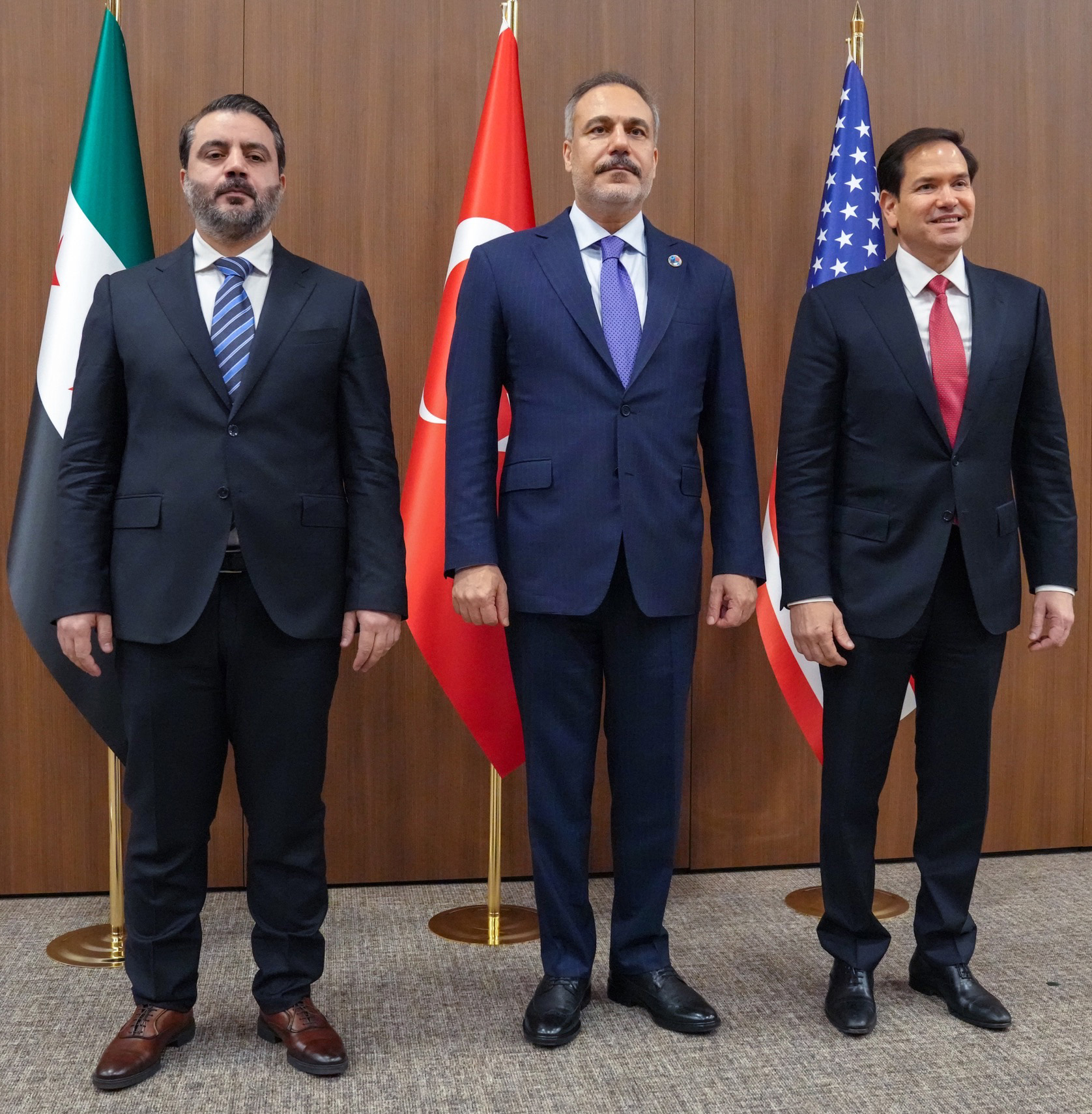
Syria has not joined the Makkah Pact, the mutual defense agreement between Saudi Arabia, Pakistan, and Turkey. RANE analyst Freddy Khoueiry estimated Syria could accede by early 2027, but TRENDS researcher Çubukçuoğlu warned that Israel’s occupation of parts of southern Syria would create “inconceivable” collective-defense obligations for existing members.
The pact, signed on August 7, operates on the principle that an attack on one member constitutes an attack on all — a formulation modeled loosely on NATO’s Article 5. Turkey ratified on November 5, bringing the alliance to full operational readiness among its three members. Al-Shaibani discussed the prospect of Syrian accession during meetings in Bahrain, according to his own public remarks.
Khoueiry told Breaking Defense that the defense pact “paves the way” for direct military cooperation and that Syria could join the Makkah Pact “by early 2027, depending on talks with existing members.” He called early speculation about Syrian combat roles in Yemen “speculative and unlikely in the near term.”
“Israel’s occupation of southern Syria would create inconceivable Article 5 scenarios for existing pact members.”
Serhat Süha Çubukçuoğlu, TRENDS Research and Advisory (Breaking Defense, November 2026)
The structural problem is real. Israel occupies the Golan Heights and has maintained a military presence in adjacent Syrian territory. If Syria were to join a mutual defense pact, an Israeli military action on occupied Syrian land could theoretically trigger a collective-defense obligation — binding Pakistan and Turkey to respond. No signatory has indicated willingness to accept that exposure.
The bilateral defense agreement with Riyadh, which carries no collective-defense clause, avoids the problem entirely. For now, Syria operates as a coalition contributor without the obligations or protections of formal pact membership — a posture that fits a conflict where the Houthis have demanded $51 billion and full recognition as the price of any settlement.
Frequently Asked Questions
What is Syria’s 82nd Division?
The 82nd Division is one of more than 20 active divisions in Syria’s restructured military. AP identified its commander, Khaled Khattab, as leading the deployment delegation to Saudi Arabia. No public biography for Khattab exists in Western media prior to the November 2026 deployment. Carnegie Endowment described Syria’s new army in June 2026 as a “wager on time” — a force assembled from dozens of formerly independent factions that will take years, not months, to achieve genuine central command and interoperability. Several of those factions previously fought each other during the civil war, and some were on opposite sides of the IRGC-organized command network — a history that complicates the task of assembling cohesive units for foreign deployment.
Has the United States officially commented on Syria’s deployment?
No State Department or Pentagon statement addressing Syria’s military deployment to Saudi Arabia was found in reporting through November 9. Congressional commentary, where it has appeared, frames the deployment through the lens of US-Iran competition rather than coalition operations. The absence of an official executive branch position leaves open the question of whether Washington views Syria’s military cooperation with Saudi Arabia as aligned with its own regional strategy or as a complication — given that the same administration reportedly conditioned Syria’s sanctions relief on designating the IRGC as a terrorist organization.
How does Syria’s contribution compare in scale to Pakistan’s?
Pakistan’s deployment is substantially larger: approximately 8,000 troops, around 16 mostly JF-17 aircraft, two drone squadrons, and an HQ-9 air-defense system, all according to Reuters. Syria’s confirmed contribution — advisers and logistics specialists, with up to 600 special forces expected — is closer in scale to the US advisory presence of 100-plus personnel than to Pakistan’s conventional force. One Reuters source noted that the Makkah Pact allows for up to 80,000 Pakistani troops, though Islamabad has not confirmed that ceiling. The difference between the two contributions is qualitative, not just quantitative: Pakistan provides air power and area defense; Syria’s personnel bring ground-level tactical experience and drone and ISR expertise drawn from the civil war.
Could the advisory role evolve into a combat deployment in Yemen?
Khoueiry of RANE called early speculation about Syrian combat roles in Yemen “speculative and unlikely in the near term.” Al-Shaibani’s denial was emphatic and specific to Yemen. AFP’s claim — sourced to Yemeni officials — that Syrians were leading drone operations inside Yemen has not been independently confirmed. The advisory arrangement could expand, but Damascus faces a domestic constraint: sending combat troops abroad while the country’s own military is still integrating more than 60 formerly independent factions risks fracturing the fragile internal consensus that holds Syria’s post-war politics together. The defense pact’s terms have not been disclosed, and it remains unclear whether the agreement includes provisions for escalation beyond the advisory scope both governments have publicly described.
The House of Saud Daily Briefing
Saudi Arabia's news in 3 minutes, every morning. Free. See today's issue