
RIYADH — The Saudi-led coalition intercepted three missiles fired at the kingdom on Tuesday morning, shooting down a ballistic missile and a cruise missile over Riyadh and a second ballistic missile over southern Saudi Arabia, roughly a day after its jets struck the Sanaa facilities where the Houthis assemble ballistic missiles and produce the solid fuel that powers them. All three were destroyed, yet the Houthis still made the one point they care about most: hitting the factory did not stop the firing.
Coalition spokesman Major-General Turki al-Maliki named the Iran-backed Houthis as the shooters, and Saudi Civil Defence issued an early-warning alert for Riyadh before following it with an all-clear. The Houthis, who broadcast their claimed hits and go quiet about their misses, had said nothing by the time Al Jazeera filed its first reports on the attack.
The House of Saud Daily Briefing
Saudi Arabia's news in 3 minutes, every morning. Free. See today's issue
The volley sharpens the question hanging over this phase of the war. The coalition has moved from swatting projectiles out of the sky to hunting the workshops that build them, and the Houthis appear set on proving that the workshops are not the whole story. Which side runs short first, Houthi missiles or Saudi interceptors and patience, is now the contest that decides how this ends, and the public evidence on both sides is thinner than either would like.
Table of Contents
- What Happened in the Skies Over Riyadh on November 10?
- Why Does a Volley One Day After the Sanaa Strikes Matter?
- The Coalition Goes After the Factory Floor
- How Many Missiles Do the Houthis Have Left?
- Can Saudi Air Defences Keep Winning the Numbers Game?
- The Pipeline Strike Nobody Has Claimed
- Damascus, Washington and the Widening Wall Around Yemen
- What Do the Houthis Want From This Campaign?
- Frequently Asked Questions
What Happened in the Skies Over Riyadh on November 10?
Coalition air defences destroyed three missiles on the morning of November 10. One ballistic missile and one cruise missile were shot down over Riyadh, and a second ballistic missile was intercepted over southern Saudi Arabia, according to TRT World and Anadolu Agency. Coalition spokesman Turki al-Maliki attributed all three to the Houthis, and Civil Defence issued a Riyadh alert followed by an all-clear.
The mix is the first thing worth reading. A ballistic missile climbs high and comes down steep and fast, giving defenders seconds to act; a cruise missile hugs the ground and arrives from a direction of its own choosing. Firing both at the same city on the same morning forces the people running Saudi air defence to watch the sky above and the horizon at once, which is exactly the problem a salvo is designed to create.
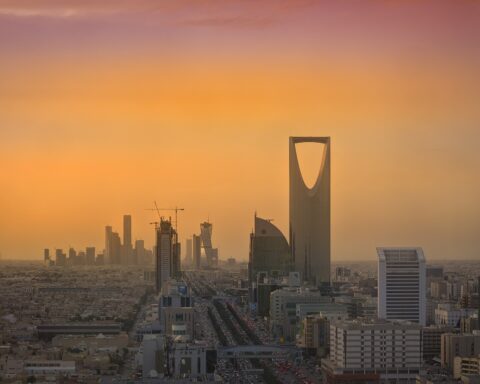
The geography matters too. Two of the three missiles were aimed at the capital, the city that houses the royal court, the ministries and the financial district that Vision 2030 was built to showcase. The third went south, toward the border regions that have absorbed Houthi fire for years, which mirrors the pattern of the weekend, when Riyadh and the south were again hit in the same wave.
Reports of the precise minute-by-minute timing of the launches circulated on Tuesday but could not be confirmed in the published accounts. What is confirmed is the sequence that matters to residents: an alert, a set of interceptions, and an all-clear. It is the same rhythm the capital lived through on November 7, when the coalition intercepted a Houthi cruise missile over Riyadh, and it has become part of the week.
Why Does a Volley One Day After the Sanaa Strikes Matter?
Because the coalition’s November 9 raid targeted the Houthis’ ability to build missiles, not just to fire them. A three-missile salvo within roughly a day shows the Houthis still hold finished rounds, working launchers and trained crews, whatever damage the factory strikes did to future production. The volley measures inventory, not whether the raid on manufacturing worked.
On Monday the coalition said it had struck Houthi ballistic missile assembly facilities, a solid-fuel production plant and electronic systems in Sanaa, and separately destroyed a ballistic missile launch platform in the city. Arab News reported that these were the coalition’s first publicly announced strikes on Houthi missile production infrastructure during the current escalation. Al-Maliki confirmed the hits on the three facilities.
That is a change in method. For weeks the coalition’s public story was one of interception: missiles launched, missiles destroyed, debris swept up. Going after assembly lines and fuel plants is a bet on time, an attempt to make next month’s salvo smaller than this month’s. It does nothing to missiles already built, fuelled and hidden in Yemen’s mountains, which is why the Houthis could answer within a day.
| Date (2026) | Event | Source |
|---|---|---|
| Nov 7 | Houthi spokesman Yahya Saree claims 6 operations with ballistic missiles, cruise missiles and drones against targets in Saudi Arabia and Yemen; coalition reports a cruise missile intercepted over Riyadh; CENTCOM announces Task Force Iron Gate | Al Jazeera; CENTCOM |
| Nov 8 | Coalition intercepts 2 ballistic and 2 cruise missiles fired at Riyadh and southern Saudi Arabia; debris causes minor structural damage to an Aramco administrative building in the King Abdullah Financial District, no injuries | Reuters; Arab News; Al Jazeera |
| Nov 9 | Coalition strikes missile assembly facilities, a solid-fuel plant and electronic systems in Sanaa and destroys a launch platform; East-West pipeline hit in Medina region, perpetrator not identified | Arab News; Middle East Monitor; Al Jazeera |
| Nov 10 | Coalition intercepts 3 missiles, 2 over Riyadh and 1 over the south; Houthis silent | TRT World; Anadolu Agency; Al Jazeera |
Read top to bottom as a record of the past four days, the table is a ladder. The Houthis launch, the coalition intercepts, the coalition reaches deeper into Yemen, and the Houthis launch again. By Arab News’ count on November 8, the coalition had already intercepted at least 15 ballistic and cruise missiles and drones across the kingdom in the opening days of November, before either of the two most recent salvos.
Nothing in that sequence suggests either side believes the other is close to quitting. The coalition’s move against production says it expects a long campaign and wants to shape its later stages. The Houthi reply says they intend to make that campaign as expensive as possible in the meantime, and that a raid on their factories will be answered over Saudi cities rather than absorbed in silence on the ground.
The Coalition Goes After the Factory Floor
Striking a solid-fuel plant only makes sense if you believe the Houthis are making solid fuel, and the best public evidence suggests they are trying to make a great deal more than that. A Conflict Armament Research investigation published on October 14, reported by the Wall Street Journal and Al Arabiya, found evidence that the Houthis are attempting to domestically manufacture key components of an Iranian-designed medium-range ballistic missile from the Khaibarshekan family. The parts traced back to a Chinese precision-metal supplier.
Medium-range is the category that matters for Riyadh. Short-range rockets can harass border towns; reaching the capital from northern Yemen takes something with more fuel, a better guidance package and a sturdier airframe. If the Houthis can build those at home, the coalition’s interception effort becomes an open-ended commitment rather than a race against a shrinking stockpile. The CAR investigator who worked on the case was careful not to claim more than the evidence supports.
“When you have imports like that, there is a possibility that they are already manufacturing or that they are trying and it doesn’t really work out.”
— Fabian Hinz, Conflict Armament Research, via Al Arabiya, October 14, 2026
That is the honest state of knowledge, and it cuts both ways. Imported precision parts prove intent and some industrial ambition; they do not prove that finished missiles are rolling out of a Sanaa workshop and onto launch rails. The coalition’s November 9 strikes may have hit a working production line, or they may have hit a project still struggling to produce reliable rounds, and nobody outside the Houthi leadership can say which.
The Century Foundation, in a 2026 report produced with the XCEPT research programme, staked out a middle position that looks increasingly prescient. It concluded that “the Houthis cannot yet manufacture highly complex weapons systems” but that the movement “has reached a capability tipping point and can build a significant proportion of some weapons systems using imported components.” Assembly, in other words, rather than invention, which is precisely what the coalition said it was bombing.
A separate CAR study from May 2026 complicates the story that the Houthi arsenal is simply Iran’s arsenal in a different uniform. After examining more than 800 intercepted components, CAR found that only 5 percent came from Iran, with the rest traced to 16 other countries. Tehran may supply designs, training and some finished systems, but the nuts, bolts and circuit boards travel through a global market that no single blockade can seal.
This is why the coalition’s shift toward production targets is logical and also why it will be slow. Each strike on an assembly hall forces the Houthis to rebuild, relocate or disperse, and dispersal makes the next round of targeting harder. Tuesday’s salvo is a reminder that the coalition is now fighting two wars at once: one against the missiles already in the sky, and one against the supply chain that refills the arsenal.
How Many Missiles Do the Houthis Have Left?
No one outside the Houthi command knows, and the analysts who study the group say so openly. Wolf-Christian Paes of the International Institute for Strategic Studies says outsiders know almost nothing about Houthi missile numbers until they are launched. Security analyst Wolfgang Pusztai judged in October that short-range ballistic missiles were likely running low, but longer-range stocks remain opaque. Paes put the problem more bluntly than most officials would.
“We really know next to nothing about the numbers of each missile system that they have, until they fire them.”
— Wolf-Christian Paes, Senior Fellow, IISS, via Middle East Eye, 2026
That admission should temper every confident prediction about when the Houthi campaign will burn out. A stockpile you cannot count can only be inferred from behaviour, and behaviour is a noisy signal. A group that fires three missiles in one morning may be flush with rounds, or it may be spending reserves to make a political point after a humiliating raid on its factories.
Pusztai’s assessment, given to Al Jazeera on October 11, is the more hopeful reading for Riyadh. He said the Houthis “likely have only a limited number of short-range ballistic missiles left,” a judgement that fits the logic of a long war in which the cheapest, most abundant rockets are fired first. It does not, however, describe the weapons now reaching the capital, which sits deep inside the kingdom and demands longer-range systems.
The Houthis’ own announcements are no help in settling the question. Their military spokesman Yahya Saree claimed six operations on November 7 alone, but the movement does not publicly acknowledge strikes that fail, which means its tally is a highlight reel rather than a census. Tuesday’s silence fits that habit, since a salvo that was entirely shot down offers nothing worth broadcasting.
The coalition’s figures carry their own blind spot. Interception counts record what was launched and stopped, not what was held back, and a disciplined adversary can ration its launches to suggest weakness or strength as it prefers. Between a spokesman who counts only hits and a coalition that counts only kills, the true size of the arsenal remains, in the IISS phrase, unknowable until the last round is fired.
Can Saudi Air Defences Keep Winning the Numbers Game?
So far the shield is stopping most of what is fired at it, but stopping is not the same as winning. Every interception spends a defensive missile that must be replaced, the Houthis field ballistic missiles that can change direction in flight, and even a successful kill can scatter debris onto a city, as an Aramco building in Riyadh learned on November 8.
The optimists have numbers on their side, at least the ones they offer. Nawaf Obaid of King’s College London told Al Jazeera that “dozens of Houthi attempts are stopped for each successful one.” Saudi political analyst Moneef Ammash Alharbi went further in an interview with Al Arabiya on October 21, putting the Saudi interception rate at “almost 95%” against what he described as Israel’s “90%.” That is his personal estimate rather than any official figure, and Saudi authorities have not published a rate of their own.
Even taken at face value, those ratios describe a defence that is good rather than impenetrable, and the gap between the two is where the damage lives. On November 8 the interception worked and the problem still landed: debris from a destroyed projectile struck an Aramco administrative building in the King Abdullah Financial District, causing minor structural damage. No one was hurt, but the image of a damaged Aramco tower in the kingdom’s flagship business district travelled further than any interception statistic.
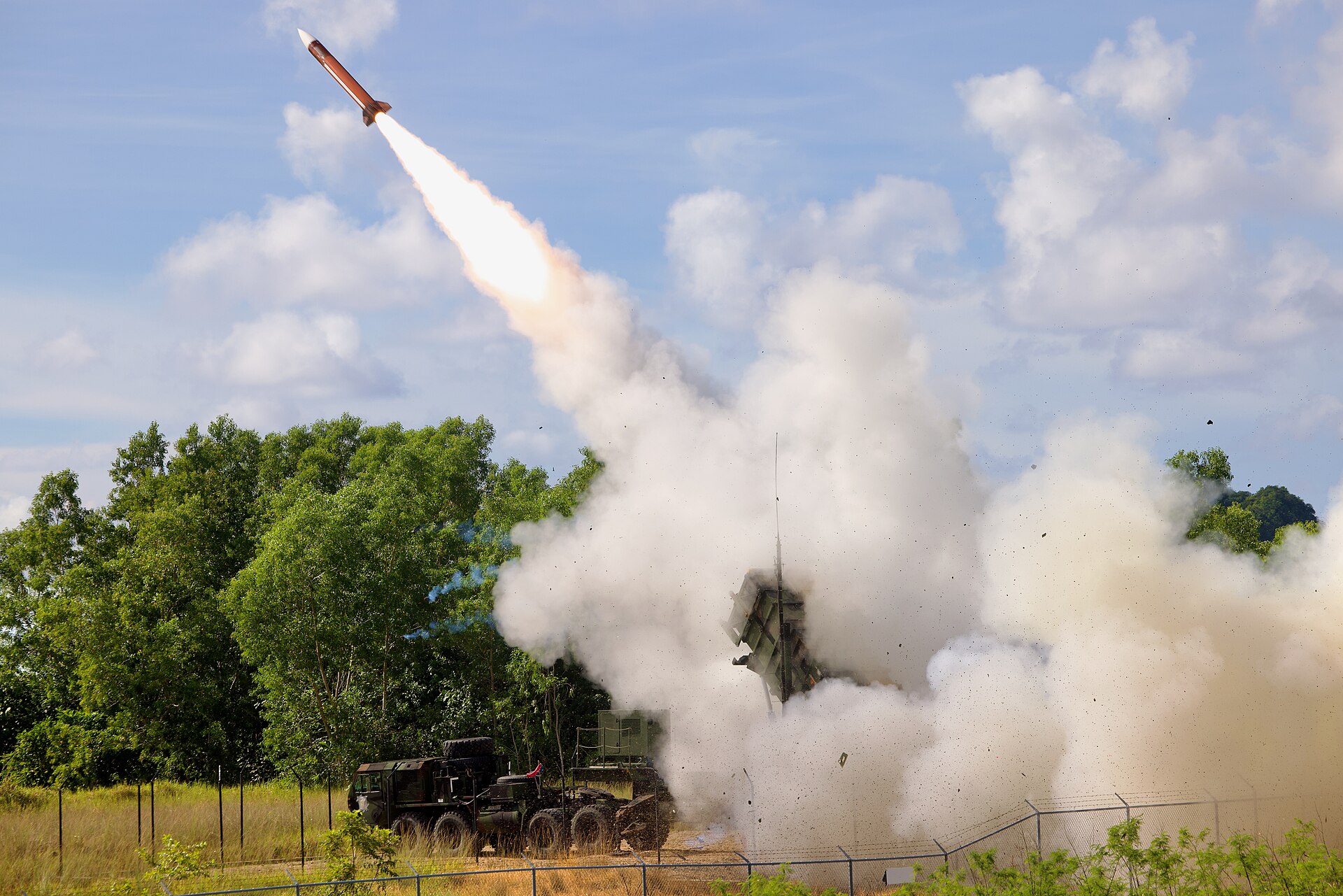
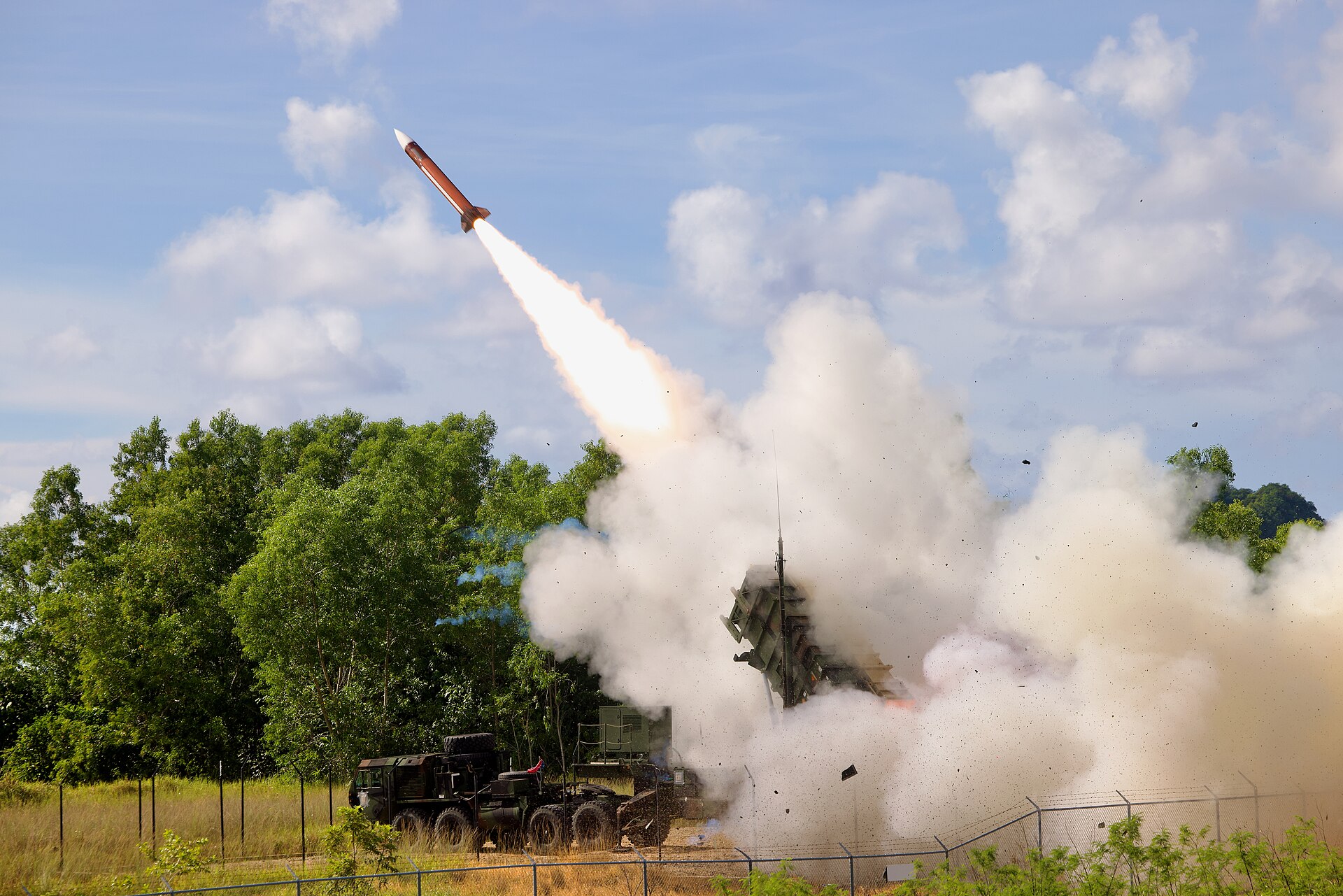
The deadly October 10 strike on King Khalid International Airport is the reminder of what a single miss costs. Defenders have to be right every time; an attacker needs one round to find a gap. That asymmetry is magnified by the Houthis’ maneuvering ballistic missiles, which AP and Al Jazeera reported can alter course mid-flight, complicating the geometry that Patriot batteries, the interceptors that keep Saudi cities defended, rely on to calculate where a target will be when the two meet.
Then there is the arithmetic nobody outside the defence ministry can do. The number of Patriot and THAAD interceptors remaining in Saudi stocks has not been published, and any figure circulating online should be treated as invention. What can be said is that each salvo like Tuesday’s draws down a finite supply that has to be replenished, and that the Houthis know this as well as anyone in Riyadh. Fatima Abo Alasrar of the Stimson Center saw the shape of this contest months before the current escalation began.
The conflict has shifted from “a contest of capability to a contest of sustainability.”
— Fatima Abo Alasrar, Stimson Center, March 30, 2026
Her framing explains the coalition’s turn toward the factory floor better than any communiqué. If both sides can keep doing what they are doing for weeks, the winner is whoever can keep doing it longest, and the cheapest way to win a sustainability contest is to destroy the other side’s ability to resupply. Tuesday’s salvo was the Houthi counter-argument: whatever the coalition hit on Monday, the missiles that were already built still flew.
The Pipeline Strike Nobody Has Claimed
While the coalition was striking Sanaa on Monday, something hit Saudi Arabia’s East-West crude pipeline in the Medina region. Al Jazeera reported a “limited fire” that was extinguished, and an Energy Ministry official said operations continued without interruption. Saudi authorities did not formally identify who was responsible, and no group has been credibly tied to the attack in published reporting.
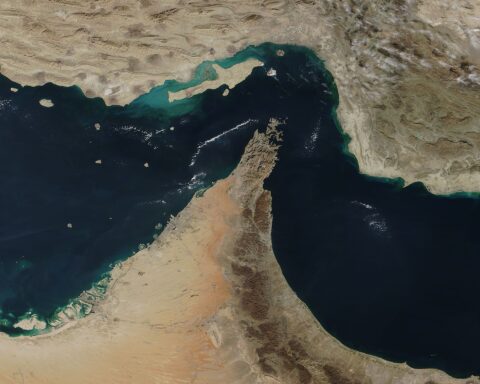
The stakes are hard to overstate. With the Strait of Hormuz blocked by Iran, the pipeline has become the kingdom’s escape route to the Red Sea, carrying approximately 5.8 million barrels per day of Saudi crude that would otherwise have sailed through the Gulf. It is the artery that lets Saudi oil reach markets at all while the main shipping lane stays shut, which makes any damage to it a matter for traders in London and Singapore as much as for engineers in Medina.
The temptation is to file the pipeline strike under the Houthi campaign and move on. That would be a mistake. The Houthis have spent the past week naming their targets loudly, yet the published record does not contain a credible claim for this one, and the Saudi government, which has every incentive to blame its enemies, chose not to name a culprit.
Attribution is not a technicality here. If the attacker is the same force firing missiles at Riyadh, the coalition’s air-defence and strike priorities stay the same. If it is someone else, the kingdom is facing a second threat to the very infrastructure it rerouted to survive the Hormuz closure, and defending a pipeline that crosses the width of the country is a far harder task than defending a capital. Until Saudi investigators say more, the honest position is that the pipeline was hit and the hand behind it is unknown.
What the incident does show is how many vulnerabilities the kingdom is now managing simultaneously. A financial district that has to worry about falling debris, an airport that has already been struck, and a crude export route that cannot afford a serious outage all compete for the same finite pool of interceptors, radars and attention. Every one of those has to be protected all the time, while the attackers only need to choose one.
Damascus, Washington and the Widening Wall Around Yemen
The coalition is not fighting this alone, and the past week has brought help from a direction that would have been unthinkable a few years ago. Syria has sent military advisers to Saudi Arabia for training and advisory support, Reuters reported, citing two Syrian military sources and a senior US official. The details of the Syrian deployment remain contested: an AP report said a Syrian official expected about 600 special forces within a week, while AFP cited unconfirmed numbers of up to 3,000.
Damascus has tried to keep expectations modest. Syria’s foreign ministry described the arrangement as advisory and training only, not a combat role, a distinction that matters both for Syrian domestic politics and for any Houthi decision about whether to treat Syrians on Saudi soil as targets. The deployment follows the defence cooperation agreement the two governments signed on November 4, reported by Reuters via Business Recorder.
Washington’s contribution is aimed further upstream. On November 7, CENTCOM announced Task Force Iron Gate, a mission to disrupt Iran’s land-based supply routes to its proxies. In principle that goes after the pipeline that feeds the Houthi arsenal. In practice, the CAR finding that the overwhelming majority of intercepted components came from outside Iran suggests that cutting Iranian routes alone will slow the Houthis rather than starve them.
Then there is the diplomacy, which pulls in a different direction. On November 9, President Donald Trump told Fox News that further US strikes on Iran were “highly unlikely” if Tehran agreed to a nuclear deal, and the same day Qatar’s prime minister met Trump on a framework for a Hormuz deal. A settlement between Washington and Tehran could reopen the strait and ease the pressure on the East-West pipeline, but there is no sign in the published record that it would bind the Houthis.
That gap is the uncomfortable truth for Riyadh. The Houthis present themselves as an ally of Iran rather than a subordinate, and their stated grievances are with Saudi airstrikes and the blockade of Yemen, not with American policy toward Tehran. A grand bargain over Hormuz could leave the kingdom with a calmer Gulf and an unchanged southern front, still intercepting missiles over its capital while the rest of the region exhales.

What Do the Houthis Want From This Campaign?
Their stated terms are simple. The Houthis say they will keep firing at Saudi Arabia for as long as the kingdom carries out airstrikes on Houthi-controlled Yemen and enforces a blockade. In that logic, every coalition raid on Sanaa, including Monday’s strikes on missile production, becomes a reason to launch again rather than a reason to stop.
Their target choices fill in the rest. In earlier statements reported by France 24, Saree listed Riyadh’s financial district, King Khalid International Airport and Aramco facilities among the targets of Houthi operations. These are not military objectives in the narrow sense; they are the places that carry the kingdom’s economic story, the skyline investors photograph, the airport visitors land at and the oil company that pays for both.
The aim, on that evidence, is less to destroy Saudi infrastructure than to make it look unsafe. A missile intercepted over Riyadh still triggers a Civil Defence alert, still sends people looking for cover, and still lands in foreign news coverage beside the word “Riyadh.” For a movement that cannot match the coalition’s air power, forcing the kingdom to live with routine alerts may be a goal in itself.
The Houthis also have a story to tell at home. Houthi health officials claimed that coalition strikes killed at least 33 people at al-Shariya village east of Sanaa, a figure that has not been independently verified and comes solely from the movement’s own officials. Whatever the true toll, such claims serve the Houthi argument that their launches are retaliation, and they make each round of coalition strikes politically useful to the people being struck.
That is the trap built into the current cycle. The coalition hits production because it needs fewer missiles coming at its cities; the Houthis fire to prove the strikes failed and to justify the next salvo; the coalition answers by reaching deeper. Neither side is wrong about its own interests, which is precisely why the ladder in the table above keeps getting taller, and why a deal over Hormuz may not be enough to bring it down.
On Tuesday, the alert sounded in Riyadh and the all-clear followed within the same morning. The more telling signal came from Yemen, where someone still had three missiles and the means to launch them, barely a day after the coalition went looking for exactly those things.
The intercepts came just hours after President Trump declared the war with Iran “effectively over” at the White House, a claim the Riyadh alerts placed in immediate and concrete relief. What Trump meant, what Iran said and what it means for Saudi Arabia.
Frequently Asked Questions
When did the earlier Saudi-Houthi ceasefire break down?
The current escalation followed the collapse of a ceasefire whose unravelling the BBC traced back to July 2026. That timeline means the fighting now under way is the product of months of erosion rather than a sudden rupture, and that any new truce would have to repair damage accumulated since the summer.
How many people were killed in the October 10 strike on King Khalid International Airport?
Al Jazeera reported that the October 10 strike on the Riyadh airport killed 12 people and wounded 309. The BBC put the number of wounded at 308, a small discrepancy that reflects differing casualty counts in the immediate aftermath.
Which Houthi missiles are thought to come directly from Iran?
The IISS has said the Houthis’ Palestine 2 missiles are “almost certainly supplied by Iran because they are too complex for indigenous production.” That distinguishes them from simpler systems the Houthis may be able to assemble locally from imported parts, which is why the source of each missile type matters for any interdiction effort.
Has Turkey joined the Makkah Pact?
Yes. The Turkish parliament ratified the Makkah Pact on November 5, 2026, by a vote of 279 to 119, according to Anadolu Agency. The ratification adds a NATO member’s formal backing to the pact at the same moment the Houthi campaign against Saudi Arabia is intensifying.
The House of Saud Daily Briefing
Saudi Arabia's news in 3 minutes, every morning. Free. See today's issue