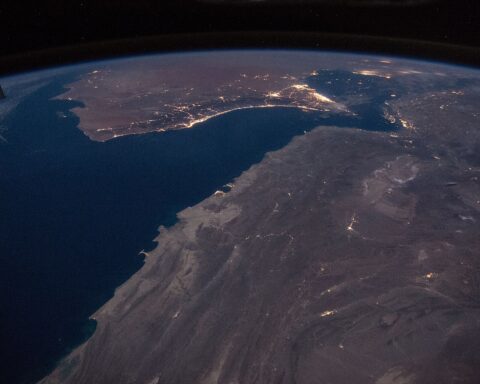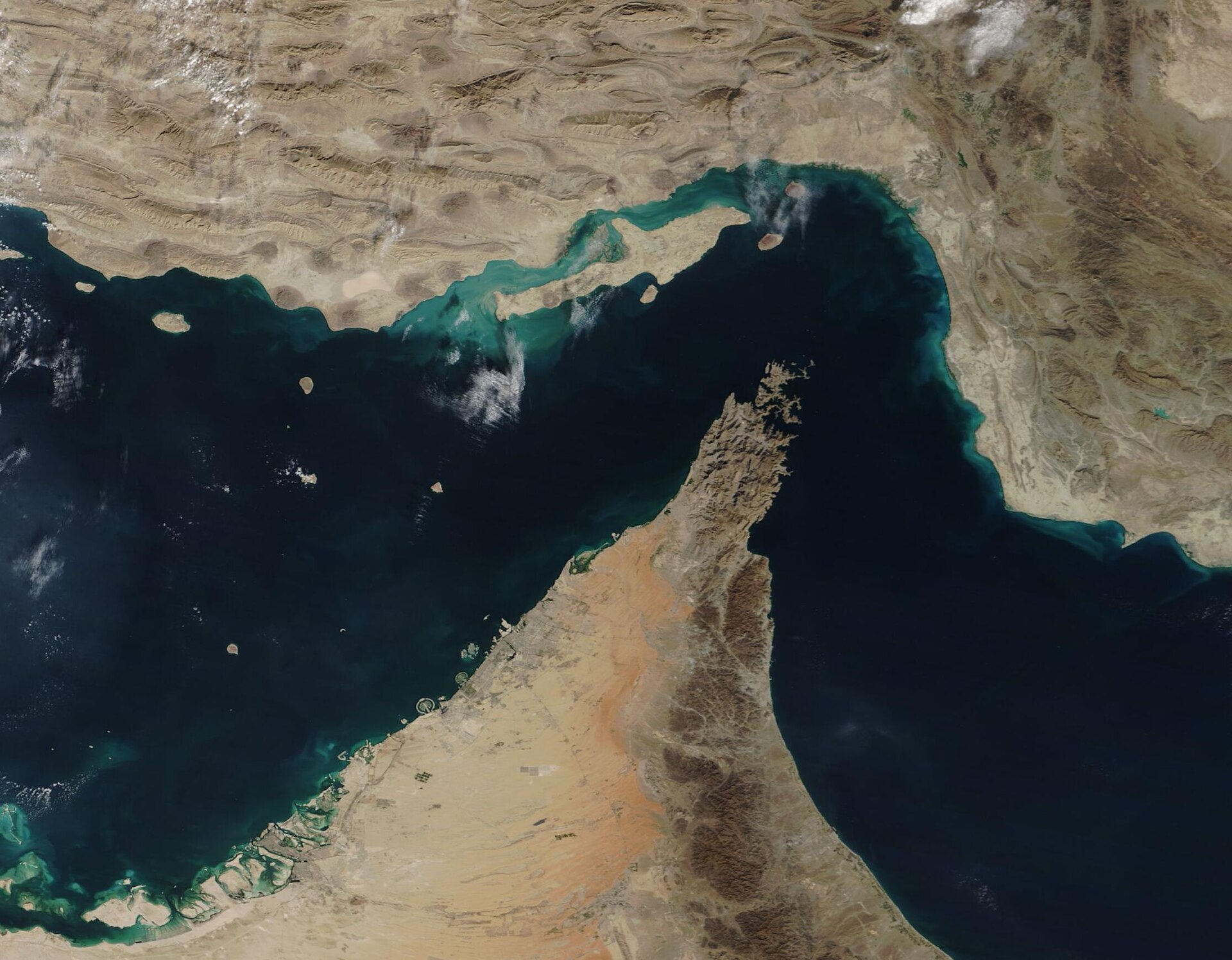

TEHRAN — IRGC Commander-in-Chief Major General Ahmad Vahidi said Iranian forces “control the waters at least 500 kilometers” beyond the Strait of Hormuz, a declaration that would extend Tehran’s self-proclaimed operational zone across the entire Gulf of Oman and to the boundary of the Arabian Sea. The claim, made at a conference of Basij paramilitary members, was reported by IRGC-affiliated media and published by The New Region, an Erbil-based outlet, on November 20, 2026 — but did not appear in a Mehr News article covering the same speech.
The 500-kilometer figure shifts Iran’s threat posture from chokepoint denial — blocking the 39-to-97-kilometer-wide Strait — to dominance over the exit corridor that tankers use after clearing Hormuz. Any vessel that has already transited the Strait and entered the Gulf of Oman would, under Vahidi’s framing, still be operating inside what Iran considers its sphere of naval control. Ships passing through Hormuz cross the territorial waters of both Iran and Oman.
The House of Saud Daily Briefing
Saudi Arabia's news in 3 minutes, every morning. Free. See today's issue
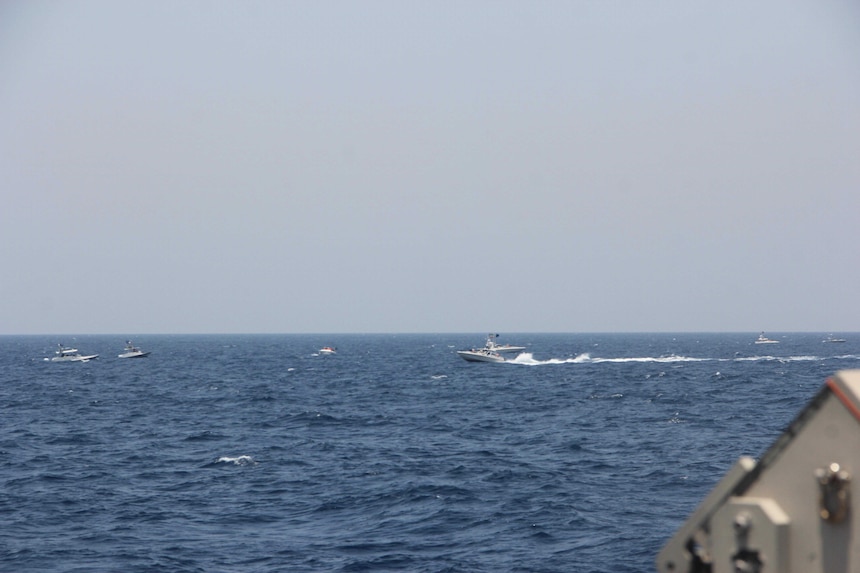
Table of Contents
What Did Vahidi Claim?
Speaking to Basij members — the volunteer paramilitary force operating under the IRGC’s umbrella — Vahidi declared that “today, not only the Persian Gulf and the Strait of Hormuz, but also an area extending at least 500 kilometers, and even further, is under the control of the Iranian Navy,” as cited by IRGC-affiliated media, according to The New Region. He framed the claim as an explanation for the absence of hostile warships from waters near Iran, expanding on the range with a pointed challenge.
“Why don’t enemy ships dare to venture more than 500-600 kilometers? Because the power of the Navy’s forces, as well as the power of the commanders and forces of the aerospace sector, is evident there.”
— Ahmad Vahidi, IRGC Commander-in-Chief, as cited by The New Region
Vahidi also told the gathering that “revenge is our right, and retribution is our right,” language consistent with IRGC rhetoric since the February 2026 US-Israeli campaign that killed former Supreme Leader Ali Khamenei. In the same speech, as reported separately by Mehr News, he described “confusion, disarray and despair in the enemy camp” and said “the enemy’s actions will lead to a review and modification of our defense doctrine.”
The gap between the two accounts is significant. Mehr News — one of the IRGC’s main English-language outlets — published an article on the same Basij speech on November 20 that included the defense-doctrine language but omitted the 500-kilometer territorial claim. The specific IRGC-affiliated media outlet that first reported the 500-kilometer statement has not been identified, and it is not confirmed as IRNA, Tasnim, or Mehr News.
Where Does 500 km From Hormuz Actually Reach?
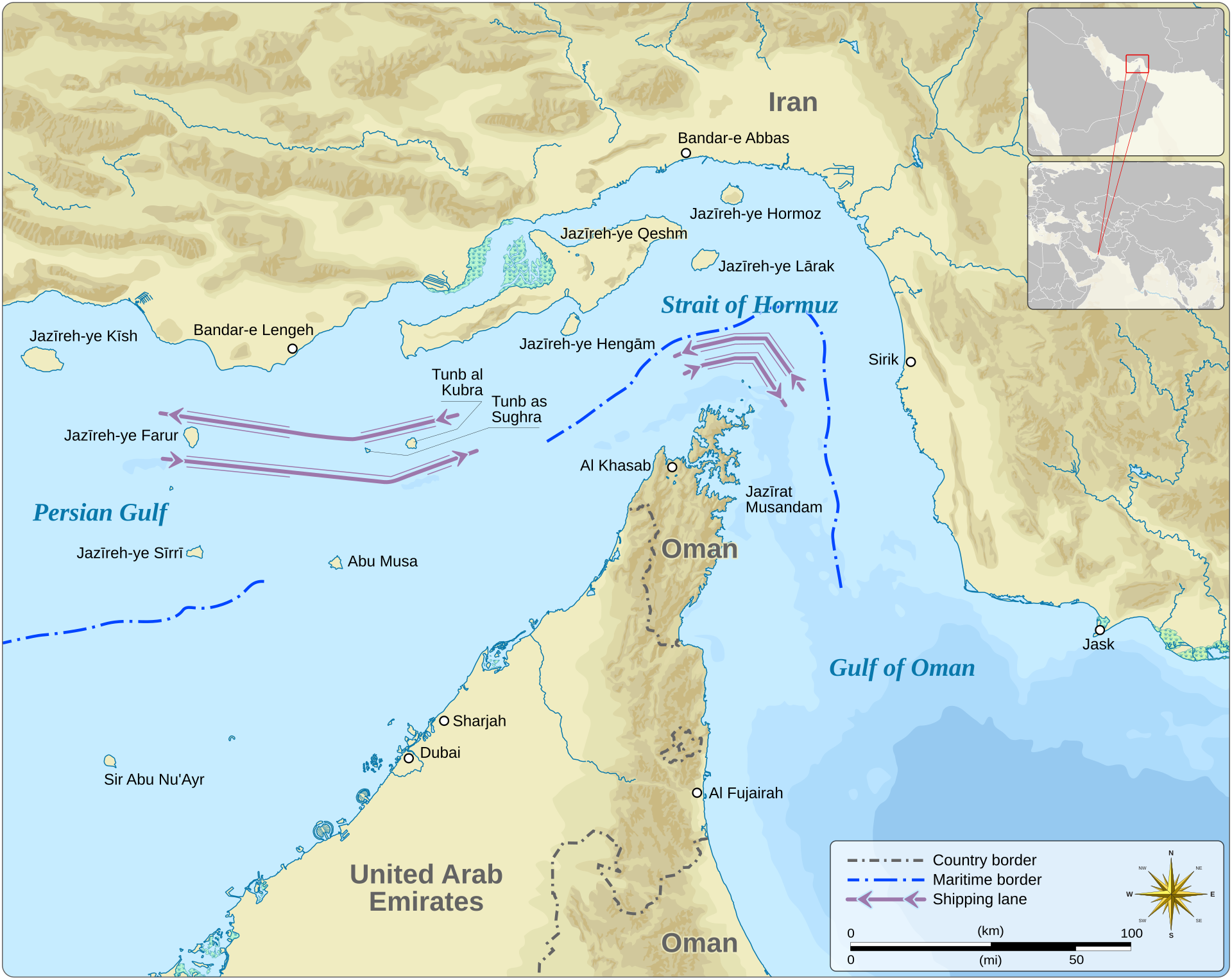
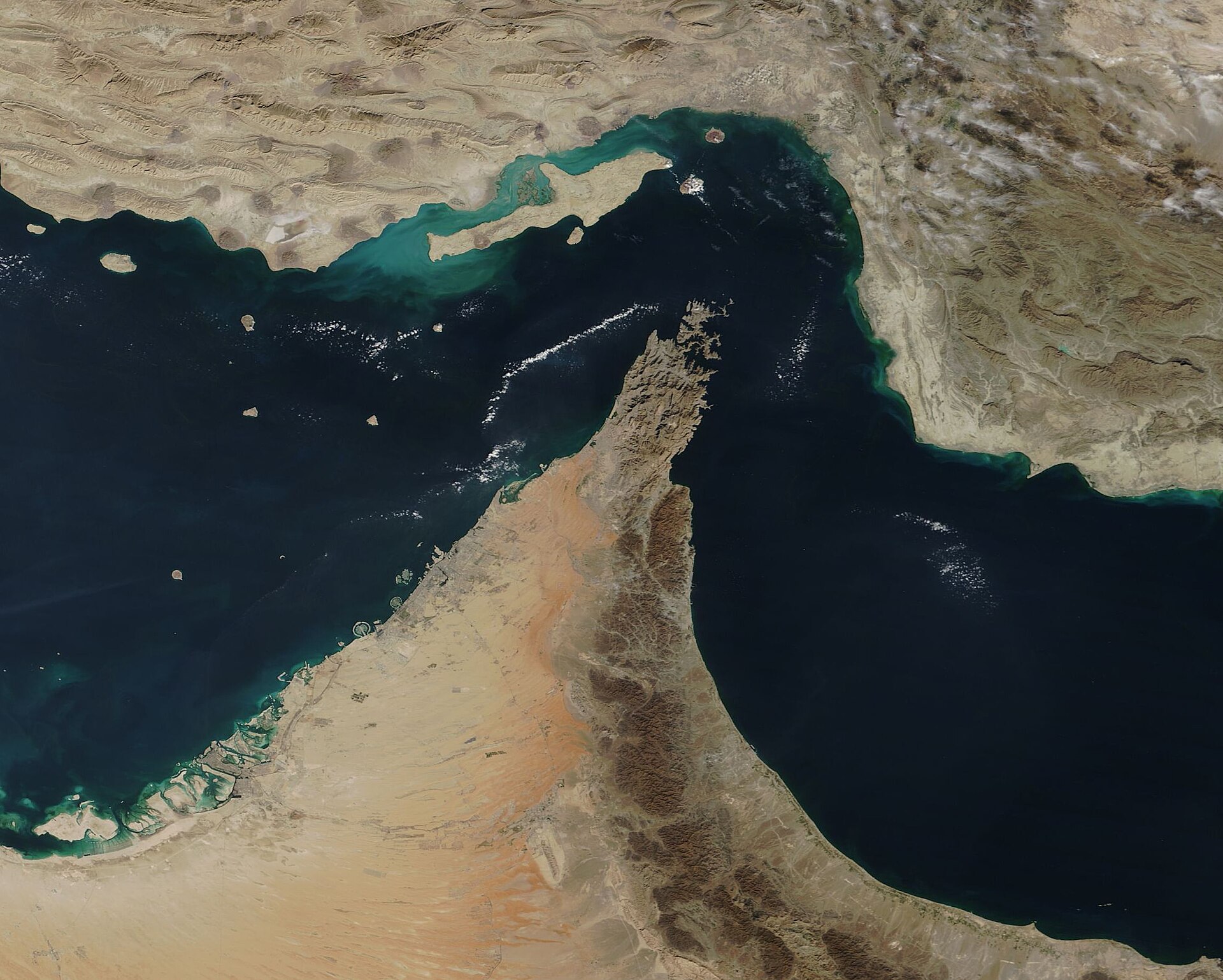
The Strait of Hormuz stretches roughly 167 kilometers in length and narrows to 39 kilometers at its tightest point. Its inbound and outbound shipping lanes — each two nautical miles wide — run through Omani territorial waters. Iran has not ratified the United Nations Convention on the Law of the Sea and asserts only innocent passage rights through the Strait, not the broader transit passage regime that most maritime states recognize.
A 500-kilometer radius drawn from the center of the Strait reaches approximately to the Gulf of Oman’s southeastern boundary — the line from Cape Al Hadd in Oman to Cape Jiwani in Pakistan — which lies roughly 530 kilometers from Hormuz. That places the entire Gulf of Oman inside the claimed zone. The Gulf of Oman is 340 kilometers wide at its broadest, with coastlines belonging to Iran (850 kilometers), Oman (750 kilometers), the UAE (50 kilometers), and Pakistan (50 kilometers), according to Wikipedia’s entry on the Gulf of Oman.
The exclusive economic zones at stake are substantial: Oman holds 108,779 square kilometers of EEZ in the Gulf of Oman, Iran holds 65,850 square kilometers, the UAE holds 4,371 square kilometers, and Pakistan holds approximately 2,000 square kilometers. All fall within or overlap the radius Vahidi described. Sea-lane approaches to India’s western coast also touch the outer edge of the zone, meaning the claim theoretically extends Iran’s self-declared reach to waters used by tankers headed to South and East Asia.
The IRGC Navy operates a base at Chabahar on Iran’s Makran coast, approximately 350 kilometers east-southeast of Hormuz — well inside the 500-kilometer claim and positioned to project force into the Gulf of Oman. The base provides genuine operational reach beyond the Strait’s vicinity, though there is a substantial gap between maintaining a coastal facility and controlling a maritime zone of that size.
Has the IRGC Used the 500 km Figure Before?
Vahidi’s statement is at least the third time in 2026 that an IRGC official has invoked the 500-kilometer figure, though each application has been distinctly different. In May, IRGC Navy political deputy Rear Admiral Mohammad Akbarzadeh described an operational zone of “over 200 to 300 miles, that is, 500 kilometers, from Jask and Sirik to beyond Qeshm Island and Greater Tunb,” calling it “a complete crescent,” according to Mehr News. That figure referred to the width of the Strait’s operational arc — a crescent spanning Iran’s Gulf coastline — not an extension beyond the Strait into open water.
In September, IRGC Spokesman General Hossein Mohebbi claimed that Iranian forces “had recently targeted a US aircraft carrier located 500 kilometers away,” Mehr News reported. CENTCOM denied the claim. That usage treated 500 kilometers as a strike range — the distance at which Iranian weapons could reach enemy warships — and the IRGC has at other times warned of “unlimited response” capacity over the Strait of Hormuz.
Vahidi’s November version redefines the number. Where Akbarzadeh described width and Mohebbi described range, Vahidi described a zone of maritime control extending beyond the Strait’s exit into the Gulf of Oman and potentially beyond. The escalation is semantic as much as military: the IRGC has moved from describing what it can reach to declaring what it claims to control.
What Does CENTCOM Say?
The United States Central Command has not responded specifically to Vahidi’s 500-kilometer claim as of this report. CENTCOM has, however, “repeatedly denied the veracity” of IRGC mine claims and said its forces have “successfully cleared the Strait of ordnance,” according to The New Region. As of October 10, CENTCOM said 135 ships had been turned around since the US blockade of Iranian ports began on July 14, according to CBS News.
The claim arrives at a moment of ambiguity in US policy toward Iran. President Donald Trump told Reuters on Thursday that he would discuss further military action against Iran “after the beginning of the year” and “after January 1,” as reported by The New Region. That timeline, if held to, would leave Iran’s Hormuz posture effectively unchallenged by new US strikes for at least six weeks. Declaratory claims like Vahidi’s tend to carry greater weight when no near-term military response is signaled.
How Does This Affect Shipping and Oil?
Whether Vahidi’s claim translates into new operational orders or remains rhetorical is not yet clear. No Gulf state, the United Kingdom Maritime Trade Operations agency, or CENTCOM has issued a response to the specific 500-kilometer assertion. The claim does, however, land during a period of sustained attacks on commercial shipping: the IRGC said on Thursday that two supertankers carrying four million barrels of oil hit naval mines in the Strait of Hormuz, according to The New Region. A vessel was also struck by a mine north of Khasab, Oman, inside what the Iranian Army called a “restricted zone east of Hormuz,” The New Region reported on November 19.
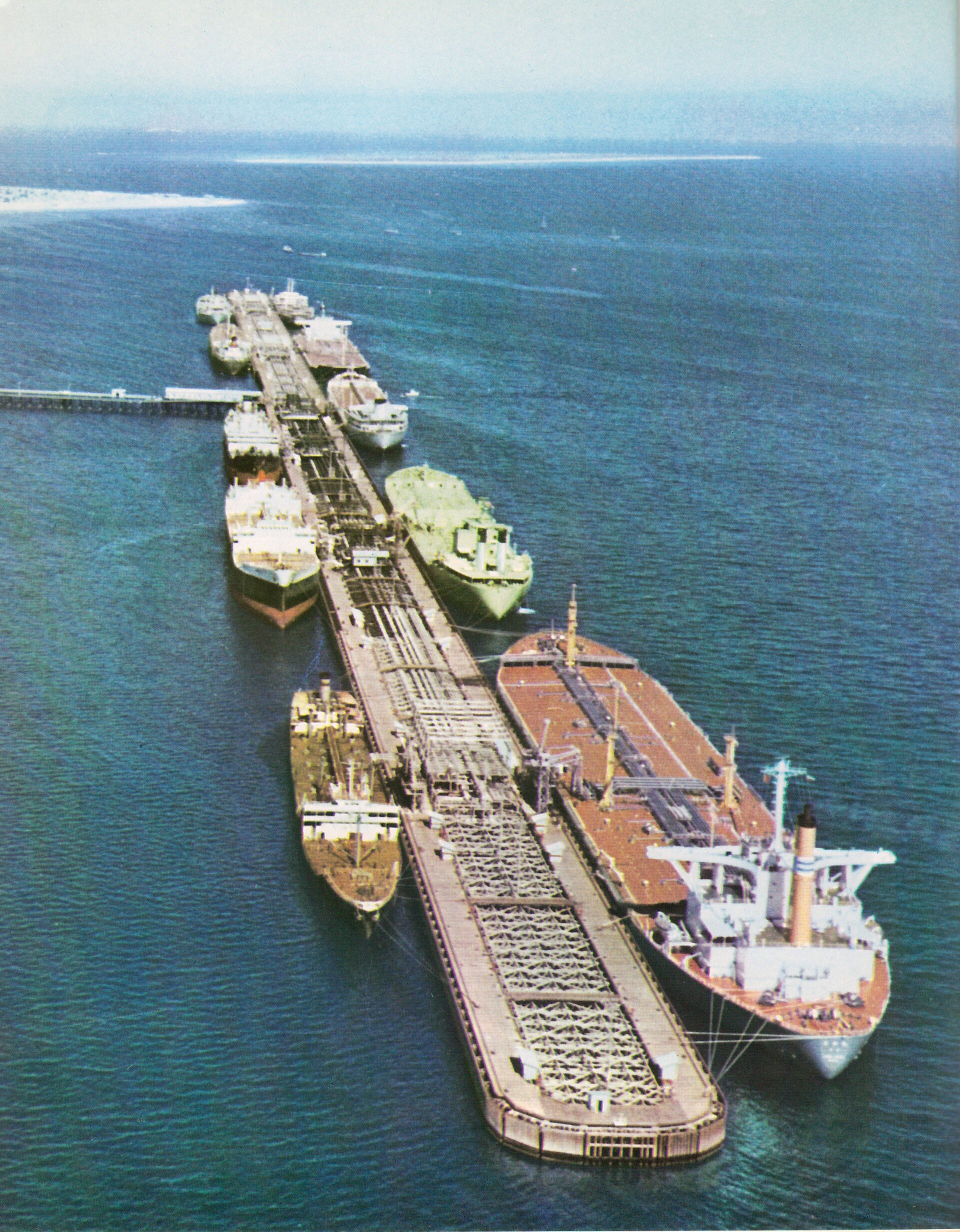
The Energy Information Administration’s November 10 Short-Term Energy Outlook reported that Middle East oil exports increased slightly in October 2026, with global oil inventories having fallen by an average of 1.2 million barrels per day across the third quarter of 2026. Brent crude averaged $124 per barrel in October; by November 18-19, the spot price had fallen to around $92 per barrel, more than $30 below the October average. ADNOC’s CEO has demanded that Hormuz reopen unconditionally, reflecting mounting frustration among Gulf producers over the sustained disruption.
Before the conflict, the Strait of Hormuz carried roughly 21 million barrels per day of petroleum — about 21 percent of global consumption — according to EIA data from 2022. If Iran’s claimed operational zone now extends 500 kilometers beyond the Strait, the implied threat is that tankers face risk not only during their Hormuz transit but for hundreds of kilometers afterward, through the Gulf of Oman’s international shipping lanes and into waters approaching the Arabian Sea.
Background
Iran first restricted Hormuz passage after the February 2026 US-Israeli military campaign that killed Supreme Leader Ali Khamenei. The Assembly of Experts named Mojtaba Khamenei his successor. A June memorandum aimed at de-escalation collapsed in July, and the US reimposed a counter-blockade on July 14. Iran re-closed the Strait, and attacks on commercial shipping have continued in both directions since — the IRGC laying mines and firing on vessels, CENTCOM clearing ordnance and interdicting Iranian-bound traffic.
Vahidi was formalized as IRGC Commander-in-Chief in August 2026, following his predecessor’s death in the February campaign; Mehr News confirmed his current title as “Chief Commander of the Islamic Revolutionary Guards Corps.” The IRGC operates distinct naval forces for Gulf and Strait operations and maintains facilities along the Makran coast extending to its base at Chabahar. The regular military’s Artesh runs a parallel naval command. Both report to the Supreme Leader through the Armed Forces General Staff; the Ministry of Defense and Armed Forces Logistics handles procurement and logistics, not operational command.
Diplomatic efforts to reopen Hormuz have stalled repeatedly. Iran’s Supreme National Security Council set conditions including an end to the war, lifting the US blockade, and wartime compensation. Qatar and Oman have run a US-Iran back channel, but talks through Muscat produced no agreement in November. Trump’s indication that further military action would wait until after January 1 leaves the status quo — a contested Strait, a US blockade, and an IRGC asserting ever-wider maritime claims — in place through the end of the year.
Frequently Asked Questions
What is the Gulf of Oman?
The Gulf of Oman is the body of water connecting the Strait of Hormuz to the Arabian Sea. It is bordered by Iran to the north, Oman to the south, and the UAE and Pakistan at its western and eastern extremities. Every tanker that clears Hormuz must cross it to reach open ocean routes to Asia, Europe, and the Americas — meaning the Gulf of Oman is not simply a geographic buffer but the first leg of every post-Hormuz voyage. Vahidi’s 500-kilometer claim would place that entire leg inside Iran’s self-declared control zone.
Does Iran have legal jurisdiction over waters 500 km from Hormuz?
Under the United Nations Convention on the Law of the Sea, coastal states hold an exclusive economic zone extending 200 nautical miles (about 370 kilometers) from their baselines, with a territorial sea of 12 nautical miles. Iran has not ratified UNCLOS. Even applying the 200-nautical-mile EEZ framework, Iran’s zone would not encompass the full Gulf of Oman, which is shared with Oman, the UAE, and Pakistan, each with their own EEZ claims. Vahidi’s statement is a declaration of military reach and operational ambition, not a recognized legal boundary under international maritime law.
What is the Basij force that Vahidi addressed?
The Basij Resistance Force is a volunteer paramilitary organization operating under IRGC command. Established during the Iran-Iraq War for mass mobilization, it now serves roles in internal security, ideological enforcement, and community organization across Iran. Its membership runs into the millions on paper, though active participation varies. IRGC commanders frequently use Basij gatherings for public statements because the audience is reliably sympathetic and the events generate domestic media coverage — making them a preferred venue for declarations intended for both internal consumption and external signaling.
How many ships transit Hormuz daily in peacetime?
Before the current conflict, 130 to 140 ships passed through the Strait of Hormuz each day, according to Reuters. That figure has collapsed since February 2026. The collapse is not merely statistical: the Hormuz shipping corridor runs through a narrow band of Omani territorial waters, and the combination of Iranian mining operations and CENTCOM interdictions has made every transit a risk calculation rather than routine passage.
Is the 500 km claim confirmed by primary Iranian state media?
Not as of this report. The claim was attributed to IRGC-affiliated media and published by The New Region on November 20. Mehr News covered the same Vahidi speech that day but quoted him only on defense doctrine and enemy disarray — it did not contradict the territorial claim, but neither did it carry it. The distinction matters: an omission from a friendly outlet is different from a denial. Neither IRNA nor Tasnim was reachable during research. The claim should be treated as reported by a credible regional outlet but not yet corroborated through primary Iranian state media.
The House of Saud Daily Briefing
Saudi Arabia's news in 3 minutes, every morning. Free. See today's issue