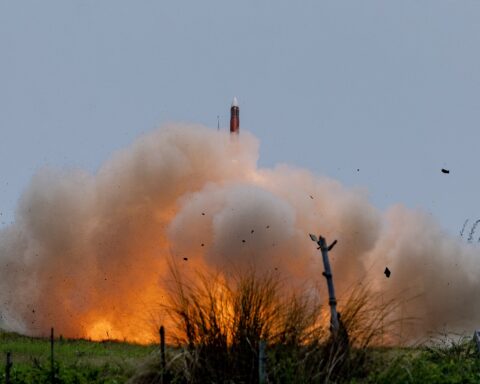

RIYADH — The Arab coalition intercepted a Houthi ballistic missile fired toward the Makkah region of western Saudi Arabia on Sunday, November 22, its spokesman Maj. Gen. Turki al-Maliki said, as Saudi Civil Defence issued a “potential danger” alert for the region and then lifted it within minutes. No casualties were reported, according to Asharq Al-Awsat, Anadolu Agency and the Saudi Times, which all carried the coalition statement on the same day.
The alert put Islam’s holiest city back inside the Houthi missile war a week after the coalition reported drones over both the Makkah and Madinah regions on November 15. On Monday, the Pakistani outlet Bloom Pakistan reported that Saudi Arabia had intercepted two more Houthi missiles near Makkah and Madinah, a claim no coalition statement had confirmed by the time of publication. The Houthis, for their part, deny that Makkah has ever been in their sights.
The House of Saud Daily Briefing
Saudi Arabia's news in 3 minutes, every morning. Free. See today's issue
Table of Contents
- What Did the Coalition Say About the November 22 Missile?
- An Unconfirmed Report of Two More Missiles on Monday
- Makkah and Madinah in the Line of Fire Since September
- Why Would the Houthis Target the Holy Cities?
- How Long Can Saudi Air Defences Keep Up?
- Background: Nine Years Between Makkah Claims
- Frequently Asked Questions
What Did the Coalition Say About the November 22 Missile?
Al-Maliki said coalition air defences intercepted one ballistic missile heading toward western Saudi Arabia on November 22, and that nobody was hurt. His statement, posted on X and carried by the Saudi Press Agency, was reported by Asharq Al-Awsat, Anadolu Agency and the Saudi Times, none of which named a missile type.
For residents, the event arrived as an alert rather than an announcement. Civil Defence’s “potential danger” warning for the Makkah region was withdrawn within minutes, the Saudi Times reported, so that for most people the episode was over almost as soon as it began. Earlier interceptions over the same region left fragments in towns and valleys, as the October record below shows, and the reports carried on Sunday described no damage on the ground.
The interception came on a day when House of Saud also covered a drone alert over the Riyadh region the same day. House of Saud’s earlier report on the Makkah missile alert was published in the early hours of Sunday. What has changed since is the claim that the next salvo reached for both holy cities at once.
The Houthis rejected the Saudi account on the same day. Their military spokesman dismissed any talk of a threat in the Mecca region in a statement carried by PressTV and Mehr News, quoted below. That leaves the November 22 missile with two accounts that cannot both be true, a coalition interception claim and a Houthi denial that the city was ever in danger.
An Unconfirmed Report of Two More Missiles on Monday
Bloom Pakistan reported on Monday, November 23, at 12:12 UTC that Saudi Arabia had intercepted two Houthi missiles near Makkah and Madinah. As of publication, House of Saud had found no matching statement from al-Maliki, the Saudi Press Agency or Saudi Civil Defence, and no second outlet had confirmed the report independently. The report should be read as unverified until the coalition speaks.
The claim is plausible on the record. On October 24 and 25, Saudi Civil Defence grouped two ballistic missiles aimed at “the Mecca and Medina regions” into a single statement, Gulf News reported, the closest confirmed precedent for a dual-city salvo. Debris from that night fell at Wadi Al Mughammas in the Makkah area, in Al Nuzha in Jeddah, in Wadi Jalil near Taif and in Masturah near Rabigh, and nobody was hurt.
Being plausible does not make it confirmed, and the coalition’s own pattern is the reason for caution. When drones approached both cities on November 15, al-Maliki announced them in two separate posts on X, two over the Makkah region and one over the Madinah region, according to Gulf News. A combined two-missile claim would normally come with an equivalent official trail, and that trail had not appeared by Monday afternoon.
Pakistani interest in the story is not accidental. Pakistan’s forces deployed to the kingdom under the Mecca Alliance mechanism that Saudi Defence Minister Prince Khalid bin Salman activated on October 5, Al Jazeera reported, so any threat to the holy cities is domestic news in Pakistan. That broader history of attacks toward Makkah and Madinah is where the real story sits.
Makkah and Madinah in the Line of Fire Since September
The current run of holy-city alerts began on September 16, 2026, when Saudi forces intercepted a drone south of Makkah. Saudi Arabia declared the attack a “red line,” and the Organisation of Islamic Cooperation, Pakistan and Kuwait condemned it, Time reported. Within two weeks the threat had reached Madinah, where no attack had been confirmed before 2026.
On September 29, a drone struck the Taiba power distribution station in the Madinah region and knocked a transformer out of service, Gulf Daily News reported on October 1. It remains the best-evidenced incident involving the city, because the coalition cited physical analysis of debris, according to the same report. A cruise missile intercepted over the Madinah region followed on October 15, and Saudi Deputy Foreign Minister Rayed Krimly publicly blamed Iran for arming, training and encouraging the Houthis, France 24 reported.
The two-city salvo of October 24 and 25 described above came next. On November 5, coalition air defences intercepted a ballistic missile heading toward the Madinah region, and Asharq Al-Awsat reported that al-Maliki “did not disclose its launch location.” The November 15 drone interceptions over both regions and Sunday’s missile toward Makkah complete the confirmed sequence.
| Date (2026) | Region | Reported event | Source |
|---|---|---|---|
| September 16 | Makkah | Drone intercepted south of the city | Time |
| September 29 | Madinah | Drone hit Taiba power station; transformer out of service | Gulf Daily News |
| October 15 | Madinah | Cruise missile intercepted | France 24 |
| October 24–25 | Makkah and Madinah | Two ballistic missiles; debris at four sites | Gulf News |
| November 5 | Madinah | Ballistic missile intercepted; launch site not disclosed | Asharq Al-Awsat |
| November 15 | Makkah and Madinah | Two drones over Makkah region, one over Madinah region | Gulf News |
| November 22 | Makkah | One ballistic missile intercepted; alert lifted within minutes | Asharq Al-Awsat, Anadolu, Saudi Times |
Every entry except the Taiba strike is an interception, which means the public evidence for most of the series is the coalition’s word and the debris it sometimes leaves behind. That evidence gap is exactly what the Houthis have built their response on.
Why Would the Houthis Target the Holy Cities?
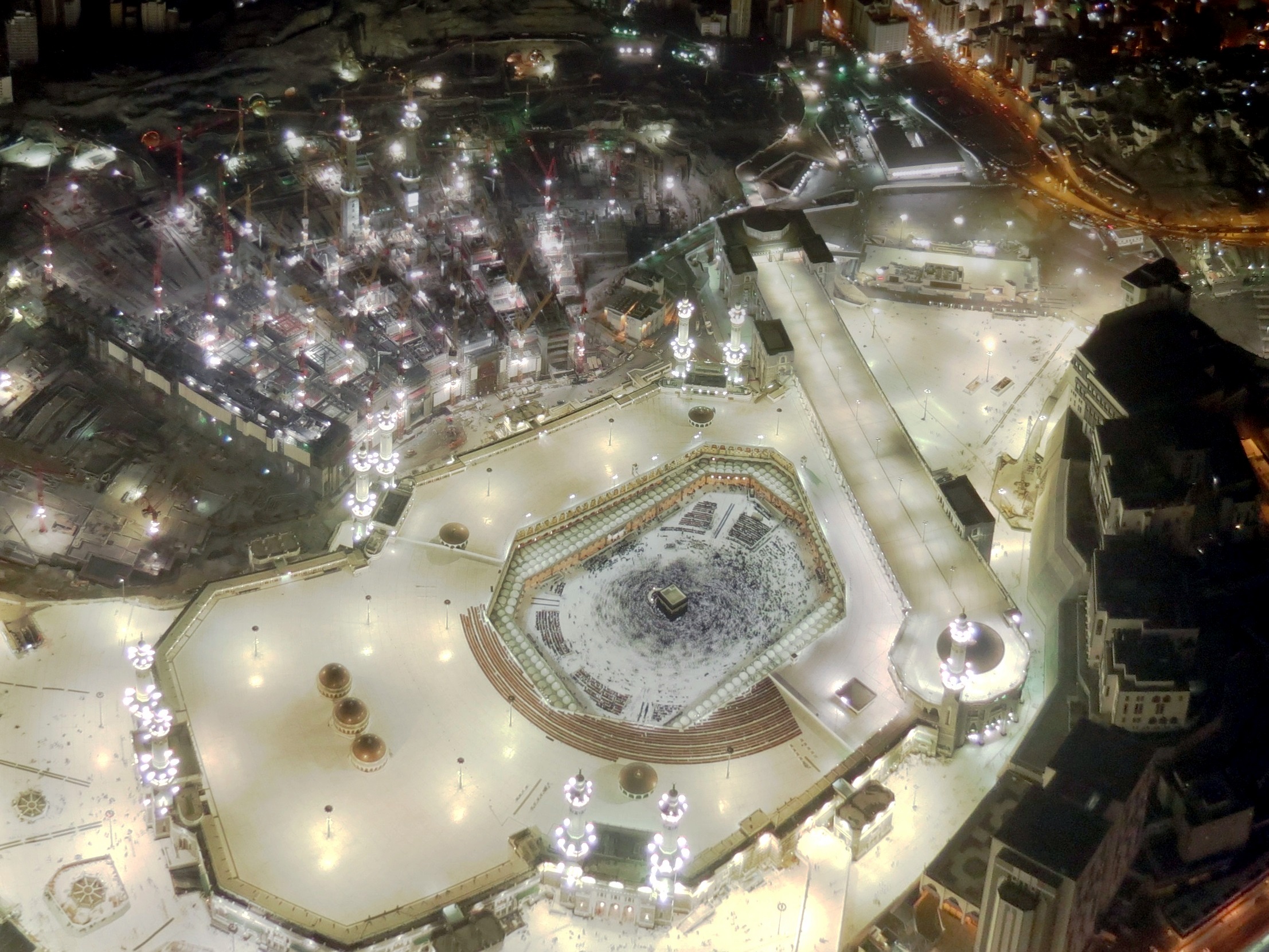
The Houthis say they would not, and have denied every coalition claim that they aimed at Makkah or Madinah. Their military spokesman, Yahya Saree, follows a consistent script: a flat denial, then an inversion casting Saudi Arabia as the real danger to the holy city, then a reminder that Houthi fire targets oil and military sites. Analysts at the Institute for National Security Studies, the London School of Economics and Chatham House have each assessed that deliberate targeting would hurt the group more than anyone.
Saree’s statement carried by PressTV and Mehr News on November 22 followed the template closely. “What the Saudi enemy is promoting about the existence of a threat in the Mecca region is a great and immense falsehood,” he said, adding that “our operations target its oil facilities and military bases.”
“There is no threat to Mecca except from the criminal Al Saud regime.”Yahya Saree, Houthi military spokesman, via PressTV, November 22, 2026
The group has also tried to fence the holy cities off in writing. On October 11, Saree declared every Saudi airport a potential target “except those serving Mecca and Medina,” Ynetnews reported, drawing a line around the two cities while declaring the rest of Saudi civil aviation fair game. On November 15, he denied launching the drones that al-Maliki said had crossed into both regions, according to Gulf News.
Tehran has backed the denials from the start. After the September 16 drone, Iranian Foreign Ministry spokesman Esmaeil Baghaei said “a mere claim” of an interception was not enough to accuse the Houthis and that “our region has witnessed numerous instances of ‘false flag’ operations,” Middle East Eye reported on September 17.
Independent analysts have not endorsed the false-flag theory, but several doubt that the Houthis meant to aim at Makkah at all. Prof. Fawaz Gerges of the London School of Economics told Time in September that for the Houthis, “as a religiously dominant organization, this would be catastrophic for them” to target Makkah, and that “there is a real possibility that the Houthi drone basically misfired.” He called it “a lose-lose for them.” Dr. Yoel Guzansky of the Institute for National Security Studies told Ynetnews in October that attacking the holy cities is “completely contrary to the Houthis’ interests.”
Guzansky also warned Saudi Arabia about overplaying the card. “The more the Saudis use this, the more dangerous it could become for them,” he said, suggesting the holy-city framing carries risks for Saudi Arabia as well as for the Houthis. Farea Al-Muslimi of Chatham House pointed to who benefits on the Saudi side, telling Time that “defending Mecca is going to create legitimacy domestically in their countries.” Whatever the intent behind each launch, the missiles still have to be stopped.
How Long Can Saudi Air Defences Keep Up?
By the coalition’s account the interceptions are holding, but analysts say the system was built for a different enemy. Saudi security analyst Nawaf Obaid of King’s College London told The National on November 20 that the Houthis’ missile launch capacity was “severely degraded” by Saudi strikes. The National reported that estimates suggest the group retains 100 to 200 ballistic missiles, though Saudi Arabia does not publish figures on its own interceptor inventory.
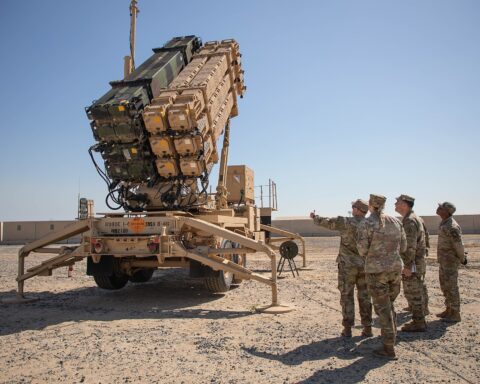
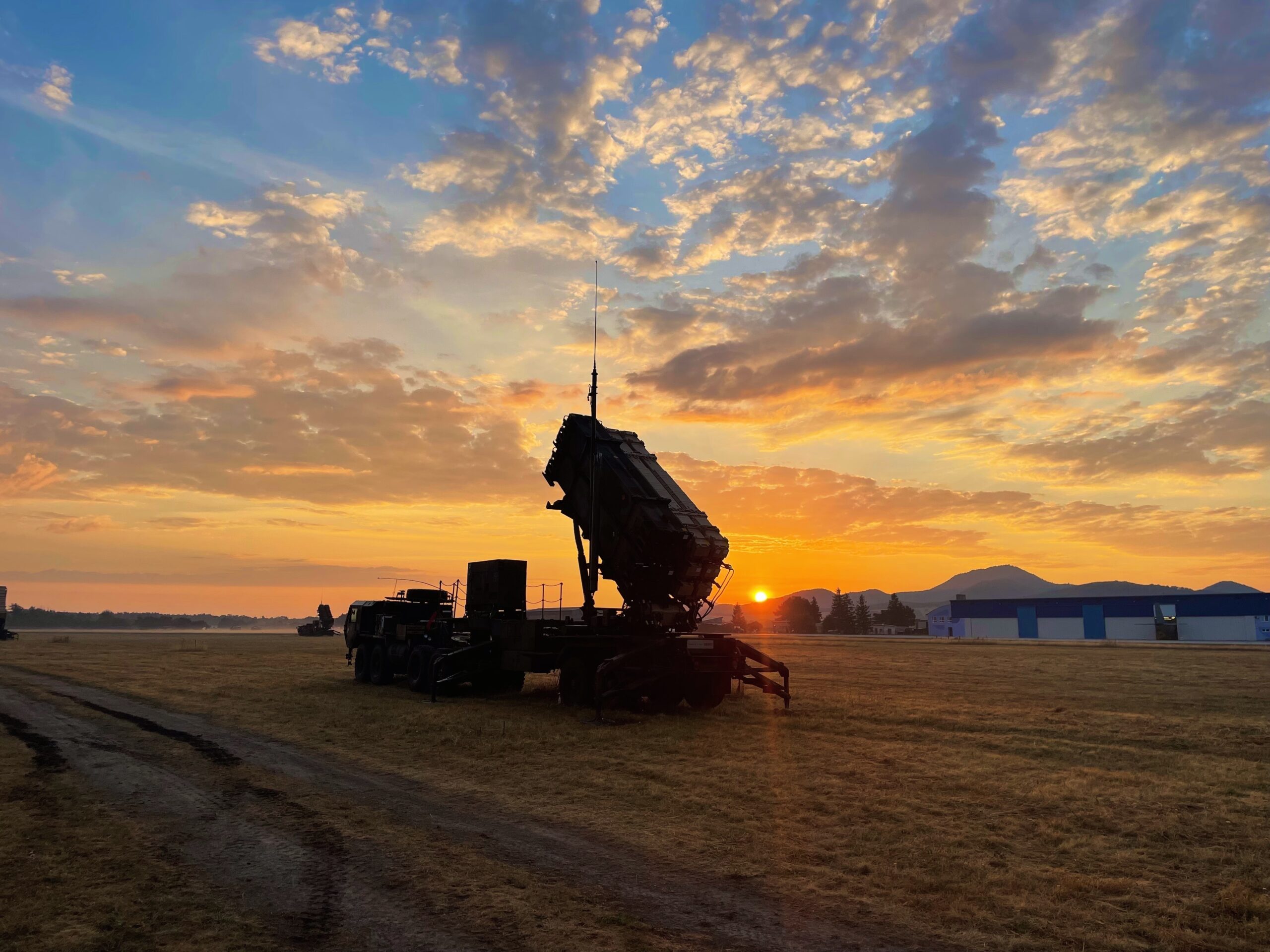
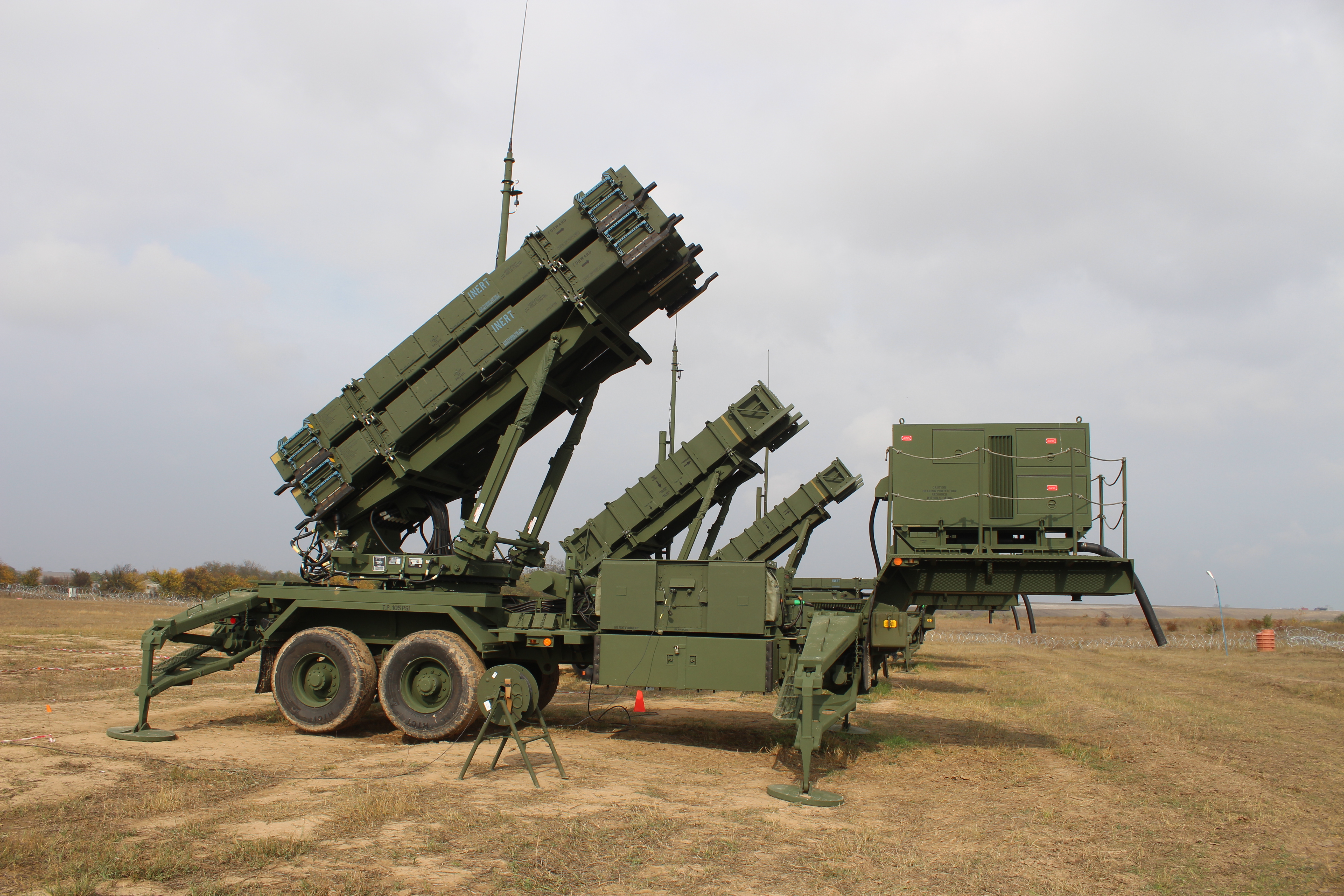
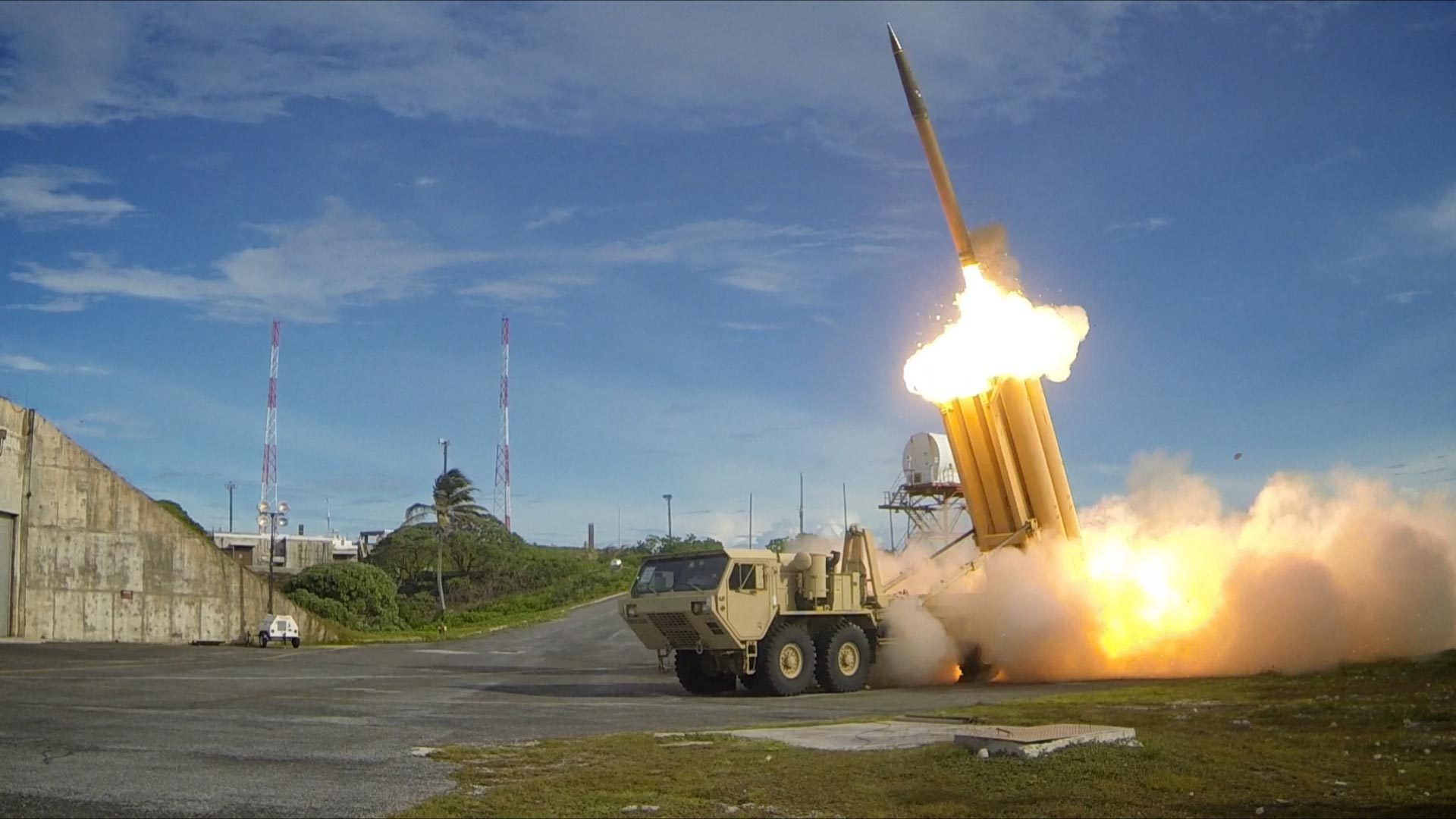
Obaid has called Patriot and THAAD “the backbone of Saudi defences” and argued that “dozens of attempts are thwarted for each successful attack,” remarks reported by The National and Al Jazeera. Wolfgang Pusztai, a security policy and defence analyst, told Al Jazeera on October 11 that the threat has moved to a direction the system was not designed for. “The ballistic missile defence system was built mainly against Iran,” he said, adding that “as Houthi attacks grow, Saudi Arabia is likely shifting some defences toward Yemen,” while Patriot and THAAD munitions are being used up quickly.
If Pusztai is right, the tension is sharpest in the west of the kingdom, where Makkah and Madinah sit on the Red Sea side, far from the Gulf coast facing Iran. Any battery shifted toward Yemen is one fewer facing east, while Iran keeps up its pressure on shipping, tracked in House of Saud’s latest Hormuz report.
Some analysts argue the answer is pooling defences across the Gulf. Defence analyst Francis Tusa told The National on November 20 that “if you do everything nationally only, then you are missing 20 per cent of the picture.” House of Saud has covered the Gulf’s moves in that direction, from the GCC forward command plan in Kuwait to the Makkah Alliance’s talks on a defence secretariat.
Joint commands take time to build, and for now news of each interception over the holy cities still arrives through al-Maliki’s own statements. Washington’s posture adds another layer of uncertainty, covered in House of Saud’s report on Trump’s latest warning on Iran.
Background: Nine Years Between Makkah Claims
The coalition first accused the Houthis of firing at Makkah in October 2016, when it said a missile was intercepted roughly 65 to 70 kilometres from the city, Al Jazeera reported at the time. A second claim followed in July 2017, during the Hajj season. After that, the record shows no coalition claim of a Makkah-bound attack until the September 2026 drone.
The 2026 escalation is different in scale and in politics. It runs alongside the wider conflict covered in House of Saud’s Iran War section, and it has given Saudi Arabia a religious rallying point that a war over oil terminals and airports does not. The same Mecca Alliance activation, described above, also drew Turkish forces into the kingdom alongside Pakistan’s; Prince Khalid had announced it as collective deterrence measures, turning the defence of both cities into a shared commitment.
For most of the past nine years, a coalition claim about Makkah did not happen at all. The confirmed incidents tabulated above changed that picture rapidly; on Sunday the warning that announced the latest one was lifted before most of the region had read it.
Frequently Asked Questions
Who is responsible for protecting the airspace over Makkah and Madinah?
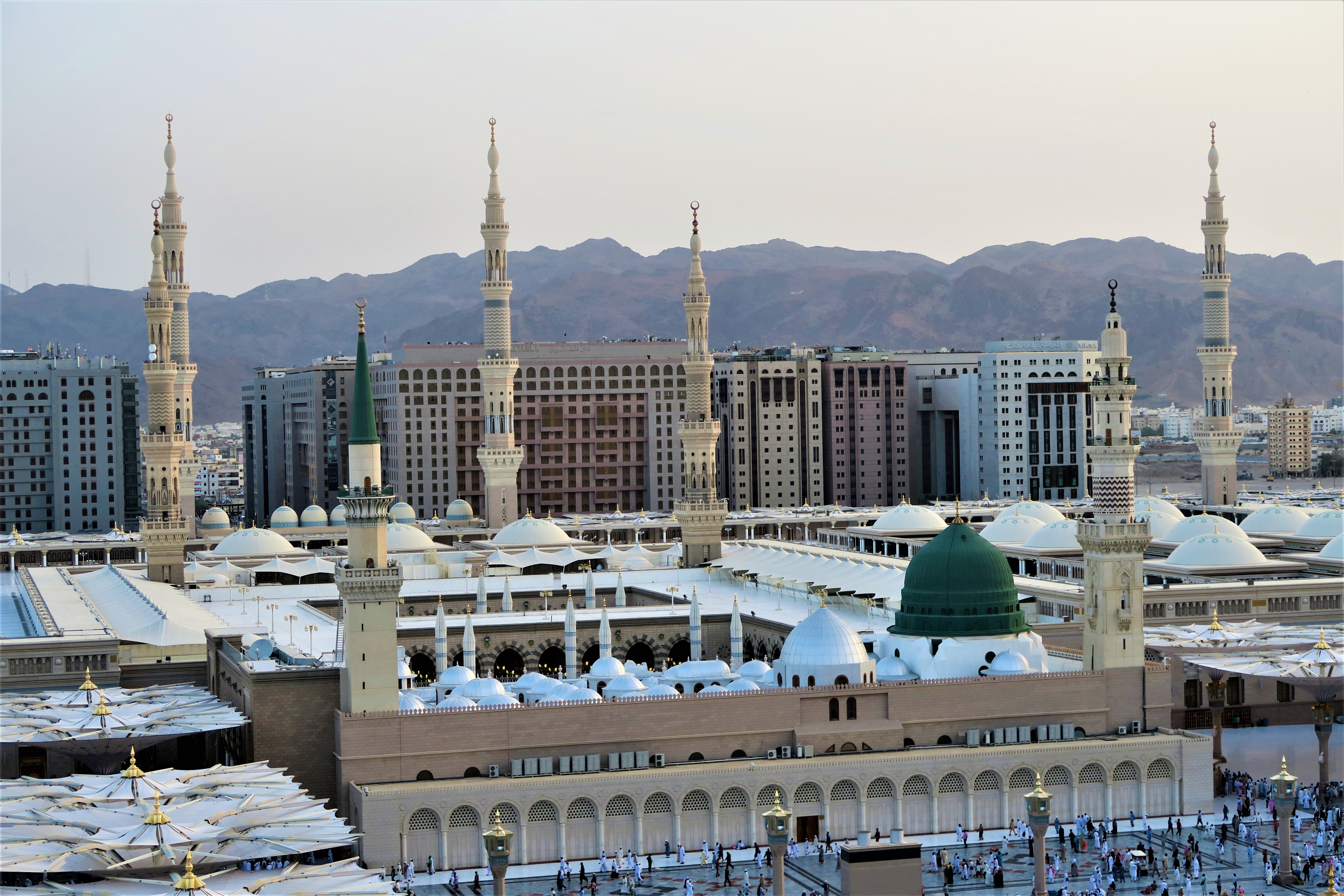
Saudi Arabia’s Air Defense Forces carry that duty. In a Hajj-season briefing in May 2026, the Saudi Ministry of Defence said the “Air Defense Forces are tasked with protecting the airspace over the sacred sites,” Bloom Pakistan reported, citing the ministry.
How has the Saudi government framed the attacks on the holy cities?
As a matter of sovereign religious duty. At its October 27 session, the Saudi Cabinet credited air defences with intercepting “repeated Houthi attempts to target Mecca, Medina and other cities and facilities” and reaffirmed “the kingdom’s right to defend the Two Holy Mosques,” Al Arabiya English reported.
What have religious authorities at the Two Holy Mosques said?
Sheikh Abdulrahman Al Sudais, head of religious affairs at the Two Holy Mosques, called Makkah and Madinah “a red line that must not be breached” after the October 24 and 25 attacks. He described the attacks as “a criminal approach” that violates Islamic law and international humanitarian norms, Gulf News reported.
Are the Houthis under United Nations sanctions?
Yes. The UN Security Council extended its Houthi sanctions regime on November 12, 2026, keeping it in force through November 14, 2027, Al Jazeera and the Saudi Gazette reported. The extension came while the September-to-November holy-city attacks were under way.
The House of Saud Daily Briefing
Saudi Arabia's news in 3 minutes, every morning. Free. See today's issue