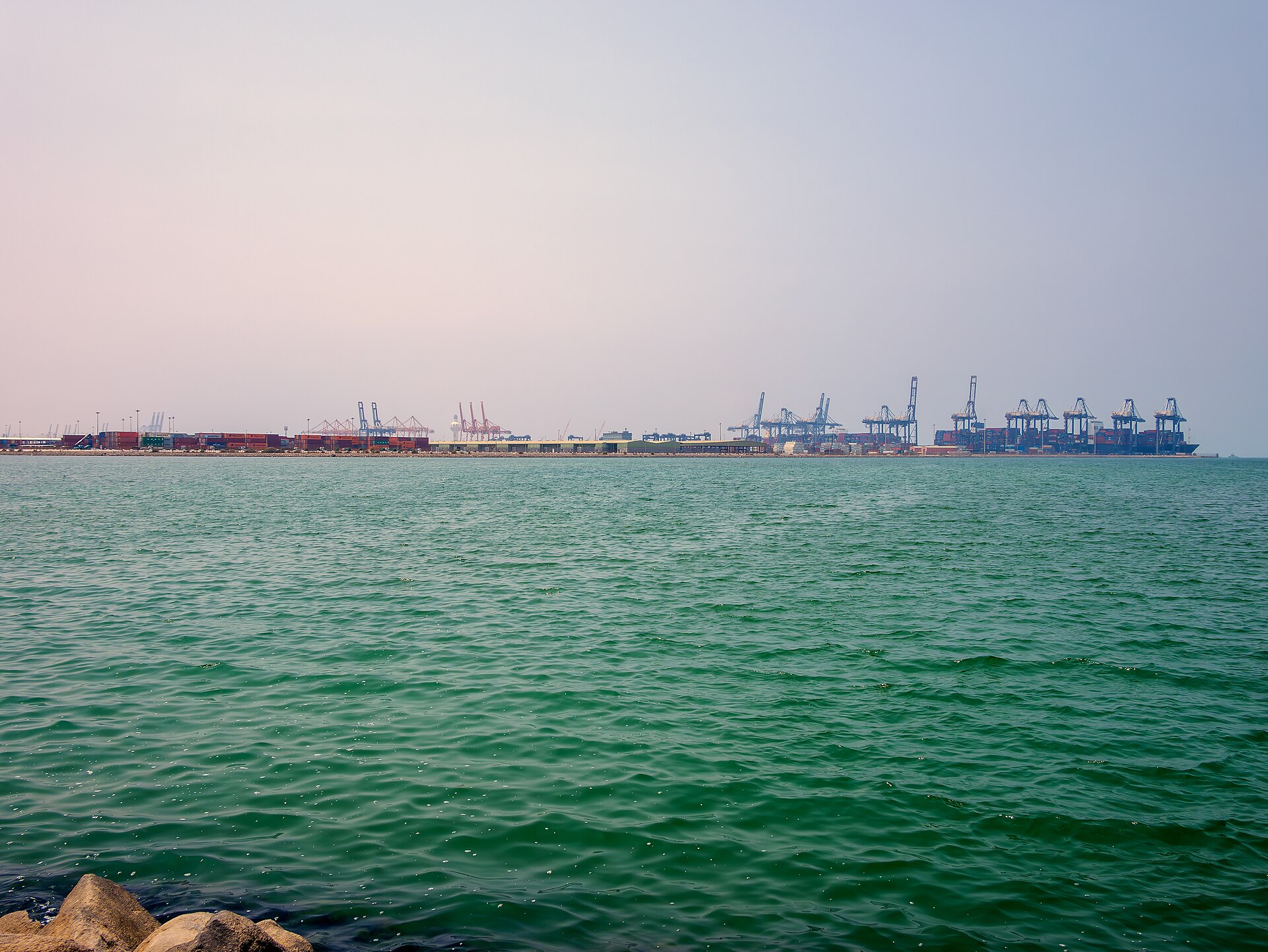

JEDDAH — On November 20, Houthi military spokesman Yahya Saree ordered airlines to evacuate Saudi airspace and shipping companies to pull vessels out of Jeddah and every other Saudi Red Sea port — and by November 23, not a single shipping company had publicly announced it was complying, according to gCaptain. No confirmed Houthi strike on Jeddah port exists as of this writing. Yet Lloyd’s of London placed the port inside a high-risk insurance zone four months ago, war-risk premiums for Saudi-linked tankers have risen roughly twelvefold since the expansion, and approximately 86 percent of scheduled departures from Riyadh’s King Khalid International Airport were cancelled in the three weeks after the October strikes — which killed at least 14 people, per the Saudi Gazette — according to Cirium data.
The Houthis are not achieving their strategic aims solely with warheads — they are achieving them with the cumulative weight of threat, and that weight is rewriting the economics of Saudi aviation and Red Sea shipping whether or not a ballistic missile ever reaches Jeddah’s container cranes. Saudi Arabia intercepts nearly every inbound projectile, strikes Hodeidah, and replaces its coalition commander, yet the insurance market, the airline schedules and the freight ledger keep drifting in the Houthis’ direction.
Table of Contents
- What Did the Houthi Military Spokesman Warn on November 20?
- The Coalition Responds: Hodeidah Strikes and the Kinetic Ledger
- How Have Insurers Priced the Threat to Saudi Red Sea Ports?
- What Do the Flight Cancellation Numbers Show?
- Siege for Siege: The Doctrine Behind the Warnings
- Does Saudi Arabia Need to Lose a Port to Lose the Economic War?
- The 6-Month Campaign and the Question of Deterrence
- The Warning as Weapon
- Frequently Asked Questions
What Did the Houthi Military Spokesman Warn on November 20?
Saree’s statement, posted on X and reported the same day by Al Jazeera, Xinhua and Baird Maritime, was the most comprehensive public articulation of the Houthi targeting doctrine since the escalation began in July 2026. He told port workers and nearby residents to evacuate immediately, urged shipping companies to remove their vessels from Saudi Red Sea ports, and explicitly named Jeddah and “all Saudi ports along the Red Sea coast” as targets — while exempting airspace near Mecca and Medina from the threat.
The House of Saud Daily Briefing
Saudi Arabia's news in 3 minutes, every morning. Free. See today's issue
Saudi airspace is unsafe and will be the theatre of our operations in the coming hours — with the exception of airspace over Mecca and Medina.
— Yahya Saree, Houthi military spokesman, November 20, 2026 (AFP; Al Jazeera)
The same statement named the Al-Shuqaiq power station in Jazan and a Riyadh financial district as additional target categories, according to Xinhua and Middle East Eye, widening the declared envelope of Houthi operations from military and energy targets to civilian economic infrastructure at scale. The warning arrived on the same day the Saudi-led coalition struck Hodeidah port, and it carried the hallmarks of the reciprocity logic the Houthis have employed since declaring a maritime blockade of Saudi Arabia on July 20: every coalition escalation against Yemen triggers a declared counter-escalation against Saudi economic infrastructure.
What made the November 20 statement different from previous warnings was its specificity and its breadth — Saree did not threaten a single airport or a single oil facility but declared the entirety of Saudi aviation and Red Sea maritime infrastructure a theatre of operations, a formulation designed less for a military audience than for the insurers, underwriters and logistics planners who decide whether aircraft and vessels operate in contested zones.
The Coalition Responds: Hodeidah Strikes and the Kinetic Ledger
The Saudi-led coalition struck Hodeidah port on November 20, describing the operation as targeting “operational capabilities at Hodeidah port that were used in smuggling operations and the transport of weapons and ballistic missiles,” according to Business Recorder, Marinelink and Al-Monitor. A second wave of strikes followed on November 21, and by November 23 the coalition had also intercepted a ballistic missile heading toward the Makkah region and three ballistic missiles heading toward Riyadh on November 21, per Al Jazeera. Yemen’s information minister contradicted the coalition directly, saying the port remained fully operational and that the flow of goods would continue.
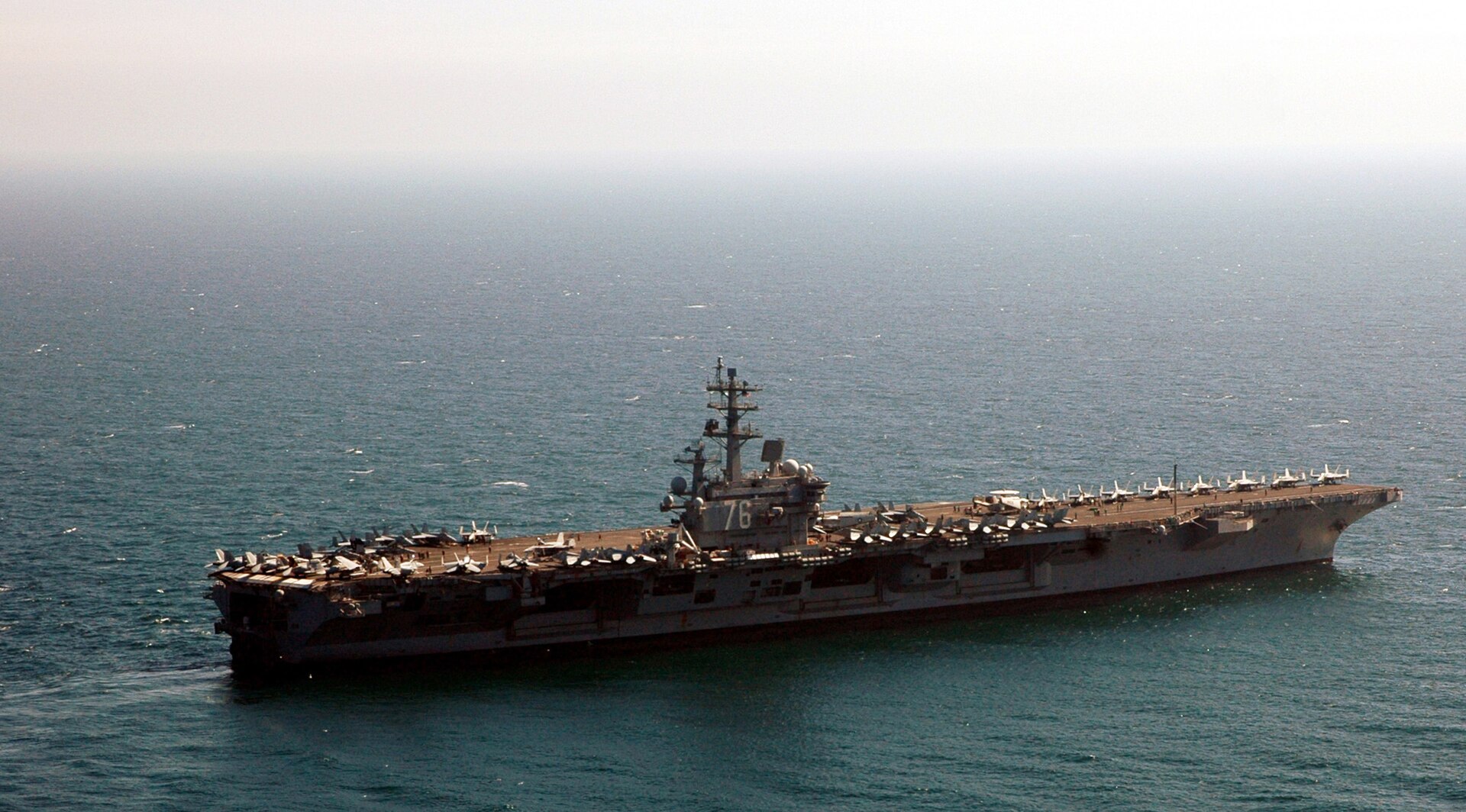
The kinetic scorecard — intercepts completed, launchers destroyed, Hodeidah facilities struck — appears to favour the coalition, which has maintained a near-perfect interception rate against ballistic missiles targeting Riyadh and the western provinces throughout the autumn. King Salman replaced the coalition commander during the week of November 16, according to Reuters, in what amounted to both an acknowledgement that the existing approach required fresh leadership and a signal to allies that Riyadh was preparing for a longer fight. On November 22, the Houthis claimed a direct hit on Saudi Arabia’s Rabigh oil refinery, but Saudi authorities did not confirm damage, PetroRabigh’s majority owner Aramco issued no statement, and the Houthis had made a prior unconfirmed claim about Rabigh on October 25, according to the New Arab and AGBI.
Yet the kinetic ledger, for all its apparent successes, is measuring the wrong contest. The coalition is winning the battle of interception while the Houthis are fighting a battle of perception — and perception, in a market governed by actuarial tables and insurance exclusion clauses, does not require a confirmed detonation to shift behaviour. Every missile intercepted over Riyadh proves the system works; every insurance premium recalculated after the interception proves the system is not enough. UN deputy spokesman Farhan Haq underlined the humanitarian dimension on November 20–21, saying the UN was following “with concern” the Hodeidah strikes and stressing the need to “safeguard the continuity of operations of Yemen’s Red Sea ports, which serve as a lifeline to millions of people in Yemen,” per The National. UN OCHA separately reported that supplies of food, medicine and water in Houthi-controlled areas had fallen by 90 percent because roads remain closed, according to Middle East Monitor — a figure that reveals the humanitarian cost of a war in which both sides are weaponising logistics.
How Have Insurers Priced the Threat to Saudi Red Sea Ports?
Lloyd’s of London’s Joint War Committee expanded the southern Red Sea listed area northward on July 29, 2026, moving the boundary from 18°N to 25.5°N — placing Jeddah and Yanbu inside the high-risk zone for the first time, according to Insurance Journal. The committee’s secretary linked the change to Houthi attacks on Saudi vessels, and the expansion did not require a confirmed strike on either port to take effect: the pattern of Houthi maritime attacks, the declared blockade, and the assessed trajectory of the campaign were enough to trigger a redesignation that immediately changed the cost structure for every vessel calling at Saudi Arabia’s most important Red Sea facilities.
The premium escalation that followed has been steep and, for Saudi-linked shipping, disproportionate. Indicative war-risk premiums for vessels calling at Jeddah and Yanbu reportedly rose from about 0.25 percent of hull value to about 1 percent after the JWC zone expansion, and by late September 2026, quoted premiums for Saudi-linked tankers had reached around 3 percent — against 0.2 to 0.3 percent for tankers with no Saudi connection, according to corp-intl.com (citing Reuters sources) and Insurance Business Magazine. The differential amounts to a targeted surcharge on Saudi trade, imposed not by the Houthis but by the insurance market’s assessment of Houthi intent.
| Period | Jeddah/Yanbu Hull Premium | Saudi-Linked Tanker Premium | Non-Saudi Tanker Premium |
|---|---|---|---|
| Before JWC expansion (pre-July 29) | ~0.25% of hull value | ~0.25% | 0.2–0.3% |
| After JWC expansion (Aug–Sept) | ~1% | Rising | 0.2–0.3% |
| Late September 2026 | — | ~3% | 0.2–0.3% |
War and political violence premiums at Gulf airports rose up to 100-fold since late February 2026, with higher deductibles, tighter coverage limits and new exclusions, according to broker Marsh as reported by AGBI and ITIJ — though that figure covers the Gulf region generally, not Saudi Arabian aviation alone. Meanwhile, Gulf-China VLCC freight rates reached $1.2 million per day by early October, up from roughly $80,000 a year earlier, per LSEG data reported by bdnews24. Each of these figures represents a cost imposed on Saudi Arabia’s economy not by a Houthi missile reaching its target but by the market’s judgement that a Houthi missile might.
What Do the Flight Cancellation Numbers Show?
Cirium data, reported by aerospaceglobalnews.com on October 26, provide the clearest picture of the aviation disruption during the worst period of the October escalation. Between October 8 and October 25 — the three weeks following the strikes on KKIA that killed at least 14, per the Saudi Gazette, and wounded 309, per Al Jazeera, on October 10 — approximately 7,802 of 17,299 scheduled Saudi departures were cancelled or marked no-fly nationwide, roughly 45 percent. At Riyadh’s King Khalid International Airport, the cancellation rate was approximately 86 percent: 4,071 of 4,736 scheduled departures.
| Metric | Riyadh KKIA | Nationwide |
|---|---|---|
| Scheduled departures | 4,736 | 17,299 |
| Cancellations / no-fly | 4,071 | 7,802 |
| Cancellation rate | ~86% | ~45% |
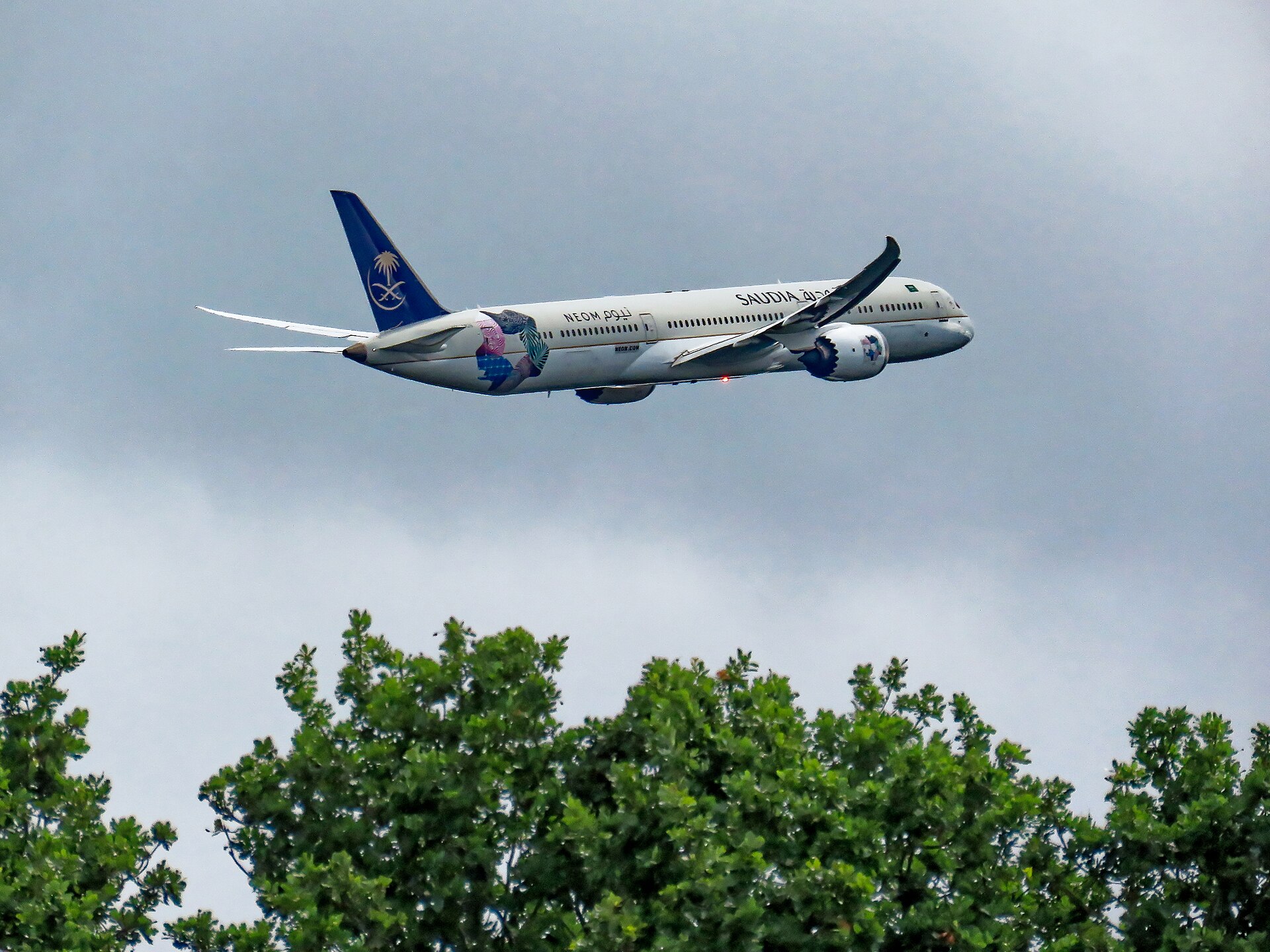
The disruptions extended well beyond the October strike window. Air India and Air India Express kept Jeddah, Riyadh and Dammam suspended until November 14, Akasa Air’s Riyadh flights remain suspended until November 30, and Delta Air Lines postponed its planned Atlanta-to-Riyadh launch from the winter 2026 schedule to March 2027, according to Aerocorner and Gulf Business. On November 16, the European Union Aviation Safety Agency extended six Conflict Zone Information Bulletins — covering Iran, Iraq, Lebanon, Jordan, Saudi Arabia, and the Persian Gulf and Gulf of Oman — to January 31, 2027, per Anadolu Agency, though the recommendations themselves were unchanged from previous iterations, meaning the extension was an administrative renewal rather than a new warning.
The pattern across all these data points is the same: airlines are making operational decisions based on the assessed threat environment, not on confirmed strikes against their specific routes or airports. KKIA was attacked and suffered casualties; Jeddah’s King Abdulaziz International Airport has not. Yet airlines are pulling back from both, because the insurance cost, the EASA guidance, and the reputational risk of operating into Saudi airspace make the commercial calculation untenable regardless of whether the next missile is aimed at Riyadh or Jeddah.
Siege for Siege: The Doctrine Behind the Warnings
The Houthis’ operational logic since mid-2026 rests on a declared principle of reciprocity they have framed publicly as “siege for siege” — the assertion that they have the right to impose on Saudi Arabia the same economic restrictions Saudi Arabia and the coalition impose on Yemen, a doctrine documented across multiple statements and reported by Middle East Eye and the Islamabad Post. The formal articulation began on July 20, 2026, when the Houthis announced a maritime blockade on Saudi vessels, citing what they called a nearly 12-year siege of Yemen, according to Al Jazeera and PBS/AP. They subsequently emailed shipping firms telling them not to load or discharge cargo at Saudi ports — and at least two Saudi-flagged crude tankers reportedly turned back toward Suez following one such communication, according to Reuters as cited by gCaptain.
That detail — two tankers turning around because of an email, not a torpedo — encapsulates the threshold effect at the core of the Houthi strategy. The movement does not need to sink a supertanker in Jeddah’s approach channel to achieve the economic disruption it seeks; it needs to create a persistent, credible expectation that such an attack is possible, and to maintain that expectation long enough for the market to price it in permanently. The Houthis retook the Bab el-Mandeb coast on November 15, giving them physical proximity to the southern Red Sea chokepoint and lending geographic weight to threats that might otherwise be dismissed as aspirational.
Critical Threats assessed on November 22 that the Houthi movement’s targeting of Saudi critical infrastructure on November 21–22 — including the unconfirmed Rabigh refinery claim — was “part of its ongoing campaign to compel Saudi Arabia to end military operations in Yemen and accept Houthi economic demands.” ISW/Critical Threats described the escalation as part of a Houthi effort “to accumulate leverage for negotiations with Saudi Arabia” rather than an attempt to restart full-scale war. That framing positions every warning, every unconfirmed claim, and every insurance premium increase as a negotiating chip rather than a military objective in its own right — and it explains why the Houthis continue to issue declarations that outpace their demonstrated capacity to strike, since the declaration itself, in a market already primed for risk, does much of the work.
Does Saudi Arabia Need to Lose a Port to Lose the Economic War?
The question at the centre of Saudi Arabia’s strategic predicament is whether the threshold for Houthi success has already been crossed — whether the combination of insurance redesignation, airline withdrawal, premium escalation and periodic kinetic strikes has achieved enough economic disruption to give the Houthis the bargaining position they seek, without requiring the mass-casualty infrastructure attack on Jeddah or Yanbu that would force a qualitative shift in the conflict. The answer depends on what metric one uses to judge success, and by the metrics that matter most to insurers and logistics planners, the Houthis are already ahead.
“The Houthi movement believes that they can maximize Saudi economic costs and compel Saudi Arabia to surrender to Houthi demands by striking civilian infrastructure, such as oil facilities and airports.”
— Institute for the Study of War / Critical Threats, November 22, 2026
The evidence suggests the answer is yes, at least in part. With Hormuz under US blockade since July 14, Saudi Arabia has turned to its Red Sea outlets — primarily Yanbu for crude exports via the East-West Pipeline and Jeddah Islamic Port as the kingdom’s main commercial import hub. Brent crude posted its third consecutive weekly loss as of November 23, falling below $89 for the first time since August, and the broader oil price trajectory reflects a market that has already priced in the disruption to Saudi export logistics without waiting for a confirmed hit on Jeddah’s berths. Can Kasapoglu of the Hudson Institute has framed the campaign as Iran and its Houthi proxies targeting Saudi airports and Gulf shipping as a coordinated pressure instrument — though Farea Al Muslimi of Chatham House cautions that Iran benefiting from the attacks “does not prove it is calling the shots.”
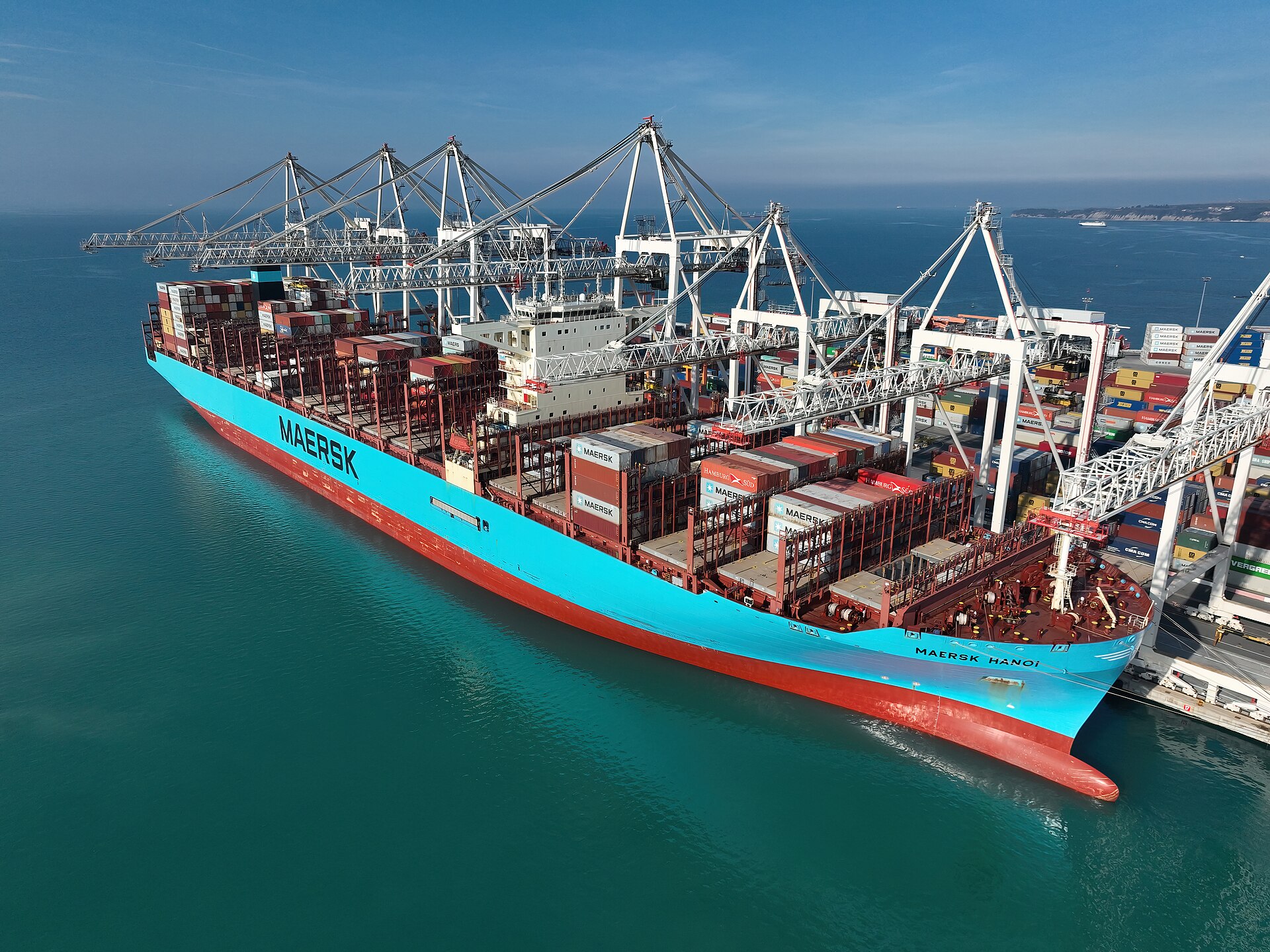
RUSI has argued that Riyadh expects the surge in Houthi attacks on sensitive Saudi infrastructure to push Washington toward renewed strikes on Houthi positions in Yemen, while the Arab Center DC described Riyadh’s aim as “to deter Houthi shipping interference without being drawn back into the same kind of war of attrition it fought from 2015 to 2022.” Those two assessments, taken together, describe a Saudi strategy that depends on external intervention to solve a problem that is, by its nature, resistant to external military solutions, because the Houthi campaign works not through destruction but through the anticipation of destruction. The Houthis have grasped, whether by design or by the evolutionary logic of a weaker force confronting a richer adversary, that a credible threat repeated often enough becomes indistinguishable from the event itself in the spreadsheets of insurers and logistics planners — and that those spreadsheets, not intercept rates, determine whether Saudi Arabia’s Red Sea economy functions or contracts.
The 6-Month Campaign and the Question of Deterrence
Reuters reported on November 18, citing two Western officials briefed by Saudi counterparts plus a third confirming source, that Saudi Arabia is preparing for the war against the Houthis to last up to six months, carrying the conflict well into 2027. Riyadh’s objective, according to those officials, is to see ground gains by its Yemeni government allies before any negotiations begin — a strategy that attempts to establish military gains on the ground before conceding anything at the table. The Saudi Foreign Ministry declined to comment on the report, and Reuters noted that Saudi and Yemeni forces are reorganising to protect Aden from Houthi advances and may shift the offensive to eastern fronts.
The six-month timeline — if it holds — raises a question the kinetic ledger cannot answer: whether Saudi Arabia can sustain the economic costs of persistent Houthi threat signalling for half a year without permanent damage to Jeddah’s standing as a commercial port and Riyadh’s credibility as a destination for international aviation. All three of Reuters’ sources said a deal to end the wider US-Iran war could allow the Yemen conflict to wind down, an acknowledgement that the Houthi campaign is not a standalone conflict but a function of the broader regional confrontation over Hormuz — and that Saudi Arabia’s ability to end it depends, in large part, on diplomatic outcomes it does not fully control.
Chatham House warned in an October assessment that “military pressure without a coherent political strategy will only reproduce the conditions that allowed the Houthis to consolidate their position” — a formulation that applies with particular force to the current moment, when the Houthis have retaken the Bab el-Mandeb coast, hold enough of Yemen’s Red Sea littoral to credibly threaten Saudi ports, and have demonstrated through the insurance and aviation data that their warnings carry market-moving weight even when their missiles do not connect. The coalition may intercept every ballistic missile aimed at Makkah and Riyadh, but it cannot intercept a JWC redesignation, an airline schedule change, or a premium reassessment — and those, not craters, are the instruments of Houthi strategic progress.
The Warning as Weapon
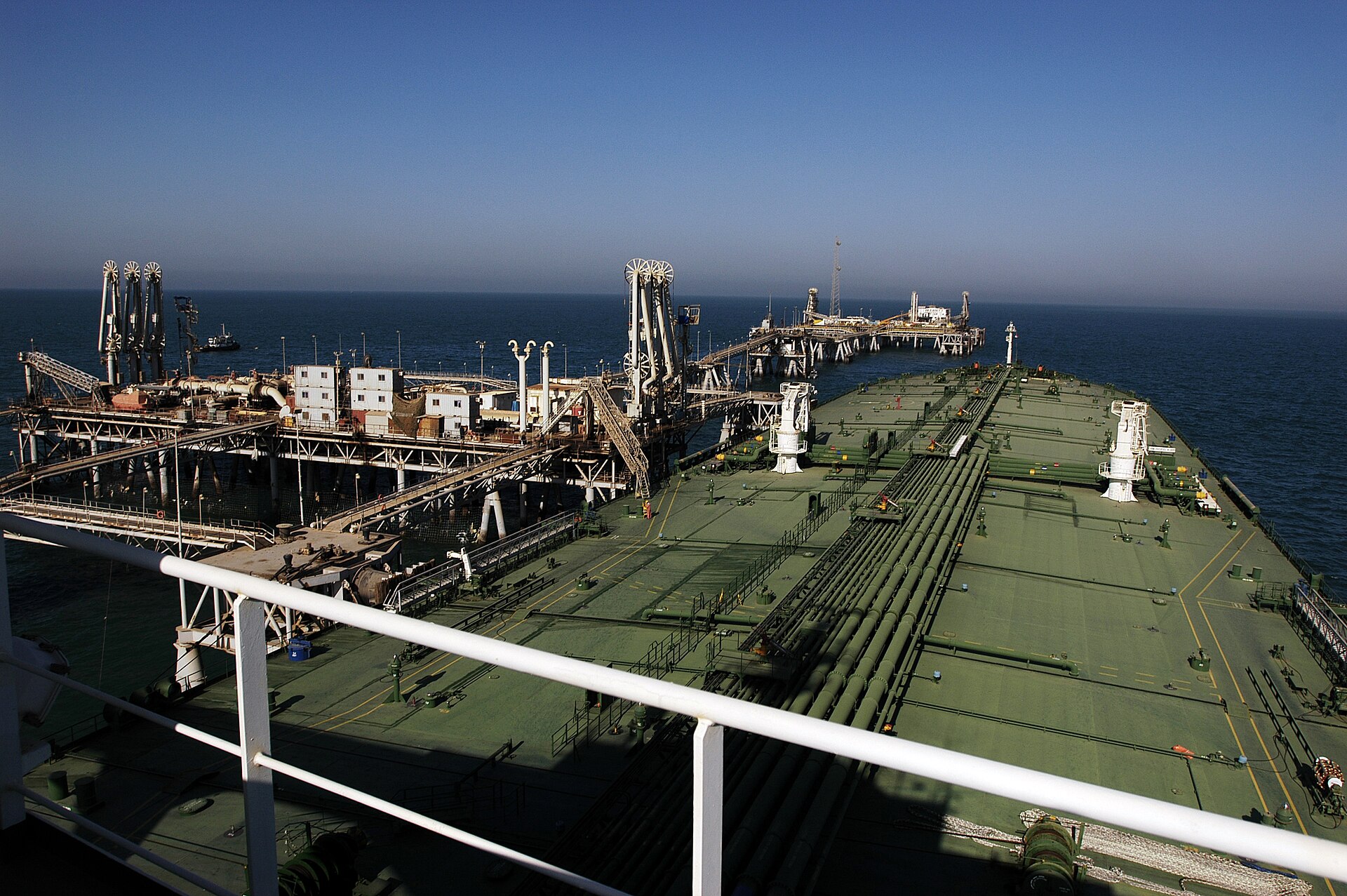
Zero shipping companies had publicly confirmed evacuating Jeddah as of November 23, and no confirmed Houthi strike had hit Jeddah port, and yet the port’s risk profile had been permanently altered by the interaction between Houthi threats, the JWC zone expansion, the premium spiral, and the visible evidence of what happens when Houthi missiles do reach their targets — as they did at KKIA in October, killing at least 14. The Houthis do not need to prove they can destroy Jeddah port; they need to prove, credibly and repeatedly, that they might try, and then wait for the market to do the rest.
When Saree declared Saudi airspace and Red Sea ports a “theatre of operations” on November 20, he was not issuing a threat so much as describing the economic reality that the insurance market had already priced in since July. The question for Riyadh is not whether the coalition can intercept the next missile — it almost certainly can — but whether interception, strikes on Hodeidah, and a six-month ground campaign can reverse the structural damage that warnings, claims, and intermittent kinetic successes have already inflicted on the kingdom’s commercial arteries, before the insurers, airlines and shippers conclude that the cost of staying has permanently exceeded the cost of leaving.
Frequently Asked Questions
Have Houthis previously followed through on targeting warnings against Saudi shipping?
Yes, and the turnaround time between declaration and action has been short. The Houthis declared a maritime blockade on Saudi vessels on July 20, 2026, per Al Jazeera and PBS/AP, and within two days — on July 22 — the group claimed an attack on the Saudi tankers Encelia and Layla, with Saudi Press Agency confirming the Encelia was hit and all crew were safe, according to Al Jazeera. By July 28, the Houthis said they had fired ballistic missiles at the Saudi tanker NCC Ghazal, and UKMTO reported an explosion with crew safe. The pattern of rapid follow-through means shipping companies and insurers treat Houthi warnings as operationally credible, not aspirational.
What operational capacity did Hodeidah port have before the November 20 coalition strikes?
Operations at Hodeidah had already fallen to about a quarter of pre-war capacity, according to a UN official cited by gCaptain. The UN monitoring mission that had overseen the port under the 2018 Stockholm Agreement ended on March 31, 2026, leaving no international supervisory presence at the facility when the coalition strikes hit. Yemen’s information minister said the port remained fully operational after the November 20 attacks, contradicting the coalition’s characterisation, but independent confirmation of either claim has not been published.
What is the Lloyd’s Joint War Committee and what does a port listing mean for shipping operators?
The Lloyd’s Joint War Committee is a committee of London market underwriters that maintains a Listed Areas map identifying sea zones where standard marine insurance policies exclude war-risk coverage by default. When a port enters the list, vessel operators must purchase separate war-risk endorsements before entering the zone — at whatever premium the current market is quoting. A listing does not prohibit operations; it transfers cost and risk decisions from insurers to operators. The committee can list an area based on assessed threat patterns before a confirmed strike occurs, as it did with Jeddah and Yanbu on July 29, 2026, per Insurance Journal — meaning the Houthis achieved a redesignation of Saudi Arabia’s two main Red Sea ports without landing a single missile in either harbour.
What would happen to Saudi crude exports if the East-West Pipeline or Yanbu were disrupted again?
The East-West Pipeline, which connects Saudi Arabia’s eastern oil fields to the Yanbu terminal on the Red Sea coast, has a capacity of approximately 7 million barrels per day, according to Aramco. The pipeline was suspended on September 12 after a drone attack — attributed to drones from Iraq, not the Houthis, per SPA and Al Jazeera — and restarted on September 22, per Reuters. Without the pipeline and its Yanbu terminus, Saudi Arabia’s crude exports would default to its Gulf coast terminals at Ras Tanura and Ju’aymah, which are served by tanker routes through the Strait of Hormuz — a waterway under US naval blockade since July 14, with daily transits running in single-digit to low-double-digit numbers per the JMIC, against a pre-war baseline of roughly 138 per day. Losing Yanbu would leave Riyadh’s exports squeezed between two disrupted chokepoints simultaneously.
The House of Saud Daily Briefing
Saudi Arabia's news in 3 minutes, every morning. Free. See today's issue