MANAMA — Bahrain submitted a draft Security Council resolution on April 6 demanding Iran cease all interference with transit passage through the Strait of Hormuz. Russia and China vetoed it the following day, 11-2-2. The resolution failed, and the GCC states that drafted it almost certainly knew it would. The veto was not the setback. The veto was the product.
Over seventeen days and six revisions, Bahrain — serving simultaneously as April’s rotating council president — shepherded a text that began with Chapter VII enforcement authority and ended as a non-binding appeal to “strongly encourage” defensive escort coordination. Every concession that stripped the resolution’s teeth was demanded by Moscow, Beijing, or Paris. By the time the sixth draft went “in blue” on April 6, the GCC bloc had what it needed: a public record in which two permanent members of the Security Council vetoed a resolution whose operative demand was UNCLOS Article 38 — transit passage, the most settled principle in international maritime law.
Table of Contents
- Seventeen Days, Six Drafts, One Outcome
- What Did Bahrain Concede to Guarantee the Veto?
- The Vote: 11-2-2
- Why Did Xi Call for Hormuz Reopening Thirteen Days After Vetoing It?
- Russia’s Counter-Resolution Problem
- What Does $0 in Toll Revenue Tell the General Assembly?
- The Mandatory Debate and the Record It Created
- The Precedent That Follows Veto Exhaustion
- FAQ
Seventeen Days, Six Drafts, One Outcome
Bahrain circulated the zero draft on March 21, coordinating with Kuwait, Qatar, Saudi Arabia, the UAE, and Jordan. The United States was not a formal co-sponsor. The sponsoring unit was a GCC-plus-Jordan bloc — a deliberate structural choice that framed the resolution as a regional demand rather than an extension of American policy.
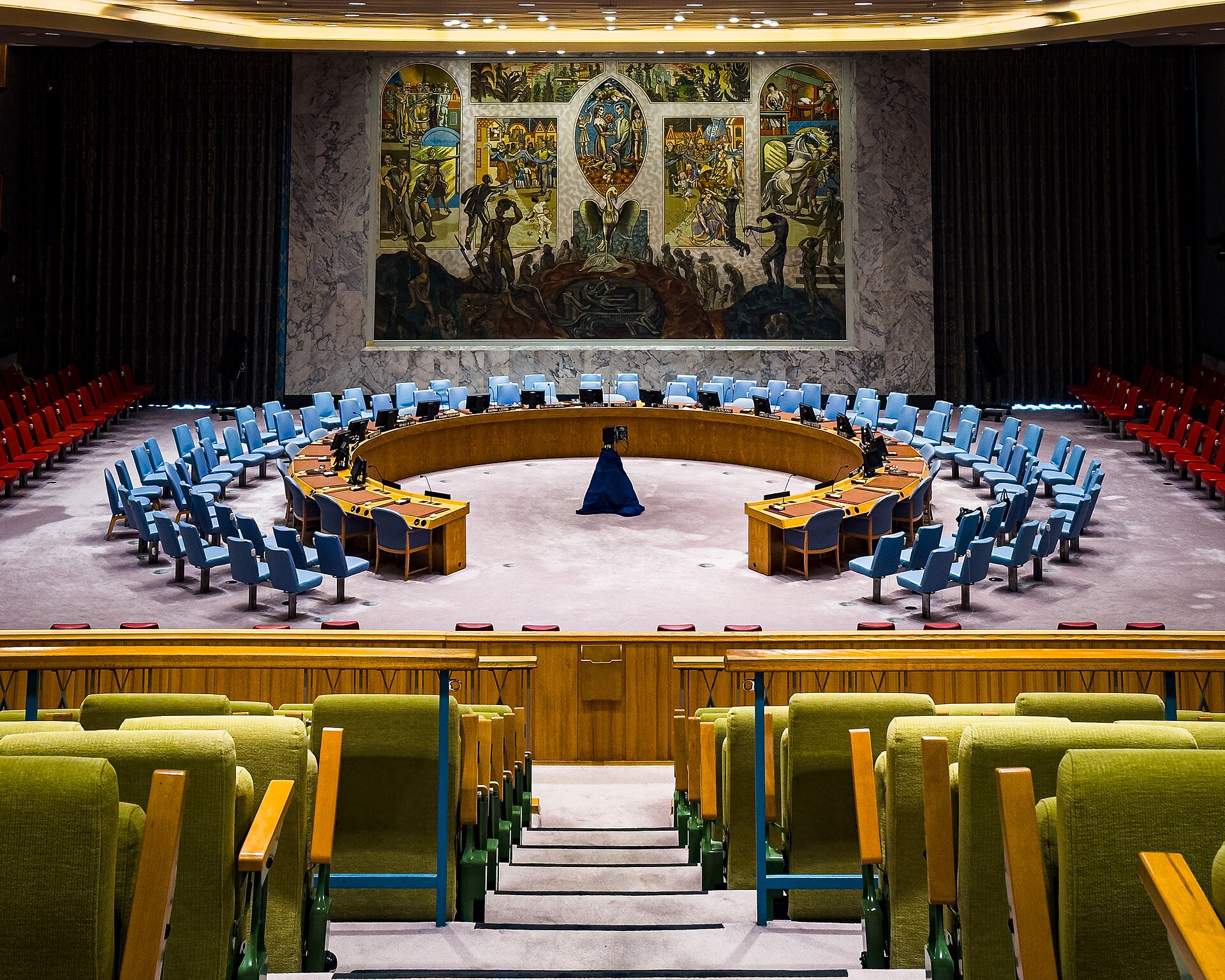
The initial text invoked Chapter VII of the UN Charter and authorized member states to use “all necessary means” to secure transit passage through Hormuz. That language — the most expansive legal authorization available short of a declaration of war — was the opening position, not the intended outcome. Five rounds of revision followed, with closed consultations on April 1, two silence procedures, and persistent objections from France and China on the use-of-force provisions.
France’s objection was narrow: Paris supported the operative demands but wanted the authorization limited to “strictly, purely defensive measures,” as Ambassador Jérôme Bonnafont put it. China’s objection was structural. Ambassador Fu Cong argued the draft risked providing “the legal veneer for unauthorized military operations” — a concern that applied to any text with enforcement teeth, regardless of how they were sharpened.
The sixth and final revision, placed in blue on April 6, stripped all Chapter VII enforcement language. “Strongly encourages” replaced “authorizes.” The text included a carve-out stating it “does not affect the rights, obligations, or responsibilities of member states under international law, including UNCLOS, in any other context” and added language that it “should not establish customary international law.”
The Middle East briefing 3,000+ readers start their day with.
One email. Every weekday morning. Free.
These were concessions to Russia and China — attempts to address their stated objection that the resolution would set a binding precedent. The concessions were accepted as technical improvements and rejected as insufficient in the same vote.
What remained after the erosion was the operative demand itself: “Iran immediately cease all attacks on shipping and any attempt to impede transit passage or freedom of navigation in the strait.” The demand invoked UNCLOS Article 38 by name. It was the one thing that could not be softened without rendering the resolution meaningless, and it was the one thing Russia and China refused to endorse.
What Did Bahrain Concede to Guarantee the Veto?
The drafting arc — from Chapter VII force authorization to a non-binding encouragement with multiple legal carve-outs — is the visible record of a negotiation that both sides understood was performative. Each concession served a dual purpose: it addressed the stated procedural objection while demonstrating that the substantive objection was irreducible. By the time Bahrain had surrendered every enforcement mechanism, the question facing Russia and China was whether they would veto a resolution that did nothing except reaffirm UNCLOS rights they themselves rely on.
They did. And the record of what Bahrain gave up to reach that point is now part of the diplomatic file.
The concessions were not random. The zero draft’s Chapter VII authorization was the element most likely to draw a veto on procedural grounds — any permanent member could object to force authorization without appearing to endorse IRGC navigation control. By including it in the opening draft and allowing it to be negotiated away, Bahrain ensured that the final veto could not be attributed to concerns about military escalation. The text that Russia and China killed was, by design, the least escalatory version possible. Ambassador Bonnafont of France acknowledged as much: “Freedom of navigation and maritime security in the Strait of Hormuz are essential,” he said, voting in favor. “The closure of the Strait constitutes a violation of the Law of the Sea.”
Resolution 2817, passed on March 11 with a 13-0-2 vote, had already established the baseline. That resolution — which drew formal expressions of support from more than 130 UN member states, an unusually broad coalition for a Security Council measure — condemned Iran’s “egregious attacks” and called on Tehran to “refrain from actions that impede lawful transit passage or freedom of navigation.” China and Russia abstained. The April 7 draft built directly on Resolution 2817’s language, extending its logic without changing its legal framework. The transition from abstention to veto — on substantially identical language — is itself a data point that Bahrain can deploy in every subsequent diplomatic forum.
The Vote: 11-2-2
Eleven members voted in favor. Russia and China vetoed. Colombia and Pakistan abstained.
Pakistan’s abstention came with a five-point plan developed with China, calling for “restoration of maritime security in the Strait.” Pakistan’s representative explained that “time and space must be allowed for ongoing diplomatic efforts” — language that echoed Beijing’s framing while stopping short of endorsing the IRGC’s position. Pakistan’s structural dilemma was visible: it had been serving as the primary ceasefire mediator since early April, and a vote for the resolution would have compromised its position as interlocutor with Tehran, while a vote against it would have contradicted its stated commitment to maritime freedom.
The vote fell hours before Trump’s stated Tuesday-night deadline for Iranian compliance. The timing was not coincidental. Ambassador Mike Waltz, speaking after the vote, framed the result in terms that served Washington’s escalation calendar: “The Strait of Hormuz is too vital to the world to be used as hostage, to be choked, to be weaponized by any one State.” The line that made the veto architecturally useful for the United States: Iran’s action of “taking the Strait of Hormuz hostage — that may be its last act.”
Iran’s Ambassador Amir Saeid Iravani praised the vetoes, calling them a prevention of the Security Council “being misused to legitimize aggression.” Tehran’s position — that IRGC “coordination” over Hormuz is a lawful treaty requirement under its own 10-point plan — went unchallenged in the chamber. No member state endorsed it, either.
Why Did Xi Call for Hormuz Reopening Thirteen Days After Vetoing It?
On April 20, Xi Jinping called MBS in a conversation reported by the South China Morning Post, Al-Monitor, and US News. Xi stated that the Strait of Hormuz “should maintain normal passage, as this serves the common interests of regional countries and the international community.” It was his first public call for Hormuz reopening.
The operative demand of the vetoed resolution was that Iran “immediately cease all attacks on shipping and any attempt to impede transit passage or freedom of navigation in the strait.” Xi’s April 20 language — “should maintain normal passage” — is a restatement of the same demand in softer diplomatic register. The substance is identical. No public Chinese explanation has addressed the gap between vetoing that demand on April 7 and endorsing it on April 20.
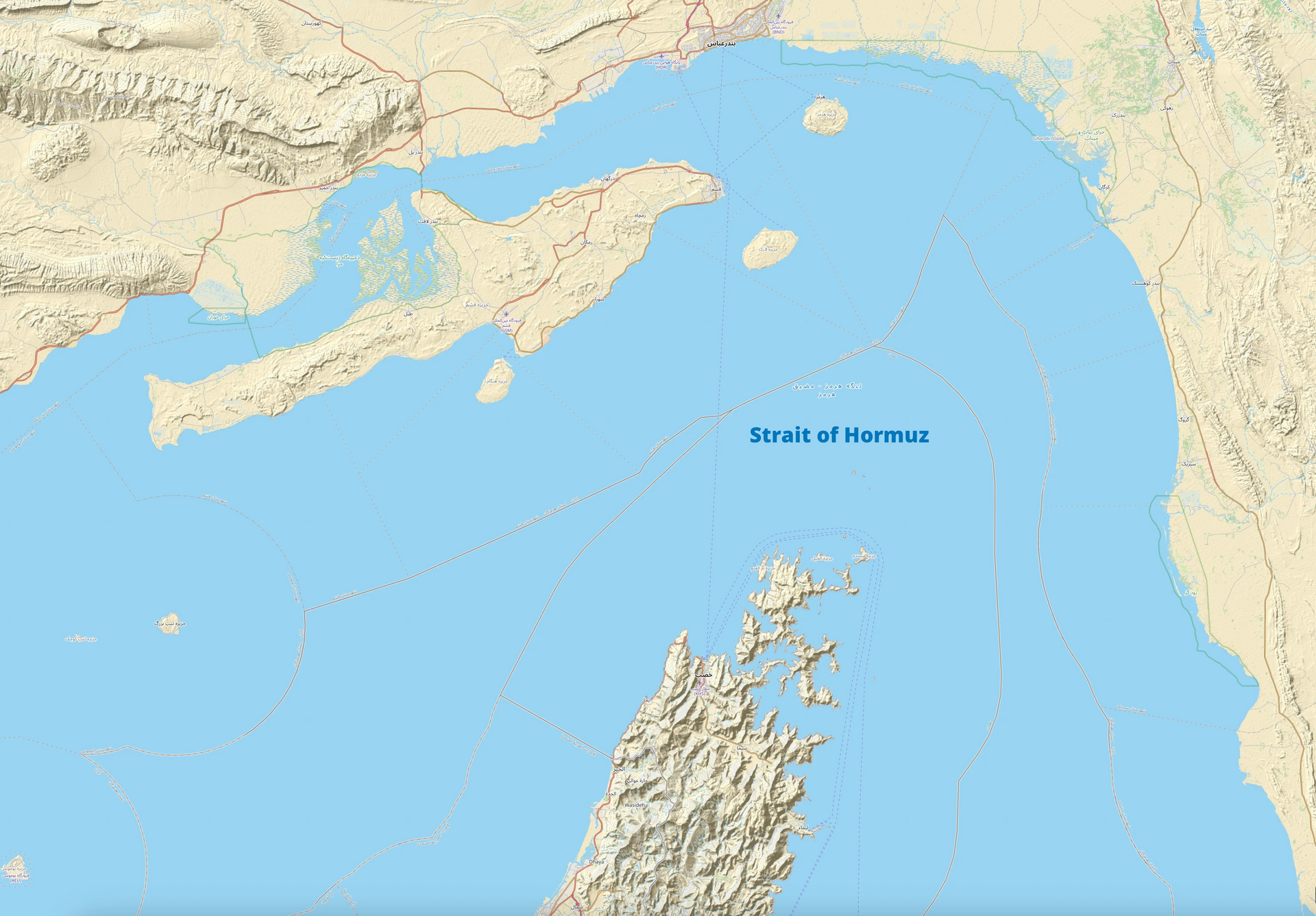
The structural explanation is not difficult to locate. China’s CNPC holds 4 million tonnes per annum of contracted Qatari LNG under a 27-year deal signed in June 2022. Sinopec holds another 4 MTPA from a November 2022 contract. Together, 8 MTPA of Chinese LNG supply transits Hormuz. Chinese crude imports through the strait account for roughly one-third of total Chinese crude supply. China holds approximately 1.3 billion barrels in onshore crude storage — around 310 days of seaborne import cover at current rates — but storage is a buffer, not a substitute for flow.
Beijing’s behavior in the thirteen-day gap between the veto and the Xi-MBS call was not inaction. China had already brokered selective IRGC transit arrangements for its own LNG tankers — the Al Daayen transit, settled in yuan via Kunlun Bank, with a reported $2 million IRGC fee. Beijing was simultaneously opposing a resolution demanding unconditional Hormuz reopening and paying tolls to the IRGC for selective passage that kept the control mechanism alive. Fu Cong’s stated ground for the veto — that the resolution would “send an extremely wrong message” while the US “threatened Iran’s survival” — did not mention China’s commercial stake in the outcome it was blocking.
The Xi-MBS call recalibrated without resolving the contradiction. Xi endorsed the demand he had vetoed, but bilaterally rather than multilaterally — preserving China’s veto as a diplomatic asset while pursuing the same outcome through a channel that does not create Security Council precedent. For the GCC, the thirteen-day sequence is the exhibit: Beijing vetoed Hormuz reopening at the UN and called for Hormuz reopening in private, and the only difference between the two positions was the forum.
Russia’s Counter-Resolution Problem
Russia and China submitted an alternative draft resolution calling for “de-escalation of ongoing hostilities,” “easing tensions,” and “a return to the path of diplomacy.” The text did not name Iran. It did not demand cessation of IRGC navigation-control operations. It was not brought to a vote.
Ambassador Vassily Nebenzia’s stated objection to the Bahraini resolution was framing: the text presented Iranian actions as “the sole source of regional tensions” while “illegal attacks by the United States and Israel were not mentioned at all.” He called the resolution “unbalanced, inaccurate and confrontational” and warned it would “generate a dangerous precedent for international law, for International Law of the Sea.”
The counter-resolution’s own language undermined this position. The Russian-Chinese draft called for “navigation rights and freedoms” — a phrase that implicitly contradicts the IRGC’s “full authority to manage the Strait” declaration of April 5 and April 10. If navigation rights and freedoms are to be restored, something must be obstructing them. The counter-resolution acknowledged the obstruction while refusing to name the source. Nebenzia did not provide a legal carve-out for IRGC operations. Neither did Fu Cong. Their stated grounds were procedural — imbalance, escalation risk, failure to capture “root causes.” The substantive question — whether the IRGC has the right to control transit through an international strait — went unanswered in both the veto and the alternative text.
Russia’s own Hormuz exposure is less direct than China’s but not negligible. Moscow’s interest in elevated oil prices — the war had pushed Brent above $100, with spikes past $110 — creates an incentive to sustain disruption. But Russia also depends on unimpeded transit through the Turkish Straits, the Danish Straits, and various international waterways where the UNCLOS transit-passage regime is the legal foundation of its commercial shipping. Endorsing a precedent in which a coastal state can claim “full authority” over an international strait is a concession Russia has never made for the Bosphorus or the Baltic approaches. Nebenzia’s veto avoided that endorsement, but his counter-resolution’s own language — “navigation rights and freedoms” — conceded the principle he was ostensibly protecting Iran’s right to violate.
What Does $0 in Toll Revenue Tell the General Assembly?
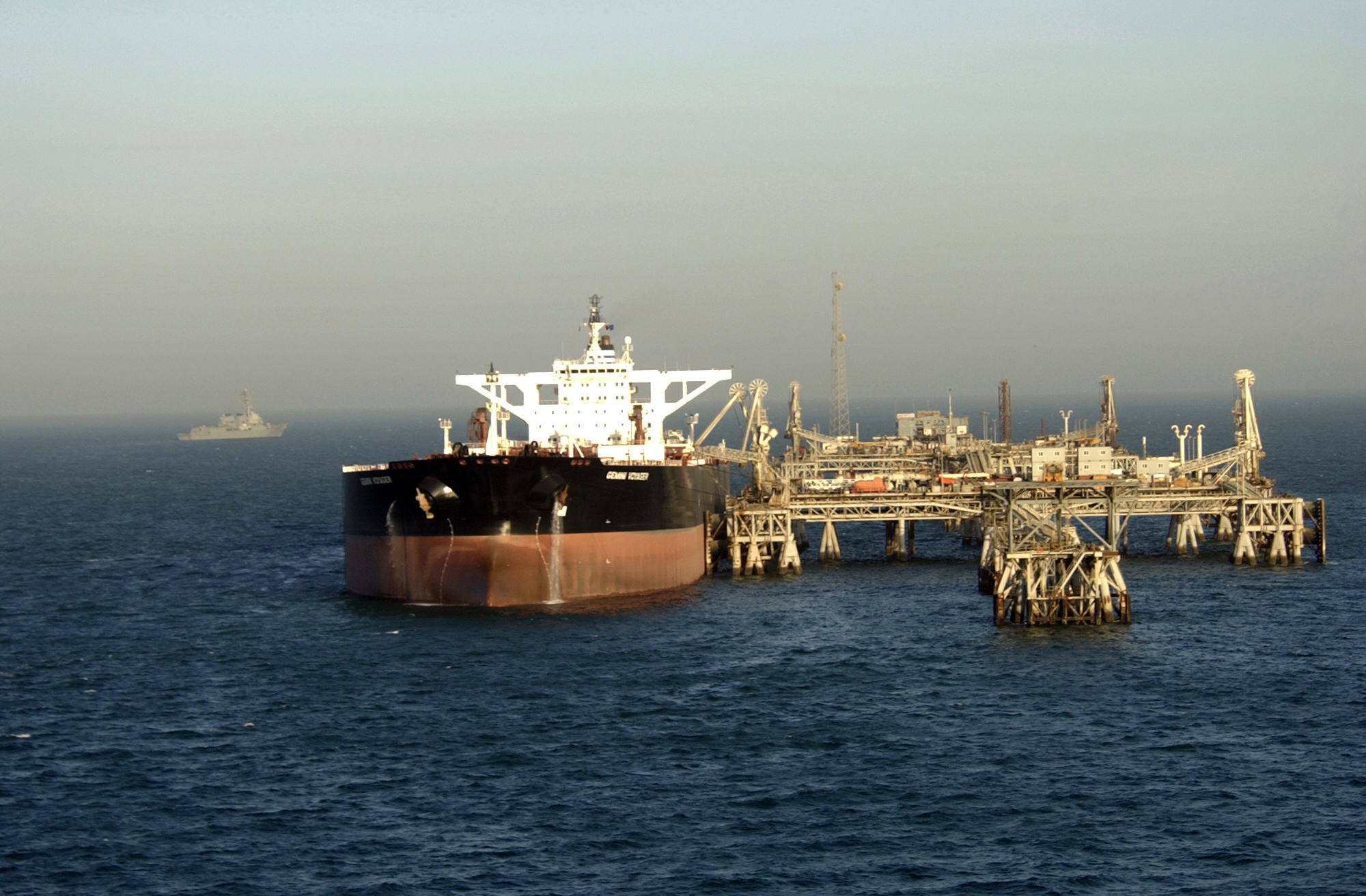
The IRGC declared “full authority to manage the Strait” on April 5 and again on April 10. Iran’s 10-point plan frames IRGC “coordination” over Hormuz as a treaty requirement — Point 7 demands that any agreement formalize IRGC oversight of navigation as a permanent condition. In the 36 days following the initial declaration, the IRGC issued 60 permits and sent 8 payment requests, according to maritime tracking data compiled by Kpler and Lloyd’s List Intelligence. Total toll revenue collected: zero.
UNCLOS Article 26 prohibits charges on foreign ships for transit passage. UNCLOS Article 38 grants all ships and aircraft the right of transit passage through straits used for international navigation — continuous, expeditious, and non-suspendable. The 1949 Corfu Channel ICJ ruling established that warships have the right of innocent passage through international straits that cannot be denied in peacetime. The IRGC’s toll mechanism — $1 per barrel, which would amount to $2 million per laden VLCC — has no basis in any of these frameworks.
The $0 figure is not evidence of failure to enforce. It is evidence of the gap between the IRGC’s administrative declaration and its operational capacity to impose a legal regime that the entire international maritime order rejects. The double blockade that Bloomberg described on April 26 — in which the US controls the Arabian Sea entry and the IRGC controls the Gulf of Oman exit — has reduced Hormuz transits to 45 since the April 8 ceasefire, roughly 3.6 percent of the pre-war baseline. But the IRGC’s revenue from that control is zero, because no state and no shipping company has recognized the toll’s legitimacy. The control is physical, not legal. The resolution Bahrain submitted asked the Security Council to say so on the record. Russia and China prevented it.
GCC Secretary-General Jasem Al Budaiwi framed the stakes in terms that connected the toll fiction to its humanitarian consequences: “We cannot accept economic terrorism affecting our region and the world.” By IEA estimates, Iran’s disruption had removed approximately 400 million barrels from global markets — roughly four days of global oil supply — with Brent peaking above $110 per barrel, more than 50 percent above pre-conflict levels.
The Mandatory Debate and the Record It Created
Under the April 2022 reform requiring General Assembly debate within 10 working days of any Security Council veto, the GA convened on April 16 to discuss the failed resolution. The debate created a second public record — broader than the Security Council’s 15-member vote — in which states that depend on Hormuz transit could register their positions.
The EU’s Ambassador Stavros Lambrinidis called the disruption “the most significant humanitarian supply chain disruption since COVID — comparable to the shock caused by Russia’s blockade of the Black Sea.” The EU delegation’s statement included data that extended beyond oil: fertilizer prices had risen 20 to 35 percent in Latin America, global urea prices were up 50 percent, and 45 million additional people faced acute hunger risk in 2026. These figures reframed Hormuz from a Gulf shipping issue to a global food-security crisis — a reframing that serves the GCC’s interest in broadening the coalition of states that view the IRGC’s actions as intolerable.
ASEAN transit-passage dependents, whose economies rely on the UNCLOS regime that the IRGC’s “full authority” claim threatens, participated in the debate alongside the GCC and EU blocs. The GA debate does not produce a binding resolution, but it produces a vote count and a verbatim record. Daniel Forti of the International Crisis Group noted that Bahrain would “secure a clear diplomatic rejection of Iran’s obstruction of the Strait, even if they fell short of obtaining authorization for the use of force.” The GA forum was where that broader rejection was assembled.
The debate also forced Russia and China to defend their vetoes before a body where they hold no veto power. In the Security Council, two votes were sufficient to kill the resolution. In the General Assembly, the arithmetic inverted: states representing the overwhelming majority of global shipping tonnage, global oil imports, and global food supply chains could register their opposition to the IRGC’s position without obstruction from Moscow or Beijing.
The Precedent That Follows Veto Exhaustion
In 1999, Russia vetoed Security Council resolutions authorizing intervention in Kosovo. NATO acted anyway. The International Commission on Kosovo — an independent body convened by Sweden — subsequently declared the intervention “illegal but legitimate.” The formulation established a precedent: exhaustion of Security Council mechanisms through veto does not prevent unilateral or coalition action. It enables it, by demonstrating that the multilateral path was attempted and blocked.
Bahrain’s drafting strategy followed the same architecture. The zero draft’s Chapter VII language was never expected to survive. Its inclusion created a negotiating space in which every concession — from “all necessary means” to “strongly encourages,” from enforcement to exhortation — was documented, timestamped, and attributed to the states that demanded it. The final text was stripped to its minimum defensible content: a reaffirmation of UNCLOS transit-passage rights that any maritime state should support. The veto of that minimum text is the diplomatic equivalent of proving that the Security Council cannot deliver the outcome that international law requires.
What follows from that proof is the question the veto was designed to raise. Forti’s observation that the resolution’s defeat would “secure a clear diplomatic rejection” while falling short of force authorization points to the interim step: rejection as predicate. The Kosovo precedent did not authorize NATO’s intervention in advance. It provided the retrospective framework for declaring it legitimate after the fact. The Bahrain resolution’s failure creates a similar predicate — a documented record of exhaustion that can be cited by any coalition that subsequently acts outside the council’s framework.
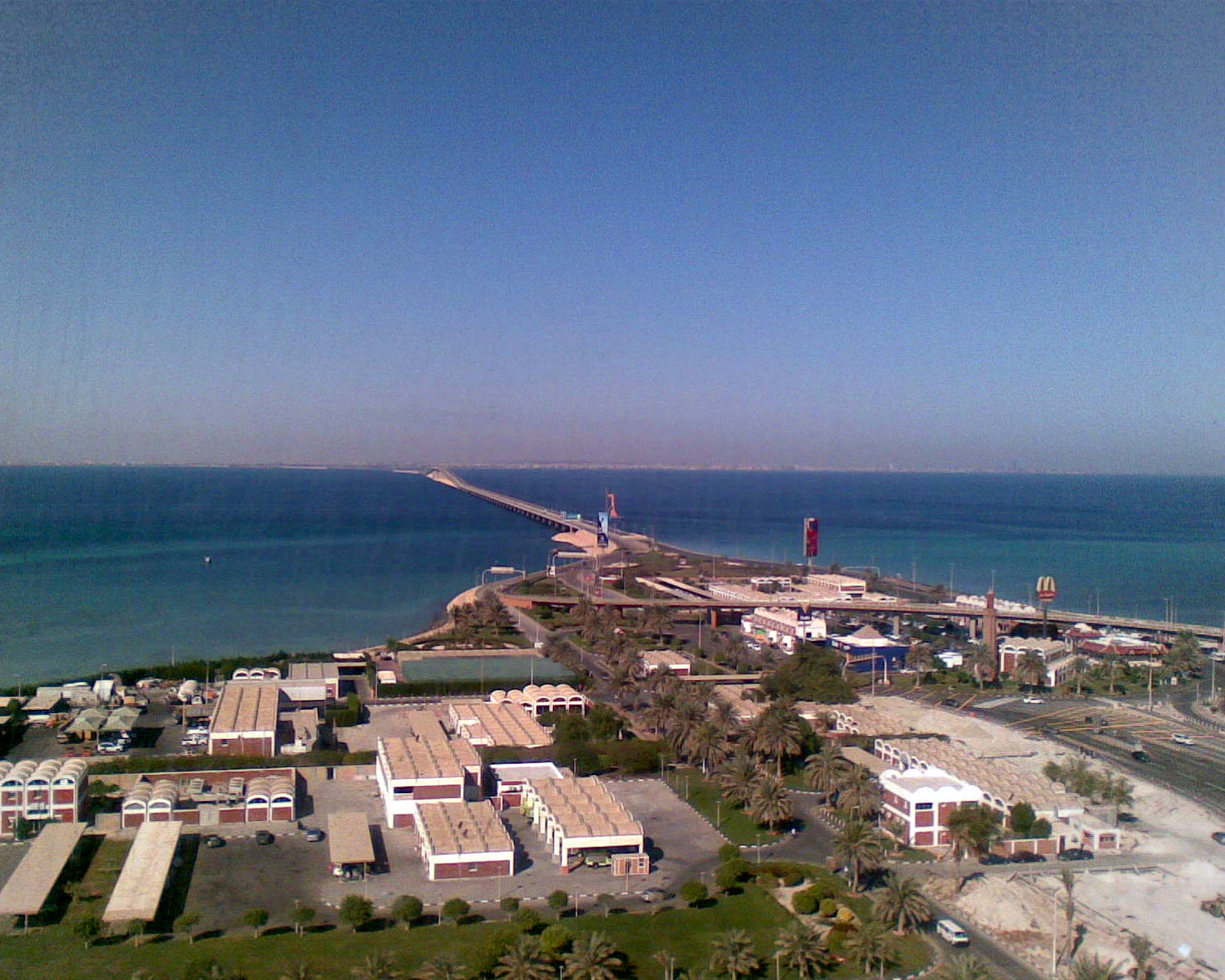
Bahrain’s own position makes the predicate personal. The Fifth Fleet is headquartered at NSA Bahrain. Bahraini airspace has been closed since February 28. The King Fahd Causeway — sole international access corridor since that airspace closure — appeared on the IRGC’s counter-target list of bridges and infrastructure. SATCOM terminals at NSA Bahrain were destroyed in the February 28 strikes. For Bahrain, the resolution was not an abstraction about maritime law. It was a request for international endorsement of the legal regime that protects the strait on which the country’s physical survival depends.
The request was denied, and the denial is now part of the diplomatic record — available to any coalition that decides the Security Council has exhausted what it can offer.
FAQ
What legal precedent does the 1949 Corfu Channel case set for Hormuz?
The International Court of Justice ruled in Corfu Channel (United Kingdom v. Albania) that coastal states cannot deny warships the right of innocent passage through international straits, even during periods of tension. The ruling established that Albania was liable for mine damage to British warships transiting the Corfu Channel despite Albanian objections. Applied to Hormuz, the precedent means that Iran’s coastal-state status does not grant it authority to condition, tax, or deny transit — the right belongs to the transiting vessel, not the littoral state. The ICJ’s ruling has been cited in every subsequent UNCLOS negotiation on strait transit regimes and has never been overturned or narrowed.
How does Bahrain’s dual role as UNSC president and resolution sponsor affect the diplomatic record?
Bahrain held the rotating presidency for April 2026, giving it control over the council’s agenda, scheduling, and procedural management during the same month it submitted the resolution. This dual role — procedurally unusual but not unprecedented — meant Bahrain could sequence the consultations, silence procedures, and vote timing to maximize diplomatic pressure. The presidency also gave Bahrain the chair during the vote itself, a visual signal to the General Assembly and global media that the council’s own presiding state considered the issue urgent enough to sponsor the text personally. The April 2022 GA veto-debate mechanism then guaranteed a second forum where Bahrain could present its case without the structural constraint of the P5 veto.
Did any UNSC member explicitly endorse the IRGC’s claim to manage Hormuz transit?
No. Neither Russia nor China offered a legal defense of the IRGC’s “full authority” declaration or its toll mechanism. Nebenzia’s objection was framing — that the resolution failed to mention US and Israeli strikes. Fu Cong’s objection was procedural — that adoption would “add fuel to the fire.” Iran’s Ambassador Iravani characterized IRGC operations as “lawful measures” in self-defense, but he was speaking as a non-member observer, not a voting participant. The distinction matters: the IRGC’s legal position — that its coordination over Hormuz is a treaty requirement — received zero affirmative endorsement from any of the 15 council members, including the two that vetoed the resolution opposing it.
What is the Iran-GCC asymmetry on UNCLOS transit passage?
Iran ratified UNCLOS in 1985 but has never accepted that Part III’s transit-passage regime supersedes its claimed sovereign rights over Hormuz. Tehran’s 10-point plan asserts that any agreement must include IRGC “coordination” of strait navigation as a permanent treaty condition — a position incompatible with Article 38’s grant of non-suspendable transit passage to all vessels. The GCC states, which ratified UNCLOS between 1985 and 1996, accept the transit-passage regime without reservation. The asymmetry means that any resolution reaffirming UNCLOS Article 38 is, by structural necessity, a resolution opposing Iran’s claimed authority — which is why the text’s language could not be softened below the transit-passage threshold without becoming meaningless, and why Russia and China could not allow it to pass without implicitly endorsing the UNCLOS framework over Iran’s alternative.
How does the Iran-Houthi Red Sea toll mechanism relate to the Hormuz UNSC vote?
Iran’s attempt to establish toll collection at Hormuz has a parallel track in the Red Sea, where Houthi forces — armed and directed by Iran — have imposed de facto transit fees on commercial shipping through the Bab el-Mandeb strait. The two mechanisms together represent a doctrine of chokepoint monetization: extract revenue from international shipping lanes by combining physical threat with administrative formalization. The UNSC resolution addressed only Hormuz, but the GCC’s framing of the issue as “economic terrorism” — Al Budaiwi’s phrase — implicitly encompasses both chokepoints. If the Security Council cannot act on the more clear-cut Hormuz case, where UNCLOS rights are unambiguous and the obstruction is admitted, the precedent for addressing the murkier Red Sea mechanism becomes even weaker.
The diplomatic failure at the Security Council prompted IMO Secretary-General Dominguez to brief the Council directly on the humanitarian toll: 20,000 seafarers remain trapped on 1,600 vessels at Hormuz, with the IMO pressing for a SOLAS-anchored resolution as the institutional track that the veto has now foreclosed.
On April 28 the Council reconvened for an emergency debate on Hormuz maritime security that drew 80+ member states, with UN Secretary-General Guterres warning of a global food emergency and Saudi Arabia formally accusing Iran on the Security Council floor — the widest multilateral pressure on the Strait since the veto foreclosed the resolution track.