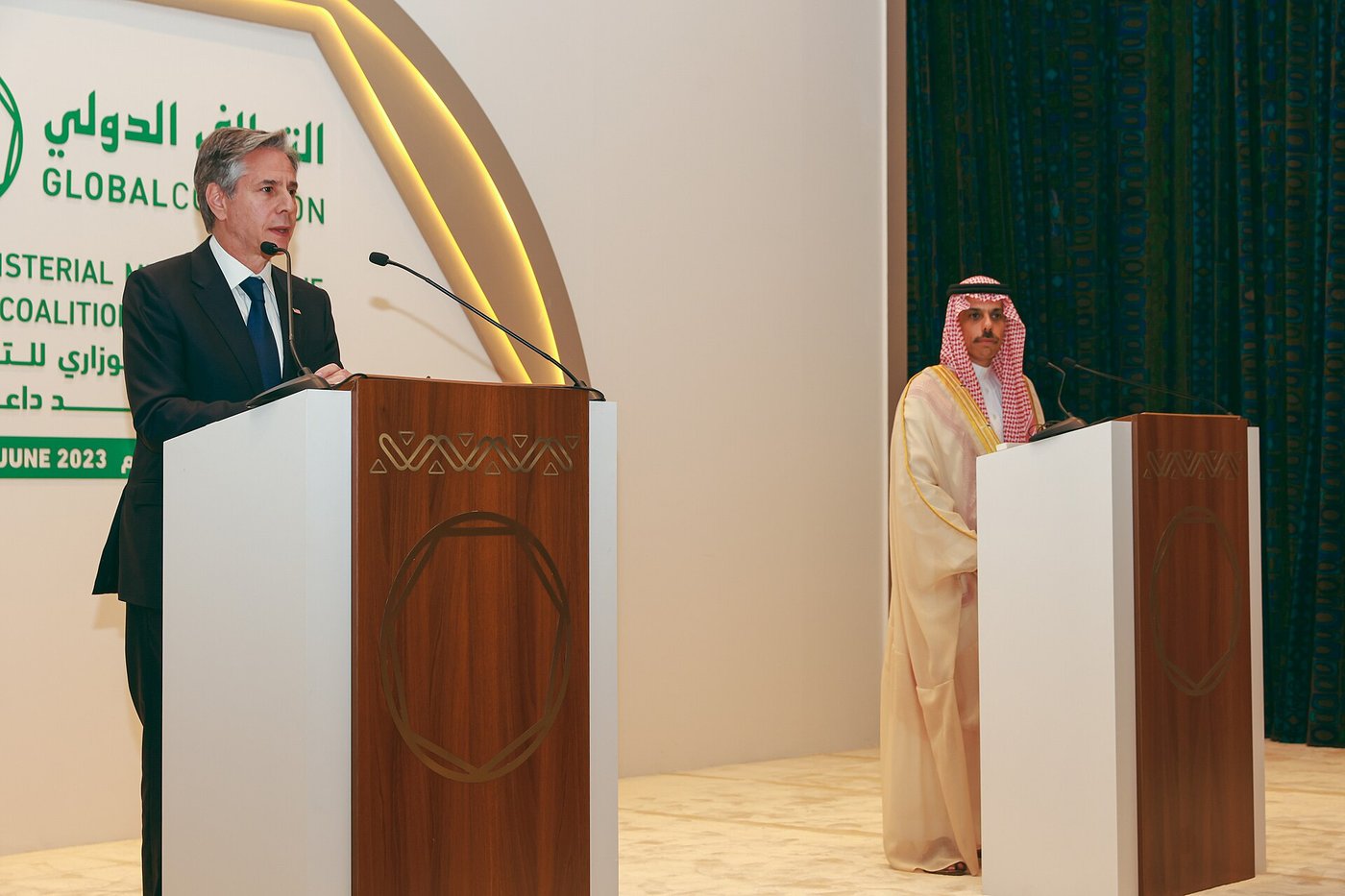
RIYADH — Saudi Foreign Minister Prince Faisal bin Farhan has spoken to his Iranian counterpart Abbas Araghchi at least nine times since April 2026 — a period during which Iran struck a Saudi-flagged supertanker, hit military bases in two GCC member states for the first time since Iraq invaded Kuwait, and declared the Strait of Hormuz closed until Washington stops bombing. On July 7, the day IRGC forces struck the VLCC Wedyan sixteen nautical miles east of Khor Fakkan, Araghchi called Faisal to discuss “the latest developments.” Saudi Arabia’s Foreign Ministry condemned the attack “in the strongest terms” and held Tehran “fully responsible for all resulting damage and consequences,” citing UNSC Resolution 2817 — and at no point in the condemnation statement did it mention that its foreign minister had spoken to the man whose government ordered the strike.
The condemnation and the call are not contradictions. They are load-bearing partners in a structure Saudi Arabia has built to manage a war it cannot stop, cannot join, and cannot afford to be excluded from — a structure in which public outrage and private contact serve different audiences, different functions, and the same strategic objective: keeping Riyadh relevant to an outcome it has no formal seat to negotiate.
Table of Contents
- Nine Calls in Ninety-Four Days of War
- The July 7 Test: Strike the Ship, Call the Minister
- How Does Saudi Arabia Condemn and Communicate Simultaneously?
- What Does Iran Gain From Calling After Every Strike?
- The Sakhir Declaration’s Forty-Five-Year Silence
- Why Has No GCC State Demanded Riyadh Hang Up?
- The Cover Architecture
- The Only Line Riyadh Controls
- Does the Channel Reduce Violence or Enable It?
- FAQ
Nine Calls in Ninety-Four Days of War
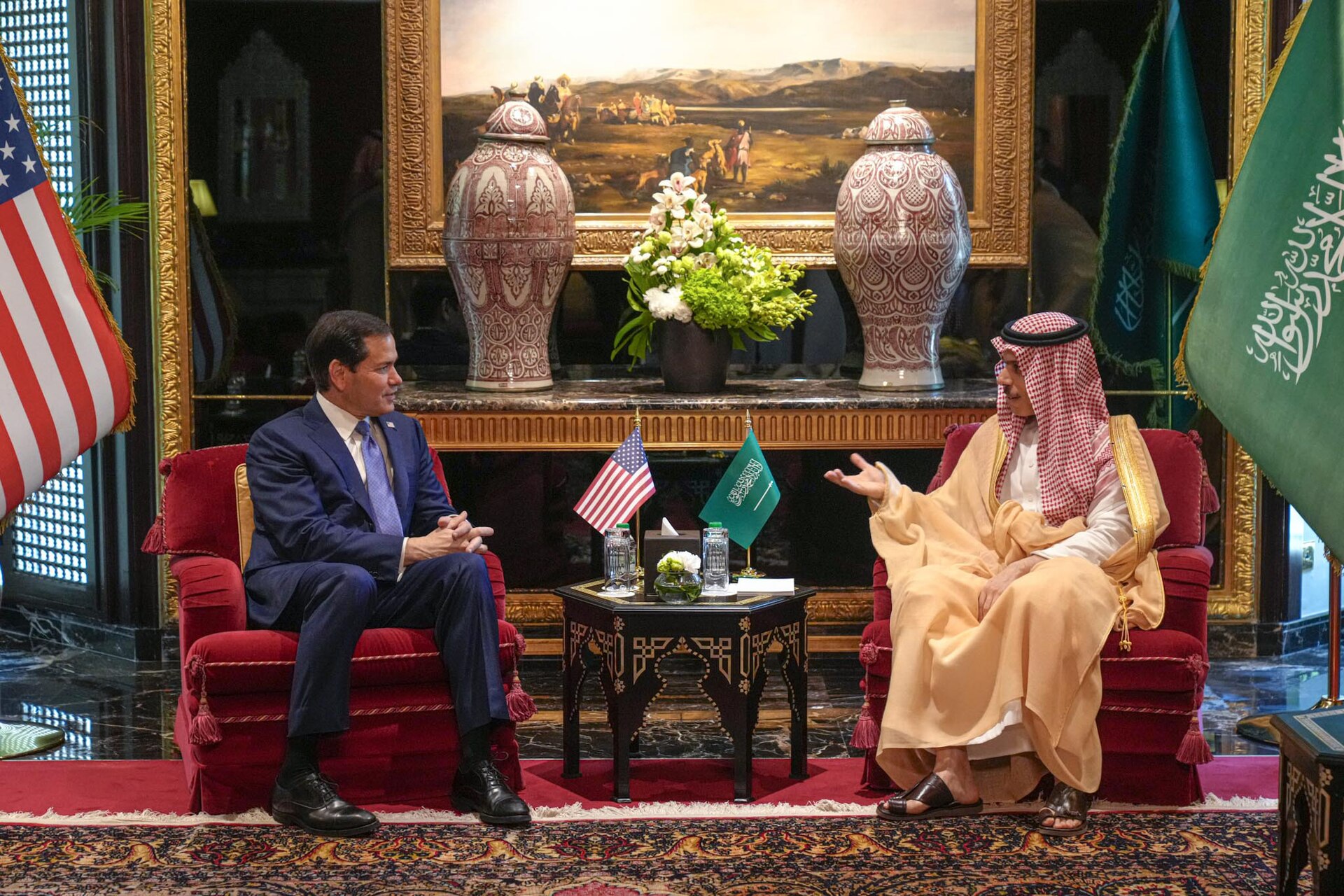
The documented Araghchi-Faisal call sequence since the conflict erupted runs: April 9, April 26, May 6, May 11, June 15, June 18, June 24-25, July 7, and July 10. Nine confirmed calls across three distinct phases — immediate post-strike crisis management in April, the 35-day silence between May 11 and June 15 that coincided with the most intense period of Saudi domestic vulnerability, and the accelerating frequency since the Iran-US MOU agreement that has produced five calls in twenty-five days. The cadence alone tells a story: Riyadh and Tehran speak roughly every ten days during active hostilities, with the intervals compressing precisely when escalation accelerates.
The first call, April 9, came after Iran’s retaliatory strikes on Gulf neighbours, and Saudi Arabia described it publicly as reviewing “ways to reduce tensions” — language so deliberately anodyne it could have described a conversation about parking regulations. By June 15, the tone had shifted: Faisal “welcomed the agreement reached between the Islamic Republic of Iran and the United States” and stressed “the Kingdom’s aspiration to achieve peace,” language that positioned Saudi Arabia as a stakeholder in an agreement to which it was not a party, negotiated in a forum where it held no seat, on terms it had no power to amend.
The June 25 call — Day 10 of the MOU’s 60-day window — covered “progress implementing agreed understandings,” which is diplomatic code for Faisal asking Araghchi what Tehran has actually agreed to and whether any of it will protect Saudi shipping. The channel’s seamless transition from crisis-management mode to normalization-management mode confirms something analysts have been reluctant to say plainly: this is not a hotline activated by emergency. It is a standing bilateral instrument that operates continuously regardless of whether Iran is actively striking Saudi assets, Saudi allies, or Saudi-adjacent waterways.
| Date | Context | Iranian Framing | Saudi Public Response |
|---|---|---|---|
| April 9 | Post-Iranian retaliatory strikes on Gulf states | “Reducing tensions” | Reviewing “ways to reduce tensions” |
| April 26 | Continued strikes / Saudi covert operations period | Regional developments | No separate statement |
| May 6 | Pre-Hajj security period begins | Regional dialogue | No separate statement |
| May 11 | Final pre-silence call | Bilateral coordination | No separate statement |
| June 15 | Iran-US MOU signed | Briefing regional partners | Faisal “welcomes” MOU |
| June 18 | MOU implementation begins | Ongoing consultations | No separate statement |
| June 24-25 | Day 9-10 of MOU window | Progress review | “Importance of joint efforts” |
| July 7 | VLCC Wedyan struck by Iran | “Latest developments” | Condemnation “in strongest terms” — separate |
| July 10 | Post-IRGC strikes on Bahrain/Kuwait bases | “Fresh US attacks against Iran” | Condemnation citing “loss of trust” — separate |
The July 7 Test: Strike the Ship, Call the Minister
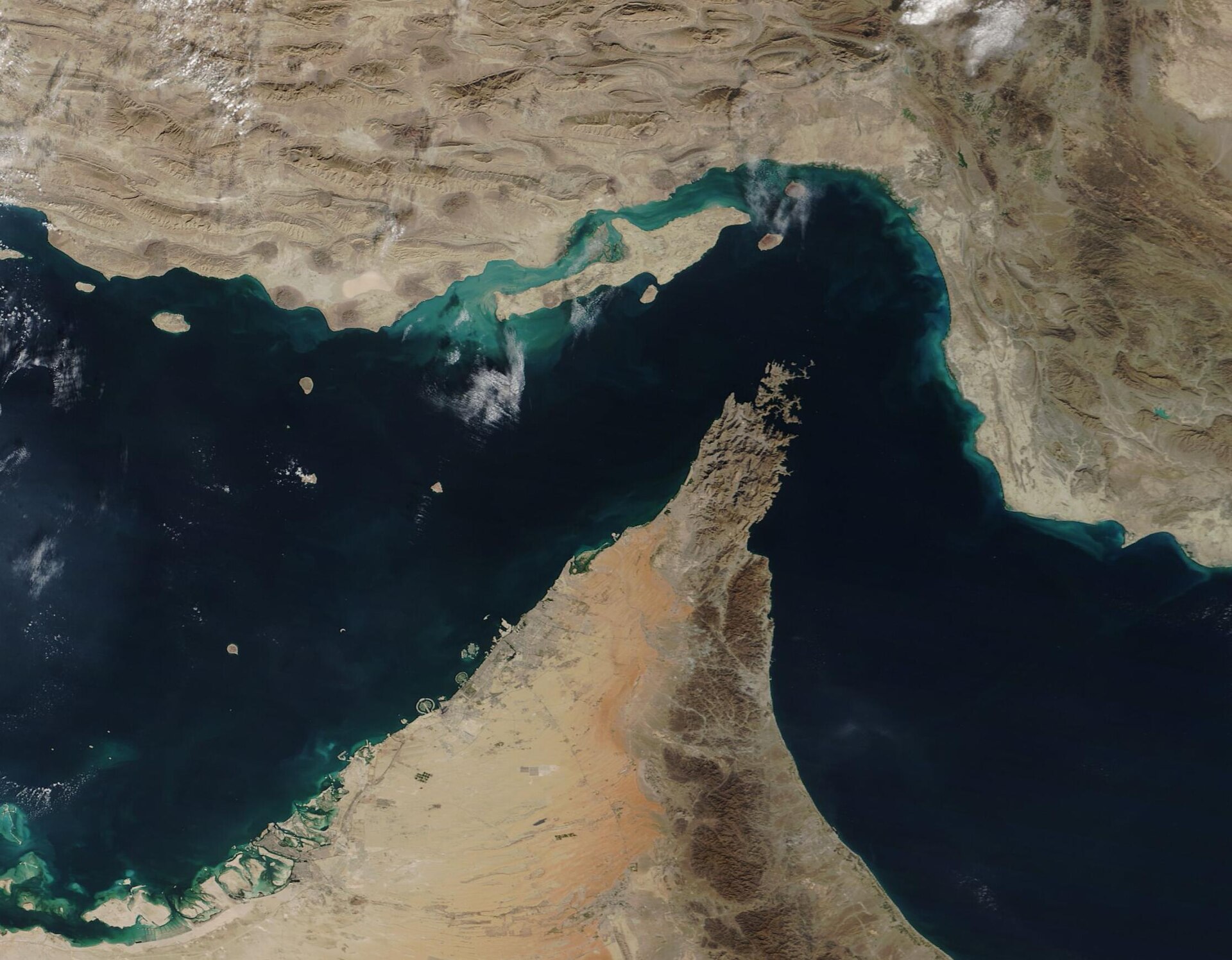
The July 7 sequence deserves isolation because it is the cleanest example of the structural paradox at work. Iranian naval forces struck the Wedyan — a Saudi-flagged Very Large Crude Carrier — sixteen nautical miles east of Khor Fakkan, inside waters Saudi Arabia considers its sovereign commercial corridor. Iran’s Mehr News Agency described the strike as “unauthorized passage” enforcement, a framing that allowed Tehran to hit a Saudi asset while maintaining the legal fiction that the action targeted a regulatory violation rather than a sovereign state. Within the same 24-hour window, Araghchi called Faisal to discuss “the latest developments,” and simultaneously posted publicly that “negotiations on a final deal will not commence if threats continue” — making the call both a private reassurance mechanism and a public coercive signal aimed at Washington.
The Middle East briefing 3,000+ readers start their day with.
One email. Every weekday morning. Free.
Saudi Arabia’s response was bifurcated with surgical precision: the Foreign Ministry condemnation cited UNSC Resolution 2817, held Iran “fully responsible,” and demanded accountability. Neither document referenced the other. Two instruments, operating in parallel, addressed to different audiences — the condemnation to the Saudi public, the GCC, and Washington; the call to Tehran, and to the internal Saudi calculation about whether this war has crossed the threshold from manageable to existential.
Faisal’s March 2026 warning that “patience in the Gulf is not unlimited” remains the strongest public language he has used — and he has not restated or escalated it since, despite four months of continuous provocation that would, under any conventional interpretation of diplomatic signalling, have demanded escalation. The warning’s non-repetition is itself a signal: Riyadh set a red line in March, Iran has crossed it repeatedly, and the consequence has been more phone calls rather than fewer.
How Does Saudi Arabia Condemn and Communicate Simultaneously?
The short answer is that Saudi condemnation language is designed to be legally and rhetorically maximal while remaining operationally inert — a formula perfected over four months of practice. “In the strongest terms” is the most forceful language available in diplomatic vocabulary; “fully responsible” establishes legal liability; UNSC Resolution 2817 invokes international law. Together they constitute the ceiling of verbal response, which means they simultaneously signal that the verbal response is all that will follow. If you have already deployed the strongest available language and nothing happened, the language has defined its own limits.
The condemnation’s function is tripartite: domestic (demonstrating to the Saudi public that the government does not accept Iranian aggression), US-facing (preserving alignment with Washington’s characterisation of Iranian behaviour), and GCC-facing (maintaining the collective condemnation formula that all six states have adopted). What it does not do — and what it is specifically engineered not to do — is require the FM channel to go dark. Saudi Arabia has created condemnation language that coexists with diplomatic contact because the language addresses audiences that do not expect the contact to cease, and the contact addresses an audience that does not expect the language to matter.
Dr. Aziz Alghashian, writing for the Gulf International Forum in July 2026, noted that “the readout after Iran’s ambassador was summoned to the Saudi foreign ministry made clear that Saudi Arabia will not stand idly by,” but added the critical qualifier that “any transition from strategic patience and restraint to offensive measures will likely be predicated on two factors” — war duration and escalation intensity. The two-factor framework is revealing because it treats the threshold as movable rather than fixed, which means every Araghchi-Faisal call is implicitly a negotiation about where that threshold currently sits.
What Does Iran Gain From Calling After Every Strike?
Tehran’s readouts tell you everything about what Iran believes this channel accomplishes. Every confirmed call is framed by Iran’s MFA as part of “Tehran’s ongoing diplomatic contacts with regional countries” — language that consistently positions Iran as the outreach initiator and Riyadh as the reactive recipient, regardless of whether that accurately describes who dialled whom. The framing matters because it constructs a narrative in which Iran maintains diplomatic relationships even while conducting military operations against those same partners’ assets and allies — a narrative that serves Tehran’s domestic audience (the regime is not isolated), its international audience (diplomacy continues), and its operational planning (the channel provides real-time tolerance data).
The July 10 call is the most instructive case. Iran had struck military bases in Kuwait and Bahrain on July 8-9 — the first external military attack on GCC member-state territory since Iraq invaded Kuwait in 1990 — and Faisal had publicly stated that Iran’s attacks had caused “a significant loss of trust in Tehran.” Within 24 hours, Araghchi called Faisal to discuss “the latest developments in the region in the wake of fresh US attacks against Iran.” Tehran’s framing recentered the entire conversation on American strikes against Iran, erasing the IRGC’s strikes on Bahrain and Kuwait from the call’s public narrative. Iran used the Saudi channel to perform a rhetorical inversion — transforming the aggressor into the aggrieved — and the channel’s continued existence after every such inversion confirms to Tehran that the formula works.
Three distinct patterns emerge from the call sequence. First, the strike-then-call pattern that functions as a tolerance sounding: Iran strikes a Saudi asset, calls within 24 hours, frames the call around US threats rather than its own actions, and gauges from Faisal’s continued engagement whether the threshold has moved. Second, escalation-peak management: every time IRGC operations reach a new intensity — GCC bases struck, Hormuz declared closed — the call follows within 48 hours, not to apologise but to demonstrate that Iran considers the relationship durable enough to survive the escalation. Third, post-deal normalization: the June calls transitioning seamlessly from crisis to MOU progress review confirm that the channel is structural infrastructure, not a crisis hotline.
The Sakhir Declaration’s Forty-Five-Year Silence
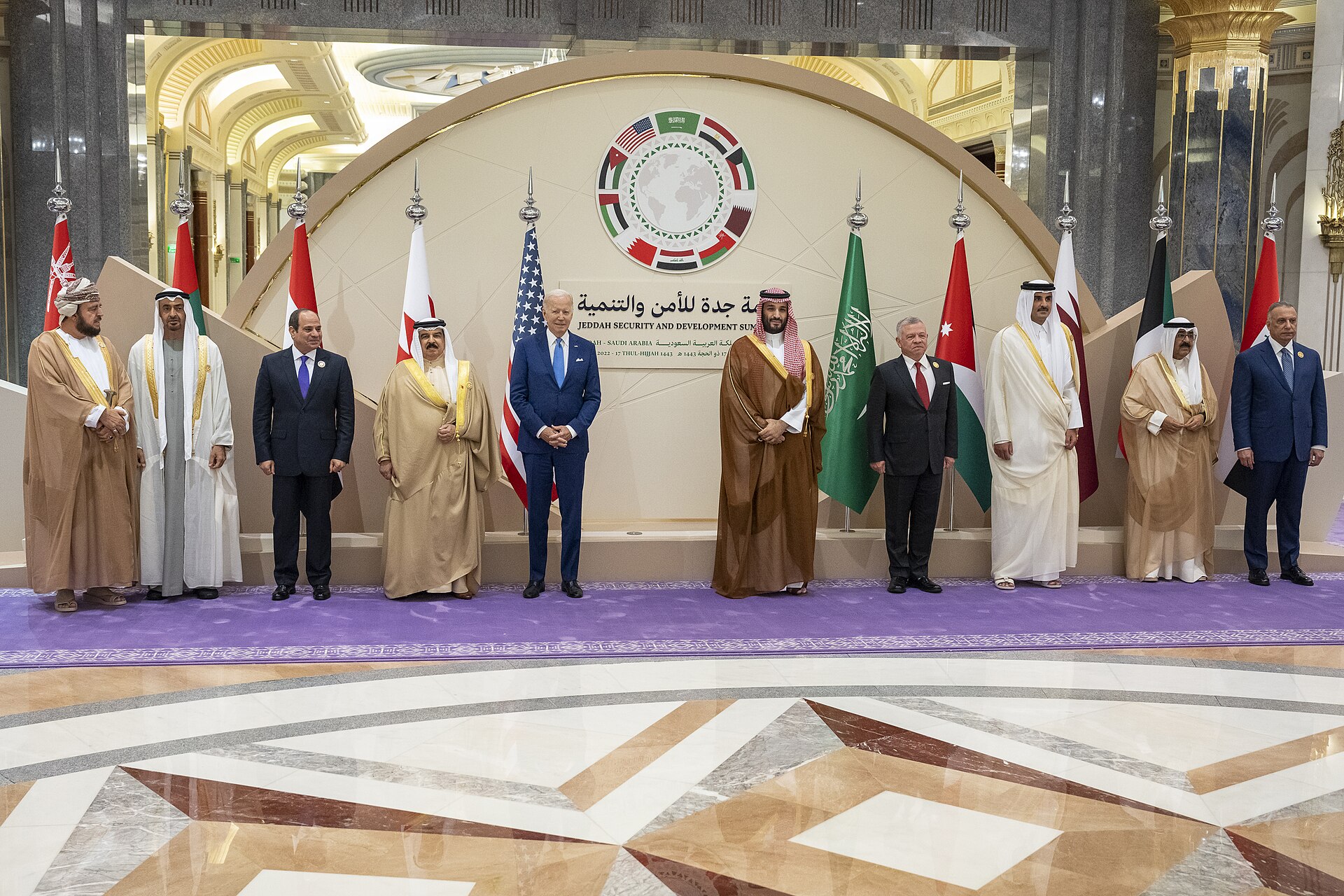
The 46th GCC Summit in Bahrain produced the Sakhir Declaration in December 2025, which pledges that “any infringement upon the sovereignty of a member state constitutes a direct threat to their collective security” — the GCC’s closest equivalent to NATO Article 5, adopted with impeccable timing just weeks before the war that would test it. Iran has since struck military infrastructure in Bahrain, Kuwait, and maritime assets across the Gulf. The Sakhir Declaration has not been invoked. The 50th Extraordinary GCC Ministerial Council meeting issued formal collective defence language in June 2026 for the first time in the bloc’s 45-year history — language that Dr. Ali Bakir assessed bluntly: “no concrete collective military or defense action was taken by the GCC countries” despite coordinated condemnations.
The non-invocation is not accidental, and it is not a failure of will. The GCC has no standing multinational headquarters, no pre-delegated force commitments, no integrated air defence network. Each state’s defence response is individually discretionary — which means invoking the Sakhir Declaration would expose the structural impossibility of honouring it. The declaration exists as a deterrent signal, not an operational commitment, and Iran tested that distinction in July and found it empty. Mahdi Ghuloom’s assessment that “Bahrain will likely wait for broader GCC alignment before considering any form of military confrontation with Iran” describes a circular dependency: Bahrain waits for the GCC, the GCC waits for Saudi Arabia, and Saudi Arabia maintains a bilateral FM channel with the state that struck Bahrain’s sovereign territory.
The Faisal-Araghchi channel is not merely surviving the Sakhir Declaration’s dormancy — it is enabled by it. If the declaration had been invoked, Saudi Arabia would face a binary choice between collective military action (which its PAC-3 stocks at 400 of 2,800 remaining cannot support) and public refusal to honour its own collective security pledge (which would end Saudi leadership of the GCC). The channel’s existence makes invocation less likely, because it offers an alternative narrative: Riyadh is managing the crisis through engagement rather than confrontation, and the engagement is producing intelligence even if it is not producing restraint.
Why Has No GCC State Demanded Riyadh Hang Up?
The answer lies in the division of diplomatic labour that the war has produced — a division so clean it cannot be accidental. Saudi Arabia holds the bilateral FM channel; Qatar holds the Doha mediation track; Pakistan holds the Islamabad MOU track; Oman holds the Hormuz bilateral. The UAE holds no formal Iran diplomatic track at all and is characterised, in Vice President Vance’s reported language, as the “most hawkish” GCC state — though Abu Dhabi is simultaneously engaging in what sources describe as “unprecedented IRGC conversations about economic incentives.” Each state has a distinct Iran-facing function, and disrupting Riyadh’s would not transfer the channel’s intelligence value to another GCC capital; it would simply eliminate it.
Saudi Arabia holds no seat, no signatory role, and no observer role in either the Islamabad or Doha diplomatic tracks with Iran. The bilateral FM channel is the only Iran-facing diplomatic tool Riyadh controls — the only instrument through which the Kingdom receives direct intelligence about Tehran’s intentions, timeline, and threshold calculations without relying on Pakistani, Qatari, or Omani intermediaries. For Bahrain and Kuwait, whose territory Iran has already struck, demanding Riyadh sever that channel would eliminate their only indirect line to Tehran that carries genuine political weight, because neither Manama nor Kuwait City maintains an equivalent bilateral instrument.
Anna Jacobs Khalaf of the Arab Gulf States Institute framed the broader dynamic as GCC states developing “regional autonomy” rather than replacing US partnerships — and the Faisal-Araghchi channel is the purest expression of that autonomy in practice. It is a Saudi-owned, Saudi-operated diplomatic tool that Washington cannot direct, Tehran cannot revoke without losing its own GCC access, and the smaller Gulf states cannot replicate. Annelle Sheline of the Quincy Institute noted that US military presence in the Gulf “became targets rather than providing deterrence” — which means Saudi Arabia’s diplomatic channel has become, by default, a more reliable security instrument than the American bases that were supposed to provide it.
The Cover Architecture
Saudi Arabia’s covert airstrikes on IRGC drone and missile launch sites in late March 2026 — never publicly acknowledged by Riyadh — produced a 76% reduction in Iranian attacks on Saudi territory within one week. The strikes established a precedent that deserves more attention than it has received: Saudi Arabia has already conducted military action against Iran, at the same time as maintaining the diplomatic channel, without either side acknowledging that the two activities were occurring simultaneously. The channel did not go dark during or after the strikes — Araghchi did not publicly reference them, Faisal did not privately apologise for them. The bilateral instrument absorbed a covert military operation without interruption — which means its tolerance for contradictions is not theoretical but tested.
This is the cover architecture in full: the diplomatic channel provides intelligence and positions Riyadh as a responsible actor; the condemnation formula satisfies domestic, US, and GCC audiences; covert military options provide actual deterrence, as the 76% reduction demonstrates; and public distance from both diplomatic tracks preserves optionality if the MOU collapses. Each element provides cover for the others — the condemnation covers the channel, and the channel in turn covers the covert military operations that are selectively deployed when deterrence demands it.
Marwan Muasher of the Carnegie Endowment identified the deeper structural tension: “A position close to Washington and against Iran is supported by the majority of Saudis, but being close to Washington while it is supporting Israel’s expansionist policy is a different ball game.” The cover architecture exists in part because Saudi Arabia cannot publicly be seen as Tehran’s interlocutor while also maintaining its US security relationship — which is why the condemnation language operates at maximum intensity. The stronger the condemnation, the more durable the cover for the call that preceded it.
The Only Line Riyadh Controls
Iran split the diplomatic tracks and locked Riyadh out of both — the Islamabad track where the MOU’s successor framework is being negotiated, and the Doha track where direct Iran-US engagement occurs. The July 11 Islamabad session proceeded without Saudi participation despite the Kingdom’s $253 million exposure to the PGSA framework that the talks will determine. The August 18 PGSA deadline — $5.5 million per day in accumulated Saudi liability — is being negotiated in a room where Riyadh has no chair, by parties over whom Riyadh has no influence, under a framework whose terms Saudi Arabia cannot amend.
The Faisal-Araghchi channel is therefore not a luxury or a diplomatic courtesy — it is Riyadh’s only sovereign instrument for influencing an outcome that will cost it a quarter-billion dollars if it goes wrong. Every other channel through which Saudi Arabia might affect the war’s diplomatic resolution runs through intermediaries: the El-Khereiji trilateral channel operates at sub-FM rank, the GCC collective mechanism produces statements but not action, and the Beijing framework that produced the 2023 normalization has not been reactivated for crisis management despite FM Faisal’s June 30 visit to Wang Yi. The bilateral FM line is the last instrument standing that gives Saudi Arabia direct, unmediated access to Iranian decision-making at a senior enough level to matter.
The MOU is now at Day 27 of 60 and functionally void — the IRGC declared Hormuz closed on July 12, which extinguishes the ceasefire conditions the agreement was premised on. The back-channel now operates without an institutional framework, which paradoxically makes it more rather than less valuable: when formal agreements collapse, informal bilateral instruments become the only remaining architecture through which parties communicate intentions. Faisal’s channel has transitioned from a complement to the MOU framework into a substitute for it — and substitutes, unlike complements, cannot be withdrawn without creating a vacuum.
Does the Channel Reduce Violence or Enable It?
The honest answer is that the evidence supports both interpretations simultaneously, which is what makes the channel so difficult to assess and so easy to justify from either side. The case for reduction: Saudi Arabia’s covert March strikes produced a 76% drop in Iranian attacks on Saudi territory, and the channel’s continued operation after those strikes may have communicated to Tehran that further escalation against Saudi assets specifically would trigger additional covert responses — a deterrence signal that works only if the diplomatic channel remains open to calibrate it. The April-May call frequency (four calls in five weeks) coincided with the lowest intensity of direct Iran-Saudi military contact since the war began, which is either correlation or evidence that the channel creates a de-escalation space.
The case for enablement is equally compelling: Iran has struck a Saudi-flagged vessel, attacked two GCC states with which Saudi Arabia has collective defence commitments, and declared Hormuz closed — all while maintaining a standing FM-level call with Riyadh that has never been suspended, never been publicly downgraded, and never produced a Saudi action that Tehran could not absorb. If you are an IRGC operational planner, the channel’s persistence through every escalation is a data point about Saudi tolerance — it tells you that Riyadh’s threshold for severing diplomatic contact is higher than striking a Saudi ship, higher than attacking Saudi treaty partners, and higher than closing the waterway through which Saudi Arabia exports its primary revenue source. That is a permission structure, regardless of whether it was intended as one.
The PAC-3 depletion — 400 of 2,800 interceptors remaining, an 86% drawdown — provides material context for why the channel persists regardless of its strategic utility. Saudi Arabia cannot fight a conventional war against Iran with its current air defence inventory; the remaining stocks were deployed around Makkah and Medina for Hajj 2026, which means the Kingdom prioritised religious site protection over offensive capacity. A state that cannot fight is a state that must talk, and a state that must talk cannot afford to discard its only sovereign talking instrument — even when the party on the other end is actively striking its assets.
Patience in the Gulf is not unlimited.
— FM Prince Faisal bin Farhan, March 2026
Faisal said patience is not unlimited in March. Four months later, it has not run out — or if it has, the consequence has been nine phone calls rather than zero. The channel’s persistence is either evidence that Saudi patience is more unlimited than Faisal claimed, or evidence that the channel itself is the mechanism through which patience is manufactured — each call buying another ten days of restraint by providing the intelligence that makes restraint feel informed rather than passive. Either way, Araghchi will call again within the week. And Faisal, having condemned whatever Iran does next in the strongest possible terms, will pick up.
FAQ
Has Saudi Arabia ever suspended the Araghchi-Faisal channel since the war began?
There is one documented gap: a 35-day silence between May 11 and June 15, the longest confirmed interruption since the 2023 normalization. The gap coincided with Saudi Arabia’s most intense domestic security period (Hajj preparations and PAC-3 redeployment to Makkah/Medina) and with the final phase of secret Iran-US MOU negotiations in which Riyadh had no role. The channel’s restoration on June 15 — the day the MOU was announced — confirms that both sides treated the silence as a pause rather than a rupture, and that the MOU’s existence gave Faisal a domestically defensible reason to resume contact (“welcoming” an agreement serves the Kingdom’s peace narrative).
Does the El-Khereiji channel operate independently of the Faisal-Araghchi line?
Deputy FM El-Khereiji chairs the trilateral committee and operates as the designated sub-FM Iran channel — his July 5 delivery of condolences to Pezeshkian (at deputy rather than ministerial rank, contrasting with the FM-level condolence Faisal delivered for Raisi in 2024) confirms a deliberate two-tier system. The El-Khereiji channel handles institutional business (trilateral coordination, written communications, protocol contacts) while the Faisal-Araghchi line handles political substance (crisis calls, MOU reactions, escalation management). The rank inversion — Raisi’s death warranted an FM condolence, Khamenei Sr.’s death warranted only a deputy FM — signals that Saudi Arabia has downgraded the protocol tier while maintaining the political tier, a distinction that communicates displeasure without disrupting access.
What is the PGSA liability and why does it give Iran power over Saudi Arabia?
The Persian Gulf Security Arrangement imposes accumulated fees of $5.5 million per day on transiting states, with Saudi Arabia’s outstanding liability at $253 million as of July 2026 and an August 18 payment deadline. The PGSA framework is being negotiated in the Islamabad track where Saudi Arabia has no seat — meaning Riyadh’s liability is determined by parties over whom it has no direct influence. Iran’s Mehr News has reported that “friendly nation” exemptions (offered to China) would exclude Saudi Arabia unless Riyadh accepts the PGSA’s legitimacy, which would constitute recognition of Iran’s authority to levy passage fees in international waters. The FM channel is one of Riyadh’s only instruments for influencing PGSA terms without formally participating in the Islamabad track.
Has any GCC state publicly criticised Saudi Arabia’s continued diplomatic contact with Iran?
No GCC state has publicly objected. Kuwait has also stayed silent, despite having its own military bases struck on July 8-9 alongside Bahrain’s — a silence that reflects the same structural logic as Riyadh’s: severing Saudi Arabia’s channel eliminates the only senior bilateral instrument any Gulf state has to reach Tehran without going through Doha, Islamabad, or Muscat. The UAE, characterised as the “most hawkish” GCC member but maintaining its own “unprecedented IRGC conversations about economic incentives,” has the most to gain from a harder Saudi line and has not pushed for one publicly.
Could Saudi Arabia use the channel to deliver an ultimatum?
Structurally, yes — the channel’s standing nature means Faisal could use any scheduled call to communicate a threshold or deadline. Practically, the March “patience is not unlimited” statement functioned as the closest approach to an ultimatum, and its non-escalation since suggests Riyadh is unwilling to convert the channel from an intelligence instrument into a coercive one. An ultimatum delivered through the channel and subsequently ignored would force Saudi Arabia to either act (with depleted PAC-3 stocks and no integrated GCC force) or accept that the ultimatum was hollow — destroying the channel’s credibility as a serious diplomatic instrument. The channel’s value depends on ambiguity about Saudi intentions; an ultimatum eliminates ambiguity, which eliminates value.