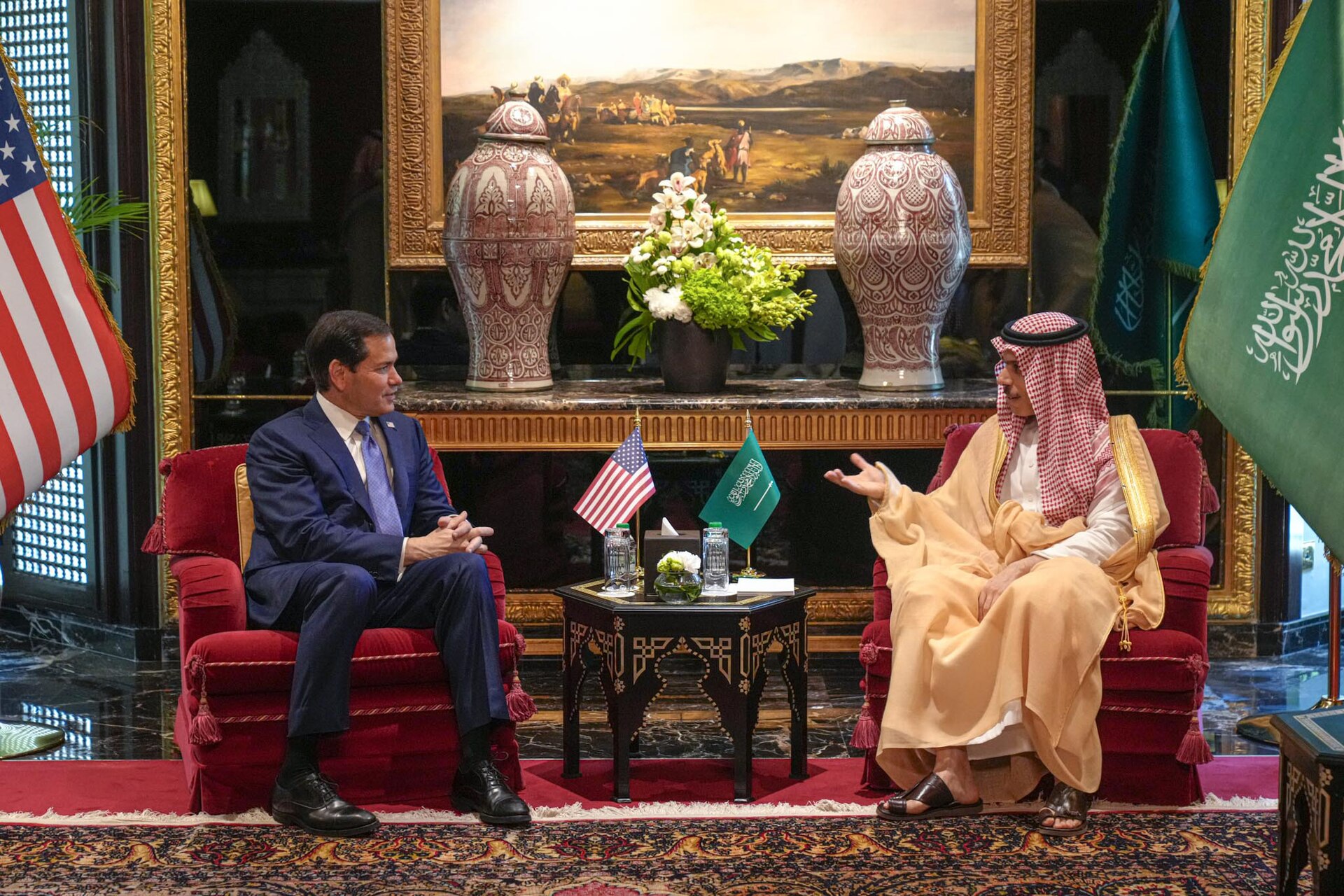
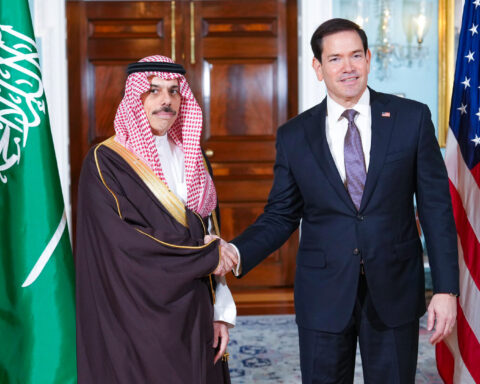
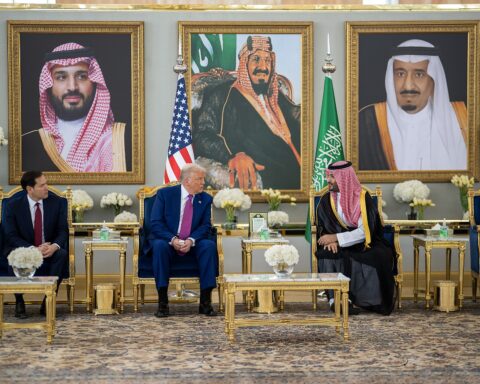
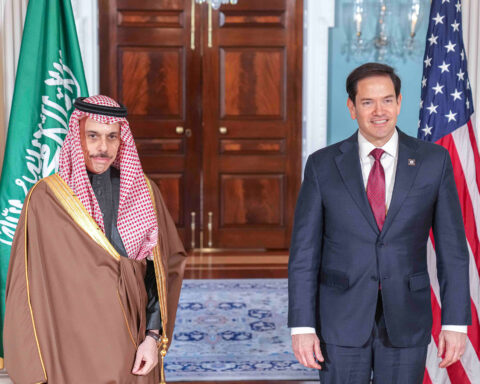
RIYADH — Saudi Arabia, the UAE, Egypt, and Jordan issued a joint condemnation of Iranian attacks on tankers in the Strait of Hormuz on July 12, calling them “a flagrant violation of international law” — and the four-state statement deliberately invoked neither the GCC Charter, the Sakhir Declaration, nor any instrument tied to the American defense umbrella. That omission is the story, because it reveals that Riyadh has concluded both the US bilateral architecture and the Gulf collective-defense system are inoperable during this conflict, and is reaching for something that has never existed before: a normative coalition of two Gulf monarchies and two non-Gulf Arab republics, united by a condemnation that none of them can individually or collectively enforce.
The statement arrived as both active diplomatic channels to Iran collapsed simultaneously — the Muscat track under explicit American threat, and the Islamabad MOU repudiated from Tehran’s end by Ghalibaf’s July 12 declaration that “the era of one-sided deals is OVER.” Saudi Arabia, excluded from both channels, now holds a normative coalition as its sole operational instrument, with no legal path from condemnation to consequence and thirty-seven days until the PGSA’s $253 million auto-activates on August 18.
Table of Contents
- The Instrument Riyadh Reached For
- Why Did Riyadh Bypass the GCC Charter and the Sakhir Declaration?
- What Resolution 2817 Can and Cannot Do
- The Muscat Channel Survives Under American Hostility
- How Did Both Ends of the MOU Close Simultaneously?
- The Four-State Coalition vs. the Five-State Quintet
- What Can a Normative Coalition Enforce Without Chapter VII?
- Pakistan Holds a Dead Document
- The Thirty-Seven Days to August 18
- Frequently Asked Questions
The Instrument Riyadh Reached For
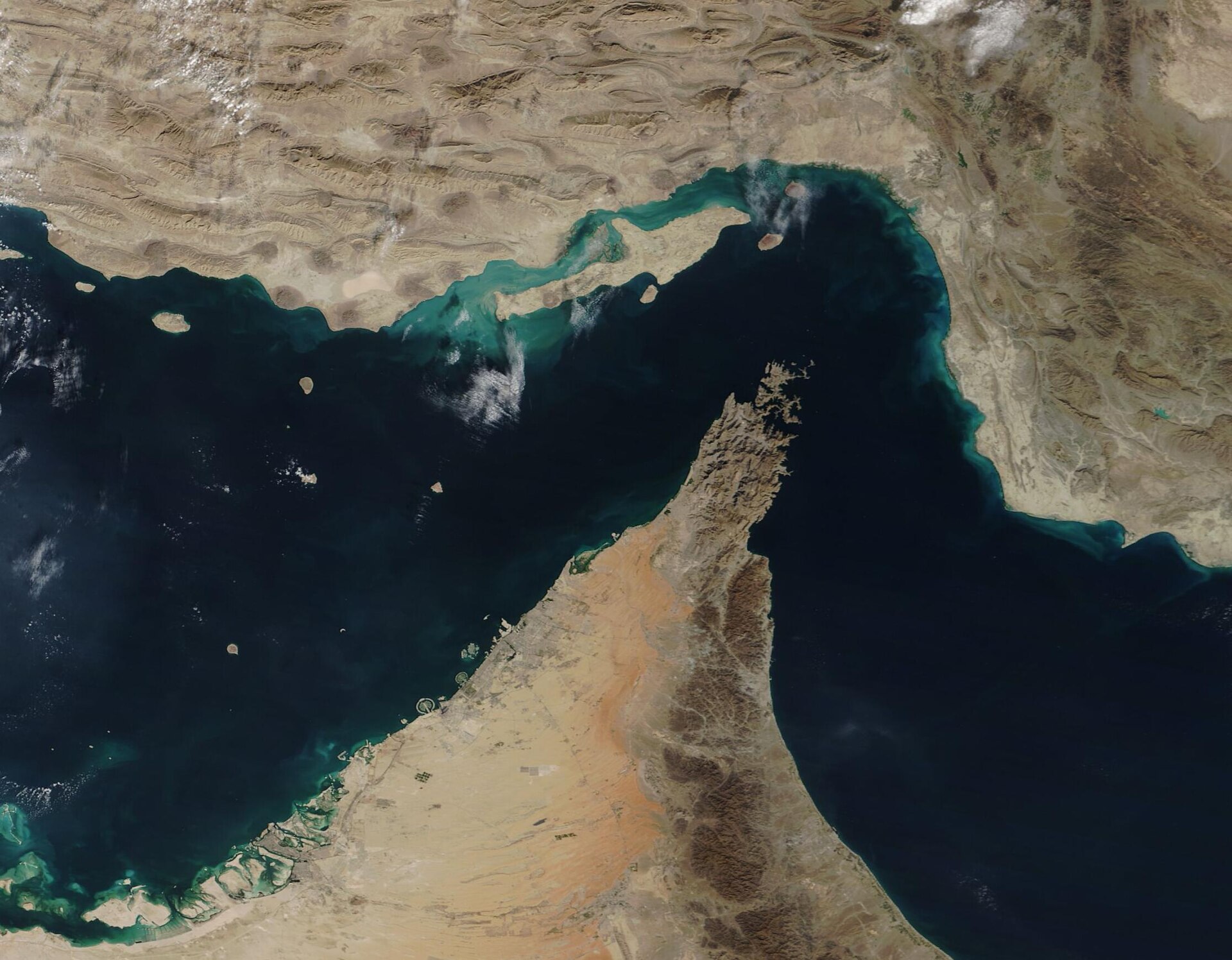
The Saudi Foreign Ministry’s statement on July 12 condemned the Iranian strike on the Bahri-operated VLCC Wedyan — 319,990 deadweight tonnes, struck sixteen nautical miles east of Khor Fakkan on July 7 — and held Iran “fully responsible for the attacks and all resulting damage and consequences.” The language tracked almost identically with the UAE, Egyptian, and Jordanian co-signatories, each issuing through their own foreign ministries in what was plainly a coordinated, pre-agreed instrument rather than a sequence of individual reactions.
What the statement cited was UNSC Resolution 2817, adopted March 11, 2026, with 135 co-sponsors — the largest co-sponsor count for any Security Council resolution in history — passing 13-0-2 with China and Russia abstaining. What the statement did not cite was more revealing: not the GCC Charter, not the Joint Defense Agreement invoked in the GCC’s own separate July 9 statement, not the Sakhir Declaration from the 46th GCC Summit in Manama, and not any bilateral or multilateral defense arrangement with Washington. The Saudi Foreign Ministry called on Iran to “immediately cease all actions that threaten regional security, international maritime navigation and global energy supplies,” grounding that demand in international law rather than in any treaty obligation Iran has to the Gulf states or that Washington has to Riyadh.
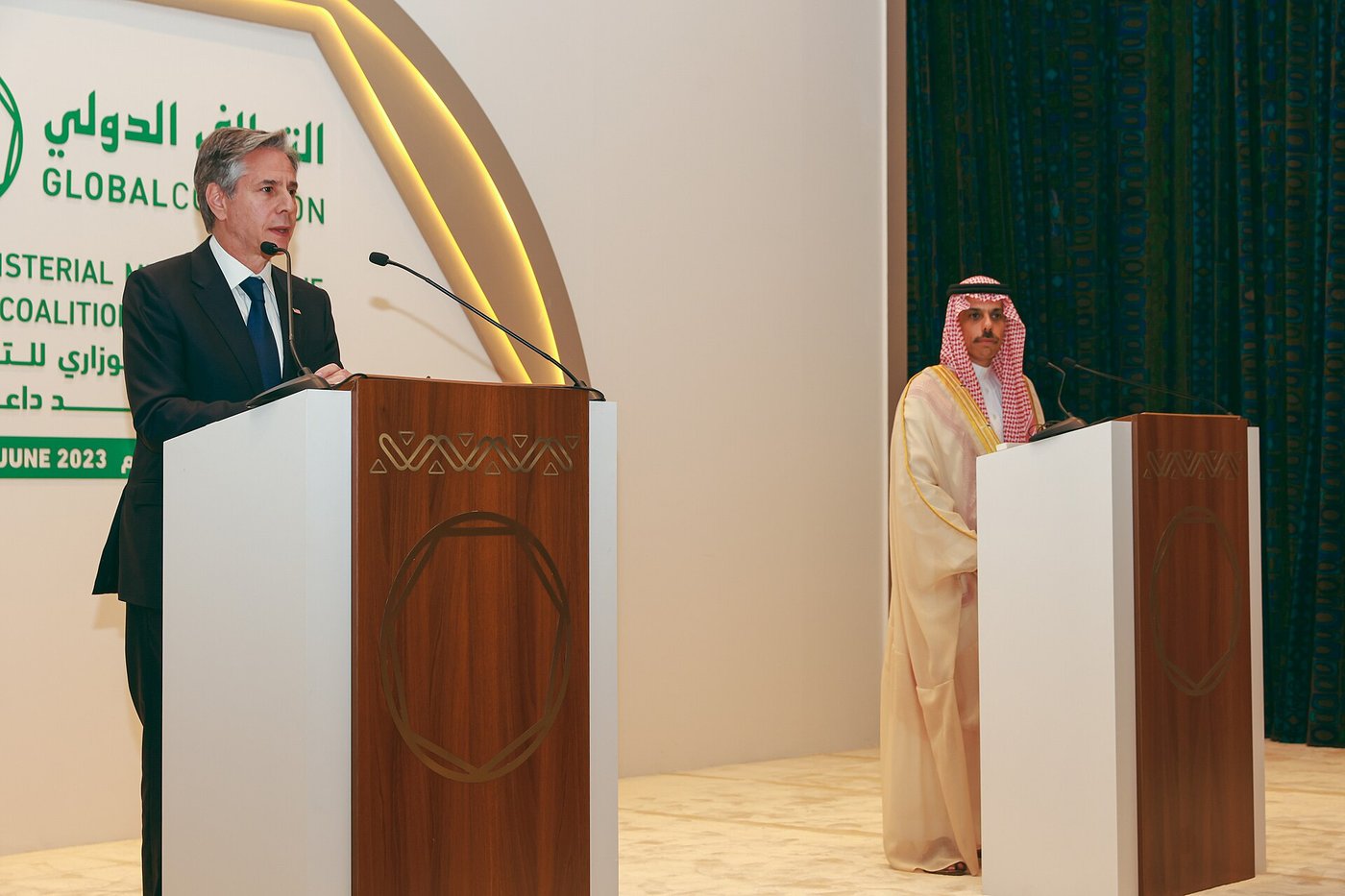
The instrument is new not because Arab states have never condemned Iran collectively — they have, repeatedly, through the Arab League, through the GCC, through bilateral channels. It is new because of what it assembles and what it excludes. Egypt and Jordan are not GCC members, not Gulf states, and not parties to either the Sakhir Declaration or the GCC Joint Defense Agreement. Their inclusion in this statement, alongside Saudi Arabia and the UAE, constructs a grouping defined not by geographic proximity or treaty obligation but by a shared normative position on maritime freedom — the kind of coalition that exists nowhere in the regional architecture and has no precedent in Saudi diplomatic history since the formation of the GCC in 1981.
Why Did Riyadh Bypass the GCC Charter and the Sakhir Declaration?
The GCC’s collective-defense architecture was available and had already been activated three days earlier. On July 9, the GCC issued its own statement reaffirming that “the security of GCC states is indivisible, and any attack against any member state is considered a direct attack on all GCC states, in accordance with the GCC Charter and the Joint Defense Agreement,” while rejecting “any unilateral and illegal mechanisms or arrangements.” That statement invoked the full collective-defense apparatus. Riyadh chose, three days later, to issue a separate instrument that invoked none of it — a deliberate act of architectural selection that makes sense only if MBS has concluded the GCC collective-defense framework cannot deliver what the July 12 statement is designed to achieve.
The Middle East briefing 3,000+ readers start their day with.
One email. Every weekday morning. Free.
The Sakhir Declaration, agreed at the 46th GCC Summit in late 2025, affirms that “the security of member states is indivisible” and that any sovereignty violation constitutes a direct threat to all members. As a legal instrument, its scope is GCC-only: six Gulf monarchies bound by the 1981 charter. Including Egypt and Jordan — both of which maintain their own diplomatic channels with Tehran, both of which have separate bilateral interests in the Hormuz question — required stepping outside the GCC entirely. When Riyadh got the call from Islamabad but did not get the seat at the table, the GCC framework offered no mechanism to address that exclusion, because the Islamabad track was a US-Iran bilateral mediated by Pakistan — none of which are GCC members or subject to GCC obligations.
The bypass also reflects a practical assessment of the GCC’s current coherence under fire. Qatar is absent from the four-state statement. Oman, which is simultaneously mediating between Iran and the international community through the Joint Hormuz Committee formed June 24, could not credibly co-sign a condemnation of the state it is actively mediating for. Kuwait and Bahrain — both struck by IRGC missiles on July 8 — are covered by the GCC July 9 collective statement but were not included in the narrower four-state instrument. The selection criteria appear to have been states capable of independent military action in the Red Sea corridor (Egypt), on the Jordanian-Iraqi border (Jordan), and in the southern Gulf (UAE) — a capabilities-based coalition rather than a treaty-based one.
What Resolution 2817 Can and Cannot Do
Resolution 2817 was sponsored by Bahrain on behalf of the GCC states and Jordan, adopted March 11, 2026, and condemns Iranian attacks while demanding cessation of hostilities and calling on Iran to comply with its international obligations regarding freedom of navigation. Its 135 co-sponsors represent the broadest co-sponsorship count in Security Council history, per UN Secretariat records, a diplomatic achievement that Saudi and Bahraini lobbying produced through months of capital-by-capital persuasion. The 13-0-2 vote — with only China and Russia abstaining rather than vetoing — confirmed that even states sympathetic to Tehran could not defend the Hormuz closure on legal grounds.
What Resolution 2817 cannot do is authorize force. It was not adopted under Chapter VII of the UN Charter, which is the exclusive legal basis for Security Council-authorized military action. A subsequent draft resolution, circulated by Bahrain, did invoke Chapter VII and would have authorized member states to use “all necessary means” in and around Hormuz — the identical formulation used in Resolution 678 (1990, Iraq-Kuwait) and Resolution 1973 (2011, Libya). That draft was blocked by China and Russia, and no comparable draft has been reintroduced since. The Saudi-UAE-Egypt-Jordan statement’s invocation of Resolution 2817 therefore carries the political weight of 135 states’ condemnation but the enforcement weight of nothing at all — a normative ceiling with no operational floor.
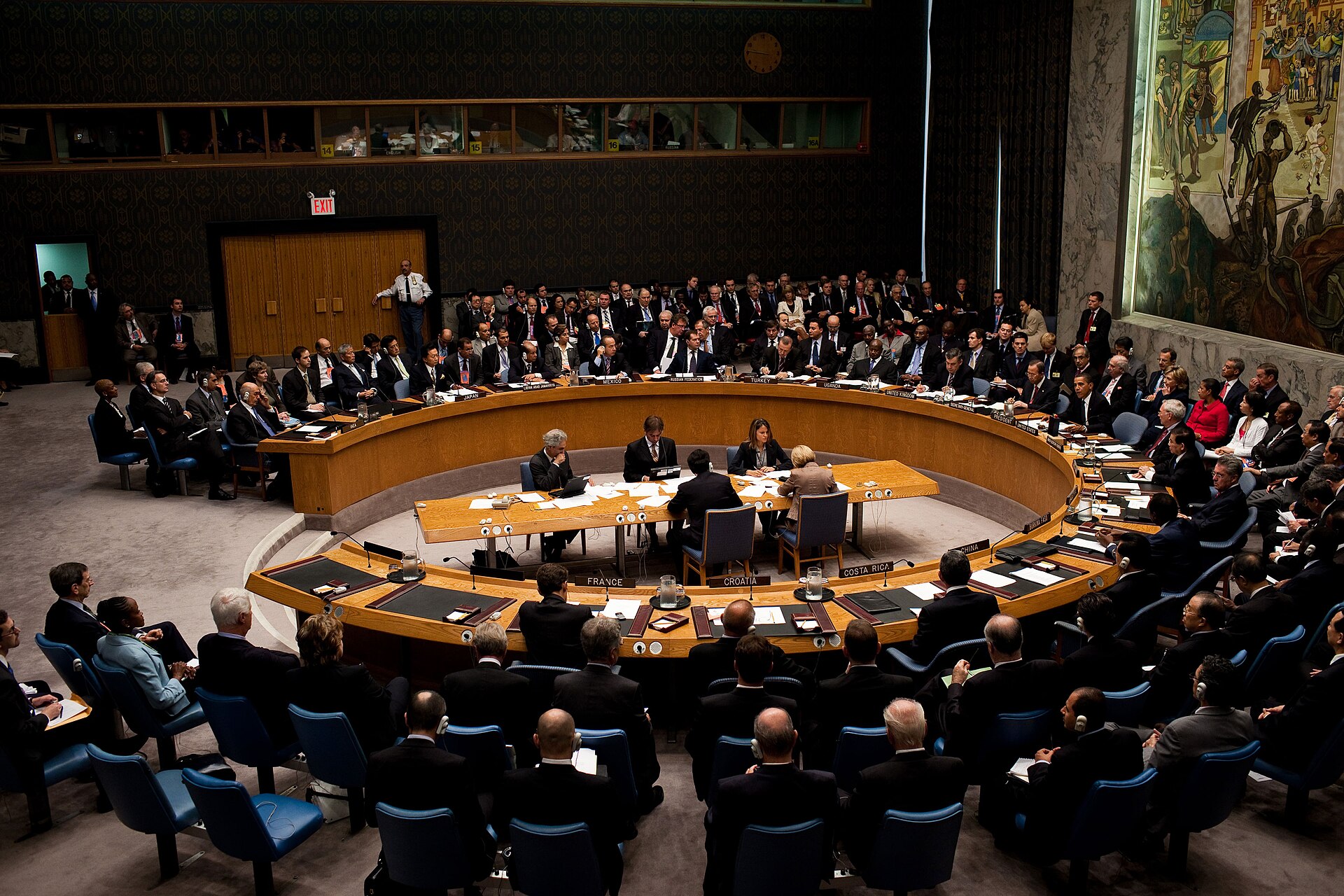
This is the structural trap the four-state coalition sits inside. By invoking 2817 rather than the GCC Charter or a bilateral defense agreement, Riyadh has chosen the instrument with the broadest international legitimacy and the narrowest enforcement capacity. The GCC Joint Defense Agreement at least theoretically permits collective military response among six states. Resolution 2817 permits condemnation by 135 states and enforcement by none.
The Saudi FM’s July 12 statement is the first time Riyadh has publicly cited the specific resolution at FM level in the context of the Hormuz closure — a deliberate elevation of the normative instrument into the operational space previously occupied by defense pacts — but elevation without transformation. The resolution remains what it was: a statement of principle adopted by a council that has already failed to adopt the enforcement mechanism that would give it teeth.
The Muscat Channel Survives Under American Hostility
The Muscat diplomatic track has not collapsed, but it operates under conditions that make its survival paradoxical. On May 27, 2026, Trump told a cabinet meeting — in comments the State Department confirmed and distributed via transcript — that “Oman will behave just like everybody else, or we will have to blow them up.” That threat preceded the current escalation cycle by forty-six days, was never retracted, and has functioned as a standing American veto on Omani mediation without ever being formally operationalized. Oman has not withdrawn despite the threat: Araghchi met Omani Foreign Minister Busaidi in Muscat on July 11 under the Iran-Oman Joint Hormuz Committee, formed June 24, with both sides agreeing to continue talks “at the technical and political levels” regarding “appropriate mechanisms for the safe passage of ships through the Strait of Hormuz in accordance with Article 5 of the Islamabad MOU.”
The channel’s survival presents a specific problem for Saudi Arabia’s normative-coalition strategy. If the Muscat track produces a bilateral Iran-Oman arrangement on Hormuz passage — one that satisfies neither UNSC Resolution 2817’s demand for full cessation nor the GCC July 9 statement’s rejection of “unilateral and illegal mechanisms” — then the four-state coalition’s condemnation becomes a statement about a situation that has been overtaken by bilateral facts on the water. The Iran-Oman Joint Hormuz Committee’s remit includes “fees for the services” associated with strait passage, which is the core PGSA architecture the GCC explicitly rejected. An Oman-brokered Hormuz regime would likely be structured to satisfy Iran’s sovereignty claims while providing practical passage — exactly the kind of arrangement that makes normative condemnations retroactively irrelevant.
Saudi Arabia’s exclusion from this process is categorical, not circumstantial. Riyadh is not a party to the Iran-Oman Joint Hormuz Committee, not a signatory to the Islamabad MOU, not an observer at any track, and not in possession of any bilateral channel to Tehran since the condolence contact through Deputy FM El-Khereiji. Iran split the talks and locked Riyadh out of both tracks as a structural matter, not as an oversight — and the four-state statement is what remains when every other door has been closed from the other side.
How Did Both Ends of the MOU Close Simultaneously?
The Islamabad MOU, signed June 17, 2026, provided for an end to military strikes, sixty days of toll-free Hormuz passage, an end to the US naval blockade, and a sixty-day ceasefire extension with PGSA fees auto-activating on August 18 if unresolved. As of July 12, the agreement is on Day 25 of 60 — and both parties have declared it functionally void without formally withdrawing. Trump said on July 8 that the MOU was “over.” Ghalibaf posted on X on July 12: “The era of one-sided deals is OVER. We told you: keep your word or pay the price. Reality is knocking.” He simultaneously declared the Strait would be “managed by Iran” and would open “only under Tehran’s terms,” citing Article 5 — the provision placing Iran in charge of reopening arrangements — as his legal basis.
“The era of one-sided deals is OVER. We told you: keep your word or pay the price. Reality is knocking.”
— Mohammad Bagher Ghalibaf, Iranian Parliament Speaker and MOU lead negotiator, X (@mb_ghalibaf), July 12, 2026
Ghalibaf’s framing is addressed to Washington, not Riyadh — PressTV’s headline the same day reads “‘Keep your word or pay the price’ of reneging on promises: Parl. Speaker Qalibaf warns US” — and treats the Saudi-UAE-Egypt-Jordan statement as legally invisible. In Tehran’s reading, the MOU supersedes or modifies prior UNSC frameworks regarding Hormuz passage arrangements, meaning Resolution 2817 is inapplicable to a situation already governed by the bilateral MOU. The four-state coalition is condemning an Iranian action that Iran does not acknowledge falls within the resolution’s jurisdiction, while invoking a resolution that Iran claims has been superseded by the very instrument both sides are simultaneously repudiating.
The question of who signs for Iran in any back-channel has become unanswerable since Ghalibaf’s statement, because the Speaker has simultaneously asserted Iran’s sovereign authority over Hormuz and voided the only framework that defined who held that authority. The MOU named specific institutional actors — now those actors are either absent (Mojtaba, 127 days without appearing, as the regime itself has acknowledged), or acting in repudiation of the document they signed.
The Four-State Coalition vs. the Five-State Quintet
Foreign Policy reported on July 1, 2026, that a Saudi-Qatar-Turkey-Pakistan-Egypt quintet was forming — described as “defined by two goals: containing the Iranian threat while also regaining influence in countries dominated by Iranian proxies or allies such as Syria and Lebanon; and also pushing back against Israel.” The IISS in May 2026 separately identified “a new Middle Eastern quadrilateral taking shape.” The July 12 Saudi-UAE-Egypt-Jordan statement is neither of these groupings. It includes the UAE but not Qatar or Turkey, includes Jordan but not Pakistan, and carries a mandate limited to maritime normative condemnation rather than the broader political and military coordination the quintet implies.
The distinction matters because it reveals Riyadh assembling different coalitions for different instruments rather than building a single alternative architecture. The quintet — with Qatar and Turkey — addresses the broader Iran-proxy question across Syria, Lebanon, and Iraq, bringing in states with their own relationships to Tehran. The four-state statement addresses Hormuz specifically, bringing in states with Red Sea and eastern Mediterranean military capacity (Egypt’s navy, Jordan’s border security, UAE’s naval assets) but excluding states whose Iran channels might be compromised by co-signing a condemnation. Qatar, which is simultaneously mediating through its own channel — the Qatar PM spoke directly to Araghchi during the funeral pause — cannot co-sign a condemnation without destroying its mediation credibility. Turkey, which has maintained its own separate dialogue with Tehran, faces the same constraint.
The UAE’s position is the most revealing. Abu Dhabi is absent from the quintet but present in the four-state condemnation — co-signing on a narrow normative instrument (maritime law, Resolution 2817) while maintaining distance from the broader political coalition that would commit it to containing Iranian influence in Syria and Lebanon. The UAE has spent years rebuilding its relationship with Tehran after the Abraham Accords period, and its co-signature on the July 12 statement represents a carefully bounded commitment: we condemn the tanker strikes, we invoke international law, we do not commit to anything beyond that specific normative position. This is the structural limitation of Riyadh’s instrument — each co-signatory participates within their own red lines, and no mechanism exists to aggregate those individual normative positions into collective action.
What Can a Normative Coalition Enforce Without Chapter VII?
A normative coalition absent Chapter VII authorization can do three things: it can name violations, it can impose reputational costs, and it can construct the political foundation for future enforcement should the Security Council dynamics shift. It cannot authorize force, impose binding sanctions outside each state’s domestic legal authority, or establish a naval interdiction regime. The four-state statement’s operational ceiling is therefore defined by what each signatory can do unilaterally — Saudi Arabia can refuse Iranian-flagged vessels in its ports, the UAE can tighten insurance requirements at Fujairah and Khor Fakkan, Egypt can restrict Suez Canal access for designated entities, and Jordan can close airspace corridors. None of these actions require the statement; all of them are available under domestic sovereignty regardless of the four-state instrument.
The statement’s value, if it has one, is as a pre-positioning exercise — establishing the legal and political record for a future enforcement mechanism that does not yet exist. If the China-Russia veto dynamic shifts (neither vetoed 2817, both merely abstained), a subsequent Chapter VII resolution becomes procedurally possible, and the four-state coalition’s documented condemnation becomes part of the evidentiary record supporting “all necessary means” authorization. This is a legal investment with an indefinite maturity date, and Riyadh is making it at a moment when it needs operational results within thirty-seven days — before the PGSA auto-activates on August 18.
| Instrument | Signatories / Parties | Enforcement Mechanism | Iran’s Legal Position |
|---|---|---|---|
| UNSC Resolution 2817 | 135 co-sponsors; 13-0-2 vote | None (not Chapter VII) | Superseded by Islamabad MOU |
| GCC July 9 Statement | 6 GCC states | GCC Charter + Joint Defense Agreement | Not applicable to non-GCC matters |
| Sakhir Declaration | 6 GCC states | Indivisible security + sovereignty | Not invoked by Saudi FM July 12 |
| Saudi-UAE-Egypt-Jordan (July 12) | 4 states (2 GCC + 2 non-GCC) | None (normative condemnation only) | Legally invisible (PressTV framing) |
| Islamabad MOU (June 17) | US + Iran (Pakistan guarantor) | 60-day framework; PGSA trigger Aug 18 | Iran sovereign under Article 5 |
| Iran-Oman Joint Hormuz Committee | Iran + Oman | Bilateral management + fee regime | Operational instrument |
| Failed Chapter VII Draft | Bahrain-circulated | “All necessary means” (blocked) | N/A (did not pass) |
Pakistan holds the guarantee that Saudi Arabia cannot buy — the institutional credibility of having brokered the MOU — but even that guarantee is now backed by a dead instrument. The four-state coalition occupies a space between the defunct MOU and the unobtainable Chapter VII resolution, making its normative position legally correct and operationally meaningless unless the Security Council dynamics change or one of the four states decides to act unilaterally under its own domestic authority rather than under the collective statement’s nonexistent mandate.
Pakistan Holds a Dead Document
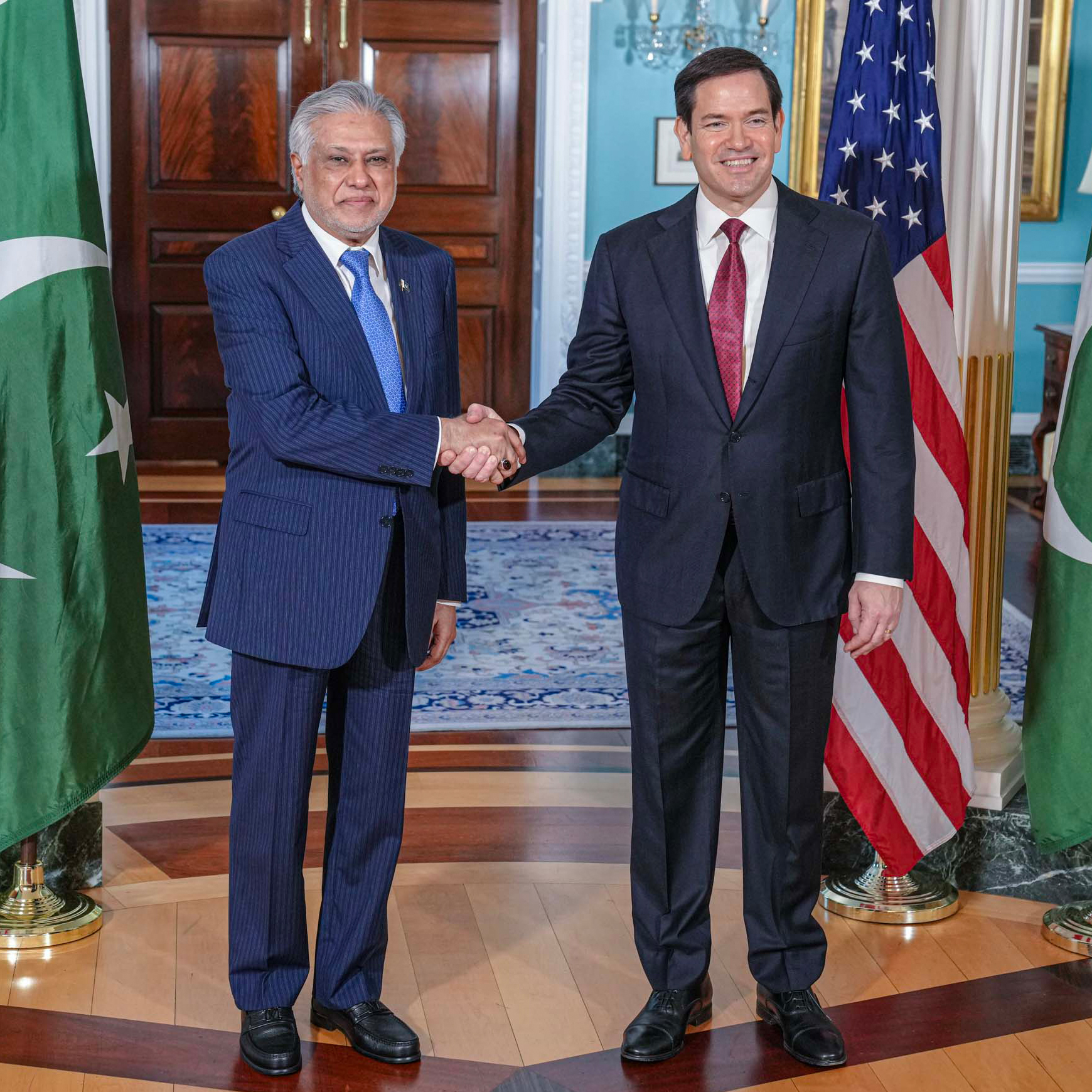
Pakistan’s Foreign Office stated on July 9 that “a renewed conflict is in no one’s interest” and described the Islamabad MOU as “an enduring foundation.” FM Ishaq Dar spoke with Saudi FM Faisal on July 11, with both expressing “deep concern over escalations despite the Islamabad MOU.” Pakistan and Qatar simultaneously made fresh contacts with both Washington and Tehran to halt strikes — the diplomatic equivalent of performing CPR on a document that both signatories have declared dead. When MBS called Trump as the Islamabad talks started without Riyadh, the call produced nothing that altered Saudi Arabia’s exclusion from the track, and Dar’s July 11 conversation with Faisal produced no announced mechanism for Saudi inclusion either.
Pakistan’s institutional exposure is acute because its reputation as a mediator is directly tied to whether the MOU survives in any operational form. If both Trump (July 8: the MOU is “over”) and Ghalibaf (July 12: “the era of one-sided deals is OVER”) formally repudiate the instrument, Pakistan is left as guarantor of an agreement that both guaranteed parties have voided — a position that damages Islamabad’s credibility for future mediation efforts and provides no leverage over either party. The July 14-15 Islamabad talks, where day-two details were to be finalized, have been delayed without a confirmed new date, and Pakistan’s only recourse is to insist that the framework remains valid while both sides act as though it does not.
The four-state coalition’s relationship to Pakistan’s position is indirect but structurally important. Saudi Arabia has no seat at the Islamabad table but maintains the Dar-Faisal bilateral channel — the only communication line between Riyadh and the MOU framework. If the four-state statement succeeds in establishing Resolution 2817 as the operative normative framework, it implicitly undermines the MOU’s claim to govern Hormuz arrangements, since the resolution predates the MOU and makes no accommodation for bilateral side-agreements. Tehran understands this, which is why Ghalibaf’s Article 5 assertion — that the MOU grants Iran exclusive authority over reopening — is simultaneously a claim about the MOU’s supremacy over 2817 and a repudiation of the MOU’s other provisions. Iran wants Article 5’s grant of authority without Articles 1 through 4’s constraints.
The Thirty-Seven Days to August 18
The PGSA — the Persian Gulf Services Authority that Iran’s fee regime will operate through — auto-activates on August 18, thirty-seven days from today, with $253 million outstanding at $5.5 million per day accumulating against vessels transiting Hormuz under the Iranian-declared toll system. No authorized Iranian signatory has been identified for the PGSA framework, a gap that has existed since Mojtaba Khamenei’s 127-day disappearance removed the only figure with presumed authority to authorize or halt the fee regime. The GCC July 9 statement explicitly rejected “any unilateral and illegal mechanisms or arrangements” — language aimed directly at the PGSA — but rejection without enforcement is a normative position encountering a material deadline.
The four-state coalition’s thirty-seven-day problem is this: the PGSA auto-activates regardless of what any coalition states, condemns, or invokes. It is a self-executing mechanism built into the MOU framework — one that does not require Security Council authorization, GCC consent, or any state’s approval to begin imposing costs on maritime traffic. When August 18 arrives, every tanker transiting Hormuz will face a binary choice between paying Iran’s fee or refusing and risking denial of passage (or worse, military interdiction under Iran’s claimed sovereign authority). The four-state statement’s invocation of Resolution 2817 provides no instruction for that binary choice, because the resolution demands cessation of Iranian hostilities but does not address the fee-collection mechanism that Iran has constructed as a non-military coercive instrument.
Saudi Arabia’s PAC-3 inventory — approximately 400 of 2,800 interceptors remaining, representing 86 percent depletion — means Riyadh is running its thinnest air-defense posture during the conflict’s most intense phase. The IRGC has struck US-aligned bases in five countries within the past week (Bahrain, Kuwait, Qatar, Jordan, and now UAE added July 12), and more than 300 US strikes on Iran across three CENTCOM-confirmed waves have not degraded the IRGC’s capacity for retaliatory attacks on Gulf targets. The four-state coalition’s members are all within range of Iranian ballistic and cruise missiles, and the statement they issued contains no mutual-defense provision, no force commitment, and no operational coordination mechanism — it is a normative instrument issued by states that individually face military threats they cannot individually or collectively deter with the depleted assets available to them.
“Oman will behave just like everybody else, or we will have to blow them up.”
— Donald Trump, cabinet meeting, May 27, 2026 (confirmed by State Department transcript; The Hill, Al Jazeera, Time)
| Timeline | Event | Status as of July 12 |
|---|---|---|
| May 27, 2026 | Trump threatens Oman (“blow them up”) | Never retracted; Oman continues mediating |
| June 17, 2026 | Islamabad MOU signed (Day 1 of 60) | Day 25; both sides repudiating |
| June 24, 2026 | Iran-Oman Joint Hormuz Committee formed | Active; Araghchi met Busaidi July 11 |
| July 7, 2026 | Saudi tanker Wedyan struck (Khor Fakkan) | Trigger for Saudi FM condemnation |
| July 8, 2026 | Trump declares MOU “over” | No formal withdrawal filed |
| July 9, 2026 | GCC collective statement (Charter + JDA) | Separate instrument from July 12 |
| July 12, 2026 | Saudi-UAE-Egypt-Jordan joint condemnation | Cites Res. 2817; no enforcement |
| July 12, 2026 | Ghalibaf: “era of one-sided deals is OVER” | Article 5 sovereignty claim |
| August 18, 2026 | PGSA auto-activates ($5.5M/day) | 37 days; no authorized signatory |
Frequently Asked Questions
What is the legal difference between the GCC July 9 statement and the Saudi-UAE-Egypt-Jordan July 12 statement?
The GCC July 9 statement invokes the GCC Charter (1981) and the Joint Defense Agreement, which theoretically obligate all six Gulf monarchies to treat an attack on one as an attack on all — a mutual-defense provision limited to GCC members. The July 12 four-state statement invokes UNSC Resolution 2817 and general international law, creating no mutual-defense obligation and applying no treaty framework. The practical consequence is that the July 9 statement could theoretically justify collective GCC military action (though it has never been used for this purpose), while the July 12 statement can justify nothing beyond individual states exercising their own domestic legal authorities. Egypt’s inclusion is significant beyond symbolism: Cairo possesses the region’s largest conventional navy and controls Suez Canal transit — capabilities relevant to Hormuz enforcement that fall entirely outside GCC jurisdiction.
Has Saudi Arabia ever issued a joint normative statement with non-GCC Arab states against Iran before?
Arab League resolutions have condemned Iranian actions collectively — most recently in 2023 regarding support for Houthi operations — but these carry the institutional weight (or weakness) of a 22-member body and have never been cited by Riyadh as an operative instrument for specific enforcement. The closest historical precedent is the 1987-1988 period during the Iran-Iraq War, when Saudi Arabia coordinated with Egypt and Jordan (both of which provided military support to Iraq) against Iranian aggression in the Gulf — but this coordination operated through bilateral military agreements with Baghdad rather than through a joint normative statement citing international law. The July 12 instrument is the first time Riyadh has assembled a non-GCC, non-Arab League, non-US-umbrella coalition to issue a formally coordinated condemnation of a specific Iranian act with a specific UN resolution citation.
Why is Qatar absent from the four-state statement?
Qatar maintains an active mediation channel with Iran: the Qatar PM spoke directly to Araghchi during the Khamenei funeral pause (July 4-9), and Doha hosted previous rounds of the Iran nuclear talks. Co-signing a condemnation of Iranian actions would compromise Qatar’s mediator credibility — the same reason Oman is absent. Pakistan, which brokered the Islamabad MOU, faces identical constraints and is also absent from the four-state instrument despite being part of the broader quintet that Foreign Policy identified on July 1. Turkey, which has maintained its own separate Iran dialogue and recently conducted a presidential visit to Tehran (May 2026), is absent for the same structural reason. The four-state coalition is defined as much by who cannot participate (states with active Iran channels) as by who did.
What happens if the PGSA activates on August 18 without a resolution?
The PGSA fee regime — $5.5 million per day per transit, $253 million accumulated outstanding — would create a binary choice for tanker operators: pay Iran’s toll and accept its sovereign claim over Hormuz, or refuse and risk interdiction. Marine insurance markets would likely split into compliant and non-compliant tiers, with premiums for non-paying vessels potentially exceeding the fee itself (war-risk premiums already stand at 2 percent of hull value, representing an eight-fold increase from pre-crisis levels). Saudi Aramco’s own fleet, operated by Bahri, would face the direct choice — and the Wedyan strike on July 7 demonstrated Iran’s willingness to enforce non-payment with kinetic action. No state in the four-state coalition has announced a naval escort commitment for non-compliant vessels, and the failed Chapter VII draft that would have authorized “all necessary means” remains blocked.
Does Iran acknowledge the four-state coalition’s statement?
Iranian state media on July 12 framed events exclusively as a US-Iran bilateral dispute. PressTV’s coverage of Ghalibaf’s statement addressed Washington directly (“warns US”), and the four-state coalition was absent from Iranian state coverage entirely — not rebutted, not dismissed, but invisible. This reflects Tehran’s consistent legal position that Hormuz management is either a bilateral US-Iran matter (under the MOU) or an Iran-sovereign matter (under Article 5), and that Arab states without naval assets deployed in the strait have no standing to condemn or condition Iranian actions there. The Iranian Foreign Ministry did not issue a separate response to the four-state statement, treating it as a sub-category of the general Arab reaction rather than a distinct diplomatic instrument requiring engagement.