RIYADH — An unspecified projectile hit the Public Investment Fund Tower in Riyadh on November 24 — the second strike on the building in under a week, wounding 11 people — while 1,500 kilometres to the south, Houthi fighters pushed to within 60 kilometres of Aden, the interim capital whose fall would end the internationally recognised Yemeni government’s last credible claim to governing anything at all. The two events are not parallel crises that happen to share a calendar date; they are the working halves of a single two-front pressure campaign, and it is a campaign the Saudi-led coalition has so far failed to disrupt.
Crown Prince Mohammed bin Salman said the kingdom would not “tolerate any infringement” of its sovereignty, according to AP. Coalition spokesman Turki al-Maliki called the attack on the King Abdullah Financial District tower “a cowardly terrorist attack.” These are the same categories of language Riyadh deployed after the September strikes that wounded 73 and after the October airport attacks that killed 13 and wounded more than 300 — and in each prior round the response was air strikes on Yemen that left the ground war’s trajectory unchanged.
Table of Contents

Two Strikes, One Strategy
Saudi Civil Defence said the November 24 casualties included two Saudi citizens, two Indian residents, three Nepalese residents and four Egyptian residents. Three witnesses told AFP that the building struck was the PIF Tower in the King Abdullah Financial District — the tallest structure in the complex and the administrative headquarters of the kingdom’s sovereign wealth fund. No group had claimed the attack as of November 24; the Houthis did claim the November 19 strike on the same building, which Houthi military spokesman Yahya Saree accompanied with a declaration that the Riyadh financial centre was “a military target” and a warning to employees, workers and residents to leave the area immediately, according to Archyde and Middle East Eye.
The House of Saud Daily Briefing
Saudi Arabia's news in 3 minutes, every morning. Free. See today's issue
The Houthi threat ladder is extending beyond Riyadh. Saree warned on November 24 that Jeddah and other Saudi Red Sea ports would become military targets if the coalition continued striking Hodeidah, according to multiple outlets. The coalition has struck Hodeidah repeatedly — it ordered civilians to evacuate ahead of operations and posted a map of intended target areas on X, according to The National — which means the conditions the Houthis set for escalation to Saudi Arabia’s western coast have been met.
The same day the tower was hit again, the Associated Press reported that Houthi forces had advanced through Lahj governorate and were within approximately 60 kilometres of Aden, having seized territory that government-aligned forces abandoned on November 15 when they withdrew from the Dhubab area and the Bab el-Mandeb Strait coastline. The coordination is not accidental. Abdulghani Al-Iryani, a researcher at the Sana’a Center for Strategic Studies, has described the entire offensive as “the escalation part of a wider strategy to force Saudi Arabia back into negotiations” on the terms of a roadmap the two sides discussed in 2023, according to The Media Line — and the Houthis are applying that pressure from both ends simultaneously, with fighters advancing toward the interim capital and projectiles reaching the financial district of the patron that is supposed to be defending it.
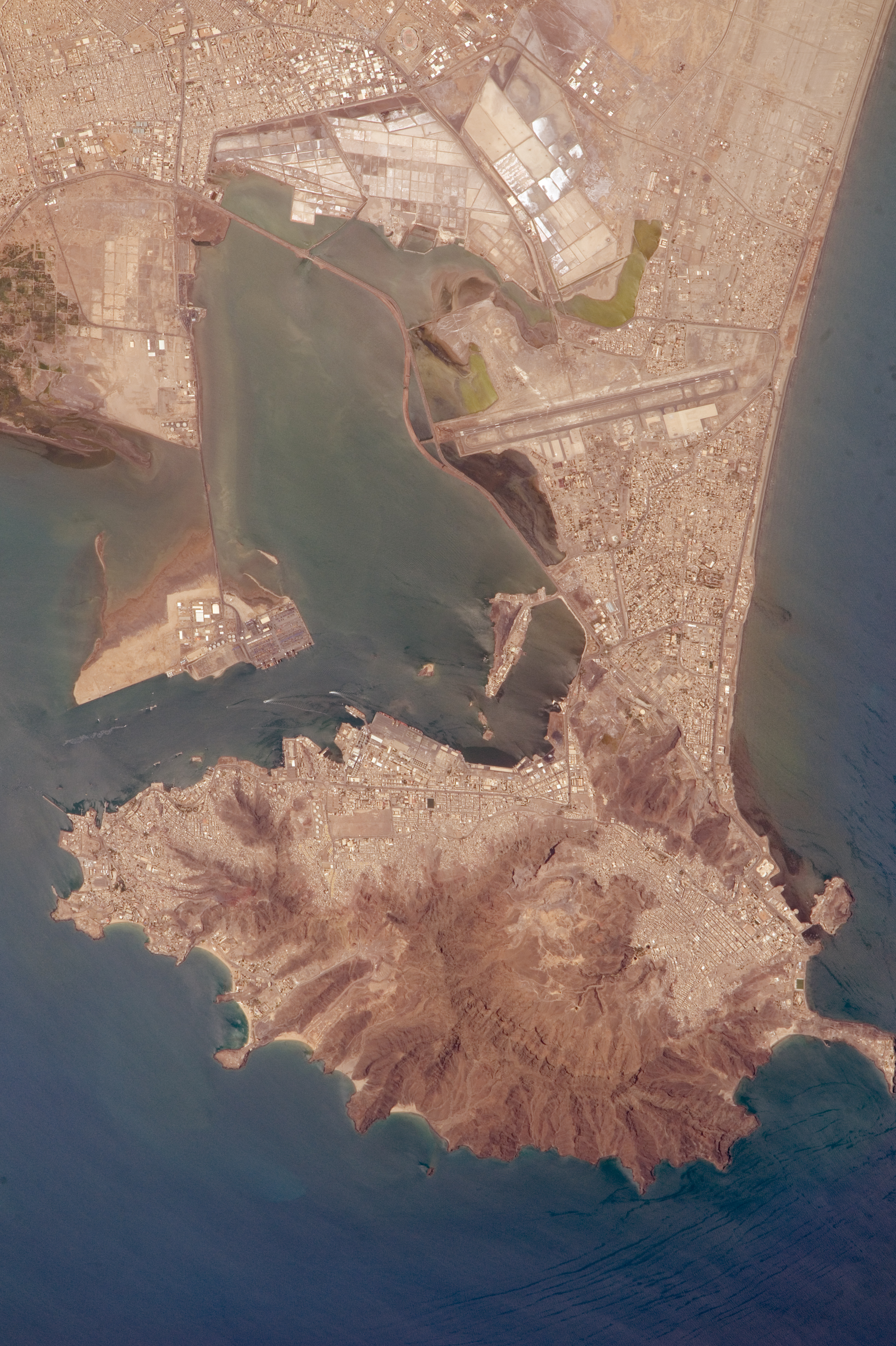
How Far Are the Houthis From Aden?
As of November 24, Houthi forces were approximately 60 kilometres from the city, according to Reuters and AP — a distance that had closed from roughly 100 kilometres just six days earlier, when The National reported their position on November 18. The advance followed the November 15 withdrawal of government-allied forces from Dhubab and the coastal territory around Bab el-Mandeb, which the government described as a “redeployment” but which independent analyst Ali al-Dahab called “a retreat or a withdrawal with the same meaning, and not a redeployment, because the withdrawal left a vast vacuum filled by the Houthis,” as he told Al Jazeera.
The Houthis have seized at least two districts in Lahj province and taken the mountainous Al-Maqatirah region, through which runs the main road connecting Aden to Taiz, according to AFP. They have also fully encircled Taiz itself, trapping an estimated two million people, according to Al Jazeera’s November 18 reporting. The road cut means Aden’s connection to the country’s third-largest city — and to any overland reinforcement route from the north — now passes through Houthi-held territory, a reality that transforms the city’s defence from a tactical problem into a logistical one.
The loss of the Bab el-Mandeb coastline carries consequences beyond the ground war. It gives the Houthis a physical presence along one of the world’s busiest maritime chokepoints, reinforcing the maritime threat they had already demonstrated by targeting Red Sea shipping before the current escalation. Yemeni foreign ministry official Marwan al-Noman asked the United States and Western countries to support the coast guard in intercepting smuggled weapons and to train Yemeni forces fighting on the ground, telling AP: “The Houthis are a terrorist organization. They threaten Yemenis first, and then every nation whose ships cross the Red Sea.”
Inside Aden, government forces have established checkpoints, pulled in reinforcements and dug trenches and earth barricades, Reuters reported on November 24. Yemeni army spokesman Colonel Majed al-Nuzaily, speaking at a virtual briefing, said forces were positioned “on a defense line built to stop the Houthi advance” north and west of the city. He invoked the memory of 2015, when the Houthis briefly seized Aden’s presidential palace before being driven out by armed residents and coalition airstrikes: “Aden is a red line. It was a red line in 2015, when the Houthis came to the city and its people drove them out.”
The One-a-Night Interceptor Drain
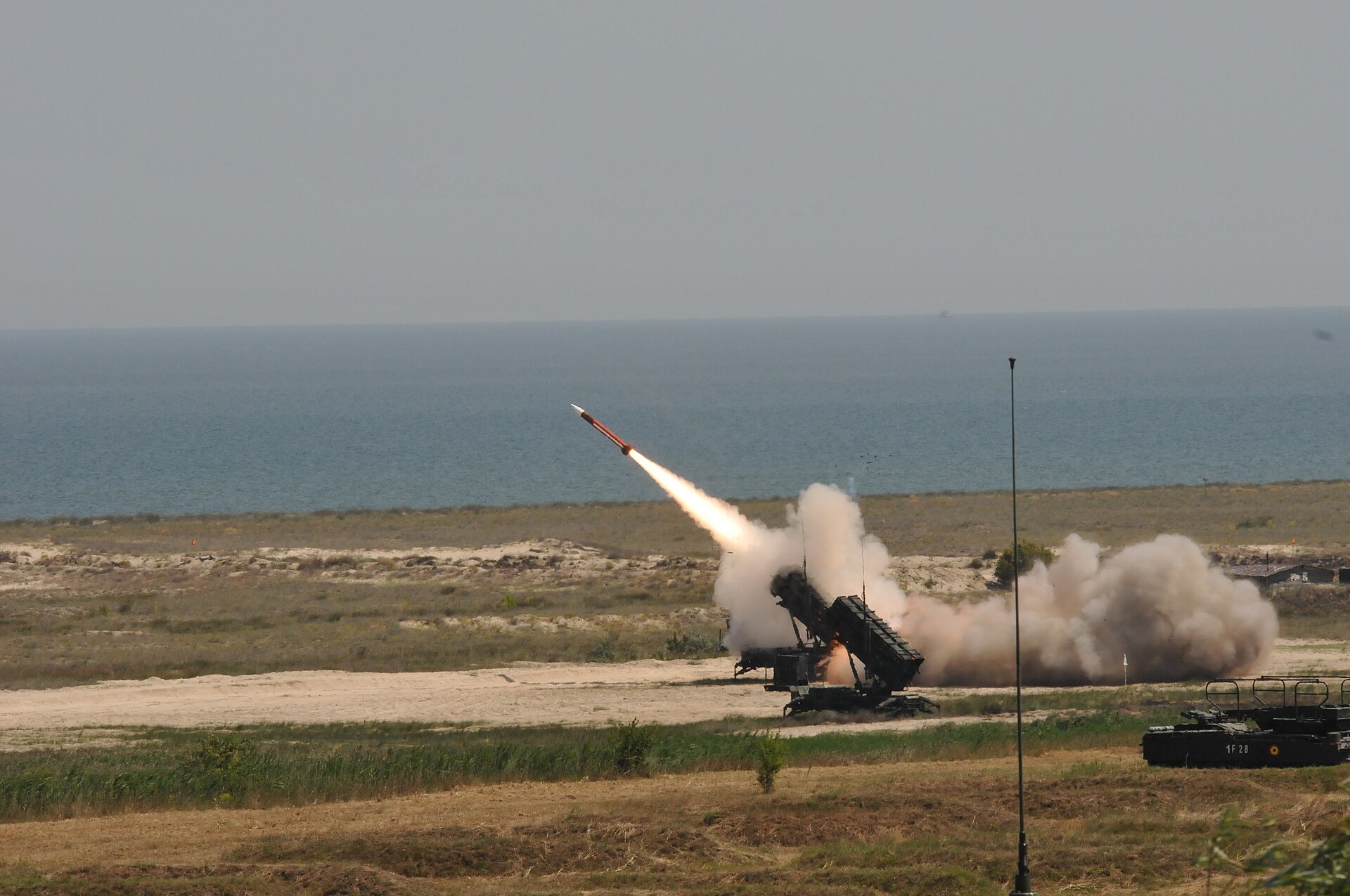
The missile campaign against Riyadh is not designed to flatten the financial district — it is designed to empty Saudi Arabia’s interceptor magazines. Defence analysts told The National on November 20 that the Houthis have adopted a tactic copied from Iran’s operations against Bahrain: firing a single missile per night, forcing Saudi air defences to activate and expend an interceptor whose replacement takes months to deliver, then standing down until the following evening. Nawaf Obaid, a Saudi security analyst at King’s College London, described the logic: “The Houthis, with their severely degraded missile launch capacity because of precise Saudi air strikes, are trying as much as they can to stretch Saudi air defences over time.”
The Houthis are not improvising — they are running a tested playbook, now scaled against a kingdom whose population centres and critical infrastructure are dispersed across a vast territory, with each site that requires active air defence representing another drain on a finite interceptor stockpile that the global supply chain cannot replenish quickly.
The arithmetic of attrition works in the Houthis’ favour, at least in the short term. The National reported that the group’s remaining ballistic missile inventory is estimated at 100 to 200 — a small arsenal, but one that is cheap to fire and far cheaper than what is expended to intercept it. Lockheed Martin’s Patriot PAC-3 MSE production line serves multiple buyers, and Saudi Arabia asked the US, UK, France and other partners for more interceptors, including ground-based systems and air-to-air missiles adapted for drone interception, according to Semafor.
“Air-defence success cannot be measured solely by the number of missiles intercepted — it must also be measured by whether the country can keep operating normally.”
Defence source in Riyadh, to The National
By that standard, the PIF Tower strikes represent a failure that interceptor statistics cannot disguise. The building that houses the administrative offices of the kingdom’s sovereign wealth fund has been hit twice in five days, the Houthi spokesman has told its occupants to evacuate, and the nightly launches have forced Riyadh into a rhythm of alerts and all-clears that disrupts the capital even when the interceptors work. Francis Tusa, a defence analyst, told The National that Saudi Arabia would benefit from “an integrated air defence network, sharing data on tracks” with regional partners rather than relying on national systems alone — a recommendation that implicitly acknowledges the current architecture is not coping with the volume.
Can Saudi Arabia Fight Two Fronts at Once?
This is the question the Houthi campaign is designed to make unanswerable. Coalition air assets are finite, and every sortie devoted to striking Houthi positions in Sanaa, Saada and Hodeidah — the coalition struck 60 targets across those provinces on November 17-18, according to coalition spokesman al-Maliki and Al Jazeera — is a sortie not available for close air support over the Lahj front where the ground war will be decided. Every interceptor fired over Riyadh is one fewer in the magazine when the next missile arrives the following night.
The coalition’s tactical dilemma sits inside a larger strategic failure. Operation Dawn of Yemen, launched on October 5 with 100 warplanes according to al-Maliki, was supposed to be the campaign that broke the Houthi advance. It produced early gains: government forces said they had secured the Dhubab area and the Bab el-Mandeb Strait in the first week, according to The National. By November 5, Al Jazeera described the operation as a “war of attrition” with no breakthrough to major Houthi population centres. By November 15, government forces had withdrawn from Dhubab entirely. The territory won in October was lost in November, and officials have said the campaign could extend six months into 2027 — but the trajectory suggests endurance rather than momentum, and the Houthis are closer to Aden now than they were before the offensive began.
The air campaign continues to impose costs — Houthi-run media claimed coalition strikes killed at least 17 people across rebel-held territory on November 18, according to France 24, and the coalition has struck Hodeidah port repeatedly. But air power, however persistent, has not translated into ground control, and the Houthis have demonstrated that they can absorb punishment from the air while simultaneously gaining territory on the ground and launching projectiles at the Saudi capital — which is the two-front capability that makes their campaign sustainable in ways that the coalition’s air-centric response is not.
King Salman responded to the reversal on November 16 by removing the coalition’s Yemen commander and appointing Chief of General Staff Fayyadh al-Ruwaili — who has held the top military staff position since February 2018 — to command the coalition’s joint forces directly. Command changes seven weeks into an operation that was announced with 100 warplanes are not confidence-building measures; they are concessions that the original plan did not survive contact with a force that is simultaneously advancing on the ground and hitting the patron’s capital from 1,500 kilometres away.
Why Have Saudi Retaliation Vows Not Changed the War?
The pattern has repeated three times in three months, and each repetition has produced the same sequence: strong language, air strikes, and unchanged ground dynamics. Each vow followed an escalation in Houthi attacks; none preceded a reversal on the ground.
| Date | Event | Saudi response | Outcome |
|---|---|---|---|
| Sept 8 | Houthi strikes wound 73 across Saudi cities | “All necessary operational measures” (NPR / Al Jazeera) | Air strikes on Yemen; no documented ground change |
| Oct 10–12 | KKIA strikes kill 13, wound 300+ | “Respond decisively” (Washington Post); Dawn of Yemen launched Oct 5 | Early gains reversed by Nov 15 |
| Nov 19 | PIF Tower struck (Houthi-claimed) | 60 targets struck Nov 17–18 (Al Jazeera); missile intercepts ongoing | PIF Tower struck again five days later |
| Nov 24 | PIF Tower struck again; 11 wounded | “Won’t tolerate any infringement” (AP); al-Ruwaili given command Nov 16 | Pending |
What has not followed any of these vows is a measurable change in the Houthis’ ability to fire missiles at Saudi cities or advance on the ground. The air campaign has degraded the group’s missile stocks — Obaid credited “precise Saudi air strikes” for the reduction — but it has not stopped the nightly launches or prevented the projectile that reached the PIF Tower on November 24. The ground offensive, launched seven weeks ago with 100 warplanes, has stalled and reversed. The pattern suggests that Saudi Arabia’s current force structure can punish the Houthis from the air without achieving the ground-level pressure required to force them into a defensive posture or reverse their territorial gains across Lahj and the approach to Bab el-Mandeb.
The disconnect between vow and outcome points to a structural problem rather than an execution failure. Air strikes can destroy missile launchers, ammunition depots and command posts, but the Houthis have spent a decade dispersing their military infrastructure across mountainous terrain precisely to survive air campaigns. Mona Safwan, a Yemeni journalist and political analyst, told France 24 on November 18 that “the Houthis deserve credit for being clear about their intentions, and they are always the ones who decide and impose their will.” The coalition, by contrast, is reacting — absorbing strikes, issuing statements, and hitting back at targets that do not appear connected to the command-and-control decisions behind the nightly missile launches.
What Would a Siege of Aden Look Like?
Most analysts who have assessed the advance do not expect a frontal assault on the city. Karim Sader, a political scientist specialising in Gulf states, told France 24 on November 18 that the Houthis favour “the scenario of an encirclement, or even a siege” over “a lengthy and costly frontal offensive,” because they lack the resources to storm a city of more than 1.2 million people, as France 24 reported. “They know that conquering Aden will not be easy,” Sader said. “While they have achieved significant military successes, they do not have the necessary resources to storm Aden so far.” Defence analyst Wolfgang Pusztai considered “an offensive to seize the city unlikely,” telling the Gateway Pundit that the Houthis would face “bloody urban fighting.”
“Since their primary objective is to put themselves in a position of strength ahead of potential talks, they will seek to gradually strangle the city to force their opponents to negotiate.”
Karim Sader, political scientist, to France 24
The more likely outcome, in Sader’s assessment, is a gradual strangulation designed to force the government and its Saudi patron to the table on Houthi terms. Tawfik Alhamidi, a Yemeni political analyst, told The Media Line that the Houthis’ “immediate objective is not necessarily to capture Aden itself, but to consolidate Houthi control around Bab el-Mandeb” — the chokepoint through which a substantial share of global shipping passes, and whose coastline the Houthis now hold.
A siege of Aden would create a humanitarian emergency to match what is already unfolding in Houthi-encircled Taiz, where an estimated two million people are already trapped. It would also force the coalition into a choice between trying to break the encirclement — which would require the kind of ground-force commitment that Saudi Arabia has so far avoided — and negotiating under conditions that the Houthis are explicitly designing to tilt in their favour. Safwan told France 24 that “the current military escalation is specifically aimed at forcing Riyadh to accept these conditions, and the further the Houthis advance, the tougher their conditions become and the more firmly they stick to them.”
The Makkah Pact and the Defence of Aden
The coalition’s answer to its manpower problem was supposed to be the Makkah Joint Defence Agreement, signed on August 7 and designed to bring Pakistani and Turkish forces into the fight. Turkey’s parliament ratified the pact on November 5 by a vote of 279-119, according to Anadolu Agency; Pakistan ratified on October 23. But ratification is not deployment, and the gap between the two has defined the pact’s contribution to the war so far.
Pakistan’s official position, stated to Al Jazeera, is that its role under the agreement is “strictly defensive.” Reuters reported in May that approximately 8,000 Pakistani troops, around 16 mostly JF-17 aircraft, two drone squadrons and an HQ-9 air defence system are in Saudi Arabia, financed by Riyadh. Pakistan sent four cargo planes of equipment to Aden in November, including air defence systems, light artillery, drones and anti-drone systems, according to The Arab Weekly — but defensive equipment for a threatened city is not the same as offensive capability aimed at reversing the Houthi advance through Lahj governorate.
Turkey has ruled out sending troops into Yemen for combat operations, according to Al Jazeera. The GCC defence ministers approved a forward command headquarters in Kuwait on November 22, which signals institutional development but does not place soldiers on the front lines where they are needed. The Houthis’ ground campaign is being fought against Yemeni government forces whose principal international backer provides air power and money but whose ground-force contribution remains, as CNN reported in October, “short of any major deployment of its own troops.”
The defence of Aden is further complicated by the politics of southern Yemen. The Southern Transitional Council — which controlled much of the south until Saudi-backed forces reclaimed Hadramout and the STC dissolved in January 2026, according to OPB — represents a constituency that Saudi Arabia sidelined and now needs. Sader told France 24 that “the Saudis once again need the STC forces that they had attacked and sidelined earlier this year, and must therefore reach out to the Emirates, which sponsor them,” adding that while coordination between Riyadh and Abu Dhabi “appears to be taking shape,” the alliance “remains fragile” because the southern forces “will not abandon their goal of independence, which is incompatible with the Saudi desire to preserve Yemen’s unity.”
When al-Nuzaily invoked 2015, he was recalling a city that defended itself — residents with guns, backed by coalition jets that had just entered the war and a patron whose own capital was not under nightly missile fire. Saudi Arabia in November 2026 is trying to protect its financial district and reverse the ground war simultaneously, with interceptor stocks that cannot keep pace with the drain and an offensive that is seven weeks old and moving backwards. Aden defended itself once, with allies who were fresh and a government that was not yet fighting for its own skyline.
Frequently Asked Questions
What weapons are the Houthis using against Saudi cities?
The November 19 strike on the PIF Tower was claimed by Houthi spokesman Yahya Saree as a cruise missile attack targeting King Khalid International Airport and the financial centre, according to a Middle East Eye live blog. The November 24 projectile was described by Saudi Civil Defence only as “unspecified,” and no group had claimed the attack as of publication. The variety of delivery systems — ballistic missiles, cruise missiles and drones, each requiring a different interception layer — is part of what makes the one-a-night tactic effective, because Saudi operators cannot predict which system they will face on any given evening.
Have the Houthis said they intend to take Aden?
Not directly. Mona Safwan, a Yemeni political analyst, told France 24 on November 18 that the Houthis have signalled they do not want to “invade the south or provoke a crisis with the people of the south.” She warned, however, that this restraint is conditional: “If Saudi Arabia uses Aden as a staging ground for its forces and as a launching point for an offensive against Sanaa, then the Houthis will seek to take the city — or even the entire south of Yemen, all the way to Socotra.” The distinction between encircling a city and storming it may determine whether Aden faces a protracted siege or urban combat, and the choice lies with the Houthis rather than with the government forces defending it.
What European and Asian military assets are deployed to Saudi Arabia?
According to The National’s November 20 report, Italy has deployed air-defence systems, radars and Eurofighter jets. France has military personnel at Yanbu on the Red Sea coast. The United Kingdom has committed RAF Typhoons and Royal Artillery personnel. South Korea is accelerating deliveries of its Cheongung-II medium-range air defence system. Ukrainian specialists are advising on countermeasures against Shahed-type drones, and Estonian firms have offered electronic warfare systems and autonomous interceptor drones, The National reported. These deployments supplement the American Patriot and THAAD systems that form the backbone of Saudi air defence but have not addressed the ground-force shortage in southern Yemen where the Houthi advance is being decided.
How many people have been killed and displaced since fighting resumed?
The United Nations says more than 1,600 people have been killed and over 300,000 displaced since fighting resumed, according to figures cited in AP’s November 24 reporting. The Houthi-run Health Ministry in Yemen claimed 83 killed and 146 wounded in the first days of Operation Dawn of Yemen alone, according to CNN’s October 6 report, though those figures have not been independently verified. Saudi Arabia has not published a comprehensive civilian casualty count from Houthi strikes on its territory; individual incidents are reported by Saudi Civil Defence as they occur, but no cumulative tally covering the full period of escalation has been released.
Are there any active negotiations between Saudi Arabia and the Houthis?
No confirmed negotiations were under way as of November 24. An Omani mediation channel has been reported by multiple outlets but its current status is unclear, and no source has confirmed active talks. The Houthis have stated their conditions publicly: lifting the Saudi-led blockade and ending the military intervention in Yemen, according to France 24’s November 18 report quoting analyst Mona Safwan. Saudi Arabia’s position, expressed through repeated retaliation vows and the continuation of Operation Dawn of Yemen, suggests Riyadh is not prepared to negotiate under conditions of Houthi military pressure — but the gap between that position and the coalition’s ability to change facts on the ground is precisely what the Houthi two-front campaign is designed to widen.
The House of Saud Daily Briefing
Saudi Arabia's news in 3 minutes, every morning. Free. See today's issue