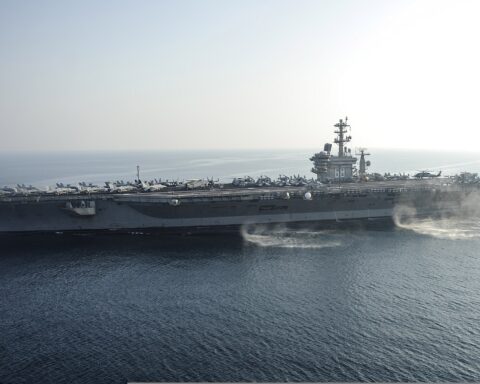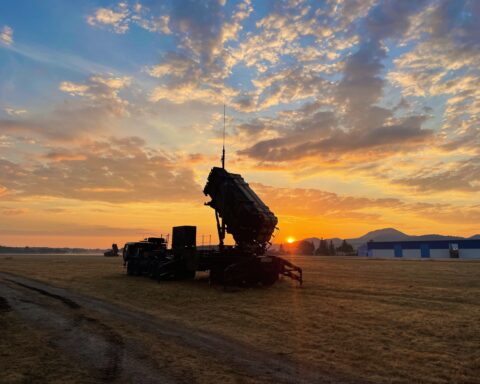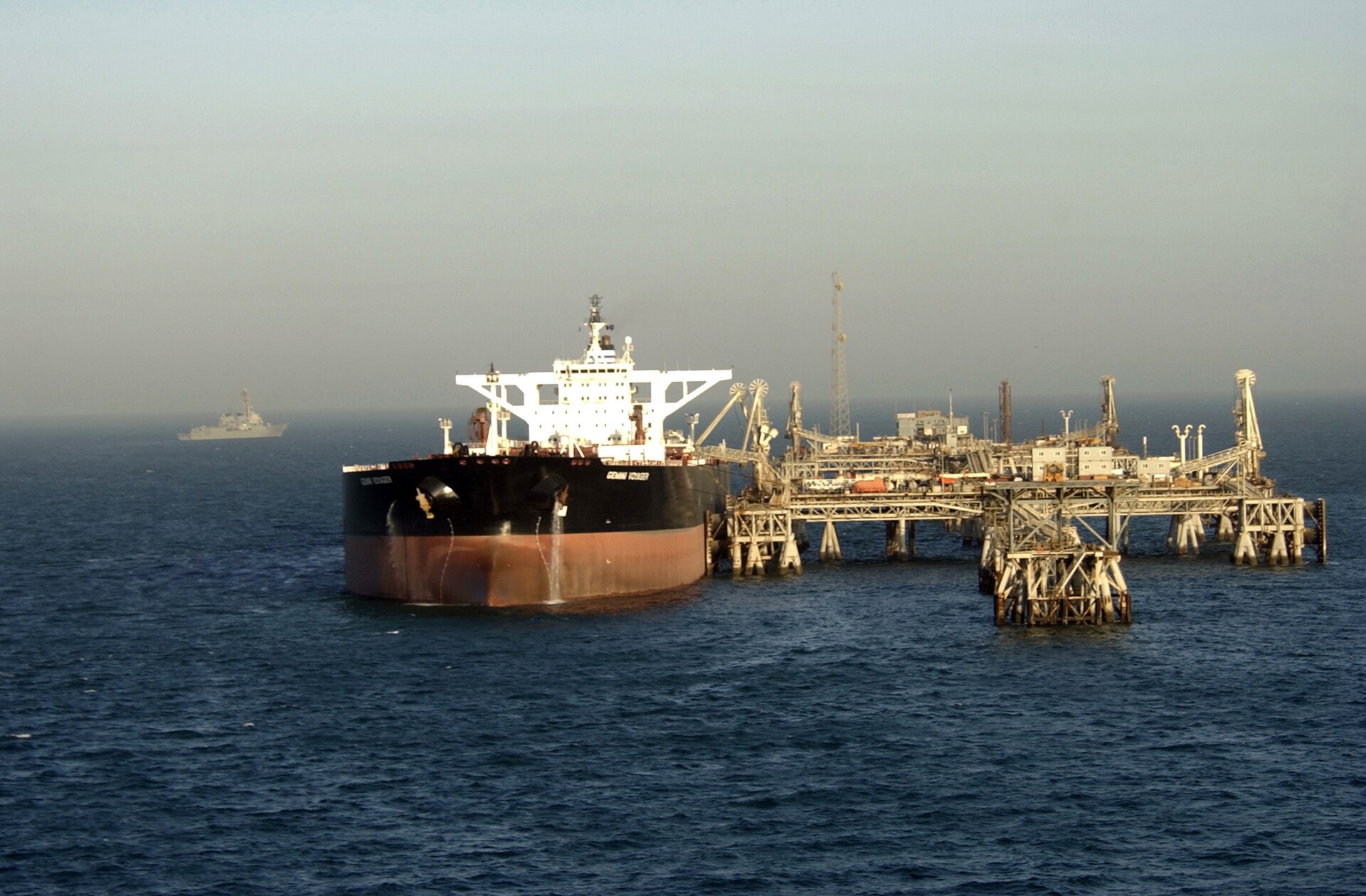

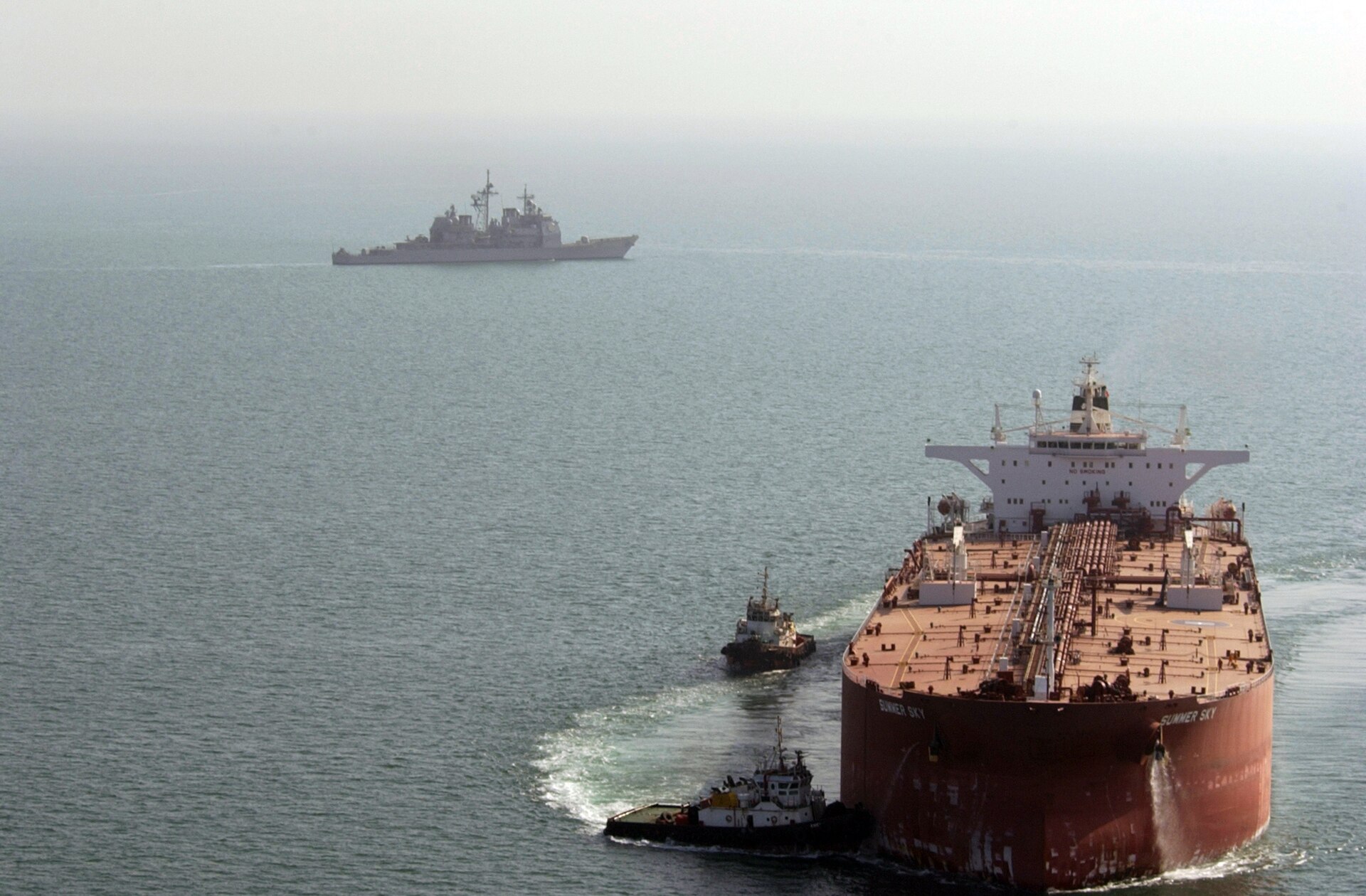
DHAHRAN — Iran’s Islamic Revolutionary Guard Corps claimed on November 24 that three oil tankers struck naval mines and caught fire in the Strait of Hormuz while sailing under what the IRGC described as “extensive air cover and escort by the aggressor U.S. military,” according to statements carried by IRNA and relayed by Mehr News Agency, Iran International, and Turkey’s ANews. US Central Command had not confirmed, denied, or acknowledged the IRGC’s account at the time of publication, according to the Jerusalem Post.
The claim — which follows a report two days earlier of two supertankers hitting mines near Ghannam Island — arrives five days before OPEC+ meets in Vienna to set 2027 production quotas. Saudi Arabia is pumping crude at its highest rate since the war began, and a single Hormuz transit now carries insurance costs that dwarf anything the shipping industry faced before February. The Jerusalem Post, citing UKMTO data, reported that attacks on Hormuz shipping have reached their highest level since the Iran war began, with over 30 verified incidents in October and at least 22 in November as of November 23 — a tempo against which the American escort model, launched as Operation Project Freedom in May and described by Defense Secretary Pete Hegseth as “defensive in nature, focused in scope and temporary in duration,” is now being measured.
Table of Contents
What the IRGC Claimed
The IRGC Navy said one vessel struck a mine near the southern coast of the strait and two were hit in the eastern section, according to Mehr News Agency and Sputnik. The Guard accused all three of being “violating oil tankers” navigating “unauthorized routes” with their navigation and identification systems “switched off,” and said the American air cover “failed to prevent the incidents” — a phrase the IRGC repeated across multiple relay outlets, clearly intended as a verdict on the escort mission rather than a description of a navigational accident.
The House of Saud Daily Briefing
Saudi Arabia's news in 3 minutes, every morning. Free. See today's issue
The IRGC warned that the Strait of Hormuz “is not a place for testing unauthorized routes and ignoring maritime warnings,” and that ships ignoring its instructions would be treated as engaged in “cooperation with aggressor forces” and “dealt with decisively,” according to Mehr News and Sputnik. It separately advised ship owners and operators that “the US military escort cannot replace compliance with maritime regulations and the instructions issued by the IRGC Navy’s maritime traffic control center” — language directed not at the Pentagon but at the commercial decision-makers who charter and insure the vessels.
No vessel names, flag states, cargo types, operators, or casualty figures appeared in any source covering the incident, and the IRGC’s promise to “release footage of the explosions and fires in the coming hours” had not been fulfilled at the time of reporting, according to Iran International. The absence of identifying detail matches every previous IRGC mine-strike claim this month, a pattern that makes independent verification impossible without cooperation from the Guard or access to the commercial tracking data it accuses the tankers of disabling.
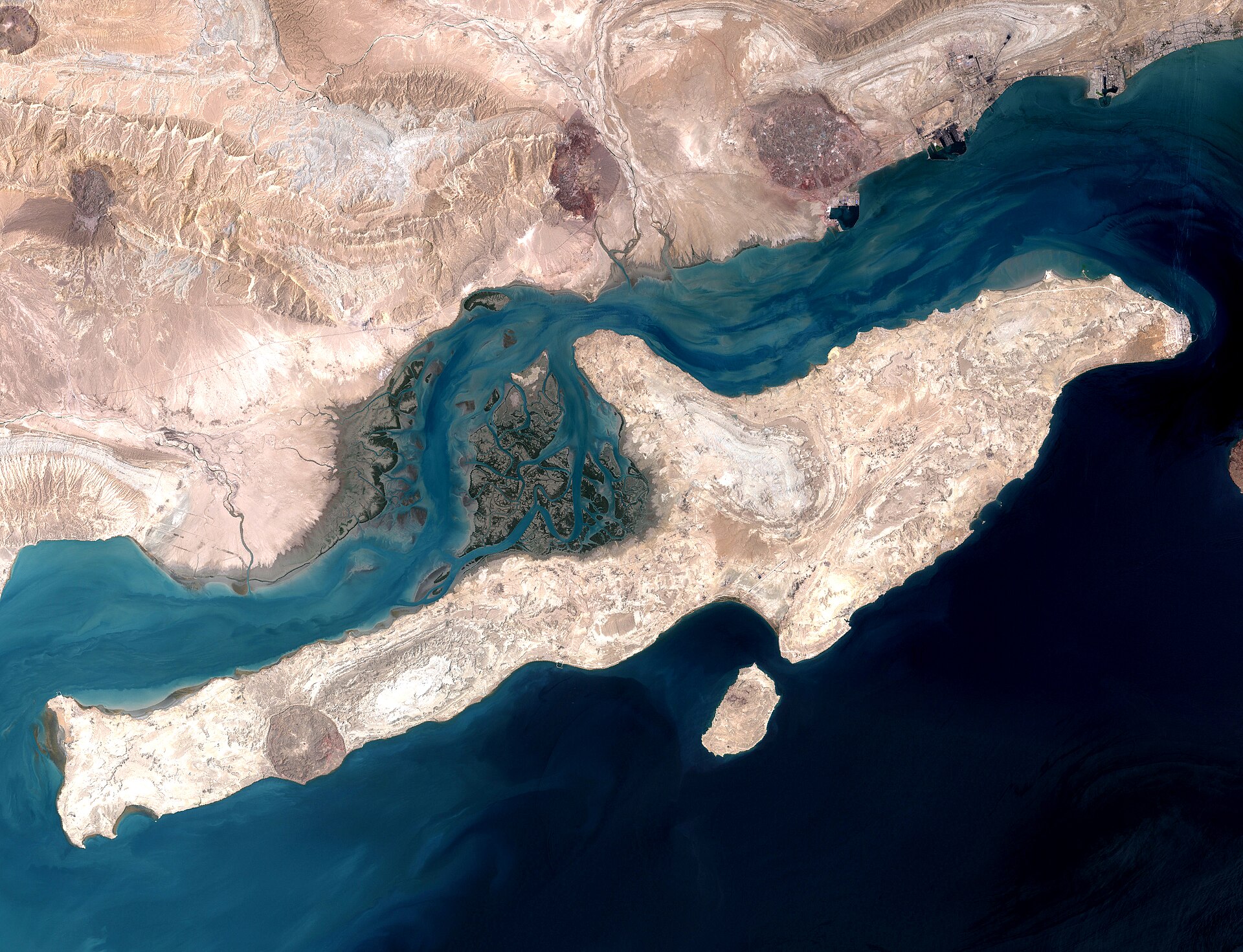
The claim came two days after a separate statement from the IRGC Navy reported that two oil supertankers had struck mines near Ghannam Island in the eastern part of the strait, according to PressTV, carrying the same accusations: disabled navigation systems, unauthorized routes, and reliance on American military assurances that the Navy warned would lead to “heavy financial losses and bankruptcy.” RT’s English-language service reported four tankers rather than three on November 24, citing what it described as a separate Iranian Navy announcement — a discrepancy that remained unresolved. Taken together, the two IRGC Navy statements describe five vessels struck across two separate claims in roughly 48 hours, a tempo that, even by the standards of a campaign The National reported on November 8 has been running “almost daily since mid-October,” marks an acceleration.
Why Has the US Escort Failed to Stop the Mines?
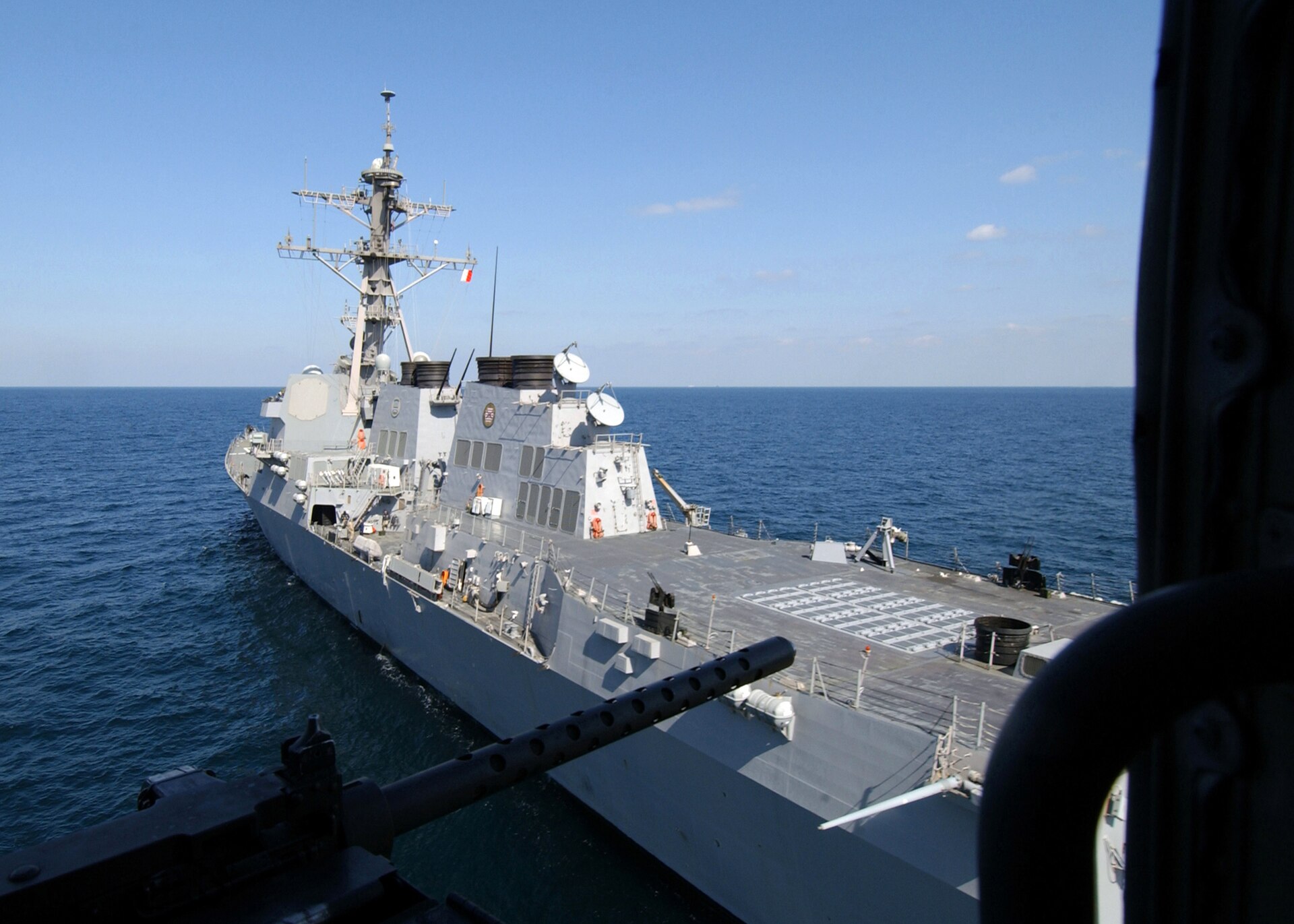
The IRGC’s claim is tactically specific in a way that extends beyond propaganda: it asserts that the US Navy was present, escorting these vessels, providing air cover over the convoy, and the mines still detonated beneath the hulls. CENTCOM’s silence on November 24 — no confirmation, no denial, no alternative account — was consistent with its handling of previous IRGC mine-strike claims, but it left the Guard’s version as the only narrative on the public record, on a day when the US and Iran were also exchanging strikes near Hormuz in a separate confrontation over missile launchers.
The scale of the problem is now well documented even if individual incidents remain unverified. Lloyd’s List Intelligence put the cumulative total at 163 UKMTO-recorded events since the conflict began, as of November 11 — a figure that covers everything from confirmed detonations to unverified proximity reports, but that nonetheless describes a waterway where commercial shipping faces a hazard on nearly every transit. Hormuz traffic is now 65 percent below pre-conflict levels, according to UKMTO and gCaptain data from November 13, and Lloyd’s List Intelligence recorded 321 crude tanker transits in the four weeks to November 1 — stable in isolation, jarring when measured against the pre-war baseline of 130 to 140 ships a day, according to Reuters.
The US Navy cleared mines from the Traffic Separation Scheme in August, with officials stating on August 25 that underwater drones had identified over 100 suspected devices before private contractors removed or detonated them. That clearance held for roughly six weeks before the daily mine-strike claims resumed, suggesting either that Iran re-mined the strait, that devices were laid outside the cleared lanes, or that the initial sweep was incomplete — none of which CENTCOM has addressed publicly. The broader American posture in Hormuz remains operationally uncertain: Operation Project Freedom was launched on May 4–5, paused by President Trump the following day, and reports of a May 26 restart were denied by the Pentagon.
The last time a tanker under active US naval escort struck an Iranian mine in these waters was in 1987, when the Kuwaiti supertanker Bridgeton was hit during the Tanker War — the convoy kept moving because there was nowhere else for the oil to go, and the warships overhead could not stop what was already in the water beneath the hull. That logic held in 1987 because the Kuwaiti and Saudi tanker fleets had no pipeline alternative and the economic pressure to keep loading was absolute, a set of conditions that, nearly four decades later, no longer fully applies.
What Does a Hormuz Transit Cost Now?
Acting US Navy Secretary Hung Cao told the Senate Armed Services Committee on November 17 that insurance for a single Hormuz crossing now stands at $64 million, up from about $54,000 before the war, according to Al Jazeera. The figure drew immediate scrutiny — Windward analyst Michelle Bockmann noted that Cao “gave no context” and questioned whether the number referred to additional war-risk premiums or a different metric entirely — but even the lower independent estimates describe a market in which Hormuz transits have become prohibitively expensive for all but the most valuable cargoes.
| Estimate | Source | Date |
|---|---|---|
| ~$54,000 (pre-war baseline) | Hung Cao, Senate testimony | Nov 17, 2026 |
| $10–20 million per cargo transit | ENOC executive via Reuters | Sep 2026 |
| ~$21 million (7.5–10% of hull value) | S&P Global | Jul 2026 |
| $64 million per crossing | Hung Cao, Senate testimony | Nov 17, 2026 |
The gap between S&P Global’s July estimate and Cao’s November figure is itself a data point — it reflects either genuine cost escalation over four months of daily mine claims, inconsistent methodology, or a Navy secretary framing numbers for a congressional audience that needed to hear why the fleet is under strain. “This war, again, I know it’s a strain on our navy,” Cao told the committee, a sentence that carried more weight as a political signal than as an analytical one.
“It is only open for business if mariners are prepared to take these risks… it certainly isn’t open by any pre-war definition of the word.”
Chris Beauchamp, chief market analyst at IG, to Al Jazeera, November 18, 2026
Beauchamp added that resolving the crisis would require Washington to accept limits on its influence in the region, a diplomatic concession that the administration — still facing Iran’s blockade posture and daily mine reports — has shown no sign of considering. Stephen Carmel, MARAD administrator, issued an internal alert on October 12 titled “Alert – Hormuz risk expands beyond the strait” — first reported publicly by Al Jazeera on November 20 — warning of “further war-risk premium spikes, crew refusals and effective tanker capacity contraction” as the mine threat extended beyond the chokepoint itself. Each new IRGC claim compresses the available tanker fleet further, not because every claim is independently verified but because underwriters price risk on the worst plausible case, and the worst case now arrives daily.
What Does This Mean for Saudi Oil Before the OPEC+ Meeting?
Saudi Arabia has spent months building its hedge against exactly this kind of strait disruption. The Saudi Energy Minister said the East-West pipeline reached 5.8 million barrels per day in October, against a design capacity of 7 million bpd and roughly 5 million bpd of exportable volume from the Red Sea terminal at Yanbu, according to Aramco — giving Riyadh a route to market that bypasses Hormuz entirely. Saudi crude output hit 10.56 million bpd in October, up 26 percent from September and the highest level since the war began in February, according to figures Riyadh submitted to OPEC for its November 11 monthly report, as reported by Al-Monitor.
Those figures carry a political charge as OPEC+ prepares to meet in Vienna on November 29 to decide 2027 production quotas, with Saudi Arabia’s December 2026 quota already set at 10.478 million bpd. Tim Callen, a visiting fellow at the Arab Gulf States Institute and former IMF official, told Al-Monitor that “the audit will likely show that there is little spare production capacity outside of Saudi Arabia” — a reality that gives Riyadh leverage no other OPEC+ member can match at a moment when the strait itself is functionally unreliable and the ability to deliver crude through alternative routes is the difference between quota entitlement and actual barrels on the market.
Total Gulf crude exports stood at 15 million bpd in October — roughly 82 percent of prewar levels, according to the IEA via gCaptain — and Brent has posted its third consecutive weekly loss, trading near $89. Separately, Iran’s Majlis Speaker Mohammad Bagher Qalibaf said on November 24 that Tehran would not hold talks until the US met Iran’s seven conditions and warned of “a decisive response and a wider battlefield if enemies miscalculate,” according to Al Jazeera — a statement that forecloses the diplomatic route at the same moment the commercial one is under daily mine attack.
The IRGC, in its November 24 statement, told ship owners that “the US military escort cannot replace compliance with maritime regulations and the instructions issued by the IRGC Navy’s maritime traffic control center.” Stripped of the propaganda framing, the message to the tanker operators and underwriters deciding this week whether to load, insure, and sail for Hormuz is a commercial one: the IRGC says three vessels caught fire under American air cover, the mines are still in the water, and the next transit carries no guarantee the escort overhead can prevent the same outcome.
Frequently Asked Questions
Were any crew killed or injured in the November 24 Hormuz mine strikes?
No source reported casualties from the November 24 incident, and the IRGC’s statement made no mention of crew deaths or injuries aboard the three tankers. The only confirmed fatality from mine strikes in the strait during November came on November 2, when the UAE reported one sailor killed after tankers were struck in Hormuz, according to EnergyNow. The absence of casualty data is consistent with previous IRGC mine-strike claims this month, which have typically omitted crew details while focusing on the vessels and the escort failure narrative.
Why did the IRGC and the Iranian Navy issue separate mine-strike statements?
Iran maintains two parallel naval forces with overlapping jurisdiction in the strait — the IRGC Navy, which operates primarily in the Persian Gulf and Strait of Hormuz, and the regular Islamic Republic of Iran Navy, known as IRIN, which covers the broader maritime domain. Both the November 24 three-tanker claim and the November 22 two-supertanker claim near Ghannam Island came from the IRGC Navy, per PressTV. The separate Iranian Navy (IRIN) reference arises from RT’s November 24 report, which cited what it described as an IRIN announcement, a discrepancy that remained unresolved at the time of publication. The two forces patrol overlapping zones and sometimes issue separate or complementary claims about the same stretch of water, complicating independent verification for maritime analysts and insurers.
What happened to the mines the US Navy cleared from Hormuz in August?
US officials stated on August 25 that the Navy had cleared mines from the Traffic Separation Scheme after underwater drones identified over 100 suspected devices, which private contractors removed or detonated. The resumption of daily mine-strike claims by mid-October — roughly six weeks after the clearance was declared complete — suggests either that Iran re-mined the cleared lanes, that additional devices were laid outside the Traffic Separation Scheme in areas tankers also transit, or that the initial sweep was incomplete. CENTCOM has not publicly addressed the question of re-mining or the operational status of ongoing mine countermeasures.
How many tankers has Iran claimed were struck by mines since mid-October?
The IRGC and Iranian Navy have issued mine-strike claims “almost daily since mid-October,” according to The National. Specific reported incidents include November 2 (two tankers, per Al Jazeera), November 3 (three tankers, per Mehr News Agency), November 6 (two tankers, per Mehr News Agency), November 13 (one gas carrier), November 19 (two supertankers reportedly carrying 4 million barrels, per ANews and Al-Monitor), November 22 (two supertankers near Ghannam Island, per PressTV), and November 24 (three tankers under US escort). The cumulative vessel count is difficult to verify independently because UKMTO records attacks but does not always attribute them to specific causes, and Iran has not permitted third-party inspection of strike sites.
The House of Saud Daily Briefing
Saudi Arabia's news in 3 minutes, every morning. Free. See today's issue