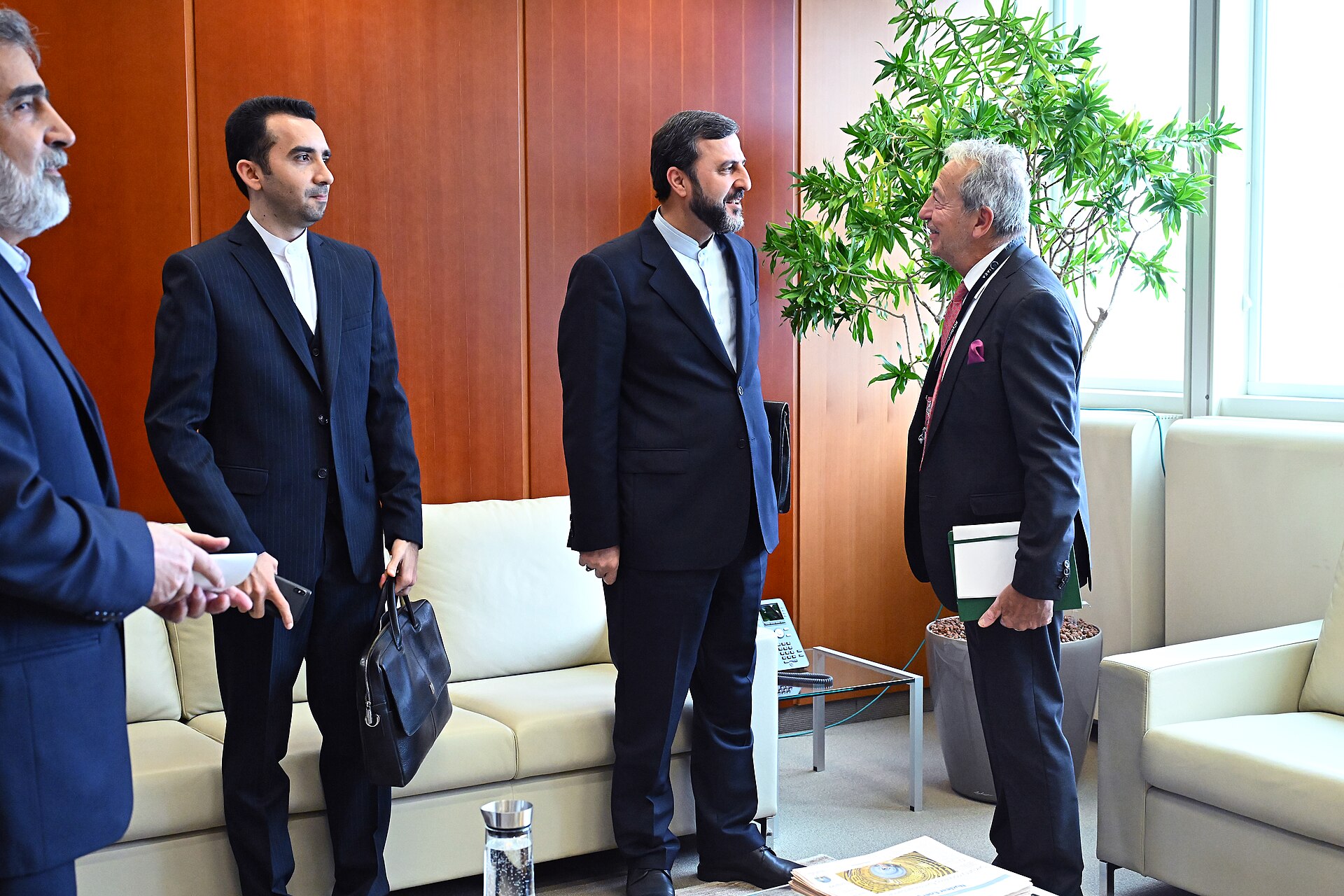

TEHRAN — Iran’s Deputy Foreign Minister Kazem Gharibabadi declared on July 18 that Tehran has suspended all commitments under the Islamabad Memorandum of Understanding, the 14-point diplomatic framework signed with the United States thirty-one days earlier. “We have suspended all of our commitments and are, in fact, no longer implementing them,” Gharibabadi told reporters. “We are not implementing them and are focused on defending the country,” he said, according to Middle East Eye.
The announcement formalized what the past seventeen days of military escalation had already decided. Since July 1, Iran has barred International Atomic Energy Agency inspectors from its bombed nuclear facilities at Fordow, Natanz, and Isfahan. Since July 8, when President Donald Trump declared the MOU “over” at the NATO summit in Ankara, neither side has observed any of the framework’s provisions. Gharibabadi’s language — “focused on defending the country” — mirrors the Article 51 self-defence notifications Iran filed with the United Nations to contest Security Council Resolution 2817, according to Islam Times.
Table of Contents
- What Gharibabadi Said on Day Thirty-One
- The MOU Collapsed Before Iran Made It Official
- Why Does the Self-Defence Language Matter?
- Rezaei’s Forty-Eight-Hour Window
- Has Mojtaba’s Conditional Approval Been Consumed?
- The IAEA Blackout and Four Hundred Kilograms of Enriched Uranium
- Frequently Asked Questions
What Gharibabadi Said on Day Thirty-One
Gharibabadi’s full statement carried three distinct elements. First, he attributed the breach to the United States: “The US has violated and suspended all its commitments within the framework of the Islamabad MoU.” Second, he declared Iran’s reciprocal suspension: “We have suspended all of our commitments and are, in fact, no longer implementing them.” Third, he reframed Iran’s military operations as a defensive posture: “We are not implementing them and are focused on defending the country,” as reported by ANI and Middle East Eye on July 18.
The defensive framing carries legal weight that extends beyond rhetoric. Iran has already filed formal Article 51 self-defence notifications with the United Nations in response to UNSC Resolution 2817, which condemned Iranian attacks on Gulf states. Tehran rejected that resolution as “adopted through a one-sided and politicized process” that “denied Iran’s inherent right of self-defense,” according to Islam Times. Gharibabadi’s “focused on defending the country” repeated the same self-defence framing Iran used in those formal UN notifications.
In a separate statement the same day, Gharibabadi eliminated any ambiguity about diplomatic re-engagement. “Iran will never start negotiations with the US under any circumstances,” he told ProPakistani on July 18.
The MOU Collapsed Before Iran Made It Official
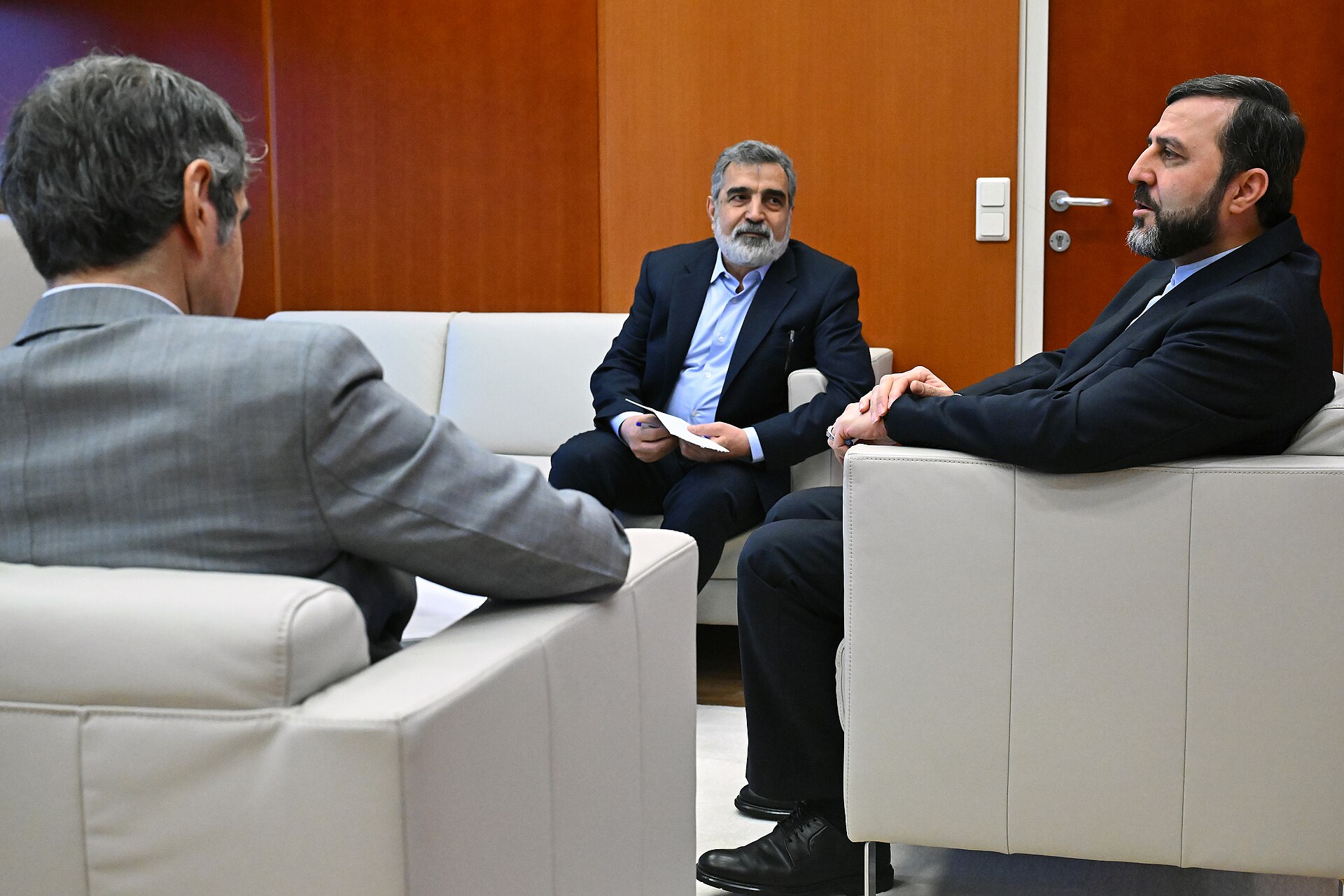
The Islamabad MOU was signed on June 17 under Pakistani mediation, establishing a sixty-day window for negotiations on sanctions relief, military de-escalation, and the nuclear file. The Arms Control Association assessed at the time that the framework was “fundamentally a non-nuclear deal that leaves key nuclear issues unresolved,” containing no enrichment ceiling, no centrifuge moratorium, and no IAEA inspection schedule.
The Middle East briefing 3,000+ readers start their day with.
One email. Every weekday morning. Free.
The framework’s functional collapse compressed weeks of diplomatic erosion into days. The United States revoked Iran’s oil sales general licence in late June, removing the economic incentive Tehran had received for signing. On July 1, Iran’s parliament speaker Mohammad Bagher Ghalibaf announced that IAEA inspectors “will not be granted any access” to nuclear sites struck by US bombs, a decision reported by Middle East Monitor. The Foundation for Defense of Democracies assessed on its July 14 podcast that “the MOU’s functional architecture collapsed within twenty-four hours” of the US resuming military strikes.
Trump’s July 8 declaration at the NATO summit in Ankara gave Iran the breach-attribution it needed to justify its own withdrawal. Iran formally withdrew compliance on July 13, Day 26 of the sixty-day window. Gharibabadi’s July 18 statement was the public codification of a position Tehran had adopted five days earlier.
The precise mechanism of Iran’s July 13 closure — Foreign Ministry Spokesman Esmail Baghaei’s “commitment for commitment” language on July 13 and his definitive “no plans for negotiations” declaration on July 15 — is documented in the five-day gap analysis of how Baghaei closed the MOU before Khamenei spoke.
The military escalation surrounding the diplomatic collapse has been lethal on both sides. US casualties in Operation Epic Fury stand at fourteen killed and 427 wounded, according to CENTCOM. Iranian casualties since July 6 have reached at least fifty killed and more than five hundred wounded, per figures the Iranian Health Ministry provided to Al Jazeera. Overnight on July 17-18, Iran struck targets in Oman, Jordan, Kuwait, and Qatar, wounding a child in Qatar, CBS News reported. The IRGC detained four commercial vessels in the Strait of Hormuz on July 18, according to Caliber.az.
Why Does the Self-Defence Language Matter?
Article 51 of the United Nations Charter preserves a member state’s “inherent right of individual or collective self-defence if an armed attack occurs.” Iran has invoked this provision explicitly, filing self-defence notifications with the UN that characterize US airstrikes as the armed attacks triggering the right. The Night Eight sorties on July 17-18 sent CENTCOM fighter jets approximately 650 kilometres into Iranian territory to strike targets near Yazd for the first time, according to CNN — the deepest penetration of Iranian airspace since Operation Epic Fury began.
By classifying all its military operations as self-defence under Article 51, Iran creates a procedural barrier at the Security Council. Any new resolution condemning Iranian operations would need to contend with Iran’s formal claim that those operations are defensive responses to prior armed attacks. Russia and China, both veto-holding permanent members, have historically been receptive to Article 51 arguments when they serve to block Western-sponsored enforcement actions. Iran’s rejection of Resolution 2817 as “politicized” and its explicit invocation of Article 51 self-defence are now both part of the formal UN record.
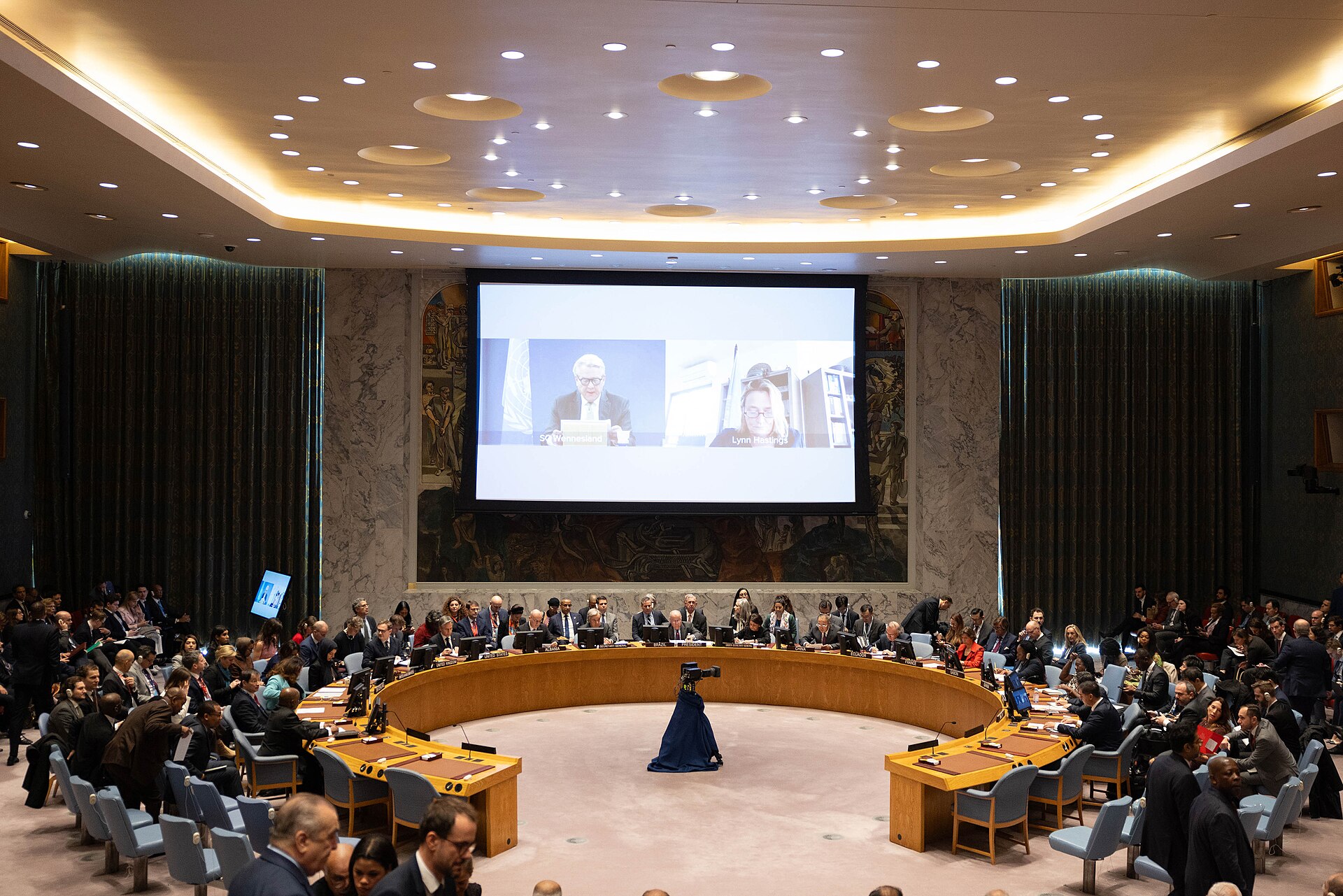
The effect of the self-defence classification is operational as well as legal. Iran’s state media have framed overnight strikes on four Gulf countries — Oman, Jordan, Kuwait, and Qatar — as defensive responses to prior US attacks on Iranian territory. Gharibabadi’s “focused on defending the country” embedded that same classification in a diplomatic statement, linking the MOU suspension to the military posture in a single public declaration on July 18.
Rezaei’s Forty-Eight-Hour Window
Gharibabadi’s announcement arrived less than twenty-four hours after Mohsen Rezaei, an IRGC official and military adviser to Supreme Leader Mojtaba Khamenei, delivered an ultimatum on state broadcaster IRIB. “If US attacks continue for another two or three days, we will enter a phase of full-scale offensive operations,” Rezaei said on July 17, as reported by the Times of Israel and Mediaite.
Rezaei went further than any senior Iranian official has since Operation Epic Fury began. “No political border will be secure against Iran’s offensive forces,” he said, adding that Iran “will no longer limit itself to retaliatory, like-for-like responses,” according to WION. The “two or three days” from July 17 places the earliest expiry of Rezaei’s window at July 19 and the latest at July 20.
Gharibabadi’s formal MOU suspension on July 18 — the day after Rezaei’s statement and before the window’s earliest closure on July 19 — placed the diplomatic and legal declarations ahead of the operational phase. The Supreme National Security Council, which manages Iran’s diplomatic and military decision-making under Article 176 of the constitution, would have needed to authorize both Gharibabadi’s public declaration and whatever operational shift Rezaei’s timeline foreshadows. That both statements emerged within twenty-four hours, with the diplomatic suspension preceding the military deadline rather than following it, aligns with a pattern of sequenced escalation: legal architecture first, then operations.
Rezaei’s window, if honoured, converts that retaliatory posture to offensive no later than July 20, according to his own public timeline delivered on IRIB.
Whether Rezaei’s ultimatum reflects genuine command authority or public performance — and the three institutional paths Iran faces as the deadline passes — is analysed in Who Ordered the Ultimatum Rezaei Cannot Enforce?
Has Mojtaba’s Conditional Approval Been Consumed?
Mojtaba Khamenei’s relationship to the Islamabad MOU was defined by a single written statement issued on June 18, one day after the signing. “In principle, I held a different opinion,” Mojtaba wrote, according to IranWire. “However, based on the commitment given to me by the honorable President, as the head of the Supreme National Security Council…” The statement delegated authority to President Pezeshkian and the SNSC while attaching conditions that Mojtaba never publicly specified.
Gharibabadi’s declaration that Iran has “suspended all of our commitments” raises a question that Iran’s constitutional architecture is not built to answer in public. Under Article 176, the SNSC operates under the Supreme Leader’s authority. Mojtaba’s conditional approval delegated the MOU’s management to the SNSC. If the MOU is now void, the delegation that accompanied it may also have lapsed — a question that hinges on whether the SNSC treats the 2020 strategic-action law, passed by parliament after the killing of Qassem Soleimani, as an independent source of authority for military and nuclear decisions.
Mojtaba has not appeared publicly for 127 consecutive days. His June 18 statement on the MOU was written, not delivered in person or on camera. Whether the SNSC can authorize the “full-scale offensive operations” Rezaei described — without a fresh Article 176 sign-off from a Supreme Leader who has not been seen since March — depends on a reading of the 2020 law that has not been tested under active wartime conditions. The law was passed during a period of asymmetric confrontation, not a multi-front military campaign involving strikes on four neighbouring countries in a single night.
The IAEA Blackout and Four Hundred Kilograms of Enriched Uranium
The MOU’s nuclear provision required only “status quo” maintenance — no enrichment ceiling, no centrifuge cap, no new inspection access. Even that minimal commitment is now formally void. Iran’s enriched uranium stockpile includes 440.9 kilograms of military-grade highly enriched uranium, according to the Arms Control Association. IAEA inspectors have been unable to verify the status of Iran’s bombed nuclear facilities for 121 consecutive days, a blackout that began months before Gharibabadi’s formal suspension of the framework.
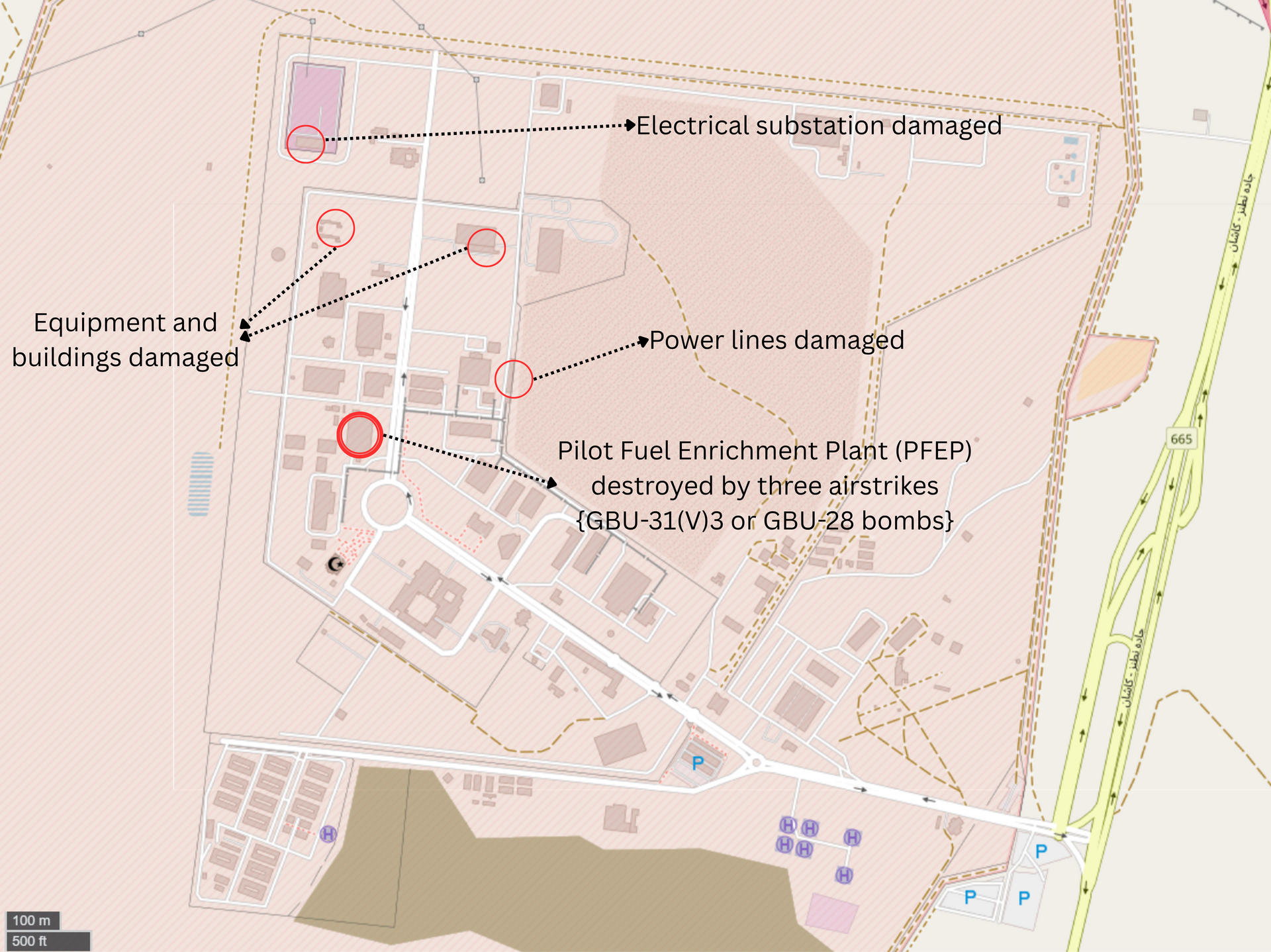
Ghalibaf’s July 1 announcement barring IAEA access means the agency cannot determine whether centrifuge cascades at Fordow, Natanz, or Isfahan have been rebuilt, whether enrichment has resumed at higher levels, or whether that stockpile has been moved or reprocessed. The MOU’s suspension removes the last diplomatic mechanism that could have provided the IAEA with a negotiated pathway back into those facilities. What remains is the IAEA’s statutory authority under Iran’s safeguards agreement — authority that Ghalibaf explicitly said Iran would not honour, as reported by Middle East Monitor on July 1.
The sixty-day MOU window would have expired on August 16. Gharibabadi’s statement that Iran will “never start negotiations with the US under any circumstances,” combined with the 121-day IAEA blackout and Rezaei’s escalation window, leaves the nuclear file without a diplomatic forum.
Frequently Asked Questions
What is the Islamabad MOU?
The Islamabad Memorandum of Understanding is a 14-point diplomatic framework signed by the United States and Iran on June 17, 2026, at the conclusion of talks mediated by Pakistan in Islamabad. The framework established a sixty-day window for negotiations covering sanctions relief, military de-escalation, and nuclear status-quo maintenance. It contained no binding verification mechanisms, no enrichment limits, and no IAEA inspection schedules. Pakistan brokered the agreement from a unique diplomatic position as a country maintaining relations with both Washington and Tehran. Saudi Arabia was excluded from the Islamabad negotiating track, as was the UAE, leaving both Gulf states dependent on a framework they had no role in shaping.
Who is Mohsen Rezaei?
Rezaei served as commander-in-chief of the Islamic Revolutionary Guard Corps during the Iran-Iraq War and later as secretary of the Expediency Discernment Council. WION described his current role as an “IRGC official and military adviser” to Supreme Leader Mojtaba Khamenei. His advisory role carries no formal command authority over military operations, but his IRGC background and access to the Supreme Leader give his public statements operational weight within Iran’s security establishment. His July 17 ultimatum — delivered on state broadcaster IRIB and reported by the Times of Israel, Mediaite, and WION — set a “two or three day” window before Iran would shift to “full-scale offensive operations.”
What does Iran’s Article 51 self-defence claim mean at the Security Council?
Article 51 of the UN Charter preserves a state’s right to self-defence when an armed attack occurs, pending Security Council action. Iran has filed formal self-defence notifications arguing that US airstrikes constitute the armed attacks activating this right. At the procedural level, any future Security Council resolution condemning Iranian operations would face a preliminary question: whether those operations fall within Article 51’s scope. Permanent members sympathetic to Iran’s legal position could invoke Article 51 as grounds for a veto or for blocking Chapter VII enforcement action. The claim does not require formal adjudication to serve its purpose; its value lies in creating procedural obstacles that consume time while military operations continue.
Can the MOU be revived before the sixty-day window expires on August 16?
Revival would require, at minimum, a bilateral ceasefire, a reversal of the US oil-licence revocation that removed Tehran’s economic incentive for the deal, and a renewed mediation effort — Pakistan’s intermediary role having been overtaken by the resumption of military operations. On the Iranian side, the SNSC would need fresh authorization from Mojtaba Khamenei, whose 127-day public absence and written-only communications complicate the constitutional pathway for any new diplomatic mandate. Gharibabadi’s declaration that Iran “will never start negotiations with the US under any circumstances” would itself need to be overridden by a higher authority — which, in Iran’s constitutional structure, means Mojtaba.
The air defence posture that allowed PSAB to absorb the July 18 strike without a coherent response — the HQ-9 command authority gap, the Sakhir Declaration left untouched, and the PAC-3 sovereignty trap — is detailed in Saudi Arabia Paid for the Shield It Cannot Fire.
Iran’s suspension of the MOU proved to be a prelude rather than a ceiling: Khamenei subsequently issued a personal repudiation of the Islamabad accord, removing the diplomatic constraint that had kept Saudi Arabia off Iran’s formal targeting list and closing the sixty-day window before Rezaei’s July 19 deadline arrived.