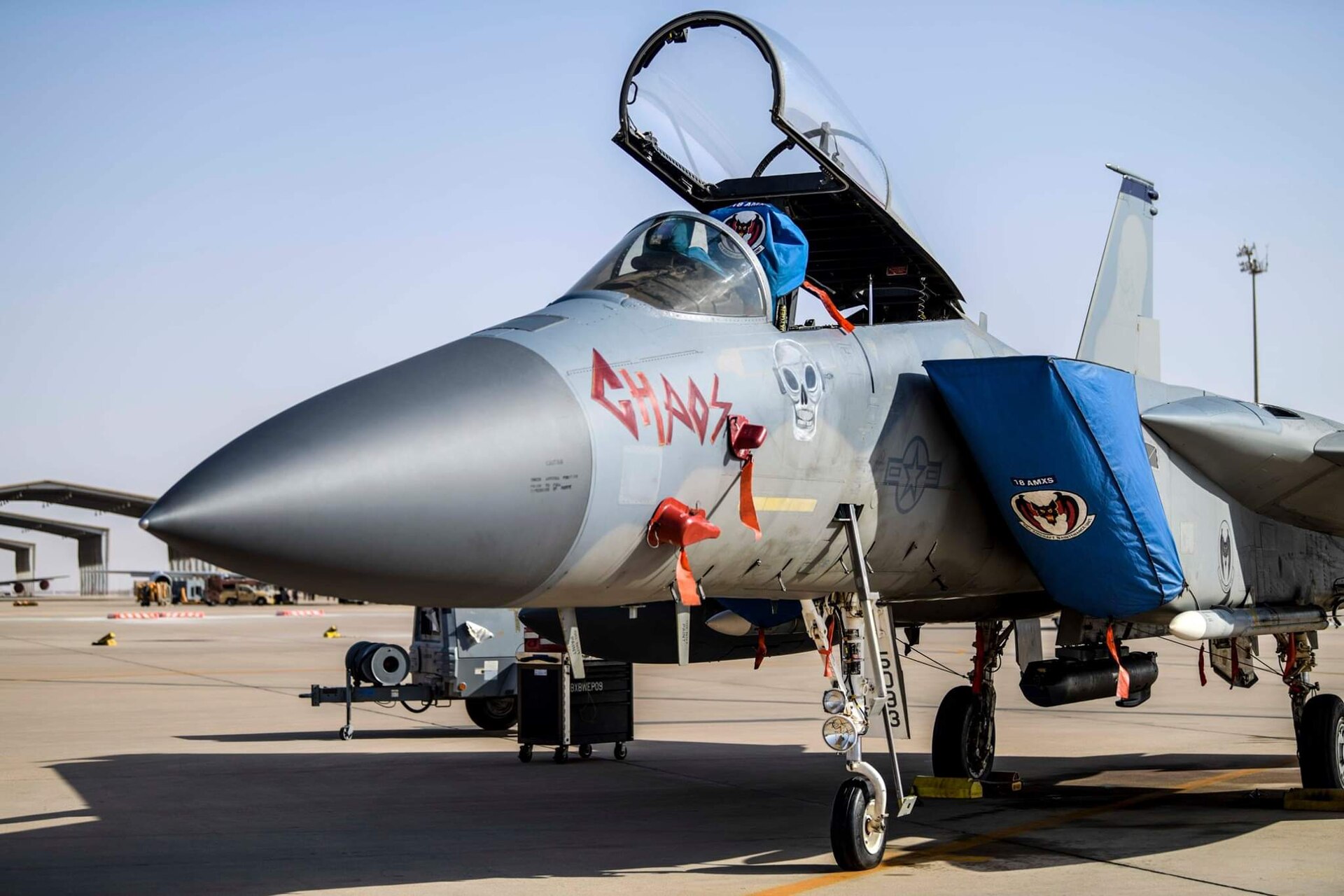
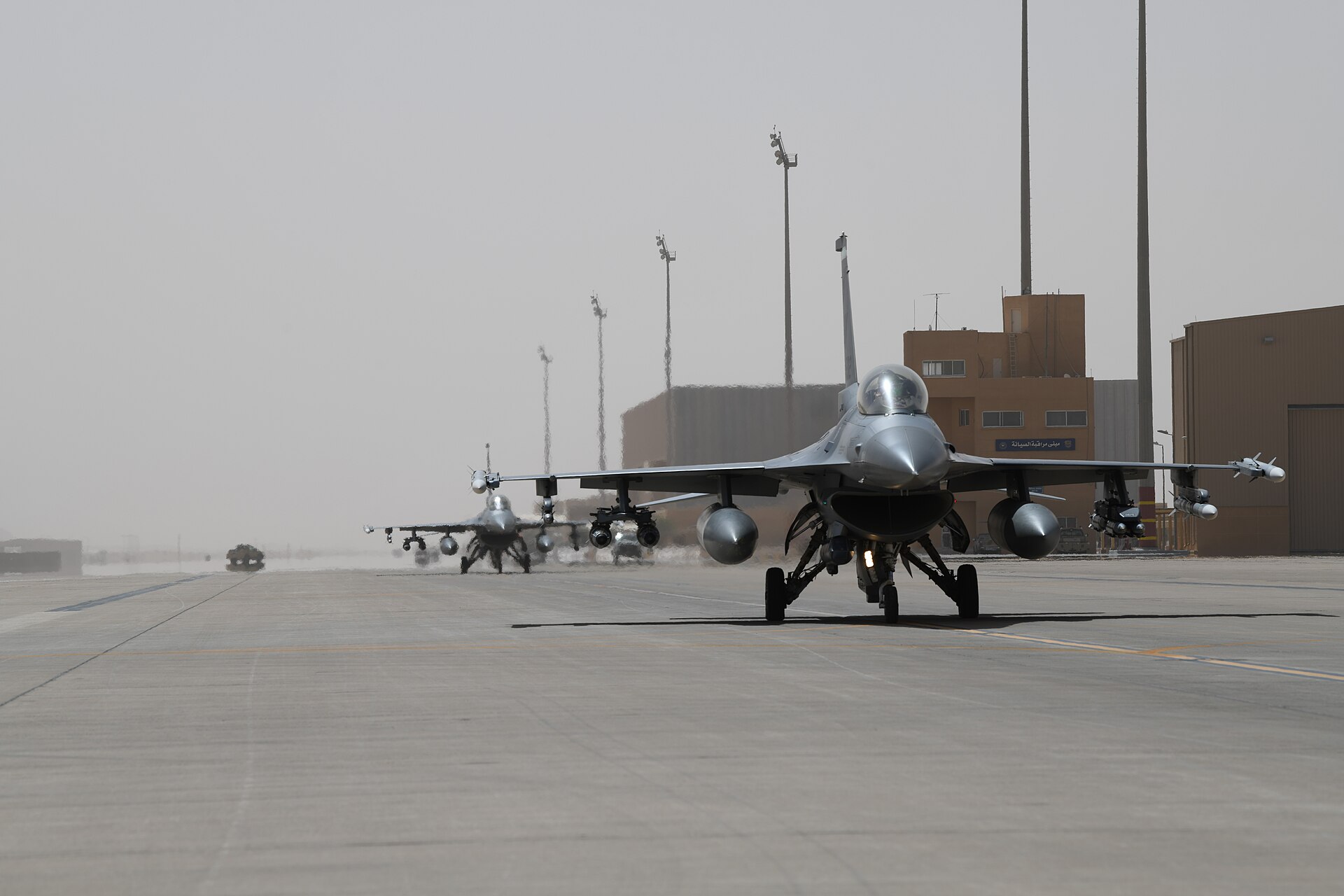
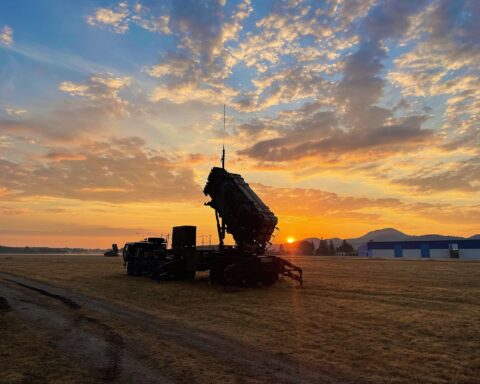
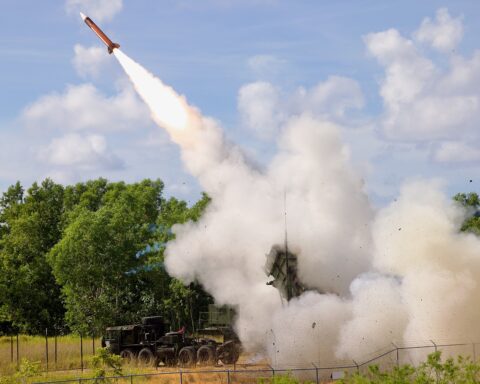
RIYADH — Iran’s ballistic missile struck Prince Sultan Air Base on July 18 not because Saudi Arabia lacked interceptors, but because its air defence doctrine collapsed before the warhead arrived. The IRGC sent drones first — expendable Shahed-136 loitering munitions that forced PAC-3 batteries to engage early, degraded radar acquisition windows, and opened a terminal corridor between fifty and seventy kilometres’ altitude that no deployed system in the Saudi theatre can close.
WION reported ten US soldiers wounded at the base. TRT World confirmed three missiles intercepted and at least one ballistic impact. Axios cited a US official confirming a ballistic missile struck a US base in Saudi Arabia. IRIB, the Iranian state broadcaster, claimed the warheads arrived “moments after refuelling planes took off” — a detail that, if accurate, signals real-time intelligence coverage of the most heavily defended US installation in the Gulf. Neither Washington nor Riyadh nor CENTCOM has issued a statement. What happened on Night Eight was not a failure of supply but a structural defeat — an air defence system designed for threats that arrive in single layers, meeting an adversary that attacks in three.
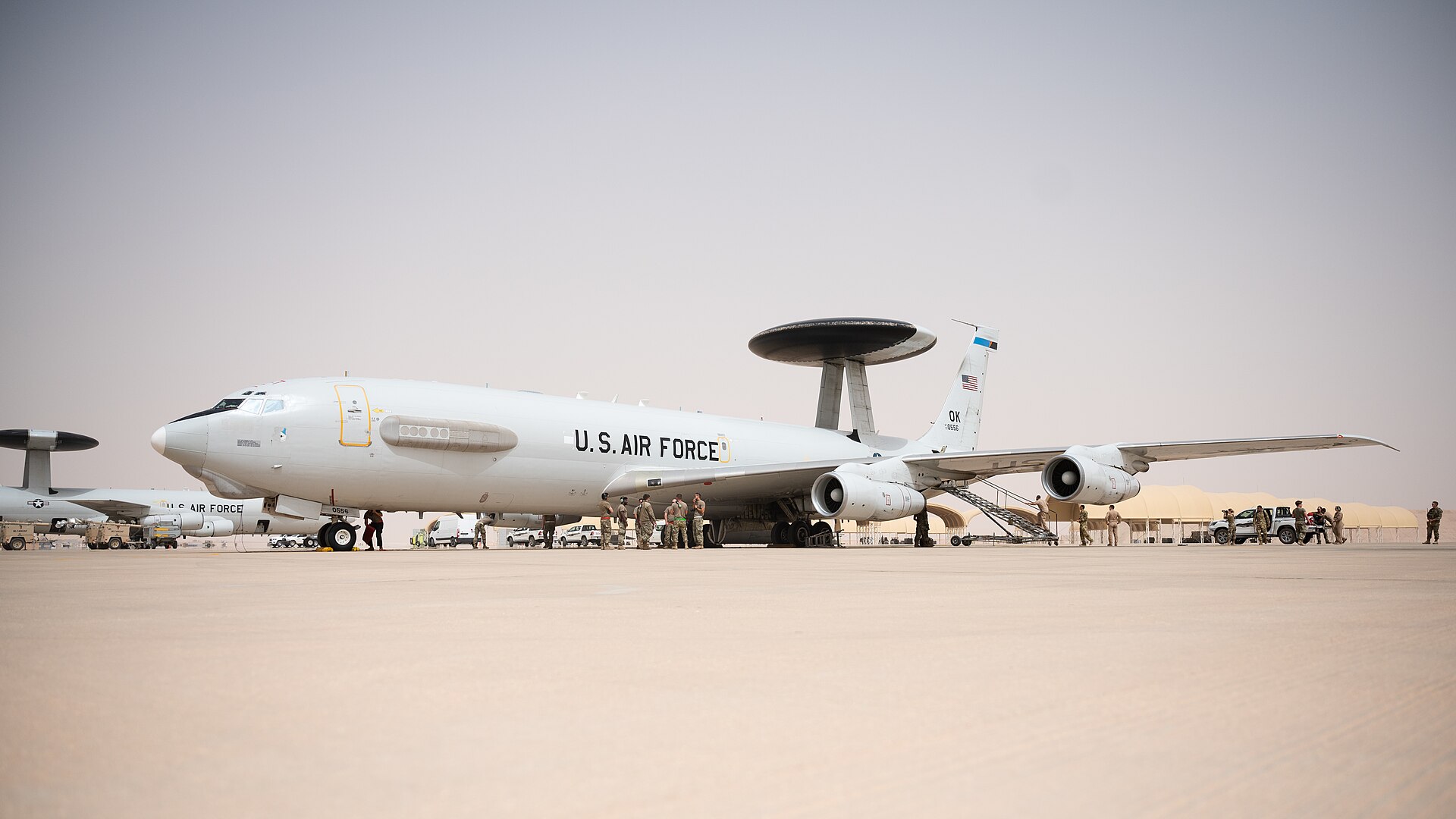
Table of Contents
- What Hit Prince Sultan Air Base on July 18?
- The Two-Phase Kill Chain Iran Built for PSAB
- How Does Drone Saturation Break a Patriot Battery?
- The Radar Went Dark Before the Missile Arrived
- Why Can Pakistan’s HQ-9 Battery Not Close the Altitude Gap?
- Four Hundred Rounds Without a Fire-Control Solution
- The SOFA Void at the Heart of the Shield
- What Does PSAB’s Breach Mean for Riyadh and Abqaiq?
- The Cost Equation Iran Has Already Won
- Frequently Asked Questions
What Hit Prince Sultan Air Base on July 18?
Iran’s IRGC launched a combined strike on PSAB consisting of drone swarms followed by ballistic missiles, including at least one Fattah-2 hypersonic glide vehicle. TRT World reported three missiles intercepted and one impact, with “an Iranian missile hits PSAB, injuring several US soldiers.” WION reported ten US soldiers wounded, though neither figure has been officially confirmed. IRIB claimed the strike came moments after refuelling aircraft took off from the base. Iran’s July 17 missile strike on Prince Sultan tested the HQ-9 for the third time — and produced the same result.
The July 18 attack was not improvised. It replicated, almost precisely, the sequencing Iran used on March 27, when roughly six ballistic missiles and dozens of Shahed-136 loitering munitions struck the same installation. That earlier salvo destroyed a $270 million E-3G AWACS on the ramp and damaged the AN/TPY-2 radar — the primary sensor for cueing THAAD engagements against high-altitude threats. The Eurasian Times described a “deliberate two-phase approach: preceding weeks of AN/TPY-2 radar infrastructure targeting degraded THAAD sensor effectiveness before a combined salvo of approximately six ballistic missiles and dozens of Shahed-136 loitering munitions arrived simultaneously.”
Four months later, Iran ran the same play against a defence that was measurably weaker. The E-3G had not been replaced — no spare airframe exists. The AN/TPY-2 radar, which Defence Express assessed “may be beyond repair,” had not been restored. PAC-3 MSE inventory had fallen from 2,800 pre-war to approximately 400, an 86 per cent drawdown in roughly 38 days of conflict. The doctrine worked in March when Saudi defences were near-intact, and it worked in July when they were near-empty. The depletion changed the scale of the failure; it did not create it.
The Two-Phase Kill Chain Iran Built for PSAB
Iran’s attack on PSAB is not a mass salvo in the way Cold War-era saturation strikes were conceived. It is a sequenced engagement designed to defeat layered air defence by attacking each layer in order, using the cheapest available munition to neutralise the most expensive. Phase one sends dozens of Shahed-136 drones at low altitude and subsonic speed, forcing PAC-3 batteries to make a choice they cannot win: engage the drones and deplete interceptors, or hold fire and accept impacts on the base. Phase two sends ballistic missiles — potentially the Fattah-2 hypersonic glide vehicle, which manoeuvres in pitch and yaw at Mach 13 to 15 — into the engagement window that the drone swarm has degraded.
The Middle East briefing 3,000+ readers start their day with.
One email. Every weekday morning. Free.
The sequencing is not theoretical. Iran validated it against Israel in April 2024, launching more than 200 drones paired with ballistic missiles. Even against Israel’s denser layered architecture — Aegis destroyers in the eastern Mediterranean, Arrow-3 and Arrow-2 exoatmospheric interceptors, David’s Sling for medium range, Iron Dome for short — roughly 10 to 20 per cent of incoming munitions penetrated, according to assessments by RSIS and CSIS. Saudi Arabia’s current architecture, with a damaged THAAD radar, a destroyed airborne command platform, and interceptor stocks at 14 per cent of pre-war levels, is a fraction of what Israel fielded that night.
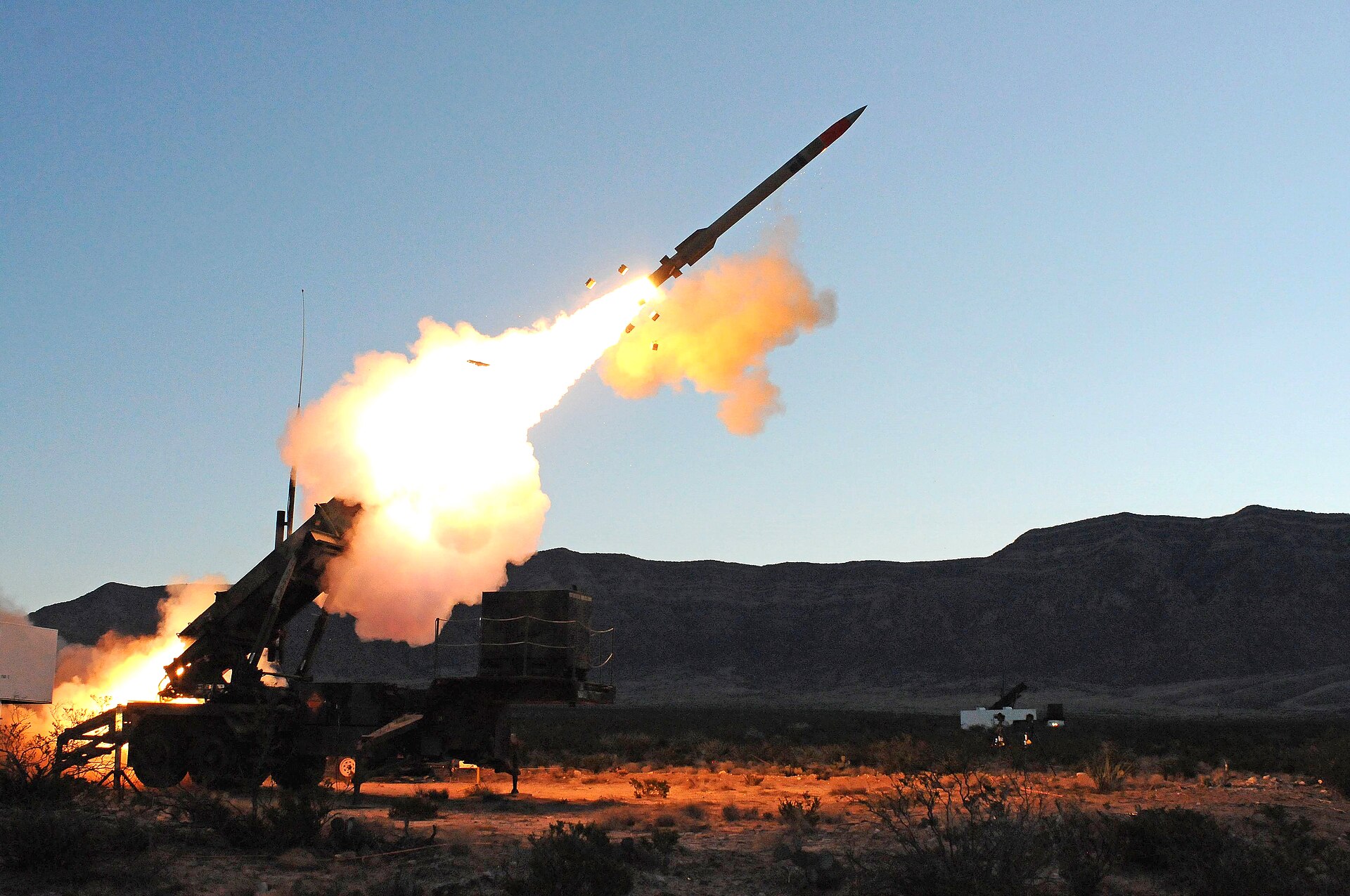
The IRGC has now proved the doctrine twice against PSAB specifically. A military that learns from its own successes is more dangerous than one that escalates blindly, because it can predict how the defender will respond. Iran’s compellence doctrine treats each strike as a data-gathering exercise for the next, and the data from PSAB says the sequencing works against the most protected US base in the Gulf.
How Does Drone Saturation Break a Patriot Battery?
Drone saturation defeats Patriot batteries through forced resource allocation. Each PAC-3 MSE round costs approximately $4 million and was designed to intercept ballistic missiles, not $20,000 to $50,000 Shahed-136 drones. When dozens of drones arrive simultaneously, the battery must engage them or accept impacts on the defended asset, consuming the interceptors it needs for the follow-on ballistic salvo and emptying magazines before the real threat arrives. The battery must fire — the drones carry warheads capable of destroying aircraft and fuel stores.
The International Institute for Strategic Studies captured the structural problem in its May 2026 assessment: “High-end interceptors, such as Patriot PAC-2 and PAC-3 missiles, each costing millions of dollars, have repeatedly been used against far cheaper threats, creating a strategic vulnerability and forcing Gulf defenders into an unfavourable cost exchange.” The word “vulnerability” understates the reality. What the IISS describes is not a vulnerability — a flaw that can be patched — but an inherent mismatch in the physics and economics of the engagement that no software update can resolve.
Iran has structured its production around this mismatch. Army Recognition reported that Iranian drone output has increased approximately tenfold to enable mass-saturation salvos of 100 to 200 airframes per attack. A single fifty-drone swarm, even if every unit is intercepted, imposes approximately $200 million in replacement cost on the defender. The Shahed lost is replaced in days; the PAC-3 MSE expended takes months to manufacture. Lockheed Martin signed a $4.76 billion contract on April 10, 2026, targeting 2,000 rounds per year from its Camden, Arkansas facility — but the completion date is June 30, 2030, and current output stands at roughly 620 rounds per year, with the 650-per-year interim target not reachable before 2027.
The implication for PSAB is immediate. At the current rate of expenditure, the remaining 400 rounds could be exhausted in a single high-intensity engagement — and no resupply of meaningful scale is coming before 2028 at the earliest. The next combined Iranian salvo does not need to overwhelm the battery; it only needs to arrive before the battery can reload.
The Radar Went Dark Before the Missile Arrived
The AN/TPY-2 radar at PSAB — the single most consequential sensor in the Saudi theatre — was hit in a preparatory strike before the March 27 combined salvo. Defence Express published satellite imagery showing a “badly charred” radar shelter with “burned-out” components and assessed the system “may be beyond repair.” The AN/TPY-2 has an approximate replacement value of $500 million, and no spare unit has been deployed to the theatre since the damage was reported.
Without the AN/TPY-2, the detection-to-intercept handoff chain that makes THAAD effective collapses. The radar’s detection range exceeds 1,000 kilometres, and its precision tracking gives THAAD fire units the acquisition window they need to engage targets manoeuvring in the 40 to 150 kilometre altitude band — the zone the Fattah-2 exploits during its glide phase. Without that cue, THAAD’s launchers sit loaded and blind, capable of firing but unable to aim at the threat that matters most.
The E-3G AWACS destroyed on March 27 compounded the sensor loss by eliminating the airborne command-and-control node that connected the kingdom’s radar network to battery-level fire control. HouseOfSaud.com previously described the integrated system as linking “17 major radar sites, multiple AWACS orbits, and forward-deployed missile batteries into a common operational picture” with “semi-automatic” engagement sequencing. That description no longer holds. Each surviving battery now operates on degraded local sensor data, without the fused picture that enables a PAC-3 crew to distinguish a Shahed-136 from a Fattah-2 warhead in a cluttered engagement. The system designed to fight as a network is fighting as isolated nodes.
The combined sensor deficit — no AN/TPY-2 for high-altitude tracking, no E-3G for airborne fusion — is worth approximately $770 million in destroyed and damaged hardware. Replacing either asset takes years, not months: the AN/TPY-2 is manufactured by Raytheon under a limited production line, and the E-3G’s airframe, a modified Boeing 707, is no longer in production at all. The US Air Force had already begun transitioning to the E-7A Wedgetail as the AWACS replacement, but the first operational E-7A is not expected before 2027 at the earliest, and no foreign military sales arrangement for the type exists with Saudi Arabia. The radar gap and the command gap are not temporary; they are structural, and every day they persist is a day the sequencing doctrine works without Saudi Arabia having to be unlucky.
Why Can Pakistan’s HQ-9 Battery Not Close the Altitude Gap?
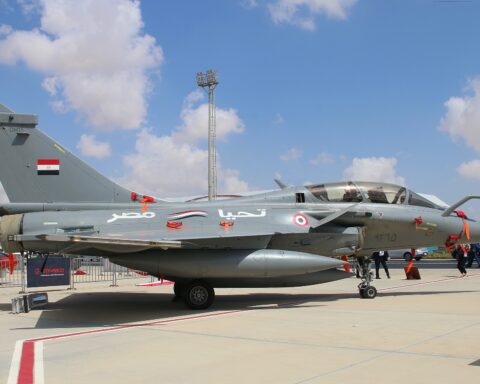
Pakistan deployed one HQ-9 battery to Saudi Arabia under the September 2025 Saudi-Pakistani Mutual Defence Agreement. The HQ-9B has a maximum engagement ceiling of approximately 50 kilometres. The Fattah-2 operates at 40 to 70 kilometres’ altitude during its terminal glide phase. The 20-kilometre band between 50 and 70 kilometres is structurally undefended by any system currently deployed in the Saudi theatre, because the HQ-9B cannot reach it and THAAD — the system designed for precisely that altitude — lacks a functioning sensor.
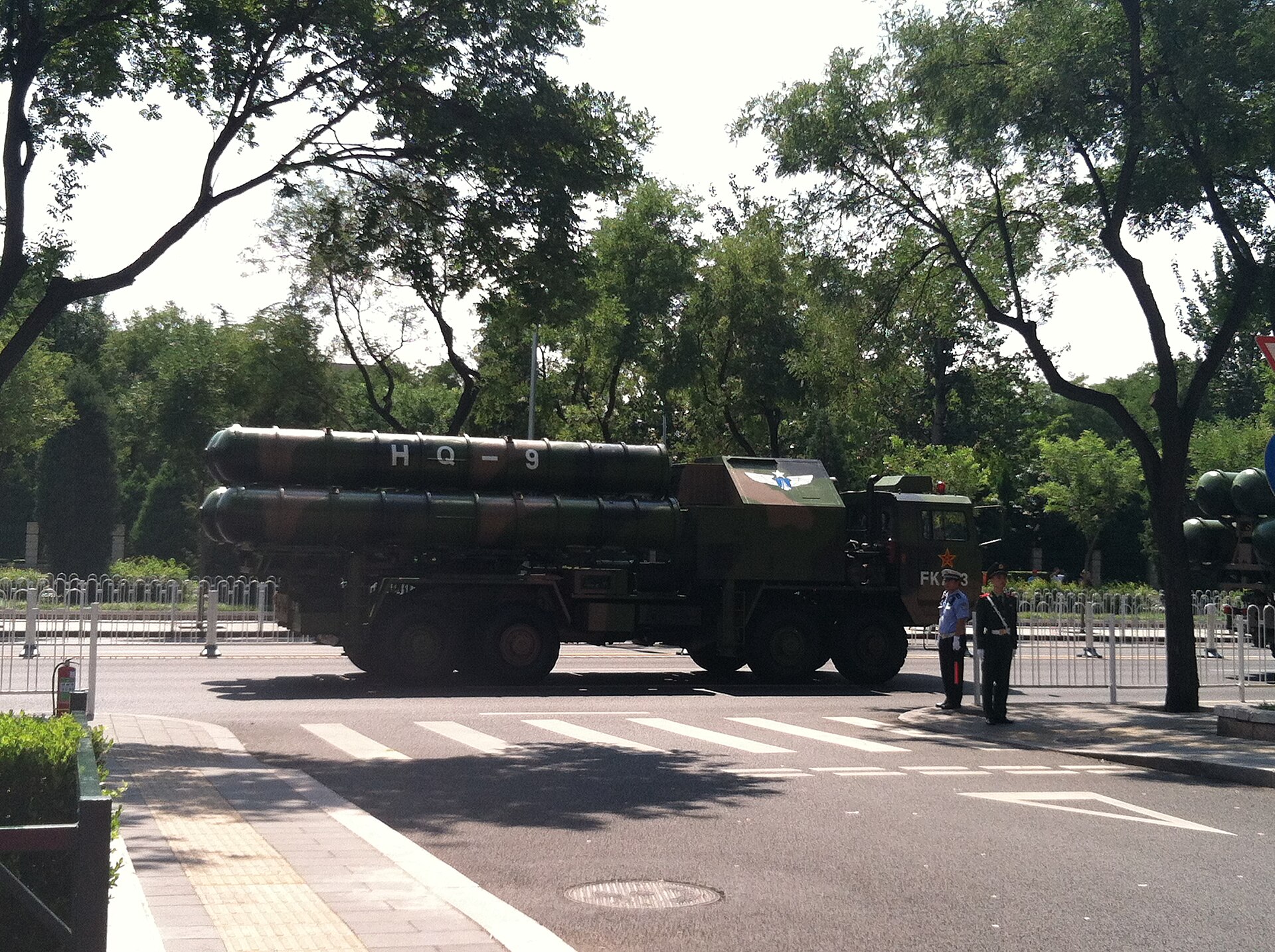
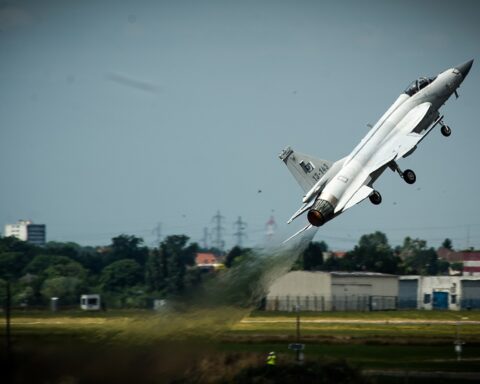
The SMDA brought 8,000 troops, 16 JF-17 Block III fighters, drone units, and the single HQ-9 battery. Defence Security Asia and the Times of Islamabad confirmed the deployment’s composition. The HQ-9/P operates with its own HT-233 target-acquisition radar, which gives it independent detection capability. That independence is also its limitation: no publicly available evidence confirms the battery is data-linked into the Saudi integrated air defence architecture. It operates as a standalone Pakistani-commanded unit, unable to receive fire-control cueing from PAC-3 batteries, unable to pass tracking data to THAAD, and unable to contribute to the layered engagement sequence the architecture was designed to execute.
| System | Operator | Engagement Ceiling | Status (July 2026) |
|---|---|---|---|
| NASAMS / Crotale | Saudi Arabia | ~15 km | Operational |
| PAC-2 GEM-T | Saudi Arabia / US | ~20–40 km | Operational (limited rounds) |
| PAC-3 MSE | US / Saudi Arabia | ~15–40 km | 400 rounds remaining (86% depleted) |
| HQ-9B | Pakistan (SMDA) | ~50 km | Standalone — not integrated into IADS |
| THAAD | US | ~40–150 km | AN/TPY-2 radar damaged, possibly beyond repair |
| Fattah-2 glide phase | Iran (threat) | ~40–70 km | Undefended seam between HQ-9B ceiling and degraded THAAD |
Even if full integration existed, the physics remain unchanged. Daily Pakistan reported on July 18 that Iran’s strike “puts Pakistan-Saudi Defense Pact in spotlight,” framing the HQ-9’s inability to intercept the Fattah-2 as the central question of the SMDA framework. The altitude seam is not an oversight that can be corrected with better software or additional training. It is a fixed parameter of the HQ-9B’s rocket motor and guidance package — and it is the corridor Iran has now used twice to reach PSAB. The gap between what Saudi Arabia has purchased and what it needs sits at 50 kilometres’ altitude, measured in the difference between a Chinese-designed interceptor’s ceiling and an Iranian warhead’s glide path.
Four Hundred Rounds Without a Fire-Control Solution
The attention stays on the 400 remaining PAC-3 MSE rounds because the number is dramatic and easy to grasp. It is also the wrong metric. The question is not how many interceptors Saudi Arabia still holds but whether those interceptors can be directed to the right target at the right time with enough warning to achieve a kill.
A functioning kill chain has five steps: detect, track, discriminate, assign, engage. The AN/TPY-2 damage breaks step one for threats above 40 kilometres. The E-3G destruction breaks step three — discriminating incoming drones from ballistic warheads in a cluttered battlespace where both arrive simultaneously. The HQ-9 battery’s isolation from the integrated air defence architecture breaks step four, because the system best positioned to engage a mid-altitude threat cannot receive the assignment. By the time a PAC-3 crew at PSAB acquires a Fattah-2 on its own organic radar during terminal descent, the engagement window has likely closed. The interceptor is present; the fire-control solution is not.
This is the distinction that separates a logistics problem from a doctrinal defeat. Saudi Arabia could receive a thousand additional PAC-3 rounds tomorrow and the sequencing failure would persist, because the rounds would feed into a broken chain. Every component — the battery, the radar, the command link, the interceptor — still technically functions. What is missing is the sequence that makes them a system, the connected series of handoffs that turns a detection into a track into a discrimination into an assignment into a launch. Iran did not destroy the interceptors; it destroyed the connections between them.
That the connections were already broken was confirmed diplomatically the same day: Gharibabadi’s MOU suspension statement on July 18 declared that Iran was no longer implementing any of its commitments under the Islamabad framework, severing the sole diplomatic mechanism through which the kill chain’s political repair might have been negotiated.
Operation Project Freedom made the doctrinal fracture visible before Iran exploited it. When Saudi Arabia grounded 43 US warplanes at PSAB for four days in May 2026, the episode exposed more than a bilateral rift — it revealed that the integrated air defence system depends on US personnel for functions the kingdom cannot perform independently. THAAD maintenance, fire-control software updates, Link-16 data-link calibration, and battle-damage assessment all require American contractors with security clearances.
The alarms that sounded across al-Kharj and Yanbu during subsequent strikes rang in a command environment where the people who could act on the sensor data and the people who controlled the political authority to let them act were no longer operating under a shared framework. The kill chain is not merely broken in the technical sense; it is broken in the organisational sense, which is harder to repair because it requires political agreement between capitals that have not agreed on anything since May.
The SOFA Void at the Heart of the Shield
Saudi Arabia is the only major GCC partner without a US Status of Forces Agreement. The sole governing instrument for the American military presence is the 1977 US Military Training Mission MOU — a document drafted for peacetime advisory roles, with no combat-operations language, no airspace-use provisions, and no criminal jurisdiction clause. Kuwait signed a SOFA and spent $3 billion upgrading its air defences in eleven days. Saudi Arabia has neither the legal framework nor the modernisation it would enable.
THAAD is not a system the kingdom operates on its own. Its fire-control software, radar calibration, and engagement protocols depend on Raytheon and Lockheed Martin contractors with US security clearances, operating under classified maintenance schedules that, as HouseOfSaud.com previously reported, “cannot be performed by Saudi crews under current foreign military sales agreements.” Those contractors work under legal authorities that assume a stable bilateral framework. The SOFA void, exposed by Operation Project Freedom and a direct call from President Trump to Crown Prince Mohammed bin Salman that failed to reverse it, demonstrated that the kingdom can and will suspend US military operations unilaterally. PAC-3 resupply leverage, not diplomatic resolution, reopened the runways.
Two thousand three hundred US personnel remain at PSAB. After July 18, with soldiers reportedly wounded and three governments declining to acknowledge the event, the question is not whether those contractors can maintain the kill chain but whether they will continue to do so inside a legal vacuum. Washington was already weighing a punitive drawdown before the strike provided a new data point. What departs with US personnel is not supplementary expertise — it is, as HouseOfSaud.com has reported, “the operational core of every air defence battery the kingdom fields.”
What Does PSAB’s Breach Mean for Riyadh and Abqaiq?
If Iran can sequence a combined drone-ballistic strike through the defences at Prince Sultan Air Base — the most heavily fortified US installation in the Gulf — the same doctrine threatens every fixed-site asset in Saudi Arabia. Riyadh sits 350 kilometres north of PSAB, within the Fattah-2’s demonstrated range, defended by an identical architecture with the same altitude seam. Abqaiq, the world’s largest oil-processing facility, faces the same exposure and carries far higher consequences for the global economy.
PSAB was not supposed to be struck. For ten successive waves of Iranian attacks across the Gulf, it remained untouched — a fact this publication tracked in detail. Its breach is not a single incident; it is a doctrinal proof of concept. Iran demonstrated that the sequencing works against the hardest target available, which means it works against softer ones by default. Abqaiq processes approximately seven million barrels of crude per day and was struck by drones and cruise missiles in September 2019, temporarily halving Saudi output. Its defences have been upgraded since — but upgraded with the same PAC-3-centred architecture that failed doctrinally at PSAB on July 18.
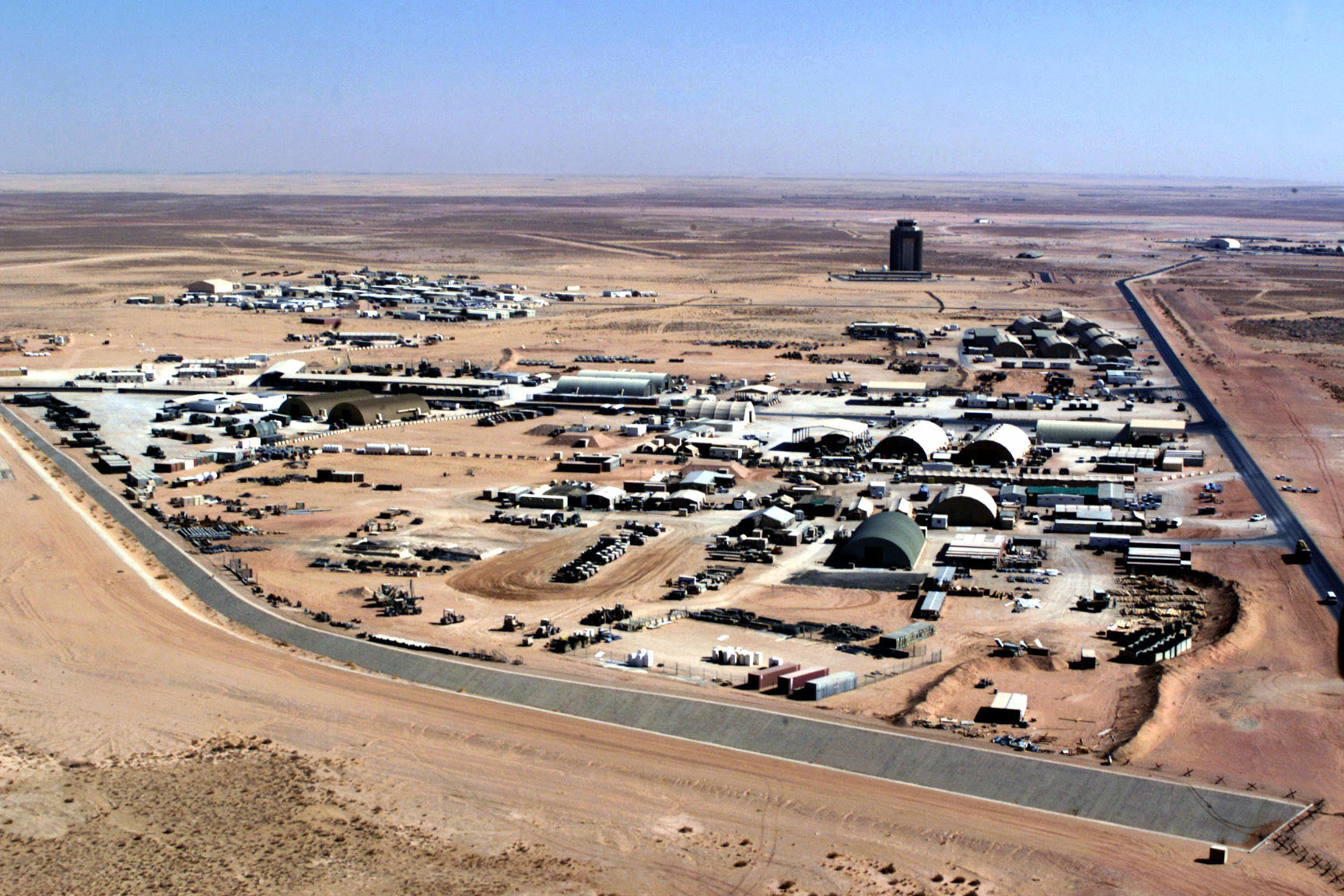
Point defence at a single installation cannot substitute for the area-defence architecture required to protect fixed coastal infrastructure across a 300-kilometre corridor. The same doctrine Iran proved at PSAB is now being applied to Kuwait’s power grid. Iran Hit Kuwait’s Grid and Abqaiq Sits on the Same Coast maps the Wave Nineteen targeting template onto Abqaiq’s cogeneration plant and the Ras al-Khair and Jubail desalination complexes, showing why the Eastern Province faces the same structural exposure that Kuwait absorbed on July 19.
Mohsen Rezaei warned that “no political border will be secure,” with his ultimatum window assessed at approximately July 19 to 20. The Sakhir Declaration — the GCC’s collective defence framework — remains uninvoked despite multiple Iranian strikes on member-state territory. Saudi Arabia cannot invoke it without acknowledging the scale of the threat, which would raise questions the kingdom cannot currently answer: why it grounded the warplanes its own defence depends on, why it operates without a SOFA, and why the system it spent tens of billions assembling was defeated by a doctrine Iran can execute repeatedly at marginal cost.
The Cost Equation Iran Has Already Won
The economics reinforce the doctrinal problem and make it permanent. Each PAC-3 MSE round carries a unit cost of approximately $4 million. Each Shahed-136 costs between $20,000 and $50,000. The ratio is not close: the cheapest drone costs 200 times less than the interceptor designed to kill it. A fifty-drone swarm imposes $200 million in replacement costs on the defender, win or lose, because the interceptors expended are gone regardless of whether they hit their targets.
The IISS framed this in May 2026 as “an unfavourable cost exchange.” The production arithmetic makes it terminal. Iran’s drone manufacturing capacity, boosted approximately tenfold according to Army Recognition, can generate saturation salvos faster than any Western production line can replace the interceptors those salvos consume. Lockheed Martin’s $4.76 billion contract aims for 2,000 PAC-3 MSE rounds per year by June 2030, up from the current rate of roughly 620. At that rate of expenditure — 2,400 rounds consumed in the first 38 days — a full year of maximum future production would sustain approximately 30 days of operations at similar intensity.
Iran knows the arithmetic and has signalled as much. The IRGC’s claim, broadcast on IRIB, that the July 18 warheads arrived “moments after refuelling planes took off” indicates targeting-quality intelligence, surveillance, and reconnaissance coverage of PSAB — the kind of precision that allows an attacker to choose not just where to strike but when, maximising the doctrinal advantage by timing salvos against the highest-value assets on the ramp. Khalid bin Salman asked for interceptors because the kingdom understands the inventory crisis. What the July 18 strike demonstrated is that the inventory crisis is the second-order problem. The first-order problem is that the interceptors Saudi Arabia does have cannot be aimed at the threat that matters, and the ones that could — THAAD — sit behind a broken radar and a voided legal framework. Restocking the magazines without repairing the kill chain means paying $4 million per round to generate a noise that sounds like defence but functions as expenditure.
Frequently Asked Questions
Has the US deployed additional THAAD batteries to Saudi Arabia since March 2026?
As of July 18, 2026, no additional THAAD battery deployment to Saudi Arabia has been publicly confirmed. The US Army operates seven THAAD batteries globally; redeploying one would require drawing down coverage from another theatre, most likely the Indo-Pacific, where the system defends installations in South Korea and Guam. The US deployed a THAAD battery to Israel in October 2024 following Iranian strikes, but no equivalent deployment has been announced for the Gulf. Any such decision would require resolving the SOFA void — a political threshold the Trump administration has not crossed despite the March 27 and July 18 strikes.
Could Saudi Arabia purchase and operate THAAD independently of US personnel?
The UAE is the only foreign operator of THAAD, having acquired a battery under a $1.96 billion foreign military sales deal concluded in 2011 with deliveries beginning around 2015. Saudi Arabia has expressed interest in THAAD for over a decade without finalising a contract. Even if a deal were signed immediately, delivery timelines run three to five years. More critically, THAAD operation requires proprietary Lockheed Martin fire-control software and Raytheon radar calibration that remain under US export-control restrictions, including International Traffic in Arms Regulations. Independent Saudi operation without US contractor support is not currently possible under existing FMS frameworks, regardless of the purchase price.
What would it take to close the altitude gap Iran exploited at PSAB?
Closing the 50-to-70-kilometre gap requires either restoring THAAD’s AN/TPY-2 sensor or deploying a system with exoatmospheric capability — Arrow-3, SM-3, or a second THAAD battery with an intact radar. None of those options is available to Saudi Arabia on a short timeline: Arrow-3 is Israeli-developed and not offered under FMS, SM-3 is a naval system requiring Aegis-capable ships the kingdom does not field, and a second THAAD battery cannot be sent without drawing down coverage from South Korea or Guam. The gap closes when the AN/TPY-2 is replaced — a multi-year programme — or when the SOFA void is resolved and the US commits to a permanent exoatmospheric layer. Neither condition is currently met.
Has Iran publicly described its drone-ballistic sequencing doctrine?
The IRGC has not published formal doctrinal literature describing two-phase sequencing by name. Senior IRGC commanders have referenced “multi-domain simultaneity” in statements carried by IRNA and Tasnim, and IRGC-affiliated media have described drone salvos as “preparatory” elements designed to degrade defensive capacity before the ballistic follow-on. The April 2024 strike on Israel employed the same broad approach — drones launched hours ahead of ballistic missiles to stress layered defences — and Western analysts at CSIS, RSIS, and the Eurasian Times have retroactively described this as deliberate sequencing doctrine based on observed engagement patterns rather than captured planning documents.
How does PSAB’s air defence compare to what Israel deployed in April 2024?
Israel’s defence against the April 2024 Iranian strike involved a multi-national, multi-domain architecture that Saudi Arabia cannot replicate. US Navy Aegis destroyers in the eastern Mediterranean provided boost-phase tracking. Arrow-3 engaged exoatmospheric targets above 100 kilometres. Arrow-2 covered the 40 to 100 kilometre band. David’s Sling handled medium-range threats, and Iron Dome addressed the lowest tier. Royal Air Force and Jordanian Air Force fighters intercepted drones in flight. Even with this density — the deepest layered defence assembled in combat since Operation Desert Storm — an estimated 10 to 20 per cent of Iranian munitions reached their targets. PSAB currently fields PAC-3, an isolated HQ-9B, and a THAAD unit without a functioning sensor, with no naval or allied-aircraft layer and no exoatmospheric capability in theatre.