
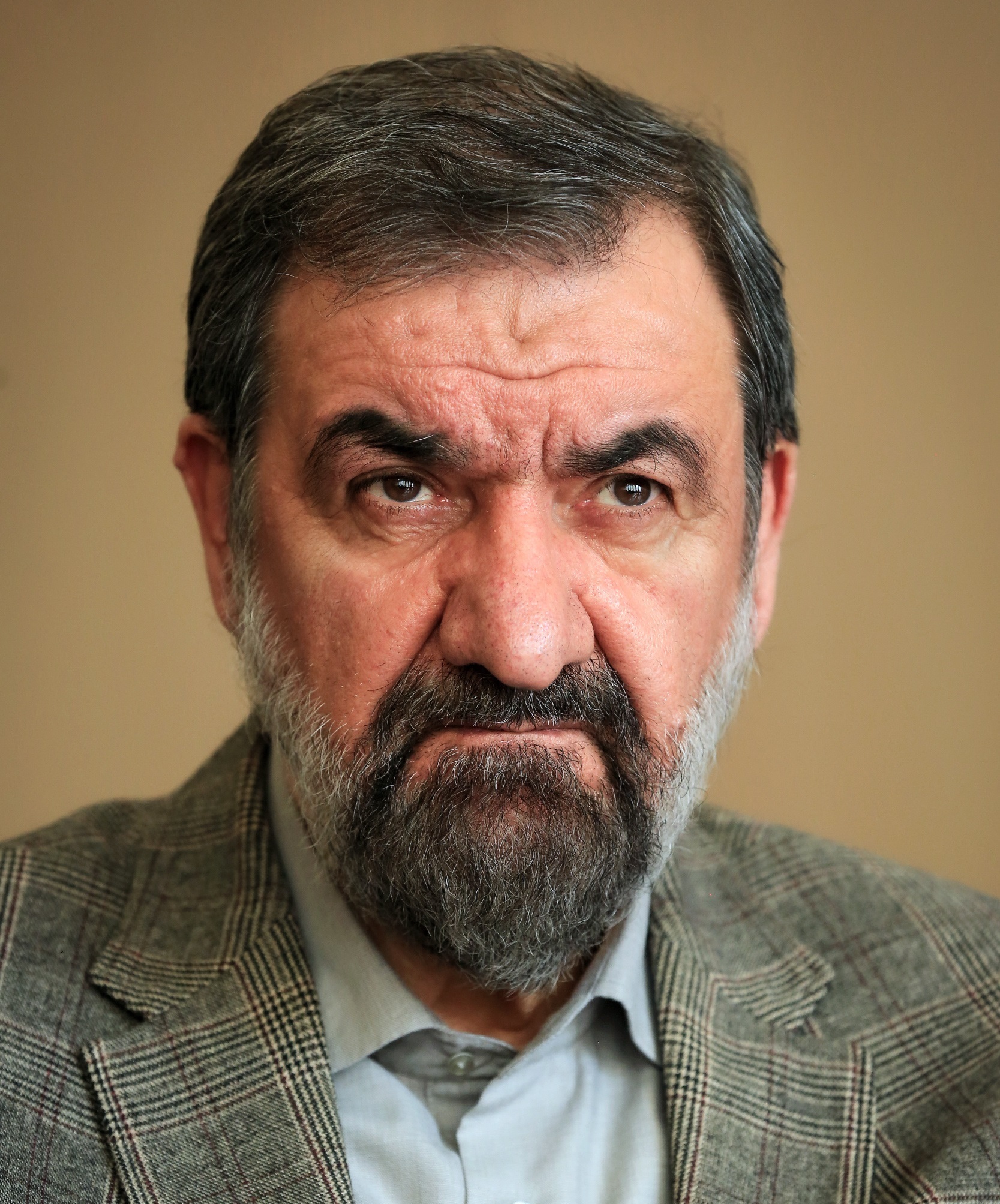
RIYADH — Mohsen Rezaei, the longest-serving commander in the Islamic Revolutionary Guard Corps’ history and formal military adviser to a Supreme Leader who has not been seen in public for 127 days, told Iranian state television on July 17 that “the conditions for both war and negotiation are over” and that Iran would enter “full-scale offensive operations” within forty-eight hours if American strikes continued. Saudi Arabia receives this ultimatum with 400 interceptors remaining from a pre-war stockpile of 2,800, no resupply commitment from Washington before mid-2027, no seat at any negotiating table active or proposed, and an oil price that approached its IMF fiscal breakeven for the first time in the conflict only because the infrastructure that moves Gulf crude is being systematically destroyed.
Rezaei’s declaration that “no political border will be secure against Iran’s offensive forces” was not the observation of a retired general or the posturing of a political candidate — it was the formal policy position of the Supreme Leader’s appointed military adviser, broadcast on state media on Day 31 of a sixty-day memorandum of understanding that the American president has already declared dead. The question for Riyadh is not whether Rezaei means it — his forty-five-year career answers that — but whether the kingdom can absorb what comes next with an air-defence architecture operating on fewer than four rounds per launcher.
Table of Contents
- Who Is Mohsen Rezaei and Why Does His Ultimatum Carry Constitutional Weight?
- From Retaliation to Offensive — the Doctrinal Threshold Iran Just Crossed
- Can Four Hundred PAC-3 Rounds Defend a Country?
- The 127-Day Absence Behind the Ultimatum
- Why Is Saudi Arabia Excluded From Every Negotiating Table?
- The Fiscal Breakeven Approached at the Worst Possible Moment
- What Does ‘No Geographic Ceiling’ Mean for Abqaiq?
- The American Strikes That Triggered the Countdown
- Frequently Asked Questions
Who Is Mohsen Rezaei and Why Does His Ultimatum Carry Constitutional Weight?
Rezaei was appointed commander-in-chief of the IRGC by Ayatollah Khomeini in 1981, at the age of twenty-seven, and held the position for sixteen consecutive years — a tenure no successor has approached. He commanded the Corps through the entirety of the Iran-Iraq War, argued internally for continuing offensive operations even after Iraqi forces withdrew from Iranian territory, and was overruled only by Khomeini’s decision to accept UN Security Council Resolution 598 in 1988. He signed none of the subsequent ceasefire documents. The man who told state television on July 17 that Iran’s military would recognise “no political border” is the same man who, nearly four decades earlier, argued that Iran’s borders should be the ones that moved.
His career since has tracked the structural core of the Islamic Republic rather than its elected periphery: twenty-four years as secretary of the Expediency Discernment Council, a brief stint as vice-president for economic affairs under Raisi, and — in March 2026 — a formal appointment as military adviser to Mojtaba Khamenei, the new Supreme Leader. That appointment, reported by Xinhua on March 16 and confirmed by Middle East Monitor on March 17, pulled a seventy-one-year-old out of semi-retirement at a moment when, as analyst Kamran Bokhari observed, “the pool of seasoned IRGC commanders may be thinning.” Rezaei remains the only living officer who held supreme command of the Corps during active conventional warfare.
The constitutional architecture matters here. Under Article 110 of the Iranian constitution, command authority over the armed forces rests solely with the Supreme Leader; no delegation mechanism exists outside Article 111’s provisions for incapacity. When Rezaei speaks as the Supreme Leader’s formally appointed military adviser — on state television, in a pre-produced segment, not an off-the-cuff interview — he speaks with whatever authority the Supreme Leader’s office can confer short of the Leader himself appearing. A US-Israeli intelligence assessment, cited by Alhurra, named Rezaei alongside Ahmad Vahidi and Mohammad Bagher Zolghadr as the three IRGC veterans exercising de facto state power while Mojtaba remains absent.
From Retaliation to Offensive — the Doctrinal Threshold Iran Just Crossed
Iranian military rhetoric follows a grammar that Western analysts routinely dismiss as performative, and the dismissal routinely proves wrong. Rezaei’s public statements since May 2026 trace a three-step escalation ladder in which each rung removes a condition that restrained the previous one, and the July 17 broadcast removed the last. On May 29, speaking to CGTN, he said Iran would “break the siege, either through negotiation or direct action” — the operative word was “either,” and negotiation was a real alternative. On June 5, in an exclusive CNN interview from Tehran, he warned that Iran would “drag the war” beyond the Persian Gulf into the Indian Ocean, Bab al-Mandab, the Red Sea, and the Mediterranean, but the warning was conditional on American behaviour: “The negotiations are at a deadlock and Trump must break this deadlock.”
The Middle East briefing 3,000+ readers start their day with.
One email. Every weekday morning. Free.
July 17 eliminated the conditional. Rezaei’s formulation, captured most completely by Xinhua: “The policy of ‘both war and negotiation’ has ended… if US attacks continue, Iran’s armed forces will no longer limit themselves to retaliatory strikes, and US bases and forces will no longer be safe within any political borders.” The word “retaliatory” is doing the structural work in that sentence. Iran’s official framework since the first IRGC missile launches in early July was dual-track — simultaneous military retaliation against American targets and diplomatic engagement under the Islamabad MOU. Rezaei’s statement terminated both tracks in a single sentence and replaced them with a declared posture of offensive operations, including, he specified, “additional military capabilities, including ground forces.”
The Stimson Center, in a paper titled “Iran Isn’t ‘Flailing’ — It’s Executing a Coercive Risk Strategy,” described the pattern as “a coherent and escalating coercive logic” in which “Tehran has concluded that restraint, unreciprocated, does not deter.” The Jamestown Foundation, writing for RealClearDefense on April 22, went further, characterising the shift as one from “calibrated deterrence” to “unconditional escalation” — a framework in which Iran regionalises conflicts, targets energy and financial infrastructure, and activates proxy forces as geoeconomic levers. Rezaei’s July 17 broadcast was the first time a figure with formal Supreme Leader authority adopted that framework on the record.
Can Four Hundred PAC-3 Rounds Defend a Country?
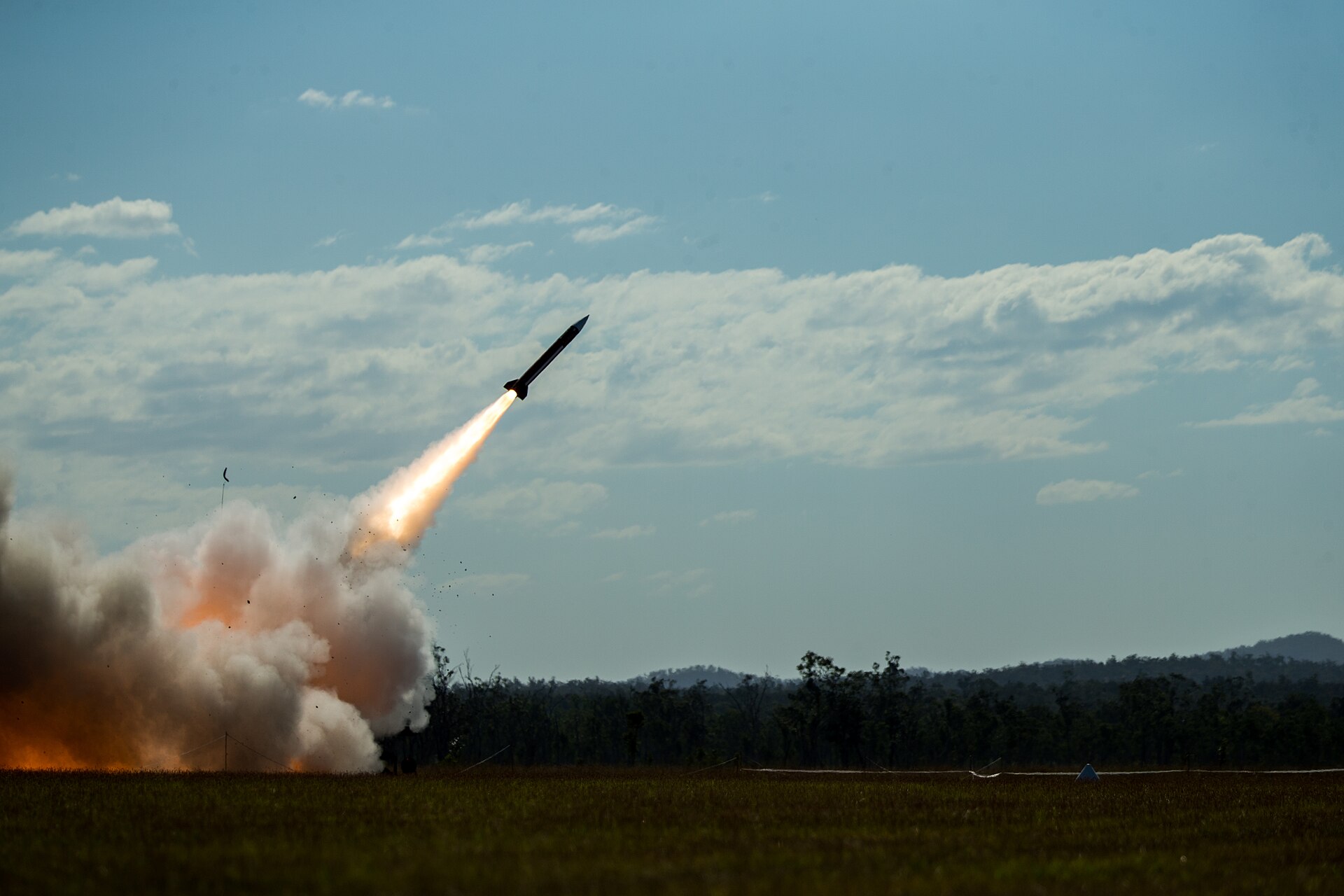
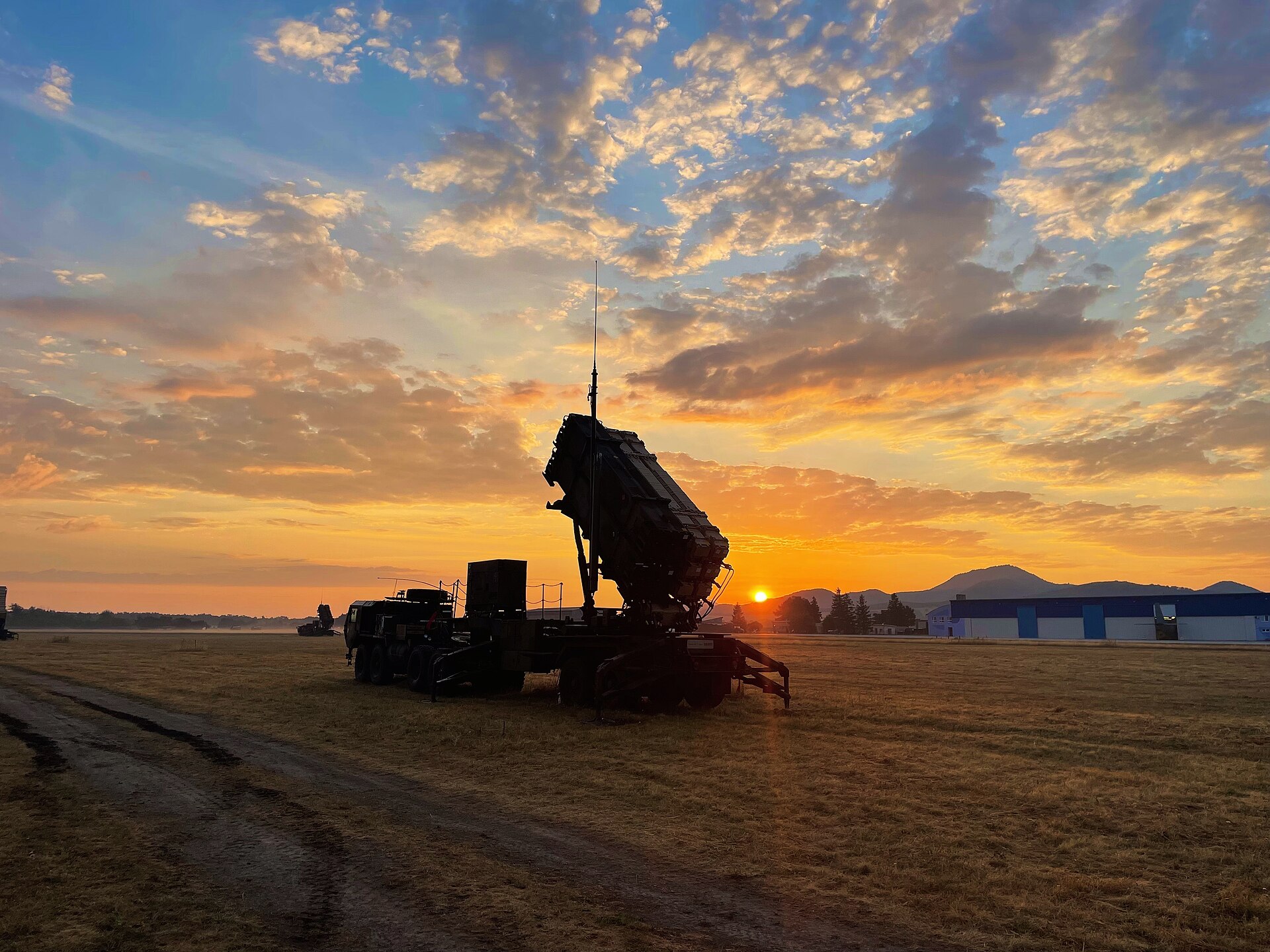
The arithmetic is not ambiguous. Saudi Arabia entered the current conflict with approximately 2,800 PAC-3 MSE interceptors distributed across 108 launchers; it now holds roughly 400, an 86 percent depletion rate that leaves an average of 3.7 rounds per launcher — below a single reload cycle. The Center for Strategic and International Studies, in its April 21 report “Last Rounds?”, found that the United States had used “roughly half its THAAD interceptors and nearly half its Patriot interceptors” across the theatre, with analysts Mark Cancian and Chris Park estimating that rebuilding to pre-war levels would take “three or more years from today.” Saudi Arabia’s position is worse than the American average because the kingdom absorbed a disproportionate share of the early salvos and because Washington withheld resupply as a coercive instrument in the Prince Sultan Air Base dispute.
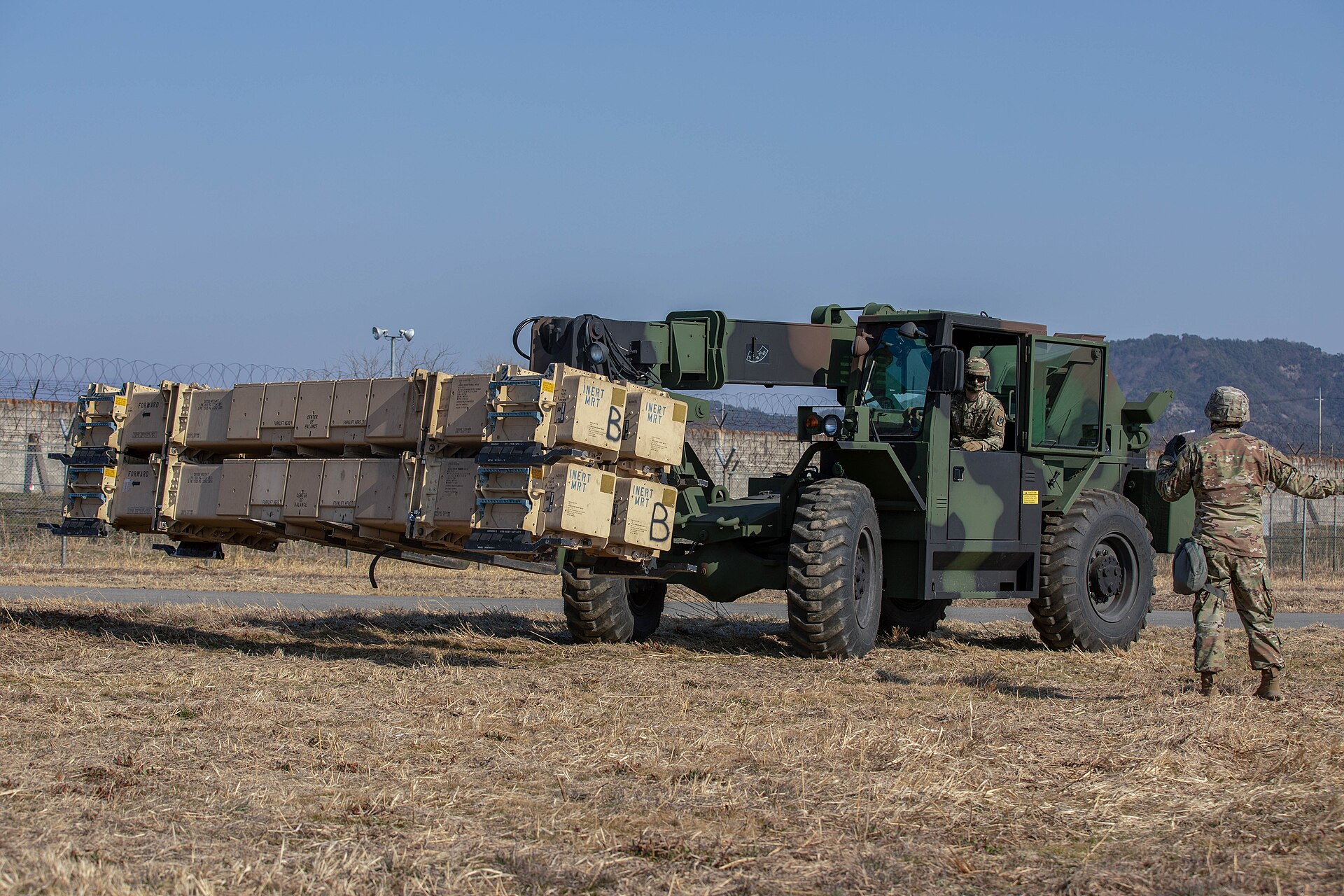
The January 30 DSCA approval of 730 PAC-3 MSE missiles — a $9 billion package — will not deliver a single interceptor to Saudi soil before mid-2027 at the earliest. Lockheed Martin’s Camden, Arkansas facility, the sole global production site for the PAC-3 MSE, produces approximately 600 rounds per year for all customers worldwide; a $4.7 billion acceleration contract awarded April 10 broke ground on a new Munitions Acceleration Center, but the company’s own target of 2,000 rounds per year will not be reached until 2030. Every PAC-3 fired by Saudi forces today is one that cannot be replaced on any timeline that intersects with Rezaei’s forty-eight-hour clock.
| System | Pre-War Inventory | Current Estimate | Depletion | Resupply Timeline |
|---|---|---|---|---|
| PAC-3 MSE (Saudi Arabia) | ~2,800 | ~400 | 86% | Mid-2027 earliest |
| AN/TPY-2 THAAD Radars (theatre) | 7–9 deployed | 4+ struck | ~50%+ | Irreplaceable near-term |
| THAAD Interceptors (US theatre-wide) | Classified | ~50% used | ~50% | 3+ years (CSIS est.) |
| PAC-3 MSE Global Production | ~600/year | ~600/year | — | 2,000/year target by 2030 |
The threat matrix compounds the depletion. Iran’s Zolfaghar ballistic missile carries a range of approximately 700 kilometres with a circular error probable of 10 to 30 metres, and Saudi Arabia’s M-SAM-II — which was procured specifically to address the altitude gap in the Zolfaghar’s terminal phase — will not be delivered until 2028. The Fattah-2, which Iran claims reaches Mach 15 at terminal velocity with a range of 1,400 kilometres, is described by Western defence analysts as “extremely difficult to intercept with current air defense systems.” The question that CSIS posed in April — who defends Riyadh when the interceptors run out? — was rhetorical then and operational now.
The 127-Day Absence Behind the Ultimatum
Mojtaba Khamenei has not appeared in public for 127 days as of July 17 — no video, no photograph, no verified audio statement, only written communiqués released through the Supreme Leader’s office whose authorship cannot be independently confirmed. The constitutional implications are not theoretical: Article 110 vests command authority over the armed forces exclusively in the Supreme Leader, and Article 111 provides for a leadership council only in cases of formal incapacity, a determination that no institution has made or appears willing to initiate. Pezeshkian carries a veto only Mojtaba can lift, as was reported on July 6 — but the man holding the veto has been invisible for four months.
The same US-Israeli intelligence assessment identified a de facto wartime triumvirate operating in the constitutional vacuum that Mojtaba’s absence has created. The IAEA has not had inspectors inside Iran’s nuclear facilities for 121 days; Iran’s enriched-uranium stockpile stood at 440.9 kilograms of 60-percent-enriched material at the last verified measurement in September 2025, and the cameras, seals, and monitoring equipment have all been removed. The parallel absences — of the Supreme Leader from public life and of international inspectors from Iran’s enrichment cascade — are producing a decision environment in which the most consequential actors are the least visible and the least accountable.
Rezaei’s July 17 ultimatum forces a binary reading of Mojtaba’s authority that no competing outlet has addressed. Either the Supreme Leader’s formally appointed military adviser declared the end of Iran’s dual-track strategy and threatened offensive operations across sovereign borders with Mojtaba’s explicit authorisation — in which case the Supreme Leader has chosen unconstrained war — or the triumvirate issued the declaration without authorisation from a leader who may be unable to provide it. Neither interpretation offers Riyadh a basis for reassurance, and neither changes the operational reality that Iran’s declared posture has shifted from retaliation to offence while the person constitutionally empowered to reverse that shift has not been heard from in four months.
Why Is Saudi Arabia Excluded From Every Negotiating Table?
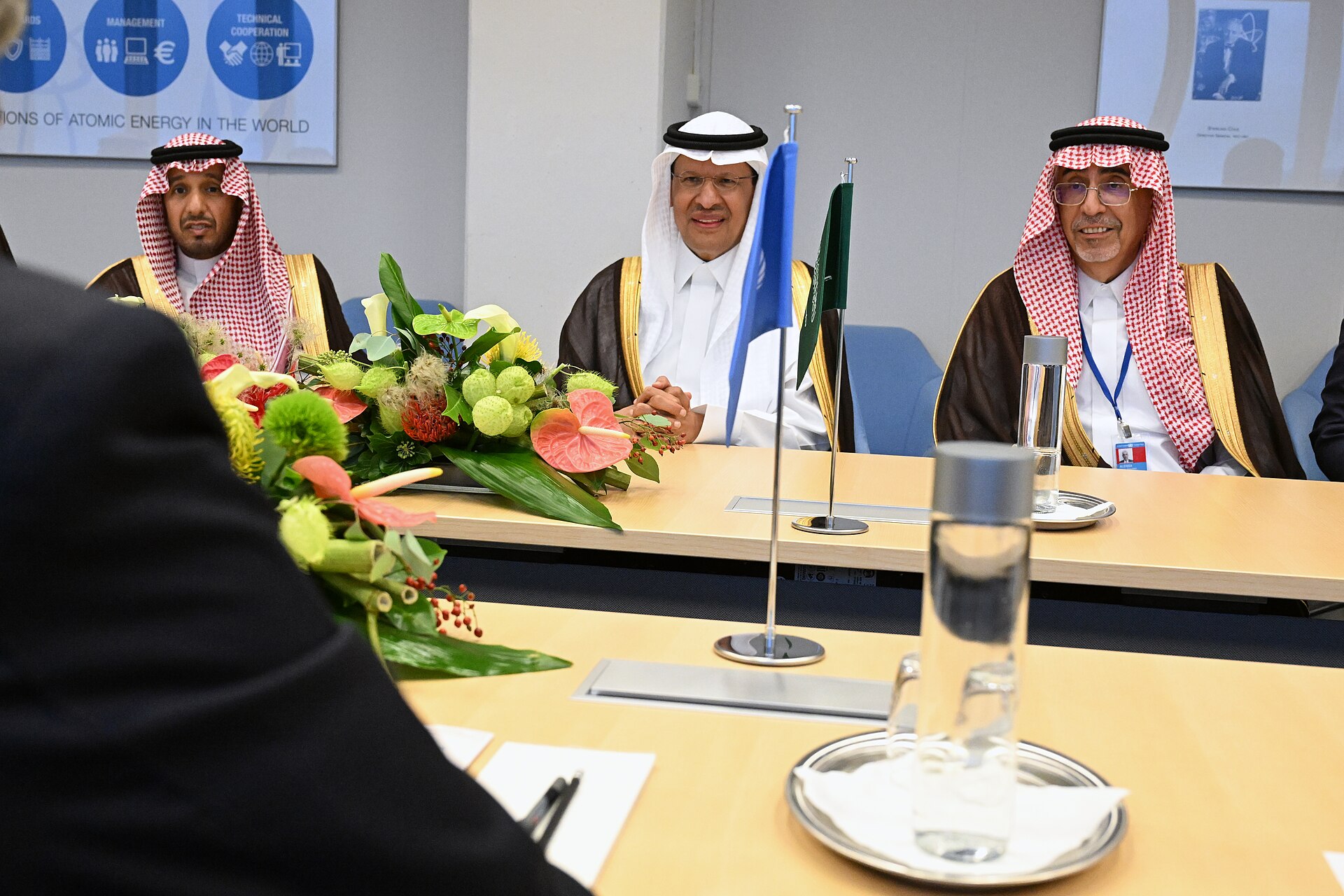
The diplomatic isolation is structural, not incidental. Saudi Arabia holds no seat in the Doha track, where Qatar has mediated US-Iranian communication channels that produced the original ceasefire framework; no seat in the Islamabad MOU process, which reached Day 31 of its sixty-day timeline on July 17 and has been functionally suspended since President Trump declared it “over” on July 8; and no seat in the Oman-facilitated talks that were scheduled for July 19 and collapsed the same day that Oman issued its first-ever condemnation of an Iranian strike. The last verified high-level US-Saudi contact was at ambassador level — Princess Reema met Secretary Rubio on July 10, a channel that operated one full tier below the foreign-minister level at which the previous crisis was handled.
By the time Rezaei’s forty-eight-hour window was running, Iran had moved to formally shut the framework down: the formal MOU suspension Gharibabadi announced on July 18 — declaring all commitments suspended and framing Iranian military operations as self-defence under Article 51 — confirmed that Day 31 of the Islamabad process was also its last, leaving Riyadh outside every track at the precise moment none of them remained operative.
Qatar’s mediation role, the only channel through which Saudi interests were indirectly represented, is itself contracting. On July 17, the Qatari foreign minister omitted his standard reaffirmation of Qatar’s role as facilitator of US-Iranian dialogue — the first such omission since the framework was established — hours after Al Udeid absorbed its second Iranian strike, which destroyed an AN/GSC-52B(V5) satellite communications dish worth $15 million. Iran has methodically eliminated every intermediary through whose good offices Riyadh might influence the terms of a ceasefire that will determine the kingdom’s security architecture for a generation, and it has done so by striking the intermediaries’ own territory — Oman’s Musandam, Qatar’s Al Udeid — at a pace that makes continued mediation politically untenable.
The Fiscal Breakeven Approached at the Worst Possible Moment
Brent crude reached approximately $85.95 to $86.09 per barrel on July 17, a level that — for the first time in the conflict — approaches the IMF’s estimated Saudi fiscal breakeven of $86.60. The irony is structural: oil is rising not because Saudi Arabia is producing more or commanding better terms, but because the infrastructure that moves Gulf crude to market is being systematically degraded. A pump station feeding the East-West Pipeline to Yanbu on the Red Sea was struck earlier in the conflict, removing 700,000 barrels per day of transfer capacity, and the reimposition of Iranian oil sanctions under OFAC General License X1 on July 7 — triggered by Strait of Hormuz attacks on three commercial vessels — tightened supply further. The licence that had permitted Iranian oil exports expired at 12:01 AM EDT on July 17, the same day Rezaei delivered his ultimatum.
The Persian Gulf Security Arrangement remains the war’s most underreported financial exposure. Iran’s PGSA surcharge — $5.5 million per day for Hormuz transit, accumulating toward a total of $253 million outstanding — activates its penalty rate on August 18, thirty-two days from Rezaei’s broadcast. The Q1 2026 deficit of 125.7 billion Saudi riyals had already rendered the kingdom’s fiscal position precarious before the conflict began; every disruption to Hormuz transit or to Saudi export infrastructure compounds a revenue base that is contracting at the same moment the price of crude is rising. The oil price is finally where Saudi Arabia needed it to be, and it arrived there by a mechanism that may destroy the infrastructure through which the kingdom earns it.
What Does ‘No Geographic Ceiling’ Mean for Abqaiq?
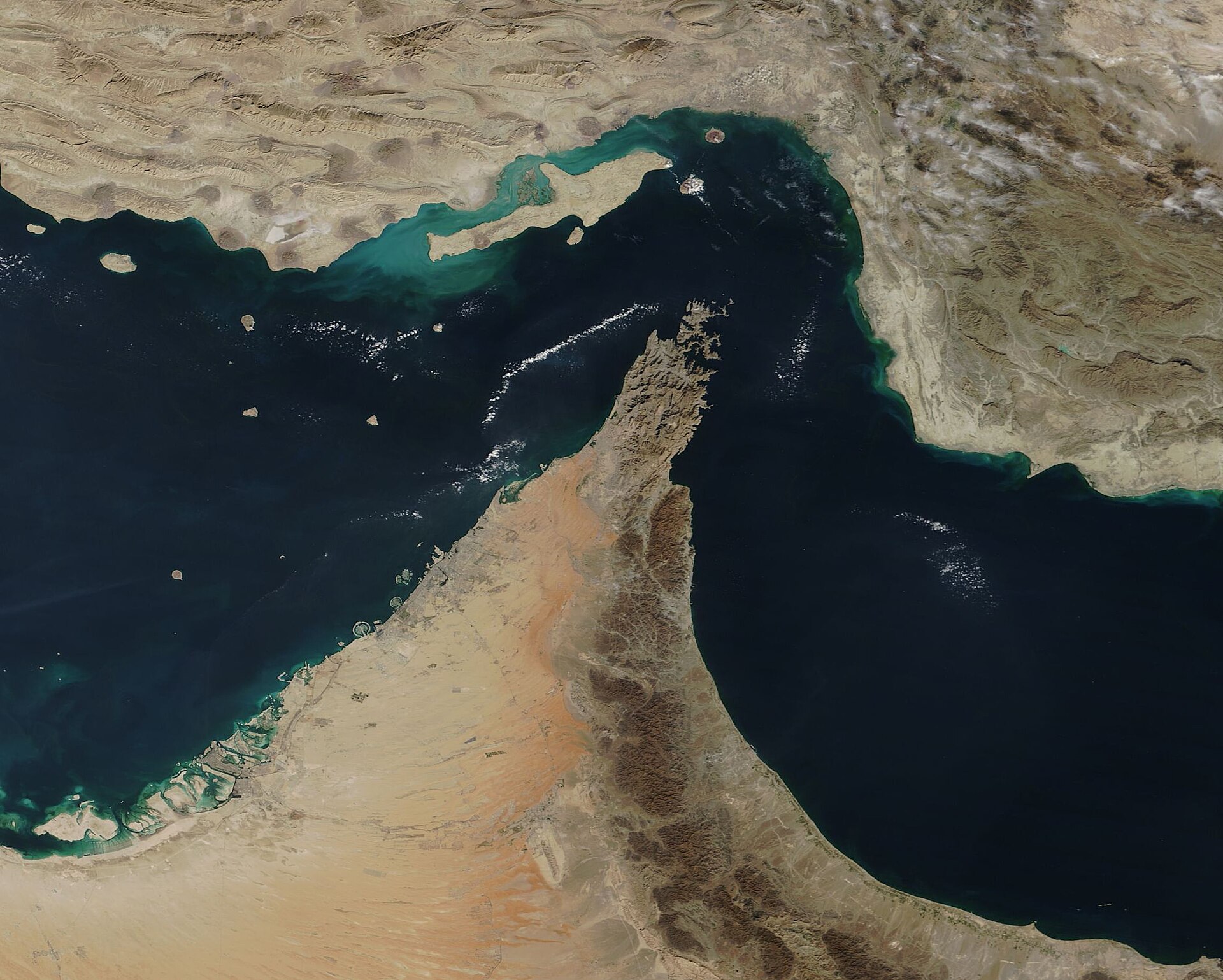
Rezaei’s declaration that “no political border will be secure” removes the last rhetorical constraint on target selection that Iranian officials had maintained. Iran has already demonstrated the operational capability to strike across six sovereign territories simultaneously — Kuwait, Bahrain, Qatar, Jordan, Oman, and the UAE — and the targets have escalated from military installations to civilian infrastructure: Kuwait’s Shuaiba desalination plant was struck on July 17, establishing a direct precedent for attacking the water supply of a Gulf state whose population depends on desalination for approximately 70 percent of its drinking water. Saudi Arabia’s dependency ratio is comparable, and its desalination network — the largest in the world — sits on the same coastline as the oil-export terminals.
Abqaiq processes roughly 7 percent of global oil supply within a single facility perimeter, and defending it alongside Riyadh, Prince Sultan Air Base, and the kingdom’s southern airports simultaneously with 400 PAC-3 rounds is not a difficult tactical problem — it is an arithmetically impossible one. Four AN/TPY-2 THAAD radar systems have already been struck across Jordan, Saudi Arabia, and the UAE in the war’s first week, each worth between $300 million and $500 million, and each described by defence analysts as irreplaceable on near-term timelines. Washington is weighing a punitive drawdown from Prince Sultan Air Base rather than reinforcement, which would remove the maintenance personnel and Link-16 connectivity that keep the remaining Patriot batteries interoperable.
Iran struck Oman’s Ghanam radar and Salama Island maritime surveillance on July 17 — facilities that monitor Hormuz transit — and simultaneously struck Kuwait’s water infrastructure, Jordan’s air bases, and Qatar’s satellite communications, each blow compounding the next. The pattern is designed to force each Gulf state to prioritise its own defence over coalition interoperability, fragmenting the sensor and interceptor network that the American theatre architecture was built to unify. When Rezaei says no border is secure, he is describing an operational reality that his forces have already demonstrated across six countries in ten days, not a capability they aspire to develop.
The American Strikes That Triggered the Countdown
Rezaei’s framing — that Iran has “so far exercised restraint to prevent the war from expanding into a broader regional and international crisis” and that the United States “miscalculated by turning the war into a regional one” — is self-serving, but the escalation ladder it references is real. Night Six of the American air campaign, on July 16, struck civilian economic infrastructure in Hormozgan province: five bridges destroyed, seven Iranian civilians killed, nine injured at Bandar-e Khamir. Night Seven, on July 17 — the day of Rezaei’s broadcast — severed the Bandar Abbas-to-Tehran railway junction, struck Iranshahr Airport, and hit Semnan Airport, extending the target set deep into Iran’s interior transport network for the first time.
The escalation from military targets to bridges, railways, and civilian airports gave Rezaei’s ultimatum a domestic logic that transcends IRGC factional politics: the adviser to the Supreme Leader was responding, on state television, to American strikes that killed Iranian civilians and severed Iranian infrastructure, and his forty-eight-hour window was timed to a phase of American operations that the Iranian public could see destroying their own country in real time. CNN carried his quote without analysing the “both war and negotiation” formulation as a structurally distinct policy declaration; Xinhua provided the most complete text, reflecting a Chinese institutional interest in amplifying the signal that Iran’s diplomatic track was closed; APA.az described the threat as “full-scale retaliatory attacks,” understating the doctrinal shift from retaliation to declared offensive operations.
“The policy of ‘both war and negotiation’ has ended… if US attacks continue, Iran’s armed forces will no longer limit themselves to retaliatory strikes, and US bases and forces will no longer be safe within any political borders.”— Mohsen Rezaei, military adviser to Supreme Leader Mojtaba Khamenei, IRIB state television, July 17, 2026 (via Xinhua)
The forty-eight-hour window, if operational rather than rhetorical, would expire on July 19 — the same day that the Oman-facilitated talks were scheduled and subsequently collapsed. Whether the timing is coincidence or coordination, the effect is identical: every buffer between the current posture and unconstrained Iranian offensive operations — diplomatic, temporal, geographic — expires within the same seventy-two-hour window, and Saudi Arabia has no mechanism to influence any of them.
Frequently Asked Questions
Has Iran made similar threats before without following through?
Iran has a documented pattern of calibrated escalation in which declared red lines are tested incrementally rather than crossed in a single action. The 2019 Abqaiq-Khurais drone and cruise-missile attack, attributed to Iran and its proxies, demonstrated precision strike capability against Saudi oil infrastructure but was followed by no declared “offensive phase” and no formal abandonment of diplomacy. The difference in July 2026 is structural: Rezaei’s statement explicitly retired the dual-track formula that had permitted Iran to escalate militarily while maintaining a diplomatic off-ramp, and it did so through a figure whose formal appointment by Mojtaba Khamenei makes the declaration constitutionally binding in ways that previous hawkish rhetoric from parliamentary figures or retired officers was not. Iran’s IRGC has also already struck targets in six sovereign territories in the current conflict, establishing operational follow-through on geographic expansion threats that were previously conditional.
Could Saudi Arabia acquire interceptors from a source other than the United States?
The kingdom’s Patriot batteries are fully integrated into US-manufactured fire-control systems — AN/MPQ-65A radars and Engagement Control Stations — that are not interoperable with non-American interceptors without hardware and software modifications requiring twelve to eighteen months of integration work. South Korea’s M-SAM-II, which Saudi Arabia has contracted to address the specific altitude gap in the Zolfaghar’s terminal phase, will not arrive before 2028. Israel’s Arrow-3, the only operational system designed to intercept the class of hypersonic-trajectory threats Iran now deploys, has never been offered to a Gulf state and would require US congressional approval under ITAR and MTCR export-control regimes — a process that has never been tested for a Saudi recipient. The PAC-3 MSE remains the only interceptor Saudi forces can load and fire today, and its sole manufacturer produces 600 per year for the entire world.
What is the Persian Gulf Security Arrangement and why does August 18 matter?
The PGSA is Iran’s unilateral surcharge framework for Strait of Hormuz transit, announced in early 2026 and accumulating charges against Gulf states at a rate of $5.5 million per day. The total outstanding as of July 17 stands at approximately $253 million, and August 18 is the date on which penalty-rate provisions activate, though the specific enforcement mechanism — whether physical interdiction, insurance-market pressure, or secondary sanctions on non-compliant shippers — has not been publicly detailed by Iranian officials. No Gulf state has acknowledged the PGSA as legitimate, but the 27 ships per day currently transiting Hormuz with active AIS, versus a pre-crisis baseline of 84, suggest that the surcharge is functioning as a de facto toll regardless of its legal status. The gap between the 27 visible transits and the estimated 34 million barrels still moving daily implies a substantial dark-fleet and state-fleet operation outside normal maritime tracking.
What role does Iran’s nuclear programme play in Rezaei’s calculus?
Iran’s stockpile of 440.9 kilograms of uranium enriched to 60 percent U-235 — verified by the IAEA in September 2025 — is sufficient, with further enrichment to weapons grade, for multiple nuclear devices. The IAEA has been unable to verify Iran’s nuclear activities for 121 consecutive days as of late June 2026: all inspectors have been expelled, all cameras disabled, and all tamper-indicating seals removed. The monitoring blackout means that any changes to enrichment levels, stockpile quantities, or weaponisation activity since late February 2026 are unknown to the international community. Rezaei himself served as secretary of the Expediency Discernment Council during the period when Iran’s enrichment programme accelerated from 3.67 percent to 60 percent U-235, giving him direct institutional familiarity with the nuclear programme’s trajectory — a dimension of his advisory role that his public statements have not addressed but his biography cannot conceal.
Analysis of whether Rezaei’s ultimatum reflects genuine command authority or IRGC gallery performance — and what each path forward costs Iran’s deterrence credibility — is examined in Who Ordered the Ultimatum Rezaei Cannot Enforce?