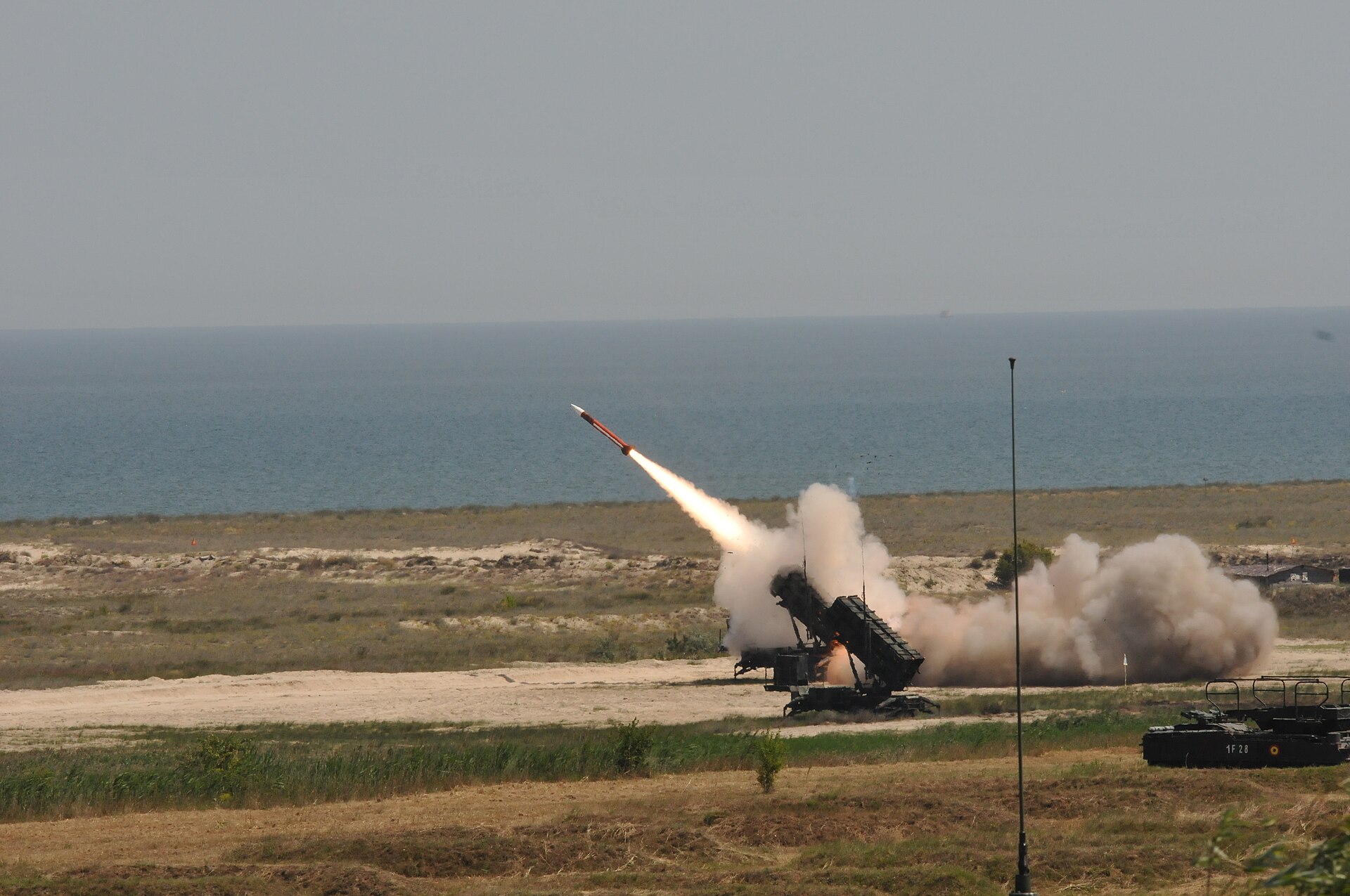
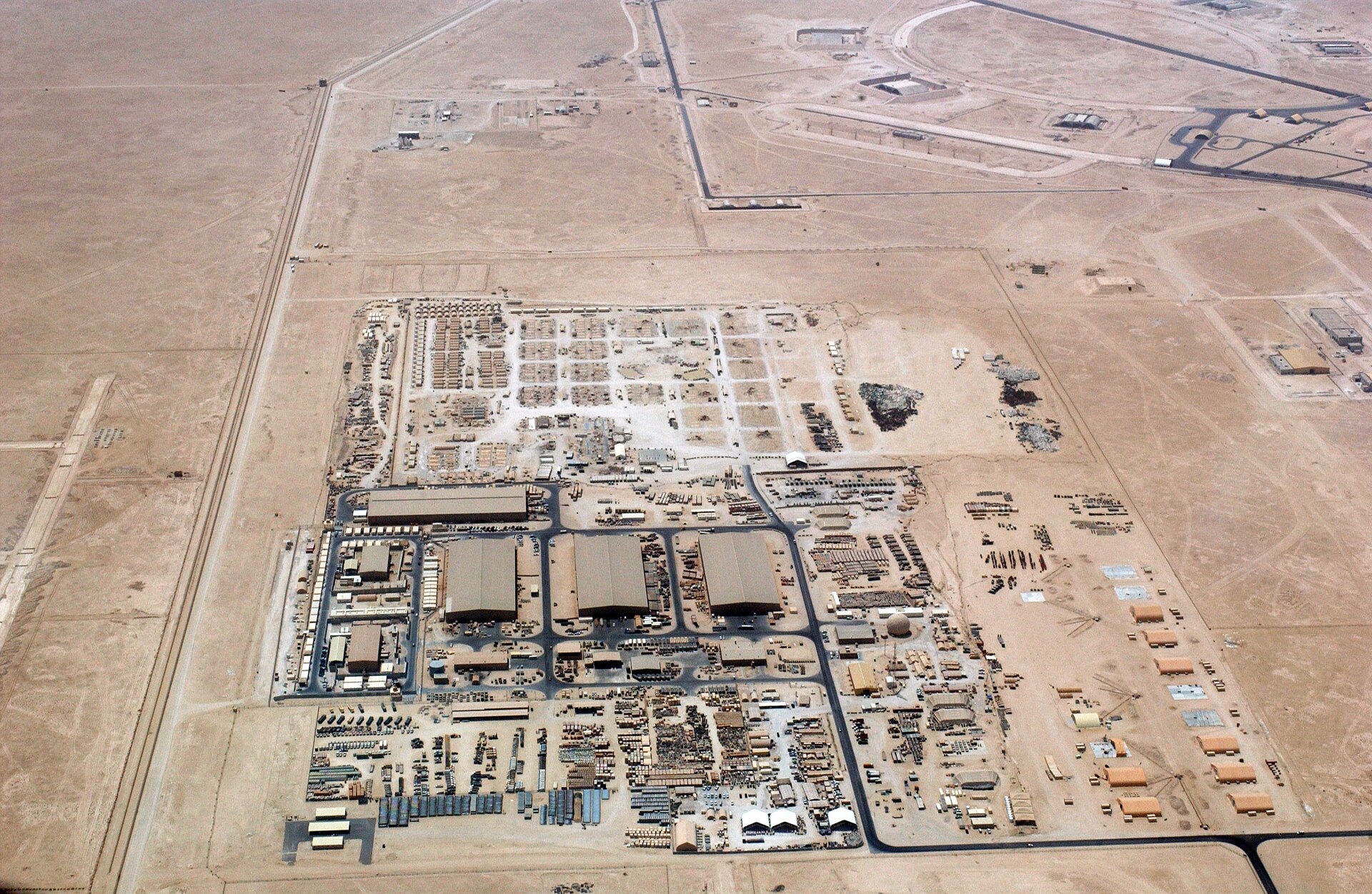
DOHA — Iran struck Al Udeid Air Base in Qatar overnight on July 16-17, wounding four people including a child with interception shrapnel that fell on a residential area, two days before US-Iran negotiations are scheduled to begin in Oman. Qatar’s Ministry of Defence confirmed it intercepted the incoming ballistic missiles. The IRGC claimed it destroyed a “jet maintenance center” and a “command-and-control center” on the base; neither Qatar nor the United States confirmed any infrastructure damage.
The attack marks the second time in eight days that the Nasr-2 campaign has targeted Al Udeid directly. On July 9, an IRGC strike destroyed an AN/GSC-52B(V5) Military Environmental satellite dish at the base — a $15 million L3Harris installation, 12.2 meters across, the first of its kind destroyed outside the continental United States. The overnight strike landed while Doha still hosted the diplomatic infrastructure meant to bring both sides to Muscat on Saturday.
What Qatar Said — and What It Implies
Qatar’s Foreign Ministry responded within hours. “The continuation of these attacks constitutes a dangerous escalation that will complicate efforts to contain tensions and undermine political and diplomatic endeavors aimed at achieving security and stability in the region,” the ministry stated. Doha held Tehran “fully legally responsible” and reserved its “full right to respond.” That phrase has carried operational weight before: when Iran struck Qatar’s territory in March, Doha scrambled F-15s and downed two Iranian Su-24 bombers in the March 2-3 exchange. The statement is notable for what it did not say: it did not reaffirm Qatar’s role as facilitator, and it did not mention the July 19 Oman talks by name.
The omission matters because Qatar has previously stated — explicitly, on the record — that it will not act as a facilitator so long as it is under attack. That condition is no longer hypothetical. Doha facilitated 17 hours of intensive negotiations in Tehran before the June 17 Islamabad MOU breakthrough. It hosted US envoys Witkoff and Kushner on July 1 alongside parallel Iranian consultations. That investment now sits beneath a strike pattern that has hit Qatar three times since March 2026: the Ras Laffan industrial attack on March 18 that wiped out approximately 17 percent of Qatar’s LNG capacity overnight, the July 9 satellite dish kill, and the July 17 residential shrapnel casualties.
Where This Fits in the Nasr-2 Sequence
The IRGC’s Nasr-2 campaign has now executed more than ten distinct waves across five Gulf states since early July. The targeting has followed a legible pattern: degrading specific US military capabilities at each host-nation installation rather than striking the broadest possible set of targets simultaneously. Wave 8 on July 16 struck the C-RAM early-warning radar at Ali al-Salem Air Base in Kuwait. Wave 10 struck air surveillance radar and fuel infrastructure at Sheikh Isa in Bahrain. IRGC Brigadier General Mohebbi stated after Wave 10 that “next phases will then begin.” The overnight Qatar attack appears to be the opening salvo of those next phases.
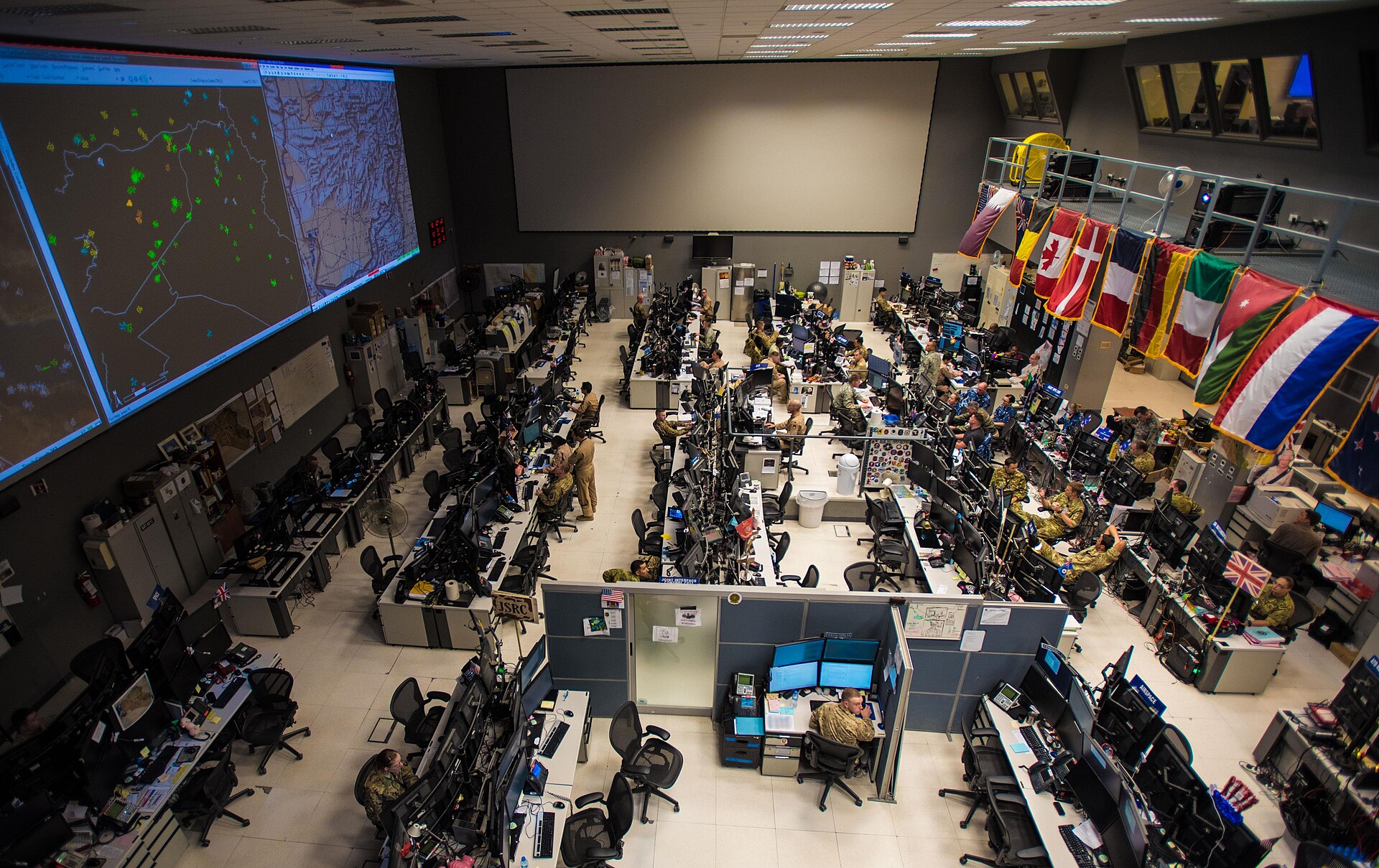
Al Udeid is the most consequential target in the theater. The base hosts approximately 10,000 US personnel and the Combined Air Operations Center — the operational nerve center directing US air campaigns across the region. Its destruction or degradation would not merely embarrass Washington; it would sever the command link that makes the sixth consecutive night of US airstrikes against Iran operationally possible. The IRGC appears to understand this. Claiming a “command-and-control center” as a target — whether the claim is accurate or aspirational — signals awareness of Al Udeid’s centrality to the campaign.
The Middle East briefing 3,000+ readers start their day with.
One email. Every weekday morning. Free.
Does Striking the Mediator Foreclose or Shape Talks?
The timing is precise enough to demand interpretation. Oman confirmed US-Iran talks for July 19. Vice President Vance, Secretary Rubio, special envoy Witkoff, and Kushner have all been named as potential US participants — a delegation whose seniority signals that Washington has not yet written Muscat off.
The IRGC struck Qatar — the state that made those talks logistically possible — exactly 48 hours before the scheduled opening. Iran’s stated justification follows the same formula it has used throughout Nasr-2: these are strikes on “American interests,” not Qatari territory. Qatar explicitly and publicly rejected that distinction in March when Prime Minister Sheikh Mohammed bin Abdulrahman Al-Thani said Iran’s actions “do not indicate any genuine desire for de-escalation or resolution” and accused Tehran of “intentionally seeking to harm its neighbors and draw them into a war that is not theirs.”
Ali Vaez, director of the Iran Project at the International Crisis Group, framed the broader dynamic: “It took about two months to negotiate a page and a half of the memorandum of understanding. It took only three weeks for it to unravel. We are going to go from one cycle of violence into the next, and this is exactly the concept of a forever war.” The overnight strike does not cancel the Oman talks — but it guarantees that Qatar arrives in Muscat, if it arrives at all, as a wounded party rather than a neutral facilitator.
The US Sixth Night and the Escalation Cycle
The Qatar strike did not arrive in a vacuum. CENTCOM completed its sixth consecutive night of airstrikes against Iran on July 16-17, and the targeting represents a step-change. Previous nights focused on air defense sites, command centers, and military logistics. The sixth night struck five bridges in southern Iran and produced three explosions in Chabahar — Iran’s only major port outside the Strait of Hormuz and its primary trade corridor with India. The move from degrading military capability to pressuring economic infrastructure marks a new US targeting doctrine.
The IRGC responded within hours. “The time for restraint is over,” the Guards stated. US strikes “will result in even more devastating responses.” The Al Udeid strike followed roughly six hours later — before the statement had cleared regional news cycles.
The pattern is circular and accelerating. The US strikes Iranian infrastructure to coerce Tehran toward the negotiating table. Iran strikes US bases in Gulf states to demonstrate that coercion cuts both ways. Each cycle makes the next more destructive, and each cycle makes the diplomatic off-ramp — scheduled for Saturday in Muscat — simultaneously more urgent and more difficult to reach. Washington has approved the instruments of escalation while the mechanism for de-escalation depends on the state it just failed to shield.
Qatar’s Structural Impossibility
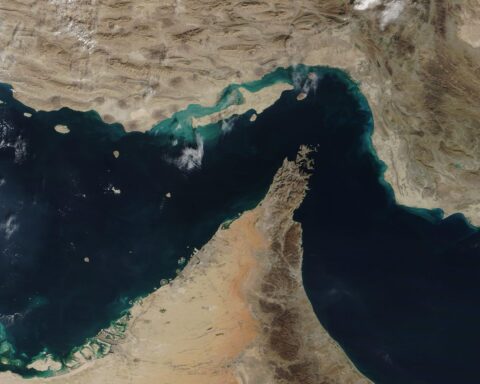
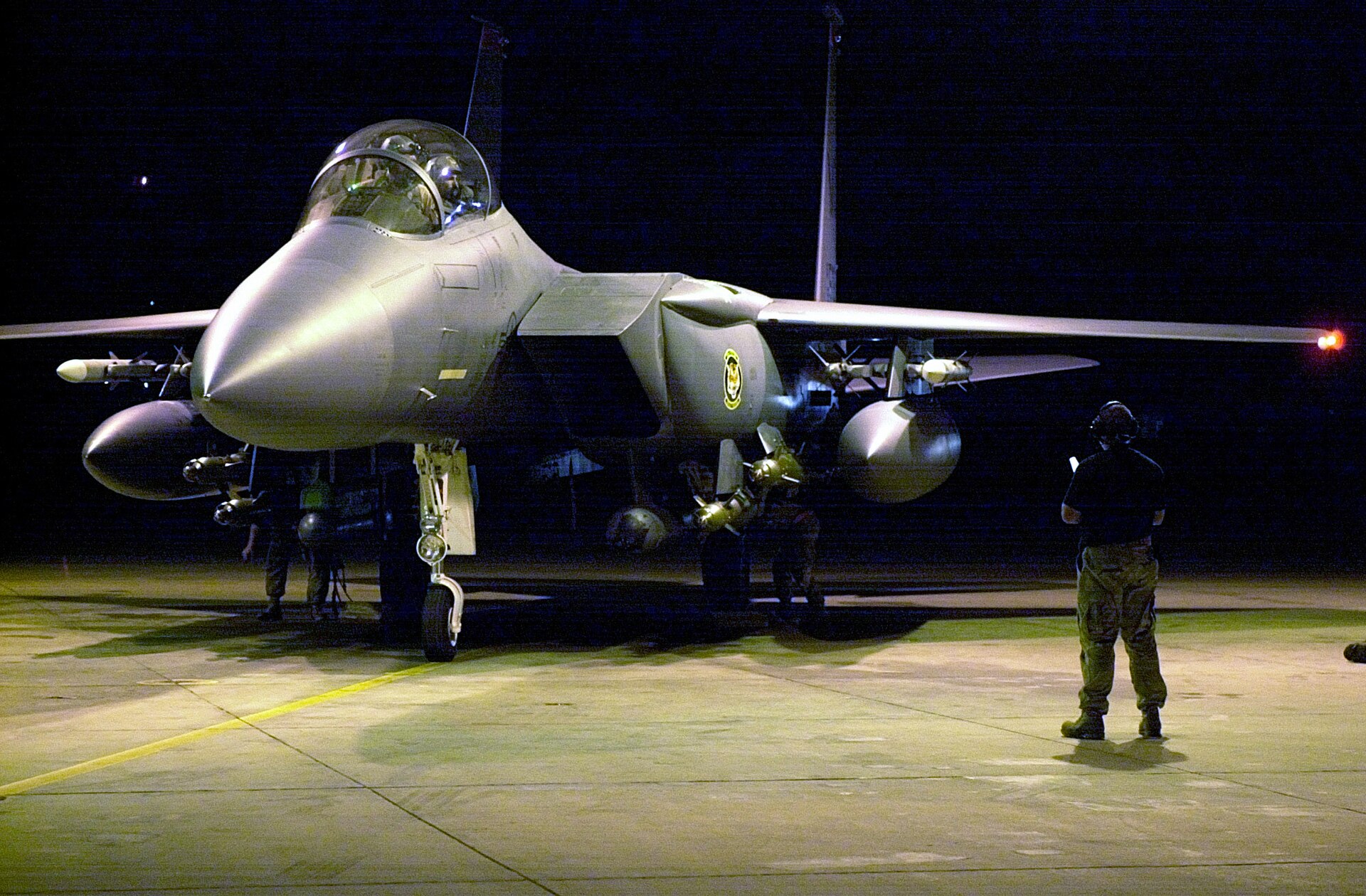
Qatar occupies a position no other Gulf state shares: it simultaneously hosts the largest US military installation in the Middle East, serves as the primary facilitator of US-Iran diplomatic engagement, and co-owns the world’s largest natural gas field (North Field/South Pars) with Iran. The arrangement worked when Iran treated Qatari territory as diplomatically inviolable. That premise collapsed in March 2026 and has not been restored. Bloomberg and Rigzone reported as early as July 7-8 that Qatar’s facilitator role was “jeopardized” by Iranian shipping attacks in the Strait of Hormuz — before the overnight base strike added shrapnel in a residential neighborhood to the ledger.
The CS Monitor identified the dynamic in May: an emerging pattern of states using “pressure campaigns and political attacks on mediators to derail diplomacy or push neutral arbitrators to take sides.” Qatar is experiencing both simultaneously. Each Iranian strike makes it harder for Doha to maintain the neutrality that gave its mediation credibility. Each US sortie that launches from Al Udeid makes it harder for Iran to accept Qatar as anything other than a co-belligerent. The structural contradiction existed before July 17. The overnight shrapnel — including the wounded child — made it a domestic political fact that Qatar’s leadership can no longer compartmentalize.
Qatar has limited options. It cannot ask the United States to vacate Al Udeid without triggering a security collapse far more severe than the one it currently absorbs. It cannot expel Iran’s diplomats without foreclosing its only leverage over Tehran. And it cannot continue absorbing IRGC strikes indefinitely while presenting itself to both parties as a disinterested go-between. The Islamabad MOU’s 60-day clock — now at Day 31 — adds urgency: if the Oman talks fail and no follow-on framework takes their place, Qatar’s diplomatic exposure converts to pure military liability with nothing to show for it. Doha is being forced toward a choice it has avoided for two years: whether the diplomatic role is worth the cost of remaining in it.
What Happens Before Saturday
Forty-eight hours remain before the Oman talks. Qatar has not withdrawn from the process, but its foreign ministry statement conspicuously avoided any reaffirmation of its facilitator role. Iran struck Oman hours after its foreign minister held Hormuz talks in Muscat earlier this month — establishing a pattern of targeting mediator states immediately before or after diplomatic engagement. The Foreign Policy assessment that Iran targets states “that matter to Washington but not enough to trigger decisive US response” now applies to Qatar with a precision that Doha’s diplomatic corps will find difficult to ignore.
The IRGC has described Nasr-2 as an “explicit attrition campaign exceeding 80 distinct strike packages.” If that figure is accurate, the campaign is less than 15 percent complete. PAC-3 interceptor stocks across the Gulf are approximately 86 percent depleted, with roughly 400 of 2,800 missiles remaining at Prince Sultan Air Base alone. Qatar intercepted the overnight volley, but interception does not restore the credibility that each strike erodes.
What happens before Saturday matters as much as what happens in Muscat. Qatar’s decision to reaffirm or withdraw from its facilitator role — stated or implied in the next 48 hours — determines whether the July 19 talks open with a convening architecture or a vacant chair. The IRGC knows this. Striking Al Udeid at the 48-hour mark was not imprecision; it was a deadline imposed on Doha before Washington and Tehran impose one of their own. In the same window, the IRGC struck Oman’s Musandam Peninsula and Salama Island, forcing Muscat to issue its first-ever formal condemnation of Iran — ending the neutrality that made it the only viable host. How Oman’s condemnation changes the July 19 talks is analyzed here.
Frequently Asked Questions
What did Iran strike in Qatar on July 17?
The IRGC targeted Al Udeid Air Base, the largest US military installation in the Middle East, claiming to have destroyed a jet maintenance center and a command node. Qatar’s Ministry of Defence confirmed it intercepted incoming ballistic missiles. Neither Qatar nor the US confirmed the IRGC’s damage claims. Four people were wounded by falling shrapnel in a nearby residential area, including one child. The IRGC did not announce a wave number, but the strike follows the operational logic of Nasr-2’s escalation sequence after Mohebbi’s “next phases will then begin” statement on July 16.
How does this relate to the Oman talks scheduled for July 19?
The Oman talks depend on Qatar’s continued willingness to host and facilitate the diplomatic channel. Doha arranged the logistics for the June 17 Islamabad MOU and hosted the US delegation on July 1. Its foreign ministry statement on July 17 held Iran “fully legally responsible” but omitted any reaffirmation of Doha’s facilitator role — the first time it has done so since the diplomatic channel opened. If Qatar formally withdraws or conditions its participation, the US delegation loses its primary back-channel into Tehran and Muscat loses its convening architecture.
How many times has Iran struck Qatar in 2026?
At least five times: the first Al Udeid strike in June 2025 (Operation Glad Tidings of Victory), the March 2-3 exchange that saw Qatar’s F-15s down two Iranian Su-24 bombers, the March 18 Ras Laffan attack that destroyed 17 percent of Qatar’s LNG capacity, the July 9 satellite dish kill at Al Udeid, and the July 17 overnight strike that wounded four civilians. The pace has accelerated: the first three strikes spanned nine months; the last two arrived in eight days.
What is Nasr-2?
Nasr-2 is the IRGC’s ongoing multi-wave missile and drone campaign targeting US military installations across the Gulf. It has struck bases in Kuwait, Bahrain, Jordan, Qatar, and potentially other states, executing at least ten confirmed waves since early July 2026. The IRGC has described it as an attrition campaign comprising more than 80 planned strike packages — meaning the ten confirmed waves represent less than 15 percent of the total declared campaign. The name echoes the 2023 Nasr exercise series, which the IRGC used to demonstrate precision-strike doctrine against distributed naval targets.