MUSCAT — The Sultanate of Oman on July 17 issued the first formal “condemnation and denunciation” it has ever directed at the Islamic Republic of Iran, forty-eight hours before the ceasefire talks it was scheduled to host on July 19, after the Islamic Revolutionary Guard Corps struck a US-operated air control radar in the Ghanam area of Musandam and a maritime surveillance station on the Salama rocks in the Strait of Hormuz. The language Muscat used on July 17 — the specific words “condemnation and denunciation” — had been withheld from every previous Iranian strike on Omani soil since the campaign began in February, and its arrival did not describe a diplomatic protest so much as the closing of the last neutral floor in the Gulf.
What Iran destroyed at Ghanam and Salama was not primarily an antenna array. It was the fiction that made Oman usable as a mediator, a fiction Muscat had maintained across five months of Iranian bombs, one presidential threat from Donald Trump to “blow ’em up,” and the slow ruin of every parallel negotiating track from Doha to Islamabad. The July 19 talks did not need to be formally cancelled after that — they had already ended.
Table of Contents
- The Language Shift: From “Profound Dismay” to “Condemnation”
- What Was Actually Destroyed at Ghanam and Salama
- Why Does Iran Strike the Only Country That Can Mediate for It?
- The Two-Lane Hormuz Proposal Iran Killed the Day It Was Tabled
- How Does Saudi Arabia Lose When Oman Loses Neutrality?
- The “US Assets” Framing as Diplomatic Insulation
- Squeezed by Trump and Tehran at the Same Address
- What Replaces Muscat When Muscat Is Gone?
- Frequently Asked Questions
The Language Shift: From “Profound Dismay” to “Condemnation”
The Omani Ministry of Foreign Affairs has issued statements on Iranian strikes on Omani territory continuously since late February, and until July 17 it had never once used the verb it now used twice in a single sentence. When Duqm, Salalah, Sohar, Bukha and Mina Al Fahal were struck in the opening waves of the campaign, Muscat expressed concern and called for restraint. When Iranian missiles hit Omani waters on July 12 within hours of Foreign Minister Abbas Araghchi’s face-to-face meeting with Badr al-Busaidi, Oman summoned the Iranian ambassador and issued a communique of “profound dismay at these irresponsible acts” that carefully called for adherence to “state sovereignty, good neighbourliness and non-interference in internal affairs.” The word “condemns” appeared nowhere in that text, and its absence was noticed in Tehran, Riyadh and Washington within the hour.
The July 17 statement is a different document written in a different register. It affirms “condemnation and denunciation of this attack,” repeats the same sovereignty language, and adds a demand that had never appeared in an Omani post-strike release: an “immediate halt to attacks across the region.” Muscat has thereby generalised its grievance beyond the bilateral file, dropping the pretence that it can absorb Iranian strikes on its own soil as a private matter to be managed between neighbours. The linguistic escalation is small on the page and enormous in the corridor, and its architecture is deliberate.
Two things distinguish the July 17 target set from every prior incident and explain why Muscat could not repeat the “dismay” formulation. First, the Ghanam radar was permanently installed US military infrastructure on Omani territory, not a passing vessel, not a temporary system, not a piece of civilian equipment that could be publicly disowned. Second, the strike arrived forty-eight hours before Muscat was scheduled to host ceasefire negotiations it had spent months constructing. Silent absorption would have been read in every Gulf capital as accepting the terms of a hostage situation, and Oman’s mediation value depends entirely on not being anyone’s hostage. We reported the July 12 strike on Omani waters at the moment Araghchi was still in Muscat, and we tracked the specific rhetorical calibration by which Muscat then refused to condemn; the July 17 shift is the exhaustion of that calibration.
What Was Actually Destroyed at Ghanam and Salama
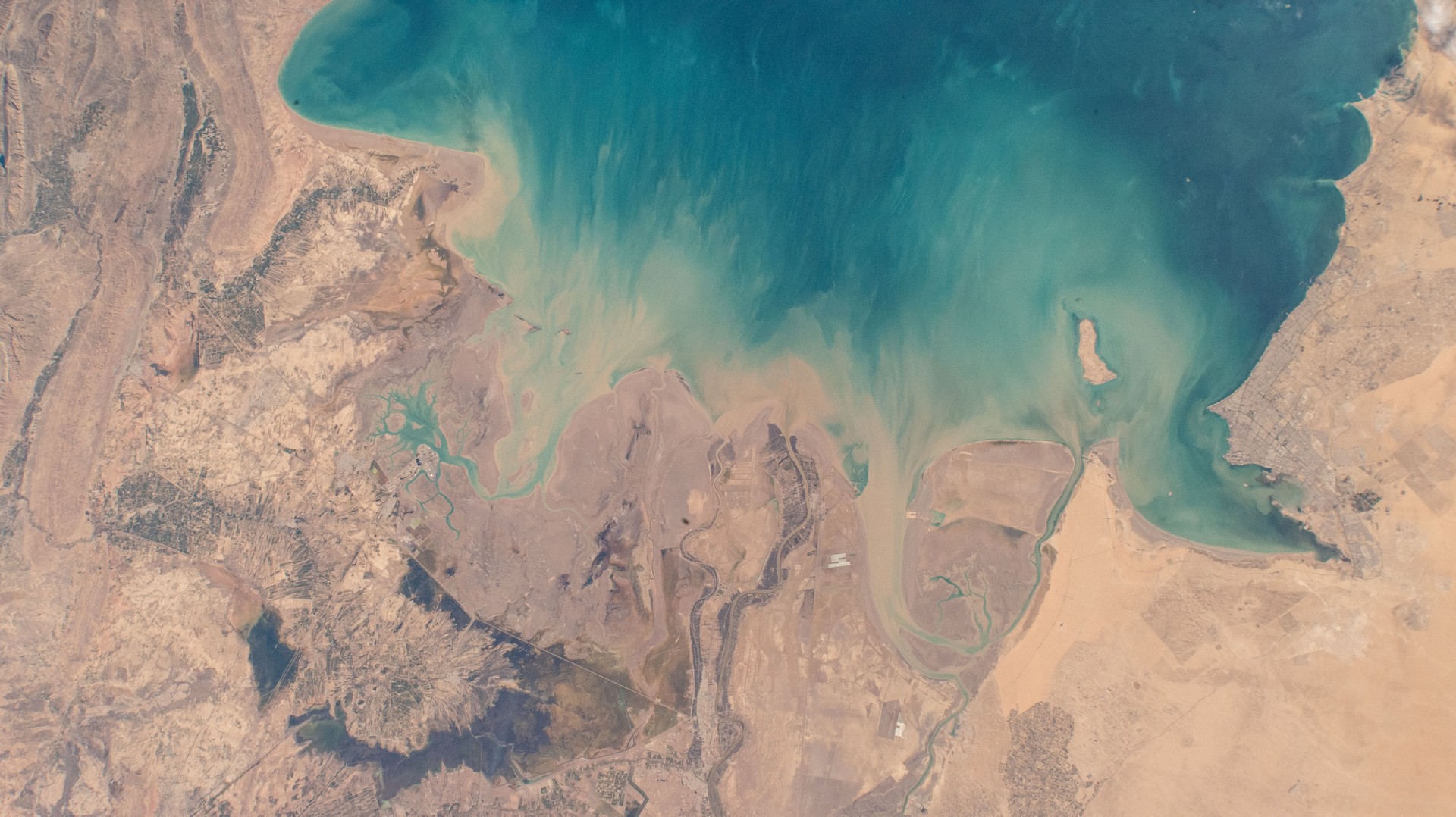
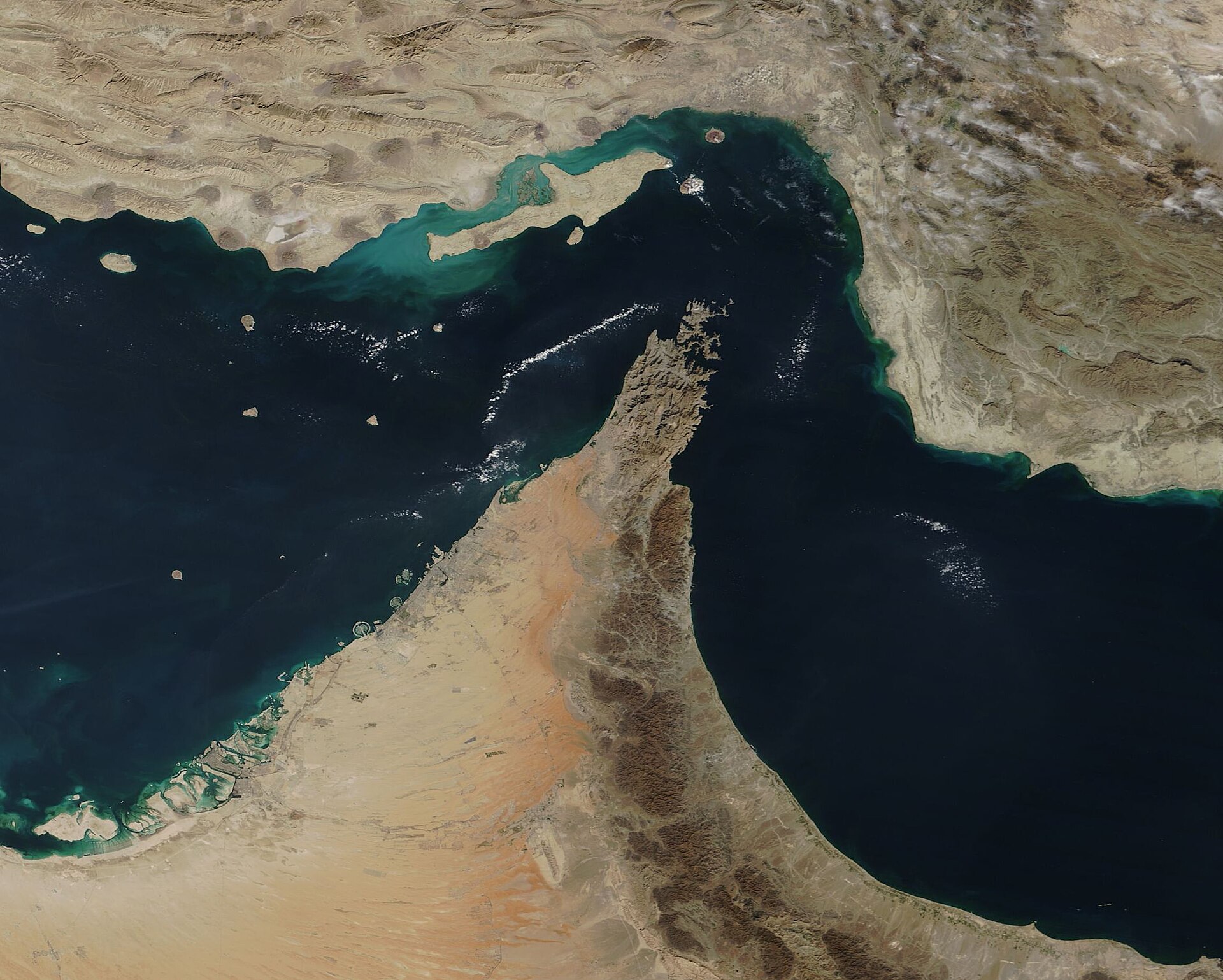
The Musandam Peninsula is an Omani exclave separated from the main body of the country by the United Arab Emirates, and it forms the southern jaw of the Strait of Hormuz at its narrowest crossing. From high ground in Musandam it is possible to see IRGC naval bases at Bandar Abbas on a clear day, and the entire transit corridor of the Strait passes underneath the peninsula’s line of sight. That geography is the reason the United States, under the framework of the US-Oman Joint Military Commission, has for years maintained sensor infrastructure in the Ghanam area whose function is to track everything that moves through the chokepoint.
The Middle East briefing 3,000+ readers start their day with.
One email. Every weekday morning. Free.
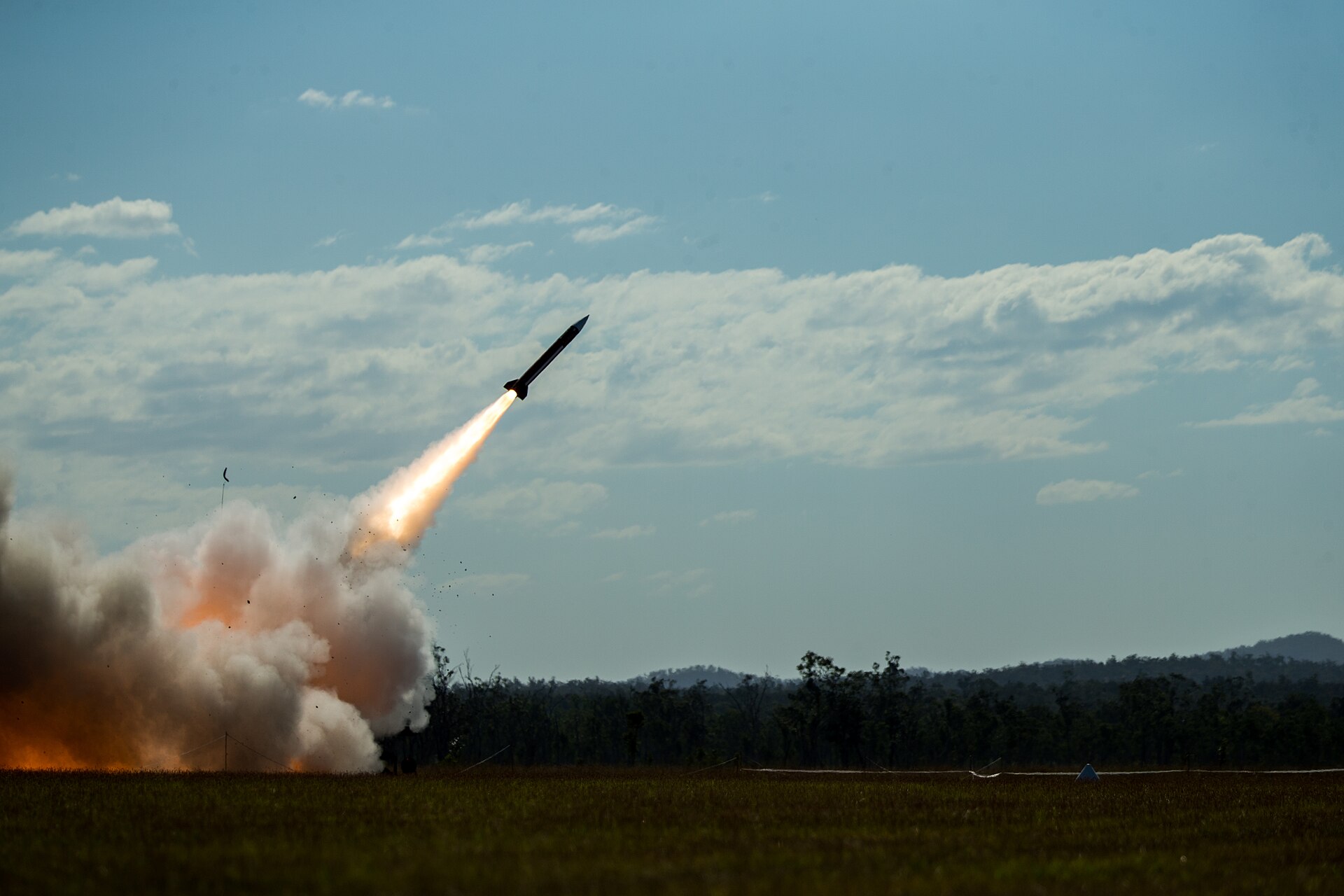
The IRGC targeted two specific systems on July 17. The first was an air control radar in Ghanam whose function is to build a real-time picture of Iranian drone and missile launches originating from Iranian territory or from IRGC naval vessels in the Strait. The second was a maritime surveillance radar on the Salama rocks — small islets in the transit lanes — whose function is to track shipping through the corridor. Together they constituted the primary US situational-awareness asset for the southern half of Hormuz, and the primary means by which Washington and its Gulf partners could validate or dispute IRGC claims about naval activity in the Strait.
Destroying those two systems is operational preparation, not symbolism. An IRGC that intends to expand its assertion of control over Hormuz transit — the assertion the Corps repeated in the same July 17 statement, declaring the Strait “under the complete control of its naval forces” — first has to remove the American ability to see what it is doing. The strike creates a sensor gap over the exact water through which roughly a third of seaborne oil passes, and it does so in the same week that IRGC operations have expanded to Kuwaiti desalination infrastructure and Qatari air bases, as the Wave Fifteen strike on Shuaiba and the second Al Udeid hit made clear. Iran did not blind Oman — it blinded the coalition monitoring architecture that Oman happened to host.
Why Does Iran Strike the Only Country That Can Mediate for It?
Oman is the state Iran trusts most in the international system, a relationship whose origins predate the revolution and survived it. Muhammad Reza Pahlavi sent Iranian troops to help Sultan Qaboos suppress the Dhofar rebellion in the 1970s, and the debt Qaboos carried from that intervention survived into the post-1979 Islamic Republic in a form no other Gulf capital replicates. Oman kept its embassy in Tehran open when Riyadh severed diplomatic relations in January 2016 after the execution of Nimr al-Nimr. Oman hosted the secret back-channel that produced the Joint Plan of Action in November 2013 and, from there, the JCPOA in 2015. Secretary of State John Kerry publicly credited Oman with having “played a critical role in getting these talks off the ground in the first place,” and every US-Iran negotiation since has, at some stage, passed through Muscat.
The Middle East Institute described the February 2026 shift of the US-Iran meeting venue from Istanbul to Muscat as “the latest reminder that when US-Iran diplomacy is on the verge of breaking down completely, Oman is the regional player the Iranian regime trusts most to step in and mediate.” Alex Vatanka, MEI’s Iran Program Director, wrote in the same publication that “what has changed in 2026 is not the nature of Oman’s involvement but the stakes: the risk of miscalculation is rising, Iran and the United States might be reading the moment in opposite ways, and quiet facilitation is no longer enough.” Vatanka’s warning was published before July 17. It reads now like an obituary written in advance.
The paradox of striking the mediator is only paradoxical if one assumes the IRGC still wants a mediated exit. The evidence of the last six weeks suggests it does not. The Islamabad Memorandum of Understanding signed on June 17 created a sixty-day negotiating window running to August 16 with Qatar, Pakistan, Saudi Arabia, Turkey and Egypt as facilitators, and by July 8 Trump had publicly declared the MOU “over.” The Corps has struck facilitator infrastructure in Qatar (twice at Al Udeid), Kuwait (Shuaiba desalination), Bahrain, Jordan, and now Oman, and the pattern is not accident. The Corps is systematically destroying the third-party architecture on which any restart of talks would depend, and it is doing so in the specific week that Iran struck six countries and spared the one that matters. The message to Washington is that no facilitator will be permitted to provide the fiction of a face-saving exit. The message to Muscat is that neutrality is no longer being purchased.
The same July 17 wave carried a second signal whose significance for any resumed track was equally terminal. Mohsen Rezaei, Iran’s Supreme Leader military adviser, declared on state television that “the conditions for both war and negotiation are over” — a formal announcement, delivered on the same day as the Ghanam and Salama strikes, that the diplomacy Oman had just lost its neutrality defending was already dead at the source. Rezaei’s 48-hour ultimatum is examined in full here.
The Two-Lane Hormuz Proposal Iran Killed the Day It Was Tabled
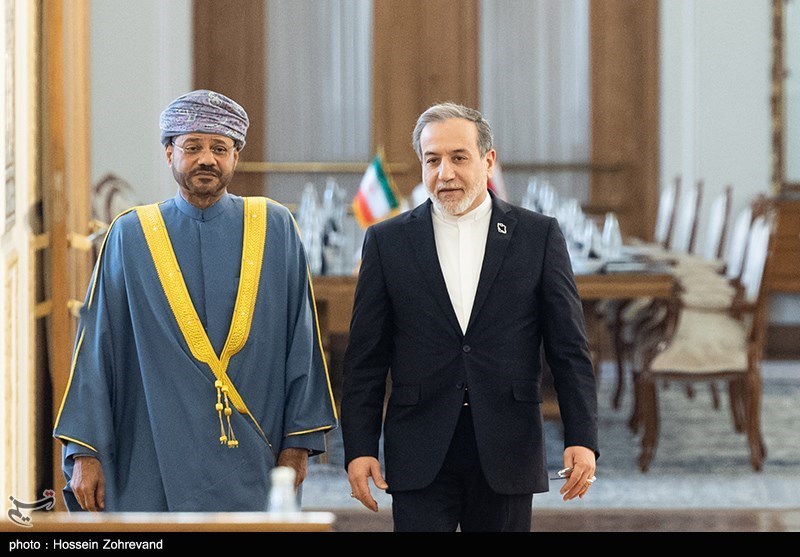
The July 12 Araghchi-Busaidi meeting in Muscat had a specific agenda, and it was not a photo opportunity. The two ministers discussed, in Araghchi’s own subsequent characterisation, “appropriate mechanisms for the safe transit of ships through the Strait of Hormuz, in accordance with Article 5 of the Islamabad Memorandum of Understanding.” Underneath that formal language sat a concrete Omani proposal: divide the Strait into two separately-controlled transit routes, one hugging the Iranian coast and administered under Iranian authority, one hugging the Omani coast and administered under Omani authority, with a demilitarised buffer between them. The Soufan Center’s July 17 IntelBrief noted that Muscat had drafted the framework and that IRGC strikes on shipping the same day the framework was being negotiated had “undermined that proposal.”
The two-lane scheme was Oman’s answer to the Persian Gulf Sovereign Access levy — the $253 million in outstanding fees and $5.5 million per day surcharge that Iran has said will activate on August 18 if the political architecture is not resolved. It offered Iran a face-saving mechanism for asserting sovereign administration over Hormuz transit without physically boarding ships, and it offered Washington a mechanism for keeping the Strait open without formally recognising Iranian jurisdiction. The proposal’s core virtue was that both sides could describe it, to their domestic audiences, as their own victory.
The IRGC strike on the Salama maritime radar on July 17 destroyed the technical basis for the Omani lane. Without the sensor picture the Salama system provided, Muscat cannot administer its half of a divided Strait to any standard Washington would accept. The Corps had five days to consider whether it wanted the Omani proposal to succeed. Its answer was to shoot the equipment that would have made success measurable.
“The kinetic escalation has effectively liquidated the diplomatic equity Oman spent decades accumulating.”
Arab Center Washington DC, “Oman and the Iran War: Neutrality Under Strain”
How Does Saudi Arabia Lose When Oman Loses Neutrality?
Saudi Arabia has spent 2026 being progressively excluded from every direct negotiating channel between Iran and the United States. It is not in the Doha channel Qatar hosts with US and Iranian representatives. It is not, as we detailed in the analysis of the twin-track exclusion, part of the Pakistan-brokered Islamabad track that convened on July 11 without Riyadh. Its formal presence in Gulf security dialogues has narrowed to the point that Deputy Foreign Minister Waleed El-Khereiji, not Prince Faisal, delivered the kingdom’s most recent condolence to Tehran. That erosion left Riyadh with exactly one instrument for feeding its positions into US-Iran talks without being seen to sit at the table: the Omani back-channel.
Oman’s utility to Saudi Arabia was structural rather than sentimental. When Riyadh could not risk a direct approach to Tehran without appearing to abandon its Yemen posture, and when it could not join Pakistani or Qatari tracks without accepting facilitators it did not fully trust, Muscat served as an indirect pressure valve. Saudi red lines could be communicated through Busaidi to Araghchi without either capital confirming the exchange. The Ghanam and Salama strikes have now removed that channel by removing Oman’s usable neutrality. A mediator who has formally condemned one side cannot deliver messages from the other without the messages being read as pressure rather than dialogue.
The timing sharpens the problem. Riyadh is still absorbing the consequences of the Prince Sultan Air Base exposures — the 43 warplanes grounded during Operation Project Freedom, the punitive drawdown that Washington is weighing in response, the Article 176 succession uncertainty in Tehran that Mojtaba Khamenei’s veto has extended. In every one of these files, Saudi Arabia needed a functioning Omani channel to communicate that it was not aligned with the American targeting decisions it could not publicly disavow. That channel is now compromised, and no replacement architecture exists. Kuwait cannot mediate — it has been struck. Qatar cannot mediate — it has been struck twice. Bahrain cannot mediate — it hosts Fifth Fleet. The Emirates cannot mediate — Iran does not accept them. There is no next-in-line.
| Date | Oman Response to Iranian Strike on Its Territory | Key Language |
|---|---|---|
| Feb 28, 2026 | Statement of concern after strikes on Duqm, Salalah, Sohar, Bukha, Mina Al Fahal | Called for restraint; no condemnation |
| Mar 2026 | Repeated diplomatic notes as strikes continued | Silent absorption; bilateral management |
| May 27, 2026 | No response to Trump’s “blow ’em up” threat | Public silence maintained |
| Jul 12, 2026 | Ambassador summoned same day as Araghchi visit; MFA statement | “Profound dismay at these irresponsible acts”; word “condemns” absent |
| Jul 17, 2026 | MFA statement after Ghanam and Salama radar strikes | “Condemnation and denunciation of this attack”; call for “immediate halt to attacks across the region” |
The “US Assets” Framing as Diplomatic Insulation
The IRGC public relations statement announcing the July 17 strikes described the targets in specific terms: a “US military air control radar in the Ghanam region” and a “maritime control radar stationed on the Salama rocks.” Nowhere in the statement does the Corps describe either system as Omani. The choice of framing was deliberate: it is technically accurate in that the equipment was operated under US military authority, and it is diplomatically calibrated in that it offers Muscat a fig leaf: the position that Iran did not strike Oman, Iran struck America inside Oman.
The calibration failed because Oman refused to accept the fig leaf. The July 17 MFA statement pointedly does not adopt the IRGC’s framing. It describes the incident as an “attack” on Omani sovereignty and demands adherence to “the values and ethical norms that bind the two neighbouring countries and peoples.” By refusing the offered face-saver, Muscat forced the strike into the category the Corps had tried to avoid: an assault on a Gulf state, not on a US installation that happened to be located on Gulf territory.
This matters because the IRGC’s insulation strategy was the mechanism by which Iran hoped to strike US intelligence capability without paying a diplomatic price with Muscat. The Corps had used the same framing in the July 9 strikes on Al Udeid, describing the destroyed AN/GSC-52B(V5) satellite terminal as “American infrastructure” rather than as a Qatari-hosted asset. In Doha, the framing held long enough for Qatar to maintain, in public, that its facilitator role was intact. In Muscat, the framing collapsed within hours. The difference is that Qatar has a US airbase whose economic value the state cannot easily replace, whereas Oman’s diplomatic value is entirely reputational. Muscat had less to lose by refusing the fig leaf, and more to lose by accepting it.
Squeezed by Trump and Tehran at the Same Address
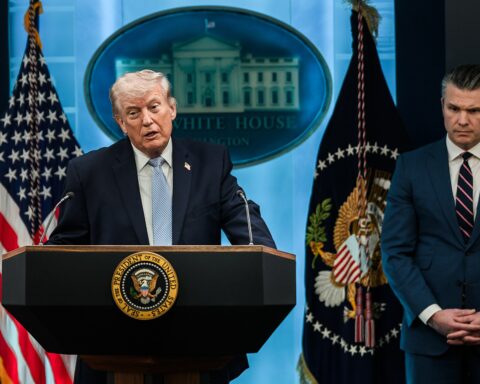
Oman is the only state in the region currently being threatened, on the record, by both parties to the war simultaneously. On May 27, Donald Trump warned publicly that Oman would have to “behave” or the United States would “blow ’em up” — a threat delivered specifically over Muscat’s role in facilitating Hormuz management talks with Tehran. The statement went effectively unremarked by Gulf capitals at the time because none of them believed Trump would follow through, and because the alternative to Omani facilitation was, and remains, no facilitation at all. But it entered the diplomatic record as a US position, and it has not been rescinded.
Six weeks later Iran began striking Omani territory in earnest. The February campaign that opened at Duqm and Salalah killed 19 people and injured 26 according to the running total in the public record. Iran’s stated justification for those strikes was that Oman was hosting US intelligence infrastructure that Tehran considered a legitimate military target — the same framing deployed on July 17. But the effect on Muscat was that its two most important external relationships, with Tehran and with Washington, both included active kinetic or verbal threats against its sovereign territory in the same calendar quarter.
The structural squeeze explains why the July 17 condemnation was slower and heavier than a bilateral response would suggest. Muscat cannot condemn Iran without also, implicitly, acknowledging that the Ghanam radar it just described as an attack on its sovereignty was in fact American equipment operated in coordination with the Pentagon. It cannot decline to condemn without confirming the Iranian narrative that Oman functions as a passive host for US operations. The Ministry’s chosen formulation — condemning the attack while calling for “an immediate halt to attacks across the region” — is an attempt to escape the trap by generalising it. Muscat is no longer asking Iran to respect Oman’s sovereignty as a bilateral matter; it is asking Iran to stop, everywhere.
What Replaces Muscat When Muscat Is Gone?
The functional answer is nothing. Every other candidate mediator in the region has been ruled out by circumstance. Qatar’s facilitator status became rhetorically ambiguous on July 17 when Foreign Minister Abdulrahman al-Thani held Iran “fully legally responsible” for the second Al Udeid strike and, for the first time in the Doha channel’s public communications, omitted the standard facilitator-role reaffirmation. Pakistan’s Islamabad track is functionally suspended since Trump’s July 8 declaration that the MOU was “over,” and Saudi Arabia was never in it anyway. Turkey remains outside the Gulf trust perimeter for Riyadh. Egypt is bandwidth-limited and internally focused. The Emirates carry too much Saudi political weight to satisfy Tehran.
What remains is bilateral messaging without a floor. The Trump administration can send messages to Tehran through the Swiss protecting-power channel, which is designed for consular matters and hostage exchanges rather than ceasefire architecture. Iran can send messages to Washington through selective press releases, which produce noise rather than negotiation. Neither channel can produce the kind of confidential, deniable, technical staff-level work that transformed the 2012-2013 Muscat back-channel into the JCPOA. Absent that back-channel infrastructure, any US-Iran de-escalation now depends on unilateral concessions by one side or the other — and both sides have spent the last six weeks demonstrating they will not offer them.
The Soufan Center’s July 17 IntelBrief captured the resulting dynamic with precision: “Both Iran and the U.S. seem to believe they have leverage over the other, and each side has demonstrated a propensity to misjudge the other’s resolve and capabilities.” The Center’s earlier July 9 note had already flagged that “regional observers expressed surprise that Iran’s attacks included Qatar and Oman, the two Gulf states seeking to mediate U.S.-Iran de-escalation.” That surprise has now been resolved. Iran was not miscalculating when it struck the mediators. Iran was deliberately removing the option of mediated de-escalation from the table, so that the only remaining exit from the current war becomes one side accepting the other’s terms.
Muscat spent forty years building a diplomatic asset whose value depended on being the one Gulf address to which everyone could talk. On July 17 that asset was written down. The July 19 talks will either not occur, or will occur as a formal record of their own failure. The larger cost is not the loss of a single meeting. It is the loss of the architecture in which any future meeting could be constructed, and the confirmation that the Islamic Republic — for reasons that remain internal to Tehran and are increasingly opaque even to its regional interlocutors — has decided that the destruction of that architecture is worth more than any settlement it could purchase.
Frequently Asked Questions
What is Article 5 of the Islamabad Memorandum of Understanding that Araghchi and Busaidi discussed?
Article 5 of the June 17 Islamabad MOU addresses freedom of navigation through the Strait of Hormuz and commits signatories to negotiate technical mechanisms for safe transit within the sixty-day negotiating window ending August 16. Its operational content was deliberately left to bilateral working groups, which is the mandate under which the Oman two-lane proposal was drafted.
How many Iranian strikes has Oman absorbed before formally condemning any of them?
Oman absorbed at least seven distinct Iranian strike incidents on its territory between February 28 and July 12, 2026, without using the word “condemn” in official communications. The July 17 statement was the first formal condemnation Muscat issued in over 46 years of continuous diplomatic relations with the Islamic Republic, marking the collapse of a bilateral posture that outlasted the 1979 revolution and every Gulf-Iran rupture since.
Does the US have a formal defense agreement with Oman that would compel a response?
The US-Oman Facilities Access Agreement, first signed in 1980 and renewed most recently in 2019, grants American forces access to Omani bases including Musandam. It is not a mutual defense treaty and contains no automatic response clause. The US-Oman Joint Military Commission is the consultation forum, but any US response to the Ghanam strike would be discretionary.
What was the AN/GSC-52B(V5) that Iran destroyed at Al Udeid, and does Ghanam have a similar system?
The AN/GSC-52B(V5) is a $15 million, 12.2-meter L3Harris satellite communications terminal — the first deployed outside the continental United States. Ghanam does not host that specific system; its equipment is oriented toward radar-based surveillance of aerial and maritime activity in the Strait rather than long-haul military satellite communications, which is why the Ghanam loss is a sensor gap rather than a communications gap.
Has Oman ever severed diplomatic relations with Iran previously?
No. Oman is the only Gulf Cooperation Council member state never to have severed or downgraded diplomatic relations with the Islamic Republic since 1979. It kept its embassy in Tehran open through the 2011 assassination-plot allegations against the Saudi ambassador in Washington, through the 2016 Nimr al-Nimr rupture, and through the 2019 tanker-attack crisis. The July 17 condemnation is the first formal break in that continuous posture.