JEDDAH — Saudi Arabia has approximately 400 PAC-3 MSE interceptors remaining — 14% of its pre-war stockpile — and no new rounds will arrive before mid-2027 at the earliest. On May 26, between 1.2 and 1.5 million Hajj pilgrims will stand on the open plain of Arafat from dawn to sunset, with no overhead cover and no hardened shelter, protected by batteries that the IRGC could exhaust in days rather than weeks.
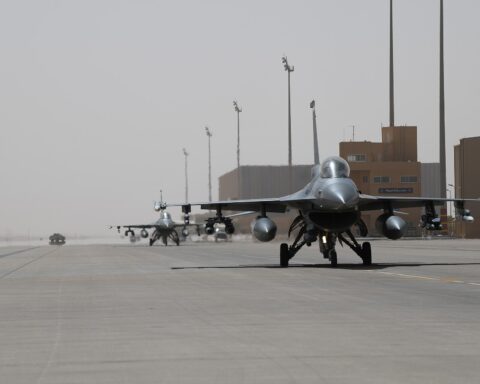
The five-layer defense Saudi Arabia built over two decades — THAAD, PAC-3, KM-SAM, directed-energy, and Skyguard — is structurally present. That is not the problem. The problem is that air defense is a consumable, and after 70 days of the most intense regional conflict since 1991, the kingdom’s primary ballistic missile tier is operating on reserve. Saudi Arabia’s Ministry of Defense has published photos of PAC-3 launchers deployed for Hajj protection. It has not published the number of rounds loaded on them — and the math explains why.
- How Many PAC-3 Rounds Does Saudi Arabia Actually Have Left?
- The April 7 Blueprint
- How Many IRGC Salvos Would Exhaust Saudi Arabia’s Remaining Stock?
- Why Can’t Riyadh Just Buy More Interceptors?
- The Plain of Arafat — 12.5 Square Kilometers Without Cover
- What Has the IRGC Done Since the Ceasefire Expired?
- Does Iran Have Anything to Lose From a Strike on the Hejaz?
- The 1991 Ghost in the PAC-3 System
- Frequently Asked Questions
How Many PAC-3 Rounds Does Saudi Arabia Actually Have Left?
Saudi Arabia retains approximately 400 PAC-3 MSE interceptors from a pre-war inventory of roughly 2,800 rounds, according to depletion assessments derived from Saudi MOD intercept disclosures and the CSIS Missile Defense Project’s consumption framework. That 86% drawdown occurred across approximately 38 days of high-intensity combat between March 3 and early April 2026 — a depletion rate with no comparable precedent in the system’s operational history, according to CSIS analysts.
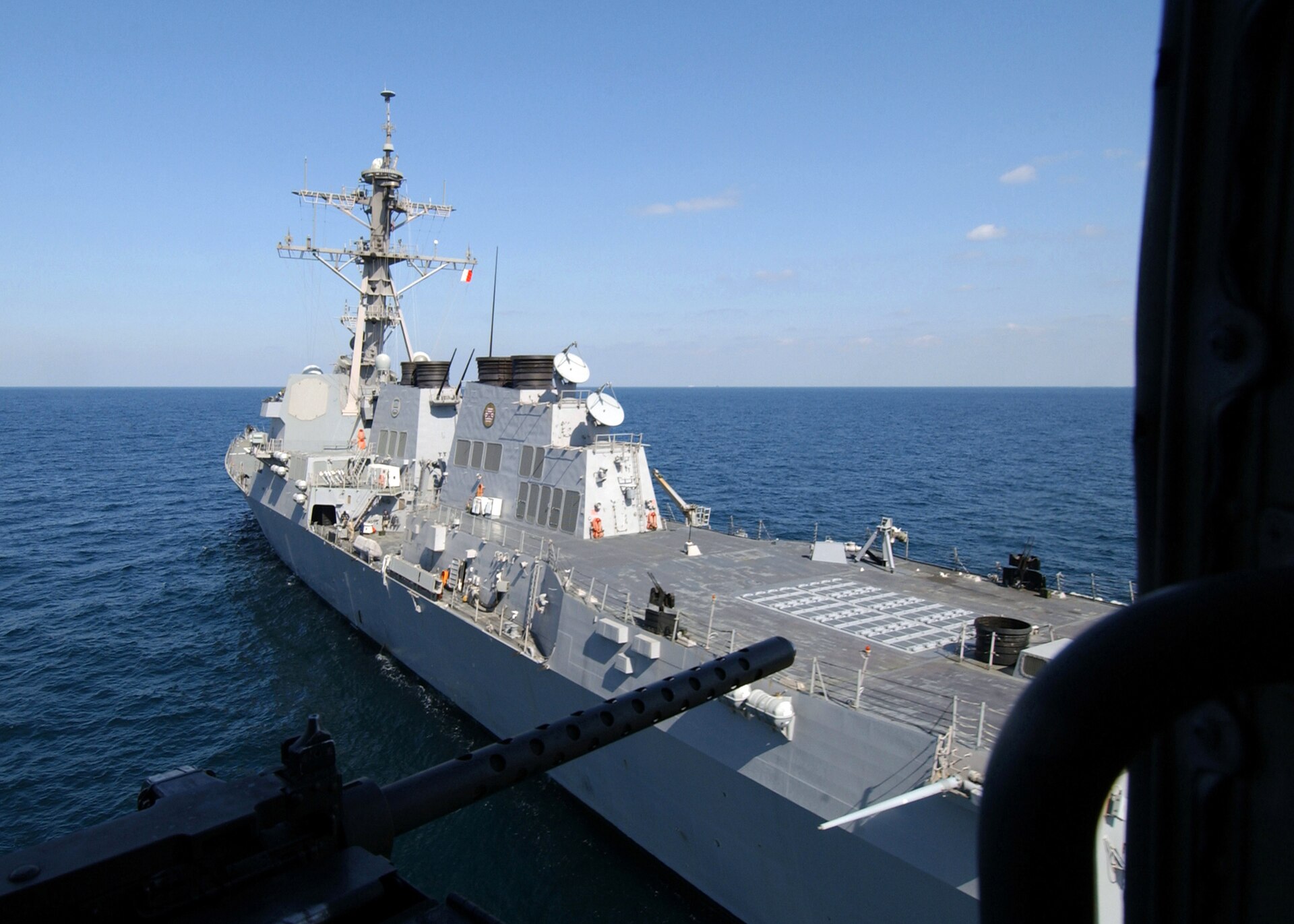
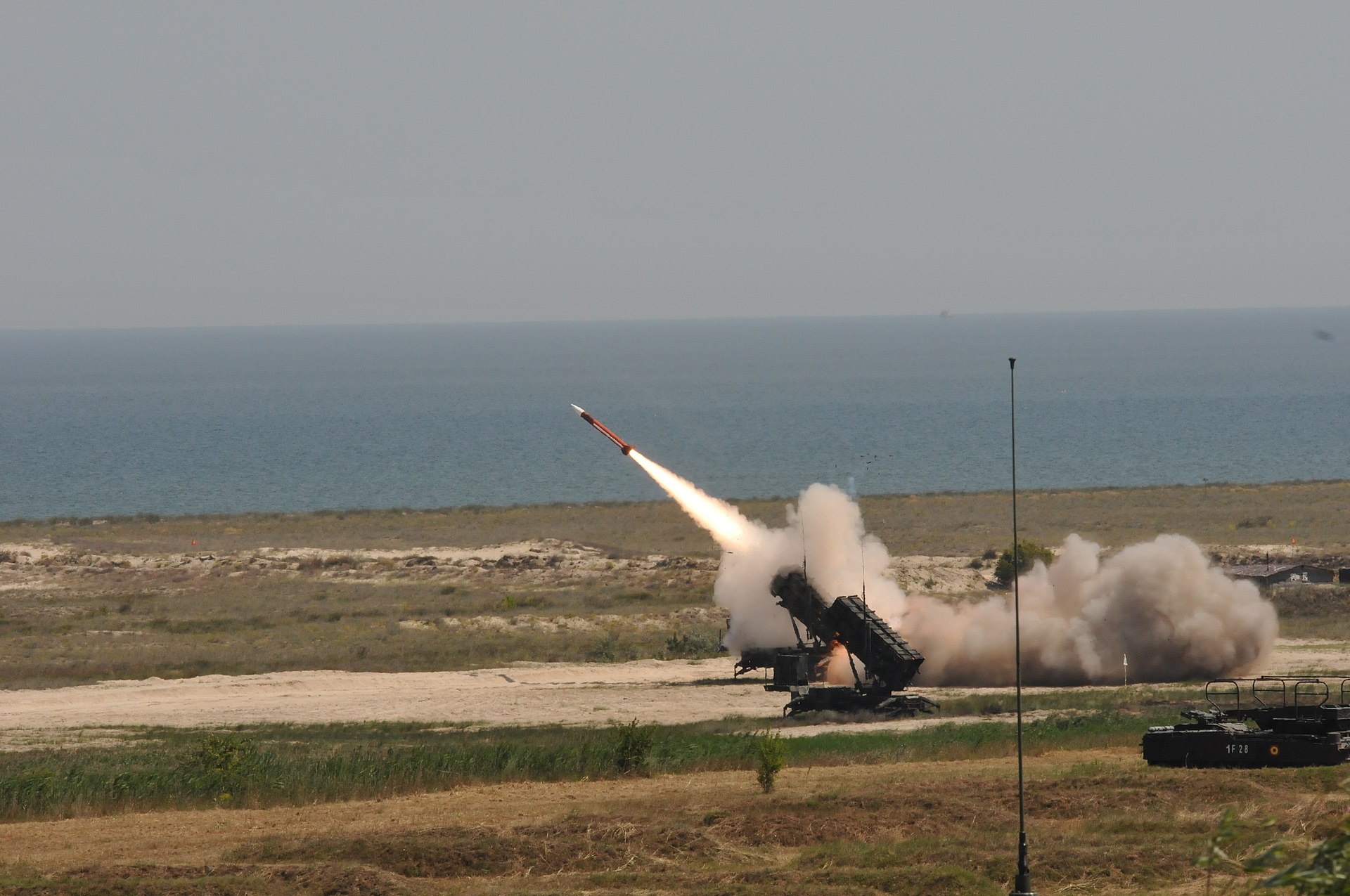
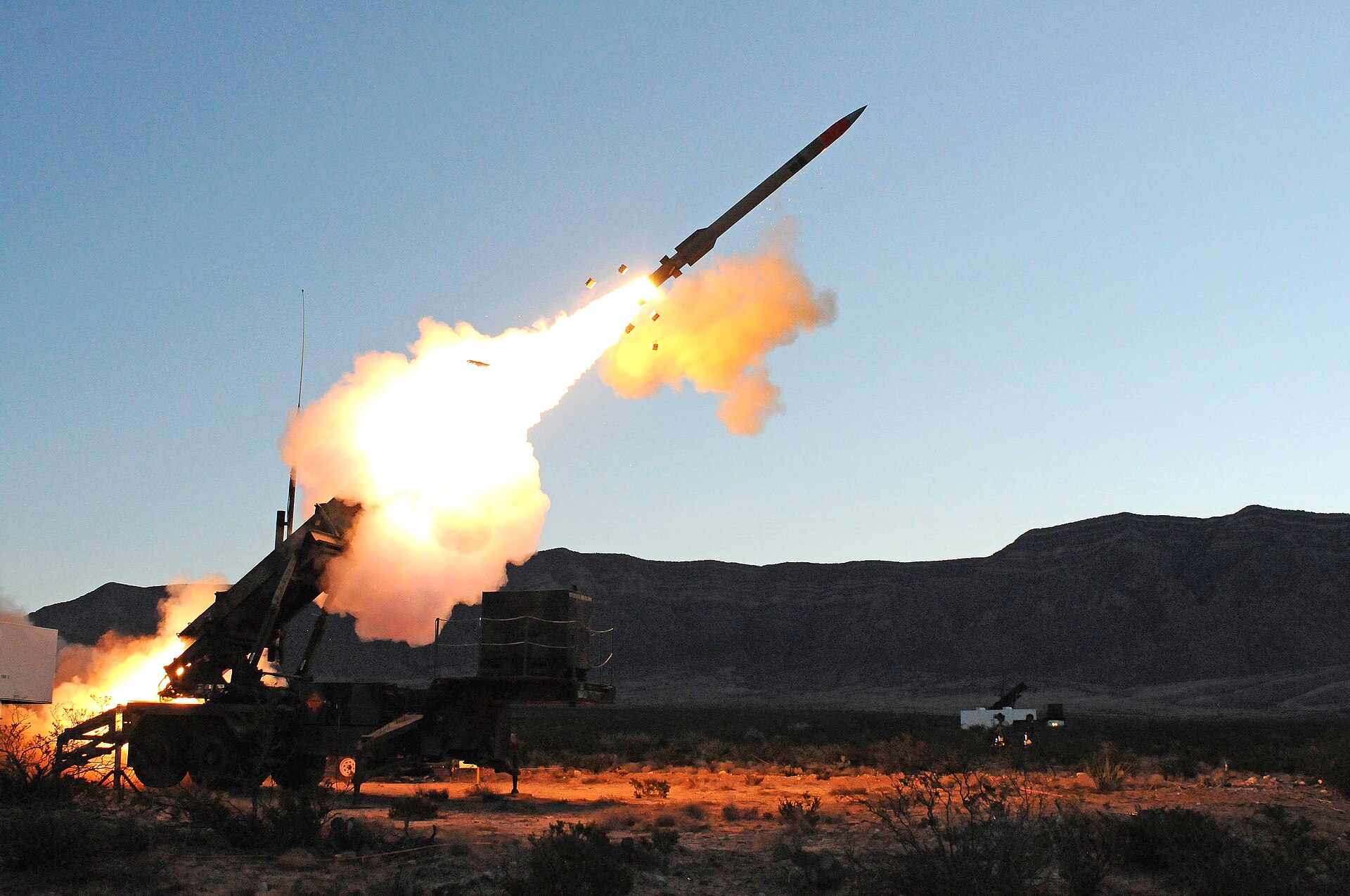
The kingdom’s Royal Saudi Air Defense Forces operate 108 M902 PAC-3 launchers organized into six operational battalions, according to RSADF force-structure data. Each launcher carries a maximum of 12 PAC-3 MSE rounds. At 400 interceptors distributed across 108 launchers, the average remaining load is 3.7 rounds per launcher — below a single reload cycle for a standard fire unit, and less than one-third of the rack’s capacity.
Between March 3 and April 7, Saudi Arabia fired 894 total intercepts against Iranian projectiles: 799 against drones, 86 against ballistic missiles, and 9 against cruise missiles, according to Saudi MOD data reported by Al Arabiya on April 7. The PAC-3 MSE handles the ballistic missile tier — the weapon class that poses the greatest threat to fixed population concentrations. Drones and cruise missiles fall to lower-tier systems: KM-SAM, directed-energy platforms, and Skyguard close-in weapons. But the PAC-3 is the layer that stops a Fateh-110 or Zolfaghar from reaching Makkah, and that layer is at 14%.
The Middle East briefing 3,000+ readers start their day with.
One email. Every weekday morning. Free.
The MOD published launcher photographs as a deterrence signal ahead of Hajj, as the OSAC advisory made explicit. It withheld interceptor counts. The visual message was presence; the withheld data was depth — and depth is what determines whether a defense holds past the first engagement.
The April 7 Blueprint
On April 7, 2026, the IRGC fired 11 ballistic missiles at Jubail in the Eastern Province in two sequential waves: four missiles in the first salvo, seven in the second. Saudi defenses intercepted all 11, according to Saudi MOD statements reported by Al Arabiya. Falling debris from the intercepts ignited a fire at the SABIC petrochemical complex — a reminder that even successful intercepts produce consequences on the ground below them.
That engagement is the most important data point in the Hajj air defense equation, because it establishes the IRGC’s demonstrated peak single-engagement capacity against Saudi territory. Eleven ballistic missiles in two waves compressed into a single engagement window is the proven upper bound of what Tehran has chosen to launch at the kingdom in one attack. It may not be the upper bound of what the IRGC can launch — the roughly 1,372 ballistic missiles fired at all Gulf states combined through April 20 confirm a far deeper magazine — but it is the number that the Hejaz defense batteries must be measured against.
Total Iranian ballistic missiles fired at Saudi Arabia through April 20 reached approximately 135, out of the roughly 1,372 launched at all Gulf states combined, according to compiled strike data. The ratio reveals deliberate metering: the IRGC committed less than 10% of its total ballistic expenditure against the kingdom, applying steady pressure without the kind of saturation salvo that might trigger a direct US kinetic response. That restraint is itself a data point — it means the IRGC retains substantial ballistic capacity that has not yet been directed at Saudi targets.
Standard Patriot engagement doctrine since the 1991 Gulf War calls for firing two interceptors per incoming ballistic missile, a 2:1 ratio designed to maximize kill probability. At that ratio, defeating an 11-missile salvo requires 22 PAC-3 MSE rounds — 5.5% of Saudi Arabia’s entire remaining national inventory consumed in a single engagement lasting minutes. A battery that fires 22 rounds from launchers carrying an average of 3.7 rounds has emptied six launchers to stop one wave.
How Many IRGC Salvos Would Exhaust Saudi Arabia’s Remaining Stock?
At the IRGC’s demonstrated peak salvo size of 11 ballistic missiles and standard 2:1 engagement doctrine requiring 22 PAC-3 MSE rounds per engagement, Saudi Arabia’s remaining 400 interceptors would last approximately 18 salvo cycles before the national inventory reaches zero. A sustained campaign at one salvo per day — well within the IRGC’s demonstrated operational tempo — would empty the stockpile in under three weeks.
But 18 salvos is the optimistic number, because it assumes every PAC-3 round in the national inventory is available for Hejaz defense. Saudi Arabia’s six PAC-3 battalions defend the Eastern Province oil infrastructure, Riyadh, Jeddah, the Makkah-Madinah corridor, and Yanbu — targets the IRGC has already struck or probed. Even a heavy reallocation toward the holy cities for Hajj would mean pulling coverage from facilities that have already absorbed hits, including the Jubail complex, Ras Tanura, and the East-West Pipeline pumping stations.
A realistic Hejaz allocation, based on the geographic distribution of the six-battalion force structure, would commit one to two battalions’ worth of interceptors to the Makkah-Madinah corridor — roughly 80 to 150 rounds out of the 400 total. At 22 rounds per engagement, that yields three to seven salvo cycles before the Hejaz air defense perimeter goes silent. The Wes Rumbaugh framework at CSIS establishes that interceptor depletion follows a nonlinear collapse curve: each salvo that forces expenditure pushes the defender closer to a threshold where the next engagement has materially lower probability of success, because the system cannot sustain its own engagement doctrine.
| Scenario | Salvo Size | PAC-3 Cost per Salvo | Salvos to Exhaust 400 National Rounds | Salvos to Exhaust ~120 Hejaz Rounds |
|---|---|---|---|---|
| April 7 repeat (demonstrated) | 11 BMs | 22 rounds | ~18 | ~5 |
| Half-salvo (conservation mode) | 6 BMs | 12 rounds | ~33 | ~10 |
| Saturation attack (escalated) | 20 BMs | 40 rounds | 10 | 3 |
| Mixed salvo (IRGC combined-arms) | 8 BMs + 50 drones | 16 PAC-3 + lower-tier | ~25 (PAC-3 only) | ~7 |
The column that matters is the last one. The IRGC does not need a saturation attack to exhaust Hejaz defense — three to five salvos at the demonstrated April 7 rate, spread across as many days, would leave the Makkah-Madinah corridor defended by systems designed for drones and cruise missiles, not the ballistic weapons that pose the greatest terminal threat to an open-air concentration of 1.5 million people. And the IRGC knows the arithmetic as well as the Saudi MOD does, because the inputs are public.
Why Can’t Riyadh Just Buy More Interceptors?
Saudi Arabia approved a $9 billion purchase of 730 PAC-3 MSE rounds on January 30, 2026, followed by a $4.76 billion production acceleration contract on April 10. Neither order will deliver a single interceptor before mid-2027 at the earliest. The binding production constraint is a single Boeing factory in Huntsville, Alabama that manufactures the PAC-3 seeker head — the precision terminal guidance component that makes a hit-to-kill intercept possible.
Lockheed Martin delivered 620 PAC-3 MSE rounds across all global customers in 2025 — every nation operating the system, combined. Saudi Arabia’s 730-round order alone exceeds one full year of total worldwide production. The April 10 contract aims to triple annual output to 2,000 rounds per year, according to Lockheed Martin’s press release announcing the $4.76 billion undefinitized contract action, but that production rate will not be achieved before 2030 because the Huntsville seeker head facility is undergoing a $200 million expansion that will not be operational for at least four years.
The $8.6 billion emergency arms package Rubio announced in April conspicuously excluded Saudi Arabia, directing accelerated deliveries to other Gulf states instead. The US itself has stonewalled Gulf state interceptor replenishment requests during the conflict, which CSIS analysts identified as a fundamental exposure of the hub-and-spoke basing model Washington built across the Middle East. Those same analysts project three to five years to rebuild US interceptor stockpiles from current depletion — meaning the arsenal that would replenish Saudi Arabia’s PAC-3 batteries does not itself exist yet.
South Korea airlifted 30-plus KM-SAM interceptors to the UAE from domestic reserves in March 2026 after the system’s combat debut there destroyed 29 of 30 incoming Iranian missiles. Saudi Arabia’s own order of 10 KM-SAM Block II batteries from LIG Nex1 remains in the production phase, with no delivery date announced. Ukraine’s counter-drone technology has been cited as a potential bridge, but adapting electronic warfare systems to the ballistic missile threat that defines Hajj risk is not a procurement problem — it is a physics problem, and physics does not negotiate with procurement timelines.
The Plain of Arafat — 12.5 Square Kilometers Without Cover
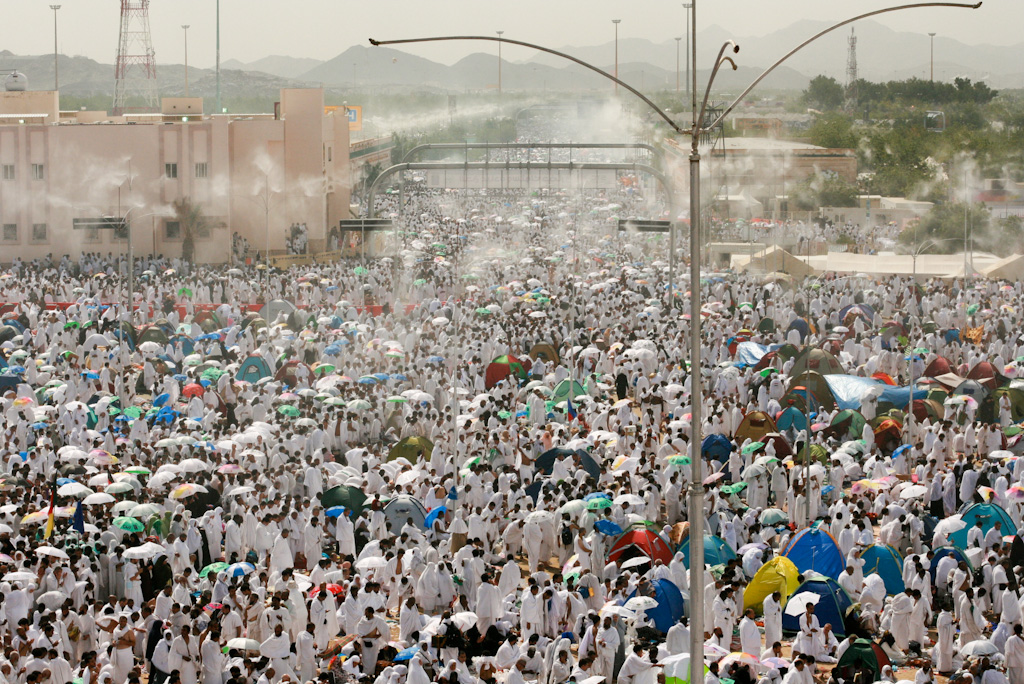
The Day of Arafah — the 9th of Dhul-Hijjah, falling on May 26, 2026 — is the climax of Hajj and the single most exposed moment in the Islamic calendar. Between 1.2 and 1.5 million pilgrims gather on the plain of Arafat, a flat, open expanse southeast of Makkah spanning approximately 12.5 square kilometers, from the Fajr prayer at dawn to sunset. The ritual is non-negotiable in Islamic jurisprudence: it cannot be moved indoors, relocated to a different site, or shortened without voiding the pilgrimage itself.
From a terminal defense standpoint, this creates a problem that no interceptor inventory can fully solve. The final defensive layer — the systems that destroy debris, submunitions, or leaker warheads in the last seconds of flight — cannot cover 12.5 square kilometers of standing human beings in open terrain. The only viable defense is upstream intercept: destroying incoming missiles at altitude using THAAD and PAC-3 before warheads reach the terminal phase. If a warhead or substantial debris penetrates to low altitude over Arafat, there is no shelter below it and no close-in system fast enough to protect a dispersed civilian mass across that area.
Saudi Arabia’s layered defense system was designed for exactly this kind of protection, and the 51% defense procurement localization milestone the kingdom announced in 2025 signaled confidence in its air defense depth. Seventy days of combat exposed the gap between system presence and consumable depth — a gap the ceasefire was supposed to make irrelevant.
The exposure window extends beyond the Day of Arafah itself. Eid al-Adha follows on May 27, and the full Hajj rites span from the 8th to the 13th of Dhul-Hijjah — approximately May 21 through May 30. For 10 days, the pilgrim population moves between Mina, Arafat, and Muzdalifah in predictable patterns along fixed routes, creating a sustained air defense commitment that draws on the same depleting inventory every day. A battery that expends rounds on May 22 defending the tent city at Mina has fewer rounds available for the plain of Arafat four days later.
What Has the IRGC Done Since the Ceasefire Expired?
Since the April 7-8 ceasefire nominally took effect, IRGC forces have seized two container ships — the MSC Francesca (11,660 TEU) and the Epaminondas (6,690 TEU) on April 22 — attacked UAE targets on consecutive days in early May, exchanged direct naval fire with US forces in the Strait of Hormuz, and violated the ceasefire at least nine times by CNBC’s running count as of May 7. The Pentagon has declined to declare the ceasefire collapsed.
The pattern is visible in Tehran’s behavior, not its statements. On April 24, Foreign Minister Araghchi declared the Strait of Hormuz “completely open.” Two days earlier, the IRGC had seized both container ships — directly contradicting the foreign minister’s framing with operational facts. Parliament Speaker Ghalibaf, a former IRGC Aerospace Force commander, formally linked Hormuz reopening to removal of the US naval blockade on his X account the same day, overriding Araghchi’s diplomatic posture with preconditions the foreign ministry had not authorized.
Defense Secretary Hegseth told reporters on May 5 that “the ceasefire is not over,” even as US and Iranian forces had exchanged fire in the strait that same week. The “below threshold” framework Hegseth and CENTCOM commander Caine have articulated communicates to the IRGC the exact ceiling of US tolerance — and the IRGC has systematically pressed against that ceiling without triggering the kinetic response that would bring American combat power directly against Iranian launch sites. On May 8, Iran fired an additional two ballistic missiles and three drones at the UAE — the same day the US-Iran MOU deadline expired — drawing on the same PAC-3 reserves that stand between Hajj pilgrims and the IRGC’s magazine; Pezeshkian again called the strikes “madness” while all five projectiles were intercepted by UAE air defences.
For Saudi Arabia, this means the ceasefire provides no military guarantee for the Hajj period. The 34 days between the ceasefire’s formal expiry on April 22 and the Day of Arafah on May 26 have produced not a reduction in IRGC activity but a refinement of it — including a systematic campaign to eliminate every Hormuz bypass route that has tightened the operational and economic pressure the conflict has imposed on the Gulf. The batteries defending the Hejaz have been consuming no rounds during this period, but they have also received no new ones.
Does Iran Have Anything to Lose From a Strike on the Hejaz?
Saudi Arabia suspended all Iranian Hajj visas at the start of the war, initially removing the mutual-vulnerability mechanism that had constrained Iran-Saudi confrontation around the holy cities for decades. Iran subsequently dispatched approximately 30,000 pilgrims to Saudi Arabia — a fraction of its pre-war allocation, delivered at what Tehran framed as zero military cost. That partial presence creates a deterrence signal simultaneously too small to fully constrain IRGC strategic planning and too visible to ignore in the Iranian domestic media space.
The 1987 precedent is instructive and unsettling. In that year, 402 pilgrims were killed in demonstrations during Hajj — an event that led Saudi Arabia to slash Iran’s Hajj quota by 87% and impose a three-year boycott. For a generation after, Iranian pilgrims in the Hejaz functioned as a structural constraint: any military action near the holy cities risked Iranian civilian casualties, creating domestic political costs in Tehran that exceeded any operational gain. In 2026, that mechanism is radically diminished — 30,000 pilgrims versus the pre-war quota of over 80,000 means the Iranian footprint in the Hejaz is a symbolic delegation, not the mass presence that once made strikes politically unthinkable.
The IRGC’s 31 autonomous corps each retain independent threat assessment capability, according to force-structure analyses of the Revolutionary Guards. A strike decision against a target in the Hejaz would not necessarily require unified political authorization from a supreme leader whose physical condition has been uncertain for more than 60 days — Khamenei has been directing war operations via audio relay, with no public appearance since late March. Iran’s parliament is simultaneously advancing a 12-article Hormuz sovereignty law, drafted by lawmakers Ahmadi and Rezayi Kouchi, that would codify IRGC operational authority over the strait as settled legislation. The domestic political incentives in Tehran all point toward sustained pressure, and the single greatest deterrent against Hejaz targeting — a large, politically consequential Iranian pilgrim population — has been reduced to a fraction of its former weight.
The 1991 Ghost in the PAC-3 System
The PAC-3 MSE is not the Patriot that failed at Dhahran on February 25, 1991, when a software clock drift of one-third of a second after 100 hours of continuous operation caused a 600-meter targeting error and killed 28 American soldiers at the Dhahran barracks. A subsequent GAO investigation found that the system’s overall intercept rate “could be much lower than ten percent, perhaps even zero” against Iraqi Scuds — a finding that contradicted the 80% success rate the US Army had initially claimed. The MSE variant is a fundamentally redesigned hit-to-kill interceptor with different guidance, different kinematics, and a 2026 combat record that confirms substantially higher real-world performance.
But the 1991 lesson that applies to Hajj 2026 is not about guidance accuracy — it is about what sustained operations do to system reliability under stress. After the Dhahran failure, Patriot crews changed engagement doctrine from near-simultaneous two-missile salvos to a 3-to-4-second delay between sequential interceptor launches. That modification improved single-engagement kill probability but reduced the number of simultaneous threats a battery can address in a compressed engagement window. An IRGC salvo that arrives in a tight temporal cluster — as the April 7 attack did, with 11 missiles in two waves — stresses that engagement window in ways that static round counts alone do not capture. A battery with four rounds per launcher and a 3-to-4-second firing delay between intercepts is time-constrained as well as inventory-constrained.
Every US escalation pathway against Iran runs through Saudi territory, which means each step up the escalation ladder increases the volume of incoming fire the kingdom’s depleting batteries must absorb. The consumption rate that produced 86% depletion in 38 days of high-intensity combat did not include a deliberate saturation attack on the Hejaz — the most politically consequential target on earth for five days in late May. On May 26, 1.5 million pilgrims will stand on the plain of Arafat with no shelter above them, and the PAC-3 launchers positioned to intercept whatever comes will average fewer than four rounds each.
Frequently Asked Questions
Has Saudi Arabia requested emergency PAC-3 transfers from other Patriot-operating nations?
No public request has been confirmed. Japan, Germany, the Netherlands, and South Korea all operate PAC-3 variants, but each nation’s inventory is already stressed by the global interceptor shortage the 2026 Gulf conflict accelerated. Japan’s PAC-3 stockpile is allocated against North Korean ballistic missile threats under standing defense ministry commitments, and Germany’s is pledged to NATO’s eastern flank under the Vilnius summit force posture. Any bilateral transfer would require US State Department approval under International Traffic in Arms Regulations (ITAR), adding weeks of bureaucratic processing to a timeline now measured in days.
Could THAAD compensate for PAC-3 depletion during the Hajj period?
THAAD addresses a different engagement envelope — higher-altitude, longer-range ballistic missiles intercepted in the upper atmosphere. Saudi Arabia operates two THAAD batteries, each carrying 48 interceptors at a unit cost exceeding $10 million per round. THAAD can thin an incoming salvo at altitude, but any missile that descends past THAAD’s engagement ceiling falls to the PAC-3 layer for terminal intercept. If that layer is depleted, THAAD provides an upper defense tier with nothing below it — a ceiling without a floor, in the language of integrated air defense doctrine.
What would happen if Saudi Arabia concentrated all remaining PAC-3 rounds in the Hejaz?
Moving all 400 interceptors to the Makkah-Madinah corridor would strip ballistic missile defense from every other high-value target the IRGC has already struck: Ras Tanura, Jubail, the East-West Pipeline pumping stations, and Riyadh. The IRGC has demonstrated willingness to strike all of these targets during the conflict. Concentrating rounds in the Hejaz would convert the rest of the kingdom’s critical infrastructure — including the oil facilities that generate the fiscal revenue sustaining the war effort — into undefended targets, creating a strategic dilemma with no solution inside the current inventory.
Is there a historical precedent for defending a mass gathering of this size against ballistic missiles?
No engagement in the history of missile defense has involved protecting a concentrated civilian gathering of 1.2 to 1.5 million people in open terrain against ballistic weapons. Israel’s Iron Dome has defended urban populations against rocket salvos from Gaza, but Israeli cities have mandatory shelter infrastructure — hardened rooms in every residential building, required by law since 1992 — that provides terminal protection when intercepts fail. The plain of Arafat has no equivalent. The closest industrial analogy is the 2019 Aramco Abqaiq-Khurais attack, which demonstrated that even modern air defense can fail against complex combined-arms salvos — but Abqaiq was a refinery complex, not a field of standing human beings.
When do Hajj pilgrims actually begin arriving, and how long is the high-risk window?
Hundreds of thousands of pilgrims were already in the Makkah-Madinah corridor by early May. The formal rites run May 21 through May 30. From a battery commander’s standpoint, this creates a cumulative attrition problem that the round-count statistics alone do not capture: any intercept engagement before May 26 draws down the inventory available for the Day of Arafah itself. A battery ordered to defend the tent city at Mina on May 22 with four of its remaining rounds enters May 26 with two or three. The high-risk window is not a spike — it is a 10-day drain that ends at the worst possible moment.