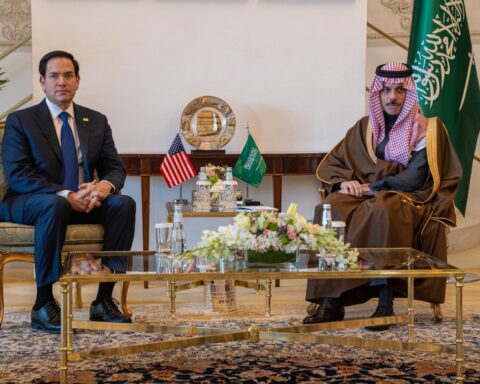
WASHINGTON — Secretary of State Marco Rubio on May 1-2, 2026 invoked the Arms Export Control Act emergency waiver to push $8.6 billion in arms transfers to Israel, Qatar, Kuwait, and the United Arab Emirates, bypassing the standard 30-day congressional review window. Saudi Arabia, the Gulf partner with the deepest interceptor deficit and the largest concentration of incoming Hajj pilgrims, was not on the list.
The package lands 24 days before the Day of Arafah on May 26, when an estimated 1.8 million pilgrims will gather on open terrain near Mecca — a gathering the US government has now formally assessed as too dangerous for American citizens to attend, in the first OSAC advisory ever issued specifically against Hajj participation. Saudi Arabia’s PAC-3 MSE stockpile stands at roughly 400 interceptors — about 14% of pre-war levels of approximately 2,800 — after Saudi air defenses engaged 894 aerial threats between March 3 and April 7, according to data compiled by the Center for Strategic and International Studies and the Defense Security Cooperation Agency. The country with the most exhausted shield got nothing through emergency authority. The countries with deeper magazines got resupplied.
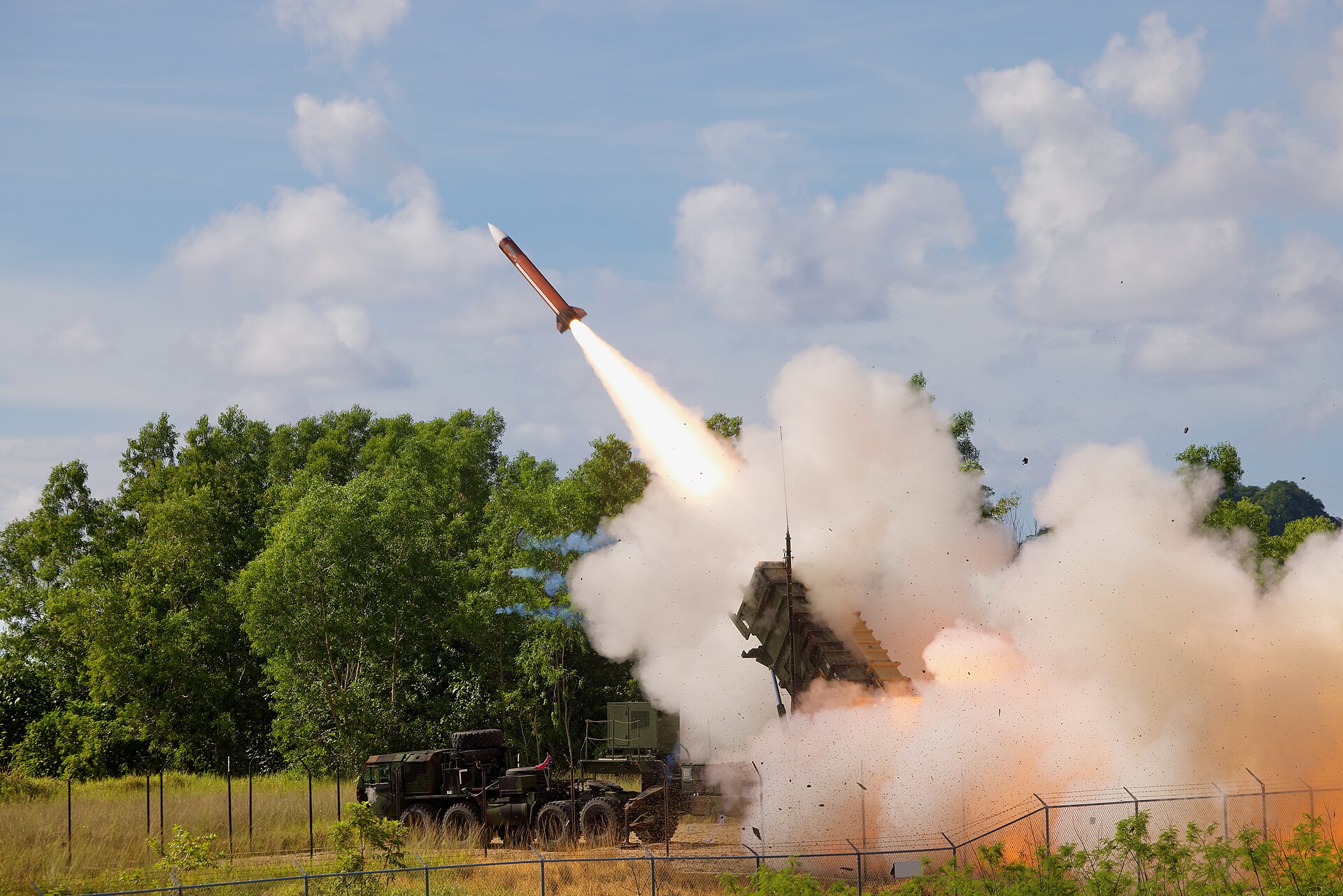
Table of Contents
What Rubio Signed, Line by Line
The State Department release issued on May 1-2, 2026 described the total package as $8.6 billion across four named country tranches — a figure that includes contractor support services and logistics components not separately itemized in the DSCA notifications — with one declared rationale. Rubio’s emergency determination stated that “an emergency exists requiring the immediate approval of critical arms transfers for Middle East partners currently under attack by Iran.” The legal vehicle is Section 36(b) of the Arms Export Control Act, which permits the Secretary of State to waive the standard 30-day congressional review when an emergency is declared.
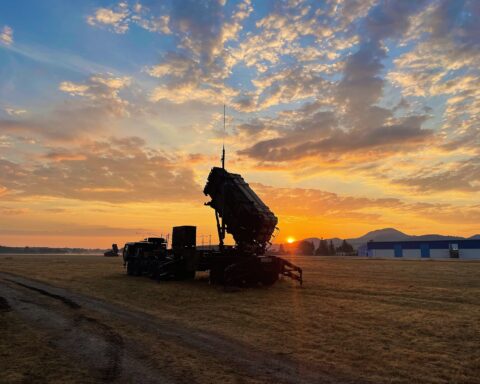
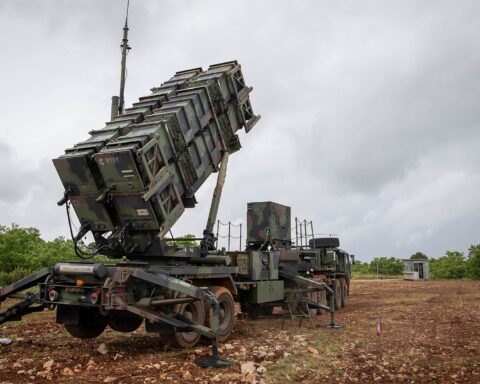
Qatar received the largest single tranche at $4.01 billion, covering Patriot air and missile defense replenishment: 200 PAC-2 GEM-T interceptors and 300 PAC-3 MSE interceptors, plus support services. The principal contractors are RTX and Lockheed Martin. Kuwait received $2.5 billion for an Integrated Battle Command System — six dismounted engagement operations centers, two hosted EOCs, fourteen mounted IBCS integrated fire unit modification kits, thirty-five launcher integrated network kits, and twenty-four KIV-77/79 IFF encryptors. Northrop Grumman, RTX, and Lockheed Martin share that work.
Israel received $992.4 million in Advanced Precision Kill Weapon Systems. The UAE received $147.6 million in the same category. BAE Systems is the principal contractor for both, according to the Times of Israel and WION reports of May 2.
| Recipient | Value | Principal Items | Prime Contractors |
|---|---|---|---|
| Qatar | $4.01B | 200 PAC-2 GEM-T + 300 PAC-3 MSE interceptors | RTX, Lockheed Martin |
| Kuwait | $2.50B | Integrated Battle Command System (full network) | Northrop Grumman, RTX, Lockheed Martin |
| Israel | $0.99B | Advanced Precision Kill Weapon Systems | BAE Systems |
| UAE | $0.15B | Advanced Precision Kill Weapon Systems | BAE Systems |
| Saudi Arabia | $0.00 | Not included | — |
Qatar hosts the forward element of US Central Command at Al Udeid Air Base, where CENTCOM opened the Middle Eastern Air Defense Combined Defense Operations Cell — MEAD-CDOC — on January 12, 2026. The largest single line item in the new package replenishes the Patriot batteries protecting the country that contains the regional air defense coordination hub.
The Middle East briefing 3,000+ readers start their day with.
One email. Every weekday morning. Free.
Why Is Saudi Arabia Not on the List?
Three explanations are in circulation in Washington and Riyadh, and they are not mutually exclusive. The first is leverage. Saudi Arabia pursued a US mutual defense treaty as part of Abraham Accords normalization, and the resulting Strategic Defense Agreement, in the assessment of CSIS, “fell short of expectations by excluding an explicit security guarantee.” Withholding emergency replenishment keeps that asymmetry visible. The Carnegie Endowment for International Peace observed in April 2026 that “Saudi diplomacy will most likely increase in Washington with the aim of leveraging U.S. action and inaction in the region toward Saudi and GCC security and obtaining military procurement,” noting that “despite Riyadh’s anger with Washington, it most likely will still seek stronger military ties with the United States, probably including more guarantees.”
The second is logistics. Saudi Arabia was approved on January 30, 2026 — through the standard Foreign Military Sales process, not emergency authority — for 730 PAC-3 MSE interceptors worth $9 billion. That order, announced by the Defense Security Cooperation Agency, exceeds 14 months of the entire global production output of the Lockheed Martin facility at Camden, Arkansas, which produced approximately 620 PAC-3 MSE rounds per year for all customers worldwide in 2025, according to CSIS and Congressional Research Service assessments. Adding an emergency line on top of an already unfillable order would not deliver hardware faster.
The third is legal architecture. The emergency bypass exists for partners under direct attack who require immediate replenishment of consumed stocks. Qatar, Kuwait, the UAE, and Israel are framed in the State Department text as “Middle East partners currently under attack by Iran.” Saudi Arabia, which has absorbed the largest share of Iranian missile and drone fire over the 39 days of campaign and ceasefire collapse, is not — at least not by Rubio’s signature.
“An emergency exists requiring the immediate approval of critical arms transfers for Middle East partners currently under attack by Iran.”
Marco Rubio, US Secretary of State, emergency determination, May 1-2, 2026
The Camden Bottleneck and the 2028 Wall
Saudi Arabia’s January 30 order is the largest single PAC-3 MSE export ever processed — and it already absorbs more than fourteen months of Camden’s total annual output. The US Army awarded Lockheed Martin a $4.761 billion contract on April 9, 2026 to expand the Camden line to 2,000 rounds per year, but that target rate is not achieved until 2030.
The practical effect is that Saudi Arabia cannot expect meaningful deliveries from its January order before 2028 at the earliest, and possibly later given competing prior orders from Poland, Germany, the Netherlands, Romania, and Ukraine-displaced US Army stocks. The 14% interceptor figure is not a passing data point — it is a structural ceiling that no FMS announcement, emergency or otherwise, can shift inside the Hajj window.
The new Qatar tranche announced May 2 includes 300 PAC-3 MSE rounds. Those rounds also have to come from Camden. The State Department release does not specify the delivery schedule, and emergency designation does not by itself increase the production rate. What it does is reorder the queue.
Poland Said No, Greece Said Yes
The interceptor shortfall could in principle be closed by allied redeployment rather than new production. On March 31, 2026, Polish Defense Minister Władysław Kosiniak-Kamysz publicly rejected a US request to redeploy one of Poland’s two newly operational PAC-3 batteries to the Middle East for Saudi defense reinforcement. “Our Patriot batteries and their armaments serve to protect Polish skies and NATO’s eastern flank,” Kosiniak-Kamysz said, in remarks reported by Defense News and Middle East Monitor. “Nothing is changing in this regard and we are not planning to move them anywhere.” Poland holds approximately 200 PAC-3 MSE interceptors across the two batteries.
The only confirmed allied air defense deployment on Saudi soil is Greece’s ELDYSA mission — approximately 120 to 130 Hellenic Air Force specialists operating a single PAC-3 Patriot battery near Yanbu. The battery fired its first combat intercepts against Iranian ballistic missiles on March 19, 2026, according to WARYATV reporting cited by HOS. Six countries now contribute to the Saudi sky picture in some form, but the magazine depth at Yanbu is one battery, not the seven the kingdom needs to cover the eastern oilfields, the Red Sea ports, the Riyadh political core, and the Mecca-Medina pilgrimage corridor simultaneously.
One Greek battery cannot saturate-cover an aerial volume the size of the Arabian Peninsula. Polish redeployment was the only realistic short-term reinforcement available before the Hajj window closes, and Warsaw declined.
Is There a US Defense Guarantee Over Saudi Arabia?
The CSIS assessment is direct. “Despite the intimacy of its security partnership with the United States, the U.S. military has no obligation to defend the kingdom,” its 2026 analysis stated. “Saudi Arabia had been working on a deal to normalize relations with Israel, largely because it would have gotten them a mutual defense treaty with the United States, and with it the obligation they hoped would be in place for just the sort of situation they now find themselves in.”
That treaty was never finalized. The Strategic Defense Agreement that Riyadh and Washington did sign contains no Article 5-equivalent obligation. Saudi Arabia is not a treaty ally in the sense Japan, South Korea, or any NATO member is. The carrier movements, basing arrangements, and munitions flows that define the partnership are presidential decisions revisable by the next president, not statutory commitments.
The May 2 emergency designations track that distinction with uncomfortable precision. Israel has a separate enhanced security relationship governed by the Memorandum of Understanding framework. Qatar, Kuwait, and the UAE host major US basing arrangements with formal status-of-forces agreements: Al Udeid, Camp Arifjan and Ali Al Salem, Al Dhafra. Each emergency recipient has a US installation on its territory whose protection is operationally identical to allied resupply. Saudi Arabia hosts Prince Sultan Air Base, but the basing arrangement was reactivated in 2019 on a different legal footing and the relationship has not been codified in a corresponding mutual defense obligation.
The Carnegie Endowment, in March 2026 reporting, noted that Saudi Arabia, the UAE, Kuwait, and Qatar have “engaged in high-level talks about the future of the current contract with the United States” covering defense procurement, energy, and infrastructure cooperation. The May 2 package is a partial answer to those talks for three of the four. The New Lines Institute observed in 2026 that “Saudi Arabia is likely to continue to diversify its international partnerships in the aftermath of the conflict, adjusting to long-term divergences from U.S. regional interests and structural limits to U.S. security provisions.”
Tehran’s Same-Day Signal
Mohammad Jafar Asadi, a senior figure in Iran’s central command, told Fars News Agency on May 2 — the same day the State Department package was announced — that “a renewed conflict between Iran and the United States is likely.” Asadi added that “evidence has shown that the United States is not committed to any promises or agreements,” in remarks reported by Al-Monitor, France 24, Arab News, and RTÉ. He framed the threat as a response to Trump’s rejection of Iran’s latest peace proposal.
The timing was the message. Tehran’s IRGC-aligned media released an escalation warning on the same calendar day Washington announced a Gulf arms package that excluded Tehran’s principal regional adversary. Iran’s regular army has continued to publicly state the war is still on while Foreign Minister Araghchi files revised drafts in Islamabad. The Asadi statement does not change the operational tempo of either side, but it does establish the public record on the day the resupply pattern became visible.
Iran has lost an estimated $4.8 billion in oil revenue under the US naval blockade announced April 13, with 31 tankers carrying approximately 53 million barrels stranded, according to Business Standard and Voice of Emirates reporting cited on May 2. CENTCOM has confirmed it has prevented 45 ships from entering Iranian ports. CNN reported on April 23 that CENTCOM had developed plans to target Iran’s Strait of Hormuz defenses. Axios reported on April 30 that CENTCOM had prepared a “short and powerful” wave of strikes on Iran, including potential ground forces to secure part of the Strait, with Trump scheduled to receive a briefing.
The interceptor magazine has to cover the Hajj security envelope through Day of Arafah and beyond, regardless of what CENTCOM does at Hormuz or what Asadi says in Tehran. The first Iranian pilgrims arrived in Medina on Day 60, placing Iranian civilians inside the holy cities at the same moment Iranian military officials publicly threaten US escalation — a development that inverts Saudi Arabia’s wartime deterrence calculus entirely.
Background: Three Bypasses, One Pattern
The May 1-2 determination is at least the third time Rubio has used Section 36(b) emergency authority for Gulf arms transfers in 2026. In March 2026, Rubio declared emergency to push approximately $23 billion in arms to the UAE, Jordan, and Kuwait, according to CNBC, Al-Monitor, and Al Jazeera reporting at the time. A separate $16.5 billion fast-track tranche moved earlier the same month. Saudi Arabia did not appear in any of the three emergency-designated lists.
The Saudi January 30 PAC-3 order went through the Defense Security Cooperation Agency under standard FMS procedures. The DSCA notification was published, congressional review proceeded on the normal calendar, and the order entered the Camden production queue behind existing customers. The processing distinction matters because it indicates the executive branch has chosen to treat Saudi air defense replenishment as a routine procurement rather than an emergency, while treating the air defense replenishment of every other Gulf host with a US base on its territory as the latter.
Kuwait’s IBCS package is a different category of capability. The Integrated Battle Command System ties together Patriot launchers, sensors, and command nodes into a single fire control network — something Saudi Arabia has been seeking through its GCC collective defense initiatives. Kuwait’s network is a data architecture that would, in principle, allow regional integration. The May 2 package places that architecture in a country that does not host Mecca.
The CSIS “Last Rounds” report of April 24, 2026, assessed that the United States itself has “depleted its missile inventories,” with more than half of the pre-war US inventory in four key munitions categories expended in the 39-day campaign before the ceasefire, with rebuilding times estimated at one to four years. The May 2 package will draw from the same constrained production base that supplies US Army, Navy, and Air Force stocks. Authorization is not the binding constraint. Allocation is.
Frequently Asked Questions
Was Saudi Arabia formally rejected, or simply not included?
Not included. The State Department release names four recipients — Israel, Qatar, Kuwait, and the UAE — and does not address Saudi Arabia. There is no companion text declining a Saudi request, nor any indication that one was filed for emergency processing in this tranche. The January 30 Saudi order remains in the standard FMS pipeline and has not been re-categorized.
Could Saudi Arabia receive a separate emergency designation later in May?
Procedurally yes. Section 36(b) does not limit the frequency of emergency declarations. The constraint is production capacity at Camden, Arkansas — adding an emergency Saudi line ahead of the existing 730-round order would require either re-sequencing other customers or transferring US Army stocks. The April 9 Lockheed Martin contract to expand Camden capacity to 2,000 rounds annually does not reach that rate before 2030.
What is the THAAD picture for Saudi Arabia?
Saudi Arabia operates a separate Terminal High Altitude Area Defense capability, with seven THAAD batteries ordered in 2017 through the DSCA FMS process and delivered in subsequent years. THAAD interceptors address higher-altitude ballistic threats and are produced on a distinct line at Lockheed Martin’s Troy, Alabama facility. THAAD inventory levels have not been publicly disclosed at the same level of detail as PAC-3 MSE, and the May 2 package does not include THAAD components for any recipient.
Does Israel’s APKWS allocation indicate a shift in resupply priority?
The $992.4 million in Advanced Precision Kill Weapon Systems for Israel covers laser-guided rocket conversion kits used primarily for fixed-wing and rotary aircraft against drone and small-target threats. It does not address the high-end interceptor problem and operates on a separate BAE Systems production line in Cherry Point, North Carolina. The line is comparatively scalable and has been a recurring resupply category since the 2024 Houthi engagements.
What does Qatar’s Patriot replenishment imply for Al Udeid coverage?
Qatar’s existing Patriot footprint protects Al Udeid Air Base and the MEAD-CDOC — the regional air defense coordination cell. The mixed PAC-2 GEM-T and PAC-3 MSE allocation reveals a layered threat calculation: PAC-2 GEM-T is more effective against aircraft and cruise missiles at lower cost per engagement; PAC-3 MSE handles ballistic threats. Qatar is being equipped for both, not just one. The practical implication is that the regional coordination hub is being hardened while the country hosting 1.8 million Hajj pilgrims is not. That asymmetry carries direct military consequences: CENTCOM’s three Iran options briefed to Trump on April 30 all require Saudi basing, airspace, and air defense that the Kingdom’s depleted PAC-3 inventory makes increasingly difficult to provide — a structural constraint examined in full here. The specific interceptor arithmetic — 400 rounds, eighteen salvo thresholds, and the Day of Arafah exposure window — is quantified in Eighteen Salvos From Empty: The PAC-3 Arithmetic Hanging Over Hajj 2026.