RIYADH — Iran’s foreign minister declared the Strait of Hormuz open on April 17 — not because the war ended, but because Israel stopped bombing Lebanon. Seyed Abbas Araghchi’s statement tied Hormuz access explicitly to “the ceasefire in Lebanon,” a truce that expires in ten days, that Israel agreed to under protest, and that Israeli forces began violating within hours of its start. Saudi Arabia’s most critical export corridor is now a derivative of Israeli restraint in southern Lebanon — a variable Riyadh cannot influence and Washington has already demonstrated it cannot guarantee.
The mechanism is simple and lethal to Saudi fiscal planning. When Israel struck 100 targets across Lebanon on April 8, Iran closed Hormuz within hours. When a Lebanon ceasefire took effect on April 16, Iran reopened it — and oil markets erased six weeks of war-risk premium in a single session. MBS engineered Lebanon’s inclusion in the ceasefire framework by routing demands through Keir Starmer and Western allies during the April 8-10 Jeddah meetings. The mechanism that delivered his diplomatic win now holds the Kingdom’s fiscal architecture hostage to decisions made in Jerusalem. According to multiple US, Western, and Arab officials, MBS made his case directly to Trump in an April 16 phone call, framing a Lebanon truce as the prerequisite for Hormuz reopening.
Table of Contents
- The Araghchi Clause
- How April 8 Proved the Mechanism
- Why Did Violations Begin Within Hours?
- What Leverage Does Saudi Arabia Have Over Israel?
- The OSP Inversion Trap
- Does the Ceasefire Expire Before the Ceasefire?
- The Insurance Market Has Not Moved
- Attribution Laundering and Its Limits
- Frequently Asked Questions
The Araghchi Clause
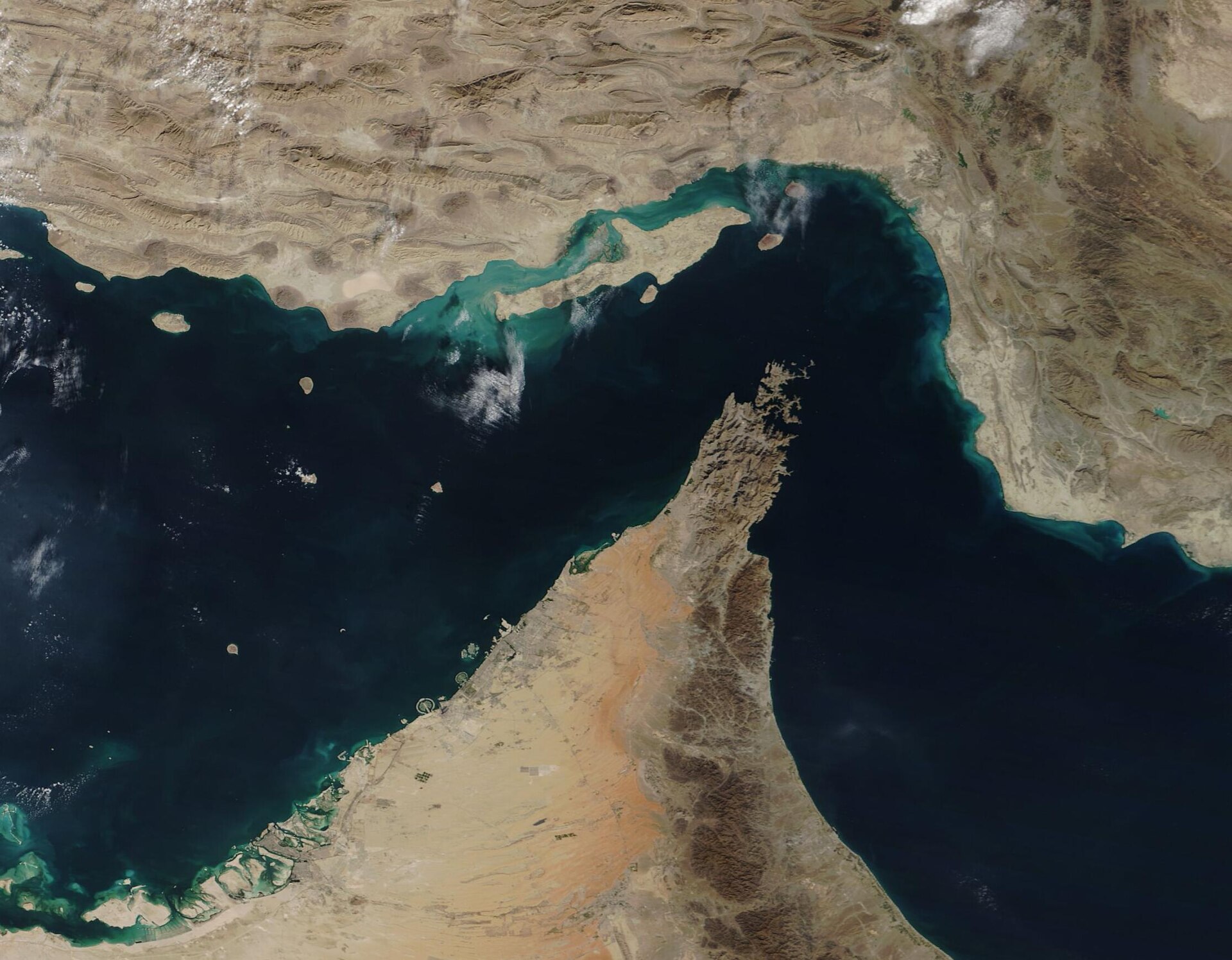
Araghchi’s April 17 statement on X was nine words longer than it needed to be, and the nine words were the point. “In line with the ceasefire in Lebanon, the passage for all commercial vessels through Strait of Hormuz is declared completely open for the remaining period of ceasefire, on the coordinated route as already announced by Ports and Maritime Organisation of the Islamic Rep. of Iran.” The operative phrase — “in line with the ceasefire in Lebanon” — names Lebanon, not the US-Iran ceasefire, as the governing condition for Hormuz access.
The distinction matters for a reason most coverage on April 17 missed. The US-Iran ceasefire expires on April 22. The Lebanon truce runs ten days from April 16, expiring April 26. These are different instruments with different parties, different enforcement mechanisms, and — after April 22 — different legal statuses. Araghchi chose Lebanon. Tasnim, the IRGC-affiliated news agency, framed the declaration as proof that Iran had “forced the criminal America to accept its 10-point plan,” including Iranian “coordination” rights over Hormuz as a treaty requirement. The administrative infrastructure for closure — the IRGC chart designating standard shipping lanes as danger zones, the 5-nautical-mile Qeshm-Larak corridor inside Iranian territorial waters — remains in place.
Markets treated the declaration as a full reopening. Brent for June delivery fell to approximately $88.96, down roughly 10.5% on the day, according to CNBC. WTI May contracts dropped about 12% to around $83.20. The single biggest oil-price move in six weeks was triggered not by a peace agreement or a verified de-escalation, but by a conditional statement from a foreign minister whose government closed the same waterway nine days earlier over events in a country 1,500 kilometres from the Strait.
How April 8 Proved the Mechanism
The Lebanon-Hormuz coupling is not a diplomatic abstraction. It was tested operationally on April 8 and performed exactly as designed. Fifty Israeli fighter jets struck more than 100 targets across Lebanon with 160 munitions that day, according to CNN and the Times of Israel live blog. Iran closed Hormuz within hours. IRGC Aerospace Commander Seyed Majid Mousavi posted the doctrinal logic on X before the closure was formalised: “Aggression towards Lebanon is aggression towards Iran.”
The Middle East briefing 3,000+ readers start their day with.
One email. Every weekday morning. Free.
Iranian state media — IRNA, PressTV, Tasnim — made the causal chain explicit in real time. IRNA cited the Israeli strikes as the direct trigger. Iran’s formal position was that the United States had violated the ceasefire by failing to restrain Israel, a framing that transferred the burden of Lebanese sovereignty enforcement to Washington. The April 8 sequence established the formula: Israeli kinetic action in Lebanon produces Iranian administrative action in the Strait, with no intermediate diplomatic step and no opportunity for Saudi intervention.
The speed of the April 8 closure — hours, not days — eliminated the possibility that Riyadh could use back-channels to prevent a repeat. By the time Saudi diplomats could have reached anyone in Tehran with standing to reverse the decision, tanker traffic was already rerouting. The IRGC Navy’s “full authority” declaration over Hormuz, issued on both April 5 and April 10, means the closure mechanism sits with naval commanders operating under decentralised autonomy, not with the foreign ministry that issued the reopening statement.
The command structure behind the mechanism matters as much as the mechanism itself. IRGC Navy commander Alireza Tangsiri was killed on March 30. No named successor has been publicly announced. The force is operating headless but functional — decentralised enough to execute closures, centralised enough in doctrine that the Lebanon trigger holds across individual commanders. When the container feeder Selen (6,800 deadweight tonnes) was turned back on March 24 as the first formal administrative rejection of a Hormuz transit, the decision came from this headless command structure. The reopening announced by Araghchi on April 17 came from the foreign ministry. The institutional gap between who opens and who closes is itself a risk factor that no ceasefire text addresses.
Why Did Violations Begin Within Hours?
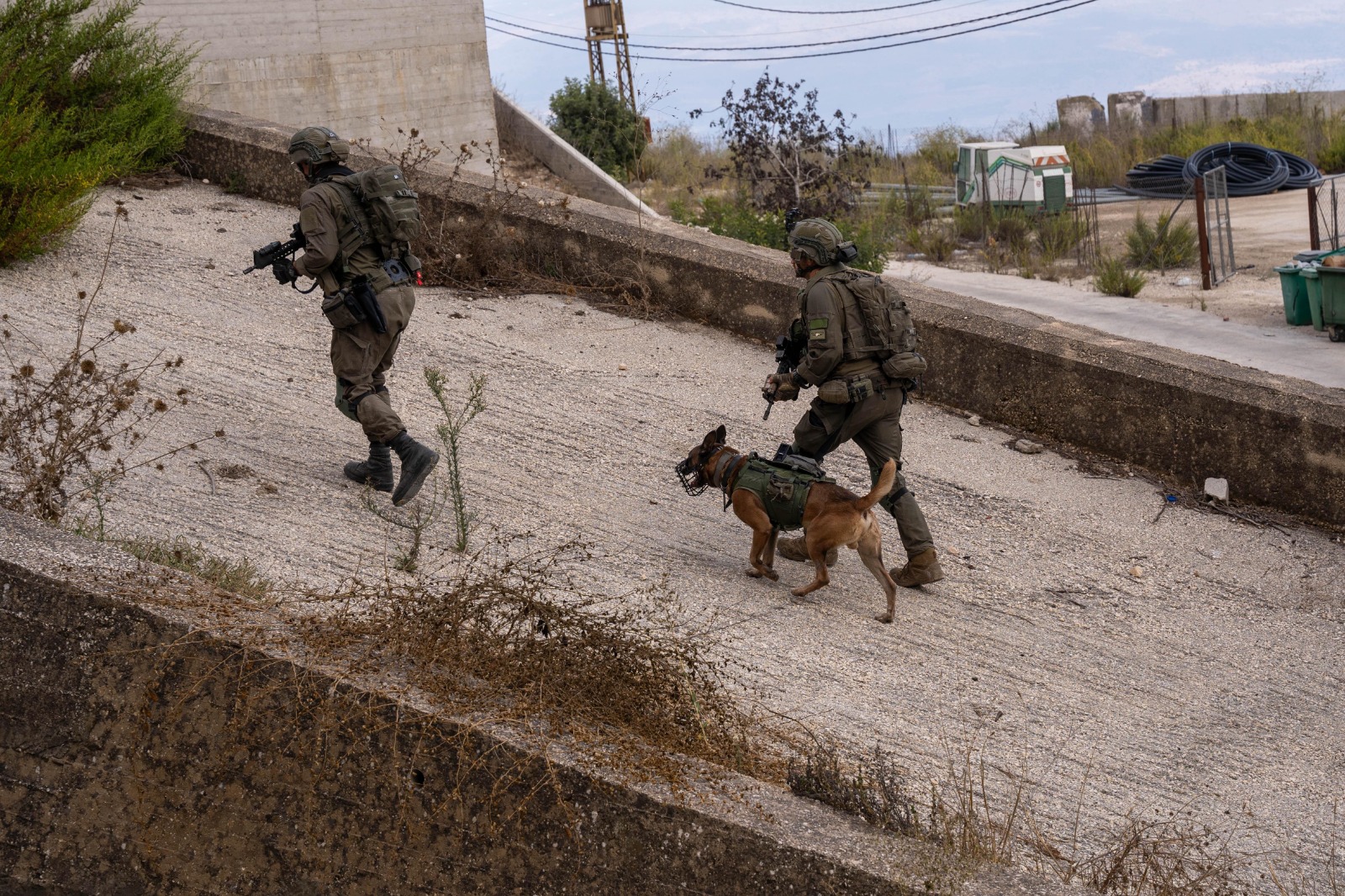
The Lebanon ceasefire took effect at 5 p.m. EST on April 16. The Lebanese army confirmed Israeli violations almost immediately — “intermittent shelling targeting a number of villages” in southern Lebanon, according to Al Jazeera and The Tribune India. Israeli forces fired a machinegun and an artillery shell at an ambulance team affiliated with the Islamic Health Authority in Kunin, Nabatieh Governorate, per The Quint’s April 17 reporting.
The violations are structurally predictable because of how the truce was written. The US State Department text preserves Israel’s “right to take all necessary measures in self-defense, at any time, against planned, imminent, or ongoing attacks,” adding that this “shall not be impeded by the cessation of hostilities.” Netanyahu confirmed that Israeli troops remain inside a 10-kilometre security buffer in southern Lebanon. Hezbollah responded that any Israeli troops on Lebanese soil grant the Lebanese “the right to resist.” The truce text contains its own escalation ladder: Israel claims self-defence to justify operations inside the buffer, Hezbollah claims resistance rights against the presence, and each side’s response validates the other’s trigger condition.
For Saudi Arabia’s fiscal planners, the question is not whether the Lebanon ceasefire will be violated. It is whether Iran will choose to treat a given violation as a Hormuz-triggering event. The April 8 precedent suggests a threshold of roughly 50 aircraft and 100 targets. The Kunin ambulance shelling, while confirmed by Lebanese authorities, has not triggered a response — yet. The discretion over what constitutes a “breach” sufficient to close Hormuz sits entirely with Tehran, a capital where President Pezeshkian has publicly accused IRGC commanders Vahidi and Abdollahi of wrecking the ceasefire and where the Supreme Leader has been absent for more than 44 days. The threshold escalated on April 18 when French UNIFIL Staff Sergeant Florian Montorio was killed by small-arms fire near Ghandouriyeh — the first UNIFIL fatality under the ceasefire, and a test of whether Tehran will treat peacekeeper deaths as the triggering event for renewed Hormuz pressure.
What Leverage Does Saudi Arabia Have Over Israel?
None. Saudi Arabia is not a party to the Lebanon ceasefire. It is not in the negotiating room — the truce is US-facilitated between Israel and Hezbollah, with France in a supporting role. Riyadh has no diplomatic channel to Jerusalem capable of influencing Israeli targeting decisions. There is no normalisation agreement to use as leverage; the Abraham Accords framework that might have produced one was overtaken by the war. The only channel available runs through Trump — the same channel that produced a Lebanon truce Netanyahu told his ministers he was “shocked to learn of from the media” and agreed to only “at Trump’s personal request,” according to the Times of Israel.
Saudi Arabia absorbs the full fiscal cost every time Hormuz closes — March production fell from 10.4 million barrels per day to 7.25 million bpd, a 30% drop, according to the IEA. Goldman Sachs estimates the war-adjusted fiscal deficit at $80-90 billion against an official projection of $44 billion. Khurais, producing 300,000 bpd, remains offline with no restoration timeline announced. The Yanbu loading ceiling through the East-West Pipeline bypass sits at 4-5.9 million bpd against a pre-war Hormuz throughput of 7-7.5 million bpd — a structural gap of 1.1-1.6 million bpd that Hormuz reopening alone does not close.
Israel, by contrast, imports no oil through Hormuz. Its economy is not exposed to Strait closures. Netanyahu’s calculus on whether to strike targets in southern Lebanon — a decision that could re-close the waterway — does not include Saudi fiscal consequences as a variable. Rob Macaire, former British Ambassador to Iran and Chatham House Council member, captured the structural flaw in an April 2026 assessment: “Israel’s insistence that its military action in Lebanon is not part of the agreement reveals a key vulnerability and shows the limits of the US ability to manage its allies.”
Chatham House’s institutional analysis went further: “After weeks of President Trump being furious with European allies for not sufficiently supporting the US, it now appears to be the alliance relationship with Israel that provides more of a risk to US interests in the Middle East.” Saudi Arabia, which is neither a US treaty ally nor an Israeli interlocutor in this context, sits downstream of both relationships with influence over neither.
An April 2026 ACLED conflict assessment captured the governance vacuum in the Gulf: regional states “must deploy what influence they have with Trump to push Iranian and American positions toward a fraught yet workable peace” but “so far have demonstrated little capacity to either restrain Trump or deter Iran.” The assessment is accurate as far as it goes, but it understates the structural constraint. Saudi Arabia’s problem is not a failure to deploy influence. It is that the variable determining Hormuz status — Israeli military behaviour in Lebanon — falls outside any influence chain Riyadh can access. Pakistan’s Asim Munir can call Tehran. Starmer can call Netanyahu. MBS can call Trump. None of these calls reach the Israeli battalion commander in the Nabatieh buffer zone whose next targeting decision determines whether Hormuz stays open.
The OSP Inversion Trap
Aramco’s May Official Selling Price was set at +$19.50 per barrel for Arab Light to Asia — a war premium calculated against Brent at roughly $109 when the pricing decision was made. Brent closed April 17 at approximately $89. The May OSP is now $17-20 per barrel underwater on term liftings, according to pricing data tracked by the IEA and Bloomberg. Aramco had already reset the June OSP to +$3.50, a $16 reduction, before the April 17 crash made even that adjustment look insufficient.
The Lebanon-Hormuz coupling creates a specific pricing trap that goes beyond ordinary volatility. Each Israeli strike that re-closes Hormuz will spike Brent back up — repricing risk premiums into spot markets — while term contract buyers remain locked into whatever OSP Aramco set weeks earlier against a different Brent environment. The result is a ratchet: closures spike spot prices but don’t help term revenue (contracts already priced), while reopenings crash spot prices and destroy the premium embedded in the next month’s OSP.
Each $1 per barrel cut in the OSP costs approximately $130-150 million per month at current Yanbu throughput, according to IEA and Aramco production data. Saudi Arabia needs to rebuild Asian market share — exports to Asia fell 38.6% in March, per Kpler tracking data — but the conditional, revocable nature of the Hormuz reopening makes term buyers rational to demand discounts that reflect re-closure risk.
The OPEC+ dimension compounds the problem. Saudi Arabia’s April quota stands at 10.2 million bpd — 3 million barrels above its actual March output, as detailed by the IEA. The quota is meaningless as a production constraint when physical infrastructure, not voluntary restraint, determines output. But it matters as a pricing signal: Asian refiners know Saudi Arabia cannot flood the market to regain share even if it wanted to, because the bypass ceiling and Khurais outage physically prevent it. The leverage that OPEC+ production discipline once gave Aramco over Asian buyers has been replaced by a forced scarcity that benefits no one — prices are volatile rather than high, and volumes are constrained rather than managed.
Does the Ceasefire Expire Before the Ceasefire?
The Lebanon truce runs ten days from April 16, expiring April 26. The US-Iran ceasefire expires April 22 — four days before the Lebanon truce. Araghchi tied Hormuz status to “the remaining period of ceasefire.” The ambiguity is structural: which ceasefire governs Hormuz access during the April 22-26 window when the US-Iran agreement has lapsed but the Lebanon truce is nominally active?
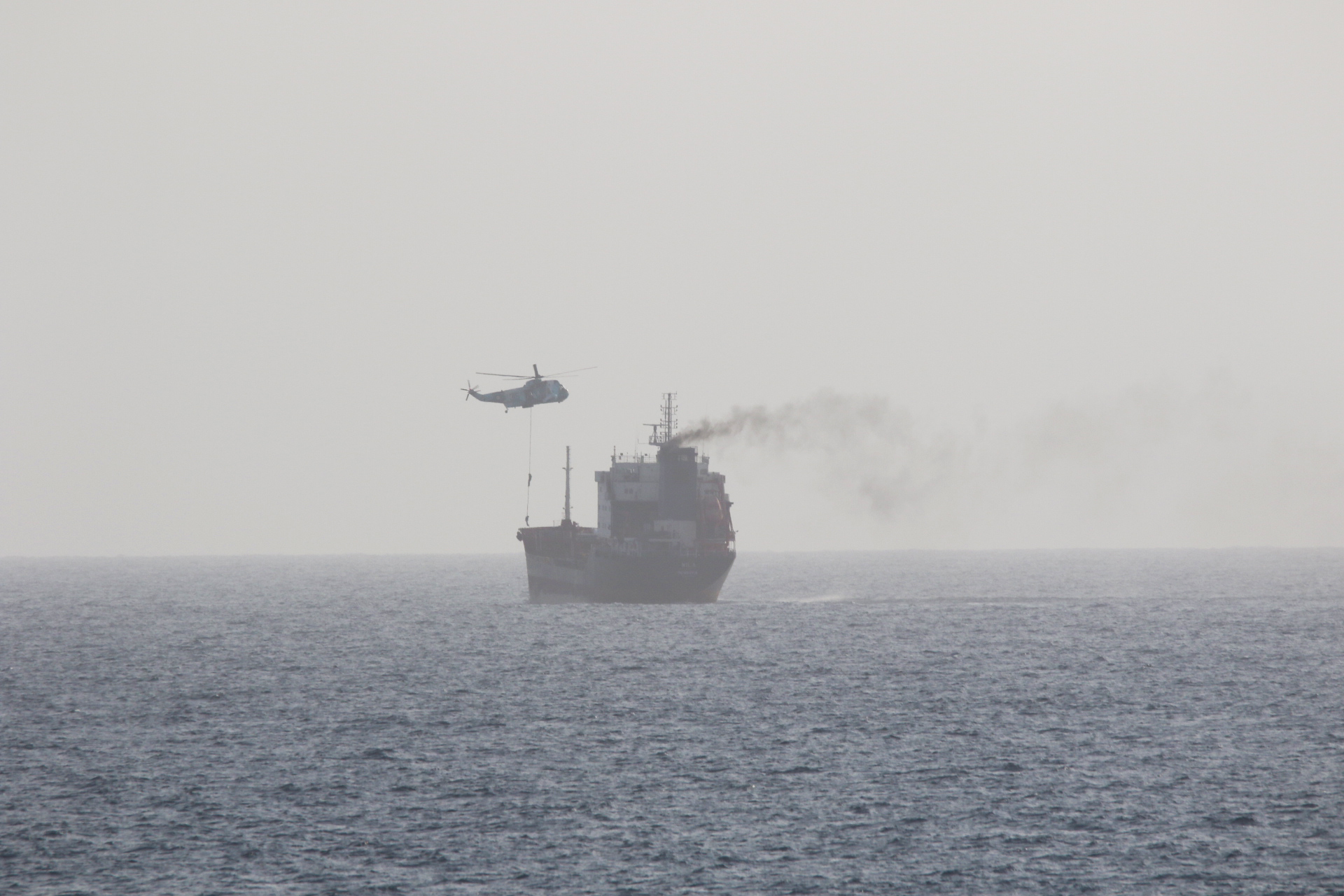
The question is not academic. If the US-Iran ceasefire expires without renewal on April 22, the American naval blockade of Iranian ports — effective since April 13, applying to Iranian-flagged and toll-paying vessels, according to CENTCOM — could intensify. Iran might argue that Hormuz remains open because the Lebanon truce (its stated condition) still holds. Or it might argue that the expiry of the broader ceasefire voids the Hormuz commitment. The Araghchi statement provides no mechanism for resolving this overlap, and Iran’s track record of maintaining administrative ambiguity over Hormuz transit — the IRGC-published danger zone charts, the “coordinated route” language in the declaration itself — suggests the ambiguity is a feature.
For Saudi Arabia, the April 22-26 window coincides with the opening of Hajj arrivals and the sealing of the Umrah cordon on April 18. Indonesia’s 221,000 pilgrims begin their first departures on April 22 — the same day the US-Iran ceasefire expires. Pakistan’s 119,000 pilgrims arrive starting April 18. The kinetic threshold for any party to escalate rises once 1.2-1.5 million pilgrims are inside the Kingdom, but the diplomatic threshold for Hormuz closure — a foreign minister’s X post, as April 17 demonstrated — does not require kinetic action at all.
The Insurance Market Has Not Moved
The disconnect between the oil market’s response and the insurance market’s response to the Araghchi declaration tells the story of who is pricing risk accurately. Brent dropped 10.5%. War risk premiums did not move. Lloyd’s Market Association confirmed that 88% of participants continue to offer Hormuz transit cover, but at rates that assume re-closure is probable — 100 times the pre-crisis baseline.
Tanker operators making loading decisions for May liftings from Ras Tanura or Jubail — both on Saudi Arabia’s Eastern Province coast and accessible only through Hormuz — must price the conditional nature of the reopening into their calculations. A laden VLCC carrying two million barrels of Arab Light at $89 Brent represents roughly $178 million in cargo value. War risk insurance at current Lloyd’s-quoted rates adds approximately $15-20 million per voyage against a pre-war cost of roughly $75,000-100,000. These costs pass through to Saudi Arabia in the form of reduced netback pricing and Asian buyer resistance to term commitments.
The insurance market’s scepticism has a specific basis: the November 2024 Israel-Hezbollah ceasefire — the last comparable truce — collapsed in February 2026. The current ten-day format is explicitly labelled a “cessation of hostilities to enable peace negotiations,” not a final agreement. Lloyd’s underwriters price precedent, and the precedent is a previous ceasefire that failed within months.
The gap between the oil market and the insurance market represents a measurable arbitrage in risk perception. Commodity traders — many of them algorithmic, reacting to headline keywords — priced in reopening within minutes of the Araghchi post. Marine underwriters, whose exposure timeline extends across a 30-day voyage from Ras Tanura to Ningbo, priced in the conditional, revocable nature of the reopening and the demonstrated speed of re-closure. Both cannot be right. If the insurance market is correct, the Brent drop overshoots and a correction follows as physical traders encounter the friction of elevated voyage costs. If the commodity market is correct, insurance premiums will fall — but underwriters have shown no willingness to lead that repricing ahead of a truce whose governing condition is a ten-day Lebanese cessation of hostilities backed by no enforcement mechanism.
Attribution Laundering and Its Limits
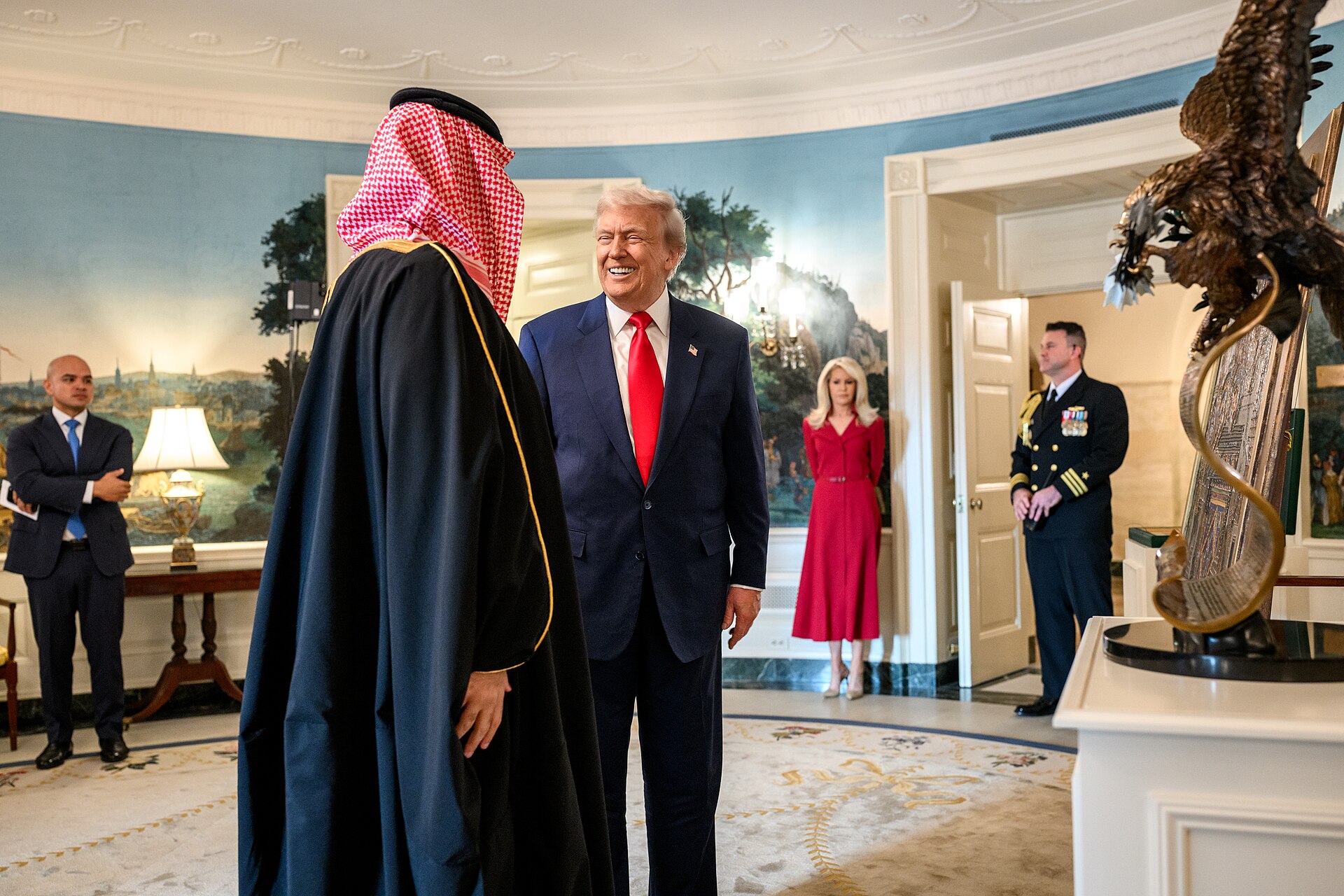
MBS told Trump in a private call — reported by Middle East Eye, citing Western and Arab officials — that a Lebanon ceasefire was “critical to achieving the goal of reopening the Strait of Hormuz.” Saudi Arabia did not appear in the Lebanon ceasefire text as a party, guarantor, or signatory. The demand was laundered through Keir Starmer, who met MBS in Jeddah on April 8-10 and called Israeli strikes on Lebanon “wrong.” Foreign Secretary David Lammy’s Mansion House speech stated that “Lebanon must be included… Hormuz must be fully reopened… no place for tolls.” A joint statement by 20-plus Western leaders included Lebanon — with Saudi Arabia absent from the signatory list.
The attribution-laundering mechanism achieved its immediate objective: Lebanon was included in the ceasefire framework. But the mechanism that succeeded diplomatically now fails operationally. Saudi Arabia cannot enforce the Lebanon truce through Starmer. It cannot restrain Israeli military operations through Lammy. When Netanyahu stripped Lebanon from an earlier draft of the ceasefire text, Saudi Arabia’s only recourse was to re-route the demand through Western allies who share its preference but lack enforcement authority over Israeli operations. Ali Fayyad, a Hezbollah politician, told Al Jazeera Arabic on April 17 that the group would approach the ceasefire with “caution and vigilance” and that “any targeting of Lebanese sites by Israeli forces will constitute a breach of the truce.”
In 2006, Saudi Arabia called Hezbollah “adventurist” after the group’s cross-border raid triggered an Israeli war in Lebanon — a joint statement with Egypt, Jordan, Kuwait, the UAE, and Bahrain. That language is unavailable in 2026. MBS rebuilt relations with Iran through the 2023 China-brokered normalisation. The war is between the United States and Israel on one side and Iran on the other, not a proxy conflict where Saudi Arabia can pick the proxy to blame. Riyadh needs Iran to not close Hormuz more than it needs to criticise Hezbollah. The diplomatic vocabulary has narrowed to the point where Saudi Arabia did not attend the Paris Hormuz framework talks — a conference designed to address its most pressing national security concern.
Frequently Asked Questions
Can Iran legally close the Strait of Hormuz under international law?
UNCLOS Articles 37-44 guarantee transit passage through international straits, and Article 26 prohibits charges on vessels exercising this right. Iran has not formally declared a closure — it has instead designated standard shipping lanes as “danger zones” via IRGC-published charts and directed traffic through a 5-nautical-mile Qeshm-Larak corridor inside Iranian territorial waters. James Kraska of the Naval War College has stated there is “no legal basis under international law” for the toll and routing arrangements Iran imposed. The legal framework prohibits what Iran is doing; the enforcement framework has not prevented it.
What would trigger Iran to close Hormuz again?
The April 8 closure established a data point — roughly 50 Israeli aircraft striking 100-plus Lebanese targets — but Iran has been deliberate about not publicising a fixed threshold. Smaller operations within the buffer zone have not triggered closures, and that ambiguity is itself coercive: no tanker operator or Saudi planner can model the exact line. PressTV framed the April 17 reopening as an Iranian “strategic victory,” suggesting Tehran views Hormuz access as a recurring instrument of pressure rather than a concession made once and then surrendered.
Has Saudi Arabia ever had direct diplomatic contact with Israel?
No formal diplomatic relations exist. The Abraham Accords framework, which normalised relations between Israel and the UAE, Bahrain, Sudan, and Morocco in 2020, included active US-brokered negotiations for Saudi inclusion throughout 2023-24. Those talks stalled after October 7, 2023, and were overtaken entirely by the Iran-US war in February 2026. MBS told The Atlantic’s Jeffrey Goldberg in 2018 that Israelis “have the right to have their own land,” but no institutional channel — embassy, liaison office, or standing back-channel — currently exists between Riyadh and Jerusalem.
How does the CENTCOM naval blockade interact with the Hormuz reopening?
The US naval blockade, effective since April 13, applies specifically to Iranian ports and vessels paying Iran’s unilateral transit toll — not to all Hormuz traffic. CENTCOM deployed DDG-121 and DDG-112 through the Strait on April 11, drawing an IRGC “last warning” radio call. The blockade and the reopening coexist in parallel: commercial tankers loading Saudi crude can transit Hormuz under Araghchi’s declaration while Iranian-flagged exports remain under American interdiction. The practical effect is that Saudi oil can flow but Iranian oil cannot — a dynamic Tehran may eventually frame as grounds for re-closure.
What happens to Saudi oil exports if Hormuz closes again?
The East-West Pipeline bypass to Yanbu cannot cover the full pre-war Hormuz throughput — the structural gap runs 1.1-1.6 million bpd even at maximum loading. But the bypass also has a second chokepoint that Hormuz analysis routinely ignores: Yanbu-loaded tankers bound for Asia must pass through the Bab el-Mandeb strait, which faces its own Houthi-related transit risks. Closing Hormuz while maintaining Houthi interdiction pressure on Bab el-Mandeb would bottle Saudi crude between two Iranian-aligned threat vectors simultaneously, with no viable export route remaining.