
ISLAMABAD — On April 22, Indonesia’s 221,000 Hajj pilgrims — the single largest national contingent — board their first charter flights to Makkah, entrusting their safety to a ceasefire that expires the same day, negotiated in a room where Saudi Arabia was not allowed to sit. Riyadh had no seat at the Islamabad Round 1 talks, was excluded at Iran’s insistence, and has received no indication it will be invited to Round 2 — the talks that Iranian sources told CNN on April 17 are “likely to be held in Pakistan on Monday,” meaning April 20 or 21, leaving somewhere between 24 and 48 hours before the entire security architecture governing the Kingdom’s airspace, oil exports, and holiest obligation either renews or collapses.
The 14-day ceasefire signed on April 8 contains no extension mechanism, no dispute resolution clause, and no published text — a structural vulnerability that turns the 48-to-72-hour window before April 22 into the most consequential period for Saudi strategic exposure since the war began on February 28. Four scenarios are plausible, and in every single one of them, Saudi Arabia’s fiscal position, air defence inventory, Hajj security posture, and oil export ceiling are determined by decisions made by other people in a city where the Kingdom’s foreign minister has not been invited. The structural reason no extension mechanism was ever possible — Zolghadr’s sanctions exposure across every viable negotiating venue — is examined in The Islamabad Accord Was Built to Expire.
Table of Contents
- A Ceasefire With No Text and No Extension Clause
- Who Is Actually Negotiating — and Who Isn’t
- If They Agree on Sunday
- What Happens If They Wait Until Monday
- What Happens If the Ceasefire Simply Expires
- The Ambiguous Deal — April 17’s Hormuz Architecture Applied to the Ceasefire Itself
- How Deep Is Saudi Arabia’s Exposure Across All Four Scenarios?
- Can 400 Interceptors Protect 1.2 Million Pilgrims?
- The Mediator Left Town
- Frequently Asked Questions
A Ceasefire With No Text and No Extension Clause
The April 8 ceasefire was mediated by Pakistan — Prime Minister Sharif, Foreign Minister Dar, and Field Marshal Munir — accepted by Iran’s Supreme National Security Council, and announced via a written statement read on state television (Al Jazeera, April 8, 2026). No formal signature ceremony took place, no written text was published, and no extension clause was included. The agreement runs 14 days, expiring April 22, with no agreed procedure for what happens on day 15.
This is not a gap in the reporting — it is a gap in the agreement itself. The CSIS analysis published in April 2026, “The Fragile US-Iran Ceasefire: Issues to Watch,” identifies six areas of concern including the nuclear programme, the Lebanon war, and what it calls a “persistent shadow war,” and notes that the ceasefire is “only a ceasefire, not a final deal.” The absence of an extension mechanism means that renewal requires a fresh negotiation — with all the same structural defects that nearly destroyed Round 1.
On April 15, AP reported an “in principle agreement” to extend the ceasefire by two weeks (AP via Assam Tribune, April 15, 2026). The same day, a US official told Reuters that Washington “has not formally agreed to the extension” (Reuters via Bloomberg, April 15). The contradiction was not resolved publicly in the three days since, and the dual-signal architecture — one source saying yes, another saying not yet — is the same pattern that preceded the collapse of Round 1, when Vice President Vance flew to Islamabad for the first direct US-Iran talks since 1979 and departed declaring the talks had “failed.”
Who Is Actually Negotiating — and Who Isn’t
Saudi Arabia was excluded from Islamabad Round 1 at Iran’s insistence, a condition Washington accepted without public objection. Saudi Foreign Minister Prince Faisal bin Farhan received two phone calls from Iranian FM Araghchi — one on April 9 before the talks began, one on April 13 after they collapsed — but had no seat at the table (Al Arabiya, April 13, 2026). In the second call, Araghchi described the breakdown to his Saudi counterpart: “Unfortunately, we witnessed the continuation of the American side’s excessive demands in the negotiations and this obstructed any result.” The Saudi foreign minister was informed of the failure of talks about his country’s security by the other side’s chief negotiator, which tells you everything about Riyadh’s position in this process.
The Middle East briefing 3,000+ readers start their day with.
One email. Every weekday morning. Free.
The exclusion is not incidental — it is structural. Iran’s five conditions for Phase 2 include Hormuz sovereignty recognition, keeping missiles off the table, sanctions relief upfront, Lebanon’s inclusion, and the rejection of a 20-year enrichment moratorium (Iran countered with monitored down-blending). These conditions directly affect Saudi security, Saudi trade, and Saudi fiscal stability, and they were set by Tehran without any Saudi input. Whatever terms emerge from Round 2, Riyadh will learn about them the way it learned about Round 1’s failure: by phone, after the fact.
The nuclear track made the exclusion operational: Munir carried Iran’s in-principle agreement to a four-country nuclear monitoring framework to Washington on April 17. Saudi Arabia, which absorbs roughly 90 percent of the conflict’s economic damage, had no input into the framework that will govern Iran’s nuclear posture on its border. The full dimensions of Pakistan’s dual role as Iran’s nuclear guarantor and Saudi Arabia’s funded mediator are here.
The authorisation problem that killed Round 1 remains unresolved. Defence Minister Ahmad Vahidi demanded that Ali Akbar Ahmadian Zolghadr, the SNSC secretary who is under both US and EU sanctions, be placed on the Iranian delegation — a demand that was refused (Jerusalem Post, April 2026). Vahidi also insisted the delegation refuse any discussion of Iran’s missile programme, and his authorisation is required for any binding security commitment. Pezeshkian himself named Vahidi and Abdollahi as the men who wrecked the ceasefire’s credibility, accusing them on April 4 of “deviation from the delegation’s mandate.” Article 110 of Iran’s constitution means the president has zero authority over the IRGC — and the man who does have that authority, Supreme Leader Mojtaba Khamenei, has not appeared publicly in over 39 days as of April 18.
If They Agree on Sunday
The best-case scenario for Saudi Arabia — an extension agreed on Sunday, April 20, two full days before the ceasefire expires — is still a scenario in which the Kingdom’s security is decided without its consent. A Sunday agreement gives 48 hours for the terms to be communicated to the IRGC’s 31 provincial corps, each of which operates with the kind of decentralised autonomy that allowed the Lar drone violation, the Larak Island shipping restrictions, and the contradictory Hormuz declarations to occur while the original ceasefire was nominally in force.
The oil price responds first. Goldman Sachs projects Brent dropping toward $85-90 per barrel in a ceasefire-holds scenario (Fortune, April 9, 2026), which would narrow the gap with Saudi Arabia’s PIF-inclusive fiscal break-even of $108-111 per barrel (Bloomberg Economics) but not close it — the Kingdom would still be running a per-barrel shortfall of $18-26, or roughly $90-130 million per day in forgone revenue at current export volumes. The fiscal relief is real but partial, and it depends entirely on how long the extension holds and whether Hormuz actually reopens.
That last condition is the trap within the best case. The Yanbu structural export ceiling — 5.9 million barrels per day via the East-West Pipeline — cannot change regardless of what is agreed in Islamabad, because pre-war Saudi Hormuz throughput was 7-7.5 million bpd and the structural gap of 1.1-1.6 million bpd requires mine clearance that takes a minimum of 51 days according to the 1991 Kuwait benchmark (IEA April 2026 OMR). Saudi Arabia is already producing 3 million barrels a day less than its pipeline can carry, and a Sunday extension does not change the arithmetic — it merely defers the moment when the arithmetic becomes unmanageable.
Hajj proceeds under reduced threat but not under resolved threat, because the extension carries the same Vahidi authorisation-ceiling defect as the original ceasefire. An agreement Araghchi signs and the IRGC does not consider binding is not a security guarantee — it is a press release with an expiry date, and the Custodian’s obligation to 1.2 million pilgrims and 400 remaining PAC-3 interceptors does not change because a diplomat in Islamabad signed a piece of paper.
What Happens If They Wait Until Monday
A Monday agreement creates a grey zone of less than 24 hours — less time than it takes for an Islamabad decision to reach 31 decentralised IRGC provincial corps. That gap overlaps precisely with Indonesia’s first Hajj charter departures and gives any provincial commander legal deniability to strike before receiving word of the extension.
A Monday agreement — April 21 — is not a negotiating inconvenience but an operational window, and the IRGC has demonstrated repeatedly that operational windows are its preferred habitat. The 31 provincial corps commanders each operate under decentralised authority with no centralised command confirmation from a Supreme Leader absent for 39 days: the legal architecture for a deniable strike is already in place.
The grey-zone window aligns precisely with Indonesia’s first Hajj charter departure on April 22 — 221,000 pilgrims boarding flights to a country where the ceasefire’s legal status may be contested between Iran’s civilian and military authorities at the exact moment of departure (Tempo.co Indonesia). Pakistan’s Hajj flights began April 18 (Pakistan MORA), meaning thousands of pilgrims are already in transit to a destination whose security architecture rests on an agreement that might or might not be renewed before they land.
Brent spikes on the uncertainty. Morgan Stanley maintains a Brent projection of $110 per barrel for Q2 2026 and predicts “slow recovery in supply” (Reuters/Intellectia, April 2026) — but that projection assumes a functioning ceasefire, not a 24-hour grey zone in which neither the US nor Iran can say with certainty whether the ceasefire is still in effect. The EIA’s April 2026 Short-Term Energy Outlook projects Brent peaking at $115 per barrel in Q2 and explicitly notes that this “assumes traffic through the Strait of Hormuz gradually resumes” — an assumption that is fragile when the Strait’s status is being decided less than 24 hours before the ceasefire that governs it expires.
The “last strike before renewal” risk is not theoretical — it is the IRGC’s demonstrated pattern. The East-West Pipeline pumping station was struck at 1pm on April 8, after the ceasefire was nominally in effect, by an IRGC unit whose commander had declared “all restraint removed” on April 7, before the ceasefire was signed. The grey zone between a Monday signature and a Tuesday expiry is precisely the space in which a provincial IRGC commander can order a strike, claim he had not yet received word of the extension, and create a fait accompli that neither Araghchi nor Pezeshkian has the constitutional authority to reverse.
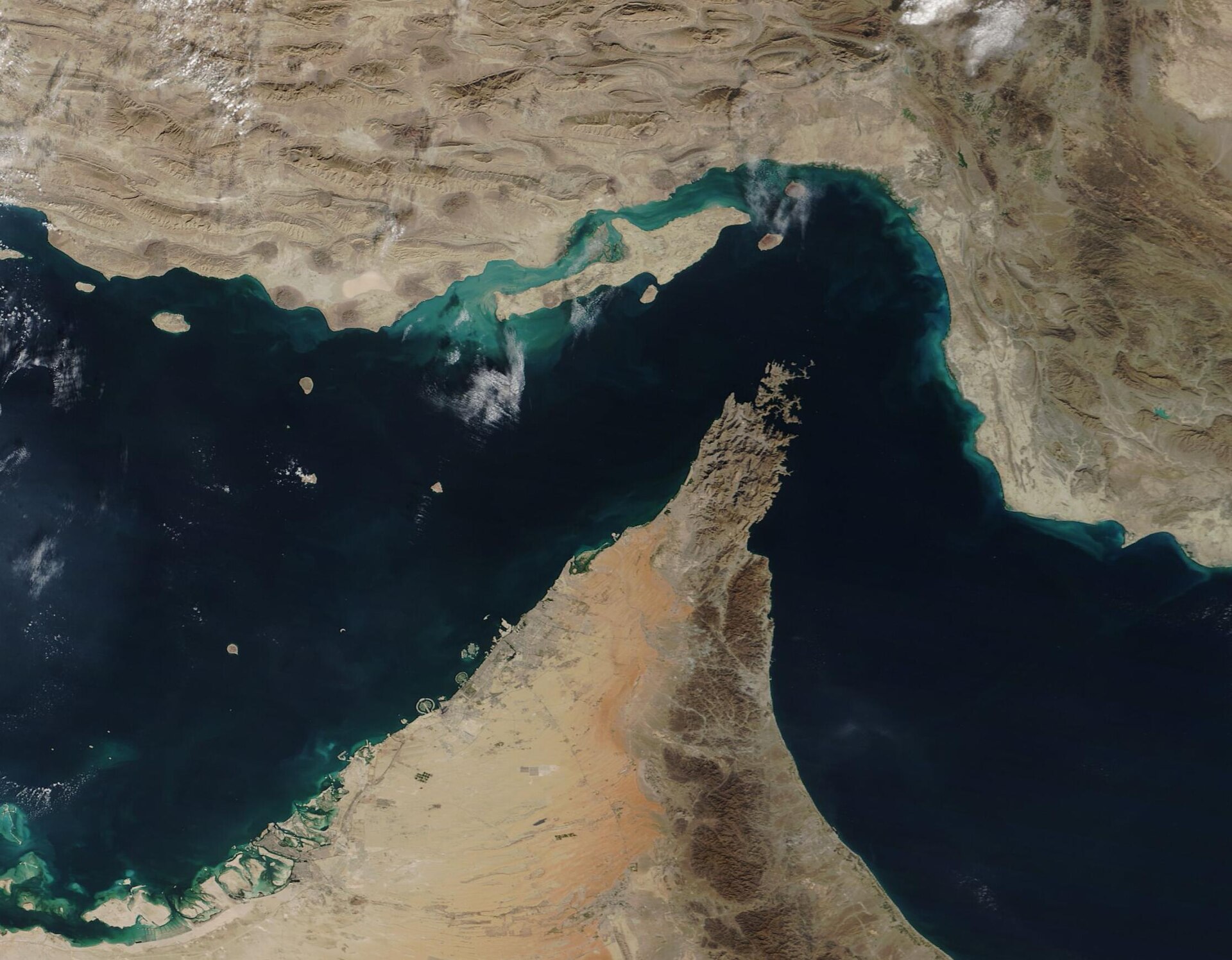
What Happens If the Ceasefire Simply Expires
Full-scale resumption of hostilities. Brent moves immediately to $110 per barrel — Morgan Stanley’s Q2 baseline, not an adverse scenario. The Yanbu corridor comes under direct threat from Abdollahi’s stated blockade of all Persian Gulf, Sea of Oman, and Red Sea shipping. Saudi Arabia’s fiscal deficit reaches $80-90 billion against an official $44 billion projection.
The EIA’s $115 Q2 Brent peak becomes the floor rather than the ceiling. Goldman Sachs projects that if Hormuz remains mostly shut for another month, Brent “could average $120 in Q3 and $115 in Q4” (Fortune, April 9, 2026) — a price level that pushes Saudi Arabia’s fiscal deficit to the 6.6 percent of GDP Goldman has already revised it to, against the official 3.3 percent projection.
The Yanbu corridor, which has been Saudi Arabia’s lifeline since Hormuz became contested, comes under direct threat again — the SAMREF refinery in Yanbu was already struck on April 3, and Khatam al-Anbiya Central Headquarters commander Ali Abdollahi stated on April 17 that Iran “would not allow any exports or imports to continue in the Persian Gulf, the Sea of Oman, and the Red Sea” if the US blockade continues (NBC News, April 17, 2026). If the ceasefire expires and the blockade remains, Abdollahi’s threat applies to the pipeline terminus that carries what remains of Saudi oil exports.
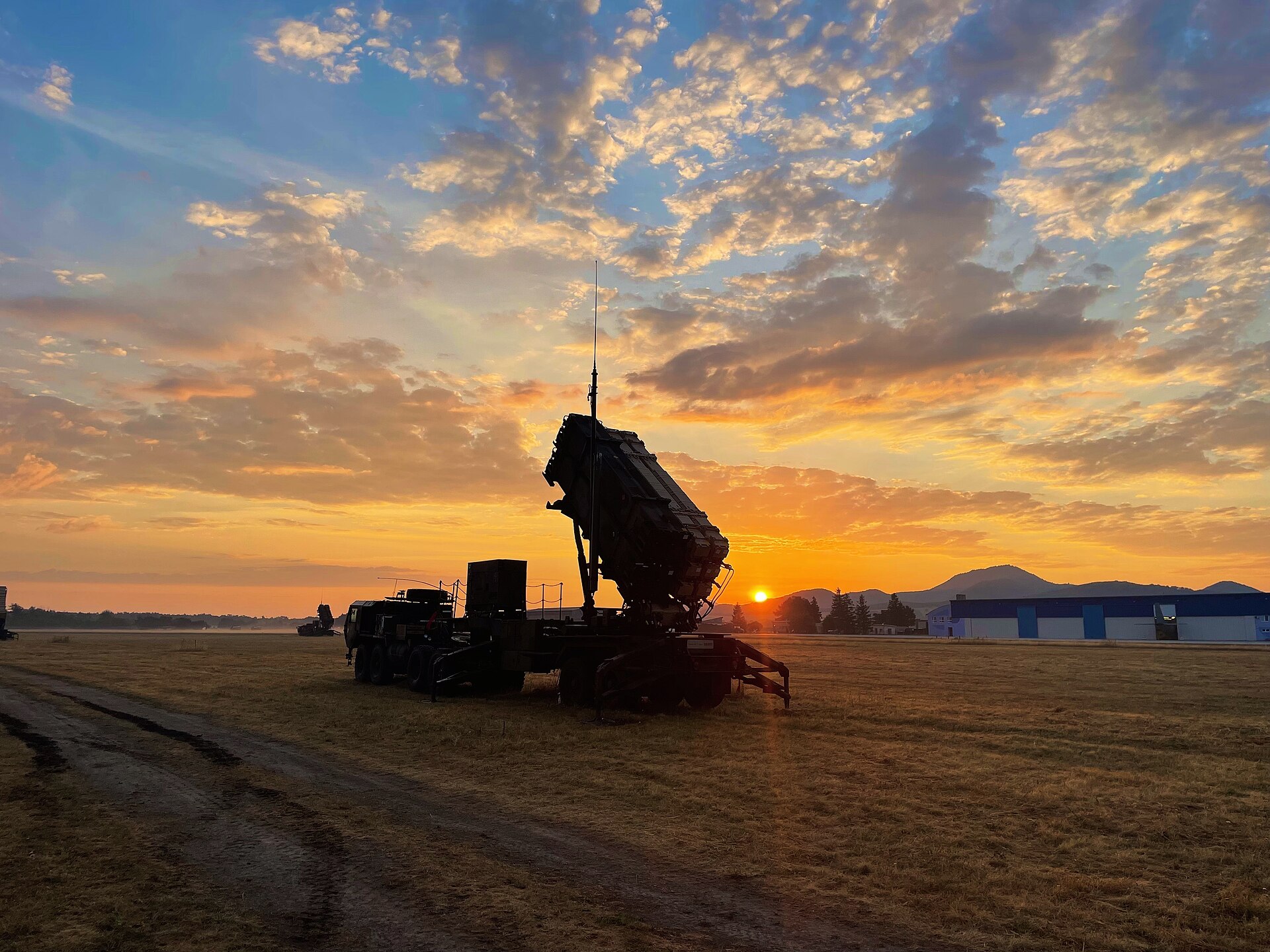
Saudi air defence faces an arithmetic that no amount of diplomacy can alter: approximately 400 PAC-3 MSE rounds remain from a pre-war stockpile of roughly 2,800, after 894 intercepts — 799 drones and 95 ballistic missiles — between March 3 and April 7. At current production rates, that stockpile will not recover before Hajj peaks on the Day of Arafah on May 26 — 34 days after ceasefire expiry.
This is the hardest scenario for MBS politically, not because the military situation is unmanageable — Saudi Arabia has been managing it since February 28 — but because a public appeal against war resumption would require acknowledging the extent of fiscal distress that the Kingdom has spent seven weeks concealing behind Yanbu export figures and OSP pricing restraint. The $3 billion rollover to Pakistan five days before the ceasefire expires is the kind of move that only makes sense if Riyadh is investing in the mediator’s continued engagement — but the mediator is negotiating a deal in which Saudi interests are represented by nobody.
The Ambiguous Deal — April 17’s Hormuz Architecture Applied to the Ceasefire Itself
This is the scenario that no one is modelling and everyone should be, because Iran demonstrated the exact template for it on April 17 — the day Araghchi declared Hormuz “completely open” for commercial vessels, and the IRGC contradicted him within hours from multiple directions simultaneously.
Tasnim News Agency, the IRGC-aligned state media outlet, called Araghchi’s declaration “flawed and incomplete” and said it “created unnecessary ambiguity about reopening the Strait of Hormuz” (Tasnim/NBC News, April 17, 2026). The IRGC Navy stated that passage through the Strait requires IRGC Navy permission — a condition Araghchi had not mentioned. And Abdollahi, commanding the Khatam al-Anbiya Central Headquarters, announced that Iran would shut all Persian Gulf, Sea of Oman, and Red Sea shipping if the US blockade continued — the opposite of “completely open” by any reading. Ship-tracking data confirmed the reality: zero oil tankers exited the Persian Gulf on April 17 despite Araghchi’s declaration, and only five cargo ships and one tanker crossed to the Gulf of Oman (NBC News live blog, April 17).
Now apply this architecture to the ceasefire extension itself. Araghchi announces an extension has been agreed. Tasnim calls it “flawed.” The IRGC Navy, which declared “full authority to manage the Strait” on April 5 and April 10, says the extension requires IRGC confirmation. Abdollahi says the extension is contingent on blockade removal. Parliamentary Speaker Ghalibaf — who told social media on April 17 that “Trump made seven claims in one hour, all seven of which are false” — issues a statement contradicting whatever Trump claims was agreed. The ceasefire’s legal status on April 22 is contested between Iran’s civilian and military authorities, and an IRGC provincial commander can strike a Saudi target and cite the ceasefire’s contested validity as justification, with plausible deniability preserved.
The oil market’s response to this scenario follows a distinctive pattern: an initial drop on “deal announced” headlines, then a spike to $105-110 within 24-48 hours as the contradiction between Araghchi’s words and the IRGC’s actions becomes visible in ship-tracking data, in Tasnim’s editorial line, and in the continued absence of tanker traffic through Hormuz. The gap between the announcement drop and the reality spike is where the fiscal damage concentrates — Saudi Aramco’s June OSP, which must be set around May 5, has to price into a market where neither the ceasefire’s existence nor its terms can be verified against a single authoritative Iranian source.
Ghalibaf’s April 17 statement is the proof that the split-voice architecture is already operational. His denial of Trump’s characterisations of what was agreed in Round 1 creates the same Araghchi-IRGC contradiction seen on the Hormuz declaration: one Iranian voice offering forward motion, another walking it back within hours. Trump says Iran agreed to everything; Iran says it didn’t — and neither side has published the text that would resolve the dispute, because no text exists.
How Deep Is Saudi Arabia’s Exposure Across All Four Scenarios?
The consistent feature across all four scenarios — Sunday extension, Monday grey zone, expiry, ambiguous deal — is that Saudi Arabia’s exposure is determined by decisions made in Islamabad between American and Iranian negotiators, with Pakistani mediation, and without Saudi participation. The variables change. The exclusion does not.
| Variable | Sunday Extension (April 20) | Monday Grey Zone (April 21) | No Extension | Ambiguous Deal |
|---|---|---|---|---|
| Brent projection | $85-90/bbl | $100-105/bbl | $110-120/bbl | $95→$105-110/bbl (48hr lag) |
| Fiscal shortfall vs $108-111 break-even | $18-26/bbl | $3-11/bbl | Net surplus on price, deficit on volume | Volatile — pricing impossible |
| Yanbu export ceiling | 5.9M bpd (unchanged — mine clearance 51+ days) | 5.9M bpd (unchanged) | 5.9M bpd ceiling + direct threat to Yanbu | 5.9M bpd (unchanged, but Hormuz status unclear) |
| PAC-3 MSE remaining | ~400 rounds | ~400 rounds | ~400 rounds, depletion resumes | ~400 rounds, threat level unclear |
| Hajj operational status | Proceeds under reduced threat | Grey zone overlaps first departures | Operational jeopardy | Threat level unresolvable — no single authority to query |
| Saudi input on terms | None | None | None | None |
The bottom row is the one that matters most, and it is identical across all four columns. Goldman Sachs has revised Saudi Arabia’s 2026 fiscal deficit to 6.6 percent of GDP — approximately $80-90 billion against an official projection of $44 billion — and that revision was made before the April 22 expiry introduces a new round of uncertainty into Aramco’s pricing, Saudi Arabia’s export volumes, and the Ministry of Finance’s ability to project revenue past the next two weeks.
At current Brent prices of approximately $96 per barrel (Trading Economics, April 18) and a PIF-inclusive break-even of $108-111 (Bloomberg Economics), the Kingdom is running a per-barrel shortfall of $12-15. At 5 million barrels per day of exports — roughly what the Yanbu corridor allows — that shortfall translates to $60-75 million per day in forgone revenue, or $21.9-27.4 billion annualised. The ambiguous-deal scenario is the worst for fiscal planning not because it produces the highest oil prices but because it makes pricing impossible: Aramco’s June OSP must be set against a market where the ceasefire might or might not exist, and the $16 reset from May’s war-premium +$19.50 per barrel to June’s +$3.50 already implies that Aramco’s pricing desk is bracing for sustained uncertainty rather than resolution.
Can 400 Interceptors Protect 1.2 Million Pilgrims?
Not with the same margin as before the war. Saudi Arabia has approximately 400 PAC-3 MSE interceptors remaining — 14 percent of its pre-war stockpile — after 894 intercepts since March 3. Camden, Arkansas produces 620 rounds per year. Poland refused a transfer. The Day of Arafah is May 26, 34 days after the ceasefire expires, and Iran’s arsenal is still roughly 50 percent intact.
The interceptor count does not change regardless of which scenario materialises on April 22, because production operates on a timeline measured in years, not days. The $16.5 billion in emergency arms sales authorised since the war began went to UAE, Kuwait, and Jordan — not Saudi Arabia.
Saudi Arabia’s Ministry of Defence published launcher photographs but withheld interceptor count data, which is itself informative — the five-layer defence architecture of THAAD, PAC-3, KM-SAM, laser, and Skyguard is intact on paper, but the system that matters most against Iranian ballistic missiles is running on 14 percent capacity, and Rubio’s April 18 appeal to the EU to reimpose Iran sanctions landed on the same day the Makkah cordon sealed for the Hajj season. The convergence is not coincidental — the diplomatic calendar and the religious calendar are now running on the same clock, and neither can be extended.
The IRGC’s cost-imposition logic, as CSIS analyst Bondar described it, relies on exactly this asymmetry: Iran’s drones cost a fraction of the interceptors that shoot them down. The stockpile was depleted by two-thirds in the first 36 days of war. Iran’s arsenal remains roughly 50 percent intact (data compiled through April 7). The production mismatch means that time favours Tehran whether the ceasefire holds or not.
The Mediator Left Town
On April 16, two days before the window in which Round 2 is expected to convene, Pakistan Prime Minister Sharif departed Islamabad on a four-day tour of Saudi Arabia, Qatar, and Turkey (Al Jazeera, April 14, 2026). The host mediator — the man whose country brokered the original ceasefire, whose field marshal visited IRGC Khatam al-Anbiya headquarters on April 16 to maintain the enforcement channel, and whose government is simultaneously the ceasefire’s sole enforcement mechanism and the recipient of a $3 billion Saudi loan rollover five days before expiry — was not in the building.
Sharif’s itinerary reads as preparatory rather than evasive: Riyadh, Doha, and Ankara are three capitals with direct stakes in whatever emerges from Round 2, and the tour may be an attempt to align positions before the talks begin. But the optics compound the structural problem. The mediator is touring the region while the mediation window closes, the US has not confirmed a date, Iranian sources have said “Monday” without specifying which Monday, and the original ceasefire’s author — Foreign Minister Dar and Field Marshal Munir — are the men who must operationally convene Round 2 in a capital their prime minister has temporarily left.
Pakistan’s structural leverage as mediator derives from its unique position as both Iran’s protecting power in the United States since 1992 and Saudi Arabia’s treaty ally under the September 2025 SMDA. That leverage is real, but it is being exercised by a state whose 27th Constitutional Amendment concentrated foreign policy authority in the hands of the military establishment — specifically Munir — rather than the elected government. The $3 billion Saudi loan matures in June 2026, and the rollover announced on April 17 means Riyadh is paying to maintain access to an intermediary who mediates on behalf of a country that excluded Riyadh from the negotiations.
The April 22 expiry arrives in four days with no confirmed date for Round 2, no confirmed agenda, no confirmed participants, no published ceasefire text to extend, no extension mechanism, no Saudi seat at the table, and a mediator whose prime minister is in Doha. The Custodian of the Two Holy Mosques has 400 interceptors, 1.2 million inbound pilgrims, a fiscal deficit three times larger than the official figure, and a pipeline that covers 80 percent of pre-war exports — and every one of those numbers will be reshaped by a conversation in Islamabad to which the Kingdom was not invited.
Frequently Asked Questions
Why was Saudi Arabia excluded from the Islamabad talks?
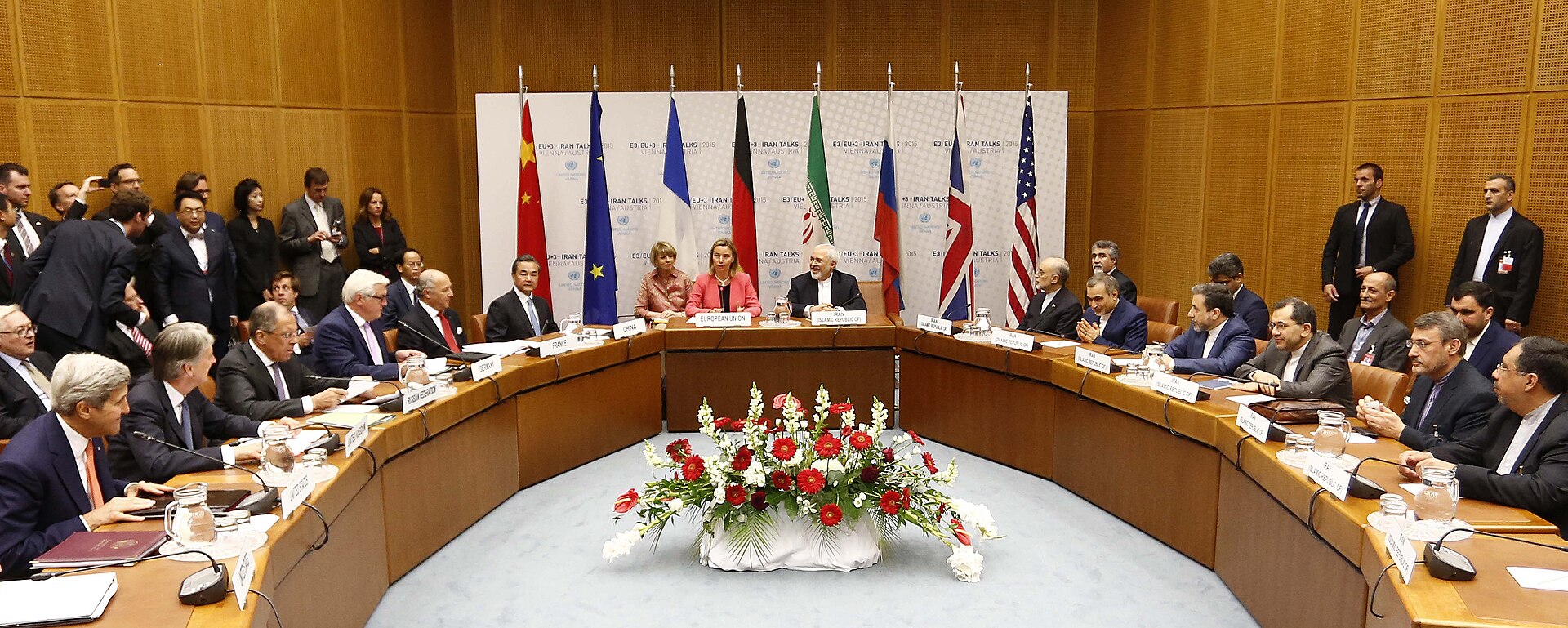
Iran set the exclusion as a precondition for participation, and Washington accepted it. The format mirrors the structure of the 2015 JCPOA nuclear negotiations, where Gulf states were similarly excluded from direct talks that reshaped their security environment. Saudi FM Prince Faisal bin Farhan maintained contact with Araghchi by phone but had no role in shaping terms, voting on proposals, or raising objections during the sessions themselves — a distinction that matters when the terms being discussed include Hormuz sovereignty, missile programmes, and enrichment caps that directly determine Saudi export capacity and defence posture.
What is Iran’s “authorization ceiling” and why does it affect the ceasefire extension?
Iran’s constitutional structure requires Supreme National Security Council decisions to be confirmed by the Supreme Leader under Article 176. Mojtaba Khamenei has not appeared publicly since mid-March 2026 — over 39 days of absence — meaning any ceasefire extension signed by Araghchi lacks the constitutional confirmation that would make it binding on the IRGC. Defence Minister Vahidi, who controls the IRGC chain of command, refused to join Round 1, demanded his preferred SNSC secretary be added, and insisted missiles be kept off the table. An extension without Vahidi’s buy-in and Khamenei’s confirmation gives any IRGC commander a legal pretext under Iranian law to treat it as advisory rather than binding.
How long would it take to reopen the Strait of Hormuz for full Saudi oil exports?
Mine clearance alone requires approximately 51 days based on the 1991 Kuwait benchmark, and the US Navy’s four Avenger-class mine countermeasure ships that were based in Bahrain were decommissioned in September 2025, leaving three Littoral Combat Ships in Asia as the nearest replacements. Even after clearance, the insurance and classification societies would need to reclassify the transit lanes, which historically adds 2-4 weeks of commercial delay. The practical minimum for full Saudi Hormuz throughput restoration is roughly three months from the date hostilities conclusively end — a date that depends entirely on the outcome of talks Saudi Arabia cannot attend.
Could Saudi Arabia unilaterally extend the ceasefire?
No. The ceasefire is a bilateral agreement between the United States and Iran, mediated by Pakistan. Saudi Arabia is a beneficiary of the ceasefire’s effects — reduced missile and drone attacks, partial Hormuz de-escalation — but is not a signatory, co-guarantor, or formal party. Riyadh can influence the environment through financial instruments (the Pakistan loan rollover), diplomatic channels (Araghchi’s phone calls to Faisal), and military posture (continued air defence operations), but it cannot extend an agreement to which it was never admitted. The Antalya Quad meeting of Turkey, Saudi Arabia, Pakistan, and others addressed the extension question from outside the negotiating room — as Iran simultaneously rejected extension and its own commander threatened the mediator.
Trump’s decision to travel to Islamabad to sign the deal in person — the first US presidential visit to Pakistan in twenty years — confirms the structural exclusion this article documented: Saudi Arabia funded the mediator, absorbed the strikes, and will watch the signing from outside the room. That exclusion and its full consequences for MBS are examined in detail here.
How Turkey converted that exclusion into a structural opportunity — convening the Antalya Quadrilateral as both a diplomacy forum and a post-war security architecture proposal — is examined in Turkey’s Antalya Security Pact: A Post-War Middle East Architecture Without Iran or Israel.