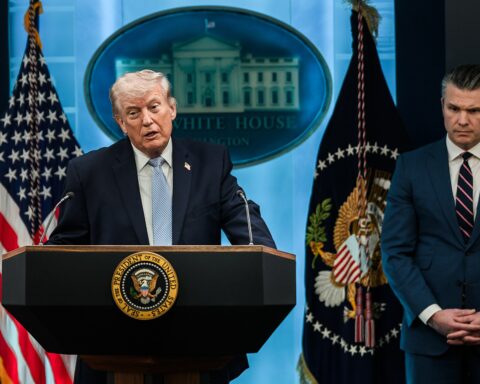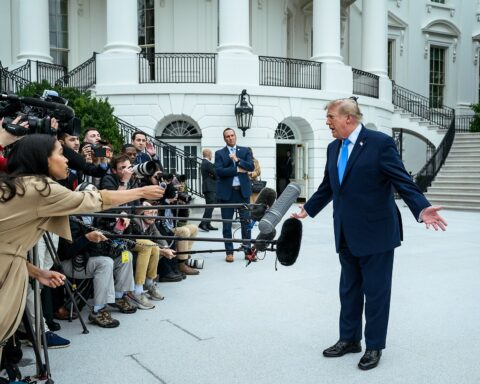

ISLAMABAD — President Donald Trump told Fox News on April 19 that Iran will get “blown up” if it refuses to sign a deal, then confirmed he is sending Jared Kushner back to Pakistan alongside Vice President JD Vance and envoy Steve Witkoff for a second round of talks beginning Monday evening — 72 hours before a ceasefire expires with no mechanism for extension. Kushner is not a government employee. He holds no Senate-confirmed title, files no financial disclosure, and manages a $6.16 billion fund built almost entirely on money from the governments whose wars he is negotiating.
“If they don’t sign this deal, the whole country is going to get blown up,” Trump told Fox News chief foreign correspondent Trey Yingst. In the same interview, he specified targets: “We’re preparing to hit them harder than any country has ever been hit before because you cannot let them have a nuclear weapon.” The language was not metaphorical. He had already named power plants and bridges in a previous statement. The delegation announcement, reported by Axios on the same day, turns the threat into a countdown.
Table of Contents
What Islamabad I Produced — and What It Didn’t
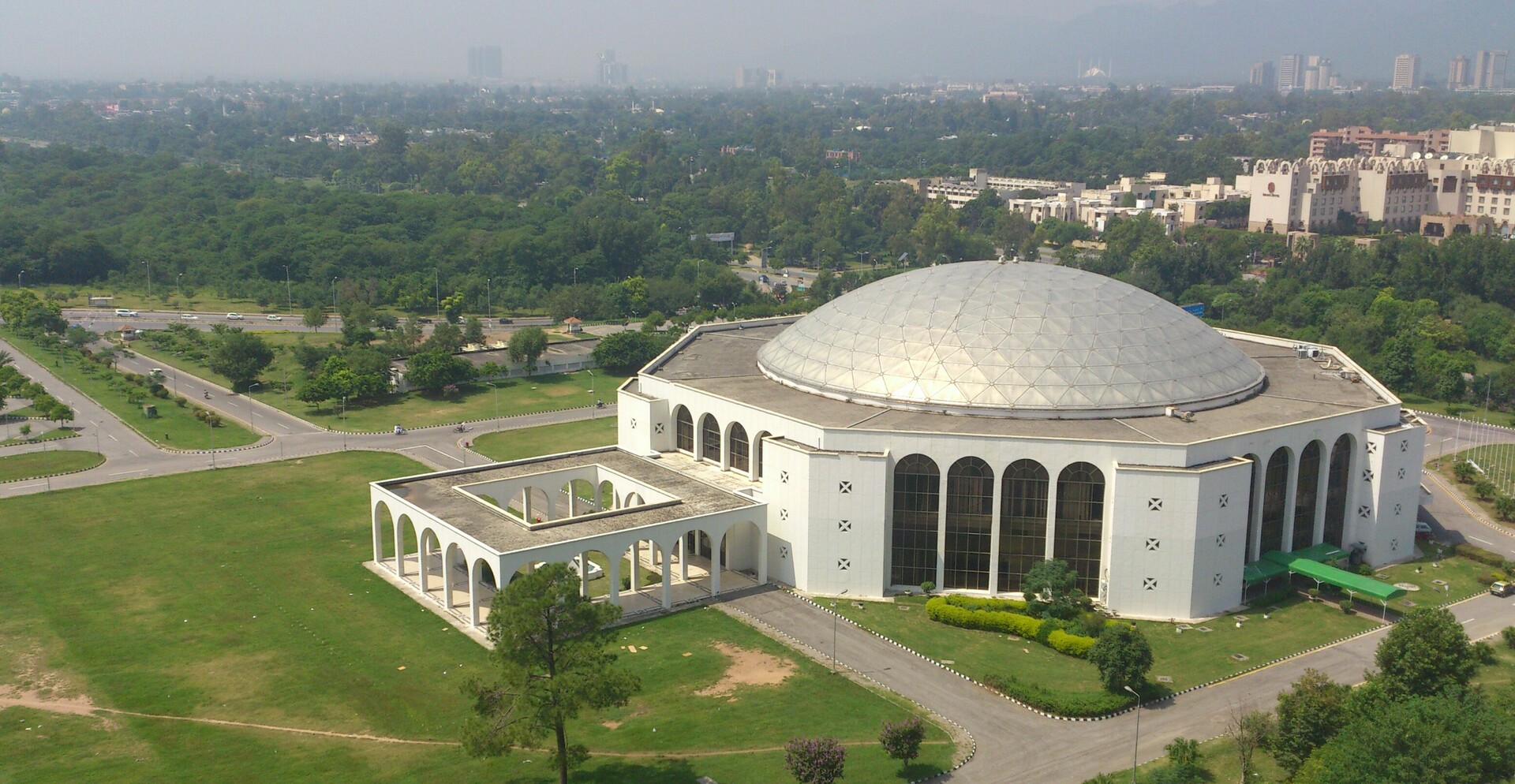
The first Islamabad round, held April 11–12, ran 21 hours across three sessions — the first indirect, the second and third face-to-face. It was the highest-level direct US-Iran encounter since the 1979 revolution. Vance sat across from parliamentary speaker Mohammad Bagher Ghalibaf, a former IRGC Aerospace Force commander, and Foreign Minister Abbas Araghchi. The US brought roughly 300 delegation members. Iran brought 70.
Negotiators agreed on most of a 10-point ceasefire framework, according to multiple reports compiled by Al Jazeera and confirmed by Pakistani officials. The two points they could not close were the ones that mattered: Iran’s nuclear program and the status of the Strait of Hormuz. The US proposed a 20-year enrichment moratorium. Iran countered with five years. Iran’s broader demands included an end to US-Israeli attacks on all fronts — including Lebanon — war reparations, and international recognition of Iranian sovereignty over Hormuz.
Vance departed with a statement calibrated to sound like an offer and read like a warning: “We leave here with a very simple proposal: a method of understanding that is our final and best offer.” He also set a clear threshold: “The simple fact is that we need to see an affirmative commitment that they will not seek a nuclear weapon, and they will not seek the tools that would enable them to quickly achieve a nuclear weapon.” Iran’s HEU stockpile stood at 440.9 kilograms enriched to 60% as of June 2025, the last time the IAEA had access. Tehran terminated that access on February 28, 2026.
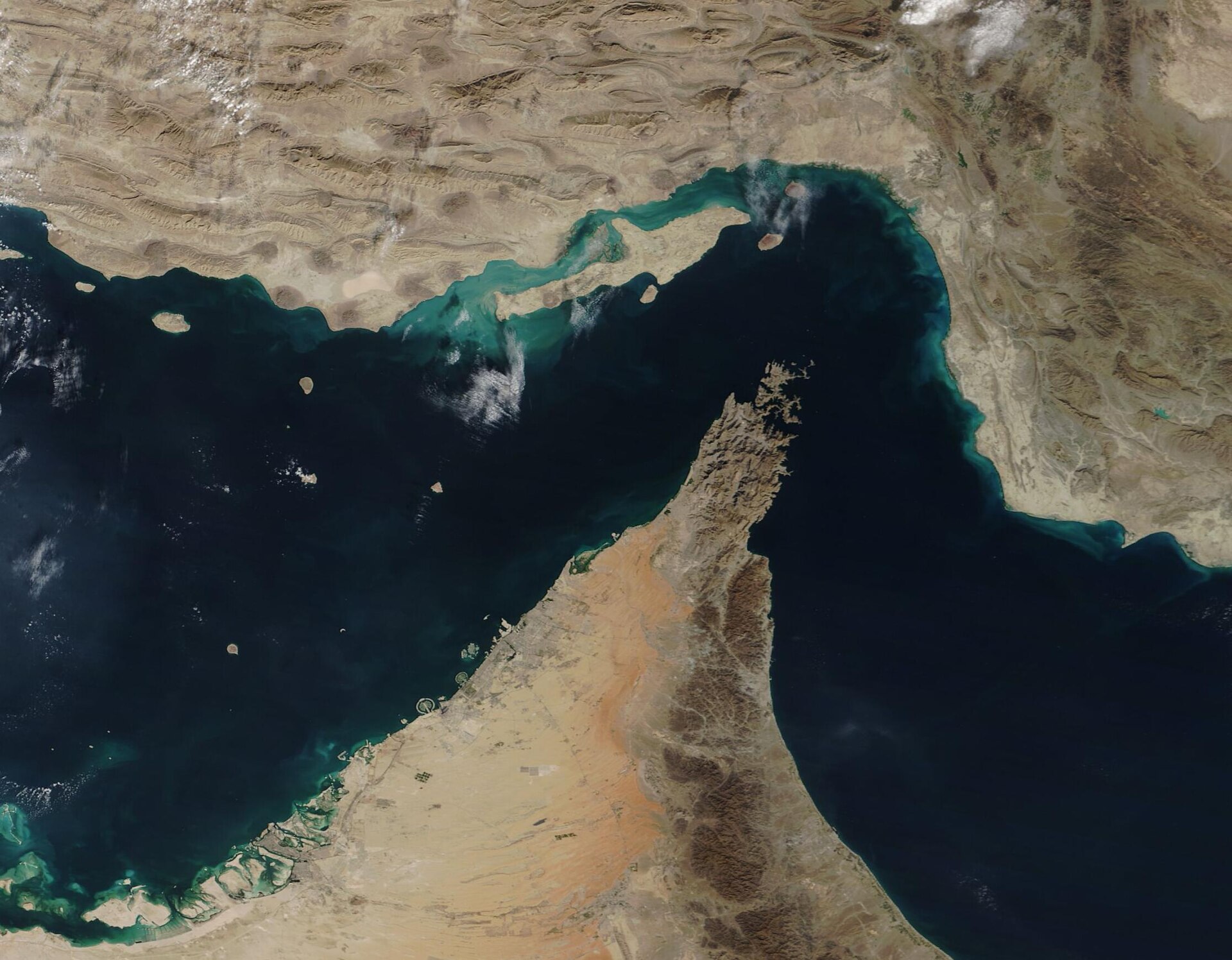
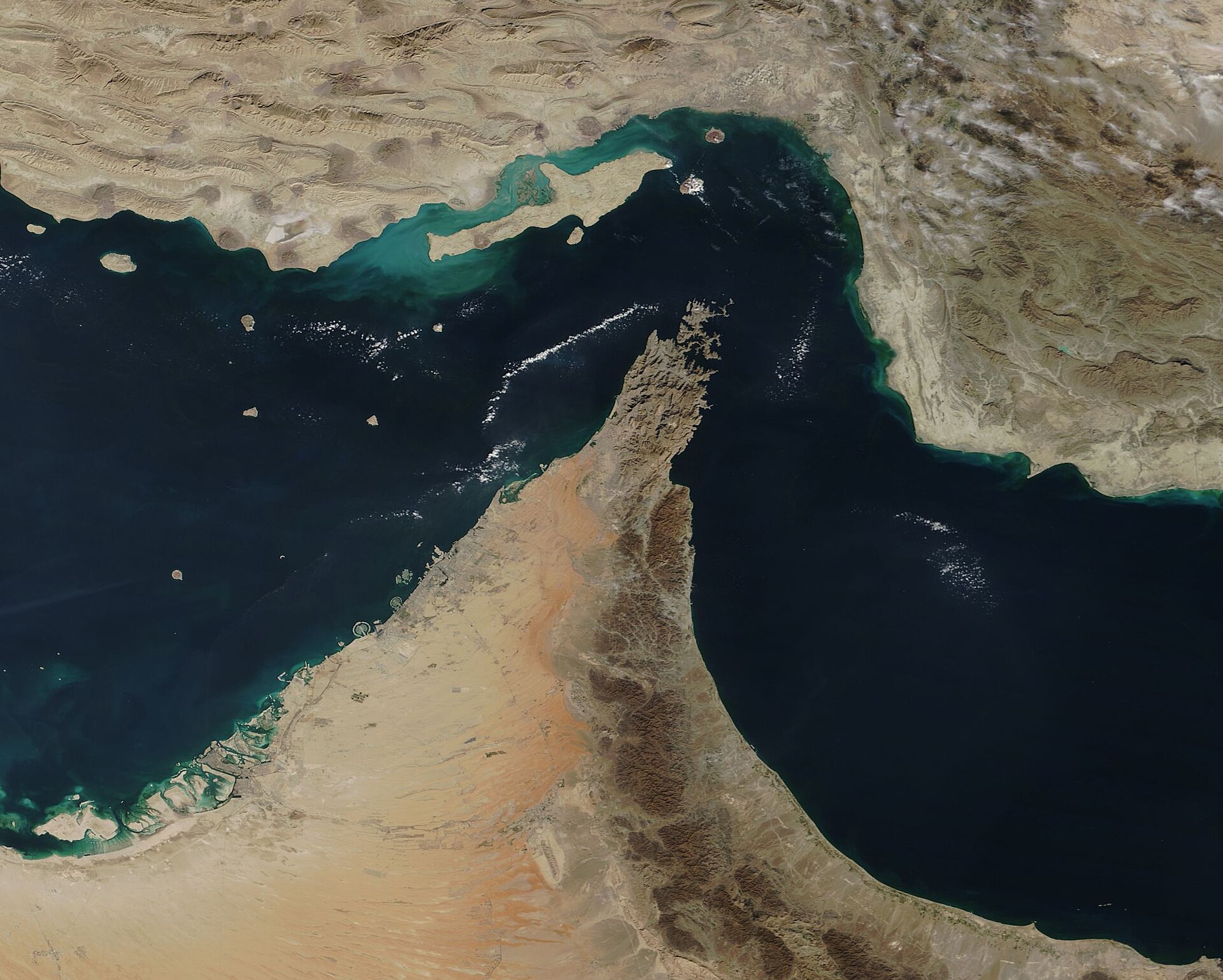
Within 24 hours of Islamabad I collapsing, the US imposed a naval blockade on Iranian ports. Within six days, the IRGC re-closed the Strait of Hormuz and declared the entire Persian Gulf a targeting zone. The ceasefire held in name. In practice, each side escalated around it.
The Middle East briefing 3,000+ readers start their day with.
One email. Every weekday morning. Free.
Why Is Kushner at the Table?
Kushner’s formal designation within the Trump administration is head of the “Board of Peace,” a body that covers Gaza, Ukraine, and Iran. It has no public mandate, no financial disclosure requirement, and no legal framework establishing its authority, according to reporting by CNN. He is not a Senate-confirmed official. He is not a registered diplomat. He is a private citizen with a portfolio that overlaps with the Secretary of State, the Vice President, and the National Security Advisor — and a fund that overlaps with the treasuries of the states on every side of this war.
His presence in Islamabad I was not ceremonial. Pakistani security officials told Al Majalla that Vance “built a rapport” with Iranian officials during the talks, but that “his hands were tied in the presence of Kushner and Witkoff.” That assessment — from the host country’s security services — describes a dynamic in which the person with the strongest negotiating relationship was constrained by the person with the strongest financial relationships.
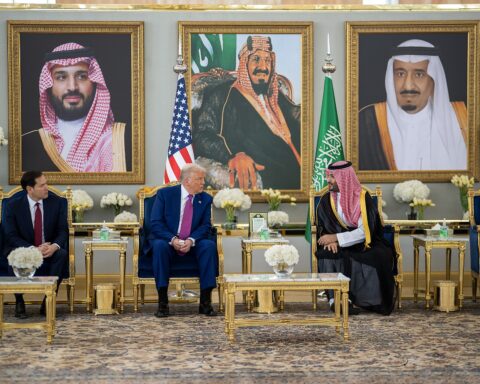
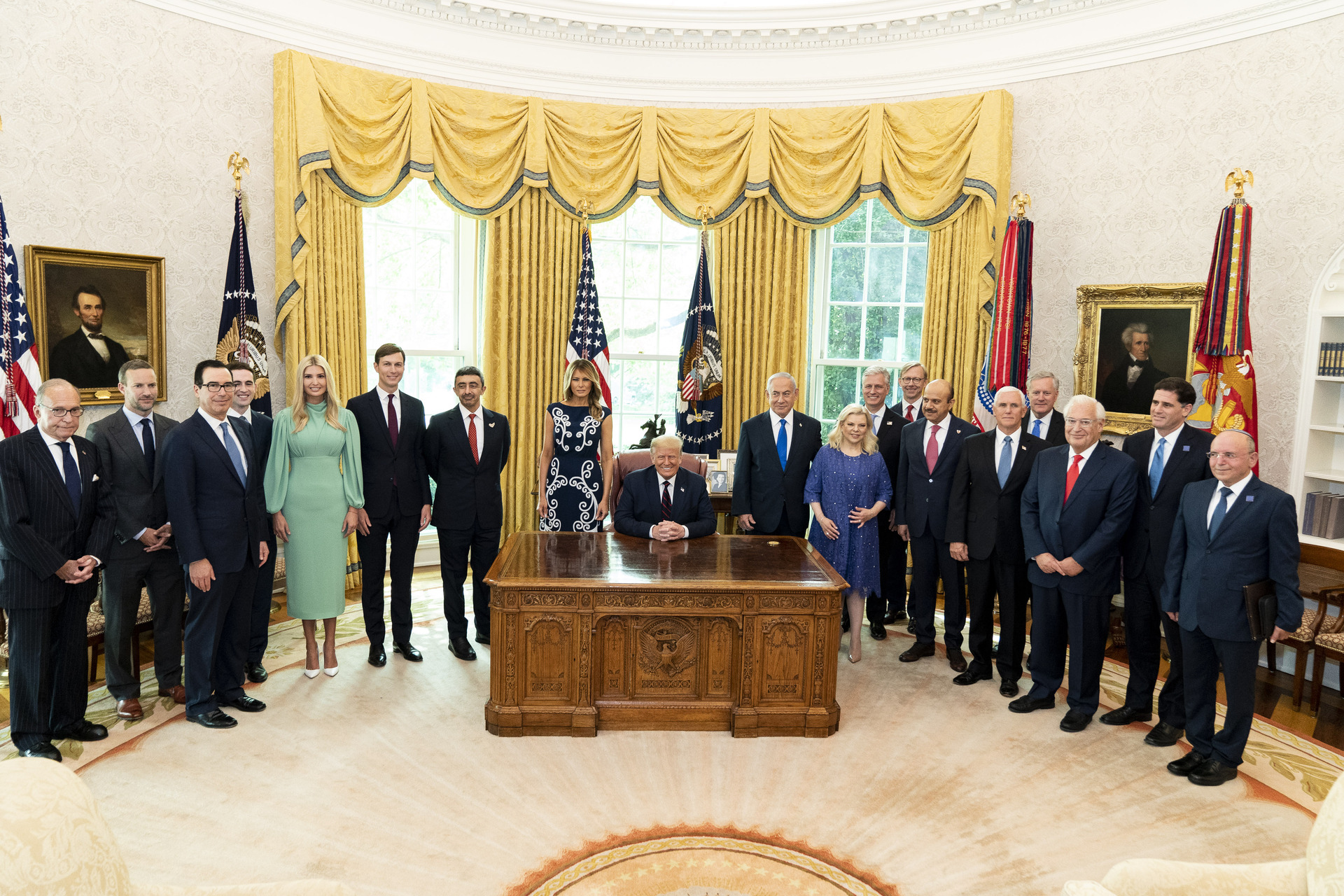
Kushner is the architect of the Abraham Accords, the 2020 normalization agreements that brought Israel together with the UAE, Bahrain, Sudan, and Morocco. The one country that did not sign was Saudi Arabia — the prize that would transform the Accords from a diplomatic achievement into an economic corridor. Trump made that ambition explicit on March 27 at the Future Investment Initiative summit in Miami, addressing PIF governor Yasir Al-Rumayyan directly: “I hope you’re going to be getting into the Abraham Accords finally. It’s time now.”
The $2 Billion Conflict Iran Already Cited
After leaving government in January 2021, Kushner founded Affinity Partners. Within months, Saudi Arabia’s Public Investment Fund committed $2 billion — what the Senate Finance Committee described as the largest known sovereign wealth allocation to a fund managed by a former senior government official in US history. That committee also estimates Kushner will collect $137 million in management fees from PIF alone by August 2026. That month is not arbitrary: it is when PIF gains contractual renegotiation or withdrawal rights from Affinity.
The fund’s composition tells its own story. A letter from House Judiciary Committee Democrats dated April 16, 2026, stated that Affinity Partners holds approximately $6.16 billion in assets under management, of which 99% — roughly $6.10 billion — comes from foreign nationals. The primary backers are Saudi Arabia, the UAE, and Qatar. While negotiating with Iran in Islamabad, Kushner was simultaneously pursuing a fresh capital raise of at least $5 billion from those same Gulf sovereign wealth funds, according to reporting by the New York Times and IBTimes UK.
Rep. Jamie Raskin, ranking member of the House Judiciary Committee, opened a formal investigation into Kushner on April 17 — two days before the Islamabad II delegation was announced. Raskin’s letter designated Kushner as “U.S. Special Envoy for Peace” and cited what he called an “incurable conflict of interest.” The letter demanded compliance by April 30. The structural problem Raskin identified is not subtle: the chief US dealmaker’s largest investor is a government whose oil revenue would be directly affected by any sanctions relief offered to Iran, and that same investor holds renegotiation rights over Kushner’s fund four months from now.
A deal that lifts Iranian oil sanctions would bring Iranian crude back onto the global market, depressing prices and undercutting Saudi revenue at a moment when Saudi production has already crashed 30% from pre-war levels. A deal that maintains maximum pressure on Iran preserves Saudi market share and PIF’s capacity to sustain its commitment to Affinity. Kushner’s financial incentives and Iran’s bottom line are structurally opposed — and Iran knows it.
Iran Doesn’t Want Kushner in the Room. He’s Coming Anyway.
Iran told CNN it no longer wants to engage with Kushner or Witkoff and prefers dealing with Vance alone. Pakistani security officials, speaking to Al Majalla, went further: Iranian negotiators view Kushner and Witkoff as representing Israeli interests, not American ones. The complaint is not personal. It is structural. Kushner built his post-government career on a thesis — Saudi-Israeli normalization unlocking Gulf capital for an Israeli-Arab investment corridor — that requires Iran to be isolated, not rehabilitated.
Ghalibaf, speaking on April 19, framed Iran’s position in terms that acknowledged the impasse without closing the door: “We have goodwill, but we do not have trust in the opposite party.” He had been more specific days earlier: “Twice within less than a year, in the middle of negotiations, and despite the Iranian side’s good faith, they attacked us.” Iran’s state-aligned Tasnim news agency set conditions on April 18: “Americans’ abstention from excessive demands is a fundamental condition for continuation of the talks.”
The internal Iranian dynamic compounds the problem. President Masoud Pezeshkian publicly accused SNSC secretary Ali Akbar Ahmadian’s predecessor Ahmad Vahidi and Khatam al-Anbiya commander Gholamali Abdollahi of wrecking Islamabad I by deviating from the delegation’s mandate. But under Article 110 of Iran’s constitution, the president has zero command authority over the IRGC. Mojtaba Khamenei has been operating as de facto Supreme Leader for over 40 days, communicating only by audio. The Iranian side of the table is fractured between a civilian government that wants to negotiate and a military command that has veto power over any agreement the civilians reach.
Kushner is returning to negotiate with a government that has told international media it does not want him there, on behalf of a president who has threatened to destroy the country if talks fail, while managing a fund that profits from the failure of the deal he is supposed to close. Trump is sending him anyway.
Saudi Arabia’s Absent Presence
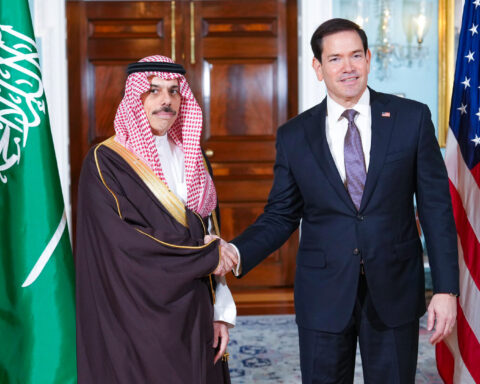
Saudi Arabia was formally excluded from Islamabad I. It is not a party to the US-Iran bilateral, and no Saudi official has been announced for Islamabad II. Saudi FM Prince Faisal bin Farhan received a call from Araghchi on April 13 — the same day the US naval blockade took effect — suggesting a parallel diplomatic channel that runs outside the Islamabad framework. But Saudi Arabia is not at the table where its future is being negotiated.
The exclusion is formal. The inclusion is financial. Kushner’s Affinity Partners is built on Saudi capital, structured around Saudi-Israeli normalization, and timed to a Saudi renegotiation deadline. If Islamabad II produces a framework that includes post-ceasefire economic reconstruction corridors — investment zones, infrastructure commitments, energy transition funds — the architecture maps onto Affinity’s stated business model. Saudi Arabia would not be signing a deal in Islamabad. It would be financing the deal’s implementation through a fund managed by the man who negotiated it.
MBS cannot sign onto normalization while Iranian missiles are still falling on the Eastern Province and Saudi production remains at a wartime floor. But a Kushner-structured deal that defers normalization to a post-ceasefire investment phase — packaging it as economic development rather than diplomatic recognition — maps exactly onto how Affinity was designed to work. The question is whether Iran will accept a peace architecture in which the dealmaker’s largest investor is the country most threatened by Iranian economic rehabilitation. This structural exposure extends beyond Islamabad: MBS’s Lebanon insertion strategy produced the same asymmetry — diplomatic credit for a ceasefire provision that Israel rendered unenforceable within 24 hours via the Yellow Line, and Saudi Arabia has no tool to reverse it.
Pakistan, the host, has its own entanglement. Army Chief Asim Munir visited Khatam al-Anbiya headquarters on April 16, engaging directly with the IRGC command structure that Pezeshkian has publicly accused of sabotaging the first round. Pakistan is simultaneously managing an $11 billion Saudi financial dependency and positioning itself as Iran’s nuclear guarantor — a dual role that only works as long as neither patron examines it too closely.
What Happens in 72 Hours
The ceasefire expires on April 22. No extension mechanism exists. The Soufan Center has confirmed there is no procedural path to roll it over without a new agreement. Trump’s ultimatum — delivered on camera, naming specific infrastructure categories — establishes a public commitment to escalation that would be politically costly to walk back. Iran’s counter-position, articulated through Tasnim and reinforced by Ghalibaf’s “no trust” statement, establishes an equally public refusal to negotiate under threat.
The gap between the two sides on enrichment alone — 20 years versus five — represents a difference so large that splitting it would satisfy neither. The Hormuz deadlock is worse: the US position treats freedom of navigation as non-negotiable under UNCLOS, while Iran’s position treats sovereignty over the strait as a precondition for talks. The IRGC has declared the entire Persian Gulf a targeting zone and CENTCOM has deployed A-10s and Apaches to turn back vessels — both sides are enforcing incompatible versions of the same waterway.
That enforcement escalated to its most concrete form on April 19: USS Spruance fired on and boarded the Iranian-flagged TOUSKA in the Gulf of Oman, the first physical seizure of an Iranian vessel since the blockade began. Iran immediately re-closed Hormuz and rejected further talks, with 72 hours left on the ceasefire clock. Iran’s IRNA called the round 2 announcement a “media game” — framing the US delegation flight to Islamabad as a performance of diplomacy rather than its substance, as Vance, Witkoff, and Kushner arrived at what Tehran’s state media called an empty table.
Parliament Speaker Ghalibaf formalised Iran’s Hormuz position further on April 19 by framing blockade removal as a reciprocal precondition — not a negotiating chip. Why that reciprocity doctrine makes the April 22 ceasefire extension structurally impossible is analyzed here.
Kushner arrives in this environment not as a diplomat empowered to make concessions, but as a dealmaker whose financial structure requires a specific kind of outcome: one that preserves Gulf capital flows, maintains Saudi leverage, and opens a normalization corridor that his fund is positioned to monetize. Whether that structure is compatible with a deal Iran can accept is the question Islamabad II will answer. The 72-hour clock started on Saturday.
“We leave here with a very simple proposal: a method of understanding that is our final and best offer.”
— JD Vance, departing Islamabad I, April 12, 2026 (NBC News)
| Metric | Figure | Source |
|---|---|---|
| Ceasefire expiry | April 22, 2026 | Soufan Center |
| Islamabad I duration | 21 hours / 3 rounds | Al Jazeera |
| US enrichment demand | 20-year moratorium | Al Jazeera |
| Iran enrichment counter | 5-year moratorium | Al Jazeera |
| Iran HEU stockpile (60%) | 440.9 kg | IAEA (June 2025, last access) |
| Affinity Partners AUM | $6.16 billion | House Judiciary Committee |
| PIF investment in Affinity | $2 billion | Senate Finance Committee |
| Kushner est. PIF fees by Aug 2026 | $137 million | Senate Finance Committee |
| Affinity AUM from foreign nationals | ~99% | House Judiciary Democrats |
| Saudi production (March 2026) | 7.25M bpd (down 30%) | IEA |
FAQ
What is the “Board of Peace” Kushner leads?
It is an informal body within the Trump administration that oversees diplomatic efforts on Gaza, Ukraine, and Iran. Unlike the National Security Council or State Department roles, the Board of Peace has no statutory authority, no Senate confirmation requirement, and no mandatory financial disclosure. Kushner’s role on it was announced by Trump but has no published executive order or legal charter defining its powers or limitations, according to CNN reporting.
Has Affinity Partners disclosed its specific investments?
No. Unlike publicly traded funds, Affinity Partners is a private investment firm with no obligation to disclose its portfolio. The House Judiciary Committee’s April 16 letter noted that the fund’s $6.16 billion AUM is 99% sourced from foreign nationals but did not itemize where the capital has been deployed. The simultaneous $5 billion capital raise from Gulf sovereign wealth funds was reported by the New York Times and IBTimes UK but has not been confirmed by Affinity Partners.
Could the ceasefire be extended past April 22 without a new deal?
No procedural mechanism for extension exists within the current framework, according to the Soufan Center. Any continuation requires a new agreement. What makes April 22 harder to slip is a civilian dimension neither side has publicly addressed: Indonesia’s first Hajj departure cohort — 221,000 pilgrims — is scheduled to leave on the same day the ceasefire expires. Pakistan brokered the original ceasefire on April 8 as an immediate stopgap, not a durable framework, and it contains no rollover clause.
What happened to the 10-point ceasefire framework from Islamabad I?
Negotiators reportedly reached agreement on most of the 10 points. The two unresolved items — Iran’s nuclear program and the status of the Strait of Hormuz — are the two issues on which the gap is widest. On enrichment, the gap is 15 years: the US demands a 20-year moratorium, Iran counters with 5. On Hormuz, the positions are not on the same axis: the US treats freedom of navigation as a legal given under UNCLOS, while Iran treats sovereignty over the strait as a prerequisite that must be acknowledged before any other point can be finalized. The broader regional architecture that might survive any deal remains undefined.
Why does Iran prefer Vance over Kushner and Witkoff?
Iranian officials told CNN they view Kushner and Witkoff as representing Israeli interests rather than American ones — a perception rooted in Kushner’s role as Abraham Accords architect and his financial ties to Gulf states strategically aligned with Israel. Vance is seen differently: Pakistani security officials told Al Majalla he developed a working rapport with Iranian negotiators that Kushner’s presence constrained. The operational consequence is that the US official Iran is most willing to engage is also the one with the least financial stake in the outcome — while the one with the deepest Gulf financial ties holds the most influence over the deal’s structure. The broader Saudi indirect financing architecture behind Pakistan’s mediating role — and how it gives Riyadh effective veto power over the ceasefire framework Kushner is structuring — is analyzed in MBS Has No Seat at the Table and Controls the Table Anyway.