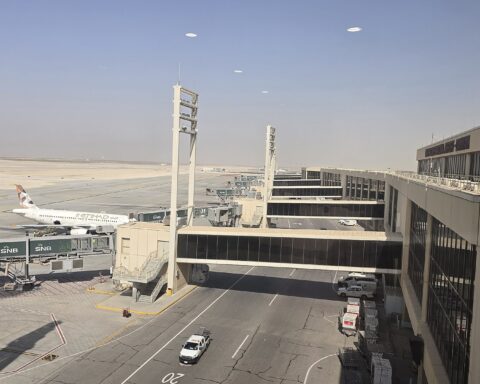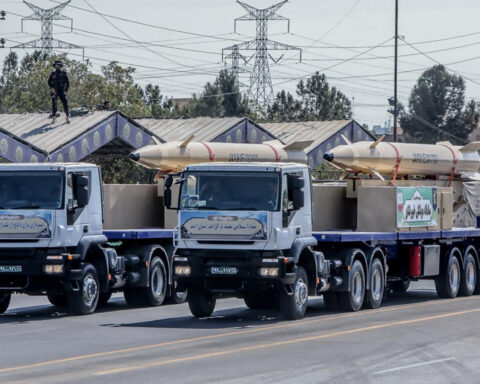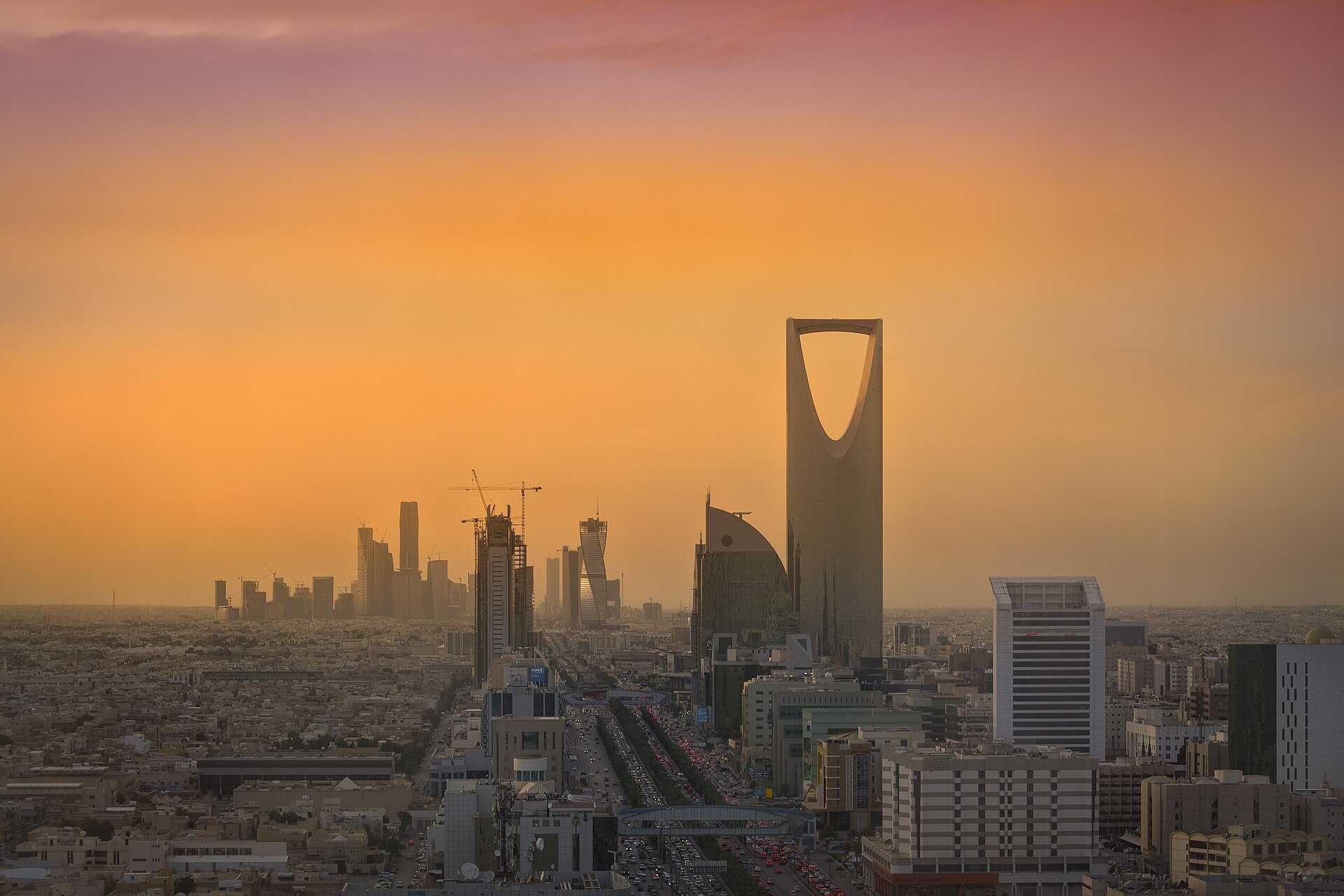

RIYADH — The second EU-GCC summit was due to open here on 24 October, with the Future Investment Initiative following two days later, but Houthi ballistic missiles reached Riyadh before the delegates could, and both events have been postponed with no new dates set. In October alone, the Saudi-led coalition says Houthi forces have fired at least 14 ballistic missiles and more than 60 armed drones at the kingdom — a campaign that killed at least 12 people at King Khalid International Airport on 10 October, wounded more than 300, and has not stopped.
On 23 October, coalition spokesman Major General Turki al-Maliki said Saudi air defences “intercepted and destroyed a ballistic missile launched by the Houthis towards Riyadh shortly after 4am,” alongside two drones aimed at the southern region destroyed around 1am. Civil Defence issued alerts for Riyadh, Abha, Khamis Mushait and Najran before confirming the danger had passed, with no casualties or damage reported. GCC Secretary-General Jasem Al Budaiwi had already pulled the summit on 15 October, citing “Houthi attacks and the suspension of flights at King Khalid International Airport,” and the FII — Riyadh’s flagship investment conference, launched in 2017 — has been pushed to 2027.
Table of Contents
- What Forced the EU-GCC Summit Out of Riyadh?
- The October Missile Campaign
- How Did Houthi Missiles Break Through on 10 October?
- FII Postponed to 2027
- What Does €165.6 Billion in EU-GCC Trade Look Like Under Missile Fire?
- The Coalition That Cannot Protect the Calendar
- Can Riyadh Still Function as a Diplomatic Capital?
- Frequently Asked Questions
What Forced the EU-GCC Summit Out of Riyadh?
The EU-GCC summit — only the second in the partnership’s history, after the inaugural meeting in Brussels on 16 October 2024 — was postponed on 15 October, nine days before it was due to start. Al Budaiwi’s explanation was unusually blunt for Gulf diplomatic language: “Houthi attacks and the suspension of flights at King Khalid International Airport.” The EU Council confirmed the postponement the same day, calling the partnership “of great strategic importance to both regions,” a formula that said everything about how much Brussels valued the relationship and nothing about when it planned to return.
The House of Saud Daily Briefing
Saudi Arabia's news in 3 minutes, every morning. Free. See today's issue
“Houthi attacks and the suspension of flights at King Khalid International Airport.”Jasem Al Budaiwi, GCC Secretary-General, on the summit postponement — The National, 15 October 2026
No new date has been set, and the biennial cadence the leaders agreed to at Brussels has already been broken by a war the EU is not fighting and has not been asked to join. Given that three-quarters of EU imports from the GCC are fuels, according to the European Commission, the postponement defers discussions that directly affect European energy supply at a moment when both the Strait of Hormuz and the Red Sea are contested. The European Aviation Safety Agency had already widened its Saudi airspace warning, per Fortune, making travel arrangements for any European summit delegation an explicit safety concern raised by Europe’s own aviation regulator.
The postponement came after a week in which the coalition intercepted two ballistic missiles aimed at Riyadh on 8 October, a strike on the airport killed and wounded hundreds on the 10th, and interceptor fire lit up the sky over the capital again on the 14th. KKIA flights had been repeatedly suspended, and the Europeans were not being asked to attend a summit in a war zone in the abstract — they were watching the war arrive, in real time, at the airport they would have had to fly into. The summit’s cancellation may have been the GCC’s call, but the conditions that made it unavoidable were visible to every government with a flight tracker and a news feed.
The October Missile Campaign
The coalition’s own figures, reported by Arab News on 23 October, put the October toll at a minimum of 14 ballistic missiles and more than 60 armed drones fired at Saudi Arabia. Saudi investigators told the AP that the munitions “flew more than 1,000 km to reach Riyadh,” a distance that places the capital within range of Houthi launch sites deep inside Yemen with no geographical barrier between the launchers and the city that hosts the kingdom’s ministries, its stock exchange and, until this month, its diplomatic calendar. The 23 October interception — the latest confirmed engagement — came at 4am, roughly 72 hours before the FII was supposed to welcome its first delegates.
| Date | Target | Outcome | Source |
|---|---|---|---|
| 6–7 Oct | KKIA, Abha | 3 killed, 36 wounded | BBC, 8 Oct |
| 8 Oct | Riyadh (2 ballistic missiles) | Intercepted by coalition | AP via NY1, 8 Oct |
| 10 Oct | KKIA | 12–13 killed, 308–309 wounded | Al Jazeera / BBC, 10–11 Oct |
| 11 Oct | KKIA Terminal 4; Dammam airport | 1 killed, 11 wounded | CNN, 11 Oct |
| 14 Oct | Riyadh; Dhahran (Aramco compound) | Coalition: intercepted; limited fire at Aramco | Al Jazeera / BBC, 14 Oct |
| 22 Oct | Southern region, Riyadh | 11 drones + 1 ballistic missile intercepted | Bernama, 22 Oct |
| 23 Oct | Riyadh (ballistic missile); southern region (2 drones) | Intercepted; no damage reported | Arab News, 23 Oct |
On the Houthi side, military spokesman Yahya Saree claimed a “direct and accurate hit” on KKIA on 14 October — the coalition said the missile was intercepted and destroyed — and on 22 October, Houthi media claimed four operations in 48 hours targeting the Saudi Defence Ministry headquarters, Dammam airport, an Aramco facility in Yanbu and Abha airport, according to This is Beirut, none of which were independently verified. No Houthi statement claiming the 23 October Riyadh missile has been published. The table shows a campaign in which the coalition’s defences have mostly held — the devastating exception being 10 October — but in which the volume and reach of Houthi fire has not diminished.
The escalation since September has been vertical rather than incremental. When the Houthis struck southern cities — Khamis Mushait, Abha, Taif — in mid-September, wounding 13 civilians according to Khaleej Times, the attacks appeared to be a continuation of the border-zone harassment that has characterised the war since the 2022 truce collapsed. When smoke rose near KKIA on 19 September, Reuters reported what appeared to be the first Houthi strike on Riyadh in the current escalation — a threshold that, once crossed, was never restored. By October the capital was absorbing ballistic missile fire on a near-weekly rhythm, and on 10 October the Houthis demonstrated they could penetrate the defences protecting it.
How Did Houthi Missiles Break Through on 10 October?
Saudi authorities began investigating the breach almost immediately, and the picture that emerged — reported by the AP via PBS NewsHour on 13 October, citing officials briefed on the probe — pointed to a deliberate saturation attack designed to exploit how air defence systems prioritise targets. The Houthis first launched multiple drones, which forced Saudi radars and interceptor batteries to track and engage a swarm of slower objects, then fired a combination of cruise and ballistic missiles while the defensive network was occupied with the initial wave. ABC News Australia confirmed the same technique. The same AP briefing established that the munitions had covered more than 1,000 km — a distance traversed in minutes by a ballistic warhead and in hours by a slower cruise missile — so the defending batteries were simultaneously tracking threats arriving at different speeds, altitudes and trajectories, with no gap between waves sufficient to reset and reload.
Al Jazeera, reporting on 11 October, described the October campaign as evidence of “the limitations of even the most high-tech air defences” and characterised the escalation as a “Houthi capability shift.” The saturation technique — cheap drones as the opening wave, ballistic missiles as the follow-on — inverts the cost equation that missile defence depends on, because the defender must expend expensive interceptors against cheap decoys before the more dangerous warheads arrive. The casualty toll from the 10 October KKIA strike is itself contested between the two principal English-language sources: Al Jazeera reported 12 killed and 309 wounded, while the BBC, after confirming the death of an Indian victim, put the figure at 13 killed and 308 injured.
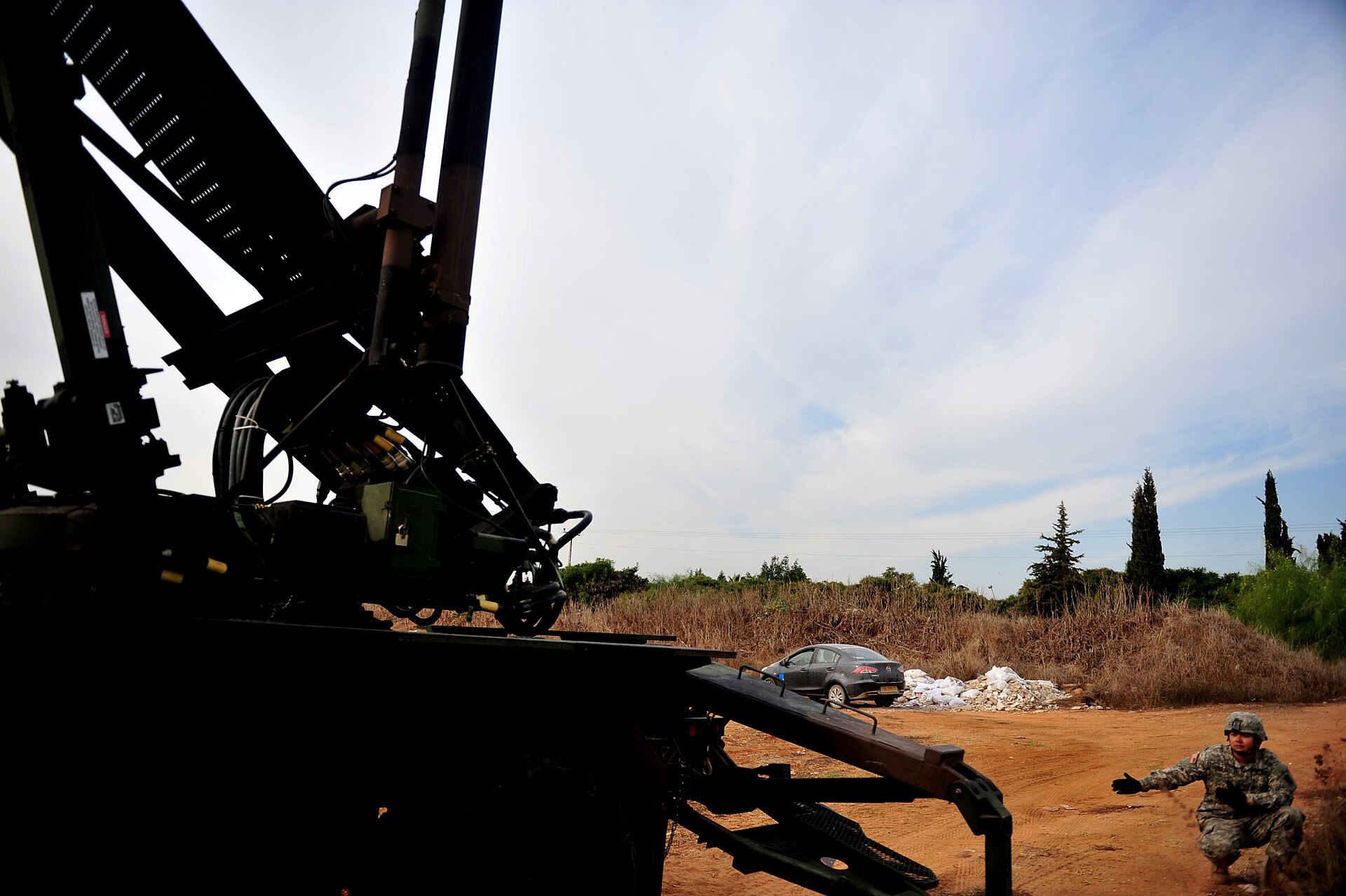
The technique matters because it explains the gap between “the missile was intercepted” and “the city is safe” — a gap the EU summit planners and the FII organisers have now measured in postponed dates. Friday’s successful shoot-down does not guarantee the next one will succeed, and the 10 October strike demonstrated that the Houthis can overwhelm the defences protecting Saudi Arabia’s busiest civilian airport from launch sites more than 1,000 kilometres away. In a city hosting a multilateral summit, one successful penetration would produce consequences far beyond the immediate blast.
FII Postponed to 2027
The Future Investment Initiative — known informally as “Davos in the Desert” — was scheduled for 26–29 October in Riyadh. Gulf News reported on 19 October that it had been postponed to 2027, and Al Jazeera confirmed the delay on 20 October. The conference, launched in 2017 as the flagship event of Saudi Arabia’s economic diversification drive, was designed to draw the global investment community to the kingdom’s capital every autumn and to serve as the public face of Vision 2030’s ambitions. No official reason for the postponement has been stated, but the timing — five days after the EU-GCC summit was pulled, nine days after the KKIA strike that killed at least 12 — requires no explanation.
The New York Times, reporting on 10 October, said the airport strikes “threaten Riyadh’s events calendar,” and the FII postponement confirmed that assessment in the bluntest terms available. The conference is not the only casualty of the October campaign: Saudi Arabia had already postponed National Day fireworks and drone shows indefinitely in September, according to Khaleej Times. The World Petroleum Congress began in Riyadh on 11 October, one day after the deadliest airport strike, per CNN, though reporting on its in-person attendance has been sparse — a silence that may reflect the difficulty of hosting a trade show while missiles are being fired at the host city.
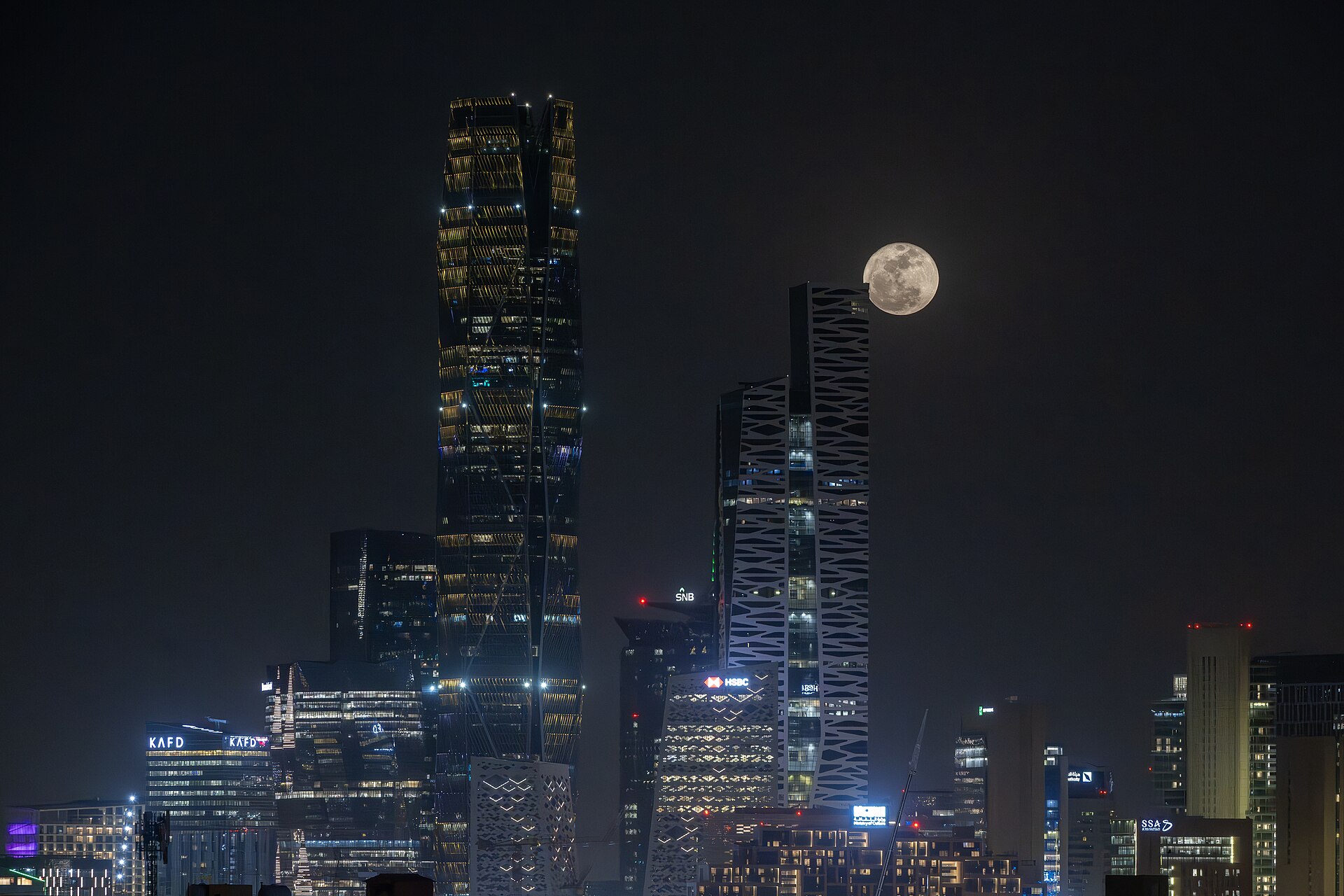
For a kingdom that has spent billions making Riyadh a destination — the metro, the KAFD financial district, the entertainment megaprojects that were supposed to attract exactly the kind of international visitors now being told to stay away — the loss of two flagship events in a single month is not a scheduling inconvenience. The pre-budget statement projected a 2026 deficit of 245 billion riyals, up from a budgeted 165 billion, with real GDP forecast to fall 3.6 per cent on a 21.8 per cent drop in oil activities, according to Reuters via Zawya. The events calendar was supposed to be the counterweight: the visible proof that Riyadh remained open for business even as the war raged at its borders and, increasingly, overhead.
What Does €165.6 Billion in EU-GCC Trade Look Like Under Missile Fire?
EU-GCC trade reached €165.6 billion in 2025, with fuels making up more than 75 per cent of EU imports from the bloc, according to European Commission figures reported by The National. Those numbers make the relationship one of the EU’s most energy-dependent trade corridors, a dependency that has grown rather than shrunk as the continent adjusts to the loss of Russian pipeline gas. The summit was supposed to advance cooperation on energy security, trade facilitation and connectivity — the priority areas agreed at Brussels in 2024. Instead, the only deliverable from the October meeting is a press release confirming it did not happen.
The gap between European rhetoric and European action defines this section of the crisis. Brussels has called the partnership strategically important, committed to a biennial summit cadence, and watched the kingdom that accounts for a substantial share of EU energy imports take repeated ballistic missile fire — and the response was to postpone and set no new date. France confirmed troops, radars and air defences for Yanbu in September, according to Al Jazeera, and Britain sent an RAF Voyager tanker, per The National — real military contributions, but directed at specific operational fronts rather than at the strategic question of whether Riyadh itself can function as a venue for the diplomacy that the trade relationship requires.
The trade volumes are resilient because they reflect physical dependencies — European power plants need Gulf gas, and European consumers need crude at a manageable price — but the infrastructure through which that trade moves is now contested at both ends. The Strait of Hormuz has been partially blockaded by Iranian mining since July, reducing tanker transits to a fraction of their pre-war level, and the Red Sea remains contested, rerouting shipping around the Cape of Good Hope and adding weeks to every GCC-European cargo at considerable additional cost. The summit’s agenda item on “energy and connectivity,” agreed at Brussels in October 2024, was designed to address in a single institutional session the twin chokepoints that are actively making this trade more expensive and more fragile. The meeting ended before it began, and the chokepoints have not moved.
Iran’s foreign minister Abbas Araghchi offered on 11 October to “facilitate dialogue between Saudi Arabia and Yemen,” per the BBC — a proposal that came from the patron of the group firing the missiles and that Riyadh has not publicly accepted. Iran’s own negotiating position, which demanded the US lift its counter-blockade of Iranian ports and release approximately $12 billion in frozen assets in exchange for reopening the Strait of Hormuz according to Al Jazeera, has been rejected by Washington; Trump said on 8 October that the Hormuz blockade remains in “full force,” per The National. The diplomatic architecture that might resolve the Houthi campaign therefore does not exist, and the summit that was supposed to build institutional links between Europe and the Gulf has been one of the first casualties of that absence. For Saudi Arabia, which has built a non-American security framework since signing the Makkah joint defence agreement on 7 August, the European absence after the October campaign gives a familiar disappointment a new specificity: a summit that was supposed to happen, a date that was supposed to matter, and a trade relationship that will continue on its own momentum without the institutional architecture both sides designed to manage it.
The Coalition That Cannot Protect the Calendar
The military response to the Houthi campaign has been large and, by the narrow metric of interception rates since 10 October, largely effective. Pakistan has deployed approximately 8,000 troops to Saudi Arabia, according to Reuters, including JF-17 aircraft, drone squadrons and an HQ-9 air defence system financed by Riyadh. Egypt’s President Sisi asked parliament to authorise troop support for the kingdom, per Khaleej Times, joining a coalition that already includes Turkish military personnel deployed under the Makkah pact. Saudi Arabia asked the UN Security Council to act after the airport attacks, according to Al Jazeera, and the four-nation bloc of Saudi Arabia, Egypt, Pakistan and Turkey issued a joint condemnation of the Houthi strikes, per CBS News.
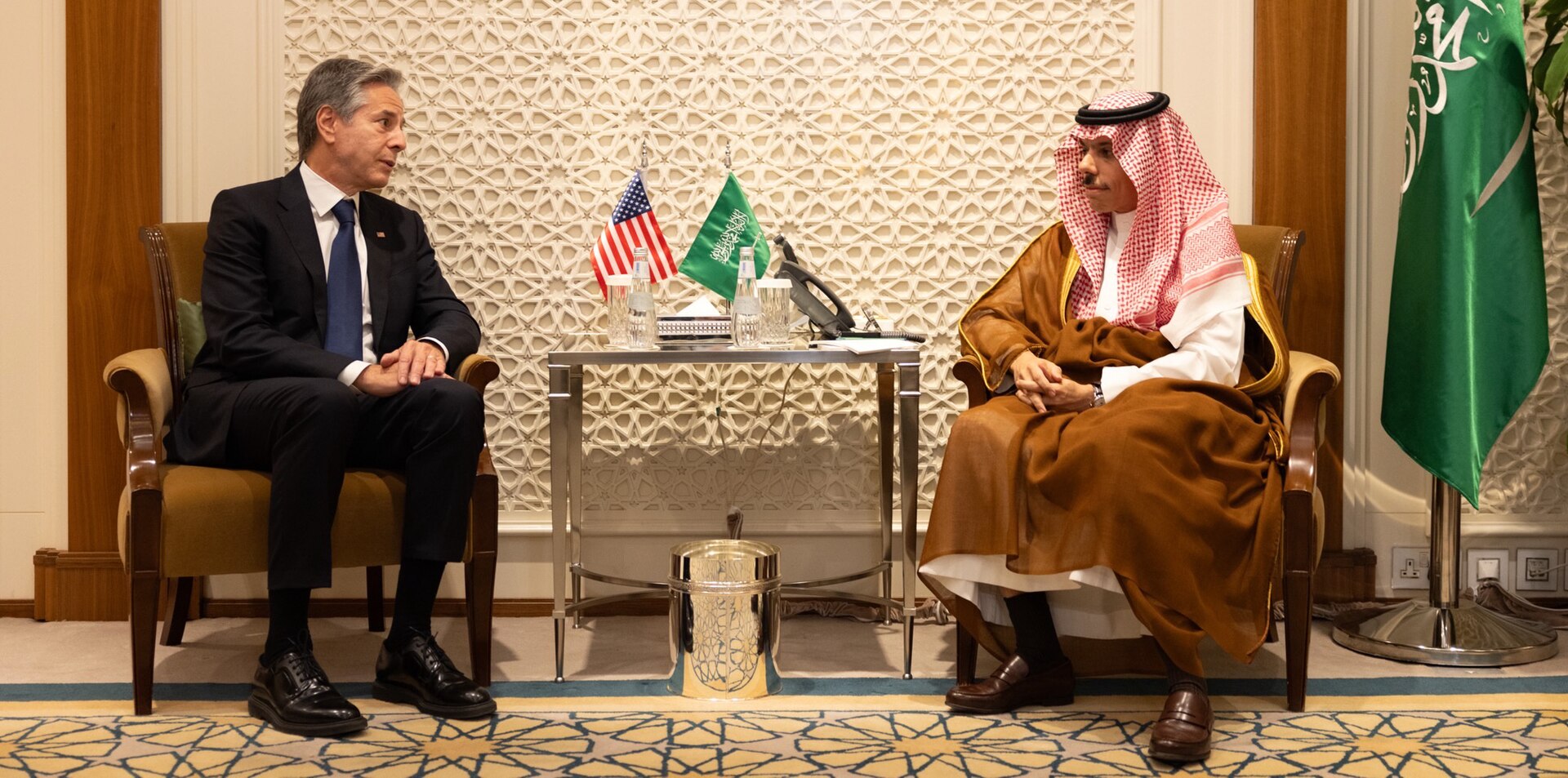
The United States, despite ordering non-emergency diplomatic staff out of the kingdom, has not been absent from the military picture. CNN reported that more than 100 US military advisers were sent to Saudi Arabia under a new joint command for intelligence support, and Secretary of State Marco Rubio said on 5 October that “we intend to live by” the US-Saudi defence agreement, per The National. The US also approved a possible $24.3 billion sale of 48 F-35A fighters in September, according to The Aviationist — but interceptor sales operate on timelines measured in years, and the Houthi campaign operates on timelines measured in hours. Trump said on 8 October that the US “will not be attacking Iran at any time prior to the midterm elections” on 3 November, per The National, which gave the Houthis and their Iranian backers a public window of nearly a month before Washington would even consider direct action against the source of the weapons.
Every Houthi missile the coalition shoots down is a tactical win, and the 23 October interception — clean, no casualties, the system working — will be briefed as evidence that the defensive architecture holds. Australia has nonetheless told its citizens in Saudi Arabia to stockpile food and shelter in place, the UK advises against all travel within 10 km of the Yemen border according to the BBC, and the US restricted its own staff from travelling within 20 miles of it, per Gulf News. The military can intercept the missiles, but what it cannot intercept is the conclusion that every foreign government draws from the fact that the missiles keep arriving. The coalition announced on 4 October that 100 jets flew in Operation “Dawn of Yemen,” according to the Oman Observer, and the Makkah pact committee agreed to deploy Pakistani and Turkish forces, per Al Jazeera — a military escalation that has not produced any visible reduction in the Houthi launch rate.
Can Riyadh Still Function as a Diplomatic Capital?
The premise of Vision 2030 is that Saudi Arabia can diversify away from oil by making Riyadh a destination — for investment conferences, sporting events, entertainment megaprojects and the kind of diplomatic gatherings that establish a capital as a place where things happen rather than a place that things happen to. The EU-GCC summit and the FII were not marginal entries on the calendar; they were the calendar, the October events that were supposed to demonstrate Riyadh’s arrival as a global meeting point, and both are gone with nothing to replace them.
The disruptions extend beyond the headline cancellations. Riyadh schools moved online for a week in September “without official explanation,” according to The National. National Day fireworks and drone shows were postponed indefinitely, according to Khaleej Times, depriving the capital of celebrations that had been planned for a month when the war was already underway. Civil defence alerts have sounded repeatedly across the capital throughout October, and the alerts on the morning of the 23rd — covering Riyadh, Abha, Khamis Mushait and Najran — were the fourth set of Riyadh alerts this month, according to Siasat. Prince Faisal told the UN General Assembly in September that the international community had been “absent,” per The National — a description that, after the October cancellations, has only gained weight.
The mechanism by which Vision 2030 was supposed to work has now encountered the one variable it was not designed to handle: a security environment that makes the capital itself inhospitable to the international presence the strategy depends on. Foreign investment commitments require a relationship that develops in parallel — not in a single annual conference, but in the infrastructure of trust and presence that requires embassies to be staffed, executives to visit, and delegations to land at airports that are not under active missile fire. The United States ordered non-emergency diplomatic staff out of Saudi Arabia on 21–22 October, according to the Washington Times and US News and World Report. These are the signals that the institutional presence which makes Riyadh investable is beginning to recede — not because investors have abandoned the kingdom, but because the operating environment has made ordinary international presence difficult to sustain.
Riyadh’s problem is not that the interceptions are failing — Friday’s shoot-down proves they work more often than not. The problem is that “more often than not” is not a phrase that reassures the insurance underwriters, protocol offices and corporate travel departments whose decisions determine whether a city can host the world. The 2026 deficit of 245 billion riyals reflects an economy already under pressure from the Hormuz blockade and collapsing export volumes, and the diplomatic and investment calendar was supposed to be the counternarrative. October provided a different one.
The FII was scheduled to open on 26 October, three days after the ballistic missile that was intercepted over the capital at 4am on the morning of the 23rd. The convention centre will sit empty, and no one has announced a new date for the summit or the conference. Secretary of State Rubio said the US would “live by” its defence agreement with the kingdom, but the delegates who were supposed to fill that convention centre have made a different calculation — the same one the EU and the FII organisers made — and the next Houthi launch will not consult either calendar.
Frequently Asked Questions
When was the first EU-GCC summit held?
The first EU-GCC summit took place in Brussels on 16 October 2024, according to Arab News. Leaders from both blocs agreed to meet every two years and identified five priority areas for the partnership: peace and security, connectivity, trade and investment, energy, and mobility. The second summit was to be hosted by the GCC in Riyadh, making Saudi Arabia the first Gulf venue for the format — a distinction the October postponement has now deferred.
What types of ballistic missiles have the Houthis used against Riyadh?
The Houthi arsenal includes the Burkan-2H, with an estimated range of approximately 950 km, and the Zulfiqar, which can reach up to 1,200 km and carries a 250 kg payload, according to the Wilson Center and Army Recognition. The Zulfiqar is derived from Iranian missile designs. No source has confirmed which specific type was used in the 23 October attack, and the coalition has not publicly identified the missile variant intercepted over Riyadh that morning.
What did Saudi Arabia ask the EU on 12 October?
At the EU Foreign Affairs Council in Luxembourg on 12 October, EU foreign policy chief Kaja Kallas reported that Saudi Foreign Minister Prince Faisal bin Farhan asked the EU to reinforce the ASPIDES maritime mission so both sides could pool efforts and keep the Bab al-Mandab strait open, according to Italian news agency ANSA. The request came two days after the KKIA strike that killed at least 12, and no public EU commitment to reinforce ASPIDES followed before the summit was postponed three days later.
How many people died in Houthi attacks on Saudi airports in October?
At least 20 people were killed in Houthi attacks on Saudi airports between 6 and 11 October, summed from GACA statements and wire-service reports across four waves: 3 on 6–7 October (BBC), 3 on 8 October including Saudia captain Hamoud Ali Al Kalthami (GDN), 12–13 on 10 October — Al Jazeera and the BBC disagreed on the final count after an Indian victim died — and 1 Pakistani resident killed at KKIA Terminal 4 on 11 October (CNN). No casualties were reported from interceptions on 22 and 23 October.
Has any Houthi claim for the 23 October Riyadh missile been published?
No Houthi statement specifically claiming the 23 October ballistic missile targeting Riyadh has appeared in available reporting as of the time of writing. Previous October attacks on Riyadh were typically claimed by Houthi military spokesman Yahya Saree, and on 22 October Houthi media claimed four separate operations within 48 hours — targeting the Saudi Defence Ministry headquarters, Dammam airport, an Aramco facility in Yanbu and Abha airport, according to This is Beirut — but the 23 October launch has not been addressed publicly by any Houthi official.
The House of Saud Daily Briefing
Saudi Arabia's news in 3 minutes, every morning. Free. See today's issue