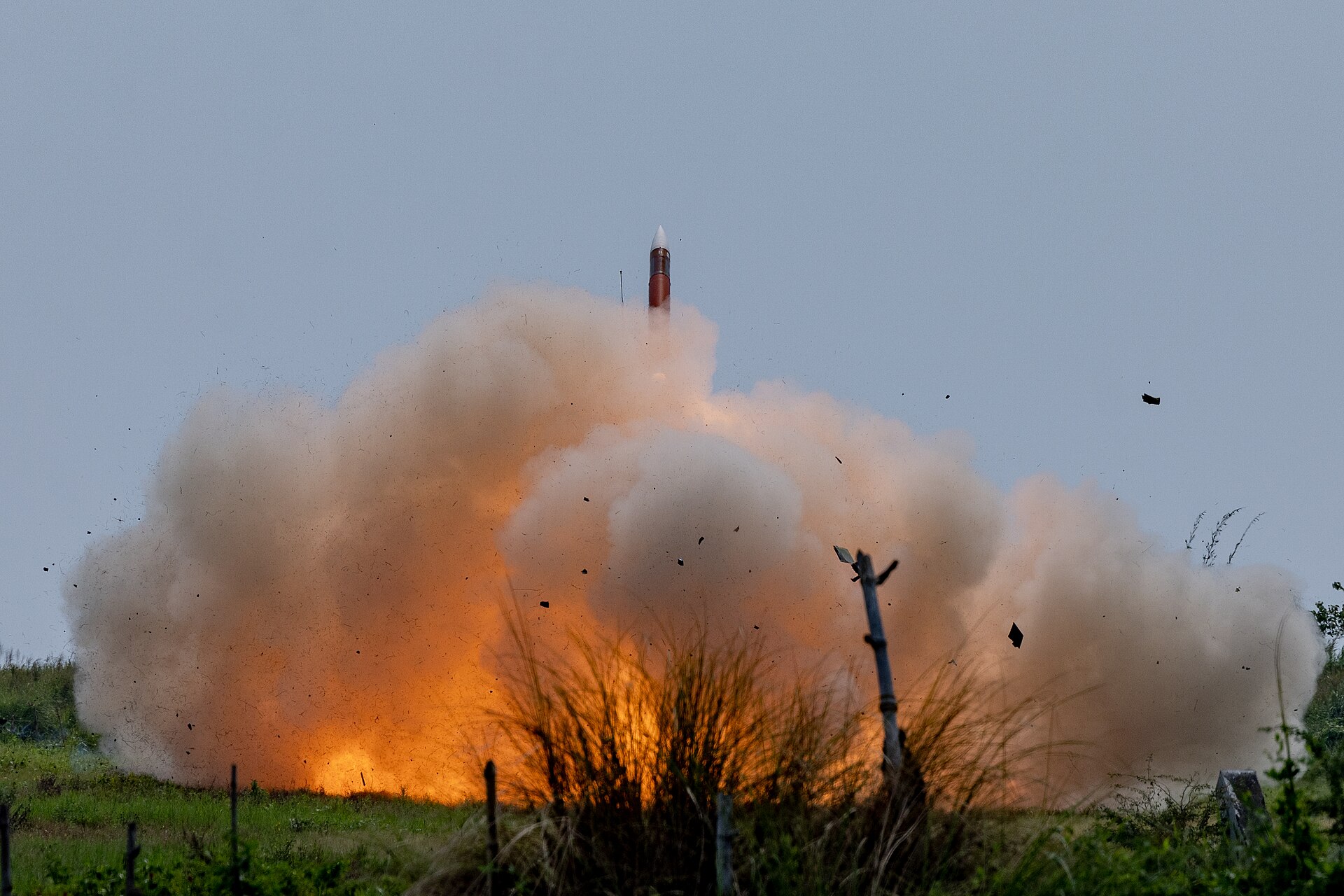

RIYADH — The Saudi-led coalition intercepted a Houthi ballistic missile aimed at Riyadh on October 24, at least the sixth reported date this month on which the capital has come under ballistic missile fire. The Wall Street Journal, citing people familiar with the kingdom’s thinking, reported that Saudi officials say their interceptor missile stocks are running low and that the kingdom is repositioning air-defence batteries to protect key energy infrastructure.
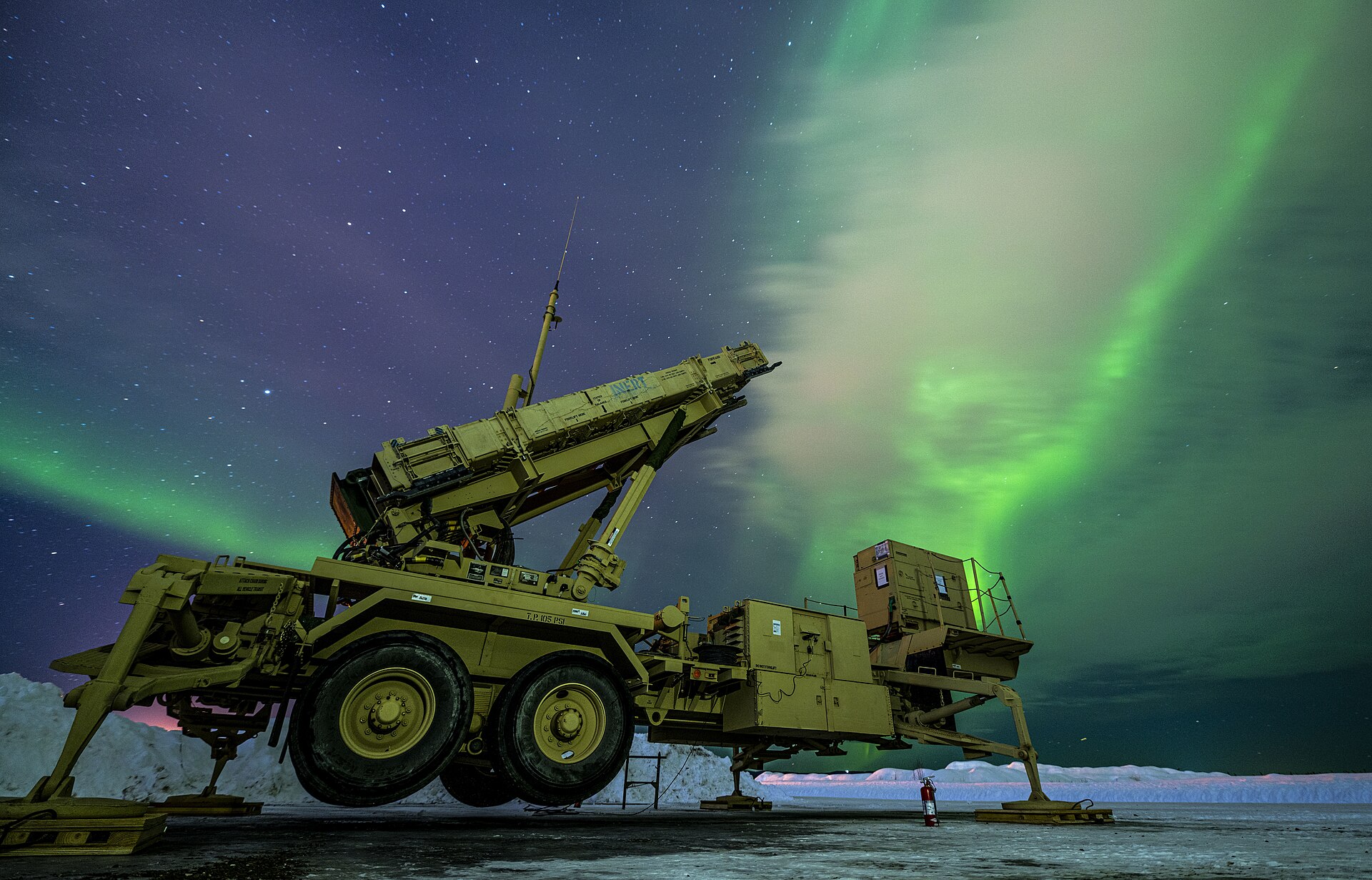
The National, citing unnamed analysts, estimated Saudi Arabia held more than 1,800 Patriot interceptors before the current escalation; many have since been fired against Iranian and Houthi attacks. Each PAC-3 MSE interceptor costs the U.S. Army approximately $4 million at current budget rates and up to $7 million at export prices. The kingdom has an approved possible purchase of 730 additional rounds through a $9 billion U.S. defence sale notified to Congress on January 30, but Lockheed Martin delivered only 620 PAC-3 MSE interceptors to all customers worldwide in 2025.
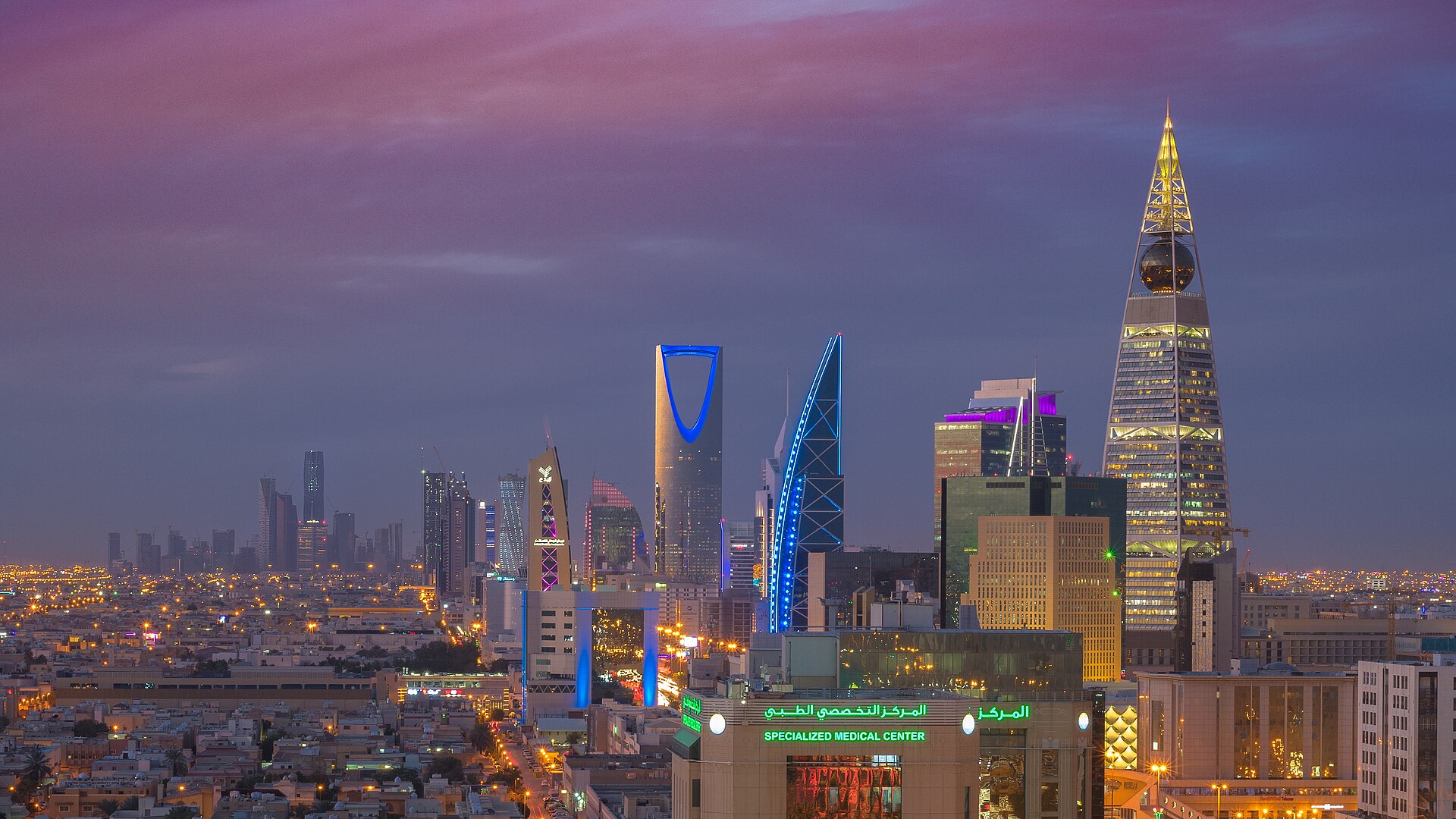
Table of Contents
- How Many Times Have Houthis Fired at Riyadh in October 2026?
- What Does Each Interception Cost?
- The Analyst Case for a Depletion Campaign
- How Fast Can Saudi Arabia Resupply?
- What Do Allied Deployments Add to Saudi Air Defense?
- Multi-Munition Attacks and the Iran Playbook
- The Ukraine Parallel
- The Interior Ministry’s Filming Ban
- Frequently Asked Questions
How Many Times Have Houthis Fired at Riyadh in October 2026?
No Saudi or coalition source has published a consolidated count. Reports from Al Jazeera, the Associated Press, Middle East Eye, and Saudi Civil Defence identify at least six dates in October on which ballistic missiles were reported targeting the capital: October 8, 12, 14, 20, 23, and 24.
The House of Saud Daily Briefing
Saudi Arabia's news in 3 minutes, every morning. Free. See today's issue
On October 8, the coalition said it intercepted two ballistic missiles aimed at Riyadh, according to the Associated Press. By October 12, Al Jazeera described the capital as under fire for the third straight day. On October 14, the coalition reported intercepting missiles targeting Riyadh and Dhahran; a Houthi missile struck an administrative building at Aramco’s headquarters complex in Dhahran, causing what the energy ministry called a “limited fire,” according to the BBC. On October 20, Saudi Arabia said it intercepted a ballistic missile aimed at Riyadh, Middle East Eye reported. On October 23, Saudi Civil Defence issued its fourth capital emergency alert of the month following an apparent interception. On October 24, the coalition confirmed another ballistic missile interception over the capital, according to Al Jazeera’s live coverage.
| Date | Reported detail | Source |
|---|---|---|
| Oct 8 | Coalition intercepted two ballistic missiles aimed at Riyadh | AP via NY1 |
| Oct 12 | Riyadh targeted; described as third straight day of capital attacks | Al Jazeera |
| Oct 14 | Missiles intercepted over Riyadh and Dhahran | Al Jazeera |
| Oct 20 | Ballistic missile intercepted over Riyadh; blasts heard across city | Middle East Eye |
| Oct 23 | Civil Defence emergency alert over Riyadh following interception | Saudi Civil Defence |
| Oct 24 | Coalition intercepted ballistic missile aimed at Riyadh | Al Jazeera liveblog |
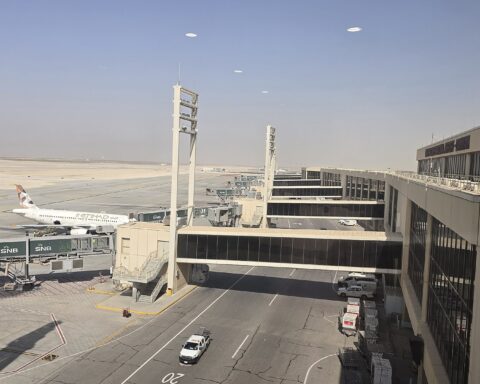
These six dates account only for attacks explicitly directed at the capital with ballistic missiles. They do not include the attack on King Fahd International Airport in Dammam on October 21, which killed one person and injured eight according to GACA, nor the Houthi claim of striking the Saudi Defence Ministry, nor the dozens of drone and cruise missile attacks on airports, Aramco facilities, and military sites across the kingdom.
The toll from the broader air campaign is severe. On October 10, a strike on King Khalid International Airport killed 12 and wounded 309, according to Al Jazeera; the BBC put the injured at 308. An Indian victim’s death the following day raised the toll to 13, the BBC reported. On October 11, a projectile hit Terminal 4, killing a Pakistani resident and injuring 11, and Dammam airport was also attacked, according to CNN. Earlier that week, two attacks on KKIA on October 8 killed three Saudis, including Saudia captain Hamoud Ali Al Kalthami, according to Gulf Daily News.
What the timeline reveals is less a sporadic campaign than an operational rhythm. The Houthis are reaching the capital with enough regularity that Saudi Civil Defence alerts have become a feature of daily life in Riyadh. Each interception is a success. Each interception also depletes inventory that takes months or years to replace.
What Does Each Interception Cost?
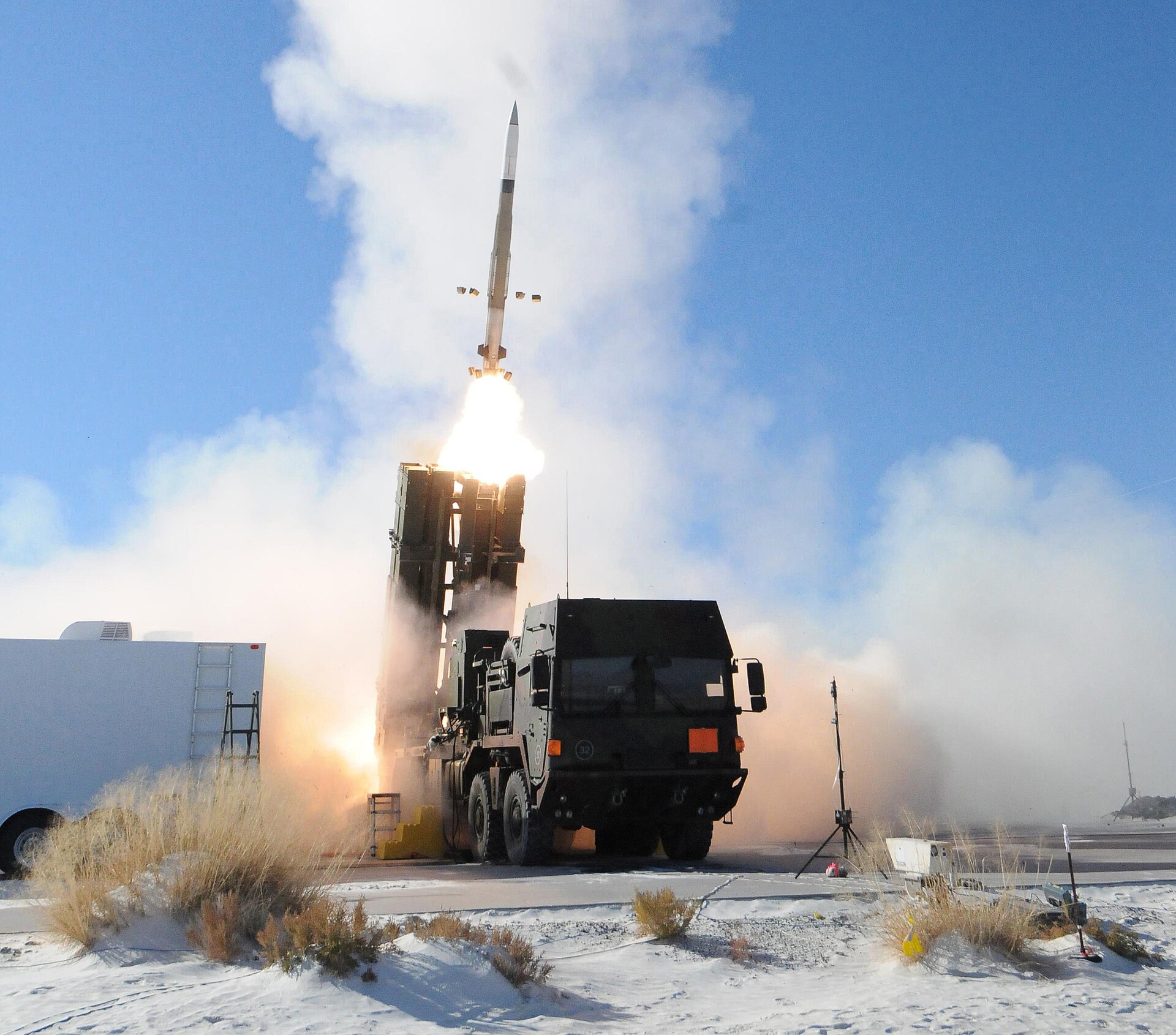
A single PAC-3 MSE interceptor—the primary round in Saudi Arabia’s Patriot batteries for ballistic missile defence—costs the U.S. Army approximately $3.87 to $4.2 million at current budget rates, according to The War Zone, citing Army fiscal year 2025–2026 documents. The FY2027 request cites approximately $5.3 million. At export prices, which bundle logistics, spare parts, and integration, the per-round figure reaches $6.25 to $7 million.
Standard engagement doctrine calls for two to four interceptors per incoming ballistic missile, a ratio confirmed in EuroMaidan Press reporting on Ukrainian Patriot operations. At even the lower bound—two rounds per target—each interception of a single ballistic missile consumes between $12.5 million and $14 million worth of PAC-3 MSE interceptors at export prices. On October 8, when the coalition intercepted two ballistic missiles aimed at Riyadh, the minimum theoretical cost of just those two engagements was $25 million to $28 million.
| Category | Unit cost | Source |
|---|---|---|
| U.S. Army FY2025–26 budget | ~$3.87–4.2M | The War Zone / Army budget docs |
| U.S. Army FY2027 request | ~$5.3M | The War Zone / Army budget docs |
| Export (bundled) | $6.25–7M | militarymachine.com |
The Houthis’ longest-range system, the Palestine-2, has an estimated range of 1,000 to 2,000 km with claimed manoeuvrability that complicates terminal-phase interception, according to The National and IranWatch. It is assessed as based on a modified Scud-C or Scud-D. Production costs for modified Scud derivatives are not public, but the asymmetry is severe: the munitions cost a fraction of what is spent to destroy them. The Palestine-2’s production cost has not been disclosed.
The Analyst Case for a Depletion Campaign
Western analysts have described the Houthi pattern of repeated capital strikes as an “interceptor bleed” strategy—the idea that cheap offensive missiles can drain an adversary’s expensive interceptor stocks faster than they can be replaced. This is analyst framing. No Houthi official statement found in the public record explicitly articulates interceptor depletion as a goal.
Houthi military spokesman Yahya Saree frames all strikes as retaliation. On October 14, he cited 2,281 Saudi air and missile attacks on Houthi-controlled areas as justification, according to Al Jazeera. His stated policy, per Middle East Eye, is “escalation for escalation.”
Dr Lynette Nusbacher, a former military intelligence officer, told The National that THAAD and Patriot interceptors are “not available in sufficient quantity, and leakage is occurring.” Defence planners, she said, had not anticipated “profligate use of high-value, exquisite air defence systems in a war lasting more than a few weeks.”
Francis Tusa, a military analyst and editor of Defence Eye, provided a reference point for consumption rates: up to 80 Patriot missiles were fired in a single night during a U.S. airbase attack in Jordan, he told The National. Robert Tollast of the Royal United Services Institute warned that concentrating interceptors on one site could leave other critical areas uncovered. Destroying energy infrastructure outside the summer months, he added, could also be “disastrous.”
Nawaf Obaid, a senior fellow at King’s College London’s Department of War Studies, offered a counterargument. Saudi Arabia “does not lack air defences,” he told Al Jazeera. The kingdom is the world’s second-largest Patriot operator, he said, and has purchased seven THAAD batteries—the largest such programme outside the United States. Penetrations are “to be expected given the kingdom’s size and border with Yemen.” For every successful Houthi strike, Obaid said, dozens of attempts are thwarted. The Saudi-led coalition retains the military advantage, but the Houthis can dominate headlines with occasional penetrations.
Wolfgang Pusztai, a security policy and defence analyst, suggested the sustainability pressure runs both ways. The Houthis “likely have only a limited number of short-range ballistic missiles left, so they probably cannot mount saturation attacks,” he told Al Jazeera. Instead, Pusztai said, the group may fire single missiles at “less-defended civilian targets to maximise strategic impact, such as disrupting civilian air traffic.”
“Defence planners did not anticipate profligate use of high-value, exquisite air defence systems in a war lasting more than a few weeks.”Dr Lynette Nusbacher, former military intelligence officer, to The National (October 2026)
How Fast Can Saudi Arabia Resupply?
The U.S. Defence Security Cooperation Agency notified Congress on January 30, 2026, of a possible $9 billion sale of 730 PAC-3 MSE missiles to Saudi Arabia—$7 billion in major defence equipment and $2 billion in other costs. Lockheed Martin is the principal contractor. Approval of a possible sale is a procedural step that permits negotiation; it does not mean missiles have been contracted, manufactured, or delivered.
The production bottleneck is the binding constraint. Lockheed Martin delivered 620 PAC-3 MSE interceptors in 2025, beating its contractual target of 550, according to The Aviationist. A January 2026 framework agreement targets roughly 2,000 interceptors per year by the end of 2030—more than triple the current rate. But 2030 is four years away. The National, citing unnamed analysts, reported that replenishing Saudi stocks could take up to 30 months even with manufacturers accelerating production.
In the near term, the United States deployed one additional Patriot battery to Saudi Arabia in early October to protect a key oil facility, and a second to Qatar to protect a natural gas facility, according to Axios. These batteries provide point defence at individual sites but do not solve the inventory problem; each requires a continuous supply of reload rounds.
Saudi Arabia’s first THAAD battery was commissioned on July 2, 2025, at a site on the Gulf coast, according to Army Recognition. Seven sites are planned. The Riyadh THAAD site is not scheduled for completion until April 2028, per a 2024 procurement planning document cited by Janes. THAAD intercepts targets at higher altitudes than Patriot—above the latter’s engagement envelope—and would add a defensive layer over the capital that does not currently exist. Until it is installed, the PAC-3 MSE remains Riyadh’s sole terminal defence against ballistic missiles, and each engagement draws down the same finite pool of interceptors.
The gap between the DSCA notification and any realistic delivery is measured in years, not months. A possible sale must clear congressional review, move to contract negotiation, enter the production queue, and then undergo integration testing before rounds reach Saudi launchers. At current production rates, manufacturing 730 interceptors for Saudi Arabia alone—without cutting deliveries to the U.S. Army or other partners—would take well over a year even if the contract were signed tomorrow. It has not been signed.
| Milestone | Detail | Source |
|---|---|---|
| Jan 30, 2026 | DSCA notified Congress of possible 730 PAC-3 MSE sale ($9B) | DSCA press release |
| 2025 production | Lockheed delivered 620 PAC-3 MSE to all customers | The Aviationist |
| 2030 target | ~2,000 PAC-3 MSE per year (up from ~600) | Lockheed Martin / Aviationist |
| Replenishment | Up to 30 months with accelerated production | The National (unnamed analysts) |
| Jul 2, 2025 | First Saudi THAAD battery commissioned | Army Recognition |
| Apr 2028 | Riyadh THAAD site scheduled (2024 planning document) | Janes |
What Do Allied Deployments Add to Saudi Air Defense?
France, Pakistan, the United Kingdom, and the United States have each deployed air-defence assets or personnel to the kingdom. None resolves the interceptor stockpile problem on its own; each adds coverage to specific sites or addresses lower-tier threats such as drones and cruise missiles.
France began its operational rollout at Yanbu in October, weeks after Macron’s September announcement, according to Al Jazeera. French troops, radars, and air defences are now at the Red Sea port, but specific equipment types—whether CROTALE, Mistral, or other systems—have not been confirmed. Yanbu is the western terminus of Saudi Arabia’s East-West pipeline, and its defence is as much about oil export continuity as airspace protection.
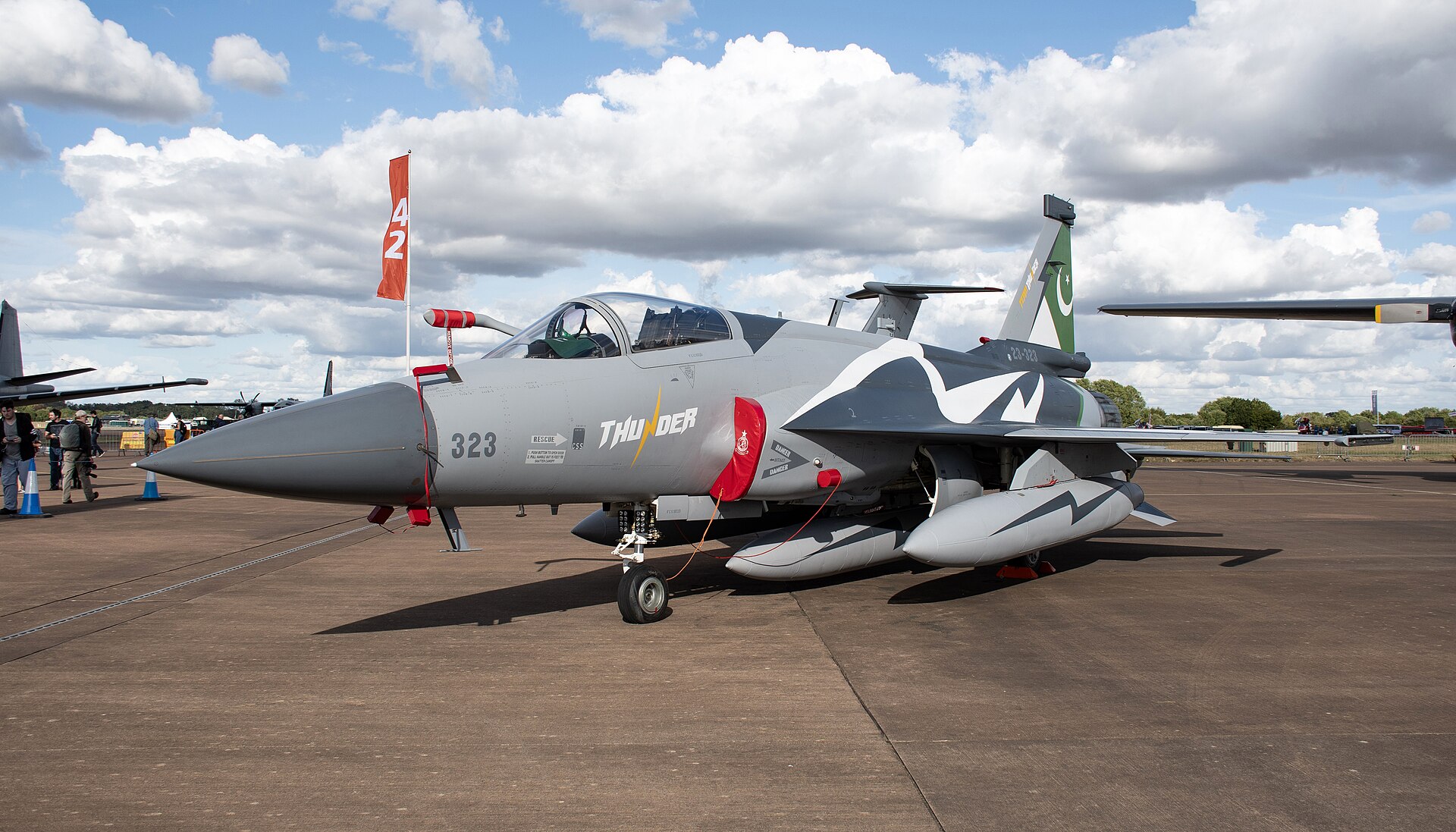
Pakistan deployed approximately 8,000 troops and approximately 16 JF-17 aircraft, financed by Riyadh, according to Reuters via The Standard. The package includes an HQ-9 long-range surface-to-air missile system with a baseline range of 120 km and a claimed anti-ballistic missile capability. Whether the HQ-9 has been positioned to engage incoming ballistic missiles in this deployment has not been independently verified.
The UK contribution includes Sky Sabre (CAMM missiles), Starstreak, and Martlet systems, according to The National. Bloomberg reported on October 21 that Britain would fly defensive air missions over Saudi Arabia, and the SOFX Report said RAF Typhoon jets had been deployed specifically to intercept Houthi strikes. These systems are effective against drones and cruise missiles but are not designed for the ballistic missile intercept mission that consumes PAC-3 rounds.
An unnamed King’s College London researcher told The National that no existing system, including those protecting the United States, can reliably stop simultaneous attacks combining ballistic missiles, cruise missiles, and drones. The allied deployments widen the defended area and add capacity against lower-tier threats—freeing Saudi Patriot batteries to focus on ballistic missiles rather than expending interceptors on drones. Whether that reallocation is sufficient to change the depletion arithmetic depends on the pace of Houthi attacks, which shows no sign of slowing.
Multi-Munition Attacks and the Iran Playbook
The Houthis are not firing only ballistic missiles. The Wall Street Journal reported that the group launches various types of munitions at Saudi targets simultaneously, hitting sites that lack air-defence coverage, according to the Institute for the Study of War and Critical Threats Project. This approach—combining ballistic missiles, cruise missiles, and drones in a single salvo—closely resembles tactics Iran and Lebanese Hezbollah have employed against Israel, ISW/CTP assessed.
The resemblance is not coincidental. IRGC and Hezbollah advisers are currently in Yemen providing targeting intelligence and military support to the Houthis, the Wall Street Journal reported, as cited by ISW/CTP. Iran declared an offensive military doctrine in October, claiming an expanded missile arsenal. The Houthis’ domestic manufacturing ambition is, in the assessment of Conflict Armament Research, “beyond what was previously assumed.”
Multi-munition attacks create a force-allocation problem that no amount of spending can solve through a single system. A Patriot battery tracking an incoming ballistic missile over Riyadh cannot simultaneously engage a low-flying cruise missile approaching Yanbu or a swarm of drones targeting Dammam. On October 16, the coalition announced it intercepted missiles and drones over Riyadh, the Red Sea, and Yanbu simultaneously, according to Middle East Eye—three different defensive sectors, hundreds of kilometres apart, engaged on the same day.
The week of October 8 illustrates the layered nature of the threat. The coalition intercepted two ballistic missiles aimed at Riyadh on the 8th; earlier that same week, on 6 and 7 October, strikes on King Khalid International Airport and Abha killed three and wounded 36, according to the BBC. The ballistic missiles consume the most expensive interceptors; the drones and cruise missiles exhaust attention and reload capacity.
The Ukraine Parallel
Saudi Arabia is not the first Patriot operator to confront the economics of interceptor depletion during active hostilities. CNN reported in mid-October 2026 that Ukraine had run out of Patriot interceptors, with almost all ballistic missiles from one Russian strike going unintercepted. EuroMaidan Press reported in April 2026 that Ukrainian Patriot units had earlier rationed their fire to one interceptor per incoming ballistic target instead of the standard two to four—a measure that lowered the probability of kill but extended the available supply.
The conditions differ in important respects. Ukraine’s Patriot batteries were donated or procured under emergency wartime conditions; Saudi Arabia purchased its systems over decades as part of a planned defence architecture backed by the world’s largest arms import budget. Ukraine faces Russian Iskander and Kinzhal missiles; Saudi Arabia faces Houthi derivatives of Iranian designs, supplied through channels a UN Panel of Experts has documented. But the binding constraint is identical in both theatres: production of the interceptors cannot keep pace with a sustained, high-tempo campaign of incoming fire, and no amount of political will accelerates a missile assembly line that is already running at capacity. Annual production serves every customer on the order book simultaneously—the U.S. Army, allied nations, and Saudi Arabia among them.
The U.S. response has followed the same template in both cases: approve a sale (the DSCA notification for Saudi Arabia in January; emergency drawdowns for Ukraine throughout 2024 and 2025), then signal the production target (2,000 PAC-3 MSEs per year by 2030). That target has not yet been met in a single quarter.
The Interior Ministry’s Filming Ban
Saudi Arabia’s Interior Ministry warned residents against filming or publishing images of drones, missiles, air-defence interceptors, and impact sites, citing national security, according to Gulf News. AFP reported that most residents have refrained from filming—an unusual degree of restraint in a country where smartphone footage ordinarily spreads without restriction.
The ban shapes the information environment. Without independent footage of intercept debris, impact craters, or failed interceptions, the coalition’s success claims cannot be independently verified. The ratio of interceptors fired to targets destroyed—the single most important metric of air-defence efficiency—is known only to the Saudi military and its partners.
What is visible comes through official channels. Aramco’s evacuation of its Dhahran headquarters was announced publicly. Riyadh civil-defence alerts are pushed to phones across the city. The KKIA passenger terminal strikes were too large to conceal. But the details of what was stopped, what leaked through, and how many interceptors were expended in each engagement remain behind a wall that the Interior Ministry has reinforced by law.
The WSJ reported that the Houthis are hitting places without air-defence coverage. If true, the sites that go undefended are precisely the ones where impacts would be most visible—and where the filming ban most effectively prevents documentation. The combination of restricted coverage and a geographically vast kingdom means that the public picture of this war is shaped almost entirely by coalition communiqués and Houthi claims, neither of which has an interest in disclosing how many interceptors are being fired, or how many targets are getting through.
Frequently Asked Questions
Has Saudi Arabia publicly disclosed its interceptor inventory?
No. Riyadh publishes no figures on its missile-defence stocks. The Wall Street Journal reported that officials say they are running low, but no Saudi government source has publicly confirmed the current inventory level, the rate of consumption, or the number of interceptors fired per engagement. The Interior Ministry’s ban on filming intercepts and impact sites further limits independent assessment.
What missile types are the Houthis using against Riyadh?
Neither side has named specific models in the October interception reports. The Palestine-2, with an estimated range of 1,000 to 2,000 km and claimed manoeuvrability, is the Houthis’ longest-range ballistic missile, according to The National and IranWatch. It is assessed as a modified Scud-C or Scud-D. The Burkan-2H, the Houthi designation for the Iranian Qiam, was previously documented by a UN Panel of Experts as having been illicitly transferred in pieces from Iran and reassembled in Yemen, according to the Long War Journal. Conflict Armament Research found the Houthis’ domestic manufacturing capability is “beyond what was previously assumed.”
Are the Houthis deliberately trying to deplete Saudi interceptor stocks?
No public Houthi statement articulates interceptor depletion as a strategic objective. Houthi military spokesman Yahya Saree frames all strikes as retaliation for Saudi attacks on Houthi-controlled areas, not as a calculated attrition strategy. The “interceptor bleed” concept is an analytical description of the observed pattern—expensive defences consumed faster than they can be manufactured—rather than a doctrine the Houthis have claimed. Iran’s IRGC and Lebanese Hezbollah, whose advisers are in Yemen according to the Wall Street Journal via ISW/CTP, have used similar multi-munition tactics against Israel, but neither Tehran nor Sanaa has publicly credited an attrition strategy in the Saudi theatre.
Are there travel warnings in effect for Saudi Arabia?
Yes. The United States barred its staff from travel within 20 miles of the Yemen border, according to Gulf News. The United Kingdom advises against all travel within 10 km of the border, according to the BBC. The European Union Aviation Safety Agency widened its Saudi airspace warning in early October, according to Fortune. Multiple airlines cancelled Saudi Arabia flights in October after the airport strikes, according to The Independent. King Khalid International Airport in Riyadh was closed following the October 10 attack; France 24 reported it remained shut on October 12. For current guidance, see the Saudi Arabia travel status tracker and safety guidance for travellers.
How does Saudi Arabia’s air-defence spending compare to the Houthi arsenal cost?
Saudi military spending totalled $83.2 billion in 2025, according to SIPRI data cited by Open Magazine. Yet the PAC-3 MSE resupply constraint is not a question of funding—the kingdom has the means to buy interceptors but cannot manufacture them faster than Lockheed Martin can build them. The Houthis’ missile programme, by contrast, relies on Iranian-origin components illicitly transferred and assembled domestically, at costs that are orders of magnitude lower per round. Wolfgang Pusztai told Al Jazeera that the Houthis’ own ballistic missile inventory may itself be limited—a constraint that cuts both ways but has not yet slowed the pace of October attacks on Riyadh.
The House of Saud Daily Briefing
Saudi Arabia's news in 3 minutes, every morning. Free. See today's issue