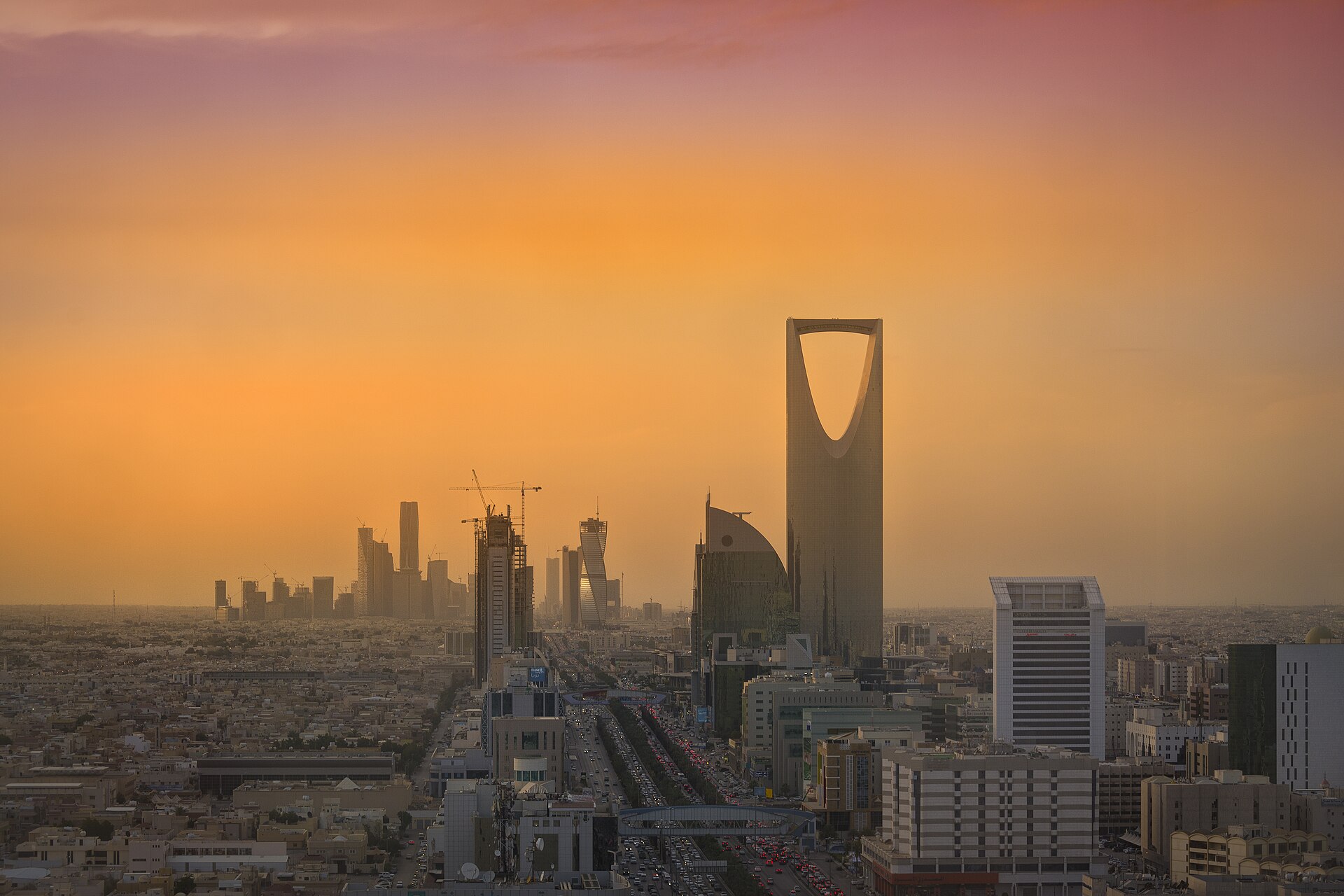

RIYADH — Today was supposed to be Day 1 of the Future Investment Initiative, the annual summit where the chief executives of JPMorgan, BlackRock, Goldman Sachs and Blackstone fly into Riyadh to write cheques and shake the crown prince’s hand — and instead the conference hall is dark, the airport has opened and closed twice in a week, and more than a dozen major international carriers still refuse to land at King Khalid International Airport. FII10, postponed on 19 October with just seven days’ notice, marks the first cancellation in the summit’s nine-year history, and it happened not because of a scheduling conflict but because Wall Street privately told PIF Governor Yasir Al-Rumayyan that its people would not board planes to a city whose airport had been struck repeatedly by Houthi missiles since early October, killing 22 and injuring more than 380.
The gap between “airport technically open” and “airport functionally accessible to international business” is where Saudi Arabia’s economic ambitions now live, caught between a Houthi campaign that has turned civilian aviation into a named military target and a global capital class that prices personal risk before it prices opportunity. The Houthis are running an economic campaign alongside a military one, and the empty seats at FII are its most visible result so far.
Table of Contents
- The FII Collapse: What Happened and What the Official Statement Did Not Say
- The Airport War: KKIA’s Open-Close Cycle and What “Open” Actually Means
- Why FII 2026 Is Different From FII 2018
- What Are the Houthi Targets in Saudi Arabia?
- What Is the Economic Cost of the Airport Attacks on Saudi Arabia?
- The Vision 2030 Arithmetic: 330 Million Passengers and a Gap That Keeps Widening
- What Happens to Saudi Arabia’s Events Calendar Now?
- What Comes Next for FII and International Confidence in Riyadh?
- Frequently Asked Questions
The FII Collapse: What Happened and What the Official Statement Did Not Say
The Future Investment Initiative, sometimes called “Davos in the Desert,” was scheduled to run from 26 to 29 October 2026, with 10,000 attendees, 550 speakers and 700 accredited media representatives, according to the FII Institute. The speaker list read like a roll call of global finance: Jamie Dimon of JPMorgan, David Solomon of Goldman Sachs, Stephen Schwarzman of Blackstone, Larry Fink of BlackRock and Jane Fraser of Citigroup had all been registered to attend, according to The National. None of them had publicly cancelled before the organisers did it for them on 19 October.
The House of Saud Daily Briefing
Saudi Arabia's news in 3 minutes, every morning. Free. See today's issue
The official statement, delivered by FII CEO Princess Dr Maha Bint Mishari Al Saud, offered a sentence of corporate empathy and nothing else: “This decision comes from a deep commitment to our partners, members, speakers and delegates. A decade of partnership and shared vision deserves nothing less than our absolute best.” There was no mention of Houthi attacks, no reference to the airport closure that had been running for more than a week, and no acknowledgement that the city hosting a global investment summit had been under repeated ballistic missile strikes on its airports in October.
Semafor, reporting on 19 October, provided the reason the official statement omitted: big banks and private-equity firms had privately relayed safety concerns about attending to PIF Governor Yasir Al-Rumayyan. Reuters reported that organisers had considered allowing executives to tune in remotely before settling on a full postponement. The Financial Times also reported the postponement on 19 October, and CNBC confirmed the decision separately. The gap between the official language — “commitment to our partners” — and the reported reality — Wall Street would not fly to Riyadh — captures a wider problem for Saudi Arabia’s economic strategy: when the presentation and the facts diverge this visibly, the market notices.
The Airport War: KKIA’s Open-Close Cycle and What “Open” Actually Means
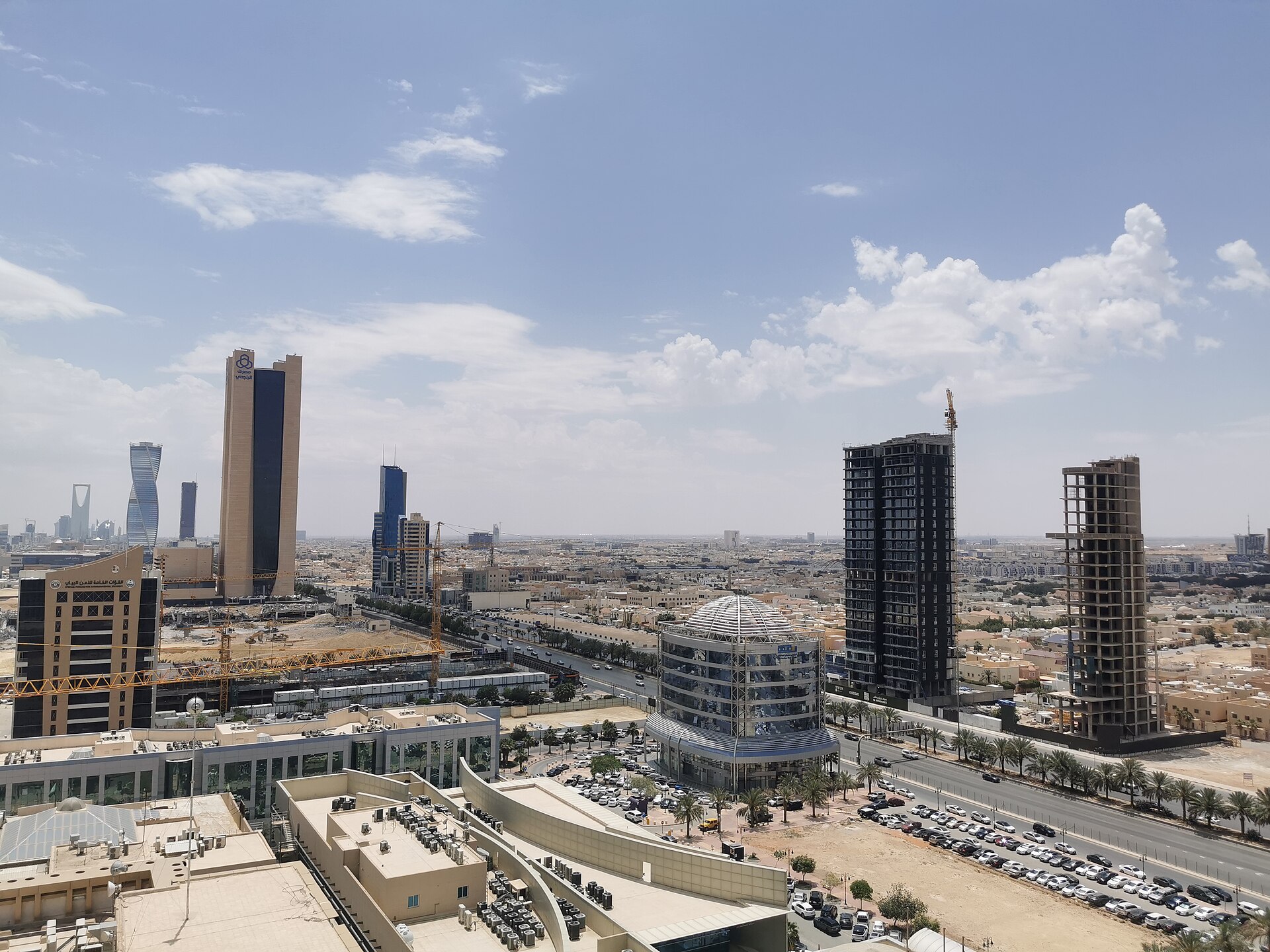
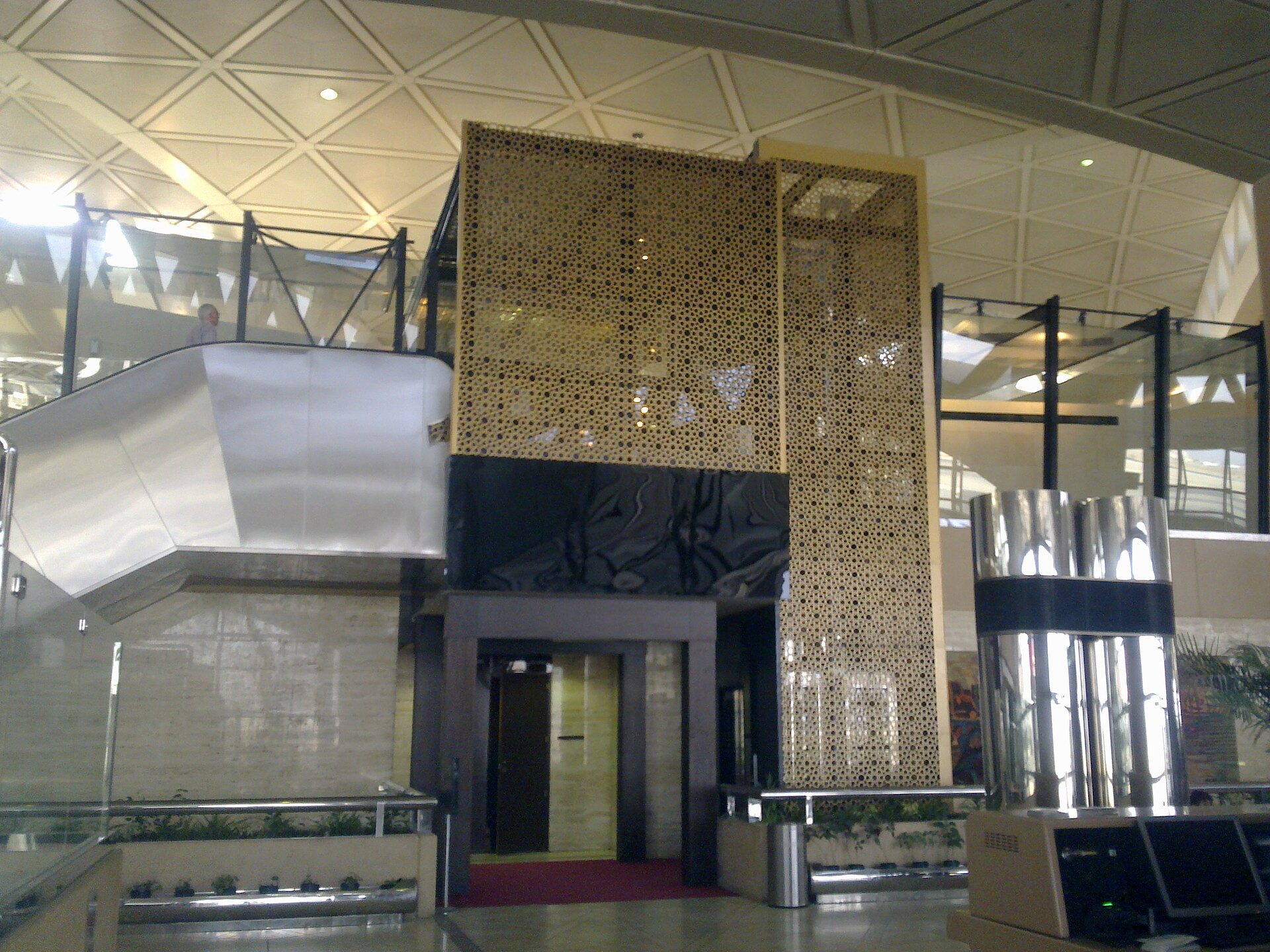
King Khalid International Airport has been the target of repeated Houthi strikes since early October 2026, and the timeline tells its own story of an aviation system under siege. On 6 and 7 October, attacks on KKIA and Abha International Airport killed three and wounded 36, according to the BBC. On 8 October, two attacks on KKIA killed three more, including Saudia captain Hamoud Ali Al Kalthami, according to GDN. On 10 October, the deadliest single strike killed 13 according to Al Jazeera — Saudi civil aviation authority GACA reported 12 — with Al Jazeera reporting 309 injured and the BBC reporting 308 — hitting Terminals 3 and 4. The next day, a projectile struck Terminal 4 again, killing a Pakistani resident and injuring 11, and Dammam airport was also attacked, according to CNN.
GACA extended the airport’s closure after the 10 October strikes. A limited reopening under a prior-permission NOTAM regime — a wartime operating procedure, not a normal commercial schedule — began around 17 to 18 October. The US Mission in Riyadh stated as of 19 October that “Operations at King Khalid International Airport in Riyadh remain suspended.” On 25 October, KKIA’s Terminals 1 and 2 reopened, but international services remained severely disrupted, with more than a dozen major carriers still refusing to operate into the airport.
The European Aviation Safety Agency widened its Saudi airspace warning, citing “recurrent missile and drone attacks, together with the activation of air-defence systems” that “create an increased risk of misidentification of civil aircraft,” according to Al-Monitor on 9 October. OPSGROUP, an aviation intelligence service, issued a “do not fly” warning to its members, according to aerocorner on 20 October. The distinction that matters is between “open” — a status GACA can declare — and “accessible,” which requires airlines, insurers, regulators and passengers to agree that the risk is acceptable, and on that measure KKIA remains functionally isolated from much of the world.
The airlines that have suspended Riyadh services tell the story in their route maps. Qatar Airways suspended Riyadh and Dammam while reducing Jeddah frequency; Etihad suspended services into November; Air India and Air India Express pulled out until 7 November; Emirates and flydubai cancelled through 29 October; and Oman Air and SalamAir suspended until 31 October, according to The National on 25 October. The Lufthansa Group suspended its Frankfurt-Riyadh route through 18 November, while SWISS, Austrian Airlines and Edelweiss suspended Dammam services through 30 November, according to aerocorner on 20 October. At least 19 airlines had refused Riyadh flights as of 25 October, according to The National, a figure that captures the scale of the connectivity crisis but almost certainly understates the commercial reality, since codeshare partners and feeder airlines follow their mainline carriers out.
Why FII 2026 Is Different From FII 2018
The obvious comparison is to October 2018, when the murder of Jamal Khashoggi triggered a wave of cancellations from the same Wall Street names — more than 40 executives withdrew, according to Al Bawaba — and FII ran anyway. Saudi Arabia signed roughly $50 billion in deals at that conference, including 15 Aramco memoranda of understanding worth $34 billion, according to Gulf Business. The reputational damage was real, but the transactional machinery kept running because the physical infrastructure of deal-making — flights, hotels, venues, personal security — was intact.
In 2026, the difference is structural rather than reputational. The 2018 boycott was a protest: executives chose not to attend a conference they could have attended. The 2026 postponement is an admission that the conference could not safely operate, because the airport serving it had been struck by ballistic missiles, its terminals had been damaged, and the European aviation regulator had warned of “increased risk of misidentification of civil aircraft” in Saudi airspace. A boycott tests conviction; a cancellation tests capability, and capability is harder to rebuild because it requires not a change of heart but a change of conditions on the ground.
The 2018 precedent also illustrates why the market’s memory of these events is short — the deals still got done, and Saudi Arabia’s investment case survived Khashoggi because the underlying economic proposition remained accessible. FII 2026 raises a different question: not whether investors want to do business with Saudi Arabia, but whether they can physically get there to do it, and that question will persist as long as the airport remains a Houthi target and the airline suspensions continue.
What Are the Houthi Targets in Saudi Arabia?
The Houthi targeting strategy is deliberate, public and designed to inflict maximum economic disruption with minimum diplomatic cost. Houthi military spokesman Yahya Saree warned all airlines not to use Saudi airports or airspace, calling them “potential targets” — while explicitly exempting Mecca and Medina, according to Al Jazeera and the BBC. That carve-out is political calculation, not restraint: it protects the Houthis from accusations of targeting Islam’s holiest sites while maintaining pressure on the kingdom’s commercial and diplomatic infrastructure.
Mohammed al-Bukhaiti, a member of the Houthi political bureau, articulated the logic as an equivalence doctrine: what Saudi Arabia does to Yemeni civilian infrastructure, the Houthis will do to Saudi civilian infrastructure. On 13 October, the Houthis explicitly threatened strikes on Aramco facilities and airports if coalition airstrikes on Sanaa continued, according to Al Jazeera and Anadolu Agency. The airports are not collateral damage in a military campaign — they are named targets in an economic one, chosen because every cancelled flight, every postponed conference and every rerouted cargo shipment inflicts costs that air-defence batteries cannot prevent even when they intercept the incoming missiles.
The broader Houthi strategy operates across multiple pressure points simultaneously: the maritime blockade declared on 20 July targets Saudi shipping, the airport strikes target aviation connectivity, and the threats against Aramco facilities target the oil infrastructure that funds the war effort. Each front raises costs; together they create a compound problem in which the economic damage outpaces the military damage, because markets and insurers aggregate risk across all three fronts even when any single strike is intercepted.
What Is the Economic Cost of the Airport Attacks on Saudi Arabia?
The direct costs are measurable, if incomplete. AGBI estimated that KKIA losses reached up to $50 million in lost revenue and unrecovered fixed costs in the week following the October attacks. Gulf News, citing Cirium data from early October, reported 169 Riyadh departures cancelled and 33.6% of inbound scheduled flights not operating. AviationA2Z data showed a sharp drop in aircraft parked at KKIA between 8 and 14 October, reflecting both airline withdrawals and physical disruption to apron infrastructure.
The airline-level data is equally stark. Flynas, Saudi Arabia’s largest low-cost carrier, reported a 15% capacity cut, 27% fewer passengers and a net loss of 241 million riyals ($64 million) in the second quarter of 2026 — and those figures predate the October escalation, according to Skift on 10 October. Unit costs rose 48% in the same period, a figure that captures the cascading effect of fewer passengers spread across fixed costs that do not shrink when flights are cancelled. Almosafer booking data showed corporate and government bookings falling 25% in Q2, even as Hajj and Umrah bookings rose 43%, according to the same Skift report — a divergence that illustrates how the business-travel segment is absorbing the crisis while religious travel, concentrated on Jeddah and Medina rather than Riyadh, has so far been insulated.
The indirect costs are harder to quantify but almost certainly larger. FII alone would have brought 10,000 attendees to Riyadh, each spending on hotels, transport, dining and entertainment, and the conference itself serves as a platform for investment commitments that run into the tens of billions of dollars. The EU-GCC summit, postponed on 15 October, would have convened heads of state and trade delegations whose presence signals market confidence to a global audience. Neither event has a rescheduled date, and every week of delay extends the period in which the investment narrative around Saudi Arabia carries an asterisk.
The Vision 2030 Arithmetic: 330 Million Passengers and a Gap That Keeps Widening
Saudi Arabia’s aviation targets sit at the centre of Vision 2030, because almost everything the plan promises — tourism, foreign investment, entertainment, sport, megaproject construction — requires people to fly into the country. The 2025 baseline, according to Skift on 10 October, was 29.3 million international visitors and 140.9 million airport passengers against a target of 330 million airport passengers per year by 2030. That target was set before the Houthi escalation, before the airport strikes, and before more than a dozen major carriers suspended Riyadh services — and no one has revised it publicly, which creates the peculiar situation of a country pursuing a 330-million-passenger goal while its capital’s airport operates under wartime flight restrictions.
The fiscal context compounds the problem. The pre-budget statement of 30 September, reported by Reuters via Zawya, forecast real GDP falling 3.6% in 2026 on a 21.8% drop in oil activities, and revised the 2026 deficit upward to 245 billion riyals from a budgeted 165 billion. That is a deficit gap of 80 billion riyals — roughly $21 billion — driven largely by lost oil volumes from Hormuz disruption and the war economy. Vision 2030’s non-oil diversification was supposed to cushion exactly this kind of oil-revenue shock, but the diversification sectors — tourism, aviation, entertainment, international events — are themselves under fire, which means the safety net and the floor are falling at the same time.
The deficit trajectory also constrains the kingdom’s ability to spend its way through the crisis. The first-half deficit reached 160 billion riyals, according to Asharq Al-Awsat on 30 July, fully financed by borrowing that pushed public debt to about 1.685 trillion riyals. Continuing to fund mega-projects, defence spending and economic stimulus simultaneously requires either sustained high oil prices, massive new borrowing, or project deferrals — and with NEOM’s The Line halted until after 2030, Trojena’s ski-village contracts terminated and the Asian Winter Games indefinitely postponed, the deferrals have already begun, according to Semafor on 22 May and MEED.
What Happens to Saudi Arabia’s Events Calendar Now?
FII is not the only casualty. The EU-GCC summit, originally set for 24 October in Riyadh, was postponed on 15 October — nine days before its scheduled date. GCC Secretary-General Jasem Albudaiwi was unusually direct about the reason, citing “the Houthi group’s continued attempts to target the Kingdom of Saudi Arabia and the extended suspension of flight operations at King Khalid International Airport” as well as delegation safety concerns, according to QNA and GDN. No new date has been set for either event. Egypt’s parliament voted on 26 October on Saudi military deployment, a decision that reflects how the regional security picture remains in motion while the diplomatic calendar freezes.
The conference and exhibition sector has followed. Intersec Saudi Arabia 2026, an international security industry expo due to run 16 to 18 November, was postponed to October 2027, with Messe Frankfurt Saudi Arabia citing the need to “prioritise the safety and security of exhibitors, visitors, partners, suppliers, and staff,” according to The National on 19 October. The Saudi Retail Forum, scheduled for 19 November, pushed back to March 2027. Routes World, the annual air service development conference, moved its October event from Riyadh to Frankfurt entirely, according to Skift on 10 October — a relocation that carries its own symbolism, given that the conference exists to connect airlines with airports.
Riyadh Season, the kingdom’s annual entertainment mega-event, opened its seventh edition on 21 October, according to Gulf News — making it the one major calendar entry that has proceeded on schedule. The distinction matters: Riyadh Season is a domestic-facing event that draws largely from the Saudi and regional population already in the country, while FII, the EU-GCC summit and the trade expos depend on international attendees who must fly in through an airport system that regulators have flagged as dangerous.
What Comes Next for FII and International Confidence in Riyadh?
FII has been rescheduled to 2027, according to the postponement announcement reported by CNBC, The National and Saudi Gazette on 19 October, but no specific dates have been announced, and the conditions that forced the postponement — the Houthi targeting of airports, the airline suspensions, the EASA airspace warnings — are all ongoing. The EU-GCC summit similarly has no new date. The question facing Riyadh’s event planners is not when to reschedule, but what must change on the ground before a reschedule becomes credible, and that depends on military outcomes that no conference organiser controls.
The airport’s reopening on 25 October is a necessary first step, but the prior-permission NOTAM regime that governs current operations means that KKIA is functioning as a controlled military airfield, not as an international hub processing its pre-crisis baseline of approximately 110,000 daily passengers, as cited by Fortune. Restoring normal operations requires not just physical repairs to terminals but the lifting of EASA and OPSGROUP warnings, the return of insurance cover at commercially viable rates, and the individual route-by-route decisions of every airline that pulled out — each of which depends on the airline’s own risk assessment, not on GACA’s declaration that the airport is open.
The deeper challenge is one of confidence compounding. Every week that Riyadh’s airport remains functionally degraded, every conference that moves to Frankfurt or postpones to 2027, every airline that extends its suspension into November and then December, makes the next investor, the next event organiser and the next airline route planner more cautious. Markets do not price individual missiles; they price patterns, and the pattern that October 2026 has established — missiles, closures, reopenings, more missiles, more closures — is one that reprices risk upward until the pattern breaks.
Frequently Asked Questions
Has Saudi Arabia’s FII summit ever been postponed before?
No. The 2026 postponement is the first in the Future Investment Initiative’s history since it launched in 2017. In 2018, when major executives withdrew over the Khashoggi killing, FII ran anyway and Saudi Arabia still signed major investment deals. What separates 2026 is the category of risk: physical security rather than reputational concern. In 2018, the physical infrastructure of deal-making was intact; in 2026, the airport serving the conference city had been struck by ballistic missiles.
Which airlines are still flying to Riyadh as of October 2026?
Saudia, the national carrier, has maintained limited domestic and some international services under the prior-permission NOTAM regime. Flynas has continued reduced domestic operations. However, the major Gulf carriers — Emirates, Etihad, Qatar Airways — have all suspended Riyadh services, as have European carriers including the Lufthansa Group, and South Asian carriers including Air India. Jeddah’s King Abdulaziz International Airport and Medina’s Prince Mohammed bin Abdulaziz Airport, which the Houthis have explicitly exempted from targeting, are currently handling diverted international traffic, creating a two-tier aviation system within the kingdom.
What is the prior-permission NOTAM regime at KKIA?
A Notice to Air Missions (NOTAM) restricting operations at KKIA requires airlines to obtain advance clearance before operating flights into the airport, rather than flying on published schedules. This is a wartime operating procedure used when an airfield faces ongoing military threats, and it effectively converts a civilian international hub into a controlled-access facility. Airlines must individually negotiate each flight’s timing and routing with Saudi aviation authorities, which adds cost, reduces frequency and makes schedule reliability impossible to guarantee — all factors that deter commercial operations even when the airport is technically listed as open.
Did the Houthis also target airports outside Riyadh?
Yes. Abha International Airport in southwestern Saudi Arabia was targeted alongside KKIA in the 6 to 7 October attacks, according to the BBC. Dammam’s King Fahd International Airport was struck on 11 October, according to CNN, and attacked again on 21 October, killing two and injuring eight, according to The National. The Houthis have also claimed attacks on Najran Airport, according to the Long War Journal on 6 August. The targeting pattern covers airports across multiple Saudi regions, reinforcing the EASA assessment that the risk extends beyond any single facility.
How much foreign investment did FII typically attract?
FII has historically generated tens of billions of dollars in announced investment partnerships per edition, spanning energy, technology, real estate and entertainment. Not all announced deals close at the figures stated — FII announcements are commitments, not completed transactions. The summit’s value extends beyond deal totals to its signalling function: attendance by global CEOs is a statement of confidence in the Saudi market, which is precisely why the 2026 no-show carries weight beyond the cancelled conference itself.
On 26 October 2025, the Ritz-Carlton ballroom in Riyadh was being wired for spotlights and simultaneous translation booths, and 10,000 name badges were being printed for a conference that would draw the world’s largest asset managers to a city that wanted to be the capital of the post-oil economy. On 26 October 2026, the ballroom is dark, the name badges are in storage, and the airport that was supposed to deliver those 10,000 attendees has been struck, closed, partially reopened, and struck again — a cycle that makes the 330-million-passenger target feel less like a plan and more like a memory of what the plan once was.
The House of Saud Daily Briefing
Saudi Arabia's news in 3 minutes, every morning. Free. See today's issue