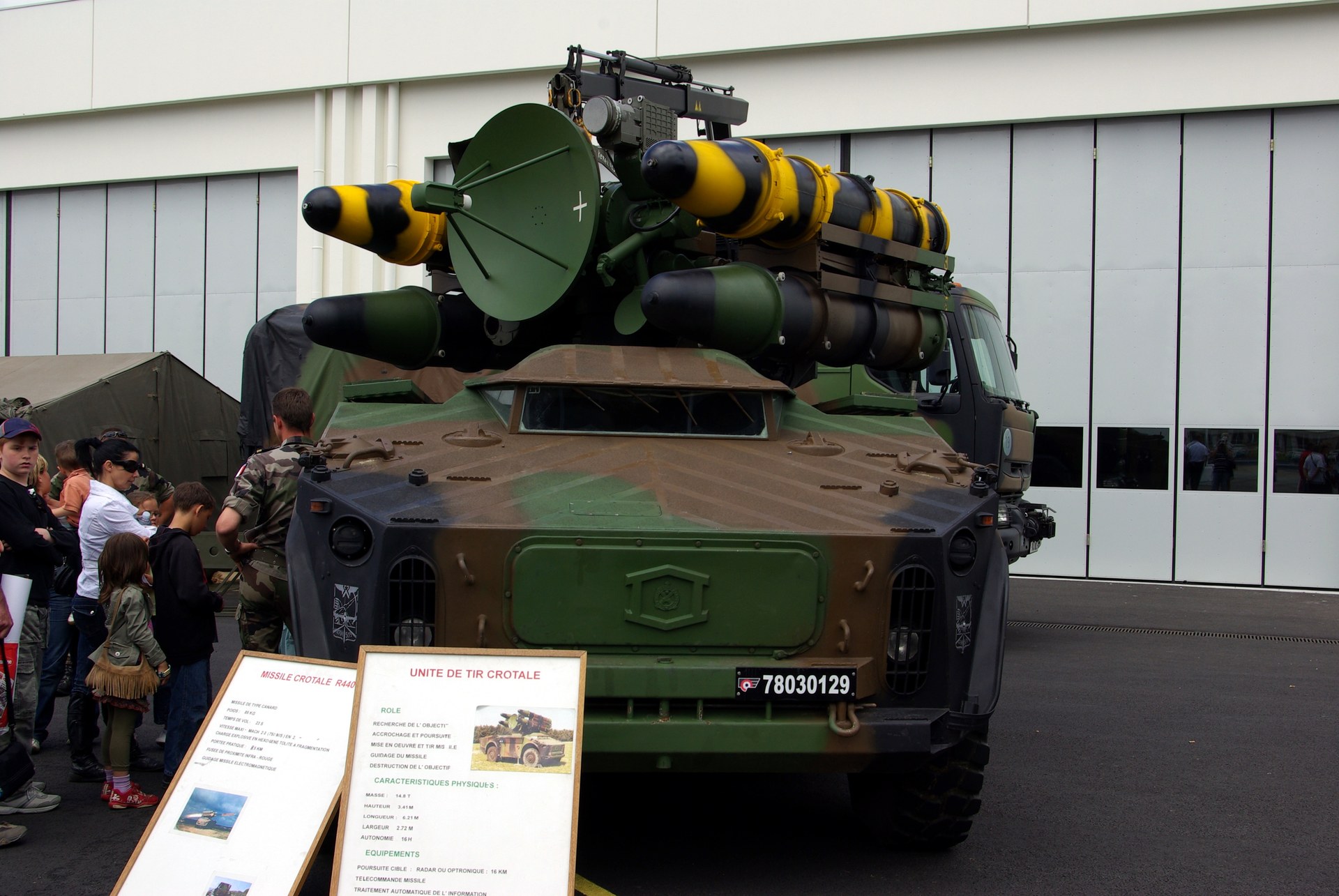

RIYADH — France deployed soldiers, radars and air-defense systems to Saudi Arabia’s Yanbu oil terminal starting around October 13, and Saudi Arabia is shipping diesel to France in return — the first confirmed European military deployment on Saudi soil tied to a named energy commitment. President Emmanuel Macron confirmed the arrangement on TF1 and France 2 on September 24, then became the first Western leader to visit Saudi Arabia since the Houthi attacks intensified, flying unannounced to Riyadh on October 21 for under three hours.
The diesel-for-protection deal sits at the center of a broader Saudi strategy visible across at least six bilateral partnerships: France at Yanbu, Britain’s RAF Typhoons, a Greek Patriot battery, Pakistan’s 8,000 troops, the Mecca Joint Defence Agreement with Turkey, and Egypt’s pending parliamentary authorization. Each partner gets something different. None has signed a mutual defense treaty with Riyadh. Saudi Arabia is constructing its wartime security not through collective agreements — which have produced condemnations, postponements and unsigned communiques — but through individual bargains struck one capital at a time.
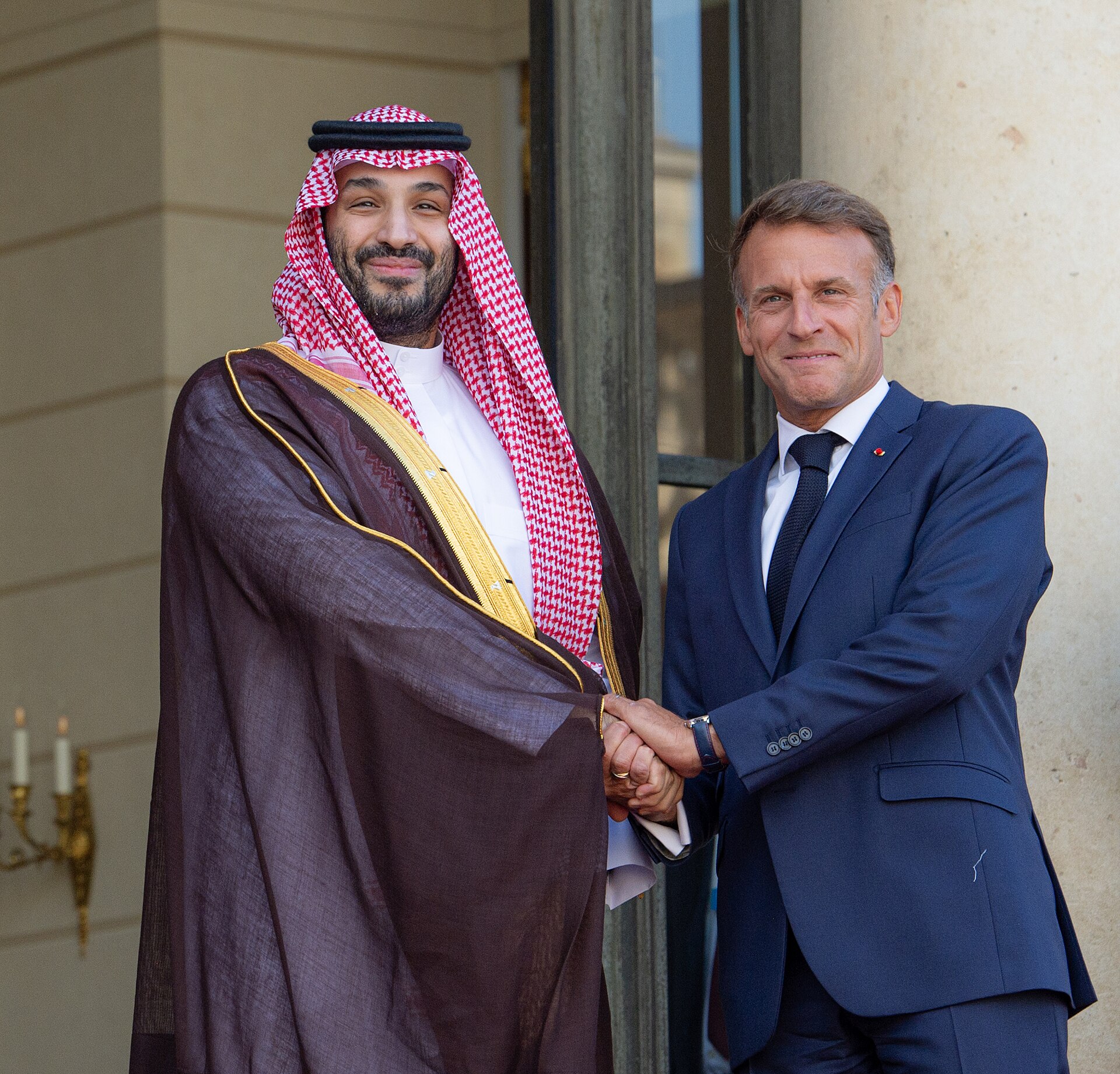
Table of Contents
What Did France Deploy to Yanbu?
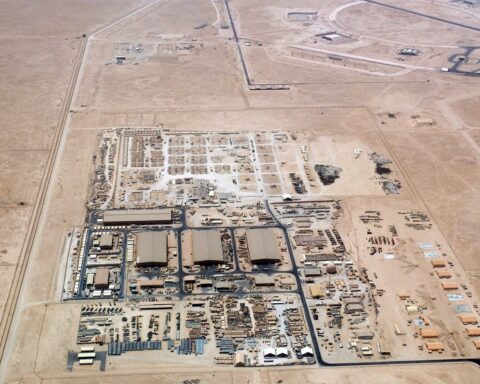
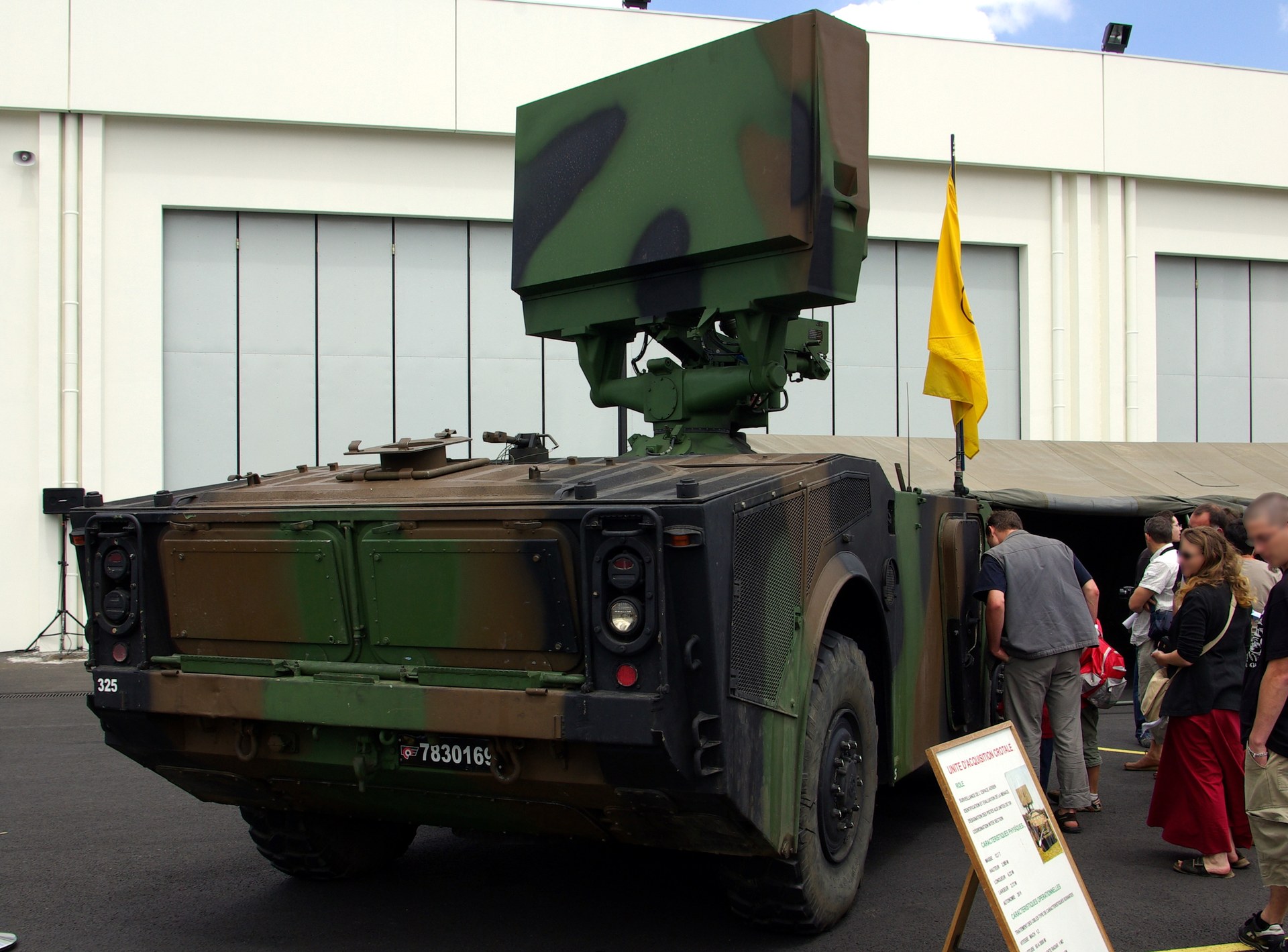
France deployed soldiers, radars and air-defense systems to Yanbu, Saudi Arabia’s Red Sea oil terminal, with the deployment beginning around October 13, 2026. President Macron announced the plan on September 24. Neither Paris nor Riyadh has disclosed troop numbers, equipment types, command structure or rules of engagement.
The House of Saud Daily Briefing
Saudi Arabia's news in 3 minutes, every morning. Free. See today's issue
Macron’s September 24 announcement on national television was specific about purpose, vague about scale: “We are going to send military assets, meaning soldiers, radars and defence systems, to protect this site. Not to get us involved in any conflicts, but to protect this site.” French Foreign Ministry spokesperson Pascal Confavreux confirmed the deployment — “France has started deploying military assets in Saudi Arabia” — and declined to elaborate.
“We are going to send military assets, meaning soldiers, radars and defence systems, to protect this site. Not to get us involved in any conflicts, but to protect this site.”
Emmanuel Macron, TF1 and France 2, September 24, 2026
General Fabien Mandon, France’s Armed Forces Chief of Staff, told parliament on October 9 that France had approximately 2,000 troops deployed across the Gulf region — in Qatar, Kuwait and now Saudi Arabia. He described the Yanbu component specifically as “at the study phase at the moment with Saudi Arabia.” Four days later, by Macron’s own account on October 21, French personnel had been on the ground for approximately eight days. The gap between “study phase” and operational presence closed between October 9 and October 13.
The France-Saudi military relationship has been built on arms sales and advisory support over five decades: a 1972 military assistance agreement, GIGN special forces advice during the 1979 Grand Mosque siege, a 2006 defense cooperation agreement, and 9.5 billion euros in Saudi defense orders between 2013 and 2022. A Strategic Partnership Council was established in 2024. France maintains its Camp de la Paix base in Abu Dhabi under a formal mutual defense commitment with the UAE. It has no comparable agreement with Saudi Arabia. The Yanbu deployment is the first time French combat-oriented assets have been positioned on Saudi territory.
No intermediate agreement between the 2024 Strategic Partnership Council and the October deployment has been disclosed. Whether a new bilateral military agreement was signed to govern French forces at Yanbu, or whether the deployment operates under an existing framework, has not been confirmed by either government.
Urban Coningham, a fellow at the Royal United Services Institute, told Al Jazeera that France’s role is “mostly limited to protecting Saudi export infrastructure.” Camille Lons of the European Council on Foreign Relations assessed France’s overall capacity for the deployment as “limited, partly because of demands on European defences from the war in Ukraine.”
The Diesel-for-Protection Exchange
Saudi Arabia agreed to supply France extra diesel “for as many months as necessary,” according to the Elysee. The Saudi commitment — reported by Al Jazeera as 95,000 tonnes per month for October and November, routed through TotalEnergies — is part of a broader Gulf fuel package Macron assembled during a five-country tour. The Elysee’s formulation ties the supply to the duration of the conflict rather than a fixed calendar. The arrangement has no disclosed end date.
The tour followed a specific order: Kuwait, the UAE, Bahrain, Qatar, then Riyadh. Each stop produced a fuel commitment. The UAE pledged 100,000 tonnes of diesel per month. Bahrain pledged another 100,000 tonnes. Qatar committed 2 TWh of LNG per month. The combined Gulf diesel total — 295,000 tonnes monthly — covers just over 10 percent of French consumption, according to Al Jazeera. Three separate diesel sources mean France is not dependent on any single Gulf producer for the full monthly supply. Riyadh was the last stop and the only one paired with a military deployment on the host’s soil.
The domestic pressure driving the tour was visible in every French forecourt. Up to 20 percent of petrol stations had run out of both fuel types at various points since the Hormuz conflict began, according to France 24. Violent protests over living costs preceded the departure. Aramco had already told European customers there would be no October oil deliveries as Hormuz war-risk insurance reached 10 percent of cargo value.
Macron’s October 21 stop in Riyadh — the first visit to the Kingdom by a Western leader since Houthi attacks intensified, according to Al Jazeera — lasted under three hours. He arrived from Qatar. “There must be no sign of febrility,” he told reporters. “I am fulfilling my role. I am at my post.”
The 95,000-tonne Saudi diesel figure has not been confirmed by a second independent source. Whether a signed written agreement governs the arrangement remains undisclosed.
Why Is Yanbu Worth a Military Deployment?
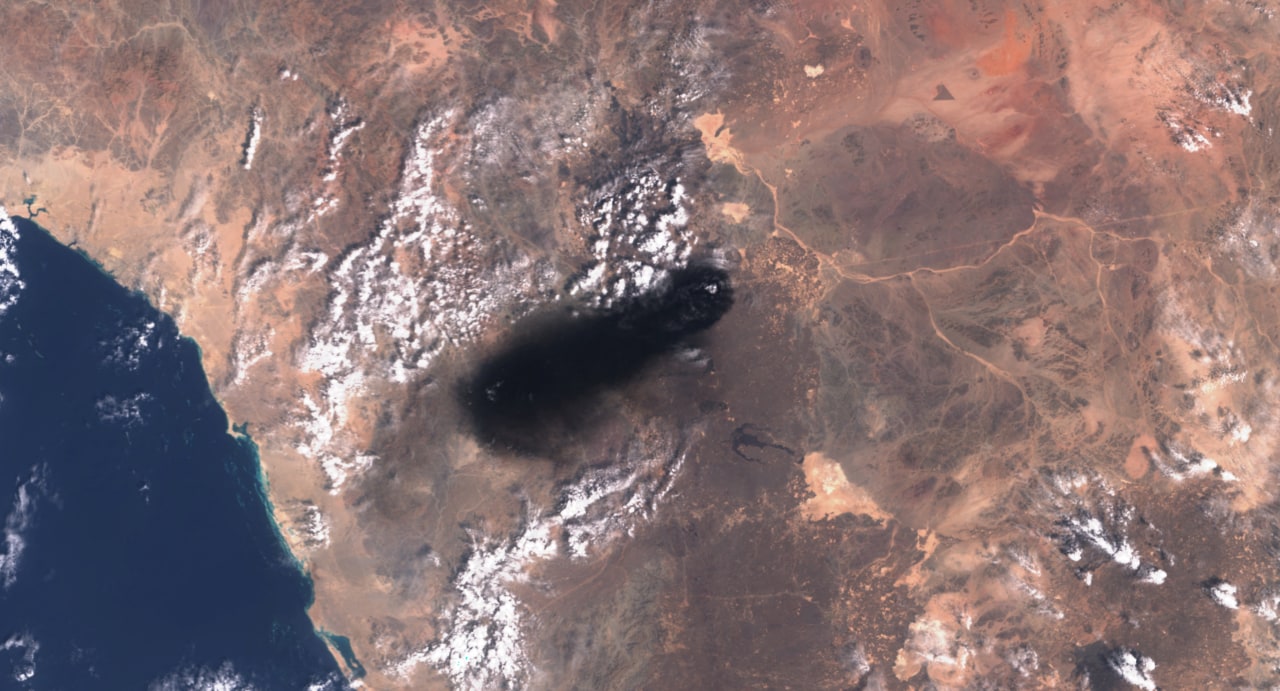
Yanbu is Saudi Arabia’s only major oil export terminal outside the Strait of Hormuz. Connected to the Eastern Province oil fields by the East-West Petroline, it has an effective export capacity of approximately 4 million barrels per day, according to Argus Media. Iran attacked the terminal in March 2026, and six missiles targeted it on September 24.
The East-West Petroline was built in the 1980s after the Iran-Iraq War, designed to provide a bypass route if Hormuz were ever closed. Its design capacity — approximately 7 million barrels per day — exceeds the terminal’s effective throughput, making Yanbu itself the bottleneck for Red Sea exports. The gap between the two numbers limits Saudi Arabia’s ability to reroute all eastern crude through the Red Sea even if the pipeline runs at maximum. Before the current conflict, Saudi Arabia exported only 760,000 barrels per day through the Red Sea, less than 14 percent of the roughly 5.5 million barrels per day that transited Hormuz, according to Argus Media.
The pipeline was engineered for temporary disruptions. What it faces now is sustained targeting. Iran struck Yanbu in March 2026, briefly halting loadings. Drones launched from Iraq hit the East-West Pipeline in early September, forcing a shutdown. On approximately September 24 — the same day Macron announced France’s deployment on national television — six ballistic missiles were intercepted targeting Yanbu and Taif, according to Euronews. Three attacks on the pipeline-terminal system in approximately six months.
Nawaf Obaid, a Saudi security analyst at King’s College London, told Al Jazeera that European deployments “could shield” what he described as “critical energy infrastructure.” With Aramco evacuating its Dhahran headquarters and Hormuz transits at historic lows, Yanbu handles a growing share of Saudi Arabia’s remaining export volume. With Brent crude at $114 per barrel, every loading interrupted at the terminal costs the Kingdom revenue it can collect nowhere else.
How Did France and Britain Bypass Parliament?
France used Article 35 of its constitution, which requires a parliamentary vote only after four months of a foreign deployment. Britain announced its RAF Typhoon deployment via a written ministerial statement — the lowest form of parliamentary engagement in the Westminster system. Neither country held a legislative vote before deploying forces.
Macron’s government disclosed the deployment on September 24. General Mandon briefed the defence committee on October 9, still describing the Yanbu component as a “study phase.” The deployment appears to have begun four days later. No vote has been held or scheduled.
The opposition responded across the political spectrum. Jean-Luc Melenchon, leader of La France Insoumise, demanded a full debate and vote. His party colleague Clemence Guette framed the risk directly: “Sending French troops into a war zone could very quickly make us cobelligerents,” she told The National. Rassemblement National’s Sebastien Chenu challenged the legal foundation: “we do not have a defence agreement” with Saudi Arabia, he told LCP.
“Sending French troops into a war zone could very quickly make us cobelligerents.”
Clemence Guette, La France Insoumise MP, September 2026
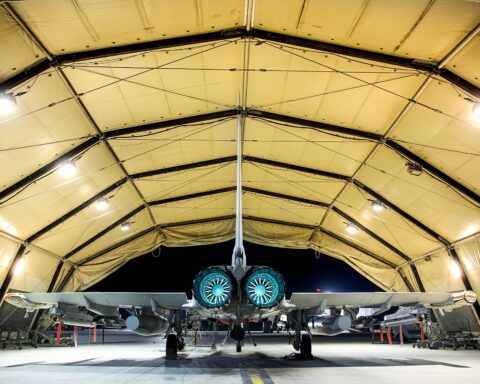
Britain’s process was thinner still. The RAF Typhoon deployment was announced on October 20 through Written Ministerial Statement HCWS394 — deposited in the parliamentary library, not debated on the floor. An urgent question was heard in the Commons on October 22, after the aircraft were already in Saudi airspace. A detailed account appeared in a separate House of Saud investigation of the UK deployment.
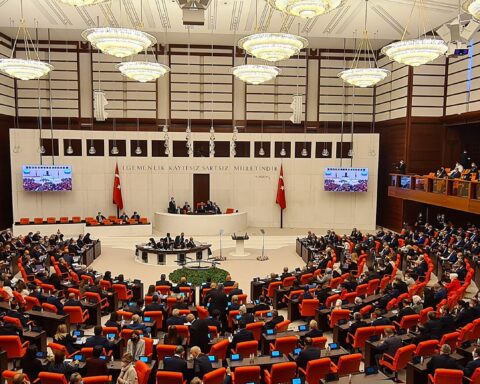
The pattern extends well beyond European capitals. Pakistan deployed 8,000 troops to Saudi Arabia without a parliamentary vote. Turkey submitted the Mecca Joint Defence Agreement to its Grand National Assembly on October 20 — seventy-four days after signing it — and ratification has not followed.
Egypt’s president asked parliament to authorize troops, but the vote was postponed. Of all the partners with confirmed or pending military commitments to Saudi Arabia, not one submitted its deployment to a binding legislative vote before forces arrived.
The mechanisms differ across capitals but converge in effect. France’s Article 35 grants the government four months before requiring a vote. Britain’s royal prerogative carries no parliamentary deadline. Pakistan deployed under executive authority. Turkey’s constitution requires parliamentary ratification for foreign military commitments — the only partner whose legal framework forced the question to a legislature, and the only one whose military commitment remains stalled as a result.
The Bilateral Lattice
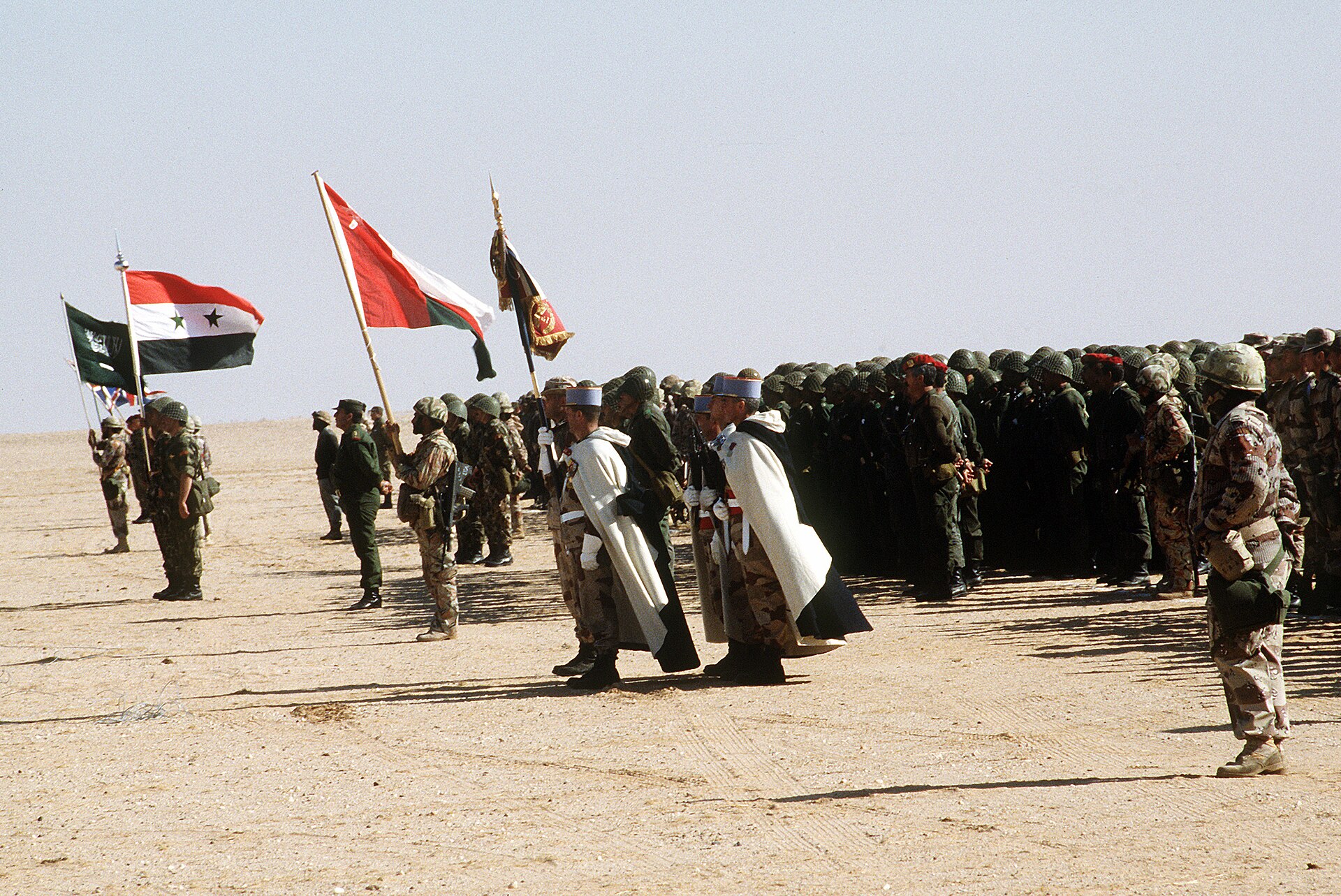
Saudi Arabia’s wartime security is not organized through a single alliance. It is a set of bilateral agreements negotiated individually with at least seven partners, each structured around different terms. An analysis published by Modern Diplomacy on October 18 described the pattern: “Saudi Arabia Is Buying Allies, Not an Alliance.”
| Partner | Military commitment | Known incentive or framework | Parliamentary authorization |
|---|---|---|---|
| France | Troops, radars, air defense at Yanbu | 95,000 t/month diesel (Al Jazeera) | None; 4-month Article 35 window |
| United Kingdom | RAF Typhoons, advisers, A400M, refuelling | Not publicly confirmed | Written ministerial statement only |
| Greece | Patriot battery | Not publicly confirmed | Not publicly confirmed |
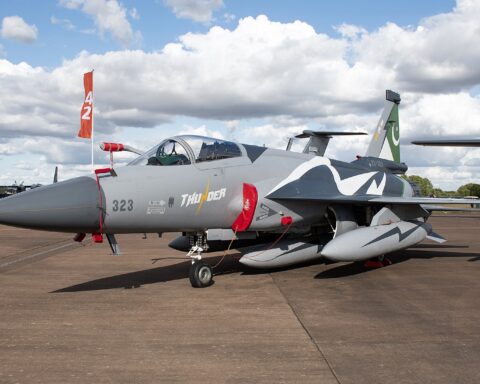
| Pakistan | 8,000 troops, squadron, air defense | Mecca Joint Defence Agreement | No parliamentary vote |
| Turkey | Mecca pact (unratified) | Mecca Joint Defence Agreement | Submitted Oct 20; not ratified |
| Egypt | Pending | Bilateral relationship | Vote postponed |
| United States | Strategic Defence Agreement; F-35 approval | Strategic partnership | No treaty ratified |
The bilateral structure gives Riyadh flexibility that a collective treaty cannot. Each partner negotiates separately. Each government faces different domestic constraints — France’s four-month constitutional window, Britain’s royal prerogative, Pakistan’s executive authority, Turkey’s stalled ratification. The terms of each arrangement can be adjusted without consulting the others.
France receives diesel. Pakistan deployed the largest contingent under the Mecca pact framework. Britain committed combat aircraft — the only Western partner to have done so — under terms it has not publicly detailed. Burcu Ozcelik of the Royal United Services Institute told Al Jazeera that after “debilitating attacks on Saudi’s energy infrastructure,” the UK could face pressure to take a more offensive role, but that London would view this “as a last resort.”
Britain’s contribution is the most hardware-intensive of the European commitments: Typhoon fighter jets, military advisers, A400M transport aircraft and Voyager tankers for air-to-air refuelling. The Typhoons bring an air-combat capability that neither the French radars at Yanbu nor the Greek Patriot battery can provide. Whether British pilots will fly combat sorties or serve only in advisory and training roles has not been disclosed. The written ministerial statement that authorized the deployment offered no operational detail.
The cost of flexibility is coordination. There is no joint command spanning the French presence at Yanbu, British Typhoons, the Greek Patriot battery and Pakistani ground forces. Each partner sets its own rules of engagement. No interoperability exercises between the partner forces have been announced. The Arab Center Washington DC assessed the Mecca pact partners specifically: they “guard Saudi skies but won’t fight Iran.” The limitation extends across the lattice. None of the seven partners has publicly committed to offensive operations against Houthi or Iranian launch sites.
Where Did Multilateral Frameworks Fail?
The bilateral approach emerged after multilateral efforts produced statements but not enforceable commitments. The EU-GCC summit was postponed in mid-October after sustained Houthi missile attacks on Riyadh. The Future Investment Initiative was pushed to 2027. An Istanbul foreign ministers’ meeting produced no communique. The UN Security Council issued a presidential statement affirming Saudi Arabia’s right to self-defense and condemning Houthi strikes, with no enforcement mechanism attached.
Saudi Arabia’s own multilateral initiatives produced framework language without operational substance. The Mecca Joint Defence Agreement, signed August 7 by Saudi Arabia, Pakistan and Turkey, uses collective-defense language and was first invoked on October 5. No text has been published. There is no joint command structure. There is no defined trigger mechanism. Turkey’s parliament has not ratified it.
The 15-nation Multinational Maritime Defence Alliance, announced July 30, covers the Red Sea, Bab al-Mandab and the Gulf of Aden. Its membership — Bahrain, Bangladesh, Djibouti, Egypt, Jordan, Kuwait, Nigeria, Pakistan, Qatar, Somalia, Sudan, Turkey and Yemen — includes no Western nation and no United States.
Both the Mecca pact and the maritime alliance generated diplomatic momentum. Neither has produced a unified military command or a joint operation publicly attributed to its framework. The bilateral deals, by contrast, produced deployed forces within weeks of negotiation.
When Macron landed in Riyadh on October 21, the EU-GCC summit had already been cancelled, the UNSC presidential statement had already been issued, and the Mecca pact’s first invocation had produced Pakistani troops but no Turkish ratification. France’s diesel deal, by contrast, moved from announcement to operational deployment in under a month.
Tehran’s Response
Iran has targeted Yanbu directly. The March 2026 attack briefly halted loadings at the terminal. Drones launched from Iraq struck the East-West Pipeline in early September, severing the link between the Eastern Province oil fields and the Red Sea coast. Six ballistic missiles were intercepted near Yanbu and Taif on approximately September 24, according to Euronews. Saudi Arabia expelled Iran’s military attache and four embassy staff, giving them 24 hours to leave after what Riyadh called “repeated Iranian attacks,” according to Al Jazeera. The expulsion left Iran with no military representation in Riyadh.
Iranian officials framed Saudi Arabia’s bilateral defence strategy as continued dependency rather than growing strength. Ebrahim Rezaei, a member of Iran’s parliamentary national security committee, said the Mecca pact is “no more effective than Saudi Arabia’s long dependence on Washington” and urged Riyadh to stop relying on outside protection, as reported by the Arab Center Washington DC.
Foreign Minister Abbas Araghchi took a different approach. He publicly welcomed the Mecca pact and urged Muslim states to “rely on themselves,” according to the Arab Center Washington DC. The message targeted a specific audience: Pakistan and Turkey, both Mecca pact signatories and both maintaining diplomatic relations with Tehran. By validating the Muslim-only security framework, Araghchi sought to widen the distance between Saudi Arabia’s regional partners and its Western ones — the French at Yanbu, the British Typhoons, the Greek Patriot battery — which Iran cannot engage diplomatically.
What Comes After France?
Britain’s RAF Typhoons arrived without a publicly confirmed energy quid pro quo. Egypt’s parliamentary vote on troop deployment has been postponed. Greece deployed a Patriot battery on undisclosed terms. Each new partner enters without a treaty, without a parliamentary vote and with a commitment limited to defensive operations.
France faces a constitutional clock. Article 35 requires a parliamentary vote if forces remain abroad beyond four months. With the Yanbu deployment starting around October 13, the threshold arrives in approximately mid-February 2027. The opposition has laid the groundwork. Melenchon demanded a vote on September 24. Guette raised the cobelligerence risk. Chenu contested the legal basis. If the conflict has not ended by then, the diesel deal will face the National Assembly.
Egypt remains the largest uncommitted partner. President Abdel Fattah el-Sisi asked parliament to authorize troops for Saudi Arabia. The vote was postponed. The financial relationship between Cairo and Riyadh gives the bilateral framework a different set of terms than the French diesel exchange. What Egypt receives in return for a military commitment has not been publicly discussed.
The United States sits at the lattice’s edge. Washington approved a potential $24.3 billion sale of 48 F-35As to Saudi Arabia in September 2026, according to The Aviationist. A Strategic Defence Agreement binds the two countries. But no mutual defense treaty exists. No new US troop deployment to Saudi territory has been announced in response to the current conflict.
Each bilateral deployment shares a common structure: defensive mission, no parliamentary mandate, unilateral withdrawal possible. The speed of assembly — France moved from announcement to operational deployment in under a month — came at the cost of the durability that treaties and parliamentary votes provide.
On October 22, the day after Macron left Riyadh, an urgent question was raised in the British House of Commons about the RAF deployment. France’s opposition renewed its demand for a debate. Turkey’s ratification remained stalled in the Grand National Assembly. France’s diesel was flowing. Its troops were at Yanbu. The terms of the next bilateral deal — and the next partner — remain undisclosed.
Frequently Asked Questions
Has any Western nation signed a mutual defense treaty with Saudi Arabia?
No. The US Strategic Defence Agreement falls short of a mutual defense treaty requiring Senate ratification. France’s only formal mutual defense commitment in the Gulf is with the UAE through the Camp de la Paix base agreement in Abu Dhabi, not with Saudi Arabia. Britain deployed RAF Typhoons under the royal prerogative without a bilateral defense pact. Greece has not disclosed the legal framework governing its Patriot battery deployment. No Western government has a binding obligation to defend Saudi Arabia comparable to NATO’s Article 5.
What is the East-West Petroline?
The East-West Petroline is a pipeline system connecting Saudi Arabia’s Eastern Province oil fields to the Yanbu terminal on the Red Sea coast. Built in the 1980s after the Iran-Iraq War, it was designed to bypass the Strait of Hormuz during temporary closures. The pipeline’s design capacity is approximately 7 million barrels per day, but the Yanbu terminal’s effective export capacity — approximately 4 million barrels per day, according to Argus Media — is the system’s constraint. Before the current conflict, Saudi Red Sea exports ran at only 760,000 barrels per day. Hormuz was open, the southern shipping route was shorter and cheaper, and the bypass system sat largely idle.
How many countries have military commitments to Saudi Arabia in the current conflict?
At least seven countries have confirmed or pending military commitments: France (troops, radars and air defense at Yanbu), the United Kingdom (RAF Typhoons, A400M transport, military advisers and air-to-air refuelling), Greece (Patriot battery), Pakistan (8,000 troops, a fighter squadron and air-defense units), Turkey (Mecca Joint Defence Agreement, not yet ratified by parliament), Egypt (parliamentary authorization pending), and the United States (Strategic Defence Agreement and F-35 sale approval). Additionally, the Saudi-led 15-nation Multinational Maritime Defence Alliance covers the Red Sea and Gulf of Aden, though it has no Western members.
Can the French deployment last indefinitely without a parliamentary vote?
No. Under Article 35 of the French Constitution, the government must inform the National Assembly within three days of deploying forces abroad, but a binding vote is required only if the deployment extends beyond four months. With the Yanbu deployment beginning around October 13, the four-month window closes in approximately mid-February 2027. If the government seeks to extend the deployment, it must secure a majority in the Assembly — where Macron’s coalition governs without an outright majority and where opposition from both La France Insoumise on the left and Rassemblement National on the right has been vocal since the deployment was announced.
What did Macron’s five-country Gulf tour produce?
Macron visited Kuwait, the UAE, Bahrain, Qatar and Saudi Arabia in October 2026, securing fuel commitments at each stop. The UAE committed 100,000 tonnes of diesel per month, Bahrain another 100,000 tonnes, and Saudi Arabia 95,000 tonnes routed through TotalEnergies. Qatar pledged 2 TWh of LNG monthly. Only the Saudi stop included a military quid pro quo — troops, radars and air-defense systems at Yanbu. The combined diesel package of 295,000 tonnes per month covers just over 10 percent of French consumption, according to Al Jazeera. The specific terms of the Kuwait commitment have not been disclosed.
The House of Saud Daily Briefing
Saudi Arabia's news in 3 minutes, every morning. Free. See today's issue