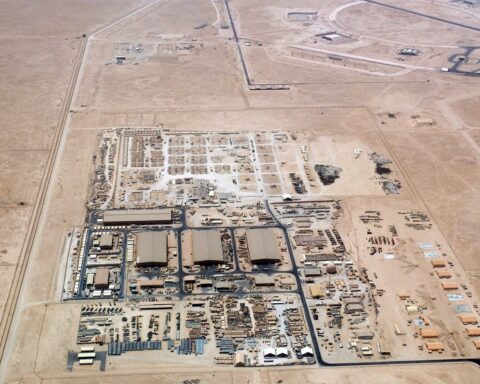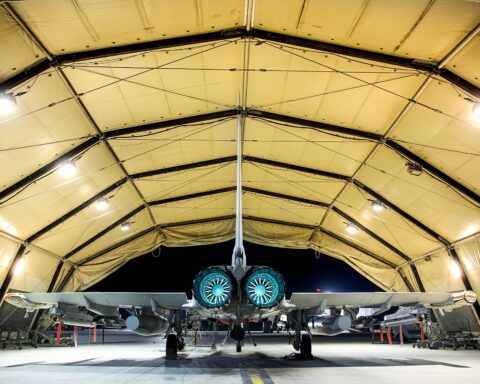

ISLAMABAD — Sixteen Pakistani JF-17 fighter jets sit at King Abdulaziz Air Base in Saudi Arabia’s Eastern Province, parked there since April under a bilateral defence agreement whose full text has never been released. On 10 October, when a Houthi strike on Riyadh’s King Khalid International Airport killed 13 people and wounded more than 300, Islamabad issued no statement about what those aircraft did that morning — or on any morning since they arrived six months ago.
Pakistan has roughly 8,000 troops deployed on Saudi soil, according to Reuters, making it the largest foreign military contingent in the kingdom. The force includes drone capabilities and a Chinese-made HQ-9 air-defence battery operated by Pakistani personnel and financed by Riyadh. Two overlapping pacts underpin the deployment: a bilateral Strategic Mutual Defence Agreement signed on 17 September 2025, and the trilateral Makkah Joint Defence Agreement with Turkey, signed on 7 August 2026 — both containing Article 5-style clauses that treat an attack on one signatory as an attack on all, and both formally invoked at an emergency Riyadh meeting on 5 October.
What followed was a public display of maximum commitment coupled with zero operational specifics. Defence Minister Khawaja Asif confirmed Pakistani forces were in “a supporting role, including reconnaissance.” DG ISPR Lt Gen Ahmed Sharif Chaudhry called the commitment “non-negotiable” and “absolute,” with “no ifs and buts.” A Pakistani official told Reuters that Houthi attacks on Saudi soil “are attacks on Pakistan — it is our red line.” None of them named the command structure, confirmed a single sortie, or identified who is legally responsible when a Pakistani pilot over Saudi airspace makes a targeting decision.
The House of Saud Daily Briefing
Saudi Arabia's news in 3 minutes, every morning. Free. See today's issue
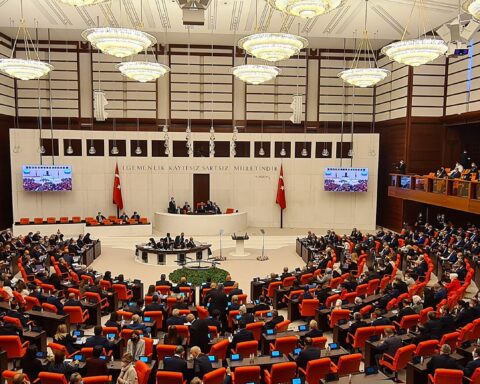
The silence is not accidental — it is structural, the product of contradictory obligations, domestic political constraints, and a 55-year military relationship that has always operated most smoothly when nobody examines its terms too closely. A government source told Reuters the SMDA permits a deployment of up to 80,000 Pakistani troops, ten times the current force, and the domestic institution that might question such a commitment — Pakistan’s parliament — was never asked. The arrangement works, as it has always worked, by avoiding the questions that would make it stop working.
Table of Contents
- What Has Pakistan Deployed to Saudi Arabia?
- How Did 55 Years of Military Ties Reach This Point?
- What Has Islamabad Said — and What Won’t It Say?
- How Does Iran View Pakistan’s Saudi Deployment?
- Why Did Pakistan Bypass Parliament?
- Can the Mecca Pact Deliver What It Promises?
- Frequently Asked Questions
What Has Pakistan Deployed to Saudi Arabia?
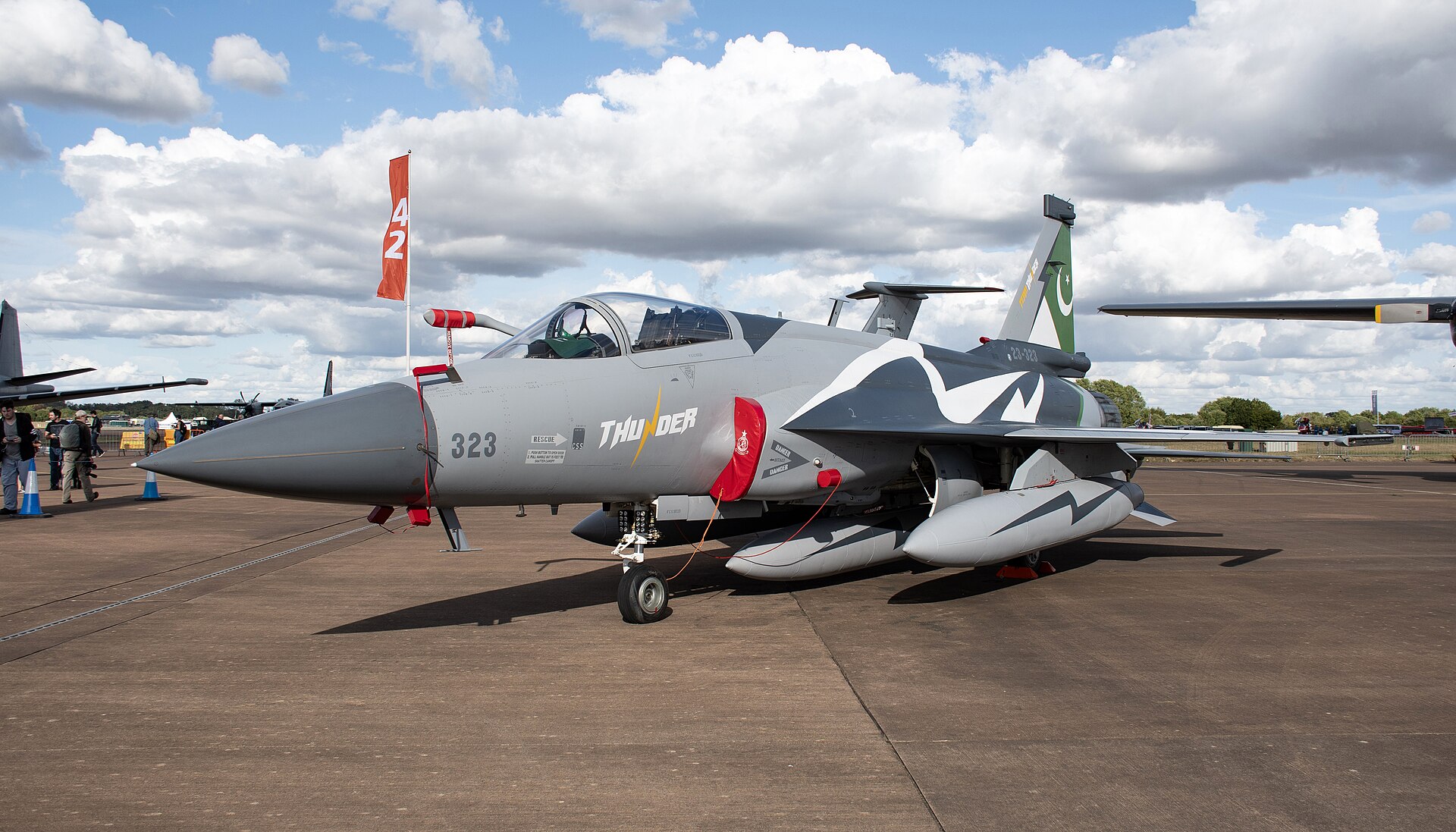
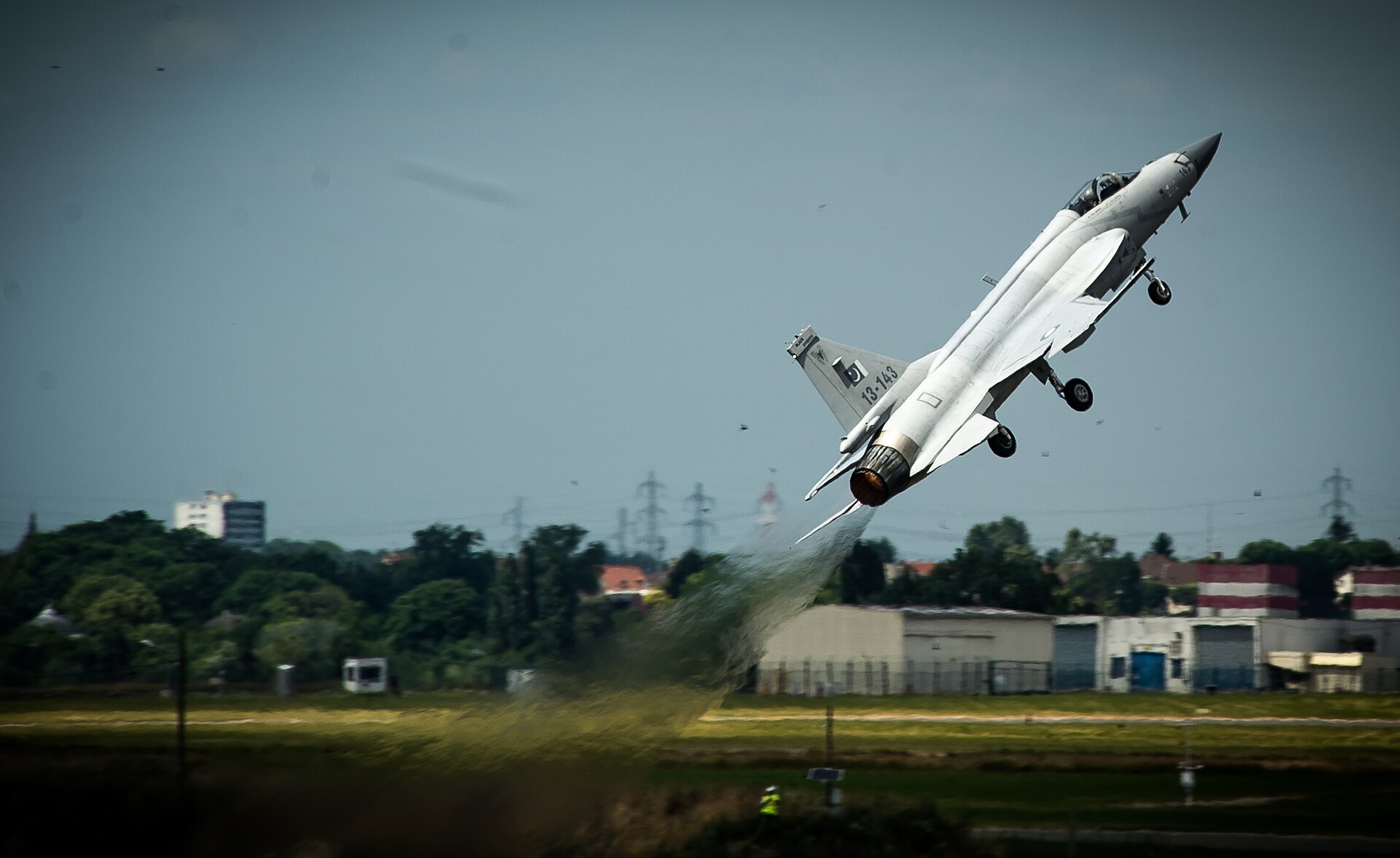
Pakistan’s military footprint in Saudi Arabia, as reported by Reuters in May 2026, consists of approximately 8,000 troops, a squadron of around 16 JF-17 Thunder fighter jets — the lightweight multirole aircraft Pakistan co-developed with China — drone capabilities, and an HQ-9 long-range air-defence system manufactured by China’s CASIC and operated entirely by Pakistani personnel. The entire deployment is financed by Riyadh, a detail the Reuters report included and no Pakistani official has disputed.
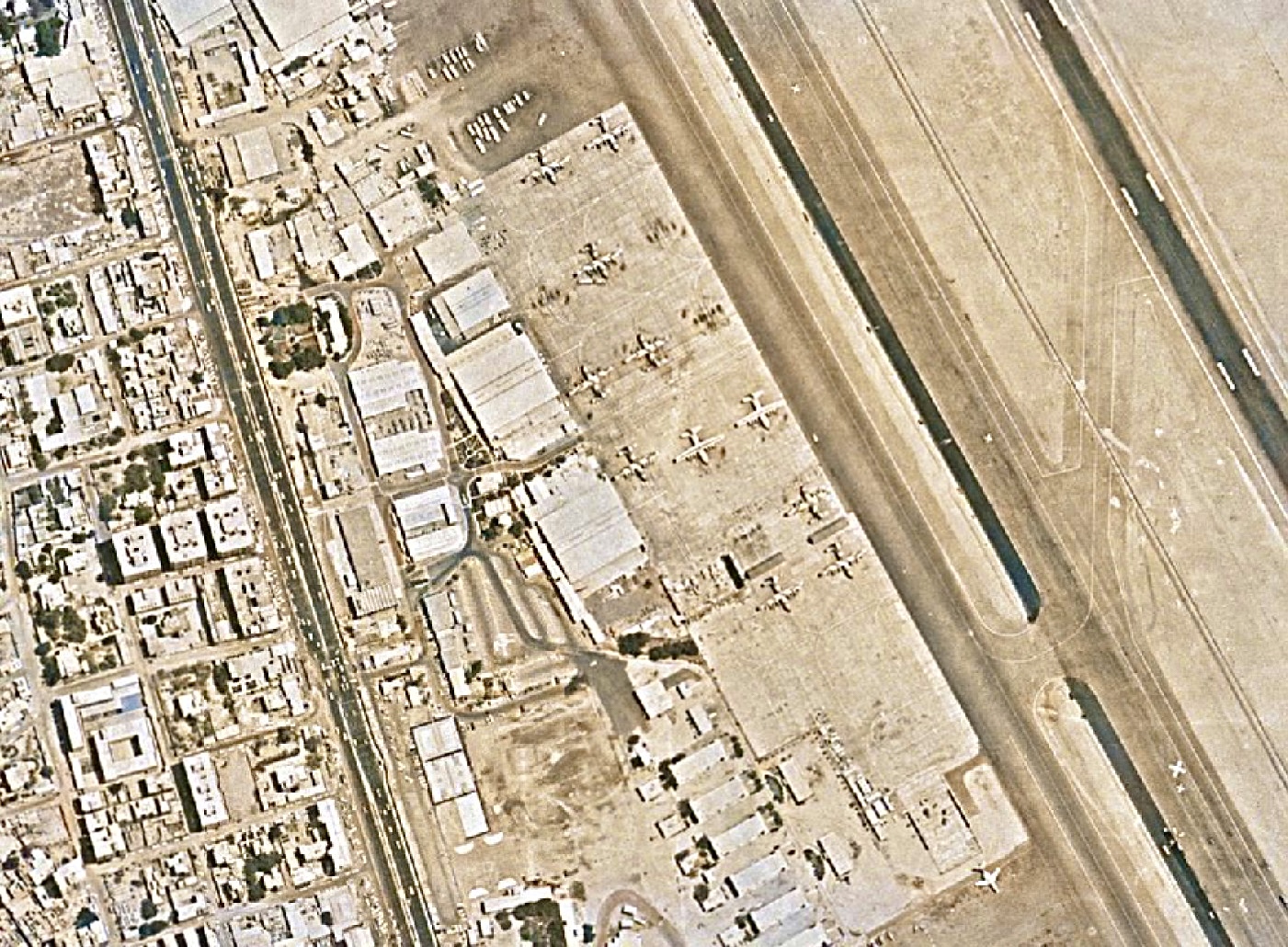
The JF-17s arrived at King Abdulaziz Air Base on 11 April 2026, announced by the Saudi defence ministry under the bilateral Strategic Mutual Defence Agreement signed during Prime Minister Shehbaz Sharif’s visit to Riyadh on 17 September 2025, according to Al Jazeera. The SMDA’s core clause states that “any aggression against either country shall be considered an aggression against both,” according to Arab News and the Atlantic Council — a formulation that mirrors NATO’s Article 5 in language while sharing none of its institutional infrastructure, its consultative mechanisms, or its 75 years of operational precedent. Pakistani security sources responded to the Reuters deployment report by calling it “angled” without disputing its figures, according to The News.
A second layer — the Makkah Joint Defence Agreement — was signed on 7 August 2026, adding Turkey, whose parliament has not ratified the pact, according to Al Jazeera. The trilateral clause is broader still: “any armed attack against any one of the three states shall be regarded as an attack against them all.” On 5 October, at an emergency meeting in Riyadh, Prince Khalid bin Salman announced the pact’s committee had agreed to “activate collective deterrence measures… in response to the attacks and all those responsible for them,” according to Al Jazeera. The joint statement from that meeting specified no force size, no operational role, and no command arrangement for the deployed forces.
A confidential government source told Reuters the SMDA’s terms allow for up to 80,000 Pakistani troops — roughly ten times the current deployment, and the equivalent of approximately eight infantry divisions. No Status of Forces Agreement governing the legal standing of Pakistani personnel on Saudi soil has been identified in any source; the key questions of accountability and command remain entirely unaddressed in public, which means they are either covered in the unpublished text of the SMDA or they are not covered at all.
How Did 55 Years of Military Ties Reach This Point?
Pakistan’s military relationship with Saudi Arabia began in the late 1960s, when Pakistani Air Force instructors helped train the first Royal Saudi Air Force jet pilots — a connection that escalated rapidly when, in 1969, PAF pilots flew Saudi Lightning interceptors during the al-Wadiah border war with South Yemen. That pattern — Pakistani personnel operating Saudi equipment against Saudi adversaries, under arrangements that were acknowledged privately and denied publicly — would recur for the next half-century.
The 1979 Grand Mosque seizure in Mecca produced the first acknowledged deployment of Pakistani special forces inside the kingdom, assisting Saudi security forces in ending a siege that lasted two weeks and killed hundreds. Three years later, in 1982, a formal deputation agreement established the Saudi Pakistan Armed Forces Organisation — SPAFO — with a headquarters in Riyadh and an armoured brigade stationed at Tabuk, near the Jordanian border, where it remained until 1988. A declassified CIA assessment from June 1985 estimated that between 13,000 and 14,000 Pakistanis were serving in or alongside the Saudi military at that time, a figure that suggests the relationship was already far larger than either government publicly acknowledged.
The 1991 Gulf War brought the largest deployment: up to 13,000 troops plus 6,000 advisers, according to Pakistan’s own Foreign Office, which stated in 2026 that “since 1982, the Pakistan armed forces have been present in Saudi Arabia in one capacity or another.” That sentence — delivered without fanfare in a routine briefing — is revealing not for what it claims but for what it normalises: a permanent military presence abroad treated as something so unremarkable it barely warrants a press release.
The most consequential precedent is the most recent. In April 2015, when Saudi Arabia requested warships, aircraft and ground forces for its intervention in Yemen, Pakistan’s parliament voted unanimously to stay neutral — while pledging to defend Saudi territory and holy sites if directly threatened. The resolution was a calibration exercise of remarkable precision: it gave Riyadh the commitment it needed on Mecca and Medina while declining a war that Pakistan’s public, its opposition parties, and much of its military establishment regarded as unwinnable. Army Chief Raheel Sharif subsequently visited Riyadh to repair the relationship, and by January 2017 he had been appointed commander of the Islamic Military Counter Terrorism Coalition, a 41-to-43-nation grouping headquartered in Riyadh with a counter-terrorism mandate distinct from the current pacts.
The 2015 resolution’s holy-sites carve-out is now being invoked as the moral and legal foundation for the 2026 deployment. DG ISPR Chaudhry cites the “Haramain Sharifain” — the Two Holy Mosques — in every public statement, a formulation that connects the current deployment to a parliamentary decision that was unanimously supported and frames the commitment in religious terms that are politically difficult to oppose in Pakistan.
What Has Islamabad Said — and What Won’t It Say?
The Pakistani government has spoken about its Saudi deployment in a specific register: maximum rhetorical commitment, zero operational detail. DG ISPR Lt Gen Ahmed Sharif Chaudhry said on 18 September 2026 that “Pakistan fully stands with the kingdom of Saudi Arabia, both diplomatically and physically,” that the commitment was “unconditional,” and that “we will go to any extent for the security of Haramain Sharifain,” according to Dawn. A month later, on 19 October, with Houthi missiles having killed one person and injured eight at King Fahd Airport in Dhahran and reached central Riyadh, he said “whatever support is needed to do that is being provided and will be provided” — while declining to specify what that support consisted of, citing “operational confidentiality.”
Defence Minister Khawaja Asif went slightly further, telling Al Jazeera on 6 October that Pakistani forces were in “a supporting role, including reconnaissance,” and that “the combat is practically being conducted by Saudi Arabia’s own forces.” He declined to answer directly whether Pakistani troops had joined airstrikes on Yemen. The formulation is carefully constructed: “supporting role” covers everything from logistics and training to active air defence and electronic warfare, while “reconnaissance” — if it means what it typically means in military operations — implies Pakistani assets are involved in target acquisition, which is a combat function by any operational definition, described in language designed to sound like it is not.
The nuclear dimension surfaced briefly and was immediately suppressed. An unnamed Pakistani minister said nuclear capabilities “will be made available to [Saudi Arabia] according to this agreement,” a statement so politically dangerous that Asif moved within hours to tell Reuters that nuclear weapons were “not on the radar” of the pact, according to the Atlantic Council’s analysis. The contradiction was never resolved — the original minister was never publicly identified, and no further questions on the subject appear to have been entertained.
On 9 October, as Saudi Arabia and Yemen’s government asked the UN Security Council to act, Pakistan said it had a “substantial number of forces” in Riyadh, according to Al Jazeera. On 11 October, Saudi Arabia, Egypt, Pakistan and Turkey issued a joint condemnation of Houthi attacks, according to CBS News. The joint statement confirmed that the four governments were aligned — it said nothing about what any of their forces were doing. The most telling formulation came from a Pakistani official speaking anonymously to Reuters: Houthi attacks on Saudi Arabia “are attacks on Pakistan — it is our red line.” NATO’s Article 5 has been invoked once in 75 years, and when it was — after the September 11 attacks — the alliance spent months defining the collective response. Pakistan declared its red line without defining what crossing it would trigger.
How Does Iran View Pakistan’s Saudi Deployment?
Tehran’s response to Pakistan’s military presence in Saudi Arabia has followed a pattern of calibrated escalation — public warnings that stop short of direct threats while leaving no doubt that Iran considers Pakistani forces a factor in its strategic calculations. Foreign Ministry spokesman Esmail Baghaei, when asked about reports of a mass Pakistani deployment, told IranIntl in October 2026: “We have also heard this rumour, and we hope it is not true.” The phrasing is diplomatic language at its most loaded — “we hope it is not true” is not an expression of uncertainty but a statement of consequence, delivered in a register that every foreign ministry in the region reads fluently.
Iranian parliamentarians dispensed with the diplomatic register entirely. Alaeddin Boroujerdi, a veteran MP, warned that “the entry of Pakistan and Turkey will definitely work to their own detriment” and said Pakistan’s public is “revolutionary, Muslim and highly sensitive to such issues” — a pointed reminder that Iran maintains sectarian and cultural influence among Pakistan’s Shia population, which comprises a substantial minority. Ahmad Naderi, another parliamentarian, said Pakistan “should no longer be considered a mediator but a regional intervenor,” according to IranIntl, and Ebrahim Rezaei told Pakistan to “correct your policies so that you do not have to beg others for security.” That last line was directed as much at a domestic Iranian audience as at Islamabad, but the word “beg” was chosen for export.
The mediator-to-intervenor distinction is not rhetorical. Pakistan brokered the April 2026 US-Iran talks in Islamabad — the highest-level direct contact between Washington and Tehran since 1979 — and Prime Minister Shehbaz Sharif credited the Islamabad Memorandum of Understanding as a Pakistani diplomatic achievement. Javad Heiran-Nia, an analyst at Tehran’s Persian Gulf Studies Group, told Al Jazeera that “if Pakistan joins offensive operations against the Houthis, Iran regards it as a red line,” and described Pakistan’s credibility as a mediator as “fragile” — its role had shifted to “management of conflicting interests.” Tehran is signalling, with increasing directness, that the mediator role and the military deployment cannot coexist.
Iran has also declared a shift to an offensive military doctrine and claimed its missile arsenal is 1.5 times larger than previously disclosed — a posture that complicates calculations about what Pakistan’s air-defence systems would face if the conflict widens beyond its current parameters. Tasnim, an Iranian state news agency, warned that Ankara and Islamabad “may be directly harmed through attacks on their ships, interests and perhaps even their own territory” if they join attacks on Yemen, according to IranIntl. The Houthis themselves have not publicly named Pakistani forces — an omission that may reflect a deliberate Iranian decision to keep the escalation path open without forcing Pakistan into a position where its domestic audience demands a response.
Why Did Pakistan Bypass Parliament?
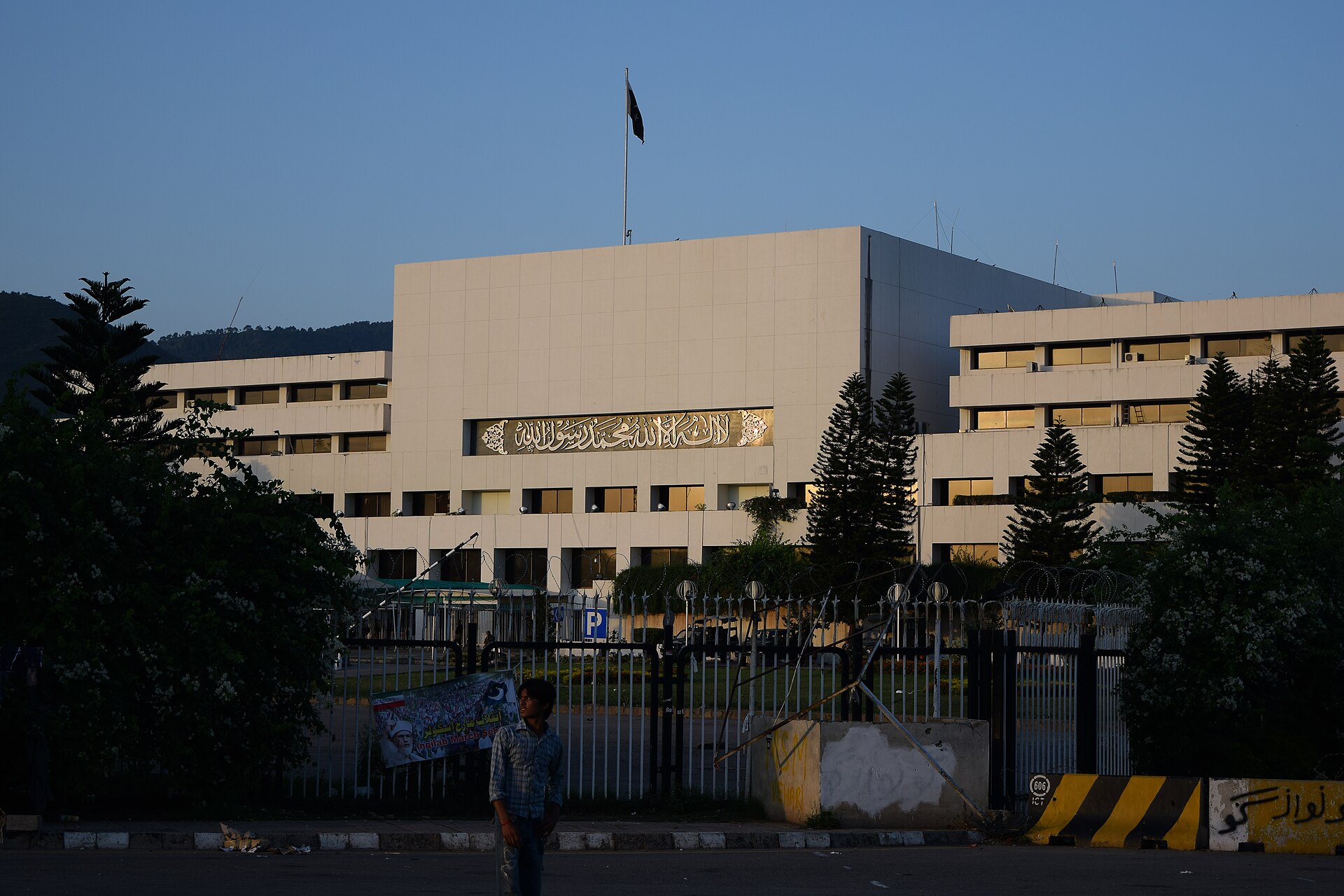
In 2015, when Saudi Arabia asked for Pakistani forces to join the Yemen intervention, parliament held a formal debate and voted unanimously to stay neutral — a decision that was, in Pakistani constitutional terms, historically unusual in the degree to which it constrained the military’s freedom of action abroad. In 2026, the deployment of 8,000 troops, 16 fighter jets and an air-defence system to a country under active missile attack proceeded without any equivalent vote, without a formal parliamentary debate, and without a public explanation of the legal authority under which it was authorised. The Information Ministry told Reuters the deployment “has gone through all necessary government procedures” but declined to specify whether cabinet or parliament was involved.
The domestic political architecture explains the silence. Army Chief General Asim Munir was given a constitutional field marshal rank in 2026, extended in post to 2030 via legislation, and granted immunity from criminal prosecution — a consolidation of military authority without recent precedent. Andreas Krieg, an associate professor at King’s College London, described a “reinforcing cycle” in which foreign partners treat the army as indispensable, strengthening its domestic claim to power; a system with weak counterweights, he told Reuters, is “good at entering commitments and worse at correcting them once costs emerge.”
PTI, the party of jailed former prime minister Imran Khan, is marching on Islamabad and has accused the military of dominating civilian politics. PTI spokesperson Zulfi Bukhari said the deployment “should be debated with political acumen” — a demand that is substantively reasonable and practically toothless, because the deployment is already in place and the institution that authorised it has insulated itself from the institution that might have questioned it. Michael Kugelman, a senior fellow for South Asia at the Atlantic Council, told Reuters: “There were times in the past when Pakistan’s parliament would vote not to send troops — it’s a different era now.”
The economic dimension makes any domestic challenge harder still. Saudi Arabia’s remittances to Pakistan totalled $9.8 billion in the last fiscal year — 24 per cent of all remittances Pakistan received, according to AGBI. The kingdom holds a $3 billion deposit with the State Bank of Pakistan, renewed in July 2026 for three months, and previously provided a $1.2 billion-per-year deferred-oil-payment facility that expired in April 2026, according to AGBI. Pakistan is now seeking a $6.7 billion concessional oil deal over 15 years, according to the Times of Islamabad. When Egypt’s parliament debated authorising troops for Saudi Arabia, it did so in a country with its own deep financial dependency on Gulf capital — but it held the debate. Pakistan did not.
Can the Mecca Pact Deliver What It Promises?
The Makkah Joint Defence Agreement is, in its public form, a statement of principle that has been presented — deliberately, by its signatories — as a deterrent. Dania Thafer, executive director of the Gulf International Forum, told Al Jazeera that “Saudi Arabia is trying to turn the Mecca pact from a political declaration into a deterrent,” a formulation that carries its own diagnosis: the pact is not yet a deterrent, and the distance between declaration and deterrence is measured in institutional architecture that does not exist. The UN Security Council’s presidential statement affirming Saudi Arabia’s self-defence right provides diplomatic cover, but diplomatic cover and an operational framework are not the same thing.
The “purely defensive” framing creates its own problem. Pakistan confirmed its forces have no offensive intent and will not enter Yemen, according to Dawn and Al Jazeera. The Houthis are firing missiles from Yemen into Saudi Arabia — meaning a purely defensive posture requires absorbing those strikes with air-defence systems while declining to address the launch platforms that generate them. Thafer identified the constraint directly: “Trying to fundamentally defeat the Houthis or retake Sanaa would be a very different and potentially much longer war.” Tughral Yamin, a retired Pakistani brigadier and senior associate at the Institute of Policy Studies in Islamabad, told Al Jazeera that Pakistan is “most likely going to beef up its existing presence with air defence units, drones” and should “draw its red lines carefully” to avoid combat against the Houthis — advice that amounts to saying the pact’s mutual-defence clause should be invoked in a manner that avoids mutual defence.
The 80,000-troop provision reveals the scale of what the pact envisions and the chasm between that vision and current reality. Eighty thousand troops would constitute the largest Pakistani military deployment since the 1971 war, requiring a logistics, command and sustainment infrastructure that does not currently exist in Saudi Arabia for foreign forces. The three-nation joint statement from the 5 October emergency meeting said forces would move to “the practical implementation of collective defense commitments” but specified no timeline, no command arrangement, and no rules of engagement. Turkey, whose parliament has not ratified the pact, remains the trilateral agreement’s most institutionally constrained signatory — and the only one where ratification requires a legislative vote that has not occurred.
The absence of a publicly identified Status of Forces Agreement compounds every other gap. Every major Western military deployment to the Middle East — the US at Al Udeid, the British at Al Minhad, the French at their base in Abu Dhabi — operates under a SOFA that defines jurisdiction, liability and operational authority. Pakistani troops in Saudi Arabia operate under terms that are either classified, unwritten, or both, and when the Houthis claimed to have struck the Saudi Defence Ministry and Aramco began evacuating Dhahran, the question of who commands Pakistani air-defence batteries — and under whose rules of engagement they fire — was not academic.
Pakistan’s Foreign Office said in 2026 that its armed forces have been present in Saudi Arabia “in one capacity or another” since 1982 — a span of 44 years during which the arrangement was never tested by a direct, sustained missile campaign against Saudi cities. It is being tested now, and the testing has exposed what both capitals spent decades avoiding: the relationship was built on a set of assumptions about mutual obligation that neither side has ever had to define under fire.
The 8,000 troops, the 16 JF-17s, the HQ-9 battery, the maximalist rhetoric from the DG ISPR and the studied evasion from the defence minister — all of it exists in the space between what Pakistan has promised and what Pakistan can deliver without consequences it is not positioned to absorb. Iran has warned that offensive operations are a red line. Pakistan’s own parliament was not consulted. The economic dependency runs in one direction. The command structure is unnamed. The pact that binds all three signatories has been invoked but not operationalised, activated but not defined.
On 11 October, a projectile struck Terminal 4 at King Khalid International Airport and killed a Pakistani resident, according to CNN. DG ISPR Chaudhry, eight days later, said “whatever support is needed to do that is being provided and will be provided.” Forty-four years of military presence, two defence pacts, 8,000 troops on the ground, and the most specific word Pakistan’s chief military spokesman would offer — on the record, with a Pakistani citizen dead on Saudi soil — was “whatever.”
Frequently Asked Questions
What is the Islamic Military Counter Terrorism Coalition?
The IMCTC is a Saudi-led military alliance of 41 to 43 Muslim-majority nations, headquartered in Riyadh, formed in 2015 with a counter-terrorism mandate. Former Pakistani army chief General Raheel Sharif was appointed its first commander on 6 January 2017. The coalition operates on a legal and operational basis distinct from the SMDA and the Makkah Joint Defence Agreement, focusing on counter-terrorism coordination rather than collective territorial defence — which means Pakistan now operates within three separate Saudi-centred security frameworks, none with a publicly disclosed command relationship to the others.
What is the JF-17 Thunder?
The JF-17 Thunder is a lightweight, single-engine multirole combat aircraft jointly developed by Pakistan Aeronautical Complex and China’s Chengdu Aircraft Corporation, entering Pakistan Air Force service in 2010. It carries precision-guided munitions, anti-ship missiles and beyond-visual-range air-to-air missiles, and is generally estimated to cost $25 million to $32 million per unit depending on the variant. The 16 aircraft deployed to King Abdulaziz Air Base represent approximately one squadron — a small fraction of the PAF’s operational JF-17 fleet.
What role did Pakistan play in the April 2026 US-Iran ceasefire?
Pakistan hosted the highest-level direct US-Iran talks since 1979 in Islamabad in April 2026, with Vice President JD Vance and Iranian parliament speaker Mohammad Bagher Qalibaf leading their respective delegations. Vance left after 21 hours without a deal, but the talks produced the framework that led to the Islamabad Memorandum of Understanding, signed electronically by both presidents in June 2026. The memorandum included provisions for 60 days of toll-free Hormuz passage, lifting of the US blockade within 30 days, and a reconstruction plan of at least $300 billion, according to IranIntl.
Has any Houthi statement specifically named Pakistani forces?
As of 23 October 2026, no Houthi statement directly naming or threatening Pakistani forces in Saudi Arabia has been identified in public sources. The Houthis have denied targeting Mecca and called Saudi claims about the holy city a “lie,” but their public messaging has not addressed the Pakistani or Turkish military presence directly — an omission that may reflect a calculated decision to avoid forcing Islamabad into a domestic political position where escalation becomes harder to resist. The diplomatic toll was equally concrete: the EU-GCC summit and the Future Investment Initiative were both postponed in October, as the Houthi missile campaign disrupted the events calendar that Vision 2030 relies on to demonstrate Saudi Arabia’s openness to global capital.
Pakistan’s deployment without a parliamentary mandate sits alongside other limits on external actors’ Saudi commitments. Iran’s diplomacy in the Saudi-Houthi conflict — three unanswered mediation offers from Araghchi — shows that Tehran has pursued a parallel track, building a record of good-faith gestures that neither Riyadh nor the Houthis chose to acknowledge. France’s parallel deployment to protect the Yanbu oil terminal — soldiers, radars and air-defense systems exchanged for 95,000 tonnes of monthly diesel — is the most explicitly transactional of the external military arrangements that have filled the gap left by multilateral inaction. Whether those allied deployments can slow Saudi Arabia’s PAC-3 interceptor depletion — or merely address the drone and cruise missile tier while Patriot rounds continue to be consumed by ballistic missiles — is examined in detail. The practical value of that ground presence is tied directly to the security of Saudi air installations: a ballistic missile targeted King Khalid Air Base at Khamis Mushait on 23–24 October, intercepted by coalition defences, placing the base at which coalition partner aircraft operate under direct Houthi fire.
The House of Saud Daily Briefing
Saudi Arabia's news in 3 minutes, every morning. Free. See today's issue