CHANGED
{“content”: “
RIYADH u2014 Saudi Arabia stopped Project Freedom on May 5, killed it inside thirty-six hours, and watched on May 7 as American destroyers in the Strait of Hormuz launched the first US offensive strikes on Iranian soil since the April 8 ceasefire. Riyadh’s veto worked exactly as designed, and CENTCOM went around it without breaking stride u2014 using ships in international water that needed no permission slip from anyone.
n
That is the structural lesson of this week, and it lands six days before Donald Trump touches down at King Khalid International for the May 13 Investment Forum. The Saudis enforced a red line, escalation happened anyway, and the Memorandum of Understanding that was supposed to govern the next phase of the war lapsed without an Iranian signature, without an Iranian rejection, and amid live fire over Qeshm Island. MBS now has to host a summit designed for a moment that no longer exists, with a deal framework that may already be dead, against a backdrop of strikes his airspace was demonstrably not used to deliver.
n
The optics matter less than the architecture. What Riyadh discovered this week is that the basing veto stops at the waterline.
The Middle East briefing 3,000+ readers start their day with.
One email. Every weekday morning. Free.
n
Table of Contents
n
- n
- What Actually Happened on May 7?
- The Veto That Stopped at the Waterline
- Did the MOU Collapse u2014 or Did Iran Just Refuse to Sign It?
- Why Did Restoring Saudi Basing Take Two Phone Calls?
- What Does Trump Arrive in Riyadh Carrying?
- The MBS Framing Trap
- The Desert Fox Echo
- What Comes Next If the MOU Stays Frozen?
- FAQ
- n
n
n
n
n
n
n
n
n
n
n
n
n
What Actually Happened on May 7?
n
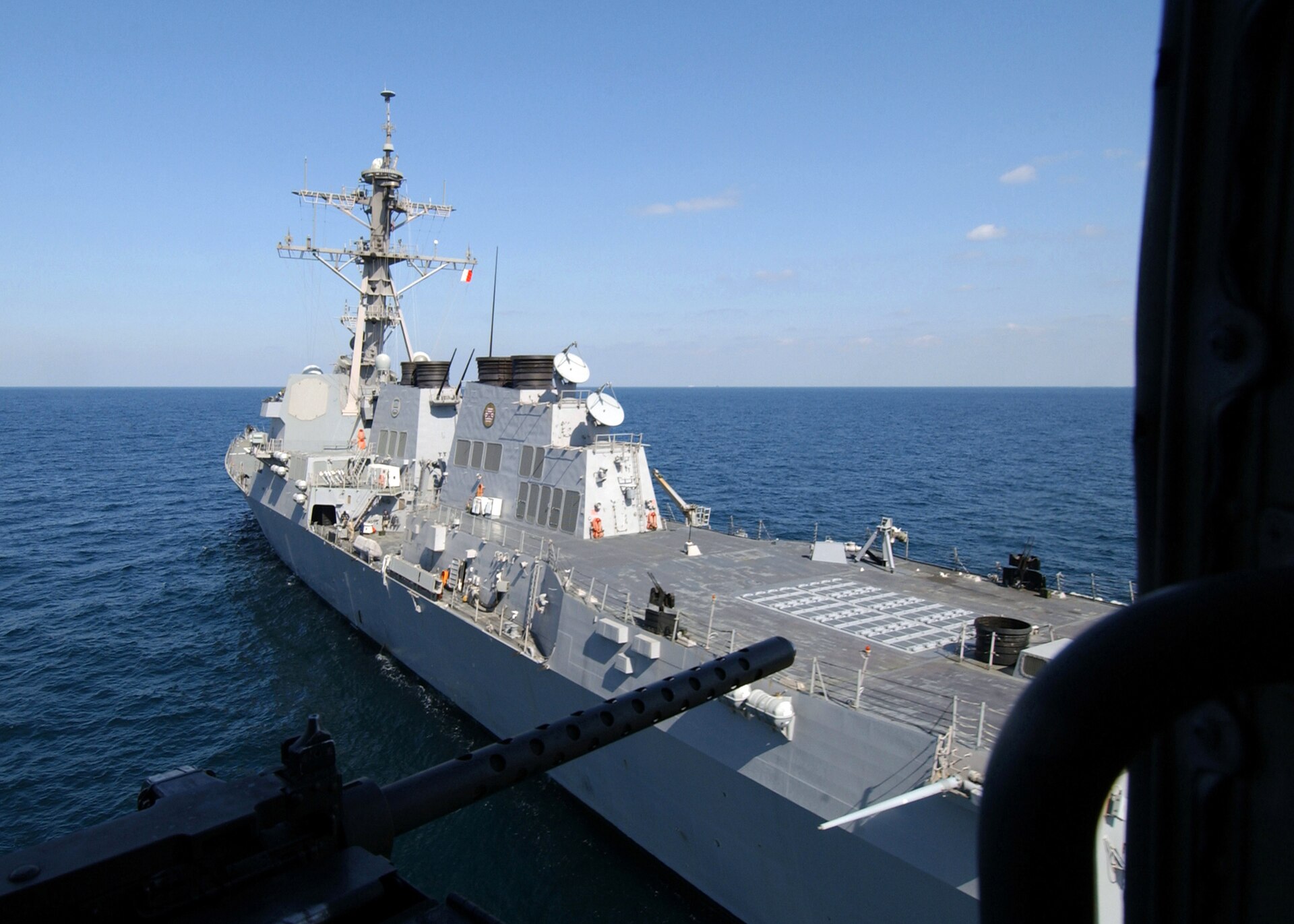
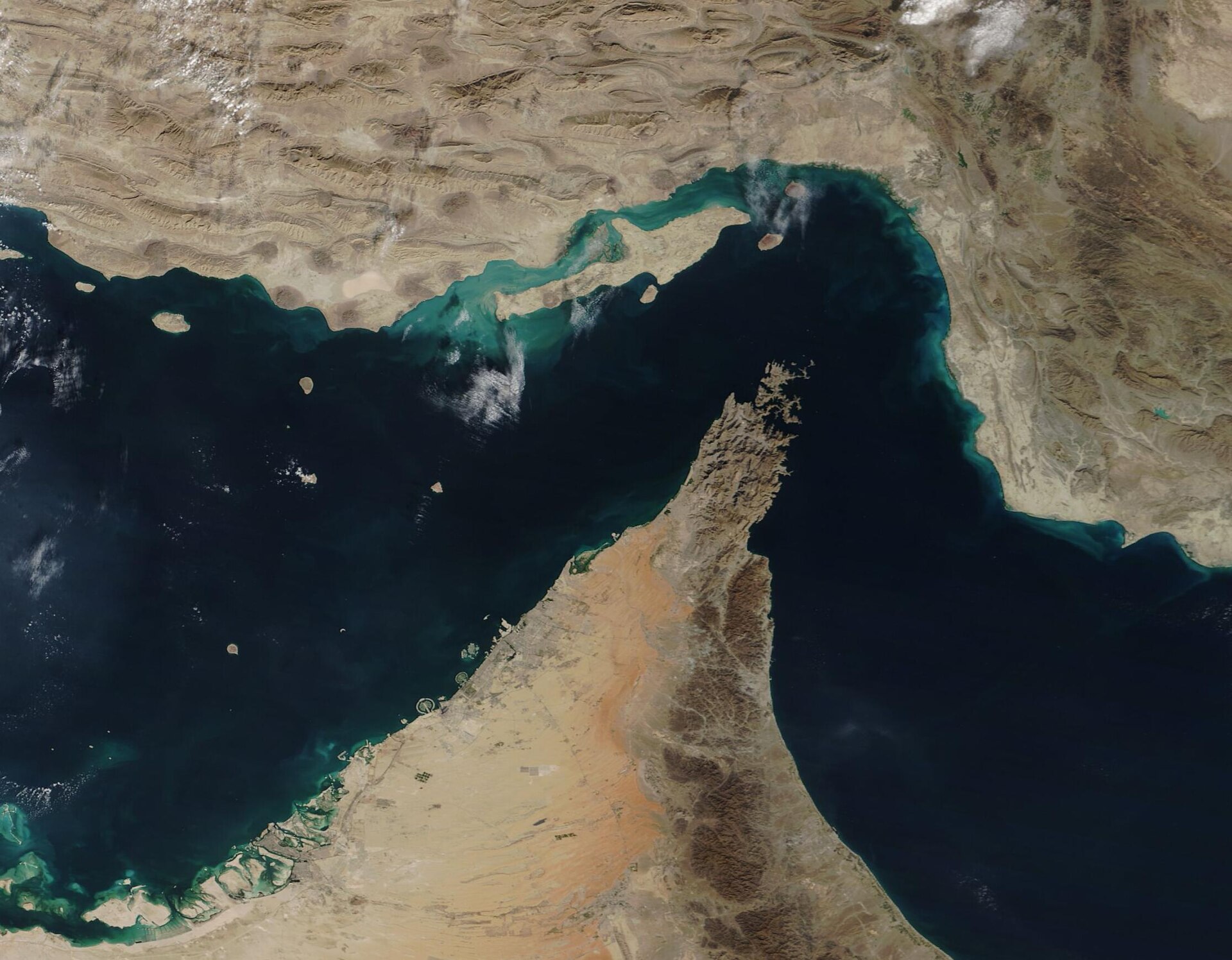
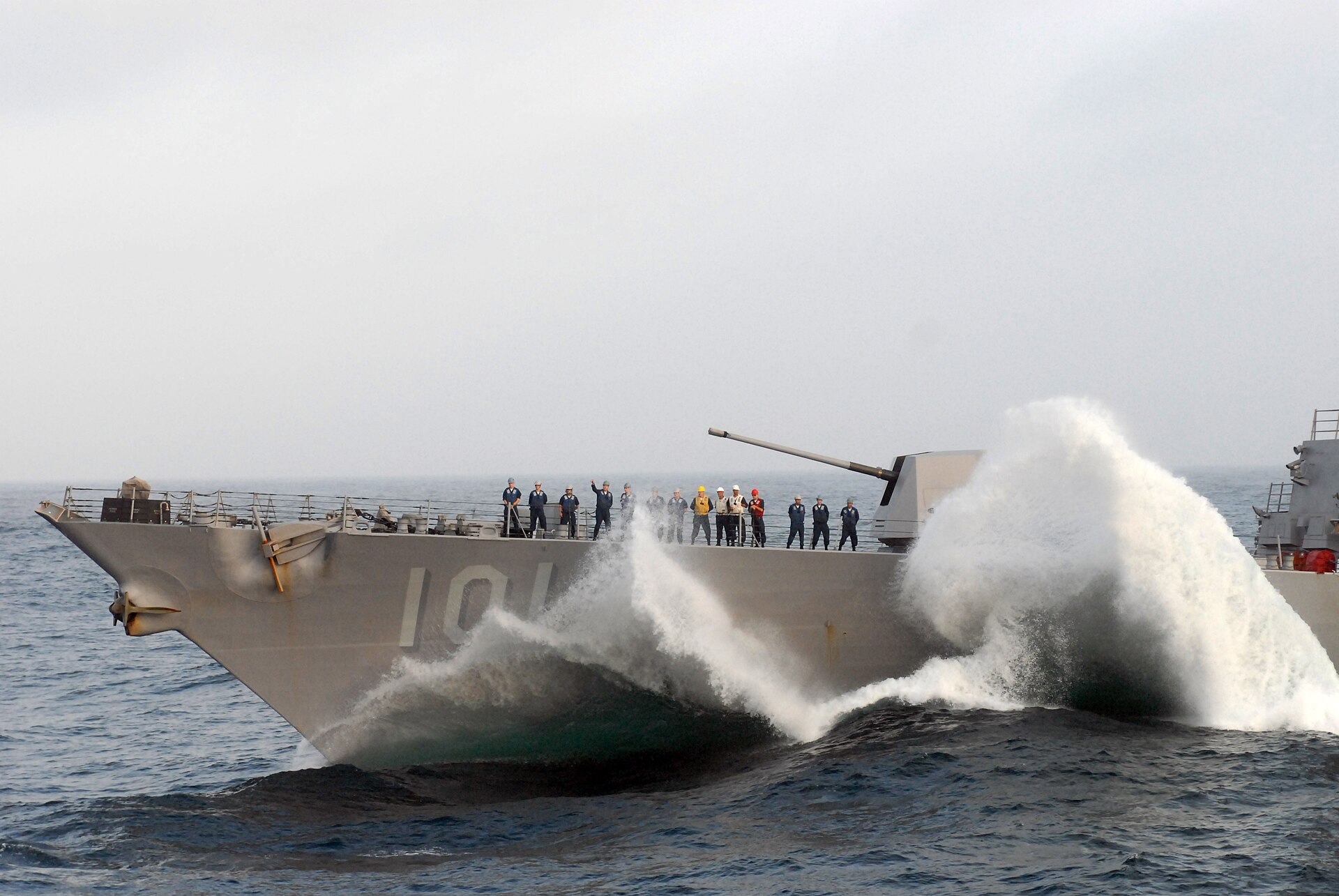
Three United States Navy guided-missile destroyers u2014 USS Truxtun, USS Rafael Peralta, USS Mason u2014 transited the Strait of Hormuz on a southeast track toward the Gulf of Oman. Iranian forces engaged them with missiles, drones and small boats. CENTCOM said zero American assets were hit. CENTCOM responded with strikes on three target sets: the port at Qeshm, the naval infrastructure at Bandar Abbas, and the checkpoint at Bandar Kargan in Minab district.
n
The official CENTCOM characterisation of the targets reads like a doctrine textbook u2014 “missile and drone launch sites, command and control locations, and intelligence, surveillance, and reconnaissance nodes.” The framing was exclusively self-defence. The press release used the word “unprovoked” and added the standard de-escalatory line: CENTCOM “does not seek escalation but remains ready to protect American forces.”
n
n
Iran’s armed forces spokesman told state broadcaster IRIB that the strikes hit civilian areas at Qeshm, Bandar Khamir and Sirik. Tehran said it had launched “reciprocal action” against US warships east of the Strait, south of Chabahar port. Iran also added a different trigger sequence: that the United States struck an Iranian oil tanker first, and that the destroyer engagement was the response. CENTCOM disputes that account directly.
n
The strikes ended a twenty-nine day gap between the April 8 ceasefire declaration and the return of American ordnance to Iranian territory. Inside Riyadh’s diplomatic apparatus, that twenty-nine-day window was the fragile thing the entire Saudi-mediated track was built to extend. It is now closed.
n
The Veto That Stopped at the Waterline
n
Project Freedom was Trump’s commercial-ship escort operation, announced on social media without prior consultation with the Saudi government. Saudi Arabia, according to NBC News, was “surprised” by the announcement. Riyadh refused permission for US aircraft to operate from Prince Sultan Air Base southeast of the capital, and refused passage through Saudi airspace. Kuwait followed suit within hours.
n
The operation collapsed in roughly thirty-six hours u2014 a denial that, on its own terms, worked. Trump paused it. The Pentagon began searching for alternatives. The Saudi message u2014 that Riyadh would not pre-authorise US escalation against Iran on Saudi soil during an active diplomatic window u2014 was delivered cleanly.
n
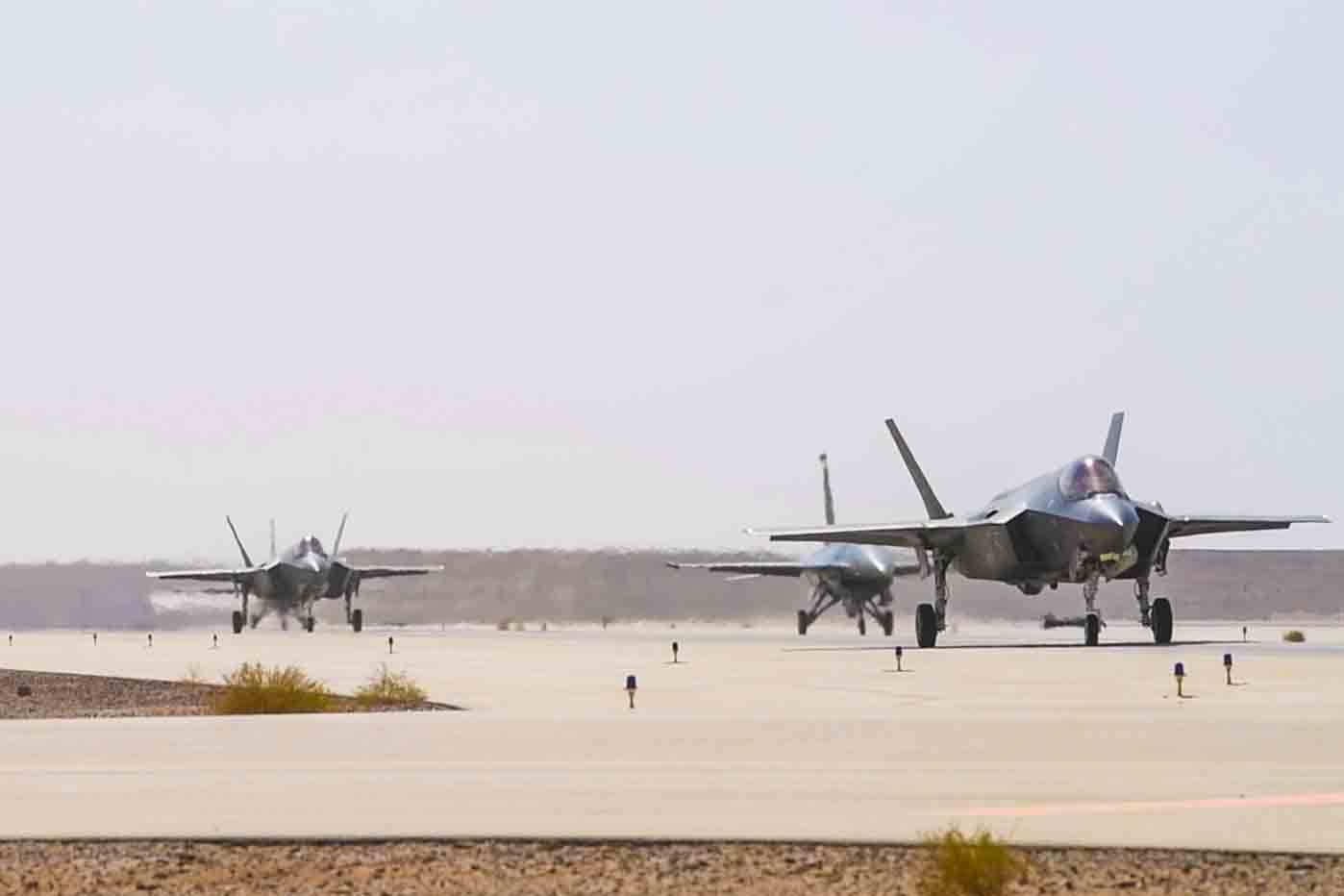
And then CENTCOM struck Iran from destroyers anyway. The destroyers needed nothing from Saudi Arabia. They sailed in international waters. They carried their own weapons. They did not request air cover from Prince Sultan, did not stage from a Gulf airbase, did not file a flight plan through Saudi airspace.
n
The veto Riyadh had spent diplomatic capital to enforce was structurally bypassed by the simple fact that the Fifth Fleet exists, and that the Strait of Hormuz is u2014 under the United Nations Convention on the Law of the Sea, the legal framework Iran has been trying to dismantle through its Persian Gulf Strait Authority sanctions trap u2014 international water with a right of transit passage.
n
n
Riyadh stopped an operation it was afraid of. It could not stop the next one.
n
The structural lesson of May 5 to May 7n
n
n
This is the part that should keep Saudi planners awake. The veto worked on the operation Riyadh could see coming. It did not work u2014 could not work u2014 on the operation that came from the water. The Fifth Fleet’s freedom of action in the Gulf of Oman is the floor under American escalation, and that floor sits below the level at which Saudi airspace policy can reach.
n
For the full sequence of how the seventy-two-hour veto unfolded — the two Trump-MBS calls, the Iranian engagement of May 7, and what Tehran extracted from the exchange — see the 72-hour veto that mapped MBS’s red line.
Did the MOU Collapse u2014 or Did Iran Just Refuse to Sign It?
n
Iranian Foreign Ministry spokesman Esmaeil Baghaei was asked on May 7 whether Iran had responded to Washington’s draft. He told IRNA that Iran “has not yet reached a conclusion, and no response has been given to the U.S. side.” He then “strongly rejected” the Axios description of the MOU’s contents, while confirming that Tehran was “still examining” the latest American proposal.
n
That is not a rejection. It is also not an acceptance. It is the deliberate ambiguity of a government that does not want to sign a document that has just been associated, in the Iranian public square, with American strikes on Iranian soil.
n
The 48-hour response window the United States attached to the draft u2014 issued on or around May 6 u2014 lapsed during the destroyer engagement. The framing of the deadline as a US-side construction, which Al Jazeera reported was Iran’s view, gave Tehran a procedural exit it did not need to use. The strikes provided the political exit instead.
n
| Element | US Position | Iranian Counter |
|---|---|---|
| Enrichment moratorium | 20 years | 5 years |
| HEU stockpile | Removal from Iran | Down-blending in country |
| IAEA inspections | Snap inspection regime | Conditional restoration |
| Underground facilities | Prohibition | Disputed |
| Hormuz reopening | Concurrent with blockade lift | Precondition to nuclear concessions |
| Negotiating window | 30 days post-signature | Open-ended |
n
n
The structural Iranian demand u2014 Hormuz reopening before nuclear concessions u2014 is the same demand that has frozen every negotiating track since March. The full architecture of that demand is mapped in the analysis of Washington’s Hormuz-first concession handing the IRGC a structural veto. The MOU did not solve the sequencing problem. It restated it.
n
440.9 kilograms of highly enriched uranium at sixty per cent purity sit in Iranian inventory. The IAEA’s June 2025 inventory is the last reliable count. That is the stockpile the MOU’s removal clause was designed to extract from Iranian soil. With the May 7 strikes, the political price of allowing that stockpile to leave the country has just risen sharply for any Iranian signatory.
n
An Iranian lawmaker told CBC the document looked like “an American wish list.” Mohsen Rezaei, the Expediency Council member, said on Iranian television the United States must pay reparations for damage done. Tehran is sketching the public posture of a state that will not sign.
n
Why Did Restoring Saudi Basing Take Two Phone Calls?
n
The Times of Israel, citing the Wall Street Journal, reported that Saudi Arabia and Kuwait restored US basing access on May 7 u2014 the same day as the strikes u2014 following a second Trump-MBS phone call. The detail buried in that sentence is the second phone call. Routine military-to-military coordination did not resolve the standoff. The CENTCOM commander did not call his Saudi counterpart and unblock the airspace. The defence ministers did not exchange letters. It took the President of the United States and the Crown Prince of Saudi Arabia, twice, to reopen Prince Sultan Air Base to American flights.
n
That is the diplomatic equivalent of pulling a fire alarm. The architecture of US-Saudi cooperation on Iran has been forced up to the head-of-state level, twice in seventy-two hours u2014 a pattern that is hard to read as anything other than structural strain on the relationship.
n
What Saudi Arabia got for the second phone call has not been disclosed publicly. What it cost the United States to reopen the airspace has not been disclosed publicly. The most likely shape of the deal u2014 given Saudi public statements and the trajectory of the Riyadh-Tehran back-channel u2014 is some form of US assurance that Saudi-hosted assets will not be used as the staging ground for further unilateral strikes on Iran during the Trump visit window.
n
n
That assurance, if given, is now in tension with the demonstration of May 7 u2014 that CENTCOM does not need Saudi airspace to strike Iran. Riyadh’s protection from association is partial. Iranian state media will draw a Saudi line into any future strike, regardless of whether Saudi airspace was crossed. That is a domestic-Iranian narrative cost the Saudis cannot insure against through basing policy alone.
n
What Does Trump Arrive in Riyadh Carrying?
n
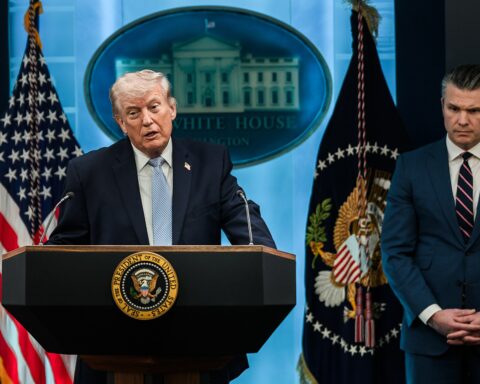
Trump told ABC News’ Rachel Scott that the May 7 strikes were “just a love tap.” He told her, in the same interview, that Iran would be hit “a lot harder, and a lot more violently” if it did not sign a deal. He insisted the ceasefire was still in effect. He said the war “will be over quickly.”
n
The four sentences do not cohere u2014 they are a negotiating posture wearing the clothes of a public statement. The “love tap” framing is for Iran u2014 it tells Tehran that Washington considers the strikes calibrated, recoverable, beneath the threshold of full re-engagement. The “harder and more violently” framing is for the same audience, on the other side of the inflection point. The “ceasefire still in effect” line is for everyone u2014 including the Saudi government that has spent the last six weeks insisting that the ceasefire framework is the only thing standing between the region and the disruption of thirteen million barrels per day of seaborne oil.
n
The IEA’s Fatih Birol called that figure u2014 13 million bpd offline u2014 “the biggest energy security threat in history.” Brent settled at $100.06 on May 7 on the strength of deal hopes. It rose 1.20 per cent to $101.26 on May 8 once the strikes were absorbed. The market is treating the strikes as containable, the ceasefire as alive, and the deal as still possible. The Saudi fiscal model is leaning on every one of those assumptions.
n
| Designed Agenda | Post-May 7 Reality |
|---|---|
| Push Saudi investment commitment from $600B toward $1T | Saudi fiscal break-even at $93 Brent; war premium gone |
| Minerals and semiconductors agreements | MOU lapsed without Iranian signature |
| GCC endorsement of nuclear deal framework | First US strikes on Iranian soil in 29 days |
| Trump-MBS strategic alignment showcase | Two emergency phone calls in 72 hours |
| Iran “permanently and verifiably” denuclearised | 440.9 kg HEU stockpile still on Iranian soil |
n
n
Trump’s stated agenda for the May 13 Investment Forum and the May 14 GCC Summit was set in another era. The aim was to push Saudi investment commitments from the November 2025 figure of six hundred billion dollars toward a trillion. Minerals and semiconductors agreements were on the table. The political deliverable was Gulf endorsement of the nuclear-deal framework Trump’s administration has been building for nine months.
n
Every one of those deliverables has been complicated, and some of them gutted, by the events of the past seventy-two hours. Trump arrives not as the architect of a deal but as the presiding officer of a framework that has absorbed its first live-fire test and not yet broken u2014 a distinction that matters enormously in the room and almost nowhere else.
n
The MBS Framing Trap
n
The hardest question MBS has faced since March 1 will be asked of him on a stage in Riyadh, with Trump beside him, in front of cameras the entire region will be watching: does the Crown Prince stand with the strikes, or does he call publicly for talks to resume?
n
The Saudi pattern since March has been condemnation of Iran in public combined with restraint advocacy in private. The back-channel architecture of that pattern is examined in the analysis of Araghchi going to Beijing to write Trump’s talking points before Riyadh got the memo. The May 13 visit forces that two-track posture into a single public moment. The questions Trump’s press pool will ask MBS u2014 whether the strikes were proportionate, whether Saudi Arabia would allow basing in a future round, whether the MOU is still viable u2014 do not have answers Riyadh can give without breaking one of the two tracks.
n
Standing with the strikes means abandoning the back-channel credibility Saudi Arabia has spent two months building with Tehran. It means signalling to the Iranian leadership that Riyadh’s diplomatic value as a mediator is provisional, available only when CENTCOM is not active. It hands Iran a public reason to terminate the Beijing-Riyadh-Tehran track that has been the spine of Saudi positioning.
n
Calling publicly for talks to resume means breaking with Trump on his own stage. It hands the Iranian foreign ministry a quotable line attributing diplomatic restraint to the Saudi government on the same week the United States struck Iranian territory. It prices in a confrontation with Washington that Riyadh has otherwise been at pains to avoid.
n
n
The pattern since March 1 has been condemnation of Iran in public, restraint advocacy in private. The May 13 visit forces that two-track posture into a single public moment.
n
The framing trap MBS now facesn
n
n
An Atlantic Council analyst wrote on May 7 that GCC states “were not parties to the Islamabad talks and do not appear to have been formally consulted at the time. There are divergences among Gulf states.” That divergence is structural. The UAE has positioned closer to the strike posture; Oman and Qatar have positioned closer to the talks posture. Saudi Arabia has straddled. The May 13 photograph closes the straddle.
n
Speaker of Parliament Mohammad Bagher Ghalibaf, who branded the MOU “Operation Fauxios” u2014 as examined in the report on Iran’s authorisation ceiling going public u2014 has the script ready for the Saudi answer that disappoints Tehran. Tehran will use whatever MBS says. The only Saudi defence against being conscripted into either narrative is to say almost nothing u2014 and that is precisely the response a sit-down summit with Trump cannot produce.
n
The Desert Fox Echo
n
In December 1998 the Clinton administration launched Operation Desert Fox u2014 a four-day air campaign against Iraq during active United Nations inspector negotiations. The strikes were framed as enforcement, designed to compel Iraqi compliance with weapons inspectors. They achieved the opposite. UNSCOM’s access to Iraqi sites ended permanently within weeks. The diplomatic framework the strikes were ostensibly protecting was destroyed by the act of protecting it.
n
The May 7 strikes are smaller, more calibrated, and structurally framed as self-defence rather than enforcement. The parallel is not exact. But the structural risk is identical. Strikes during talks tend to collapse the framework they are meant to enforce. They give the targeted regime a reason to walk; they hand the regime’s hardliners a public mandate to dictate the terms of any continuation; they attach a domestic political price to any signature.
n
The Centre for Strategic and International Studies, in its assessment “The Fragile US-Iran Ceasefire: Issues to Watch,” wrote that the ceasefire is “less a resolution than a pause in a conflict whose underlying drivers remain not only intact but, in some cases, intensified.” CSIS forecast “a likely pattern of recurring clashes u2014 cyberattacks, proxy violence, limited strikes, and periodic escalation u2014 rather than a clean postwar settlement.” The May 7 episode looks like the first iteration of that forecast. It will not be the last.
n
Chatham House analysts, in the April 2026 brief on the ceasefire’s lasting prospects, framed the requirement bluntly: “Crucial to a lasting agreement is Tehran demonstrating willingness to compromise on its nuclear programme through a new inspection regime, and Washington must structure sanctions relief to make de-escalation politically sustainable on both sides.” The May 7 strikes worked against both halves of that requirement. Tehran’s willingness to compromise on the nuclear programme was visibly degraded. Washington’s ability to structure sanctions relief in a politically sustainable way was complicated by the optics of striking Iranian territory while asking for an Iranian signature.
n
n
The Iranian counter-narrative on May 7 u2014 that the United States struck an Iranian tanker first u2014 fits the Desert Fox template precisely. The strikes generate a sequence of disputed accounts; the disputed accounts generate a domestic Iranian mandate to walk; the walk closes the framework. Whether or not the tanker claim is verifiable is almost beside the point. Tehran has the public predicate it needs.
n
What Comes Next If the MOU Stays Frozen?
n
Three scenarios are now in play, and the probabilities have shifted dramatically since May 5. The first is that Iran absorbs the strikes, treats the MOU as a still-live document, and eventually signs something close to the 14-point framework with cosmetic concessions. This is the scenario the Brent market is pricing. It requires the Iranian leadership to accept that signing under the shadow of US strikes is politically survivable. The 29-day gap between April 8 and May 7 was the test of whether the ceasefire could hold under pressure; the test was failed. The probability of this scenario has dropped sharply.
n
The second is that the MOU stays frozen indefinitely, neither signed nor formally rejected, while both sides operate under the rubric of an active ceasefire that does not actually constrain CENTCOM or the IRGC. This is the CSIS “recurring clashes” scenario. It is now the modal outcome. It is also the scenario most damaging to Saudi fiscal planning, because it removes any anchor for the energy market and turns every Hormuz incident into a price-volatility event.
n
The third is that the MOU collapses formally, Iran activates the Persian Gulf Strait Authority’s full toll-and-permit regime, and the United States responds with a sustained escalation campaign. The structural commercial cost of that scenario is examined in the report on 22,500 mariners trapped in the Gulf as the legal crisis outpaced the MOU u2014 a humanitarian and insurance-market crisis that any strike escalation would deepen. Saudi Arabia’s posture in this scenario depends almost entirely on whether the US asks for basing access again, and on whether MBS can refuse it a second time without rupturing the relationship.
n
Riyadh’s leverage in scenarios two and three rests on a single proposition: that Saudi Arabia is the only actor in the region with credible communication channels to Tehran, Washington, and Beijing simultaneously. That proposition is mapped in the analysis of why both Hormuz coalitions need Riyadh, and Riyadh needs neither. The May 7 strikes test the proposition without breaking it. The May 13 visit will determine whether MBS can hold all three channels open at once.
n
The Persian Gulf Strait Authority, launched May 5, requires every Hormuz-bound vessel to file a forty-question “Vessel Information Declaration,” pay a toll, and obtain an IRGC transit permit. The PGSA is the operational manifestation of the parliamentary 12-article Hormuz sovereignty law sponsored by Ahmadi and Rezayi Kouchi. It is an institution. Institutions outlive the ceasefires that produced them. Any deal that does not explicitly dismantle the PGSA leaves the IRGC’s economic chokehold in legal force.
n
Trump arrives in Riyadh on Tuesday with the MOU frozen, the strikes five days old, and a ceasefire that is officially alive and operationally porous. The Crown Prince has thirty-six hours, between the wheels-down moment and the Investment Forum’s opening keynote, to decide what he is going to say about all of it.
n
The structural revelation of May 7 will sit unspoken at every meeting on the schedule: the Saudi veto stops at the waterline, and the United States noticed. What happens when Riyadh is asked to ratify that fact, in public, with cameras running, is the question the next seventy-two hours will answer.
n
FAQ
n
How much advance notice did Saudi Arabia receive before CENTCOM struck Iran on May 7?
n
The public record does not show formal pre-strike notification beyond the routine deconfliction channels Fifth Fleet maintains with regional partners. The strikes were framed as self-defence in response to an Iranian engagement on three transiting destroyers, which procedurally does not require coalition notification. The second Trump-MBS phone call that restored basing access happened on the same day as the strikes u2014 the sequencing suggests the call addressed both the airspace restoration and the strike posture, but the communiquu00e9 has not been released.
n
Has Iran’s Supreme Leader publicly addressed the May 7 strikes?
n
Ayatollah Khamenei’s last documented public position, “brought to their knees,” predates the April 8 ceasefire. As of May 8, he had been absent from public-facing statements for more than sixty days. The May 7 Iranian responses u2014 the armed forces spokesman’s “civilian areas” framing, Baghaei’s “still examining” line, and Mohsen Rezaei’s reparations demand u2014 were all delivered by figures below the Supreme Leader’s level. Mojtaba Khamenei’s audio-only communications continued without video appearance.
n
What does Project Freedom actually do, and who benefits if it resumes?
n
Project Freedom is a US-led commercial-ship escort operation announced by Trump on social media in early May. It assigns US Navy assets to provide armed escort for non-flagged commercial vessels transiting the Strait of Hormuz, partially substituting for the protection role normally provided by flag-state navies and private maritime security. The principal commercial beneficiaries are non-Iranian, non-PGSA-compliant tanker operators u2014 the segment of Hormuz traffic that has dropped most sharply since the IRGC’s permit regime began. The principal political beneficiary, if the operation resumes successfully, is the Trump administration, which gains a commercial-protection narrative independent of the MOU.
n
Why does the second Trump-MBS phone call matter more than the first?
n
The first call, on May 5, was the standard escalation call between heads of state on a fast-moving incident. The second call, on May 7, was diagnostic. It indicated that the working-level diplomatic and military channels u2014 secretary of state, defence secretary, ambassadors, CENTCOM-Saudi MOD u2014 had not produced an outcome on basing access in roughly forty-eight hours. The principals had to intervene a second time. That pattern, repeated across more than one issue, would indicate the bilateral relationship is operating in permanent crisis mode rather than steady-state cooperation. One instance is recoverable; a second instance in the same week sets a precedent.
n
What is the Persian Gulf Strait Authority’s relationship to the Hormuz sovereignty law in the Iranian parliament?
n
The PGSA is the executive-branch operational embodiment of the legislative direction set by the parliamentary 12-article Hormuz sovereignty law sponsored by deputies Ahmadi and Rezayi Kouchi. The law has not been finalised, but the IRGC’s launch of the PGSA on May 5 created facts on the water that any final legislative text will codify rather than create. The forty-question vessel declaration, the toll regime and the IRGC transit permit are all administrative instruments designed to outlast any ceasefire and survive any deal that does not specifically name the PGSA for dismantlement. The MOU as drafted does not name it. The full diplomatic sequence u2014 Trump’s Riyadh arrival, the MOU deadline window, and how Beijing’s leverage over Tehran inverts the trip’s logic u2014 is analysed in Trump’s Riyadh-Beijing Sprint and the Clock Only Xi Controls. The price impact of the May 7 strikes landed the following session: Brent hit $108.80 on the CENTCOM operation before Trump’s “love tap” comment crashed it to $96.80 u2014 a $12 intraday swing that compressed into a $101 close.
n”}
The full pre-visit diplomatic sequence that set the terms before Trump arrived is traced in Trump Is Flying to Riyadh. Riyadh Already Wrote the Script. — from the Ankara quartet meeting through Faisal’s May 9 calls to Lavrov and Abdelatty.