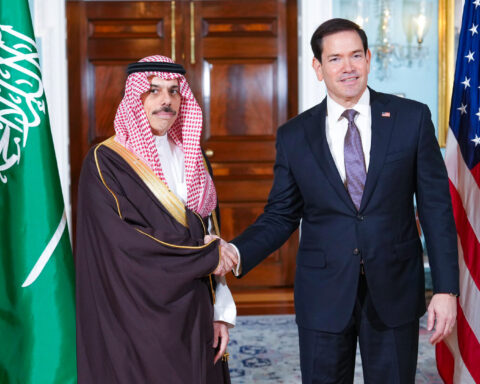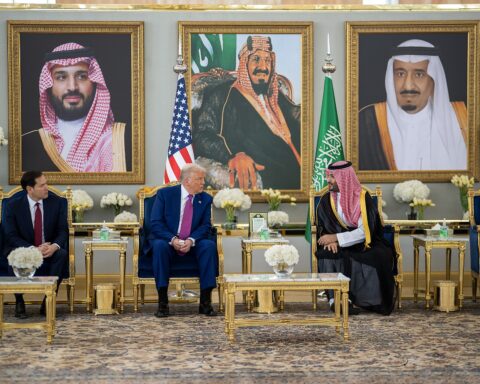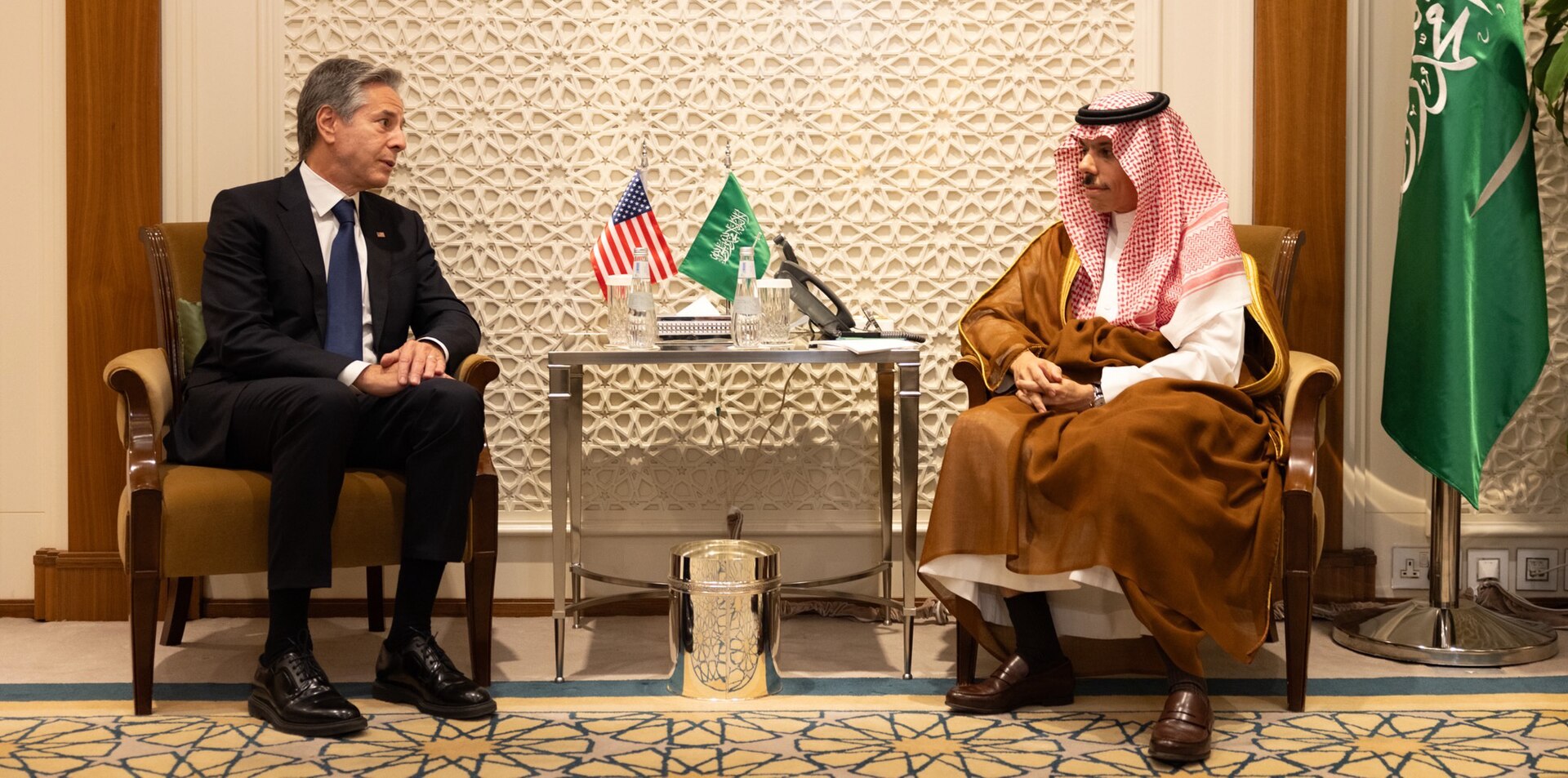

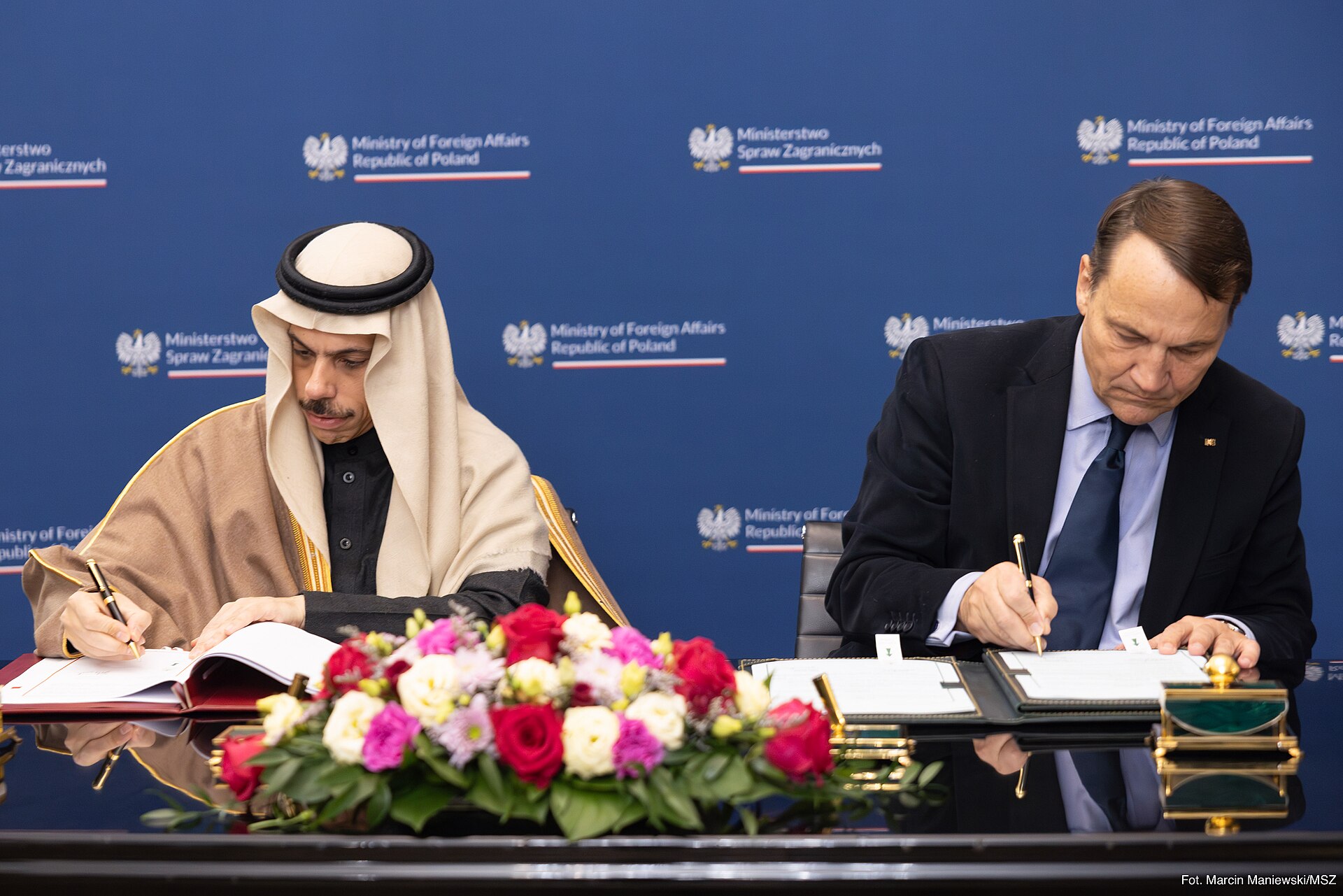
RIYADH — Saudi Foreign Minister Prince Faisal bin Farhan ended fourteen days of public silence on the Iran crisis with a concentrated burst of diplomatic activity between June 2 and June 4 — six contacts in three days, each one channeled away from the three capitals where the war’s outcome will be decided. He called Jordan’s Ayman Safadi to condemn Iranian strikes on Kuwait and Bahrain. He called Bahrain’s Abdullatif bin Rashid Al Zayani to express solidarity. He coordinated with Qatar’s Sheikh Mohammed bin Abdulrahman Al Thani on Pakistan-led mediation — the same day Pakistan delivered two separate letters to Supreme Leader Khamenei, one from PM Shehbaz and one from Army Chief Munir, creating a dual-track interpretive architecture Saudi Arabia has no institutional mechanism to engage with. He received the IAEA’s Rafael Grossi in Riyadh to discuss nuclear safety. He received written messages from Moscow and Seoul.
n
He did not call Secretary of State Marco Rubio, whose last State Department readout of a call with Faisal dates to March. He did not call Iranian Foreign Minister Abbas Araghchi, last reached on May 6. He issued no statement on the June 4 Israel-Lebanon-US ceasefire from which Saudi Arabia was excluded. The calls the foreign minister made are a map of the calls he chose not to make. On June 6, Riyadh issued a sixth condemnation statement on Iran’s ballistic strikes on Kuwait and Bahrain — again without accompanying action, a pattern documented in Saudi Arabia’s six condemnation statements.
n
Table of Contents
n
The Middle East briefing 3,000+ readers start their day with.
One email. Every weekday morning. Free.
- n
- The Call Log
- Who Did Faisal bin Farhan Not Call?
- Why Is Saudi Arabia Excluded From All Three Hormuz Negotiating Tracks?
- The Abqaiq Template
- Why Has Saudi Arabia Not Expelled More Iranian Diplomats?
- What Does Saudi Arabia’s Diplomatic Positioning Cost as June 9 Approaches?
- The Quadrilateral Without a Communiqué
- Not Our War, but Our Territory
- Frequently Asked Questions
- n
n
n
n
n
n
n
n
n
n
n
n
n
The Call Log
n
Between June 2 and June 4, FM Faisal conducted or received the following diplomatic contacts — the first cluster of public activity since his May 20 statement at the EU Gymnich meeting in Cyprus, where he told European foreign ministers that the Strait of Hormuz should be restored “to the state prior to February 28th 2026.”
n
| Date | Counterpart | Format | Topic | Category |
|---|---|---|---|---|
| June 2 | Russian FM Lavrov (via Ambassador Kozlov) | Written message received by Deputy FM Al-Rassi | “Issues of common interest” | Passive receipt |
| June 3 | Qatar PM/FM Sheikh Mohammed bin Abdulrahman | Phone call | Pakistan-led US-Iran mediation; coordinating support | Mediation coordination |
| June 3 | Jordan FM Ayman Safadi | Phone call | Condemned “brutal” Iranian attacks on Kuwait and Bahrain | Solidarity/condemnation |
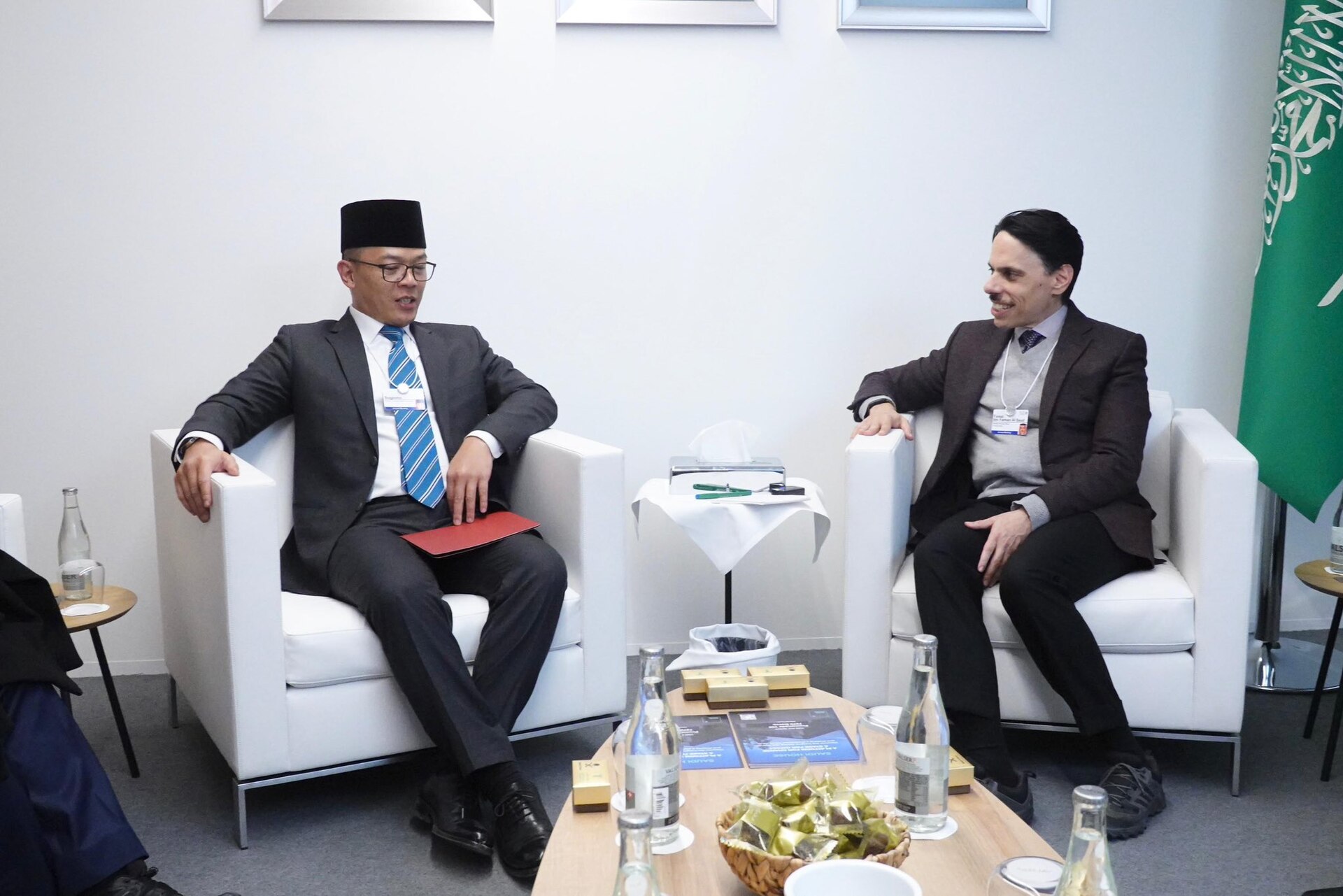
| June 3 | IAEA DG Rafael Grossi | In-person meeting, Riyadh | Nuclear non-proliferation, SNAEP, December nuclear-emergency conference | Institutional engagement |
| June 3–4 | South Korean FM Cho Hyun (via Ambassador Kang Shin-chul) | Written message received by Deputy FM Al-Rassi | Bilateral relations | Passive receipt |
| June 4 | Bahrain FM Abdullatif bin Rashid Al Zayani | Phone call (received) | “Condemnation of flagrant Iranian attacks targeting the Kingdom of Bahrain” | Solidarity/condemnation |
n
n
Every contact falls into one of three categories: condemnation of attacks on neighbors (Jordan and Bahrain calls), coordination on someone else’s mediation effort (Qatar call), or institutional engagement that produces no policy commitment (IAEA meeting, written messages from Russia and South Korea). None is a negotiating position. None commits Saudi Arabia to an outcome.
n
That dual-track is visible at the summit level as well as the diplomatic: on the same week Saudi Arabia received written messages from Russia, Prince Abdulaziz bin Salman was in St. Petersburg signing thirty bilateral agreements as Vladimir Putin’s guest of honor — a posture that produces no negotiating commitment toward Washington or Tehran but maintains parallel access to Moscow.
n
Two of the six contacts were passive — written messages delivered by ambassadors to a deputy foreign minister, not to FM Faisal himself. The IAEA meeting in Riyadh was part of Director General Grossi’s Gulf tour following the May 17 drone strike on the UAE’s Barakah nuclear plant, not a Saudi-initiated summit. The remaining three phone calls were solidarity instruments: one with a neighbor (Qatar) supporting Pakistani mediation, two (Jordan, Bahrain) condemning Iranian attacks that had already occurred.
n
n
Who Did Faisal bin Farhan Not Call?
n
FM Faisal did not call US Secretary of State Marco Rubio, Iranian FM Abbas Araghchi, or any party to the June 4 Israel-Lebanon ceasefire. The last confirmed State Department readout of a Rubio-Faisal call dates to March 2026 — approximately 86 days before the June 3 solidarity cluster. The last confirmed Faisal-Araghchi call was May 6, making the current 29-day gap the longest confirmed silence on the Saudi-Iranian bilateral channel since the China-brokered normalization reopened diplomatic ties in March 2023.
n
The Rubio gap is structurally anomalous. On May 13, Saudi Arabia secured a $142 billion US arms package and Major Non-NATO Ally status — the most consequential bilateral defense commitment since the 1945 Quincy Agreement. Three weeks later, neither government has published a readout of a call between their top diplomats. The arms deal extracted Washington’s primary pressure tool over Riyadh without requiring any normalization commitment in return, but it also left the two governments without an active high-level diplomatic rhythm at the moment when the Iran war’s endgame began accelerating.
n
“Just as the United States launched this war without asking Saudi Arabia or other Gulf partners, President Trump is likely to declare it over without telling them,” Michael Ratney, a senior adviser at CSIS and former US Ambassador to Saudi Arabia, wrote in a 2026 analysis. The FM’s call log suggests the reverse is also true: Saudi Arabia is not telling Washington what it is doing either.
n
The Lebanon silence is equally precise. Saudi envoy Yazid bin Farhan directed Lebanese President Joseph Aoun on April 25 not to meet Israeli Prime Minister Benjamin Netanyahu — a veto instruction delivered from outside the room. When Washington, Israel, and Lebanon formalized a ceasefire on June 4, Hezbollah was named as a condition, not a party, and Saudi Arabia was named as neither. No Saudi MOFA statement followed. Saudi Arabia was also excluded from the June 22 Washington follow-on meeting on Lebanon’s implementation.
n
n
“Dialogue and diplomacy remain essential to addressing the root causes of the crisis and achieving a lasting agreement that prevents further escalation.”— Sheikh Mohammed bin Abdulrahman Al Thani, Qatar PM/FM, in the June 3 call with FM Faisal. Qatar MOFA readout.
n
n
Why Is Saudi Arabia Excluded From All Three Hormuz Negotiating Tracks?
n
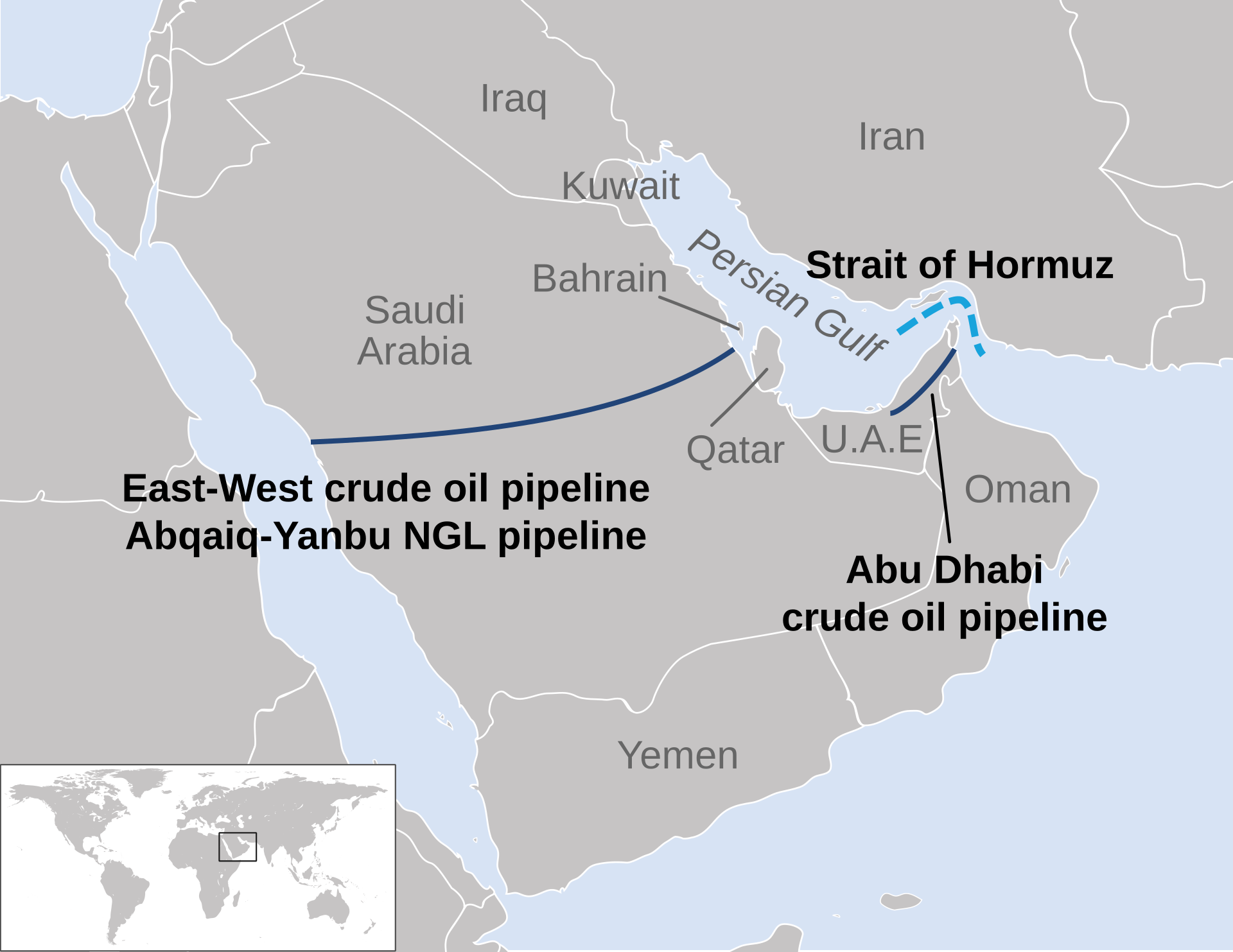
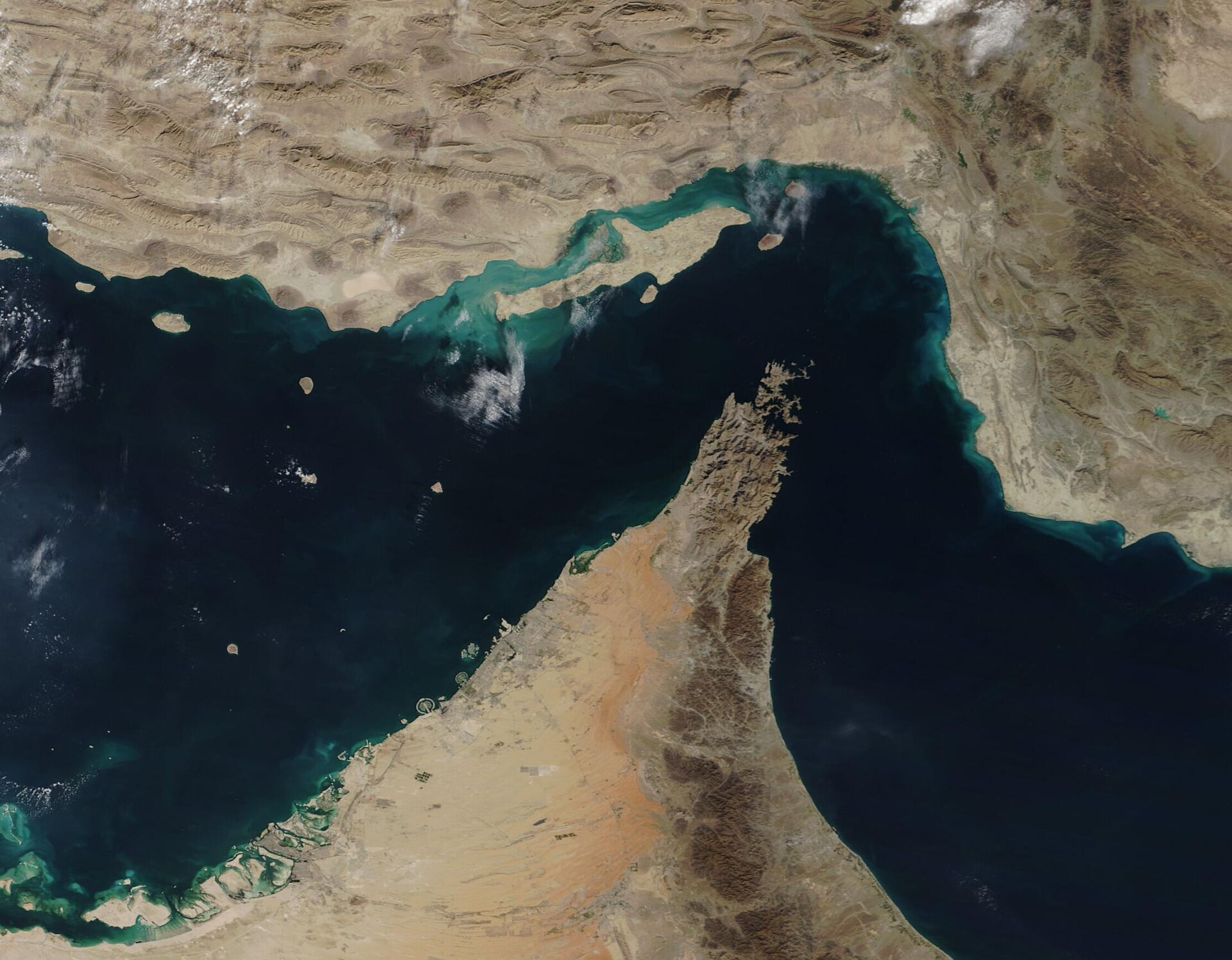
Saudi Arabia holds no seat at any of the three active Hormuz negotiating tracks: the US-Iran direct channel brokered through Oman, the Pakistan courier architecture carrying amended MOU texts between Washington and Mojtaba Khamenei’s bunker, and the UK-France maritime coalition coordinating from Northwood headquarters. The most oil-dependent Gulf state — running an involuntary production cut of approximately 3 million barrels per day because Hormuz remains under Iranian operational control — is a spectator to every negotiation over the strait’s future.
n
FM Faisal’s June 3 call with Qatar’s Sheikh Mohammed bin Abdulrahman — coordinating support for Pakistan-led mediation — is the closest thing Saudi Arabia has to a Hormuz track. It is a support call for someone else’s negotiation. When MBS called Emmanuel Macron on May 31 to discuss “maritime navigation security and freedom,” the Élysée published no readout — an asymmetry consistent with a call requested by Riyadh, not Paris. France is the only power with simultaneous access to a Hormuz coalition co-command, a direct channel to Tehran, and a permanent UN Security Council seat. Saudi Arabia was routing its Hormuz position through French diplomatic infrastructure because no direct route existed.
n
The exclusion is not accidental. The US-Iran track is bilateral by design. The Pakistan courier was constructed during the Islamabad quadrilateral in April, a format that gave Pakistan the mediator role Saudi Arabia had sought through the Baghdad talks of 2021-2022. The UK-France coalition operates under maritime security mandates that do not include revenue-sharing, toll disputes, or the Persian Gulf Security Arrangement that Iran is demanding — the issues on which Saudi Arabia has the most at stake.
n
Saudi Arabia’s OPEC+ quota stands at 10.291 million barrels per day. Actual production is approximately 7.25 million — a Hormuz-imposed gap larger than any voluntary cut in OPEC+ history. The OPEC+ meeting on June 7 will convene two days before Iran’s formal rejection of the MOU, attempting to manage a quota system in which two members’ airports are shut and Saudi Arabia’s compliance deficit is involuntary.
n
n
The Abqaiq Template
n
On September 14, 2019, cruise missiles and drones struck Saudi Aramco’s Abqaiq processing facility and the Khurais oil field, knocking out 5.7 million barrels per day of production — the largest single supply disruption in modern oil-market history. Saudi Arabia’s diplomatic response was multilateral statements, UN expert deployment, and international attribution-gathering. Adel al-Jubeir, then Minister of State for Foreign Affairs, told reporters: “We want to mobilise international support and we want to look at all options — diplomatic options, economic options and military options.”
n
No military option was exercised. A UN panel confirmed Iranian-origin missiles by June 2020. President Trump, asked about retaliation, said: “That was an attack on Saudi Arabia, and that wasn’t an attack on us.” Aramco CEO Amin Nasser, speaking in London on October 9, 2019, said publicly what the diplomatic apparatus could not: “An absence of international resolve to take concrete action may embolden the attackers and indeed put the world’s energy security at greater risk.”
n
FM Faisal’s June 2-4 cluster follows the Abqaiq template in its channel selection: solidarity calls with attacked neighbors, institutional engagement with the IAEA, passive receipt of messages from major powers, no direct bilateral confrontation with Iran, and no unilateral military posture. The categories are identical. Even the IAEA meeting rhymes — in 2019, Saudi Arabia used IAEA attribution frameworks; in 2026, FM Faisal met Grossi to discuss nuclear safety and co-host a December conference.
n
But the 2019 template operated in a different fiscal environment. No Aramco dividend was payable within five days at 0.85x free cash flow coverage. Saudi Arabia was not simultaneously excluded from every negotiating track relevant to its oil exports. And the Abqaiq pattern led somewhere — four rounds of Saudi-Iranian talks in Baghdad (April 2021 through April 2022), then the China-brokered normalization of March 2023, and FM Faisal’s own visit to Tehran in May 2023, the first by a Saudi foreign minister in seven years. The June 2-4 cluster does not visibly lead to any comparable destination.
n
Why Has Saudi Arabia Not Expelled More Iranian Diplomats?
n
On June 3, Kuwait expelled two Iranian diplomats with a 24-hour persona non grata deadline — the first GCC diplomatic expulsion since the UAE closed its Tehran embassy entirely on March 1. Saudi Arabia’s last punitive expulsion was on March 21, when it declared five Iranian diplomats persona non grata: the military attaché, his assistant, and three embassy staff. But it preserved Iran’s civilian Ambassador Alireza Enayati in Riyadh. Seventy-four days later, no further diplomatic reduction has followed.
n
When IRGC missiles and drones struck Kuwait’s Terminal 1 on June 3 — killing an Indian national, injuring 63, and temporarily shutting the airport — FM Faisal condemned the attacks as “brutal” in his call with Jordan’s Safadi and expressed “full support and solidarity” to Bahrain’s Zayani. Saudi Arabia’s foreign ministry Twitter account condemned “blatant Iranian aggression and the flagrant violation of the sovereignty of the UAE, Bahrain, Qatar, Kuwait, and Jordan.” (Verbatim from the Saudi MOFA X/Twitter statement; Qatar’s inclusion reflects Iranian drone and missile activity in the broader Gulf corridor during the same period, not a direct strike on Qatari soil.) But the statement was a blanket condemnation, not a diplomatic action. Solidarity is cheaper than reciprocity.
n
The asymmetry is deliberate. An expulsion commits Riyadh to a specific consequence and invites Iranian reciprocal action that would formally close what remains of the back-channel architecture Saudi Arabia has maintained. Saudi Arabia’s private de-escalation track with Tehran — the bilateral channel that predates and has outlasted the US MOU process — depends on preserved diplomatic infrastructure. Every expelled diplomat is a closed door.
n
n
“The Kingdom of Saudi Arabia continues to stand in support of de-escalation and avoiding escalation, as well as negotiations and the efforts undertaken regarding them.”— Ambassador Dr. Rayed Krimly, Saudi Deputy Minister for Public Diplomacy, 2026.
n
n
The UAE’s Anwar Gargash offered the contrast: “The UAE does not close the doors of diplomatic communication, but we judge by actions, not words.” Abu Dhabi closed its embassy and judged. Riyadh kept its doors open and condemned. The diplomatic costs run in different directions: the UAE lost its channel but demonstrated resolve; Saudi Arabia preserved its channel but demonstrated restraint that Iran treats as noise.
n
n
What Does Saudi Arabia’s Diplomatic Positioning Cost as June 9 Approaches?
n
June 9 is a triple convergence. Iran is expected to formally reject the Trump MOU, replacing the May 31 suspension with an outright refusal. Oman is preparing a counteroffer. And Aramco will distribute $21.89 billion in quarterly dividends to shareholders — against $18.6 billion in quarterly free cash flow, a coverage ratio of 85 cents for every dollar owed. None of the FM’s June 2-4 contacts addresses any of these deadlines.
n
The fiscal arithmetic is compressed. Brent crude traded at approximately $97 on June 4, against a PIF-inclusive Saudi breakeven of $108-111 per barrel (Bloomberg Economics). The gap of $11-14 per barrel represents a revenue shortfall that SAR 125.7 billion in Q1 2026 deficit spending — already 76 percent of the full-year target — has not closed. The IMF’s June 3 Article IV statement made Saudi recovery explicitly “contingent on Hormuz normalising,” the first time chokepoint conditionality has appeared in an Article IV for any Gulf state.
n
The OPEC+ meeting on June 7, two days before the convergence, will attempt to manage a quota system that no longer reflects production reality. Saudi Arabia cannot credibly threaten further voluntary production cuts — its Hormuz-imposed shortfall of approximately 3 million barrels per day already exceeds the entire remaining 1.65 million barrels per day of the OPEC+ agreement. Kazakhstan, producing 322,000 barrels per day over its quota from the irreversible $48.5 billion Tengiz expansion, has no enforcement mechanism pointed at it.
n
The FM’s solidarity calls are priced into no market and no negotiation.
n
| Metric | Figure | Source |
|---|---|---|
| Saudi OPEC+ quota | 10.291M b/d | OPEC Secretariat |
| Actual production (Hormuz-constrained) | ~7.25M b/d | Industry estimates |
| Involuntary production gap | ~3M b/d | Derived |
| PIF-inclusive fiscal breakeven | $108-111/bbl | Bloomberg Economics |
| Brent crude (June 4) | ~$97/bbl | Market close |
| Revenue gap per barrel | $11-14/bbl | Derived |
| Aramco Q1 2026 dividend | $21.89B | Aramco Q1 2026 results |
| Aramco Q1 2026 FCF | $18.6B | Aramco Q1 2026 results |
| FCF-to-dividend coverage | 0.85x | Aramco Q1 2026 results |
| Q1 2026 fiscal deficit | SAR 125.7B (76% of full-year target) | Saudi MoF |
n
n
The Quadrilateral Without a Communiqué
n
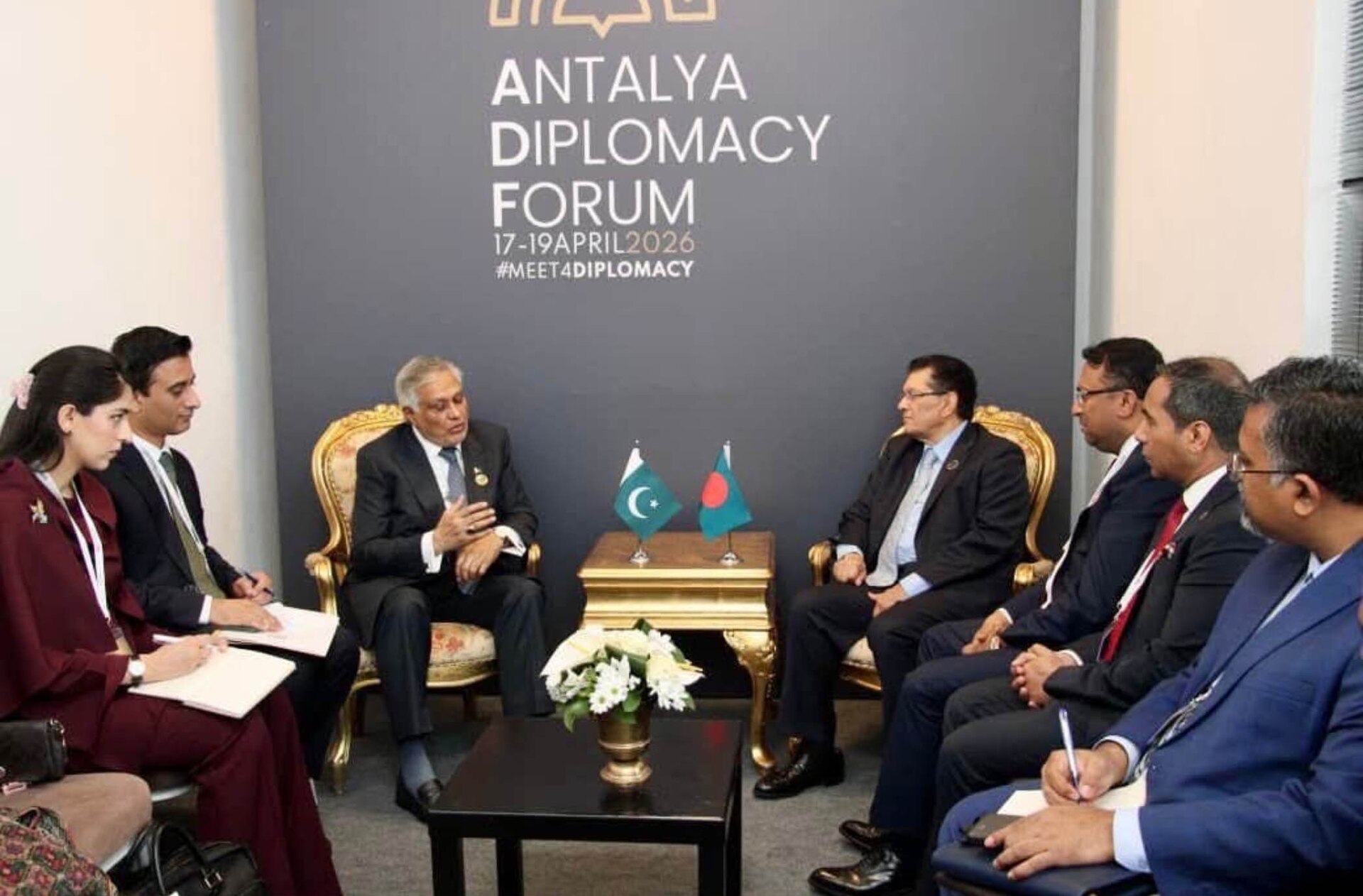
The Saudi-Egypt-Pakistan-Turkey quadrilateral held three ministerial sessions in thirty-one days — March 19 in Riyadh, March 29 in Islamabad, April 18 in Antalya — and produced zero communiqués, zero joint statements, and zero documents acknowledging the formation’s existence. The International Institute for Strategic Studies, in a May 2026 analysis, described it as “institutionalised consultation” — calibrated to describe something more than ad hoc coordination and less than an alliance.
n
FM Faisal’s June 2-4 cluster follows the same architecture: high diplomatic activity producing zero commitment artifacts. Condemnation calls do not produce communiqués. Solidarity statements do not produce defense commitments. Written messages received from Moscow and Seoul do not produce policy positions. The pattern is not inactivity. It is activity specifically designed to avoid the kind of diplomatic product — a treaty, a joint statement, a formal position — that would constrain Saudi Arabia’s future options.
n
The quadrilateral’s structural logic explains why: Saudi Basic Law Article 70 requires King Salman’s signature on any treaty, and the ninety-year-old monarch’s approval for a security grouping that would publicly position Saudi Arabia against Iran is not assured. As long as the four meet without producing documents, Iran can engage each member bilaterally. A formal charter naming collective security as its purpose would force Tehran to treat the formation as a bloc, eliminating the bilateral engagement strategy that currently keeps Saudi Arabia’s private Tehran channel alive.
n
The same constraint applies to the FM’s solidarity calls. A Saudi condemnation of Iranian strikes on Kuwait does not require an Iranian counter-response. A Saudi diplomatic expulsion would.
n
n
Not Our War, but Our Territory
n
On March 7, Prince Faisal bin Farhan told reporters: “Saudi Arabia is open to any form of mediation aimed at de-escalation… if Iranian attacks persist… the Kingdom will be forced to respond.” The implied framework — “not our war, but our territory” — has defined Saudi messaging since February 28. Condemnation without escalation. Solidarity without commitment. Mediation support without mediation leadership.
n
The Iran MOU that will be formally rejected on June 9 was negotiated without Saudi input. The Aramco dividend payable that day was set when Brent traded above $100. The Omani counteroffer expected that day will route through a channel Saudi Arabia does not control. “Not our war, but our territory” assumes the territory is not also the venue for the war’s financial and diplomatic resolution.
n
“A position close to Washington and against Iran is supported by the majority of Saudis, but being close to Washington while it is supporting Israel’s expansionist policy is a different ball game,” Marwan Muasher, vice president for studies at the Carnegie Endowment for International Peace, wrote in March 2026. The FM’s June 2-4 call log threads that needle: close enough to Washington to condemn Iranian strikes on GCC states, distant enough to avoid any association with the Lebanon ceasefire or the Hormuz tracks Washington is managing.
n
Saudi public opposition to normalization with Israel stands at 99-to-1, according to an August 2025 WINEP/INSS survey. None of Secretary Rubio’s four statehood preconditions — independent Palestinian state, 1967 borders, East Jerusalem capital, irreversible commitment — were met in his June 3-4 Senate Foreign Relations Committee testimony. The King Salman constraint on normalization remains binding. The FM’s call selections operate within these limits.
n
Stefanie Hausheer Ali, an Atlantic Council nonresident fellow, offered the broader frame: “The perception of the Gulf Arab states as safe havens in a tough region is shattered.” FM Faisal’s solidarity calls attempt to reconstruct that perception — Saudi Arabia as the responsible regional actor, condemning violence, supporting mediation, engaging international institutions. But the calls he did not make — to Rubio, to Araghchi, to anyone in Beirut — are where the reconstruction breaks down.
n
The 2019 Abqaiq pattern led eventually to the China-brokered normalization of March 2023 and FM Faisal’s own visit to Tehran. Twenty-nine days of silence toward Araghchi suggests no comparable destination is visible from June 2-4. On June 9, Aramco’s dividend will exceed its quarterly free cash flow and Iran is expected to formally reject the MOU — two outcomes shaped entirely by a strait the FM’s calls did not address and Saudi Arabia does not control.
n
Frequently Asked Questions
n
What is Saudi Arabia’s current diplomatic representation in Iran?
n
Saudi Arabia’s embassy in Tehran, reopened in September 2023 following the China-brokered normalization, remains formally open. Iran’s civilian Ambassador Alireza Enayati remains in Riyadh — he was deliberately preserved when Saudi Arabia expelled five military and embassy staff on March 21, 2026. This asymmetry (military attaché expelled, civilian ambassador retained) keeps the back-channel infrastructure intact. By contrast, the UAE closed its Tehran embassy entirely on March 1, and Kuwait expelled two diplomats on June 3. Oman remains the only GCC state with full, uninterrupted diplomatic relations with both Tehran and Washington.
n
Has FM Faisal met any Iranian official in person during the 2026 conflict?
n
FM Faisal met Iranian FM Araghchi at the April 18 Antalya Quadrilateral session — the last confirmed in-person Saudi-Iranian ministerial contact. Faisal received Iran’s proposal text before Washington did at that meeting, according to multiple reports. Phone calls continued through May 6. Before the conflict, Faisal’s highest-profile Iran engagement was his May 2023 Tehran visit — the first by a Saudi FM in seven years, following the March 2023 normalization. The current 29-day phone silence is the longest gap in a bilateral channel that was operating at near-weekly frequency in March and April 2026.
n
What diplomatic actions has Saudi Arabia taken during the Iran war beyond solidarity statements?
n
Saudi Arabia’s operational diplomatic actions since February 28 include: maintaining US base access while restricting use for Israeli operations and denying Prince Sultan Air Base to Project Freedom (New Lines Institute, Becker-Hicks); expelling five Iranian military and embassy staff on March 21 while preserving the civilian ambassador; co-founding the Saudi-Egypt-Pakistan-Turkey quadrilateral (three sessions, zero communiqués); deploying the Saudi Multinational Defence Alliance with 80,000 troops authorized and approximately 8,000 deployed; and routing Hormuz messaging through French diplomatic infrastructure after direct channels closed. It has not joined any Hormuz negotiating track, initiated independent UN Security Council action, or proposed its own ceasefire framework.
n
How does Saudi Arabia’s 2026 diplomatic posture differ from the 2021-2022 Baghdad track?
n
In the Baghdad talks (April 2021 through April 2022), Saudi Arabia was a direct principal — one of two parties at the table, negotiating bilateral terms with Iran through Iraqi mediation. In 2026, Saudi Arabia has shifted from principal to supporting actor: it supports Pakistan’s mediation but is not at the table, coordinates with Qatar but is not a co-mediator, engages the IAEA but is not party to the US-Iran MOU, and routes Hormuz messaging through France but does not participate in the Northwood coalition command. The shift coincides with the loss of the Chinese channel — Beijing, which brokered the March 2023 normalization, has not replicated its mediator role in the 2026 conflict. No comparable great-power sponsor for a Saudi-Iranian bilateral track has emerged.
n
What would a Saudi diplomatic expulsion of Iranian diplomats change?
n
A further PNG would likely trigger Iranian reciprocal action — either expelling Saudi diplomats from Tehran or formally downgrading relations. This would close Saudi Arabia’s remaining direct channel to the Iranian government at the moment when the US-Iran MOU is collapsing and the Omani counteroffer for Hormuz is being prepared. Kuwait’s June 3 expulsion already prompted Iran FM Araghchi to claim Kuwait bears “direct responsibility” for hosting US forces — the framing Saudi Arabia has avoided by maintaining Ambassador Enayati’s presence in Riyadh. An expulsion would also force Saudi Arabia to formally align its diplomatic posture with Kuwait and the UAE’s harder line, constraining the “not our war” positioning that FM Faisal has maintained since March. Pakistan was not silent during those same days: Mohsin Naqvi made his third Tehran visit in three weeks, carrying a letter from Field Marshal Munir directly to Khamenei’s office — the contrast with Saudi Arabia’s frozen diplomacy is examined in Pakistan’s active courier diplomacy. Meanwhile, on May 28, Washington had already moved to close the Omani channel that Saudi Arabia had relied on as its last surviving indirect route to Tehran: Trump Threatened to Bomb Oman: Saudi Arabia’s Last Channel to Tehran. Qatar emerged on June 8 as the relay that filled every gap those channels left: Riyadh called Doha, Tehran called Doha, and neither called each other — the full architecture is in The Back-Channel Saudi Arabia Cannot Name.