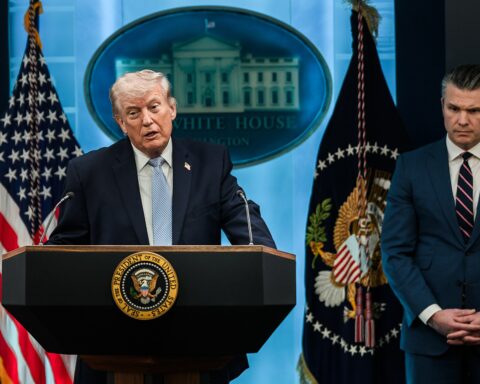
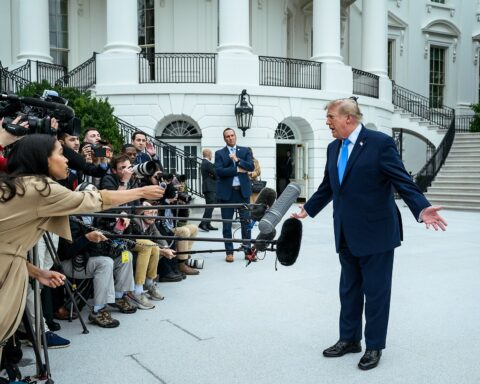
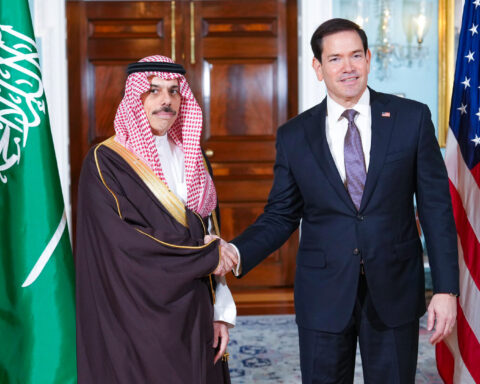
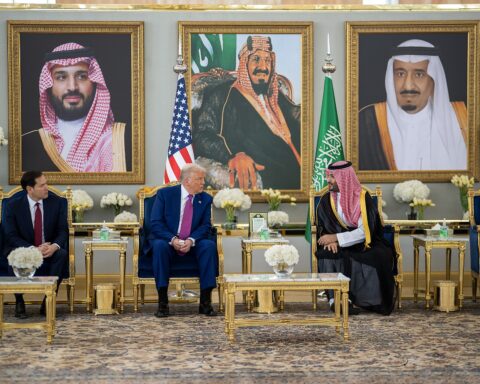
WASHINGTON — On the morning of April 18, Secretary of State Marco Rubio urged European governments to reimpose sanctions on Iran, warning that Tehran is close to nuclear weapons capability — a declaration made on the same day Saudi Arabia sealed between 1.2 and 1.5 million pilgrims inside the Makkah cordon with roughly 400 PAC-3 interceptors standing between them and an Iranian missile arsenal that remains, by every serious estimate, more than half intact. The ceasefire expires in four days, and Saudi Arabia — the country that would absorb the first salvo if coercive pressure triggers an Iranian breakout from the Islamabad Accord — has no seat at either table.
Rubio’s push arrives on a date that is not coincidental. April 18, 2026 was precisely the endpoint Russia and China proposed last September when they tried, and failed, to extend the JCPOA framework at the UN Security Council. The snap-back mechanism that reimposed UN sanctions is already spent — its ten-year trigger window expired on October 18, 2025. What Rubio is now demanding from Europe is something new: bilateral sanctions escalation, tighter enforcement of the existing UN regime, and secondary sanctions on third parties including Chinese banks, all in the narrowest and most dangerous window of the war so far. Saudi Arabia funds the interceptors, hosts the bases, absorbs the strikes, and shelters the pilgrims. It decides nothing.
Table of Contents
- The Snap-Back Is Already Spent — So What Is Rubio Actually Asking For?
- How Close Is Iran to a Nuclear Weapon?
- The Four-Day Window and Saudi Exposure
- Why Does Saudi Arabia Have No Vote on Iran’s Nuclear Future?
- The Hajj Hostage Calculus
- The US-Saudi 123 Enrichment Contradiction
- Bessent’s China Warning and the Secondary Sanctions Track
- Why April 18 Was Never a Coincidence
- Frequently Asked Questions
The Snap-Back Is Already Spent — So What Is Rubio Actually Asking For?
The JCPOA’s snap-back mechanism — the veto-proof procedure embedded in UN Security Council Resolution 2231 that allowed any original participant to reimpose full UN sanctions on Iran without a vote — was triggered by the E3 (France, Germany, and the United Kingdom) on August 28, 2025, seven weeks before its hard expiry date of October 18, 2025. UN sanctions were fully reimposed by September 27-28, 2025, covering the arms embargo, bans on sensitive nuclear and missile technology transfers, asset freezes, travel bans, and oil, financial, and transport sector restrictions. Russia and China could not block it: the mechanism’s design required a positive Security Council vote to prevent reimposition, not to enable it — a deliberate inversion of the normal veto architecture.
That mechanism is now dead. It was a one-time, ten-year instrument and it has been used. When Rubio stood before cameras on April 18 urging Europe to act, he was not invoking snap-back. He was demanding something the JCPOA never contemplated: a new round of EU bilateral sanctions, tighter enforcement of the sanctions already reimposed, and coordinated secondary sanctions pressure on third parties — particularly Chinese financial institutions still processing Iranian transactions. The distinction matters because the tools remaining to the West are slower, weaker, and subject to exactly the kind of Russian and Chinese obstruction that snap-back was designed to circumvent.
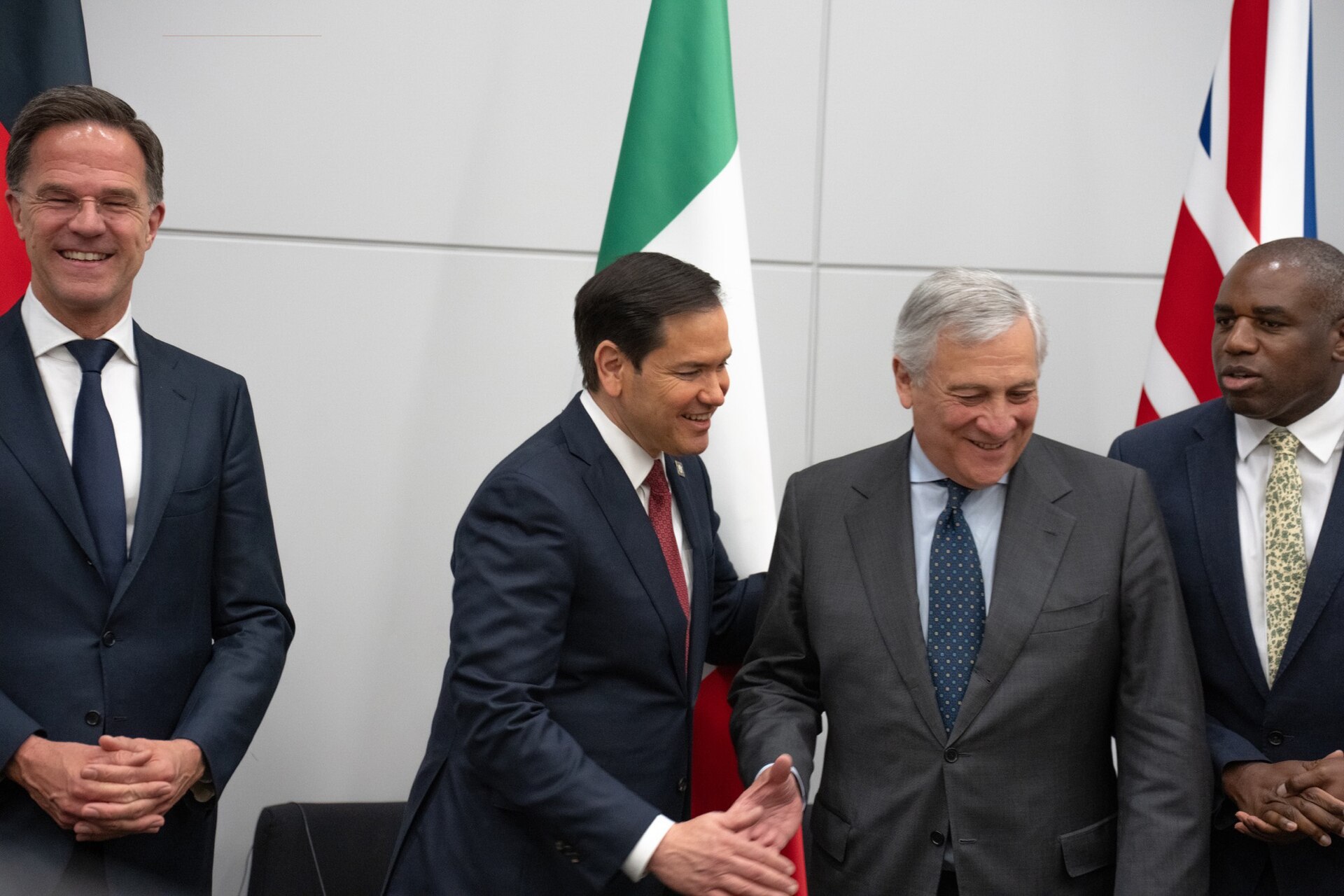
Rubio framed sanctions as a diplomatic accelerant, not an alternative to diplomacy — a position he first staked out during the E3 trigger in August 2025 and has reprised almost verbatim this week. Iran’s reading is the opposite. Foreign Minister Abbas Araghchi told the UN Security Council that the United States and E3 “have actively and intensely paved the way for dangerous escalation,” calling snap-back “an action against diplomacy, not a chance for it.” Iranian Foreign Ministry spokesperson Esmaeil Baqaei, responding to the latest sanctions escalation on April 16, went further: “These are nothing short of economic terrorism and state-sponsored extortion — actions that amount to crimes against humanity.”
The question is not whether either characterisation is accurate. The question is who gets to decide — and the answer, for Saudi Arabia, is: not you.
The Middle East briefing 3,000+ readers start their day with.
One email. Every weekday morning. Free.
How Close Is Iran to a Nuclear Weapon?
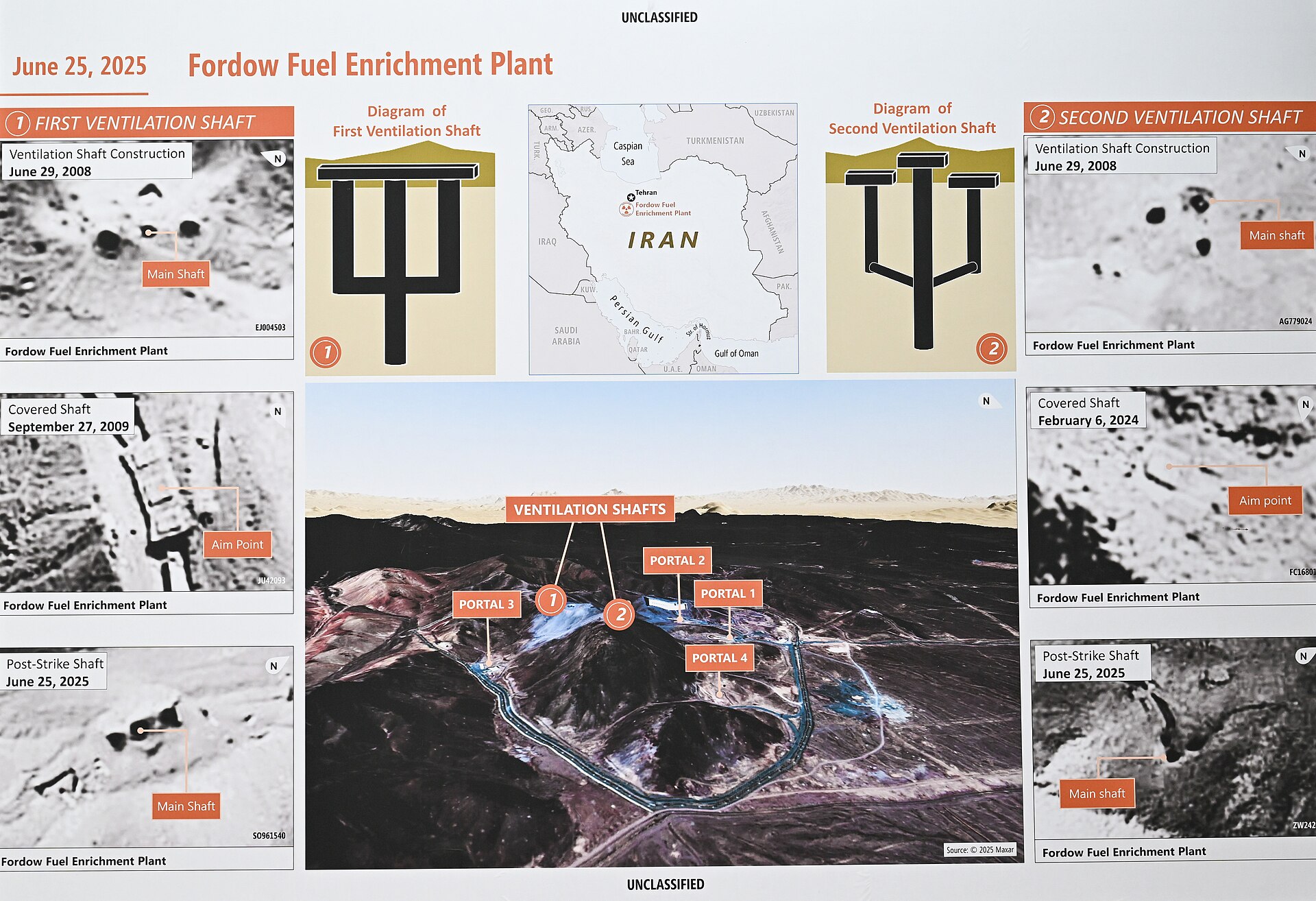
Rubio’s April 18 warning that Iran is “nearing the capability to develop a nuclear weapon” rests on a factual foundation that is simultaneously alarming and unknowable. The last verified measurement of Iran’s highly enriched uranium stockpile came from the International Atomic Energy Agency in June 2025: 440.9 kilograms enriched to 60 percent — a level that, as the E3 foreign ministers noted in their snap-back notification letter, “lacks any credible civilian justification and is unprecedented for a state without a nuclear weapons program.” On February 28, 2026, Iran terminated all IAEA access, disabled cameras, and removed seals. The current stockpile is unverifiable, and ten months of uninspected production at Fordow and Natanz have elapsed since the last measurement. The nuclear and diplomatic dimensions of that blackout are examined in depth in Iran’s Nuclear Clock and Saudi Arabia’s Closing Window, which maps the 123 Agreement timeline against the IAEA monitoring gap.
The physics of breakout from 60 percent enrichment are well-understood and not reassuring. Enriching uranium from natural levels to 60 percent accounts for roughly 90 percent of the total separative work required to reach weapons-grade material at 90 percent or above. The final step — from 60 to 90 percent — is technically modest. The Center for Arms Control and Non-Proliferation assesses that a single cascade of 175 IR-6 centrifuges could produce enough weapons-grade material for one nuclear device every 25 days. The June 2025 stockpile of 440.9 kilograms at 60 percent is sufficient, if further enriched, for approximately nine to ten nuclear devices — a figure the table below details against each breakout stage.
| Parameter | Value | Source |
|---|---|---|
| HEU stockpile (60% enriched) | 440.9 kg | IAEA, June 2025 verification report |
| Weapons equivalents at 90% | ~9-10 devices | Center for Arms Control |
| Time per device (60% → 90%) | ~25 days | ISIS / Center for Arms Control |
| Total breakout to deliverable weapon | 7-13 months | US intelligence community |
| IAEA access status | Terminated Feb 28, 2026 | IAEA |
| Days since last verification | ~300+ | — |
Total breakout from a political decision to a deliverable device — enrichment, conversion, weaponisation — the intelligence community estimates at seven to thirteen months. But these timelines assume starting conditions that were last verified nearly a year ago, and they assume Iran has not already crossed thresholds that IAEA inspectors would have detected had they been permitted to look. Rubio’s warning is not speculative, but neither is it falsifiable — and that is precisely the condition in which coercive pressure becomes most dangerous.
The Four-Day Window and Saudi Exposure
The Islamabad Accord, negotiated over 21 hours on April 11-12 before talks collapsed, established a ceasefire that expires on April 22 with no extension mechanism and no formal renewal agreed as of April 18. The accord contains no provision for what happens when it lapses, no designated arbiter, and no penalty structure. The US imposed a naval blockade on April 13, one day after the collapse. The Foundation for Defense of Democracies estimates the combined sanctions-and-blockade regime is costing Iran $435 million per day in economic damage. Rubio’s April 18 sanctions push adds European pressure to this squeeze in a four-day window during which Iran has every incentive to act before the ceasefire expires — and Saudi Arabia is the most exposed target in the theatre.
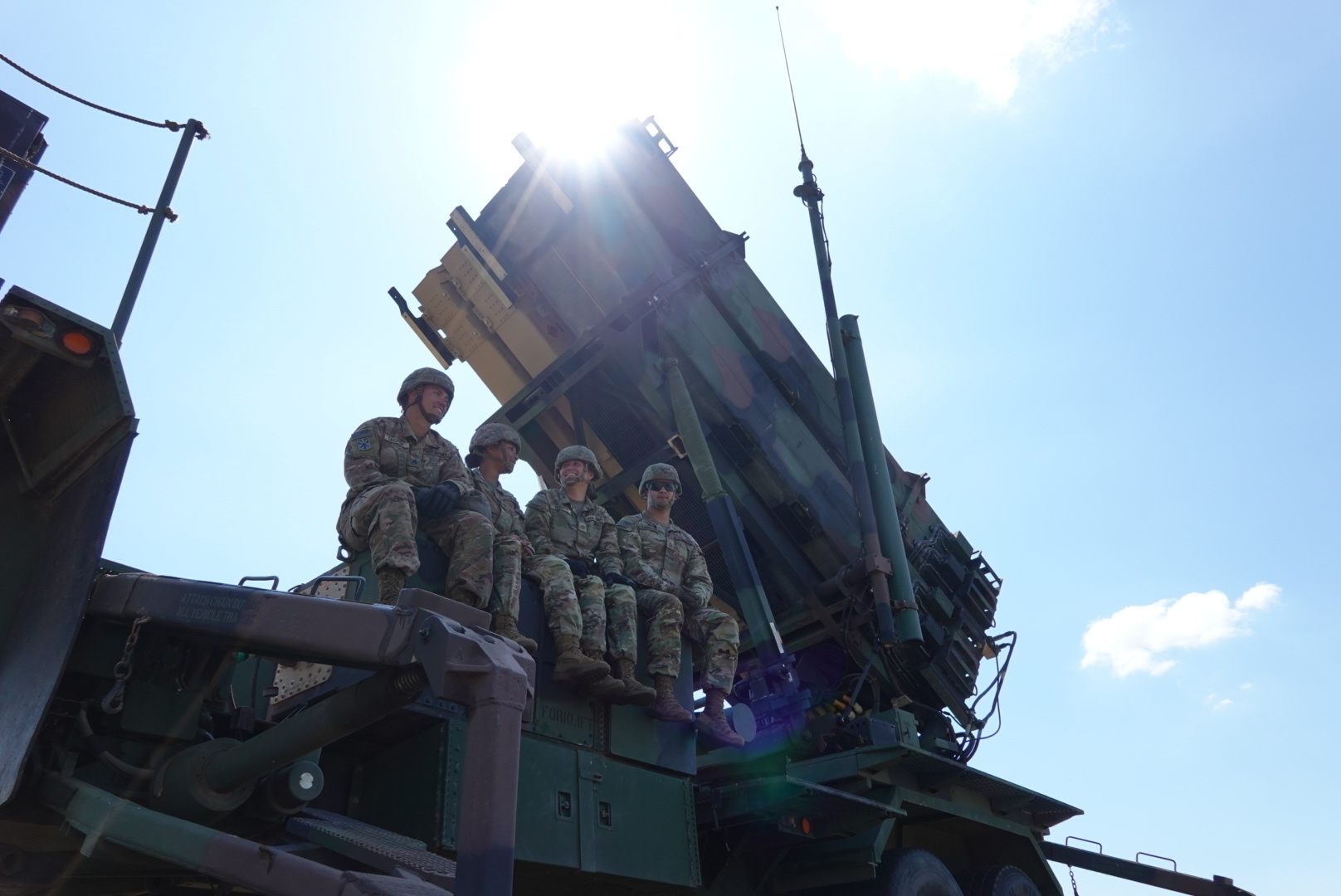
Saudi Arabia’s air defense architecture has been degraded to a level that makes the four-day window existentially consequential. Of the approximately 2,800 PAC-3 MSE interceptors in Saudi inventory before the war began on February 28, roughly 400 remain — an 86 percent drawdown. The 894 projectiles intercepted in seven weeks consumed approximately 2,400 rounds, reflecting standard multi-round engagement doctrine for ballistic threats. The Lockheed Martin facility in Camden, Arkansas produces 620 rounds per year at current capacity. A reported $4.76 billion emergency contract is expected to raise output to approximately 2,000 rounds annually, but that production line will not reach full capacity until 2028. Poland refused a Patriot battery transfer on March 31. The $16.5 billion emergency arms package went to the UAE, Kuwait, and Jordan — not to Saudi Arabia.
Iran, by contrast, retains an estimated 50 percent of its pre-war missile and drone arsenal. The IRGC’s cost-imposition logic, as described by the Center for Strategic and International Studies, is arithmetically simple: every Iranian drone costs a fraction of the PAC-3 round required to intercept it, and the production asymmetry compounds with every salvo. The four days between April 18 and April 22 are the window in which Western sanctions pressure is highest, Iranian economic pain is most acute, and Saudi Arabia’s ability to absorb a retaliatory strike is at its wartime nadir.
Why Does Saudi Arabia Have No Vote on Iran’s Nuclear Future?
Saudi Arabia’s exclusion from the decisions that most directly affect its survival is not an accident of timing — it is a structural feature of the architecture built in 2015. The JCPOA was concluded on July 14, 2015, between Iran and the P5+1 (the United States, United Kingdom, France, Russia, China, plus Germany) with EU coordination. Saudi Arabia and the UAE explicitly demanded inclusion during the 2014-2015 negotiations. Tehran refused. Several P5+1 parties — the United States included — acquiesced. The Saudi concerns that were excluded from the deal’s scope — ballistic missiles, proxy networks, sunset clauses — became the precise issues that define the current war.
The Saudi government’s official statement in July 2015 supported a deal with “specific, strict and permanent mechanisms for inspecting all sites and rapidly re-imposing sanctions.” It received neither permanent inspections — Iran expelled the IAEA eight months ago — nor a seat at the table where reimposition is discussed. When the E3 triggered snap-back in August 2025, Saudi Arabia was informed, not consulted. When Rubio urges Europe to escalate on April 18, he is shaping the coercive environment that Saudi Arabia inhabits without soliciting the view of the government that has spent $3.49 billion in interceptor rounds defending against the consequences of that coercion.
The exclusion extends beyond the JCPOA. The Islamabad talks that produced the ceasefire were a US-Iran bilateral negotiation with Pakistan as venue and mediator. Saudi Arabia was not in the room. When talks collapsed, Saudi Foreign Minister Prince Faisal bin Farhan called Iranian Foreign Minister Araghchi on April 13 — the day the US blockade began — in what amounts to a parallel diplomatic track conducted entirely outside the formal framework. Saudi Arabia’s influence operates through financing, hosting, and absorbing — never through voting, vetoing, or signing.
The Hajj Hostage Calculus
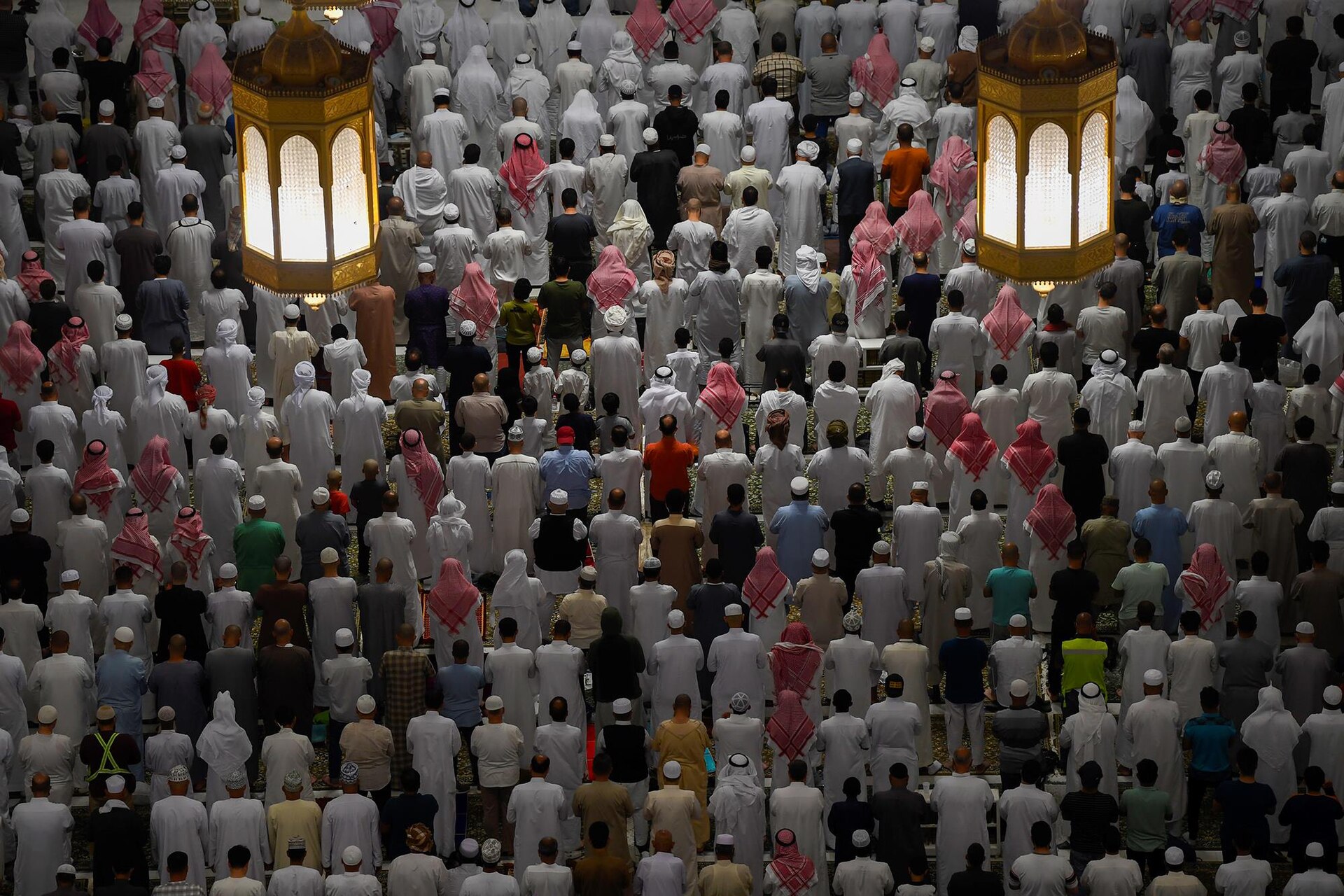
The Makkah cordon sealed on April 18 marks the beginning of a period in which Saudi Arabia’s most fundamental obligation — the protection of pilgrims performing the Hajj — collides with the military reality of a depleted air defense shield and an adversary under maximum economic pressure. Umrah is suspended from April 18 through May 31. The Day of Arafah falls on May 26 — a full 34 days after the ceasefire expires on April 22. Between 1.2 and 1.5 million pilgrims will be present on Saudi territory during a period in which no ceasefire is operative and no extension has been agreed. Indonesia’s 221,000 pilgrims begin departure on April 22 — the day the ceasefire lapses. Pakistan’s 119,000 arrive on April 18 itself.
“Snapback does not contradict our earnest readiness for diplomacy, it only enhances it.”Marco Rubio, US Secretary of State, August 28, 2025
The 1987 precedent — the last time Hajj coincided with an active Iranian military confrontation — killed 402 people, triggered an 87 percent quota cut for Iranian pilgrims, and produced a three-year Iranian boycott. But the 2026 configuration inverts the deterrence logic entirely. Zero Iranian pilgrims are present in Saudi Arabia this year, which means Iran bears no human cost if Makkah comes under fire. The pilgrims are exclusively from countries allied with or dependent on Saudi Arabia — Indonesia, Pakistan, Egypt, Turkey, Bangladesh, Nigeria — whose citizens become, in effect, the hostage population that constrains Saudi military options while providing no reciprocal constraint on Iran.
Editor’s note: Subsequent reporting has established that Iran negotiated 30,000 pilgrims into Saudi Arabia for Hajj 2026 via the Jadidat Arar crossing, entering from April 27 under SNSC authorisation. This materially complicates the deterrence logic described above. See: Iran Has 30,000 Nationals Inside Saudi Arabia. The Hajj Deterrence Logic Has Reversed.
Saudi Arabia’s five-layer defense architecture around the Hajj zone — THAAD, PAC-3, KM-SAM, laser systems, and Skyguard close-in defense — was designed for a threat environment in which the interceptor stockpile was full. At 400 remaining PAC-3 rounds, the system can absorb one major salvo, perhaps two. The Ministry of Defense published launcher photos in recent weeks but withheld interceptor inventory data — a disclosure pattern that suggests confidence in the platforms but not in the ammunition. Rubio’s sanctions push on April 18 raises the probability of an Iranian response during exactly the period when Saudi Arabia’s capacity to absorb that response is at its lowest and its moral obligation to protect pilgrims is at its highest.
The US-Saudi 123 Enrichment Contradiction
The structural absurdity of Saudi Arabia’s position extends into the nuclear domain itself. The US-Saudi 123 nuclear cooperation agreement — the bilateral framework required under US law before transferring civilian nuclear technology — does not expressly forbid Saudi enrichment of uranium. This is a departure from the so-called “gold standard” established in the US-UAE 123 agreement, which includes an explicit enrichment prohibition. The Arms Control Association and PBS News reported in February-March 2026 that the draft agreement leaves the enrichment question deliberately ambiguous, with Saudi negotiators resisting any language that would permanently foreclose the option.
The contradiction is structural, not rhetorical. The United States is simultaneously pressuring Iran to abandon enrichment — Rubio’s April 18 statement warns of Iran “nearing the capability to develop a nuclear weapon” — while negotiating an agreement with Saudi Arabia that preserves Saudi Arabia’s right to pursue the same capability. The Stimson Center’s assessment is blunt: “Saudi Arabia’s nuclear path will not depend on Iran or the war’s outcome” but is driven by “eroding U.S. security guarantees” — a judgment that reframes Saudi nuclear ambition as a response to exactly the kind of structural exclusion that April 18 exemplifies.
The enrichment asymmetry has a direct nuclear cooperation dimension: the pending US-Saudi 123 Agreement does not contain an explicit enrichment prohibition, meaning Washington is pressing Riyadh to voluntarily cap a right it has not contractually foreclosed.
During the Islamabad talks, the US proposed a 20-year Iranian enrichment moratorium. Iran countered with monitored down-blending. Araghchi reportedly said the two sides were “inches away” from a memorandum of understanding before Vice President Vance walked out. The moratorium demand would have frozen Iran’s enrichment capacity while the 123 agreement simultaneously left Saudi enrichment rights open — an asymmetry that Iranian negotiators identified and that contributed to the collapse. The war has made the contradiction more acute, not less: Saudi Arabia is now the country most endangered by Iranian enrichment and the country whose own nuclear ambitions are least constrained by US treaty architecture.
Bessent’s China Warning and the Secondary Sanctions Track
Three days before Rubio’s European appeal, US Treasury Secretary Scott Bessent warned two Chinese banks on April 15 that they faced secondary sanctions if Iranian money continued flowing through their accounts. “If we can prove there is Iranian money flowing through your accounts, then we are willing to put on secondary sanctions,” Bessent told Bloomberg — a formulation that made the threat conditional on proof but unconditional on consequences. China’s Foreign Ministry spokesperson Guo Jiakun responded that “China opposes illegal unilateral sanctions without the authorisation of the UN Security Council,” a position that, whatever its legal merits, accurately identifies the gap: the snap-back sanctions were UN-authorised, but secondary sanctions on Chinese banks are a unilateral American instrument operating entirely outside the multilateral framework.
The Bessent track and the Rubio track are complementary halves of a single coercive strategy — financial strangulation from the East via secondary sanctions on Chinese intermediaries, and trade restriction from the West via European bilateral sanctions and enforcement tightening. Together they are designed to close the gaps that Iran has exploited since the snap-back reimposition, particularly the Kunlun Bank channel through which yuan-denominated Iranian oil payments have continued to flow. The naval blockade, effective since April 13, adds a kinetic dimension: Iranian ports are physically interdicted while financial channels are simultaneously constricted.
Saudi Arabia’s position in this architecture is that of the absorber. It absorbs Iranian retaliation when sanctions bite. It absorbs the oil market disruption — Saudi March production fell to 7.25 million barrels per day from 10.4 million in February, a 30 percent crash, the largest single-month output drop in the kingdom’s history. It absorbs the fiscal damage — Goldman Sachs projects a 6.6 percent GDP war-adjusted deficit against the official 3.3 percent forecast. It absorbs the pilgrimage risk. And it absorbs all of this while the decisions about whether to tighten or loosen the pressure are made in Washington, Brussels, and Beijing by officials who do not consult Riyadh before acting.
Why April 18 Was Never a Coincidence
On September 26, 2025 — one day before UN sanctions snapped back into force — Russia and China introduced a counter-resolution at the Security Council proposing to extend the JCPOA framework until April 18, 2026. The resolution failed, but the date it named is the date on which Rubio chose to escalate. Whether this is deliberate signalling or calendrical coincidence, the effect is identical: April 18 was the date Moscow and Beijing wanted as the outer boundary of the JCPOA’s legal architecture, the date beyond which they argued the framework should have been allowed to expire naturally rather than being killed by snap-back. Rubio’s decision to demand European action on that precise date reads, from Moscow and Beijing, as confirmation that the Western strategy was never about preserving the JCPOA but about replacing it with an enforcement regime that Russia and China cannot obstruct.
That strategy extended to Vienna on April 24, when China and Russia joined Iran for a trilateral meeting with IAEA Director General Grossi — their third such session since October 2025, each timed days before a US-Iran negotiating round. The coordinated effort amounts to what analysts are calling Beijing and Moscow’s co-authorship claim over Iran’s nuclear framework, inserting both powers as structural parties before Washington can close a bilateral deal in Muscat.
| Date | Event | Saudi Role |
|---|---|---|
| Aug 28, 2025 | E3 triggers JCPOA snap-back mechanism | Informed, not consulted |
| Sep 26, 2025 | Russia/China propose extending JCPOA to April 18, 2026 — fails | Not party to vote |
| Sep 27-28, 2025 | UN sanctions fully reimposed on Iran | No seat at table |
| Oct 18, 2025 | Snap-back mechanism expires permanently | — |
| Feb 28, 2026 | Iran terminates IAEA access; war begins | Primary target |
| Apr 7-8, 2026 | Islamabad Accord ceasefire (no extension mechanism) | Not in room |
| Apr 11-12, 2026 | Islamabad talks collapse after 21 hours | Not in room |
| Apr 13, 2026 | US naval blockade begins; Saudi FM calls Araghchi | Parallel track, no formal role |
| Apr 15, 2026 | Bessent warns Chinese banks on secondary sanctions | Not consulted |
| Apr 18, 2026 | Rubio urges EU sanctions; Hajj cordon seals; Russia/China extension endpoint | Absorbs consequences |
| Apr 22, 2026 | Ceasefire expires | Primary kinetic target |
| May 26, 2026 | Day of Arafah (Hajj peak) | 1.2-1.5M pilgrims under Saudi protection |
Iran’s own internal signalling on April 18 is contradictory in ways that compound the danger. The IRGC outlet threatened to close Hormuz if the US blockade continues, while Araghchi simultaneously declared the strait “completely open” — a split that reflects the authorisation ceiling problem that has defined Iranian decision-making since Khamenei’s prolonged absence. The IRGC Navy declared “full authority to manage the Strait” on April 5 and again on April 10, while Araghchi was negotiating in Islamabad. Tangsiri, the IRGC Navy commander, was killed on March 30 and no named successor has been announced, meaning the force that controls Hormuz is operationally active but command-headless. Iranian Foreign Ministry spokesperson Baqaei called Western sanctions “economic terrorism” on April 16 — language calibrated to justify retaliation under Iran’s own legal framework.
Araghchi’s September 2025 Guardian op-ed offered a different register entirely: Iran “is ready to forge a realistic and lasting bargain that entails ironclad oversight and curbs on enrichment in exchange for the termination of sanctions.” That offer was made before the war, before IAEA expulsion, before 440.9 kilograms became an unknown and growing number. Whether it survives the current pressure — pressure that Saudi Arabia absorbs but does not direct — is the question that April 18 poses and April 22 may answer.
Saudi Arabia built the financial architecture that sustains Western-aligned security in the Gulf. It funded PAC-3 batteries for neighbours, hosted the bases from which US aircraft operate, pre-positioned 7.3 million barrels per day of export capacity before the war began, and accepted the Custodian title that makes cancelling Hajj a theological impossibility. Prince Faisal’s phone call to Araghchi on blockade day — April 13, the same day the US Navy sealed Iranian ports — is the clearest evidence that Riyadh is conducting its own diplomacy in the margins of a framework it cannot enter. The call happened. Its contents have not been disclosed. Saudi Arabia’s influence on the most consequential week of the war operates through back channels and bilateral appeals to an Iranian foreign minister whose own government has publicly accused him of exceeding his mandate.
Four days remain before the ceasefire expires. The sanctions pressure is rising. The interceptor count is not. The pilgrims are inside the cordon. And the country that bears more risk than any other participant in this crisis will learn what Washington and Brussels decided by watching what Tehran does next.
Frequently Asked Questions
Can the JCPOA snap-back mechanism be used again?
No — it is permanently expired. The one-time, ten-year instrument embedded in Resolution 2231 was used by the E3 on August 28, 2025, and its trigger window closed on October 18, 2025. Neither the United States nor anyone else can invoke it again. What no one has publicly addressed is whether a new Security Council resolution could recreate a snap-back-style architecture from scratch — the answer is almost certainly no, because any new Iran sanctions resolution requires a positive vote, which Russia and China have signalled they would oppose. At the September 2025 counter-resolution vote, both countries proposed extending the JCPOA framework rather than allowing snap-back to proceed; neither has indicated any willingness since to support new punitive measures outside a negotiated settlement. The West’s remaining tools are therefore bilateral and secondary — effective against Iran’s revenues but unable to achieve the automatic, universal, veto-proof reimposition that snap-back provided.
What sanctions are currently in force against Iran?
Iran’s Central Bank circulated an internal memo projecting 180 percent inflation and a 12-year recovery timeline if the current sanctions-and-blockade regime holds — a damage assessment that the government has not published but that has circulated to officials. The underlying architecture: the full pre-JCPOA UN regime was reimposed September 27-28, 2025, covering arms embargoes, nuclear and missile technology transfer bans, asset freezes, travel bans, and oil, financial, and transport sector restrictions. Layered on top are US unilateral secondary sanctions that penalise non-US entities — the tool Bessent invoked against Chinese banks on April 15 — and EU bilateral sanctions. The US naval blockade, effective since April 13, adds physical interdiction at Iranian ports. Russia and China cannot lift or block enforcement of the September 2025 UN reimposition; what they can block is any new Security Council resolution, leaving the West’s remaining escalation tools in the slower, more contestable bilateral and secondary sanctions lanes.
Has Saudi Arabia ever been offered a seat at Iran nuclear negotiations?
Not formally, and the exclusion has deepened rather than narrowed. Saudi Arabia and the UAE requested inclusion in 2014-2015; Tehran refused and the P5+1 acquiesced. No GCC state has been offered formal participation in any subsequent negotiating framework — not the 2018-2019 JCPOA repair talks, not the Vienna revival rounds that ran through 2022, and not the Islamabad process. The informal track that does exist is bilateral: Saudi FM Faisal calling Araghchi directly on April 13. That is the full extent of Saudi involvement in the most consequential nuclear diplomacy since the Cuban Missile Crisis. The contrast with the AUKUS framework — where a US ally’s security concerns drove a direct technology transfer agreement — has not gone unremarked in Riyadh, and it shapes the Saudi calculation on the 123 enrichment question.
What is the US-Saudi 123 agreement and why does it matter here?
A “123 agreement” — named after Section 123 of the US Atomic Energy Act — is the bilateral framework required before the United States can transfer civilian nuclear technology to another country. The US-UAE 123 agreement, signed in 2009, set a “gold standard” by including an explicit prohibition on enrichment and reprocessing. The US-Saudi draft, as reported by the Arms Control Association and PBS News in early 2026, does not include this prohibition, leaving Saudi Arabia’s future enrichment rights deliberately ambiguous. The Stimson Center assessed that Saudi nuclear ambitions are driven less by Iran’s capabilities than by “eroding U.S. security guarantees” — meaning the same structural exclusion visible on April 18 is accelerating Saudi interest in an independent nuclear capability that would not depend on American decisions. The 2026 NPT Review Conference, opening April 27 in New York, examines this enrichment asymmetry directly: the United States will spend four weeks pressing for language constraining Iranâs enrichment while its draft 123 Agreement with Saudi Arabia leaves Riyadhâs enrichment rights deliberately open.
What happens if no ceasefire extension is agreed by April 22?
The Islamabad Accord contains no extension mechanism, no arbitration clause, and no designated mediator for renewal. The Soufan Center has noted the absence of any procedural path to extension. Pakistan — the only country that has functioned as an enforcement mechanism — faces its own constraints: Pakistani Foreign Minister Dar indicated “new dialogue in coming days” on April 13, but the 27th Constitutional Amendment means ceasefire diplomacy runs through ISI chief Munir rather than elected government. Further complicating matters, Iran’s chief negotiator Zolghadr was sanctioned by the US during the Islamabad talks, requiring any extension negotiation to identify a fourth-party signatory — potentially Oman. Without extension, the war resumes on April 22 with Hajj pilgrims on Saudi territory through at least May 31 and with Saudi air defense interceptor stocks sufficient for one to two major salvos at most. A structural analysis of all three renewal-blocking locks is in Three Locks, No Keys: Why the Islamabad Accord Cannot Be Renewed Before April 22. Iran’s parallel move — dispatching 30,000 pilgrims to Saudi Arabia while the ceasefire clock ran — is examined in Iran Sends 30,000 Hajj Pilgrims to Saudi Arabia at Zero Military Cost.