
RIYADH — Iran’s decision to widen its war to all six Gulf Cooperation Council members simultaneously accomplished what three decades of Saudi-led diplomacy could not: genuine GCC political and military unity. By attacking Oman’s ports, Qatar’s gas terminals, and Kuwait’s refineries alongside Saudi and Emirati targets, Tehran eliminated every neutral corner it had spent years cultivating — destroying its own diplomatic back-channels and producing the most unified Gulf posture since the 1991 coalition against Saddam Hussein’s Iraq. The 50th Extraordinary Meeting of the GCC Ministerial Council, first convened on March 1 with language condemning “Iranian aggression” and invoking the collective self-defense provisions of Article 51 of the UN Charter, marked the moment the Gulf began shifting from passive victimhood to coordinated strategic demands — a posture that hardened with each subsequent Iranian strike. Whether this unity survives the end of hostilities is the most consequential question in Gulf security today.
Table of Contents
- From Fracture to Unity in Thirty Days
- Why Did Iran Attack All Six GCC Members?
- What Flipped the Holdout States?
- The 50th Extraordinary Meeting and the Language of Escalation
- How Did GCC War Aims Shift from Ceasefire to Degradation?
- Is This the Gulf’s 1991 Moment — or Its 2017 Moment?
- What Iran Lost When It Struck Oman and Qatar
- Will GCC Unity Outlast the War?
- Frequently Asked Questions
From Fracture to Unity in Thirty Days
On March 1, the Gulf Cooperation Council was fractured six ways. Saudi Arabia absorbed the heaviest strikes and demanded collective action. The UAE hedged, protecting its commercial interests while offering quiet logistical support. Bahrain aligned with Riyadh, as it always does. But Qatar maintained back-channels to Tehran, Oman positioned itself as a mediator, and Kuwait attempted the kind of careful hedging it has practiced since 1961. Six members, six contradictory strategies, and a forty-three-year-old alliance that appeared to be disintegrating under its first real test.
All six foreign ministers signed the initial condemnation on March 1. But the words became real over the thirty days that followed, as each holdout state was forced — by Iranian missiles, not Saudi diplomacy — to convert rhetorical solidarity into operational commitment.
The arc is stark. From February 28 through March 14, Iran focused its retaliation primarily on Saudi Arabia and US military assets hosted on Gulf soil. This allowed the smaller states to maintain varying degrees of distance. Qatar’s Foreign Ministry kept its diplomatic channel to Tehran open. Oman’s Foreign Minister Badr al-Busaidi told Al Jazeera on March 3 that “off-ramps are available — let’s use them.” Kuwait’s Emir described his country as a friend of Iran “which we consider a friend, and to which we did not allow the use of our land, airspace, or waters for any military action against it.”
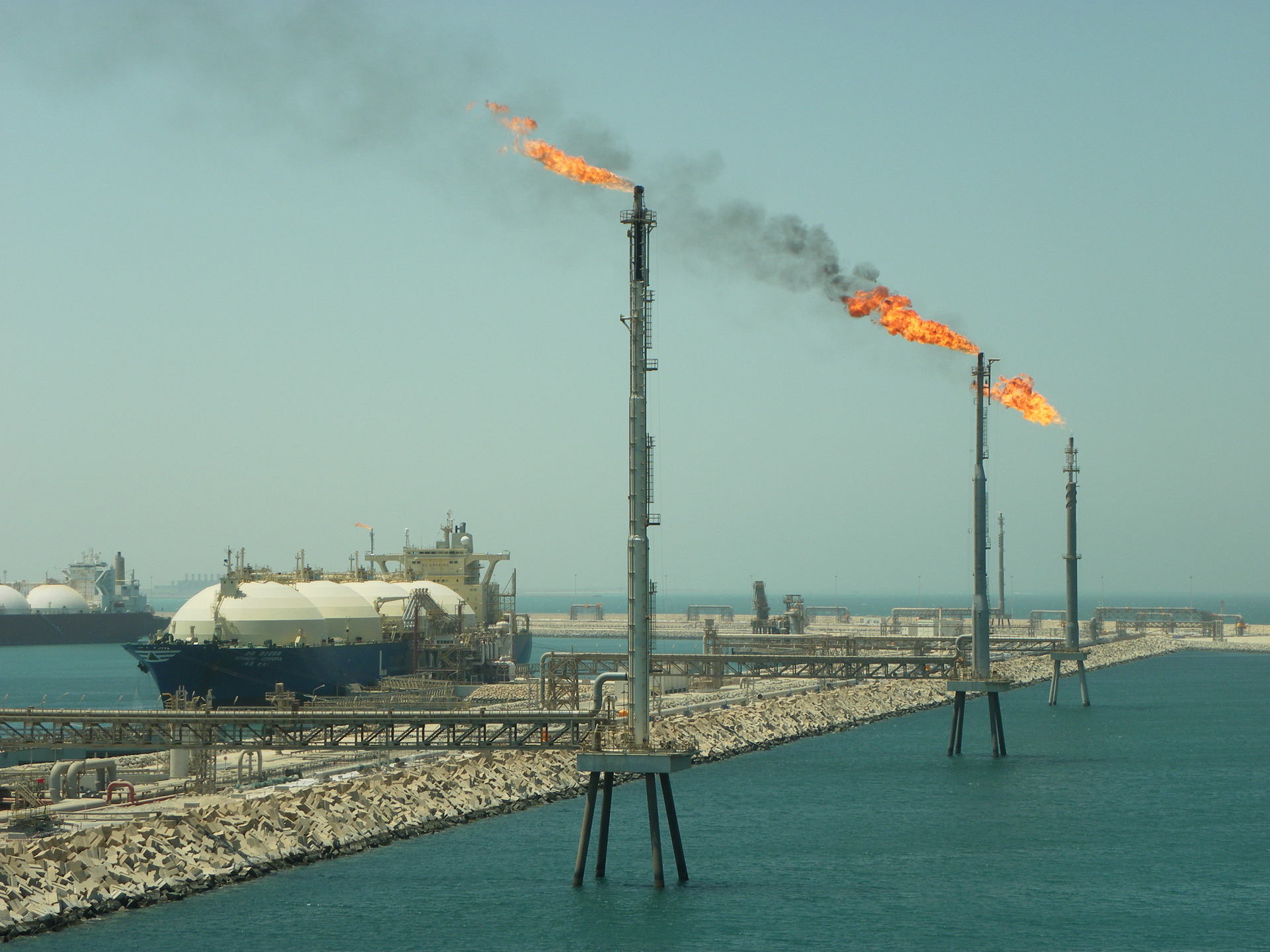
Then Iran widened the aperture. The IRGC struck Qatar’s Ras Laffan LNG terminal on March 18, wiping out 17 percent of Qatar’s LNG export capacity. By March 29, Iranian missiles had hit Emirates Global Aluminium’s Al Taweelah smelter in Abu Dhabi and Aluminium Bahrain’s facilities, injuring workers at both sites. Each strike eliminated one more potential mediator.
Why Did Iran Attack All Six GCC Members?
Iran widened its strikes to all six GCC members because it was executing a deliberate coercive strategy, not lashing out in desperation. The Stimson Center’s analysis, published in March 2026, argued that Iran’s approach was a calculated “coercive risk strategy” in which Gulf states serve as a “particularly well-chosen pressure point” — not because they are combatants, but precisely because they are not. By raising the economic and political costs of continued fighting across the entire Gulf, Tehran aimed to force the region’s governments to pressure Washington into halting its campaign.
The Middle East briefing 3,000+ readers start their day with.
One email. Every weekday morning. Free.
The logic, from Tehran’s perspective, was internally coherent. The IRGC’s Khatam al-Anbiya Central Headquarters declared on March 8 that “every point that serves as the origin of aggression against Iran is a legitimate target.” Since all six GCC members host some combination of US military facilities, intelligence infrastructure, or logistical support nodes, the IRGC treated the entire Gulf as a single theatre of operations. On March 14, an IRGC-affiliated media outlet published a graphic identifying US firms and their regional addresses — including KKR, Boston Consulting Group, and Bain & Company offices in the Dubai International Financial Centre — warning that “these companies will be the legitimate targets for Iran’s Armed Forces.”
The strategy had a second dimension. Iran framed every Gulf strike as retaliation against American infrastructure rather than an attack on sovereign Gulf states. Iran’s state broadcaster IRIB claimed the March 29 aluminium strikes targeted sites “linked to the United States military.” This framing served a domestic audience — the IRGC could claim it was striking America, not its Muslim neighbors — and was designed to offer Gulf governments a face-saving pretext to de-escalate rather than retaliate.
It failed on both counts. The Gulf governments did not pressure Washington to stop. And the framing that “we are only hitting American assets on your soil” did not survive contact with burning aluminium smelters and dead Gulf citizens. As Human Rights Watch documented in its March 17 report, Iranian strikes had hit “civilian residential buildings, hotels, civilian airports, and embassies” — targets with no conceivable link to US military operations.
What Flipped the Holdout States?
The three holdout states — Oman, Qatar, and Kuwait — each flipped for different reasons, at different speeds, and with different degrees of commitment. Understanding the sequence matters, because it reveals whether the unity is structural or circumstantial.
Qatar: The $20 Billion Flip
Qatar’s position changed on March 18, and it changed because of money. Iran’s strike on the Ras Laffan Industrial City — home to the world’s largest LNG export facility — caused what QatarEnergy’s CEO called “extensive damage” that could take three to five years to repair. Qatar declared force majeure on LNG contracts. The shared North Field/South Pars gas field, which generates 80 percent of Qatari government revenues according to Bloomberg, had been the foundation of Qatar’s friendly relationship with Iran for decades. Tehran destroyed that foundation in a single salvo.
Qatar’s response was swift and unambiguous. The Foreign Ministry declared Iran’s military and security attaches persona non grata within twenty-four hours of the Ras Laffan strike. Qatar joined the GCC joint statement affirming the right to collective self-defense. The back-channel to Tehran — Iran’s secondary diplomatic lifeline in the Gulf after Oman — went dark. Iran subsequently struck deeper, hitting a QatarEnergy tanker with a cruise missile inside Qatari territorial waters on April 1.
Oman: The Reluctant Convert
Oman’s shift was slower, more agonized, and less complete. Sultan Haitham’s government had positioned itself as the indispensable mediator. Foreign Minister al-Busaidi had brokered the pre-war US-Iran talks, and as NPR reported, “the Muscat channel exists precisely because Oman is trusted by both Iran and the United States.”
Iranian strikes on Omani ports forced a recalculation but did not produce an immediate reversal. The Stimson Center noted that Omani officials remained “unfazed” even after strikes on Omani territory, and Oman’s defiant neutrality remained the Gulf’s most valuable diplomatic asset well into late March. But the Foundation for Defense of Democracies observed that Oman’s “flipflopping on Iran” risked leaving it isolated in the Gulf. Lloyd’s Joint War Committee added Omani waters to its high-risk list on March 3, triggering mandatory insurance premiums that threatened Oman’s Vision 2040 economic plan.
What ultimately moved Muscat was not the physical damage but the diplomatic impossibility. When Iran struck all six GCC members, Oman could no longer position itself as neutral without appearing to condone attacks on its own treaty allies. Sultan Haitham signed the GCC joint statement, but Oman’s private diplomatic channels to Tehran almost certainly remain open — a distinction the other five members tolerate because an Omani back-channel may still prove useful.
Kuwait: The End of Hedging
Kuwait’s hedging strategy collapsed under the weight of geography and history. Kuwait’s Emir had insisted his country was an Iranian friend that had not allowed its territory to be used for military operations against Tehran. But as the Middle East Council on Global Affairs documented, “neither hosting, nor hedging, nor mediation guaranteed immunity once the region crossed into open war.” When Iranian missiles struck Kuwaiti refineries, the Emir’s friendly rhetoric became untenable. Kuwait’s parliament, haunted by the memory of 1990, moved faster than the executive — demanding collective GCC action within days of the first Iranian strikes on Kuwaiti soil. By March 30, Iran had escalated further: a drone strike on a Kuwait desalination plant killed a worker, extending Iran’s targeting from military and industrial assets to the civilian water supply.
The 50th Extraordinary Meeting and the Language of Escalation
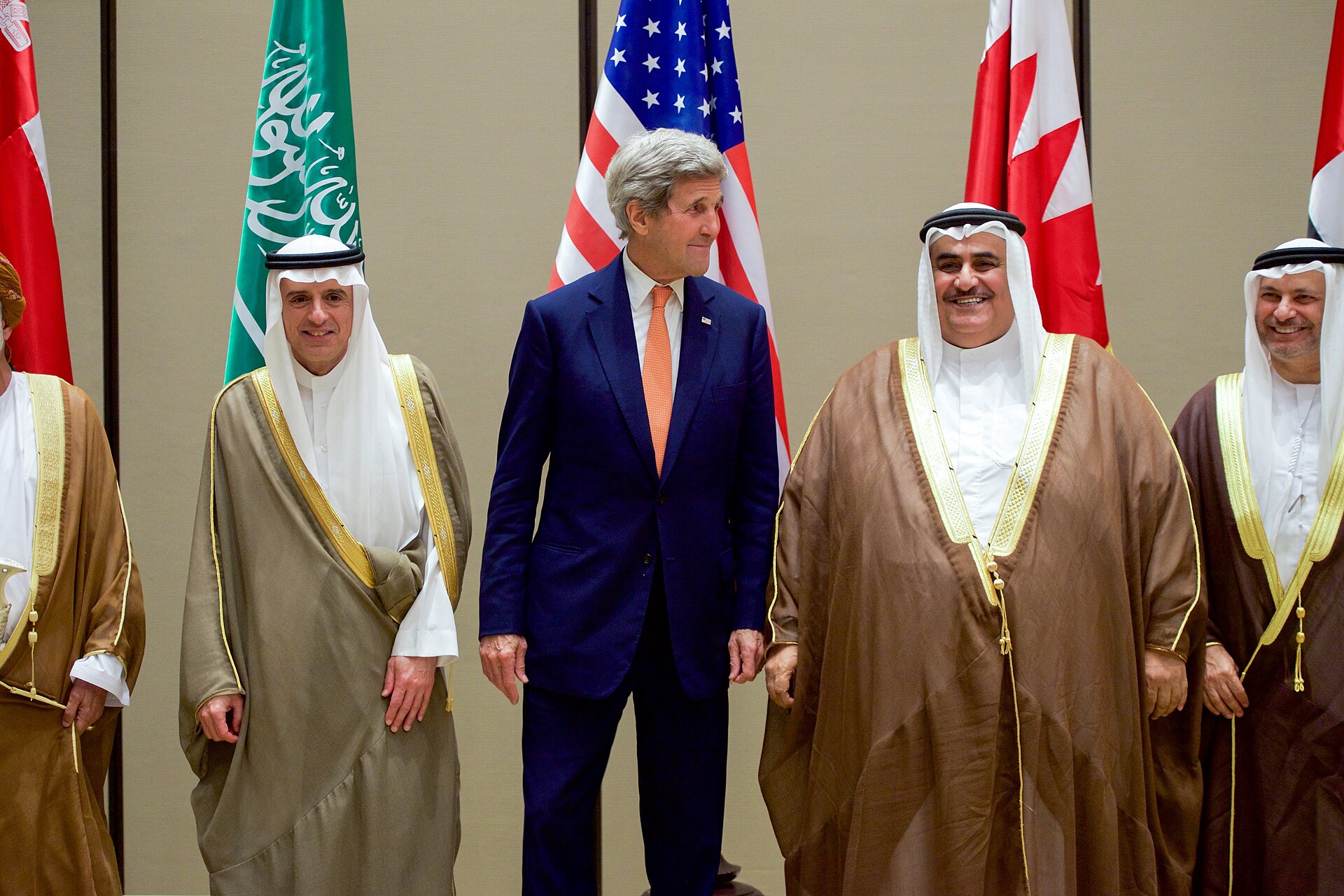
The 50th Extraordinary Meeting of the GCC Ministerial Council, convened via videoconference on March 1 and chaired by Bahrain’s Foreign Minister, produced a communique that diplomatic historians will study for its precise escalatory language. Three elements stand out.
First, the word “aggression.” The GCC Ministerial Council expressed “rejection and condemnation in the strongest terms of these heinous Iranian attacks targeting GCC countries.” Previous GCC statements on Iran had used “concern,” “rejection,” or “violation.” The adoption of “aggression” — a term with specific meaning under the UN Charter — was deliberate. It triggers Article 51’s right to individual and collective self-defense, which the statement explicitly invoked.
Second, the statement affirmed that “GCC countries reserve their legal right to respond.” This is not diplomatic boilerplate. It is a formal declaration that all six members consider military response a live option. When read alongside Saudi Foreign Minister Prince Faisal bin Farhan’s warning at the Islamabad meeting — “The Kingdom and its partners possess significant capabilities, and the patience we have shown is not unlimited. It could be a day, two days, or a week — I will not say” — the GCC statement provides collective backing for what had previously been a Saudi threat delivered alone.
Third, and most revealing, the statement maintained that GCC members “have always advocated for dialogue, negotiations, and the resolution of all issues with Iran.” This language was not naivety. It was legal positioning — establishing a record of exhausted diplomatic options that would strengthen any future Article 51 claim before the UN Security Council, which had already adopted Resolution 2817 condemning Iran’s “egregious attacks” against its neighbors.
How Did GCC War Aims Shift from Ceasefire to Degradation?
The most significant shift between early March and late March was not in GCC unity but in GCC ambition. The bloc’s war aims escalated from defensive to offensive in a span of three weeks, and the implications extend well beyond the current conflict.
In the war’s first two weeks, every GCC statement used the language of de-escalation: ceasefire, restraint, dialogue. The first session of the 50th Extraordinary Meeting, convened on March 1, called for “the importance of dialogue and diplomacy in international relations as the sole path to overcome the current crisis.” The GCC-EU joint ministerial statement of March 5 echoed this framing. The March 18 consultative meeting in Riyadh brought together foreign ministers from six GCC states plus Egypt, Jordan, Lebanon, Pakistan, Syria, Turkey, and Azerbaijan — all speaking the language of de-escalation.
By March 25, the language had changed entirely. UAE Ambassador to the United States Yousef Al Otaiba published a Wall Street Journal article declaring that “a simple ceasefire is not enough.” He called for “a conclusive outcome that addresses Iran’s full range of threats: nuclear capabilities, missiles, drones, terror proxies, and blockades of international sea lanes.” UAE presidential adviser Anwar Gargash reinforced the message: the war must end with a long-term solution, not a return to the status quo ante.
The demand that Iran’s military be permanently degraded before any deal now carries the weight of a unified GCC position, not merely an Emirati or Saudi preference. This represents a profound shift. The Gulf states are no longer seeking survival — they are articulating conditions for permanent strategic advantage. Prince Faisal bin Farhan’s statement that Saudi Arabia “reserves the right to take military actions” against Iran intersects with this unified posture. A Saudi decision to co-enter the war — still unlikely, but no longer unthinkable — would now carry GCC institutional endorsement rather than face GCC opposition.
| Period | Official Language | Posture | Trigger Event |
|---|---|---|---|
| March 1-7 | “Dialogue and diplomacy” | Defensive / de-escalation | Initial IRGC strikes on Saudi Arabia |
| March 8-17 | “Right to self-defense” | Defensive / hedging | IRGC widens target set to US firms in Gulf |
| March 18-24 | “Existential threat” | Active deterrence | Ras Laffan LNG strike (17% capacity lost) |
| March 25-30 | “Ceasefire not enough” / “permanent degradation” | Offensive / conditions-based | EGA/Alba aluminium strikes; Otaiba WSJ op-ed |
The table illustrates a pattern familiar to students of wartime escalation: each Iranian strike that crossed a new threshold — from military targets to economic infrastructure, from Saudi-only to all-GCC — ratcheted the collective response one step further. The Gulf states did not choose this escalation. Iran’s targeting decisions chose it for them.
Is This the Gulf’s 1991 Moment — or Its 2017 Moment?
The last time the GCC achieved this level of political unity was the 1991 Gulf War coalition against Saddam Hussein’s invasion of Kuwait. The comparison is instructive, but not in the way most analysts assume. The 1991 precedent suggests both the power and the fragility of threat-driven unity.
The similarities are genuine. In both cases, external aggression against GCC member states — Iraq’s invasion of Kuwait in 1990, Iran’s strikes on all six members in 2026 — produced rapid political alignment and invocation of collective self-defense. In both cases, the United States provided the military backbone that made collective action meaningful. In both cases, the GCC’s own collective defense architecture proved inadequate to the actual threat, requiring ad hoc coalition arrangements with extra-regional powers.
The differences are more telling. In 1991, the threat was conventional territorial invasion — Iraqi tanks in Kuwait City. The response was a discrete military campaign with a defined end state (Iraqi withdrawal). In 2026, the threat is dispersed missile and drone bombardment combined with economic warfare via the Strait of Hormuz closure. There is no defined end state because the GCC members themselves cannot agree on what “victory” means — whether it is a ceasefire, Iranian military degradation, or regime change.
The more uncomfortable comparison is 2017, not 1991. The Qatar diplomatic crisis of 2017-2021 demonstrated how quickly GCC unity can collapse when the external threat recedes and internal rivalries resurface. Saudi Arabia, the UAE, Bahrain, and Egypt imposed a blockade on Qatar that lasted three and a half years, severing air, land, and sea links. The crisis was formally resolved at the Al Ula summit in January 2021, but the underlying tensions — over Qatar’s relations with Turkey, its hosting of Al Jazeera, its tolerance of the Muslim Brotherhood — never fully disappeared. They were papered over, not resolved.
If Iran agrees to a ceasefire tomorrow, the forces that produced the 2017 blockade remain latent. Qatar will want to rebuild its Iran relationship for commercial reasons (the shared gas field is not going anywhere). Oman will resume its mediator role. Kuwait will return to hedging. The UAE and Saudi Arabia may diverge on post-war security architecture, as they did on Yemen. The question is not whether these fault lines exist — they do — but whether the March 2026 crisis has created institutional mechanisms strong enough to contain them. That divergence is already visible: the Saudi-UAE fracture that erupted over Yemen, Islamabad, and Riyadh’s “highly dangerous” label for Abu Dhabi’s conduct is not a post-war scenario but a wartime reality.
What Iran Lost When It Struck Oman and Qatar
Iran’s widened strikes destroyed three diplomatic assets that cannot be rebuilt in the current generation of Gulf leadership. The loss is strategic, not tactical, and it will constrain Tehran’s regional options for a decade regardless of how the war ends.
The first and most valuable loss is Oman’s unconditional neutrality. Oman mediated the secret back-channels that produced the 2015 JCPOA nuclear deal. Sultan Haitham’s government was positioning itself as the ceasefire interlocutor in the current conflict. As the Middle East Institute noted, Oman’s mediation capacity depended on being “trusted by both Iran and the United States.” By striking Omani territory, Iran forced Sultan Haitham to sign a collective condemnation that compromises Muscat’s standing in Tehran. Even if the back-channel survives — and it probably does, quietly — Iran can no longer treat Oman as a reliable proxy for its diplomatic interests in the Gulf.
The second loss is Qatar’s back-channel. Qatar hosted Hamas’s political bureau, maintained commercial ties through the shared gas field, and served as Iran’s other diplomatic lifeline in the Gulf. The Ras Laffan strike was existential — not a setback to be managed but a wound to Qatar’s entire economic model. The aluminium strikes that exposed the Gulf’s industrial vulnerability were devastating, but Qatar’s response — expelling Iranian military attaches and going dark on decades of back-channel communication — was the more consequential strategic loss for Tehran. That is not a relationship that recovers with a handshake at the next UN General Assembly. Yet by March 30, Saudi and Qatari intelligence chiefs were sitting across from each other at a Jeddah trilateral summit alongside Jordan’s military chief of staff — the deepest Saudi-Qatari security coordination since before the 2017 blockade.
The third loss is the GCC’s collective hedging posture. Before March 2026, Iran could exploit the fact that GCC members had different threat perceptions, different relationships with Tehran, and different calculations about how much American protection to accept. Playing Qatar against Saudi Arabia, Oman against the UAE — this was the foundation of Iranian Gulf strategy for two decades. By striking everyone simultaneously, Iran collapsed the differences. The Carnegie Endowment’s assessment that Gulf states are now “caught between Iran’s desperation and US recklessness” is correct, but the critical addendum is that for the first time they are caught together rather than individually.
Tehran’s coercive logic — that striking Gulf states would force them to pressure Washington into de-escalation — produced the opposite result. Unified Gulf pressure has given Washington more latitude to continue operations, and Saudi Arabia’s absorption of over 600 strikes without retaliating has generated diplomatic capital that Riyadh can spend on shaping the post-war order. How Riyadh spends that capital, however, is increasingly contradictory — Saudi Arabia’s simultaneous peace advocacy in Islamabad and war lobbying in Washington exposed the tensions at the heart of that unified Gulf front.
Will GCC Unity Outlast the War?
The honest answer is: probably not in its current form, but the war has likely altered the baseline. Three factors will determine whether the March 2026 unity proves to be a structural shift or a wartime reflex.
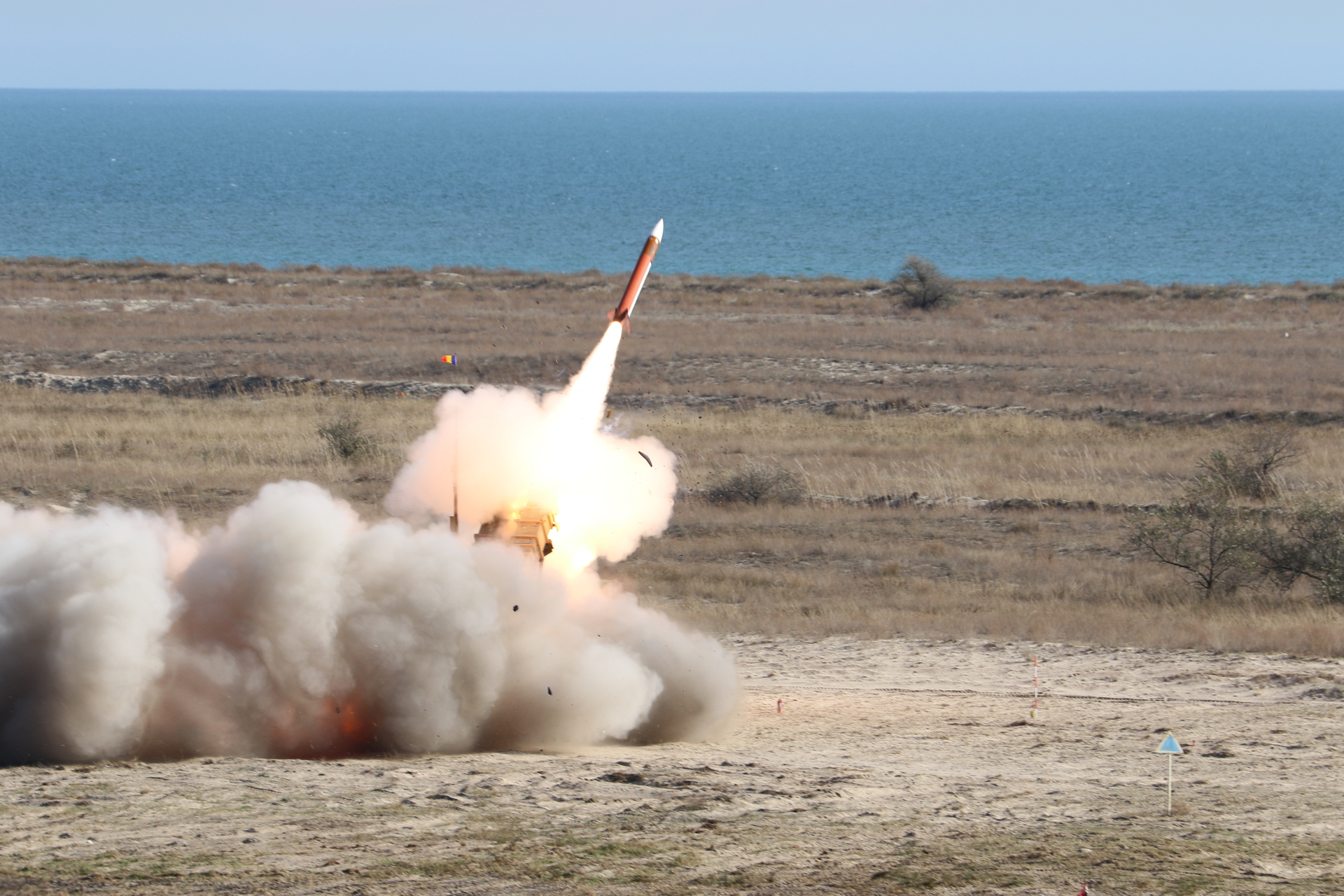
The first factor is institutional reform. The GCC’s collective defense mechanisms were exposed as inadequate when the war began. Six separate air defense networks, six separate command structures, a coalition shield with a timer on it — the organizational failures are documented and undeniable — underscored by the confirmed destruction of an E-3 Sentry AWACS at Prince Sultan Air Base on March 27. Saudi Arabia operates 108 Patriot launchers and two THAAD batteries, according to IISS data, but these assets are not integrated with Emirati, Qatari, or Kuwaiti systems in any operationally meaningful way. If the current crisis produces a genuine integrated air defense command — the GCC equivalent of NATO’s Allied Air Command — that would be a structural change that outlasts the immediate threat. If it produces only communiques, the 1991 pattern will repeat.
The second factor is the economic reckoning. Bloomberg reported on March 15 that Gulf economies face their deepest slump since the 1990s if the conflict persists. The simultaneous disruption of hydrocarbon exports, shipping, tourism, and aviation has demonstrated that economic diversification — the premise of every Gulf state’s vision document — is not merely aspirational but existential. The World Economic Forum calculated the “global price tag” of the war, and the Gulf’s share is disproportionate. Shared economic vulnerability could produce shared economic institutions, or it could produce competitive scrambling for recovery — each state trying to restart its LNG contracts, reopen its ports, and rebuild its tourism sector faster than the others.
The third factor is the post-war security architecture. The GCC-EU joint ministerial meeting, the GCC-UK ministers’ meeting, and the expanding web of security consultations suggest that Gulf states are building the external partnerships that their internal institutions failed to provide. If these partnerships are formalized — binding defense agreements with European and Asian powers, not just bilateral arrangements with Washington — they could provide the structural glue that the GCC Charter never did. The UN Security Council’s adoption of Resolution 2817 condemning Iran’s attacks established an international legal framework that the Gulf states can build upon.
The wildcard is Saudi Arabia’s own wartime economic resilience. If Riyadh emerges from the crisis with its oil infrastructure intact and its pipeline capacity at seven million barrels per day, it will have demonstrated a degree of strategic depth that further cements its position as the GCC’s center of gravity. A structurally dominant Saudi Arabia may not need GCC unity — it may prefer a hub-and-spoke model in which bilateral relationships with each member state replace the fiction of multilateral consensus.
Iran united the Gulf in thirty days. The question now is whether the Gulf can remain united without an Iranian missile to remind it why.
Frequently Asked Questions
What is the GCC Peninsula Shield Force and why did it not respond to the Iranian attacks?
The Peninsula Shield Force is a joint military force established by the GCC in 1984, headquartered at King Khalid Military City in Saudi Arabia. It has approximately 40,000 troops on paper but has never conducted combined air or missile defense operations. Its only significant deployment was to Bahrain in 2011 during the Arab Spring protests — a policing operation, not a military campaign. The force lacks integrated command-and-control systems, joint doctrine for multi-domain operations, and interoperable communications between member states’ air defense networks. Gulf defense planners have privately acknowledged that the Peninsula Shield is a political symbol rather than a combat-ready formation.
Has Iran attacked GCC member states before the 2026 war?
Iran and its proxies have struck GCC targets multiple times but never all six members simultaneously. The most significant precedent was the September 2019 drone and cruise missile attack on Saudi Aramco’s Abqaiq and Khurais facilities, which temporarily halved Saudi oil production. The Houthis, backed by Iran, have launched hundreds of missiles and drones at Saudi Arabia since 2015. Iran also seized tankers in the Strait of Hormuz in 2019 and 2023. However, these were episodic incidents targeting one or two states. The February-March 2026 campaign is unprecedented in simultaneously striking sovereign economic infrastructure across all six GCC members, which is why it produced a qualitatively different political response.
How does Iran’s relationship with Qatar differ from its relationship with other GCC states?
Qatar and Iran share the world’s largest natural gas field — known as the North Field on the Qatari side and South Pars on the Iranian side — which generates approximately 80 percent of Qatari government revenues. This geological fact forced a commercial relationship that persisted even through regional crises. During the 2017-2021 blockade imposed by Saudi Arabia and the UAE, Iran opened its airspace to Qatar Airways and provided food shipments, deepening the relationship. Qatar also hosted Hamas’s political bureau, which Tehran considered a valuable diplomatic conduit. The March 18 Ras Laffan strike destroyed this unique bilateral dynamic more thoroughly than any Saudi diplomatic pressure ever did.
What role has Pakistan played in the GCC’s response to the Iran war?
Pakistan occupies a uniquely precarious position. Under a bilateral defense agreement with Saudi Arabia, Islamabad would be obligated to support Riyadh in a direct Iran-Saudi confrontation — a scenario Pakistan desperately wants to avoid given its own border with Iran and deep cultural ties to both countries. Prime Minister Shehbaz Sharif, Foreign Minister Ishaq Dar, and Army Chief General Asim Munir have conducted multiple shuttle diplomacy visits to Riyadh in March 2026, attempting to prevent Saudi Arabia from entering the war as a co-belligerent. Pakistan’s diplomatic position is that it supports GCC sovereignty while opposing any widening of the conflict — a balance that becomes harder to maintain with each escalation.
Could GCC unity lead to a joint military intervention against Iran?
A joint GCC military intervention remains unlikely despite the unified rhetoric. The GCC states collectively spend over $100 billion annually on defense but have never conducted a combined offensive military operation. Their forces are designed for regime protection and territorial defense, not power projection into Iranian territory. The more probable outcome is that GCC unity gives Saudi Arabia — the only member with the military scale and strategic depth for offensive operations — the political cover to act with institutional backing if it chooses to. Prince Faisal bin Farhan’s warning that Saudi patience “is not unlimited” now carries the implicit endorsement of five other governments, lowering the diplomatic cost of any Saudi escalation while leaving the military decision to Riyadh alone.