
JEDDAH — Saudi Arabia’s East-West Pipeline, restored to full 7-million-barrel-per-day capacity on April 12, was designed to solve one problem: Hormuz. It does not solve two. Ali Akbar Velayati, Iran’s senior foreign policy adviser to Ayatollah Khamenei, posted on X the same day the CENTCOM naval blockade of Iranian ports took effect: “Today, the unified command of the Resistance front views Bab al-Mandeb as it does Hormuz. If the White House dares to repeat its foolish mistakes, it will soon realize that the flow of global energy and trade can be disrupted with a single move.” The statement equated the two straits as a single chokepoint architecture — and in doing so collapsed the arithmetic that had underwritten Saudi Arabia’s wartime export strategy since March.
The bypass thesis was straightforward: pump crude west through 1,201 kilometres of pipeline to Yanbu on the Red Sea coast, load it onto tankers, and route it around a closed Hormuz. The thesis depended on Bab el-Mandeb remaining open. Velayati’s statement, Houthi operational readiness, and the geography of the Red Sea now make that assumption load-bearing in a way Saudi planners and OPEC+ delegates treated as secondary. The effective Saudi export ceiling under a dual-chokepoint scenario falls to a range that cannot sustain the kingdom’s fiscal commitments — not merely below revenue targets, but below the production floor required to fund the state.
Table of Contents
- The Pipeline Delivers 7 Million Barrels. The Port Can Load 4 Million.
- Velayati’s Doctrine of Unified Chokepoints
- Why Does the Bypass Thesis Collapse Under Dual Threat?
- Is the SUMED Pipeline an Alternative?
- What Can the Houthis Actually Do at Bab el-Mandeb?
- The Fiscal Arithmetic Below 4 Million Barrels per Day
- How Does This Break the OPEC+ Hold Logic?
- Iran’s Zero-Cost Asymmetry
- The 2018 Institutional Reflex, Scaled Up
- FAQ
The Pipeline Delivers 7 Million Barrels. The Port Can Load 4 Million.
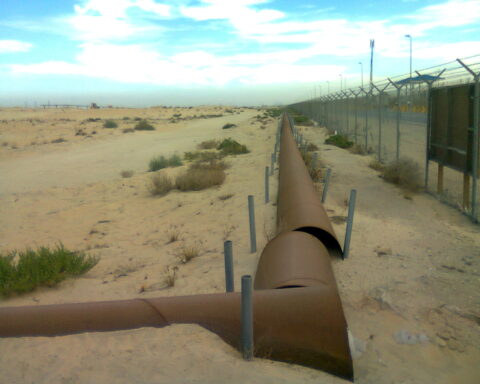
Bloomberg and S&P Global confirmed on April 12 that Saudi Arabia had restored the East-West Pipeline — formally the Petroline — to its full 7-million-bpd nameplate capacity after an IRGC drone strike had knocked roughly 700,000 bpd offline. The restoration was framed as a strategic milestone: proof that Saudi Arabia could sustain its Hormuz bypass at wartime tempo. But the pipeline’s capacity is not the binding constraint. The port of Yanbu is.
Yanbu’s combined loading infrastructure consists of seven VLCC berths split between a North Terminal commissioned in the 1980s — designed for roughly 1.5 million bpd — and a South Terminal brought online in 2018 with approximately 3 million bpd of throughput capacity. Vortexa, the cargo-tracking firm, estimates Yanbu’s effective wartime export ceiling at 3 to 4 million bpd under sustained operations. The pipeline delivers crude to the coast faster than the coast can put it on ships.
Domestic offtake along the pipeline’s 1,201-kilometre route — refinery feedstock at Yanbu, petrochemical plants, internal consumption — absorbs an estimated 2 million bpd, leaving a net export-available flow of roughly 5 million bpd reaching the terminal area. Against a loading ceiling of 3 to 4 million bpd, the gap is structural. It cannot be closed without new berth construction, which would take years. Saudi Arabia’s pre-war Hormuz throughput was 7 to 7.5 million bpd. The bypass route, at maximum, restores roughly half of that.
Velayati’s Doctrine of Unified Chokepoints
Velayati’s April 12 statement was not a freelance provocation. It was timed to the hour. CENTCOM had announced the formal activation of a naval blockade of Iranian ports effective April 13. Within hours, Velayati — who has served as Khamenei’s senior adviser on international affairs since 1997 and previously served as foreign minister for eight years — equated Bab el-Mandeb with Hormuz as a unified theatre under “Resistance front” command. The phrase “a single move” was directed at an audience in Sanaa as much as in Washington.
The Middle East briefing 3,000+ readers start their day with.
One email. Every weekday morning. Free.
The doctrinal groundwork had been laid nine days earlier. On April 4, Mohammad Bagher Ghalibaf, the speaker of Iran’s parliament and a former commander of the IRGC Aerospace Force from 1997 to 2000, posted on X asking what share of global oil, LNG, wheat, rice, and fertiliser passes through Bab el-Mandeb — and which countries depend most on it. Republic World and other outlets reported the post as a deliberate targeting signal dressed in the format of a parliamentary question. PressTV published detailed articles the same day on Bab el-Mandeb’s global dependency profile and Ansarullah’s stated readiness to close it “in support of Iran.”
Mona Yacoubian, the director of the USIP Middle East Program, told Fox News on April 12: “If the U.S. proceeds with its plan to blockade the strait, Iran’s escalation strategy could dictate that it ensures Gulf countries can’t export, either.” An anonymous senior Iranian source had told the Washington Times five days earlier: “If the situation gets out of control, Iran’s allies will also close the Bab el-Mandeb Strait.” The escalation ladder is explicit. Iran has stated the condition — a US blockade, which is now active — and named the response.
Why Does the Bypass Thesis Collapse Under Dual Threat?
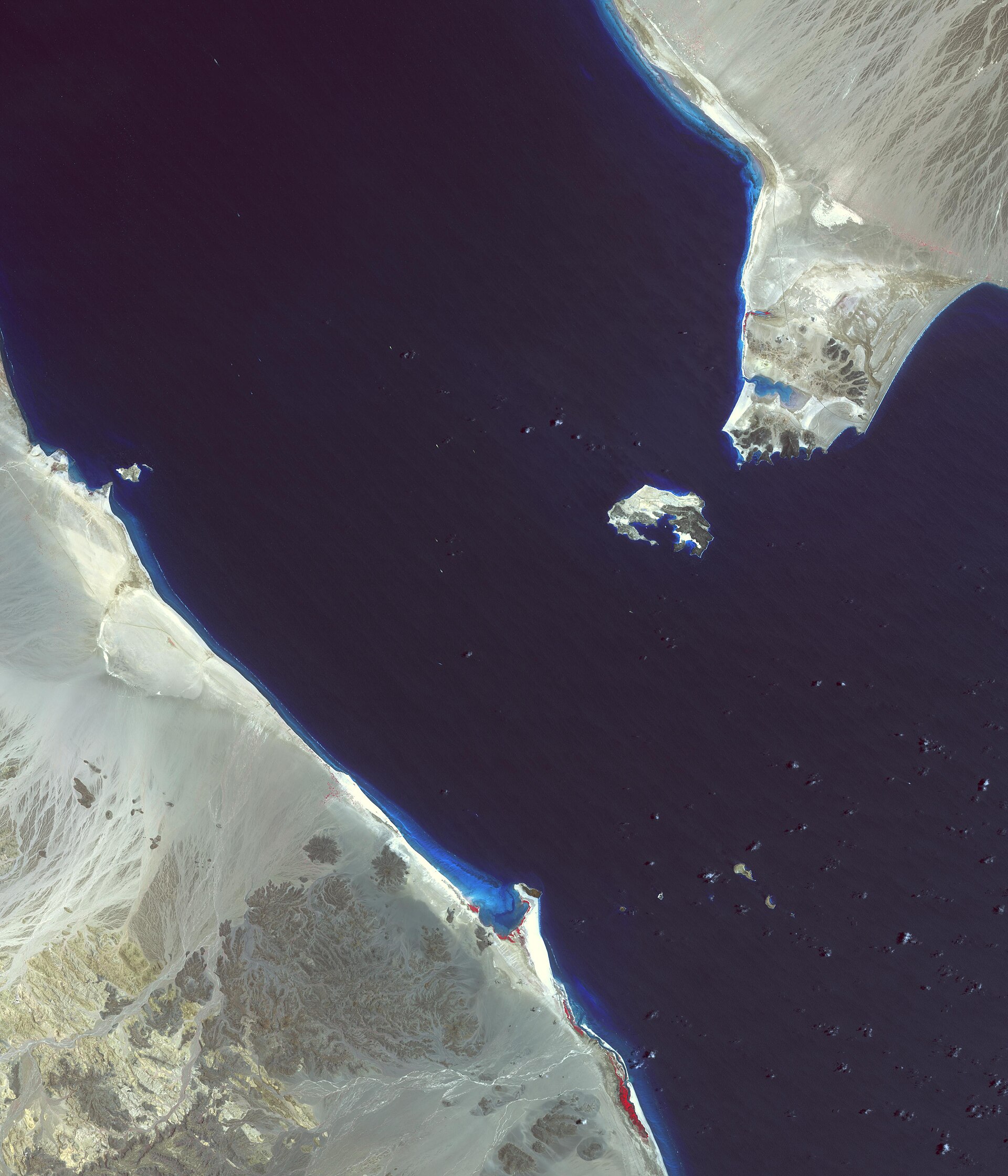
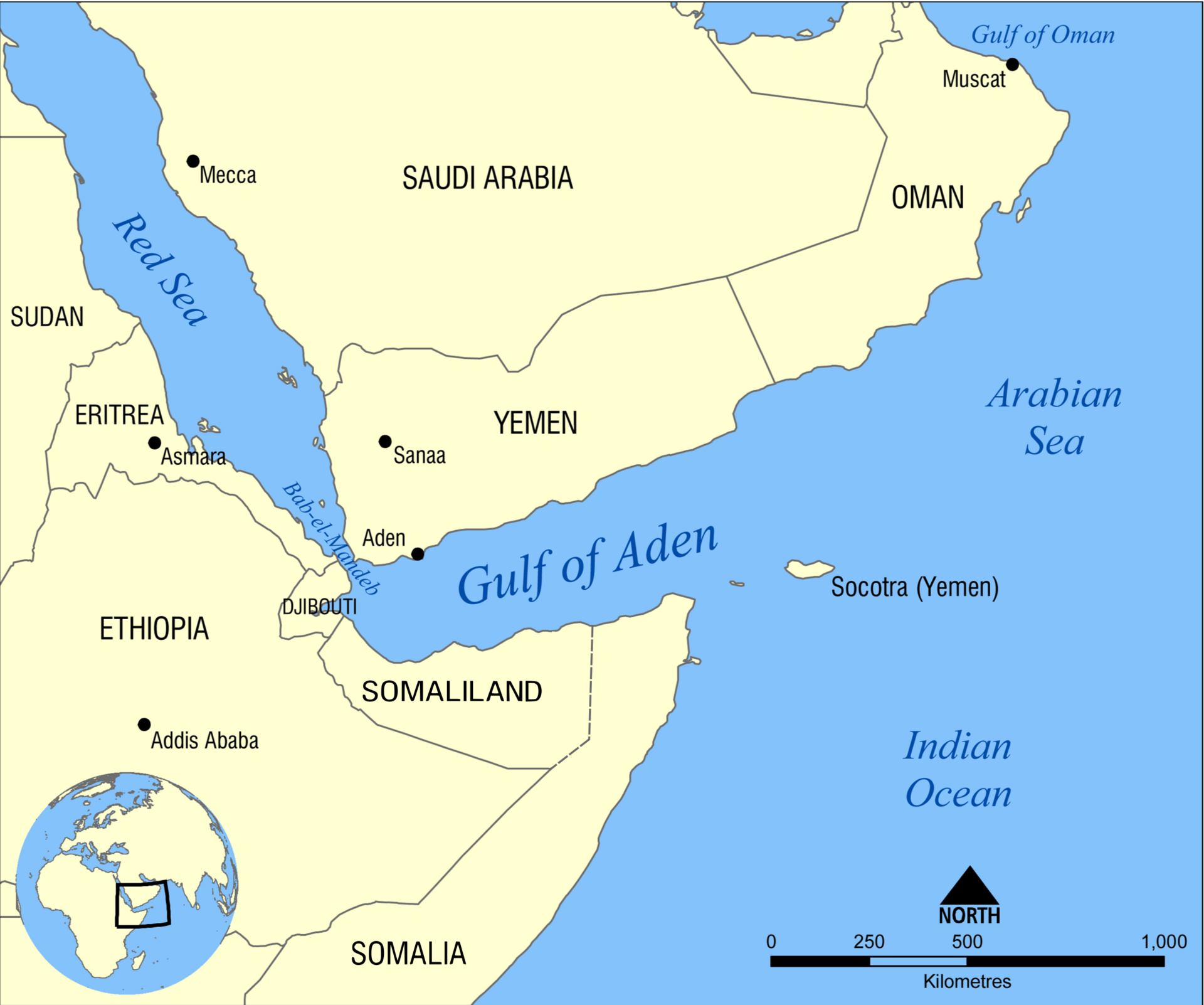
The bypass thesis collapses because the Red Sea has only one southern exit. Saudi Arabia’s Asian customers — China, Japan, South Korea, India — receive crude loaded at Yanbu via tankers that must transit Bab el-Mandeb southward, round the Horn of Africa, and cross the Indian Ocean. Velayati’s April 12 statement, designating Bab el-Mandeb as equivalent to Hormuz under unified Resistance command, makes the bypass route contingent on Iranian proxy restraint.
Flavio Macau, the associate dean of Edith Cowan University’s School of Business and Law, put it plainly in The Conversation in April: oil from Yanbu “still requires Bab el-Mandeb transit to reach Asian markets,” making the bypass logically circular if the second chokepoint closes. The pipeline does not bypass Hormuz. It substitutes one strait for another — a strait where Iran’s proxies have spent two years demonstrating operational capability against commercial shipping.
For European buyers, the arithmetic is marginally better but still constrained. Tankers from Yanbu heading north through the Suez Canal do not pass Bab el-Mandeb. But Europe absorbs roughly 15 to 20 percent of pre-war Saudi export volumes. The bulk flows to Asia.
Wartime routing data is commercially sensitive and partially classified by Aramco, but pre-war trade patterns and long-term contract structures with Asian refiners suggest 60 to 70 percent of Red Sea exports move southbound through Bab el-Mandeb. Under the US blockade scenario now in effect, that share would likely increase as displaced Hormuz volumes are rerouted to Yanbu, concentrating even more traffic through the second chokepoint.
Is the SUMED Pipeline an Alternative?
No — not for Saudi Arabia’s primary customers. SUMED flows northward only, from Ain Sokhna on the Gulf of Suez to Sidi Kerir on the Mediterranean, and serves exclusively Mediterranean-bound crude. For the 60 to 70 percent of Saudi exports destined for Asian refiners, it offers nothing. Those barrels must exit the Red Sea southward through Bab el-Mandeb regardless of SUMED’s availability.
Egypt’s SUMED pipeline has a capacity of 2.5 to 2.8 million bpd. It was built for scenarios where the Suez Canal becomes impractical for laden VLCCs. In a single-chokepoint scenario where only Hormuz is closed, SUMED could theoretically absorb Yanbu crude: tankers would load at Yanbu, sail north through the Red Sea, discharge at Ain Sokhna, and the crude would flow by pipe to Mediterranean tankers. Yanbu-to-Ain-Sokhna tanker traffic moves northward within the Red Sea and does not transit Bab el-Mandeb. Under dual closure, that route still works — but only for European buyers.
The SUMED alternative is a capacity-constrained partial solution shared with other producers and conditional on Egyptian governmental cooperation. Elisabeth Kendall, a Middle East specialist at Cambridge’s Girton College, told Al Jazeera that simultaneous Hormuz and Bab el-Mandeb restrictions would create a “nightmare scenario” for European trade even with SUMED operational, because the pipeline lacks the capacity to substitute for normal Suez Canal crude flows.
What Can the Houthis Actually Do at Bab el-Mandeb?
Enough to halve throughput without closing the strait. Between November 2023 and September 2024, Houthi forces documented 67 maritime incidents in the Red Sea and Bab el-Mandeb approach, according to maritime security trackers. Bab el-Mandeb throughput fell from 9.3 million bpd of crude and petroleum products in 2023 to 4.1 to 4.2 million bpd in 2024, according to EIA and IEA figures — a decline of more than 55 percent. Maersk, MSC, and CMA CGM rerouted permanently around the Cape of Good Hope. Shipping companies did not need to be sunk. They needed to be priced out.
The campaign paused after the Gaza ceasefire in November 2025, but The National reported in March 2026 that the pause reflected a conditional deterrence posture, not degraded capability. The Houthis maintained their force buildup throughout. They rejoined the Iran war on March 28, 2026, with ballistic missile strikes against Israel. By April 2, Houthi leadership had issued an explicit threat: Bab el-Mandeb closure if Gulf Arab states joined US strikes on Iran. The 2026 trigger is Gulf participation in military operations against Iran — a condition that Saudi Arabia’s hosting of US air operations from bases including Prince Sultan Air Base and King Abdulaziz Air Base has already met, depending on how broadly “participation” is defined.
The US has no mine-countermeasure capacity in the Red Sea. The four Avenger-class MCM ships that had been based in Bahrain were decommissioned in September 2025 and have not been replaced. Nabeel Khoury, a former US diplomat, told Al Jazeera that Houthi firing at ships would “arrest all commercial shipping through the Red Sea.” War-risk premiums in 2024 exceeded $150,000 per Red Sea transit for some hull categories, according to Lloyd’s Market Association data — enough to make routes commercially non-viable for most operators without a shot landing.
The Fiscal Arithmetic Below 4 Million Barrels per Day
Saudi Arabia’s fiscal break-even oil price — the price per barrel required to balance the government budget — sits at $86.60 per barrel on the IMF’s central-government-only estimate and $94 per barrel on Bloomberg Economics’ broader measure. When PIF domestic spending commitments are included, Bloomberg puts the figure at $108 to $111 per barrel. Brent crude was trading at approximately $102 per barrel as of April 13.
At $102 Brent, Saudi Arabia is already below PIF-inclusive fiscal break-even. But the fiscal equation has two axes: price and volume. A Bab el-Mandeb closure compresses both simultaneously. If effective Saudi exports fall to 3 to 4 million bpd — the Yanbu ceiling — from a pre-war baseline of 7 to 7.5 million bpd, the kingdom is exporting roughly half the volume it needs even at elevated prices. If Bab el-Mandeb disruption further constrains the 60 to 70 percent of those barrels that are Asia-bound, effective export revenue could fall to levels not seen since the demand collapse of early 2020. The supply context that shapes this pressure — including why Saudi Arabia cannot collect the fiscal prize it has won, with OPEC+ production 8.14 million bpd below pre-war target in March — is analyzed in the OPEC April monthly report breakdown.
| Scenario | Export Volume (bpd) | Brent Price ($/bbl) | Daily Revenue (est.) | Revenue Gap vs. Pre-War Baseline |
|---|---|---|---|---|
| Pre-war baseline | 7.0-7.5M | ~$80 | $560-600M | — |
| Hormuz closed, Yanbu open | 3-4M | $100-110 | $300-440M | $120-260M/day below baseline |
| Dual closure (Hormuz + BaM) | 1-1.5M (Suez-only) | $130-150+ | $130-225M | $335-470M/day below baseline |
The dual-closure row assumes only Suez-bound volumes reach market — crude loaded at Yanbu and routed north to European buyers or via SUMED, with Asia-bound flows halted. JP Morgan warned in a March 2026 commodities note that Bab el-Mandeb disruption alone could add $20 per barrel to crude prices. Goldman Sachs projected Brent above $100 throughout 2026 if Hormuz remains closed another month, in an April 2026 energy research update. Under a combined scenario, energy analysts at banks including Citigroup and BNP Paribas have flagged a range of $150 to $200 per barrel as a combined-closure scenario ceiling — prices that would partially offset the volume collapse but would simultaneously devastate Saudi Arabia’s largest crude customers in Asia, compressing demand and triggering contract renegotiations.
The revenue collapse under dual closure is not a theoretical exercise in worst-case planning. It is the scenario that Velayati’s statement was designed to invoke — and the scenario that the East-West Pipeline bypass thesis was supposed to have made impossible.
How Does This Break the OPEC+ Hold Logic?
The April 5 OPEC+ consensus depended on Saudi Arabia functioning as the cartel’s pressure valve — exporting via Yanbu to offset Hormuz-displaced demand. A credible threat to Bab el-Mandeb removes that mechanism. If Saudi Arabia cannot reliably deliver Red Sea volumes to Asian buyers, the output-hold rationale collapses, and the 206,000-bpd April increase becomes irrelevant to supply management.
The OPEC+ meeting on April 5 produced a consensus among eight participating countries to proceed with a 206,000-bpd output increase for April. The decision was framed as a pressure-valve measure — modest enough to avoid flooding a disrupted market, large enough to signal that the cartel retained collective discipline. The bypass narrative was load-bearing within that consensus. Saudi Arabia’s ability to export via Yanbu was the mechanism that made the hold logic work: the kingdom could maintain production, route it west, and supply the market despite Hormuz.
Iraq and Kuwait — both of which export almost exclusively through the Persian Gulf — cannot bypass Hormuz at all. Their output hold was predicated on the Yanbu route remaining viable: absorbing displaced demand and keeping global supply disruption manageable. If Yanbu’s Red Sea exit is threatened, that mechanism fails. Saudi Arabia cannot serve as the cartel’s relief valve if its own bypass is under the same threat architecture as Hormuz.
The OPEC+ logic also depended on price stability within a band that sustained fiscal break-evens across the Gulf. Oxford Economics has warned of GCC recession, with Qatar facing a potential 14 percent GDP contraction under sustained chokepoint disruption. A dual-closure scenario that pushes Brent toward $150 might seem fiscally beneficial, but the volume collapse and demand destruction it triggers — Asian refiners shutting crude distillation units, term contracts invoking force majeure — could produce a price spike followed by a demand cliff. The April 5 consensus was built for a one-chokepoint world. April 13 is a two-chokepoint world.
Iran’s Zero-Cost Asymmetry
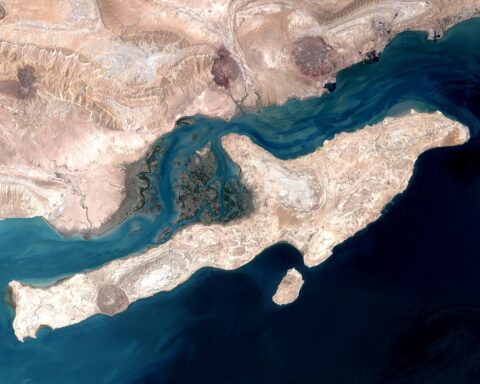
Iran routes zero oil through the Red Sea. Its crude exports — currently estimated at 1.3 to 1.5 million bpd despite sanctions, loaded primarily at Kharg Island and routed through Hormuz to Chinese buyers — do not transit Bab el-Mandeb. A Houthi closure of the strait costs Iran nothing in export revenue. The asymmetry is total: maximum cost imposed on Saudi Arabia and other Gulf producers, zero cost absorbed by Iran or its proxy network.
This is structurally different from Hormuz, where Iran’s own exports are at risk if the strait closes — a fact that has historically been cited as a deterrent against Iranian escalation. At Bab el-Mandeb, that deterrent does not exist. The Houthis can close or degrade the strait at Iranian direction without any Iranian barrel being affected. Ghalibaf’s April 4 post — cataloguing which countries depend most on Bab el-Mandeb — was a public demonstration of this asymmetry, broadcast to an audience that understood the implication.
The cost asymmetry extends to military operations. The US Navy’s Fifth Fleet is concentrated in Bahrain and the Persian Gulf, oriented toward Hormuz. Combined Task Force 153, established in April 2022 to patrol the Red Sea and Bab el-Mandeb, has been reinforced since the 2023-2024 Houthi campaign but lacks the force concentration of the Hormuz theatre. With the Avenger-class MCM ships decommissioned from Bahrain in September 2025, there is no dedicated mine-countermeasure force available in the Red Sea theatre. At Hormuz, the mine-clearance deficit is already estimated at 51 days for 200 square miles of shipping lane. At Bab el-Mandeb, the timeframe would be longer with fewer assets.
The 2018 Institutional Reflex, Scaled Up
On July 25, 2018, then-Saudi Energy Minister Khalid Al-Falih announced that Saudi Arabia was “temporarily halting all oil shipments through the Bab al-Mandab Strait” after Houthi missiles struck two VLCCs belonging to Bahri, the national shipping company. Al-Falih said the halt would continue “until the situation becomes clearer and maritime transit through Bab al-Mandab is safe.” At the time, Saudi crude exports through the strait amounted to 500,000 to 700,000 bpd.
The 2018 halt lasted weeks and was largely absorbed by the market. Saudi Arabia had excess pipeline and port capacity, Hormuz was fully open, and the volumes at risk were modest — less than 10 percent of Saudi exports. The decision to self-suspend was itself a form of leverage: Riyadh demonstrated that it took the threat seriously, applied diplomatic pressure on the coalition to address Houthi maritime capabilities, and resumed shipments once conditions improved.
In 2026, the dependency is categorically different. Saudi Arabia is now routing the majority of its export capacity through the Red Sea because Hormuz is closed. A Bab el-Mandeb disruption at 2026 scale would not affect 500,000 to 700,000 bpd of discretionary routing. It would threaten 2 to 3 million bpd of export volumes that have no alternative path to market — three to four times the volume at risk in 2018. Al-Falih’s 2018 decision was precautionary. The 2026 equivalent would be existential — a self-suspension that the kingdom’s budget cannot absorb and that the global market, already pricing Hormuz disruption, cannot easily replace.
The 2018 episode also reveals an institutional reflex. Saudi Arabia halted shipments voluntarily rather than risk tanker losses. If the Houthis demonstrate intent at Bab el-Mandeb in 2026 — a missile strike on a tanker, a mine detonation in the shipping lane, even a credible threat communicated through Omani or Iranian channels — the precedent suggests Riyadh would halt again. The kingdom’s first instinct in 2018 was to protect its fleet, not to run the strait under fire. War-risk insurance markets would reinforce that instinct: premiums would spike, P&I clubs would issue exclusion zones, and commercial operators would refuse the transit before Riyadh made any official decision.
Al Jazeera, citing EIA and IEA figures, reported in April 2026 that simultaneous closure of Hormuz and Bab el-Mandeb would block 25 percent of the world’s oil and gas supply. The Cape of Good Hope diversion — the route that Maersk and MSC adopted during the 2023-2024 Houthi campaign — adds approximately 8,000 kilometres and 15 days to a Yanbu-to-Asia voyage. For a VLCC carrying 2 million barrels, that diversion adds $3 to $4 million per voyage in fuel, crew, and time costs. It is survivable for container shipping. For crude oil economics at wartime pricing, it compresses margins, delays deliveries, and breaks the scheduling assumptions built into term contracts with Asian refiners.
“Today, the unified command of the Resistance front views Bab al-Mandeb as it does Hormuz. If the White House dares to repeat its foolish mistakes, it will soon realize that the flow of global energy and trade can be disrupted with a single move.”Ali Akbar Velayati, Senior Adviser to Iran’s Supreme Leader, April 12, 2026
The East-West Pipeline was built as a hedge against one closed strait. Saudi Arabia is now operating in a world where two straits are simultaneously threatened — one by Iranian naval forces, the other by an Iranian proxy that demonstrated the capacity to halve Bab el-Mandeb throughput over 11 months of sustained operations. The pipeline is full. The port is constrained. The exit is watched by the same coalition that Velayati claims to command from a single operations room. The bypass arithmetic that justified the pipeline’s wartime role, the OPEC+ output hold, and Riyadh’s confidence in sustaining export revenue through the Red Sea now carries a dependency that its designers — and its current operators — treated as a secondary risk until April 12.
FAQ
Which Asian buyers are most exposed to a Bab el-Mandeb closure?
China is structurally most exposed: it holds 5 percent equity in Qatar’s North Field East project and takes an estimated 8 million tonnes per year of contracted LNG through the strait, on top of Saudi crude imports that accounted for roughly 16 percent of Chinese crude supply before the war. Japan and South Korea have no alternative crude routing from the Red Sea — both receive the majority of their Saudi contract volumes via Bab el-Mandeb, with no Pacific-facing Saudi terminal. India’s Jamnagar complex and state refiners IOC and BPCL run on Middle East crude with limited substitution capacity at short notice.
What would trigger a Saudi self-suspension of Red Sea shipments in 2026?
The 2018 episode provides the template: Saudi Arabia suspended Red Sea shipments voluntarily after a single Houthi missile strike on two Bahri VLCCs, before any ship was sunk. The institutional reflex was to protect the fleet rather than contest the strait. In 2026, war-risk insurance markets would likely force the same outcome before Riyadh decided — P&I clubs would issue exclusion zones and commercial operators would refuse the transit as premiums spiked, as occurred during the 2023-2024 campaign when premiums exceeded $150,000 per transit for some hull categories.
Why can’t SUMED pipeline in Egypt solve the problem?
SUMED’s 2.5 to 2.8 million bpd capacity flows only northward and serves Mediterranean buyers exclusively — it cannot redirect crude to Asia. SUMED is jointly owned by Egypt (50 percent), Saudi Arabia, Kuwait, the UAE, and Qatar through the Arab Petroleum Pipeline Company; its throughput is allocated across those shareholders, so Saudi Arabia cannot commandeer full capacity even in wartime. Pre-war SUMED utilisation averaged around 1.5 to 1.8 million bpd against a nameplate of 2.5 to 2.8 million bpd — suggesting some headroom exists, but not enough to compensate for the loss of Asian markets, which take the majority of Saudi export volumes.
Can Iran actually order the Houthis to close Bab el-Mandeb?
The command relationship is indirect but operationally established. Ansarullah receives Iranian material support — ballistic missiles, drones, targeting intelligence — and has repeatedly acted in alignment with Iranian strategic signalling, as demonstrated when Houthi operations resumed within days of Iran’s explicit escalation warnings in March 2026. However, Houthi leadership retains autonomous decision-making authority; Iran cannot issue binding operational orders the way it can to IRGC units. Velayati’s April 12 statement framing both straits under unified “Resistance front” command was a political declaration, not a military command. Whether the Houthis act depends on Ansarullah’s own calculus, not solely on Tehran’s direction.
Could Saudi Arabia build more port capacity at Yanbu to close the gap?
New deepwater VLCC berths require 3 to 5 years for environmental assessment, dredging, construction, and commissioning — timelines that assume peacetime permitting and supply chains. Saudi Arabia’s current seven VLCC berths at Yanbu were built across two phases spanning decades (North Terminal in the 1980s, South Terminal in 2018). Emergency wartime construction could compress timelines, but not below 18 to 24 months for even a single additional berth, according to port engineering benchmarks from comparable Gulf terminal expansions. The pipeline-port gap is not solvable within the timeframe of this conflict.
Why Saudi Arabia formally asked Washington to lift the Iran blockade — and why Bab al-Mandeb is the answer — is analyzed in Saudi Arabia’s Blockade Objection Is About the Red Sea, Not Iran. Iran’s explicit three-sea interdiction threat — naming the Persian Gulf, Sea of Oman, and Red Sea simultaneously — and why Saudi Arabia has no export contingency if Yanbu closes, is examined in Abdollahi’s Three-Sea Doctrine Leaves Saudi Arabia With No Export Contingency.