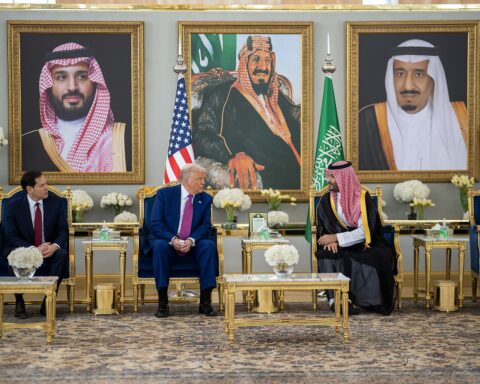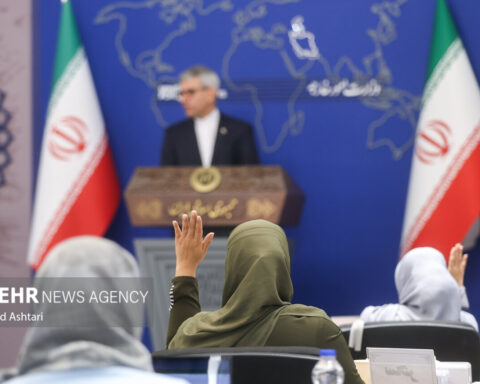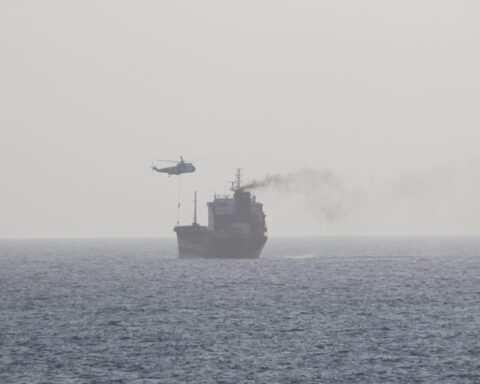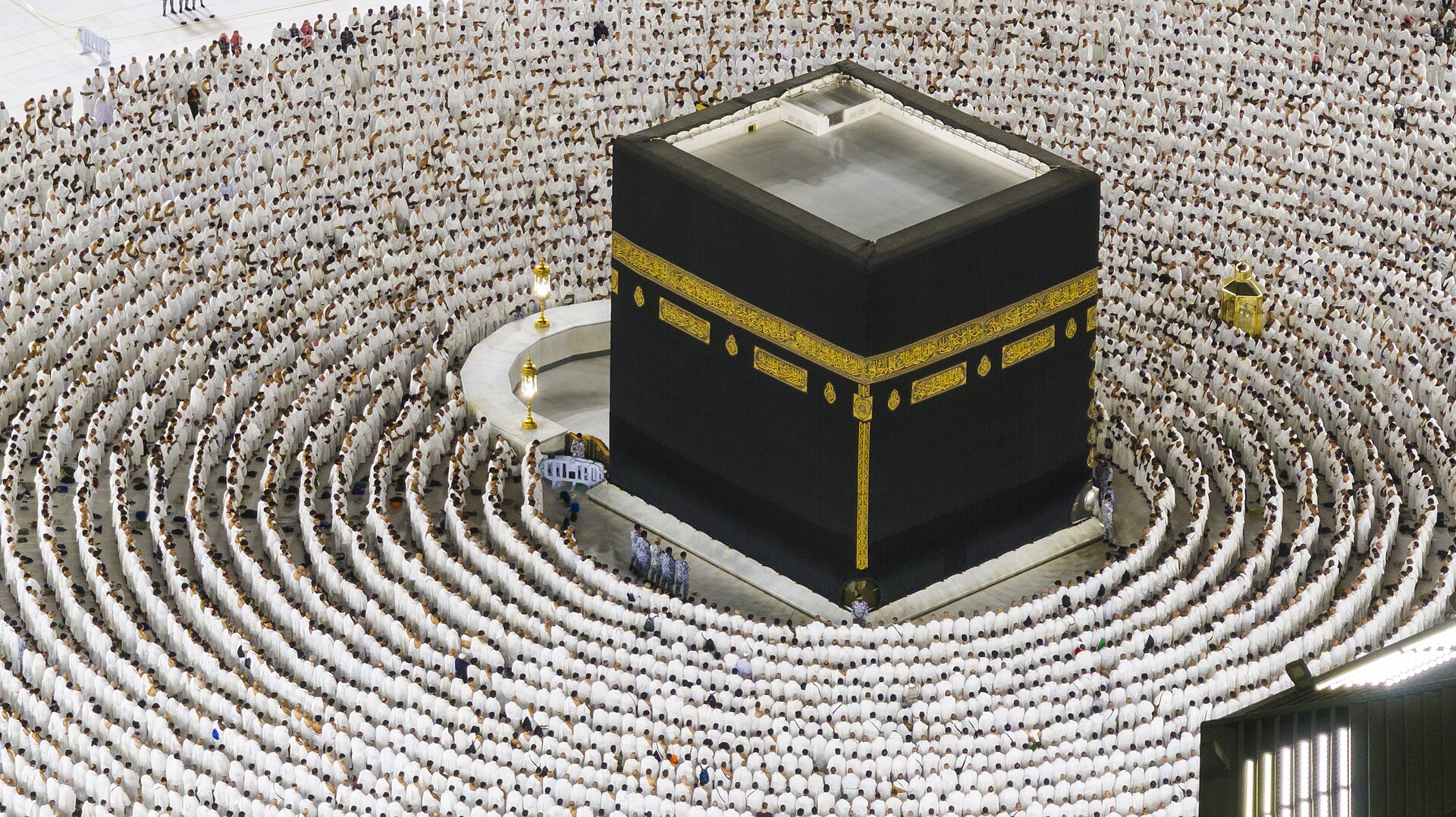

JEDDAH — Indonesia’s advance Hajj officials departed for Saudi Arabia on Thursday as foreign ministers from Turkey, Pakistan, Saudi Arabia, and Egypt gathered at the Antalya Diplomacy Forum to negotiate an extension of the US-Iran ceasefire set to expire on April 22 — the same day Indonesia’s 221,000 pilgrims, the world’s largest national contingent, begin boarding 548 chartered flights. Pakistan’s first 119,000 government-scheme pilgrims fly tomorrow, April 18, when Saudi Arabia’s General Authority of Civil Aviation formally opens the Hajj arrival window.
The overlap is no longer a scheduling coincidence but a physical constraint on every party at the Antalya table. Three of the four mediating states — Turkey, Pakistan, and Saudi Arabia — are simultaneously committing tens of thousands of their own citizens to airspace corridors and ground infrastructure inside the conflict zone, with no published evacuation protocol and aviation war risk premiums running 50 to 1,000 percent above pre-war baselines. Iran, whose Hajj visas Saudi Arabia suspended, has zero pilgrims at stake — a structural asymmetry with no modern precedent except the three-year boycott following the 1987 Mecca crisis.
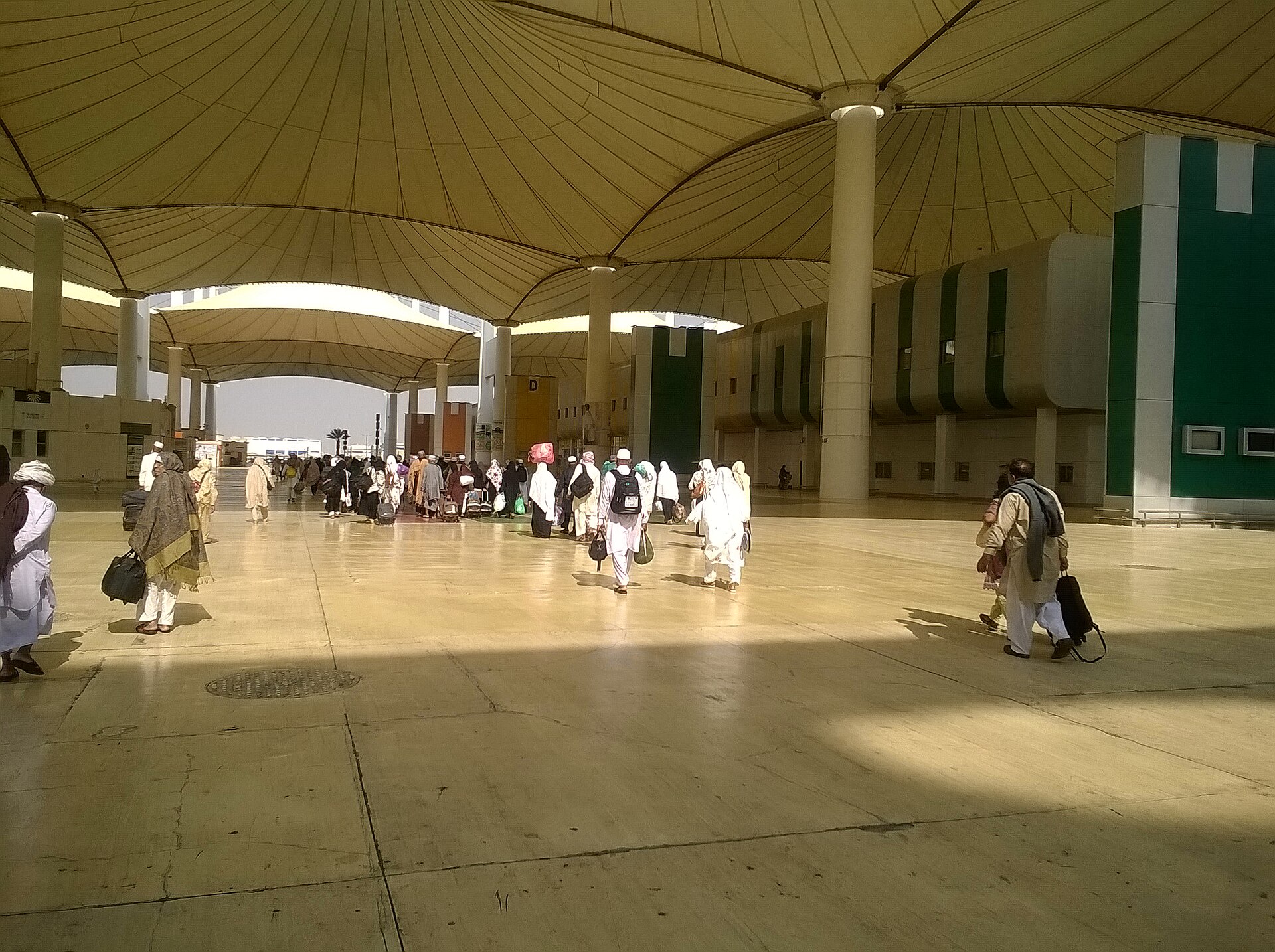
Table of Contents
The Airlift Is Already Underway
Saudi Arabia’s GACA opened the official Hajj pilgrim arrival window on April 18, with Makkah entry restricted to pilgrims and special permit holders since April 13. Umrah permits on the Nusuk platform shut down from April 18 onward, according to The National. The cordon is physical: non-pilgrim traffic out, pilgrim traffic in, no reversal mechanism published.
Pakistan’s airlift begins tomorrow. The Hajj Reporters portal confirmed 468 chartered flights operated by PIA, AirBlue, Air Sial, and Saudia will move 119,000 government-scheme pilgrims over a 34-day window ending May 21. Pakistan’s Foreign Minister Ishaq Dar — the same official who briefed Turkish, Saudi, and Egyptian counterparts on the Islamabad ceasefire talks on April 13 — is at Antalya today negotiating ceasefire extension while his country’s pilgrim pipeline starts flowing in the morning.
Malaysia’s Tabung Haji dispatches its first flight on the same day. Chairman Tan Sri Abdul Rashid Hussain characterized operations as “business as usual” on April 14, while confirming that a special committee was monitoring the conflict. Malaysia is sending 31,600 pilgrims on 100 chartered flights operated by AMAL (Malaysia Airlines subsidiary) and Saudia, with the last flight scheduled for May 20, according to The Star Malaysia.
The Middle East briefing 3,000+ readers start their day with.
One email. Every weekday morning. Free.
Indonesia’s timeline is the most politically loaded. The country’s Daker — Airport and Medina Working Areas — advance officials departed today, April 17, according to ANTARA News. Makkah Working Area staff follow on April 22-23. The first of 548 pilgrim flights carrying 221,000 Indonesians (203,320 regular quota plus 17,680 special) departs April 22 from 16 embarkation points across the archipelago — the precise date the ceasefire expires.
What Can Antalya Deliver in Five Days?
The Antalya Diplomacy Forum, running April 17-19, has drawn over 150 countries and more than 20 heads of state, according to Daily Sabah. The quadrilateral meeting — Turkey, Pakistan, Saudi Arabia, and Egypt — is focused on two deliverables: language for a ceasefire extension and a workable Hormuz transit formula. Pakistani Prime Minister Shehbaz Sharif is present and will meet President Erdogan bilaterally.
Turkey’s position is the most explicitly stated. Erdogan told his AKP parliamentary group: “We are making the necessary efforts to reduce tensions, extend the ceasefire, and continue the negotiations. Weapons must not be allowed to speak again instead of words.” Turkish Foreign Minister Hakan Fidan added that Hormuz should be reopened “as soon as possible” but warned it would remain “a key point of contention,” according to Daily Sabah.
Pakistan is pushing for a 45-day extension, according to Iran International’s April 15 report, but no confirmed extension mechanism exists. The Antalya quadrilateral faces a structural problem: Iran is not at the table. The Islamabad Accord, which Pakistan brokered, contained no enforcement clause — a gap that President Pezeshkian himself exposed when he publicly named IRGC commanders Ali Akbar Ahmadian’s deputy Vahidi and Abdollahi as the officials who derailed the ceasefire mandate in Islamabad. On April 17, Iran gave the Antalya table its clearest statement yet: Tehran rejected the Lebanon ceasefire as a stand-alone achievement and demanded a simultaneous regional ceasefire, framing its original comprehensive demand as now validated rather than abandoned.
The Antalya mediators must produce extension language acceptable to a government that has publicly admitted it does not control its own military chain of command. The Vance-Ghalibaf face-to-face in Islamabad — the first direct US-Iran talks since 1979 — ended with a walkout after what Iran’s delegation described as a “deviation from mandate,” attributed by Pezeshkian to IRGC-aligned members of Iran’s own negotiating team.
War Risk Premiums and the Cost of Flying Pilgrims
Aviation war risk insurance has repriced the Gulf as a conflict zone. Business Insurance reported premiums rising “up to 1,000 percent” for Gulf routes. Darshan Parikh, senior director at Lockton India’s Corporate Solutions Group for marine, aviation, and space, stated: “Recent geopolitical conflicts have fundamentally altered risk perception across both aviation and marine insurance.”
The cost per flight is measurable. Wide-body charter war-risk surcharges on India-Gulf routes — a structural analogue for Hajj charters — add approximately $108,000 to $120,000 per leg, according to Business Standard. Private jet war risk insurance for Gulf trips has reached $50,000 per flight, per AirGuide and Seoul Economic Daily reporting from March 2026. Applied to Pakistan’s 468 chartered flights alone, the aggregate war-risk surcharge exceeds $50 million at the lower bound — a cost borne by pilgrim ticket prices, government subsidy, or some combination that no official has publicly itemized.
Indonesia’s Minister of Hajj and Umrah, Mochamad Irfan Yusuf, acknowledged the financial dimension in March: “The consequence is that it would likely increase aviation costs.” He did not specify by how much. Indonesia’s Scenario 1 flight corridor reroutes aircraft via the Indian Ocean and East African airspace, avoiding Iraq, Syria, Iran, Israel, UAE, and Qatar entirely — adding hours of flight time, requiring technical fuel stops, and compounding the insurance arithmetic.
The insurance market operates on a 7-day cancellation notice for war risk coverage. If the ceasefire lapses on April 22 and insurers invoke cancellation clauses, aircraft already en route or staged at Gulf airports face a coverage gap measured in hours, not days. No Hajj-sending country has disclosed whether its charter contracts include force majeure provisions tied to ceasefire expiry.
Iran’s Zero-Pilgrim Advantage
Saudi Arabia suspended all Iranian Hajj visas for 2026. Iran has zero pilgrims in the Kingdom — a condition without precedent in the modern Iran-Saudi rivalry except for the three-year boycott following the 1987 Mecca incident.
In July 1987, Iranian pilgrims organized political demonstrations during Hajj under direct instruction from Khomeini’s government. Saudi security forces intervened, triggering a stampede and clash that killed 402 people — 275 Iranian pilgrims, 85 Saudi nationals, and 42 others — and injured 649, according to contemporaneous Washington Post reporting. Saudi Arabia severed diplomatic relations with Iran in April 1988. Iran’s Hajj quota was cut by 87 percent for three years.
The 1987 crisis contained a built-in restraint: Iran had 150,000 of its own citizens inside Saudi Arabia. Any Iranian-sponsored escalation during Hajj risked Iranian lives. In 2026, that restraint does not exist. Iran’s Foreign Minister Abbas Araghchi, speaking after the Islamabad talks, framed Hormuz “safe passage” as requiring “coordination with Iranian armed forces” rather than announcing unconditional free transit, according to Iranian state media.
The IRGC stated it would observe the ceasefire but warned it is “ready to return to war if the enemy makes another miscalculation,” according to PressTV and globalsecurity.org. The IRGC’s mosaic defense doctrine, documented by the RAND Corporation and IISS, distributes operational command across 31 provincial units designed to function without central authorization — a structure that means even a formally approved ceasefire extension may not bind field commanders operating in the Strait or along Saudi Arabia’s eastern perimeter during the Hajj window.
Does Any Country Have an Evacuation Plan?
No Hajj-sending country has published a wartime mass-evacuation protocol. Saudi Arabia has publicly accepted “full responsibility” for pilgrim safety — a phrase Saudi Ambassador to Indonesia Faisal bin Abdullah Al-Amudi repeated to Jakarta, confirming that “the hajj pilgrimage in 2026 will proceed smoothly and according to plan” and that “air travel arrangements are being coordinated closely to ensure that all pilgrims can depart and return safely,” according to ANTARA News.
Indonesia has published three scenarios. Scenario 1: departure proceeds with rerouted flights avoiding conflict airspace. Scenario 2: Indonesia unilaterally postpones. Scenario 3: Saudi Arabia suspends Hajj. Minister Irfan Yusuf stated: “The main principle in preparing these scenarios is to ensure the safety and security of Indonesian pilgrims as the highest priority.” None of the three scenarios include military evacuation provisions. The only modern precedent for an Indonesian Hajj cancellation is COVID-19 in 2020-2021 — a public health suspension, not a wartime extraction.
Marwan Dasopang, chairman of the Indonesian House of Representatives’ Commission VIII and a member of the PKB (National Awakening Party), called the ambiguity unacceptable: “The government must issue a clear proclamation to stop departures. Previously there was only an advisory not to travel, yet departures still occurred. If people have already left, what are the next steps?” The question has not been answered publicly.
Malaysia’s approach is the most opaque. Zulkifli Hasan, the minister overseeing Hajj affairs, confirmed that Tabung Haji “has already set up a special committee and we are monitoring the situation from time to time” with “comprehensive scenario planning,” according to Malay Mail. No details of the scenarios have been released, and Malaysia’s 31,600 pilgrims will be airborne within 24 hours of the ceasefire’s possible collapse.
Pakistan has disclosed the least. The 34-day airlift window means the bulk of Pakistan’s 119,000 pilgrims will be either in Saudi Arabia or in transit between April 18 and May 21. If the ceasefire lapses on April 22, approximately one-fifth of Pakistan’s pilgrims will already be on the ground in Makkah or Madinah, with no published contingency for extraction. The Pakistani government that is simultaneously positioning itself as the ceasefire’s enforcer has not told its own citizens what happens if enforcement fails.
The Mediator-Pilgrim Paradox
Three of the four states at the Antalya quadrilateral — Turkey, Pakistan, and Saudi Arabia — are sending pilgrims into the zone they are trying to stabilize. The fourth, Egypt, hosts 90,000 annual Hajj pilgrims of its own. The diplomats at the table are not disinterested brokers; they are governments with citizens boarding aircraft.
Turkey’s exposure is specific: 84,942 pilgrims selected by lottery from 1.8 million registrants, according to Daily Sabah and Expat Guide Turkey. Erdogan’s ceasefire rhetoric at Antalya — “weapons must not be allowed to speak again” — carries a domestic weight that pure geopolitical mediation does not. Turkish families who won the Hajj lottery are watching Antalya’s outcome as a personal safety question, not a foreign policy abstraction.
Pakistan’s dual role is the most compressed. FM Dar is at Antalya today as mediator; tomorrow, PIA departs Islamabad with the first Hajj charter. He is asking the quadrilateral to accept an extension of the agreement that Iran’s own military establishment publicly undermined.
The 45-day extension Pakistan is reportedly seeking, per Iran International, would push the ceasefire to early June — covering the core Hajj period through the Day of Arafah on May 26 and the Eid al-Adha days that follow. A shorter extension — say, to May 10 — would leave hundreds of thousands of pilgrims in Saudi Arabia when the ceasefire lapses a second time, with the same evacuation gap and the same insurance exposure.
Saudi Arabia’s position is the least flexible. The GACA arrival window is open, the Makkah cordon is sealed, and the infrastructure is committed. Ambassador Al-Amudi’s assurance to Jakarta — pilgrimage “will proceed smoothly and according to plan” — is a public guarantee on the record as of April 17. The 2015 Mina stampede, which killed at least 2,411 pilgrims by counts compiled by AFP from national government announcements — the Saudi official figure was 769 — documented the operational fragility of managing millions of pilgrims under stress without any kinetic threat present.
Background
The US-Iran ceasefire, brokered through Pakistani intermediation in Islamabad, took effect in early April 2026 with a nominal expiry of April 22. No extension mechanism was written into the agreement. The Antalya Diplomacy Forum convened as the primary multilateral venue for extension talks after the Islamabad process stalled. Iran is not represented at the Antalya table.
Saudi Arabia’s air defense stockpile has been drawn down over the course of the conflict. The Kingdom has intercepted over 890 drones and missiles since March 3, with PAC-3 MSE rounds estimated at roughly 400 remaining — approximately 14 percent of pre-war inventory. The Hajj security perimeter around Makkah and Madinah requires continuous air defense coverage for the duration of the pilgrim season, which runs through late May.
FAQ
How many total pilgrims will be in Saudi Arabia during the ceasefire expiry window?
Saudi Arabia’s total Hajj quota for 2026 has not been officially published, but based on recent years’ figures of approximately 1.8 million pilgrims and the arrival window of April 18 through May 21, between 200,000 and 400,000 pilgrims from multiple countries are expected to be in-Kingdom or in transit by April 22. The four largest sending countries alone — Indonesia (221,000), Pakistan (119,000), Turkey (84,942), and Malaysia (31,600) — account for over 456,000 pilgrims whose travel windows overlap with the ceasefire expiry.
Can individual countries cancel their Hajj departures unilaterally?
Yes, but the only modern precedent is COVID-19. Indonesia canceled Hajj departures in 2020 and 2021 under pandemic conditions — a public health justification with no geopolitical dimension. A wartime cancellation would carry different political costs. Indonesian lawmaker Marwan Dasopang has publicly called for a “clear proclamation to stop departures,” but as of April 17, no sending country has announced a suspension. The financial penalties for cancellation are also a factor: pilgrim deposits, airline contracts, and hotel bookings in Makkah and Madinah represent billions of dollars in committed spending across all sending countries.
What happens to aviation insurance if the ceasefire lapses mid-airlift?
If the ceasefire expires on April 22 and hostilities resume, insurers can invoke the standard 7-day war risk cancellation clause — meaning aircraft already staged at Gulf airports or on return legs could face a coverage gap. Airlines would then need to secure replacement coverage at conflict-repriced premiums or ground their fleets pending new underwriting. For Hajj charter operators running back-to-back rotations through late May, a mid-airlift repricing event would compound across every remaining flight in the schedule. No Hajj charter operator has publicly disclosed whether its contracts contain ceasefire-contingent force majeure provisions.
What is the IRGC’s mosaic doctrine and why does it matter for the Hajj window?
The IRGC’s mosaic defense doctrine, formalized after Iran’s experience in the Iran-Iraq War, distributes operational command across 31 provincial units designed to function independently without central authorization. In practice, this means that even if Iran’s Supreme National Security Council authorizes a ceasefire extension at Antalya’s urging, individual IRGC field commanders — particularly naval units in the Strait of Hormuz — retain the capacity and doctrinal permission to act on standing orders that predate the ceasefire. The IRGC Navy’s April 5 and April 10 declarations of “full authority to manage the Strait” were issued while Araghchi was in Islamabad negotiating, illustrating the gap between diplomatic and operational command.
Has Saudi Arabia ever suspended Hajj for security reasons?
Saudi Arabia has never formally suspended Hajj for military or security reasons in the modern era. The COVID-19 restrictions of 2020 (limited to approximately 1,000 domestic pilgrims) and 2021 (60,000 domestic pilgrims) were framed as public health measures, not security suspensions. Historically, Hajj has been disrupted by conflict — the 930 CE Qarmatian massacre, the 1979 Grand Mosque seizure — but the Saudi state has never proactively canceled the pilgrimage in response to an external military threat. Doing so would carry weight for the Saudi monarch’s title of Custodian of the Two Holy Mosques, a designation adopted by King Fahd in 1986 specifically to assert sovereign religious authority over the pilgrimage.