ISLAMABAD — The Islamabad Accord ceasefire expires on April 22 and cannot be renewed, not because the parties refuse to extend it but because the legal instrument through which it was issued contains no mechanism for extension, the Iranian official whose body issued it is sanctioned by the United Nations, the European Union, the United Kingdom, and at least eleven other jurisdictions, and the constitutional authority required to issue a replacement instrument — Supreme Leader confirmation under Article 176 — has been functionally unavailable for forty-four days. Three interlocking failures, each independently fatal to a rollover, converge on the same four-day window in which Saudi Arabia’s air-defence reserves have fallen to roughly fourteen per cent of their pre-war stockpile, its fiscal deficit has doubled to 6.6 per cent of GDP on Goldman Sachs war-adjusted estimates, and the only plausible substitute guarantor — Oman — has already been absorbed into Iran’s Hormuz management architecture under the April 3 Muscat Protocol.
The Antalya Diplomacy Forum quad ministerial on April 18 — Turkey, Egypt, Pakistan, Saudi Arabia — produced statements of intent from President Erdogan and Foreign Minister Fidan but no replacement text, no new signatory framework, and no workaround for the sanctions exposure that makes Zolghadr’s continued participation a compliance trap for every financial institution connected to Pakistan’s banking system. Three structural locks make the ceasefire non-renewable in its current form, create an impossible position for Riyadh, and determine what a post-April 22 environment looks like when the instrument dies and nobody has built a replacement.
Table of Contents
- The Zolghadr Problem: Why Co-Signing With a UN-Designated Official Creates Secondary-Sanctions Exposure
- Why Was the Ceasefire Designed Without an Extension Clause?
- Can Iran Authorise a Replacement Instrument Before April 22?
- Why Can’t Oman Step In as Substitute Guarantor?
- What Does the Extension Gap Mean for Saudi Arabia?
- The Antalya Forum and the Missing Text
- Pakistan’s FATF Tightrope
- After April 22: The Instrument Dies, the War Resumes
- Frequently Asked Questions
The Zolghadr Problem: Why Co-Signing With a UN-Designated Official Creates Secondary-Sanctions Exposure
Mohammad Bagher Zolghadr was appointed secretary of Iran’s Supreme National Security Council on March 24, 2026, nine days after Ali Larijani was assassinated, and he arrived in the post carrying one of the densest sanctions profiles of any serving Iranian official outside the Supreme Leader’s immediate office. UN Security Council Resolution 1747, adopted on March 24, 2007 — exactly nineteen years to the day before his SNSC appointment — designated Zolghadr as an “IRGC key person” for involvement in “proliferation-sensitive nuclear activities and nuclear weapon delivery systems,” a designation that remains active and binding on all 193 UN member states. The EU re-designated him on September 29, 2025, under Council Decision 2025/1982, and the UK’s FCDO imposed a Director Disqualification Sanction on April 9, 2025, confirmed active as of January 8, 2026. France, Switzerland, Australia, Canada, Japan, Israel, South Africa, Taiwan, Turkey, Qatar, and Ukraine each maintain parallel designations.
The ceasefire instrument — an electronic SNSC statement transmitted through Pakistan as sole communication channel — carries Zolghadr’s institutional authority as SNSC secretary. Any formal extension, amendment, or renewal would require a fresh SNSC statement, which means a fresh instrument bearing Zolghadr’s institutional imprimatur. Under OFAC FAQ 805 and FAQ 844, non-US persons who knowingly provide “significant support” or “materially assist” an individual designated for weapons-of-mass-destruction proliferation risk being placed on the Specially Designated Nationals list themselves. Pakistan’s role as sole transmission channel — the diplomatic body through which the SNSC statement was communicated to the United States and Saudi Arabia — sits precisely on this boundary.
The original ceasefire could be transmitted as a one-off act of diplomatic communication: Pakistan relayed a unilateral Iranian statement, a function closer to postal delivery than co-signature. An extension is structurally different, because it requires active negotiation, mutual commitment, and a new instrument — transforming Pakistan from relay into co-signatory. Farzin Nadimi of the Washington Institute for Near East Policy observed on March 25 that Zolghadr’s record shows “deep involvement with the regime’s internal machinery and far less visible experience dealing with foreign counterparts,” and that “any meaningful concession would be filtered through the regime’s security core, not the conventional diplomatic apparatus under Foreign Minister Abbas Araghchi.” The sanctions problem is not theoretical: it is a compliance question that Pakistan’s banking regulators, its correspondent-banking relationships with US and European financial institutions, and its position as the ceasefire’s sole enforcement mechanism cannot afford to test.
Why Was the Ceasefire Designed Without an Extension Clause?
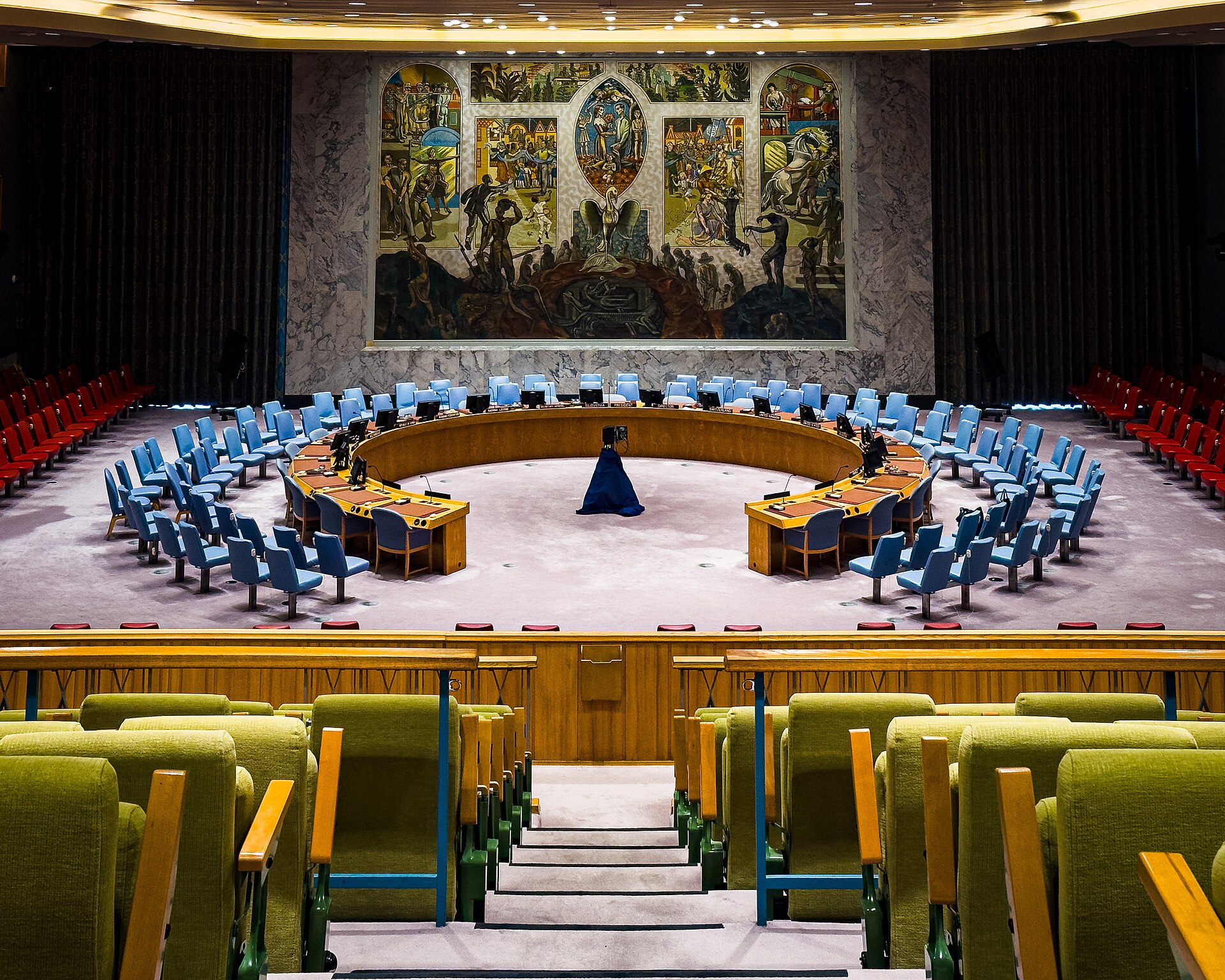
The SNSC statement broadcast on IRIB approximately two hours after Trump’s April 7 announcement contained language that answers this question directly: “This does not signify the termination of the war. Our hands remain upon the trigger, and should the slightest error be committed by the enemy, it shall be met with full force.” A ceasefire described by its own issuing body as a continuation of war by other means was never designed to be extended, because its authors never intended it to survive beyond its immediate tactical utility. The statement credited Mojtaba Khamenei’s “guidance” in third-person language — not a direct command, not a fatwa, not even a formal SNSC decision in the constitutional sense, but an invocation of authority from a figure who has been governing audio-only and whose capacity to participate directly in decision-making has been assessed by the Soufan Center and multiple Western intelligence assessments as severely compromised.
The Middle East briefing 3,000+ readers start their day with.
One email. Every weekday morning. Free.
The instrument’s form matters as much as its content. It is not a bilateral treaty, not a signed memorandum of understanding, not even the “Islamabad MoU” that Parliament Speaker Ghalibaf referenced publicly — a reference that remains the clearest acknowledgement from any Iranian official that a near-agreement existed even though no document was issued. The Axios reporting from April 7 described the framework as an electronic MOU transmitted through Pakistan, and the April 11-12 Islamabad talks produced no signed document whatsoever.
Abbas Araghchi told Al Jazeera they were “inches away from an MoU” before the United States “moved the goalposts,” but “inches away” and “signed” occupy different legal universes. The Soufan Center’s April 13 IntelBrief stated plainly: “The existing ceasefire expires April 22 with no automatic extension mechanism.”
No extension clause, no amendment procedure, no renewal mechanism. The instrument was built to expire. The question is whether that was Iranian incompetence, Iranian design, or the structural consequence of issuing a ceasefire through a body — the SNSC — whose secretary arrived in office nine days before the ceasefire and whose authority to commit Iran to anything beyond a temporary pause depends on a Supreme Leader confirmation that has not come.
Can Iran Authorise a Replacement Instrument Before April 22?
Article 176 of Iran’s constitution requires Supreme Leader confirmation of every SNSC decision. This is not a formality, not a rubber stamp, not a procedural courtesy — it is the constitutional mechanism through which SNSC statements acquire binding legal force within the Islamic Republic’s own governance framework. Mojtaba Khamenei, who assumed the Supreme Leader’s functions after his father’s incapacitation, has been governing audio-only for forty-four days as of April 18.
The FDD’s April 6 analysis, “5 Men Now Running Iran,” listed the five figures with actual decision-making authority — Vahidi, Zolghadr, Mojtaba Khamenei, Rezaei, and Abdollahi — and explicitly excluded President Pezeshkian from the circle of power. Pezeshkian himself confirmed his irrelevance on April 4, when he publicly named Vahidi and Abdollahi as the officials who wrecked the ceasefire, an extraordinary accusation from a sitting president that simultaneously advertised his own powerlessness: under Article 110, the president has zero authority over the IRGC.
A replacement ceasefire instrument — one that would supersede the expiring SNSC statement with a new text containing extension provisions, enforcement mechanisms, and the compliance-safe signatory architecture that the original lacked — would require the SNSC to convene, draft, and adopt a new decision, and that decision would require Mojtaba Khamenei’s confirmation. The constitutional path runs through a figure who has not appeared in public, whose audio-only interventions have been described by multiple analysts as scripted and pre-recorded, and whose physical capacity to review, assess, and confirm a document of this strategic weight is unknown. Even if Mojtaba were fully capable, the timeline is impossible: four days from the Antalya Forum’s failure to produce text (April 18) to expiry (April 22), with no draft on the table, no negotiating mandate from the IRGC, and Vahidi’s stated refusal to discuss missile limitations in any forum.
The constitutional dead-end is compounded by the IRGC’s operational behaviour during the ceasefire itself. Iranian forces struck the East-West Pipeline on April 8 — the day the ceasefire was announced — and hit Saudi energy sites during the April 11-12 Islamabad talks, including a second strike on Ras Tanura. Sahar Baloch, writing for the Soufan Center on April 13, observed that “the real test of credibility is not preventing breakdowns, but remaining relevant after them,” a formulation that describes Pakistan’s challenge but also Iran’s: the SNSC issued a ceasefire its own military ignored, and now lacks the constitutional machinery to issue a replacement.
Why Can’t Oman Step In as Substitute Guarantor?
The obvious solution to the Zolghadr sanctions problem is to route the extension through a different guarantor — one without UN designations, one with established credibility as a mediator between Tehran and Washington, one with geographic proximity to the Strait of Hormuz and a track record of backchannel diplomacy. Oman fits every criterion except the one that matters most in April 2026: neutrality. On April 3, Iran and Oman signed the Muscat Protocol, creating a joint IRGC-Royal Oman Navy coordination centre for Hormuz vessel traffic management. Commercial vessels now use a “Green Channel” jointly managed by both navies, a framework that places Muscat structurally inside Iran’s Hormuz management architecture.
The Muscat Protocol was a rational bilateral arrangement for Oman — its economy depends on Hormuz transit, and operational co-management with the IRGC Navy reduces the risk of Omani-flagged vessels being detained or diverted through the narrow Qeshm-Larak corridor that the IRGC declared a danger zone on April 9. But it is structurally incompatible with serving as a neutral ceasefire guarantor.
A guarantor must be able to adjudicate violations impartially; Oman is now operationally embedded in one belligerent’s maritime command structure. A guarantor must be able to impose costs on the violating party; Oman’s Green Channel access depends on IRGC cooperation. A guarantor must be perceived as neutral by both sides; Saudi Arabia pressed to exclude Muscat from the original Islamabad framework precisely because Riyadh viewed Oman’s pre-war mediation — including the February 6 indirect US-Iran talks in Muscat — as tilted toward Tehran.
The irony is that Saudi Arabia’s own diplomatic manoeuvring helped create this trap. Riyadh pushed for the quadrilateral format (Pakistan, Turkey, Egypt, Saudi Arabia) that sidelined Oman, a decision informed by the Belfer Center’s assessment that Pakistan “lacks unilateral leverage to impose a permanent agreement” but possesses “access, strategic literacy, and the ability to communicate hard truths to all sides.” The Belfer Center also noted that “mediation is not the same as enforcement” — a distinction that proved prophetic when the IRGC struck Saudi energy infrastructure during the very talks Pakistan was hosting. Now that the original instrument is expiring and the original guarantor (Pakistan) faces sanctions-exposure problems with the SNSC secretary, the natural substitute (Oman) has been structurally compromised by its own survival diplomacy, and Saudi Arabia cannot invite Muscat back into the framework without accepting the Hormuz co-management arrangement it has spent the entire war opposing.
What Does the Extension Gap Mean for Saudi Arabia?
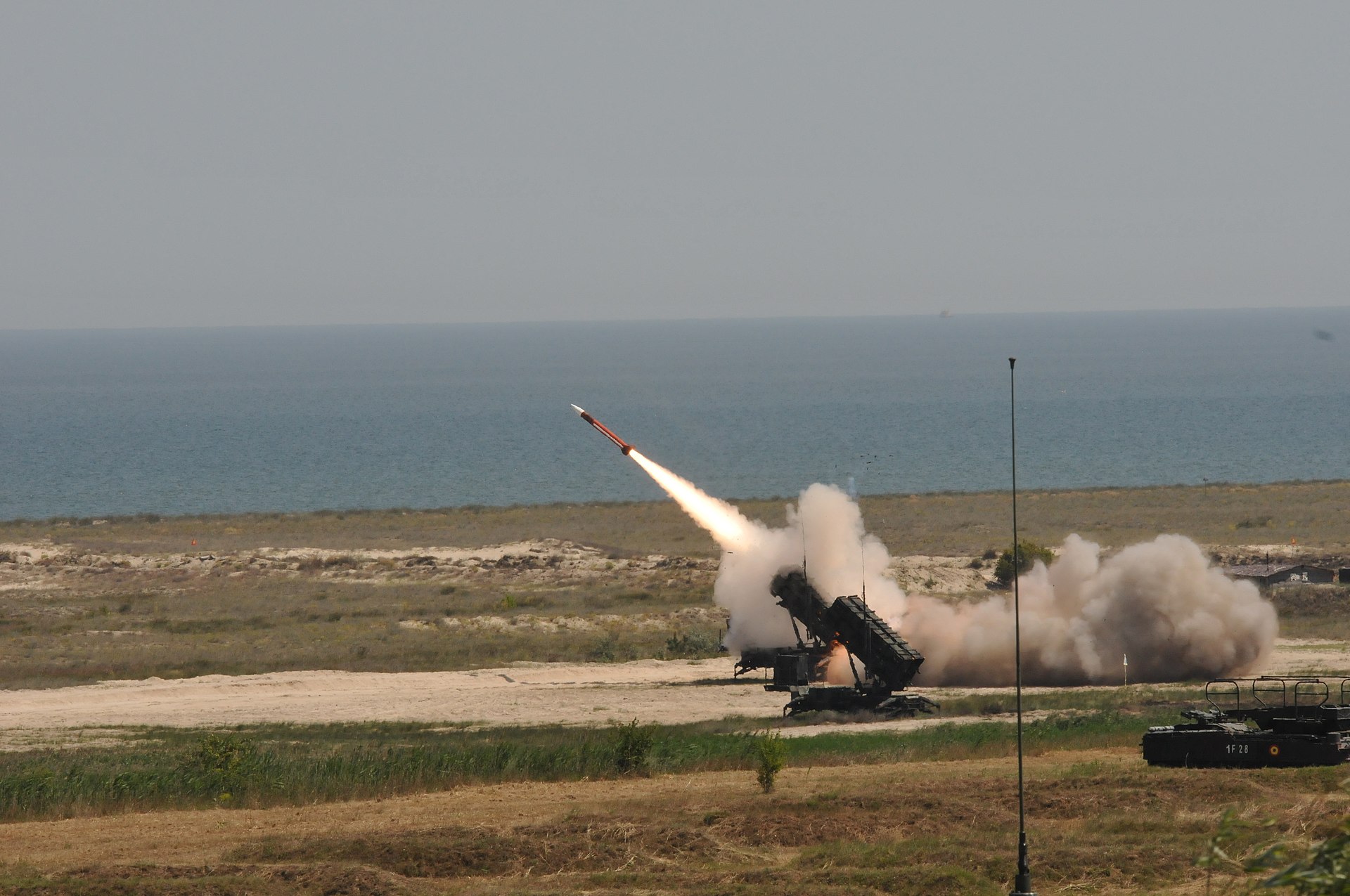
The arithmetic is unforgiving. Saudi Arabia entered the ceasefire period with approximately 400 PAC-3 MSE interceptors remaining — roughly fourteen per cent of the estimated 2,800-round pre-war stockpile — after intercepting 894 projectiles (799 drones and 95 missiles) between March 3 and April 7, at an implied expenditure of $3.49 billion at $3.9 million per round. No resupply contract delivers before 2028.
Lockheed Martin’s Camden, Arkansas facility produces approximately 620 PAC-3 MSE rounds per year at maximum capacity, and Poland refused a Patriot transfer request on March 31. The $16.5 billion emergency arms package went to the UAE, Kuwait, and Jordan — not Saudi Arabia.
Fiscally, the war has doubled the kingdom’s deficit. Goldman Sachs analyst Farouk Soussa estimated a war-adjusted deficit of 6.6 per cent of GDP, against the official projection of 3.3 per cent. Bloomberg Economics calculates a PIF-inclusive oil-price breakeven of $108-111 per barrel; Brent has traded between $88 and $96 through April 2026.
The IEA described Saudi March production of 7.25 million barrels per day — down from 10.4 million in February, a 3.15-million-bpd collapse — as “the largest disruption on record,” with Asian exports falling 38.6 per cent according to Kpler data. The June OSP has already been reset to +$3.50 per barrel, a $16 markdown from May’s war-premium +$19.50, an implicit admission that the pricing power Aramco exercised in the first weeks of the conflict has evaporated.
A ceasefire extension, even one as flawed as the original, would buy time — time for interceptor resupply pipelines to begin delivering, time for Khurais’s offline 300,000 barrels per day to come back, time for the East-West Pipeline repair that would restore Yanbu’s full 7-million-bpd throughput capacity beyond its current 4-5.9 million. Without an extension, Saudi Arabia faces resumed Iranian strikes with a missile-defence stockpile that cannot sustain another month of the March-April intercept rate, a fiscal position that worsens with every barrel of lost production, and no diplomatic off-ramp that does not require engaging with a UN-sanctioned SNSC secretary or accepting an Omani guarantor embedded in Iran’s Hormuz command structure. Three simultaneous Saudi exposure vectors — June OSP repricing, PAC-3 depletion, and a doubling fiscal deficit — converge on the same April 22 window.
The Antalya Forum and the Missing Text
Turkey’s Foreign Minister Hakan Fidan hosted the quad ministerial at the Antalya Diplomacy Forum on April 18, four days before the ceasefire expires, with Erdogan telling Al Arabiya on April 15 that Turkey was “making the necessary efforts to reduce tensions, extend the ceasefire, and continue the negotiations.” Fidan said at the forum that the Strait of Hormuz should be reopened “as soon as possible” while warning it “would remain a key point of contention.” Neither statement was accompanied by a draft instrument, a proposed signatory framework, or any mechanism for circumventing the three structural locks described above. The mediators from Egypt, Pakistan, and Turkey had reached what AP described on April 15 as an “in principle” understanding on extension, but “in principle” without a signed document and four days on the clock is a statement about aspiration, not architecture.
White House Press Secretary Karoline Leavitt was unambiguous on April 16: an extension of the current US ceasefire with Iran is “not true at this moment.” Iran’s Foreign Ministry spokesperson was equally direct: “no agreement has been reached on extending the current ceasefire.” Both statements were issued on the same day, from opposing capitals, with identical substance — the diplomatic equivalent of two armies simultaneously confirming they have not agreed to stop shooting. Iranian sources told CNN on April 17 that a next round of talks would take place in Pakistan “on Monday” (April 20), but the US side did not confirm, and even if talks materialise, two days is not enough time to negotiate, draft, circulate, and constitutionally ratify a replacement instrument through Iran’s SNSC-to-Supreme-Leader pipeline, particularly when the pipeline’s terminal node has been incommunicado for over six weeks.
Pakistan’s FATF Tightrope
Pakistan was removed from the Financial Action Task Force grey list in October 2022 after years of remedial action, but it remains under continued FATF follow-up monitoring through 2025-2026, with the FATF explicitly warning that grey-list removal “does not give immunity from money laundering and terror financing” scrutiny. The distinction matters because Pakistan’s role in a ceasefire extension is not limited to diplomatic facilitation — it is the sole transmission channel for the SNSC instrument, and if an extension requires a new instrument co-negotiated with Zolghadr’s SNSC, Pakistan’s banking system becomes the correspondent-banking conduit through which the diplomatic infrastructure operates.
OFAC’s secondary-sanctions framework does not require intent to violate; it requires “knowing provision of significant support” to a designated individual’s activities. Pakistan’s intelligence services, its military establishment under Army Chief Munir — who visited Khatam al-Anbiya headquarters (Abdollahi’s command) on April 16 — and its diplomatic corps are deeply intertwined with the ceasefire architecture. The September 2025 Saudi-Military Deployment Agreement put 13,000 Pakistani troops and jets on Saudi soil, making Pakistan simultaneously Iran’s interlocutor and Saudi Arabia’s treaty ally, a duality that the Vance-Ghalibaf face-to-face talks in Islamabad tested to breaking point. Pakistan’s $5 billion Saudi loan matures in June 2026 — Riyadh rolled over $3 billion of it five days before the ceasefire expiry — and the 27th Constitutional Amendment makes ceasefire diplomacy Munir’s operation, not the elected government’s.
For Pakistan, a ceasefire extension that requires co-signing a new instrument with Zolghadr’s SNSC is not a diplomatic question but a compliance one. The country’s correspondent-banking relationships with JPMorgan, Standard Chartered, and Citibank — the arteries through which its $30 billion in annual remittances flow — cannot survive OFAC designation. Grey-list removal bought Pakistan access to international capital markets; secondary-sanctions designation for “materially assisting” a UN-designated proliferation figure would close them. Munir’s intelligence apparatus can relay messages, facilitate back-channels, and host talks in Islamabad’s secure zones, but it cannot sign a binding instrument with an SNSC secretary who carries active UN, EU, and UK sanctions without creating a compliance trail that OFAC and the UK’s Office of Financial Sanctions Implementation would be obligated to investigate.

After April 22: The Instrument Dies, the War Resumes
On the day Zolghadr was appointed SNSC secretary, he told assembled officials: “The IRGC should gain more control over the country.” That statement, made on March 24, reads differently on April 18 — not as aspiration but as description. The IRGC struck Saudi energy infrastructure during the ceasefire, declared “full authority to manage the Strait” of Hormuz on April 5 and again on April 10 while Araghchi was in Islamabad, and maintained operational tempo throughout a diplomatic process it never authorised and a ceasefire its own statement described as “the continuation of battlefield.” The instrument that made the pause possible — an electronic SNSC statement with no extension clause, issued under the institutional authority of a UN-sanctioned secretary, requiring constitutional confirmation from an incapacitated Supreme Leader — was not designed to outlive its fourteen-day window.
The same SNSC that Zolghadr runs — the body whose “deviation from mandate” report ended the Islamabad talks — announced on April 18 that it is “currently reviewing” fresh US proposals delivered via Pakistan’s army chief. What that statement reveals about whether the review is genuine or procedural theater is examined here.
The Hajj arrival window opens on April 18, the same day the Makkah cordon sealed, with 1.2 to 1.5 million pilgrims converging on the holy sites through late May. Indonesia’s 221,000 pilgrims begin their first departures on April 22 — the day the ceasefire expires. The convergence is not coincidental; it is the calendar expressing what diplomacy cannot: that the war’s resumption, if it comes, will unfold against the backdrop of the largest annual gathering in the Islamic world, in a kingdom whose air-defence reserves are at fourteen per cent and whose fiscal cushion has been halved by forty-nine days of conflict.
Saudi Foreign Minister Prince Faisal bin Farhan called Araghchi on April 13 — the day the US CENTCOM blockade took effect — in what analysts interpreted as behavioural evidence of a parallel diplomatic track operating outside the Islamabad framework. That call, unreported by Saudi state media and confirmed only through Iranian diplomatic sources, suggests Riyadh is building direct channels precisely because the multilateral architecture is failing. But direct channels with Tehran run through the same constitutional dead-end: any Iranian commitment requires SNSC authorisation, SNSC authorisation requires Zolghadr’s institutional involvement, Zolghadr’s involvement creates sanctions exposure, and the Supreme Leader confirmation that would give any replacement instrument binding force remains constitutionally unavailable. The locks are interlocking, the keys are missing, and the clock runs out on Tuesday.
Frequently Asked Questions
Could the United States unilaterally extend the ceasefire without a new Iranian instrument?
The US could announce a unilateral pause in offensive operations, as it did informally on April 7 before the SNSC statement, but a unilateral American pause does not bind the IRGC, which struck Saudi targets on the ceasefire’s first day. The original framework’s value was that it created mutual obligations — however poorly enforced — through a third-party transmission channel. A unilateral US extension would remove even the nominal constraint on Iranian operations while leaving American forces bound by a self-imposed restraint their commander-in-chief has already described as temporary. Trump’s April 6 deadline rhetoric and the April 13 CENTCOM blockade both suggest the administration views the ceasefire as a coercive tool, not a humanitarian commitment, making unilateral extension politically implausible absent a tangible Iranian concession on enrichment or Hormuz.
Has any previous ceasefire in the region faced a similar sanctions-exposure problem with a signatory?
The closest parallel is the 2015 JCPOA, where the agreement itself contained sanctions-relief provisions that addressed the designated status of Iranian officials and entities. But the JCPOA was negotiated over twenty months by seven parties with dedicated legal teams specifically tasked with navigating sanctions architecture. The Islamabad Accord was assembled in days, transmitted electronically, and structured as a unilateral SNSC statement relayed through a single mediator — a format that gave no one the opportunity to address the compliance implications of Zolghadr’s designations. The UNSC Resolution 1747 designation is particularly binding because it is a Chapter VII measure, meaning it supersedes bilateral arrangements and cannot be waived by individual states, only by the Security Council itself — where Russia and China hold vetoes and have shown no inclination to delist Zolghadr for ceasefire-facilitation purposes.
What happens to the Muscat Protocol if Oman is asked to replace Pakistan as ceasefire guarantor?
Oman would face a binary choice: abandon the Green Channel arrangement that protects its commercial shipping through the IRGC-managed Hormuz corridor, or decline the guarantor role and preserve its operational relationship with Tehran. Sultan Haitham’s foreign policy has consistently prioritised Oman’s economic survival over regional alignment, and the Green Channel provides direct, quantifiable protection for the approximately $76 billion in annual trade that transits Hormuz past Omani territorial waters. Oman’s Transport Minister Al Maawali stated publicly that “no tolls can be imposed for crossing Hormuz,” positioning Muscat against Iran’s toll architecture while simultaneously co-managing the strait’s traffic with the IRGC Navy — a contradiction Oman has so far managed by treating the Muscat Protocol as an operational necessity rather than a political alliance, a distinction Riyadh does not accept.
Could Turkey or Egypt serve as alternative guarantors?
Turkey hosted the April 18 Antalya quad ministerial and Erdogan has positioned Ankara as a mediator, but Turkey’s NATO membership creates its own sanctions-compliance constraints: Turkish banks operating in US dollar-denominated markets face the same OFAC secondary-sanctions exposure as Pakistani banks if they co-sign an instrument with Zolghadr’s SNSC. Egypt’s role has been limited to the quad format, and Cairo lacks the bilateral intelligence channels with Tehran that made Pakistan’s ISI-to-IRGC communication pathway possible. Neither country has the geographic proximity to Hormuz, the military deployment on Saudi soil, or the established back-channel architecture that made Pakistan indispensable to the original framework — and both face the same fundamental problem: the sanctions locks do not change with the guarantor, only the institution exposed to them.
| Structural Lock | Mechanism | Workaround Required | Feasibility Before April 22 |
|---|---|---|---|
| Zolghadr sanctions | UNSC 1747 + EU + UK + 11 jurisdictions | UNSC delisting (Russia/China veto) or new SNSC secretary | Zero |
| No extension clause | Electronic SNSC statement, no amendment procedure | Draft, negotiate, and ratify entirely new instrument | Near zero (4 days, no draft exists) |
| Article 176 confirmation | Supreme Leader must confirm every SNSC decision | Mojtaba Khamenei physically participates in ratification | Unknown — 44 days incommunicado |
| Oman compromised | Muscat Protocol joint IRGC-RoN Hormuz centre | Oman exits Green Channel arrangement | Zero (would expose Omani shipping) |
The pragmatic argument that Hormuz control could fund the war economy — one potential key to the first lock — has since been answered empirically: Iran’s toll scheme collected zero dollars across 36 days, confirming that the commercial rationale for moderation no longer exists.
The structural locks identified here have since yielded concrete evidence: on April 18, IRGC gunboats fired on a commercial tanker without VHF warning, less than 18 hours after Araghchi publicly declared Hormuz “completely open.” The firing demonstrates that the authorization ceiling problem is not theoretical — field units are executing independently of any diplomatic track the Foreign Ministry is running, whether or not a ceasefire framework exists on paper.
The diplomatic collapse became explicit on April 18 when Iran’s Deputy Foreign Minister Khatibzadeh announced that “until we agree on the framework, we cannot set a date” — effectively cancelling the April 20 Islamabad round. Iran’s cancellation of the April 20 session and the simultaneous IRGC firing on an Indian tanker confirmed that the authorization ceiling had moved from structural theory to kinetic reality.
The Antalya Quadrilateral’s failure to produce a ceasefire extension before the April 22 deadline is analysed in The Quartet That Cannot Reach Iran.
Trump’s April 17 claim that Iran had agreed to hand over its enriched uranium — and the Bloomberg and Iranian Foreign Ministry rebuttals that followed within hours — illustrate precisely how the authorization ceiling manifests in public messaging: a negotiating position cannot be confirmed as settled when the chain of command that must ratify it remains broken. That episode is documented in Trump Says Iran Will Hand Over “Nuclear Dust.” Bloomberg Says Deal Is in Limbo.