TEHRAN — Iran’s Islamic Revolutionary Guard Corps overrode Foreign Minister Abbas Araghchi’s declaration that the Strait of Hormuz was “completely open” for commercial shipping, announcing on April 18 that the waterway had returned to its “previous state” under the “strict management and control of the armed forces.” The reversal — executed in under 24 hours through a joint command statement carried by the IRGC-aligned Tasnim News Agency — came four days before the next round of US-Iran talks in Islamabad and two days before the April 22 ceasefire expiration.
Parliament Speaker Mohammad Bagher Ghalibaf, a former IRGC Aerospace Force commander, then issued a public statement that made the institutional override explicit: “Whether the Strait is open or closed and the regulations governing it will be determined by the field, not by social media.” Brent crude, which had fallen approximately 9.5% to $89.89 per barrel on Araghchi’s opening declaration Friday, steadied in the $94-$99 range after the reversal confirmed the closure held. Bloomberg reported several oil tankers turned back in the Persian Gulf.
Table of Contents
- What Araghchi Declared — and How Fast It Collapsed
- The IRGC Joint Command Statement
- Why Did Ghalibaf Speak in the IRGC’s Voice?
- Iran’s Own Media Turned on Araghchi
- Oil Markets Whipsawed Between Two Iranian Governments
- What Does This Reveal About Who Controls Iran’s War Policy?
- Background
- Frequently Asked Questions
What Araghchi Declared — and How Fast It Collapsed
At approximately 21:00 GMT on April 17, Araghchi posted on X: “In line with the ceasefire in Lebanon, the passage for all commercial vessels through Strait of Hormuz is declared completely open for the remaining period of ceasefire.” Al Jazeera and CNBC both reported the declaration the same evening.
The House of Saud Daily Briefing
Saudi Arabia's news in 3 minutes, every morning. Free. See today's issue
The framing was deliberate. Araghchi tied the Hormuz opening to the Lebanon ceasefire — a condition Iran had insisted on since April 9-10, when its negotiators demanded Lebanon’s inclusion in any broader settlement. From the Foreign Ministry’s perspective, the Lebanon ceasefire fulfilled Iran’s precondition and authorized the opening.
The White House moved immediately to claim credit. An unnamed spokesman stated: “The Strait of Hormuz is completely open for business, and Iran has agreed to never close the Strait again,” according to OilPrice.com.
That claim lasted less than a day.
By April 18, the IRGC joint command had issued its counter-statement through Tasnim News Agency: “Control over the Strait of Hormuz has returned to its previous state, and this strategic waterway is under the strict management and control of the armed forces.” The statement cited the US naval blockade, imposed on April 13, as the operative condition: “Until the US restores full freedom of movement for vessels traveling to and from Iran, the situation in the Strait of Hormuz will remain strictly controlled and unchanged.” The following day, that institutional override was broadcast publicly: the IRGC Navy transmitted on VHF Channel 16 — the international distress frequency monitored by every vessel in the Gulf — that Hormuz would open “by the order of our leader, Imam Khamenei, not by the tweets of some idiot.” What the Channel 16 broadcast means for the Islamabad negotiations and Iran’s authorization ceiling is analyzed here.
Iran State TV reported the same language — “strict management and control” — confirming the reversal through official broadcast channels, according to ABC News.
The IRGC Joint Command Statement
The IRGC’s reversal statement was issued under anonymous institutional authority rather than by a named commander. This is consistent with the command vacuum that has persisted since Rear Admiral Alireza Tangsiri, the IRGC Navy’s commander, was killed in an Israeli strike at Bandar Abbas on March 30. No successor has been publicly named in the 19 days since, according to the Foundation for Defense of Democracies.
The statement operated on a different logic than Araghchi’s. Where the Foreign Minister treated the Lebanon ceasefire as the relevant trigger, the IRGC treated the US blockade as the operative fact. These are two separate conditions with two separate resolution paths — and the IRGC’s condition (lifting the blockade) is one that Washington has explicitly refused to meet.
President Trump stated on April 18 that the blockade “will remain in full force” until “our transaction with Iran is 100% complete,” according to NBC News. The gap between Araghchi’s condition (Lebanon ceasefire, achieved) and the IRGC’s condition (blockade lifted, refused) is the space in which the reversal occurred.
The IRGC characterized the US naval presence as “piracy and maritime robbery under the so-called blockade,” framing Iran’s strait control as reactive rather than aggressive. PressTV ran a tribute from Brigadier General Majid Mousavi, the IRGC Aerospace Force commander, honoring Tangsiri as “the architect of the new order in the Strait of Hormuz” — implicitly positioning the current unnamed command structure as executors of Tangsiri’s established doctrine.
“The IRGC Aerospace Force remains distrustful of the enemy, with its finger on the trigger and in full readiness to defend Iran,” Mousavi said, according to PressTV.
Why Did Ghalibaf Speak in the IRGC’s Voice?
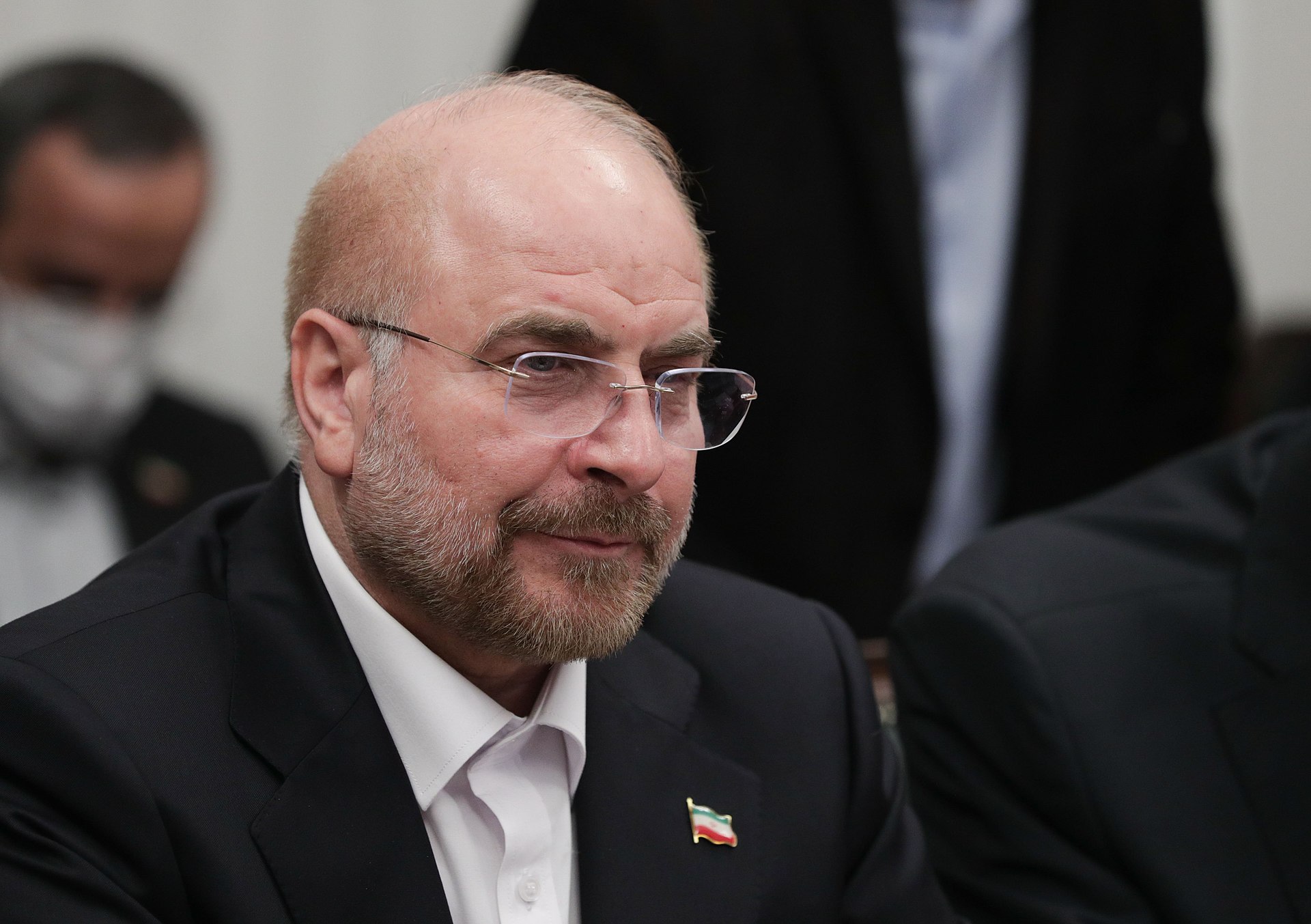
Ghalibaf’s intervention on April 18 carried a particular weight. As Parliament Speaker, he holds no position in the military chain of command. But he served as IRGC Aerospace Force commander from 1997 to 2000, and his April 18 statement used operational military language that no civilian legislator would normally employ.
“Passage through the Strait of Hormuz will be conducted based on the ‘designated route’ and with ‘Iranian authorization,’” Ghalibaf said, according to ANI News and BusinessToday. “Whether the Strait is open or closed and the regulations governing it will be determined by the field, not by social media.”
The “social media” reference was a direct rebuke of Araghchi, whose declaration had been made on X. Ghalibaf was not merely disagreeing with the Foreign Minister’s position — he was dismissing the medium as categorically insufficient for setting policy on the strait.
He then escalated. “The President of the United States made seven claims in one hour, all seven of which were false,” Ghalibaf said. “They did not win the war with these lies, and they will certainly not get anywhere in negotiations either. With the continuation of the blockade, the Strait of Hormuz will not remain open.”
The conditional warning — Hormuz will not remain open while the blockade continues — aligned precisely with the IRGC joint command’s stated position. A Parliament Speaker was speaking in the IRGC’s institutional voice, providing political legitimacy to a military override of Foreign Ministry policy. This is a role Ghalibaf has played before: he led the 71-member Iranian delegation to the Islamabad talks, where his IRGC background made him the preferred interlocutor for discussions the Foreign Ministry could not conduct alone. Two days before ceasefire expiry, Ghalibaf escalated this pattern further, warning that Iran had “prepared to reveal new cards on the battlefield” — a threat carrying operational weight because of the same Aerospace Force command that made his Hormuz statements credible.
“Media warfare and engineering public opinion are an important part of war, and the Iranian nation is not affected by these tricks,” Ghalibaf added.
Iran’s Own Media Turned on Araghchi
The speed and breadth of the domestic media response to Araghchi’s tweet revealed the depth of institutional opposition.
Mehr News, a state-run outlet, called it “a bad and incomplete tweet that created misleading ambiguity about the reopening of the Strait of Hormuz” and said it “provided the best opportunity for Trump to go beyond reality, declare himself the winner of the war,” according to Iran International.
Tasnim News Agency, which is aligned with the IRGC, criticized Araghchi’s post for lacking “any verbal explanation or at least sufficient written clarification” and called for either revised Foreign Ministry messaging or Supreme National Security Council intervention, Iran International reported.
Fars News Agency, another IRGC outlet, demanded: “Officials, at least explain the reason for your ‘lack of explanation.’” Fars warned that the absence of clear messaging had left Iranian society in “a state of confusion.”
A source close to the Supreme National Security Council, speaking to Fars, outlined conditions that had never appeared in Araghchi’s tweet: ships must be commercial; passage of military vessels is prohibited; vessels and cargo must not be linked to hostile countries; vessels must use routes designated by Iran and coordinate transit with IRGC forces. These conditions — which amounted to a controlled, managed passage regime rather than an “open” strait — were presented as the actual policy that Araghchi’s tweet had failed to convey, according to Iran International.
Iranian lawmaker Morteza Mahmoudi said Araghchi would have faced impeachment over his tweet “if not for wartime considerations,” accusing him of “repeatedly making ill-timed remarks that help calm global oil and energy markets,” Iran International reported.
The coordinated media attack — across Mehr, Tasnim, Fars, and individual lawmakers — is rare. Iranian outlets compete and contradict each other routinely, but the unanimous framing of Araghchi’s declaration as unauthorized and damaging reflected a pre-existing institutional consensus that Hormuz policy belongs to the IRGC, not the Foreign Ministry.
Oil Markets Whipsawed Between Two Iranian Governments
The financial consequences of the reversal were immediate. On Araghchi’s April 17 declaration, Brent crude fell approximately 9.5% to $89.89 per barrel, and WTI dropped over 10% to $84.89, according to OilPrice.com. The drop reflected the scale of the war premium embedded in oil prices — and how quickly markets were prepared to remove it.
After the IRGC reversal on April 18, Brent stabilized in the $94-$99 range as markets recalibrated, CNBC reported. Bloomberg reported several oil tankers turned back in the Persian Gulf following the IRGC’s statement. The whipsaw — a roughly $10 per barrel swing over less than 24 hours — was driven not by supply fundamentals but by confusion over which Iranian authority actually controls the strait.
The underlying supply disruption remains severe. Approximately 20% of global oil and LNG flows transit the Strait of Hormuz in normal conditions — roughly 20 million barrels per day. Hormuz traffic has dropped approximately 80% since hostilities began, from over 100 vessel transits per day to roughly 21. Over 150 tankers are anchored outside the strait, and hundreds of ships with thousands of seafarers remain stranded in the Gulf, BusinessToday reported.
VLCC day rates on the benchmark Middle East-to-China route had already breached $423,000 per day in late March — a level with no precedent in shipping data going back to 2005, according to Paradox Intelligence.
The Saudi fiscal position compounds the volatility. Saudi Arabia’s break-even oil price stands at $108-$111 per barrel on a Bloomberg PIF-inclusive basis. March production fell to 7.25 million barrels per day — down 3.15 million bpd from February’s 10.4 million — the largest disruption on record, according to the International Energy Agency. The EIA raised its 2026 Brent projection to $96 per barrel as of April 15, a price that sits below Saudi fiscal break-even and above the post-Araghchi crash level but below the post-reversal recovery range.
The insurance market — not navies — has become the de facto enforcement mechanism. With the IRGC reversal restoring “strict control,” war-risk premiums that had briefly compressed on Araghchi’s declaration will widen again, and underwriters will re-designate the strait as a listed area. Ships that had begun repositioning toward the strait are now reversing course.
What Does This Reveal About Who Controls Iran’s War Policy?
The Araghchi-IRGC reversal is not an isolated event. It is the most publicly visible instance of a pattern that has defined Iran’s conduct throughout the war: the Foreign Ministry negotiates, and the IRGC overrides.
On April 5 and again on April 10, the IRGC declared “full authority to manage the Strait” while Araghchi was physically present in Islamabad conducting ceasefire negotiations, as previously reported. President Masoud Pezeshkian, in an extraordinary public confession on April 4, named SNSC Secretary Ali Akbar Ahmadian Vahidi and Khatam al-Anbiya commander Abdollahi as having sabotaged the ceasefire negotiations. Under Article 110 of Iran’s constitution, the president has zero authority over the IRGC.
Supreme Leader Ali Khamenei has been absent from public view for over 44 days. Mojtaba Khamenei has appeared in audio-only format. The IRGC joint command is issuing orders under anonymous institutional authority with no named IRGC Navy commander since Tangsiri’s killing.
Prof. Mehran Kamrava of Georgetown University Qatar identified the IRGC’s Khatam al-Anbiya headquarters as “most likely the central key security decision making within the Revolutionary Guards,” operating parallel to — not under — the Supreme National Security Council. “The war footing continues as far as the Revolutionary Guard is concerned,” Kamrava told Euronews on April 10, “because there is a history of Israel repeatedly sabotaging negotiations between Iran and the United States.”
The April 17-18 sequence made this structural reality visible in real time. Araghchi spoke for Iran’s government. The IRGC spoke for Iran’s state. They said opposite things within hours. The IRGC prevailed. The April 18 declaration extended this pattern from transit enforcement to basin-wide targeting: the IRGC’s no-movement order covers every vessel in the entire Persian Gulf and Sea of Oman, eliminating the last residual possibility that selective IRGC permits might allow Gulf-side loading to resume, as analyzed in the April 19 market mispricing assessment.
The timing compounds the stakes. The next round of US-Iran talks is scheduled for April 20 in Islamabad. The ceasefire expires April 22. Any commitment Araghchi makes in Islamabad now carries an implicit asterisk: the IRGC may reverse it before the ink dries, as it did with his Hormuz declaration. Ghalibaf made the IRGC’s position explicit: “With the continuation of the blockade, the Strait of Hormuz will not remain open.” That asterisk was confirmed on April 21, when Abdollahi issued a war warning on state television invoking the Supreme Leader’s authority — on the same day Pakistan brokered the ceasefire extension Trump announced — demonstrating that the authorization ceiling Araghchi cannot override operates on its own schedule. The war warning and its implications for Pakistan’s enforcement architecture are reported here. On April 20, those April 22 talks never materialised: Araghchi formally labelled the US blockade an “act of war” and cancelled the Islamabad round entirely, confirming that the asterisk documented here had become the headline.
Background
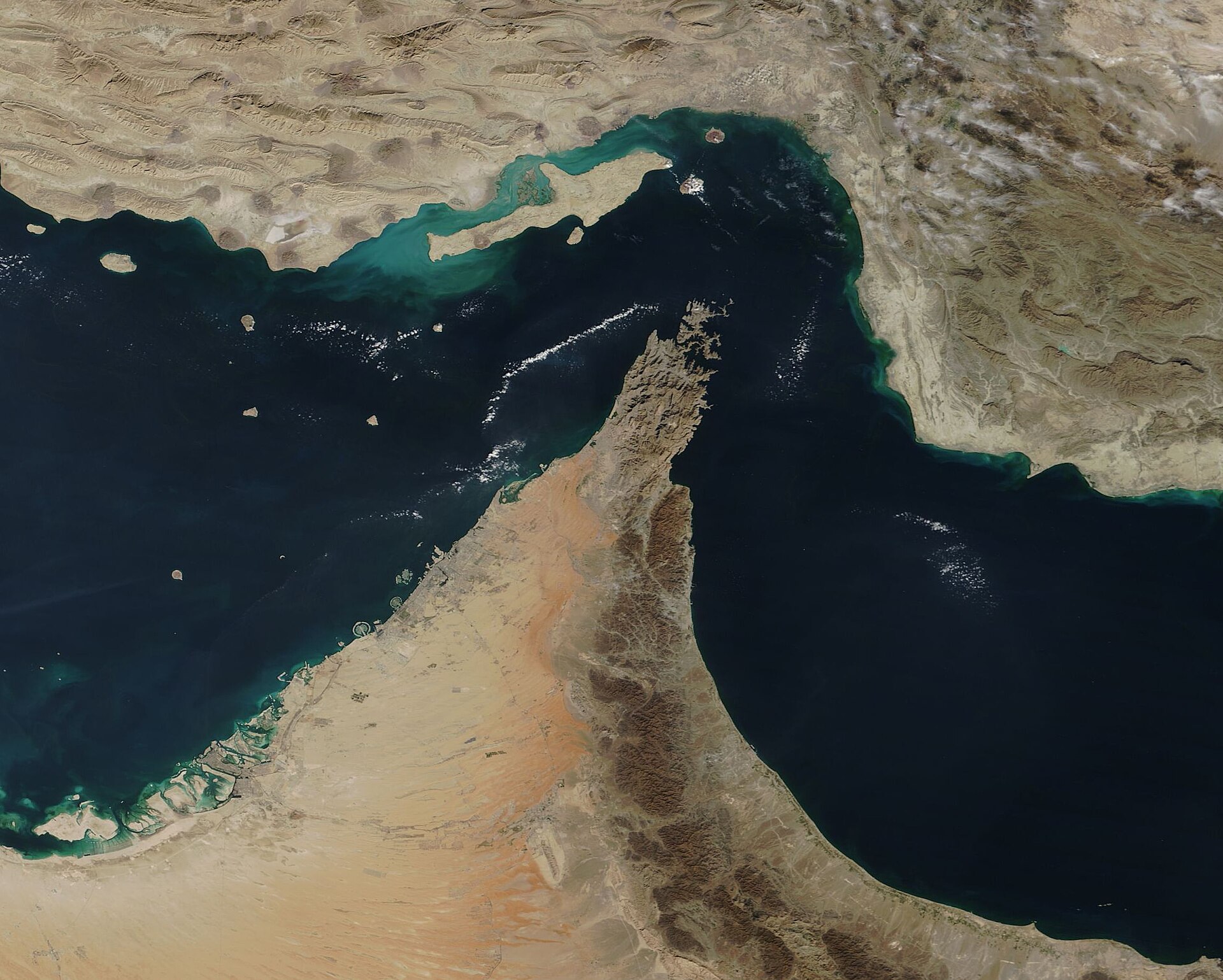
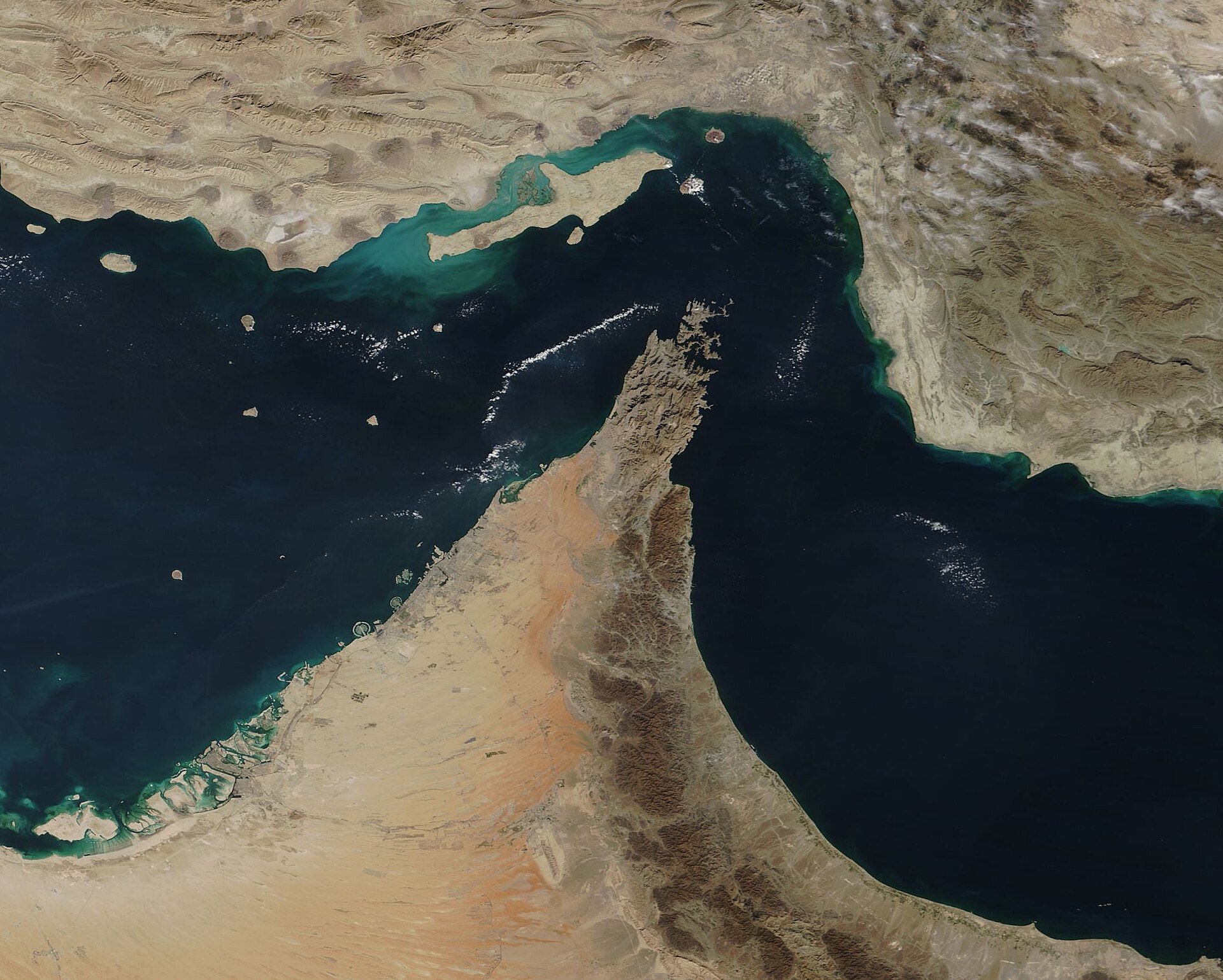
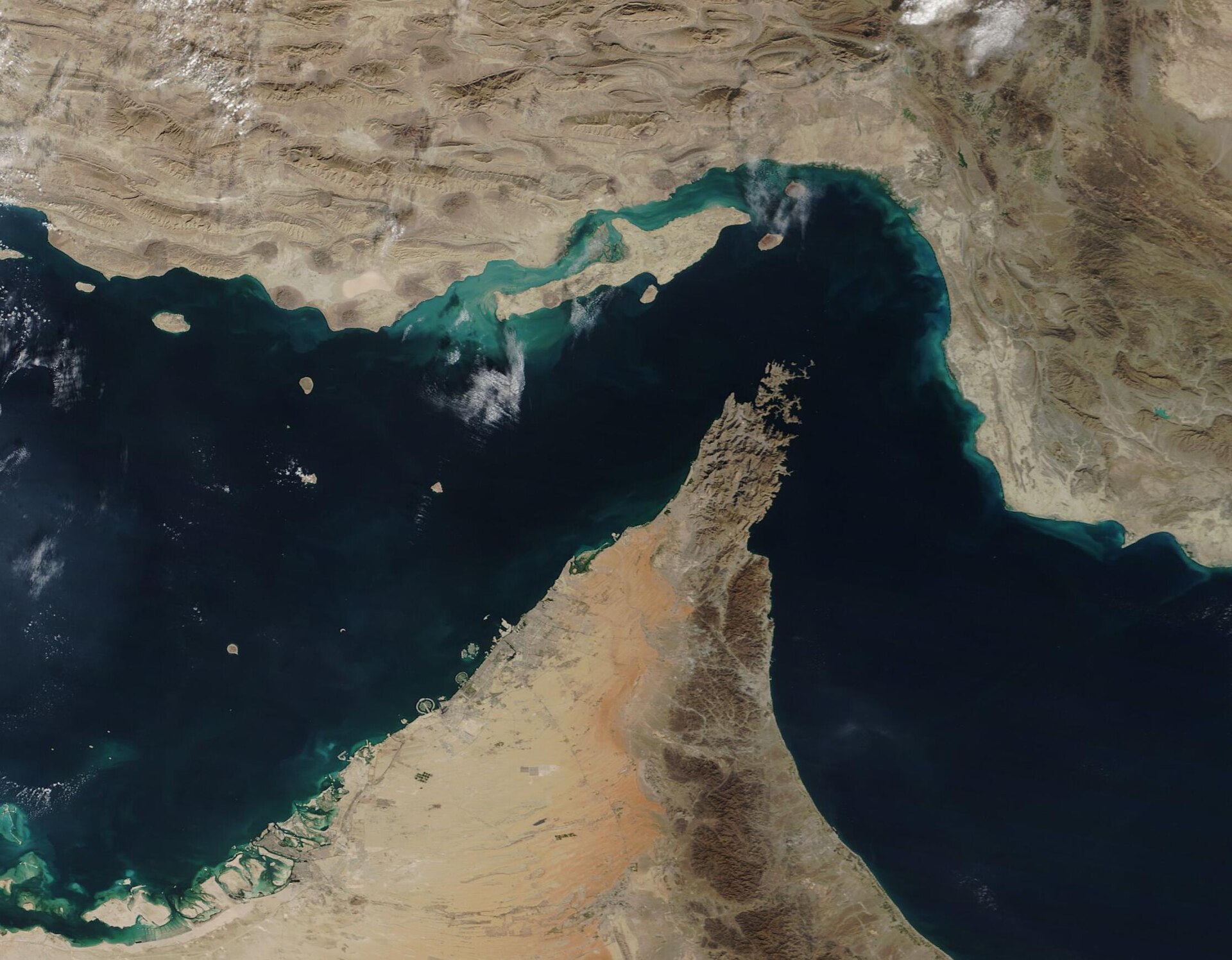
The Strait of Hormuz, a 21-nautical-mile-wide passage between Iran and Oman, is the world’s most consequential maritime chokepoint.
Iran’s war with the United States and Israel, now in its 50th day, has reduced Hormuz traffic by approximately 80%. The IRGC Navy published a chart on February 28 designating the standard Traffic Separation Scheme as a “danger zone” and redirecting vessels through a narrow five-nautical-mile corridor between Qeshm and Larak islands — inside Iranian territorial waters and subject to IRGC inspection.
The US imposed a naval blockade on Iranian ports on April 13, targeting Iranian-flagged vessels and those carrying Iranian cargo. Iran has framed the blockade as the primary obstacle to normalizing strait traffic, while the US has conditioned the blockade’s removal on a comprehensive deal.
CENTCOM has enforced the blockade with A-10C Thunderbolt IIs and AH-64 Apache helicopters flying low-altitude patrols over the strait — a deliberate legibility signal designed to make the US presence unmistakable to IRGC fast-boat crews. The operational deployment and its limits are examined in CENTCOM Deploys A-10 Warthogs and Apaches Over Hormuz, Turns Back 23 Vessels Before Ceasefire Expiry.
The ceasefire currently in effect was brokered through the Islamabad Accord, with Pakistan serving as the primary enforcement mechanism. The accord contains no extension clause, and its renewal faces structural obstacles including the sanctioning of Zolghadr — one of its signatories — which would require a fourth-party replacement such as Oman.
Frequently Asked Questions
Is the Strait of Hormuz currently open or closed?
As of April 18, the IRGC’s position — which has operational precedence — is that the strait is under “strict management and control of the armed forces” and has returned to its “previous state.” A source close to the SNSC told Fars News that transit requires Iranian authorization, commercial-only status, no links to hostile countries, and use of IRGC-designated routes. This amounts to a controlled-passage regime, not an open strait. Araghchi’s “completely open” declaration has been functionally nullified.
Why did Araghchi’s declaration fail?
Araghchi treated the Lebanon ceasefire as the trigger for opening Hormuz — a position consistent with Iran’s stated preconditions since April 9-10. The IRGC operates on a different condition set: the US naval blockade of Iranian ports, imposed April 13, remains in effect. Trump confirmed on April 18 that the blockade “will remain in full force” until a comprehensive deal is complete. From the IRGC’s operational standpoint, Araghchi addressed a political precondition while ignoring the military situation on the water.
What happens at the April 20 Islamabad talks?
The reversal weakens whatever negotiating position Araghchi brings to Islamabad. Any commitment he makes on Hormuz now carries demonstrated risk of IRGC override. The ceasefire expires April 22 — two days after talks resume — and the Islamabad Accord has no built-in extension mechanism. Ghalibaf’s conditional warning — “With the continuation of the blockade, the Strait of Hormuz will not remain open” — positions Hormuz closure as Iran’s leverage heading into the talks, not as a concession already made.
Has this kind of IRGC override happened before during the war?
Yes. On April 5 and April 10, the IRGC declared “full authority to manage the Strait” while Araghchi was in Islamabad conducting ceasefire negotiations. In the Islamabad walkout incident, the “deviation from delegation’s mandate” attributed to Zolghadr on April 14 reflected the same dynamic — IRGC-aligned actors overriding Foreign Ministry-negotiated positions. Pezeshkian’s April 4 public accusation against Vahidi and Abdollahi confirmed that the pattern is recognized at the presidential level but cannot be stopped, because Article 110 places the IRGC outside presidential authority.
That authorization ceiling hardened further on April 19, when Parliament Speaker Ghalibaf converted the IRGC’s Hormuz posture into a formal reciprocity doctrine — conditioning any reopening on full US blockade removal, a concession Washington cannot make before the April 22 ceasefire deadline. Ghalibaf’s reciprocity doctrine and why it forecloses extension is analyzed here.
How does the IRGC issue orders without a named Navy commander?
Since Tangsiri’s killing on March 30, IRGC naval operations and strait policy have been issued under anonymous “joint command” authority. The IRGC underwent a decentralization reform in 2008 that distributed operational authority across regional and functional commands. Prof. Kamrava identified the Khatam al-Anbiya headquarters — not a named individual — as the likely central decision-making node. PressTV’s framing of Tangsiri as “the architect of the new order” suggests current operations are executing standing orders rather than requiring new command decisions, allowing the headless structure to function through institutional momentum.
The institutional momentum that enabled the IRGC to override Araghchi has also sustained a toll collection scheme that has generated zero dollars in 36 days of operation — a commercial failure that removes the one pragmatic argument for moderating Hormuz control.
The IRGC override of Araghchi documented here proved not to be isolated. Within hours of Araghchi’s April 17 “completely open” declaration, IRGC gunboats fired on a commercial tanker without VHF warning, driving five vessels to reverse course near Qeshm Island and erasing what remained of the Foreign Ministry’s credibility over Hormuz operations. On April 18, the override became legally incoherent: IRGC gunboats fired on two Indian vessels — the VLCC Sanmar Herald and bulk carrier Jag Arnav — that were transiting under IRGC-issued clearances, exposing a command structure incapable of honoring its own permits.
The pattern of White House optimism running in parallel with IRGC operational override continued on April 19, when the administration called negotiations “productive” on the same day the IRGC re-closed Hormuz and fired on ships it had itself cleared. The structural contradiction between diplomatic framing and IRGC operational reality is examined in White House Calls Iran Talks ‘Productive’ as IRGC Re-Closes Hormuz.
The external trigger that transformed that authorization ceiling from theoretical to operational was the Touska seizure: how the IRGC named its specific retaliation countdown and why it went unnoticed by Western analysts is examined in The Touska Countdown — Iran Named Its Trigger and No One Noticed.
The IRGC authorization ceiling documented here has a direct operational consequence for Saudi Arabia’s Hajj posture: with the ceasefire expiring April 22 and 1.2–1.5 million foreign pilgrims entering the Hejaz, no air defense architecture can fully substitute for a credible political decision the IRGC has not authorized. The arrival of Hajj pilgrims on Saudi soil during the 72-hour window before ceasefire expiry is reported here.
The IRGC authorization ceiling documented here became the defining constraint on April 22, when the ceasefire expired and the IRGC seized two commercial vessels on the same day as the Hajj opening — a convergence that removed Saudi Arabia’s ability to de-escalate without undermining the Custodian title. The Hajj Opens Under an Expired Ceasefire: MBS’s Custodian Title Becomes a Trap examines that convergence in full.
The constitutional question of who can actually ratify or reverse IRGC operational orders — and why Iran’s Article 111 incapacitation protocol has not been triggered despite Mojtaba Khamenei’s 45-day absence — is examined in The Unconscious Sovereign: How the IRGC Captured Iran Without Triggering Article 111. The institutional gap between Iran’s diplomatic announcements and IRGC operational reality extended on April 23, when Iran confirmed a first Hormuz toll deposit into the Central Bank — yet the revenue routing ran through IRGC payment infrastructure rather than conventional banking channels, and two ships were seized the same day.
The same diplomatic pattern Araghchi deployed on April 17 — a public declaration calibrated to buy IRGC tolerance rather than to inform Washington — continued on May 5, when his condemnation of Project Freedom served as permission-seeking rather than negotiating rhetoric. The full anatomy of Araghchi’s dual-audience strategy and its May 5 IRGC-calibrated statement is examined in full. The full strategic context behind Project Freedom’s failure — including the covert Saudi strikes on Iranian soil in late March that preceded and enabled Riyadh’s veto — is documented in Saudi Arabia Struck Iran, Then Vetoed America’s Plan to Do the Same.
The diplomatic pattern Araghchi deployed on April 17 — declaring Hormuz open only to have the IRGC reverse it — was formally closed on May 17 when First VP Aref declared Iranian sovereignty over the strait “established and closed” and parliament security chief Azizi announced Iran’s formal Hormuz toll mechanism. The civilian establishment has now adopted the IRGC position as official government doctrine.
The House of Saud Daily Briefing
Saudi Arabia's news in 3 minutes, every morning. Free. See today's issue