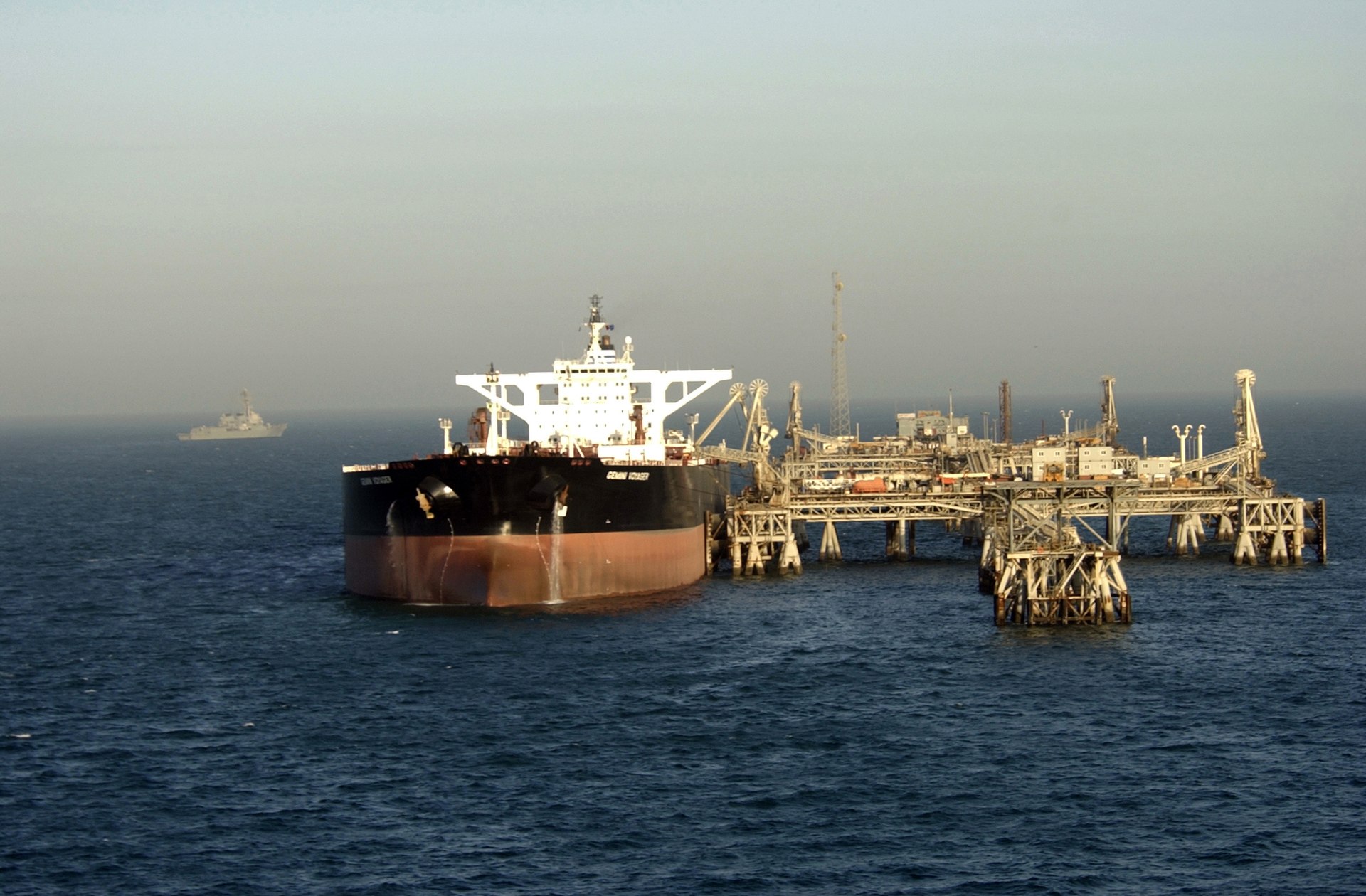

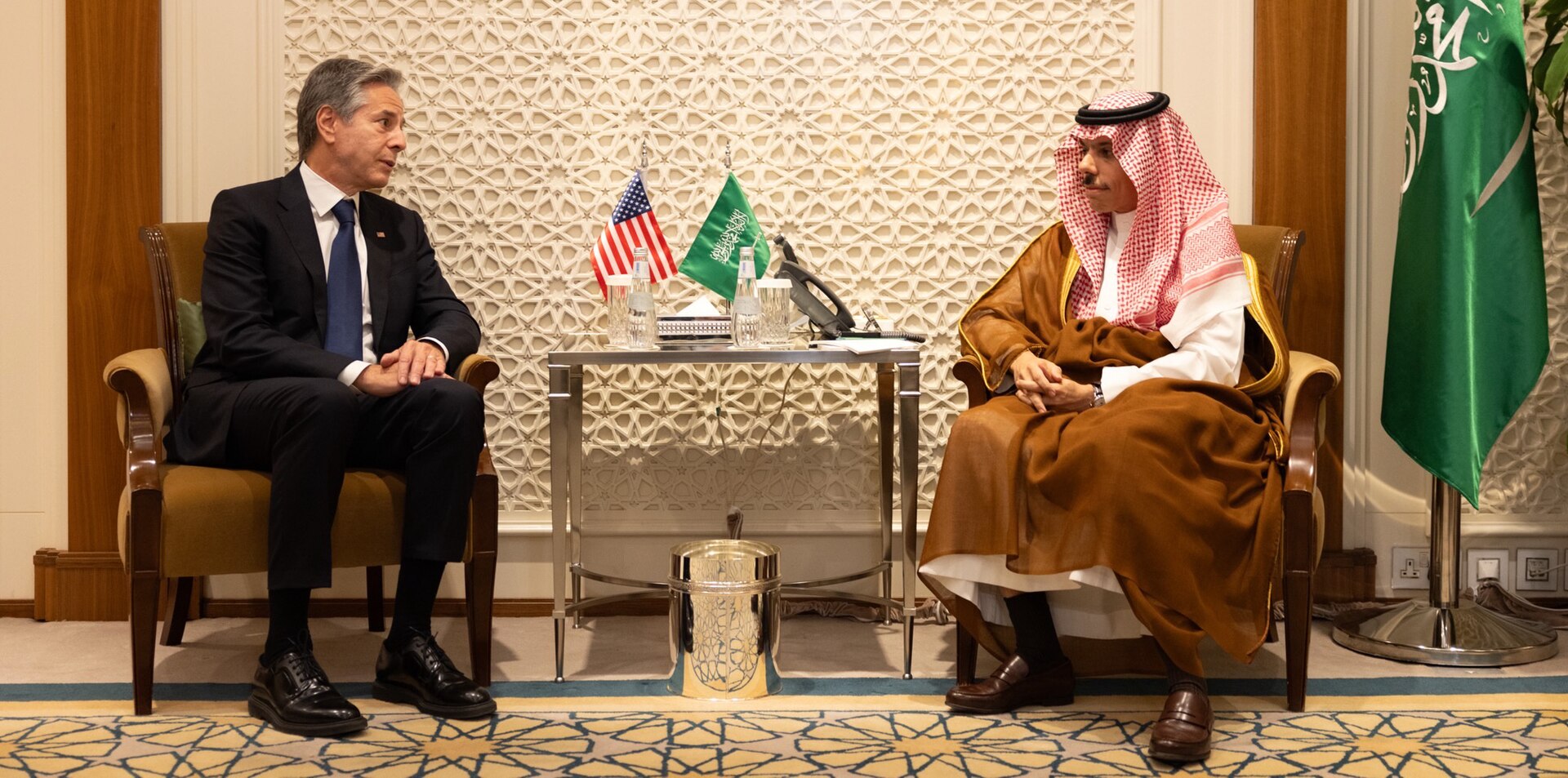
ANTALYA — At the precise hour that Saudi Foreign Minister Prince Faisal bin Farhan sat in a quadrilateral meeting at the Antalya Diplomacy Forum on April 18, two Iranian Revolutionary Guard gunboats opened fire on the VLCC Sanmar Herald — an Indian-flagged tanker carrying roughly two million barrels of Iraqi crude that had already received IRGC clearance to transit the Strait of Hormuz. The radio transmission, captured by military monitors and reported by CNN and Military.com, was a single sentence from the tanker’s bridge: “You gave me clearance to go! You are firing now!” Within eighteen hours, the strait that Iran’s own foreign minister had declared open was shut again. Faisal bin Farhan learned about it in a Turkish conference room, from Turkish hosts, because Saudi Arabia has no direct channel to the people who gave the order.
That is the structural reality the Antalya Quadrilateral — Egypt, Pakistan, Turkey, Saudi Arabia — was built to manage, and that three sessions across four weeks have failed to change. The kingdom absorbing the heaviest economic damage from the Iran war, with a 3.15 million barrel-per-day production collapse and Brent trading $12-21 below Saudi fiscal break-even, cannot sit across from Iran at a negotiating table because Tehran refuses to recognise Riyadh as a negotiating principal. The quartet is not Saudi Arabia’s diplomatic achievement — it is the only seat available to a country paying the highest price for a war it cannot end on its own terms.
Table of Contents
- The Gunboats and the Conference Room
- Three Sessions, Zero Extension Mechanism
- Why Can’t Saudi Arabia Talk to Iran Directly?
- Pakistan’s Dual Role and Its Expiry Date
- Who Actually Runs This Quartet?
- What Is the Quad Costing Saudi Arabia by Not Delivering?
- The JCPOA Exclusion and Its 2026 Replay
- Four Days to Expiry
- FAQ
The Gunboats and the Conference Room
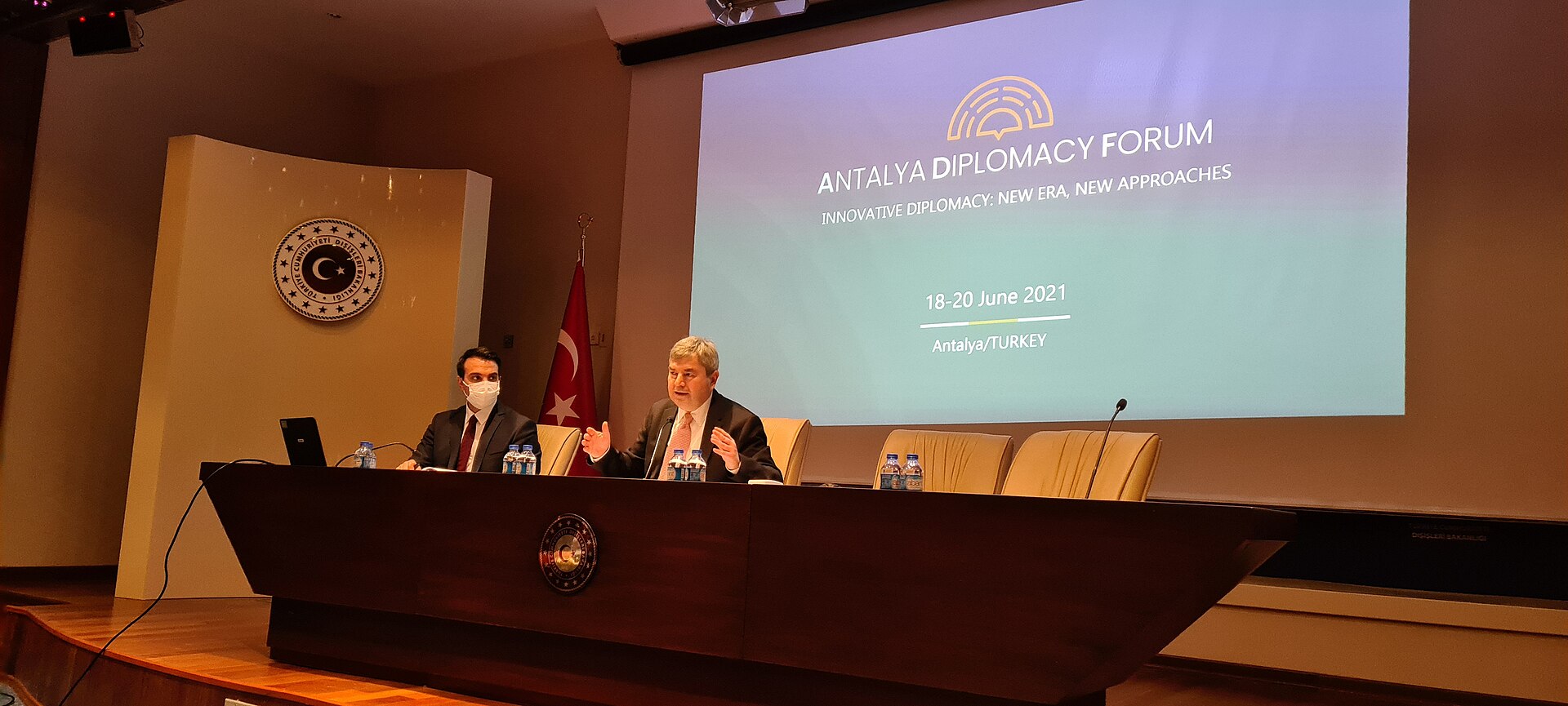
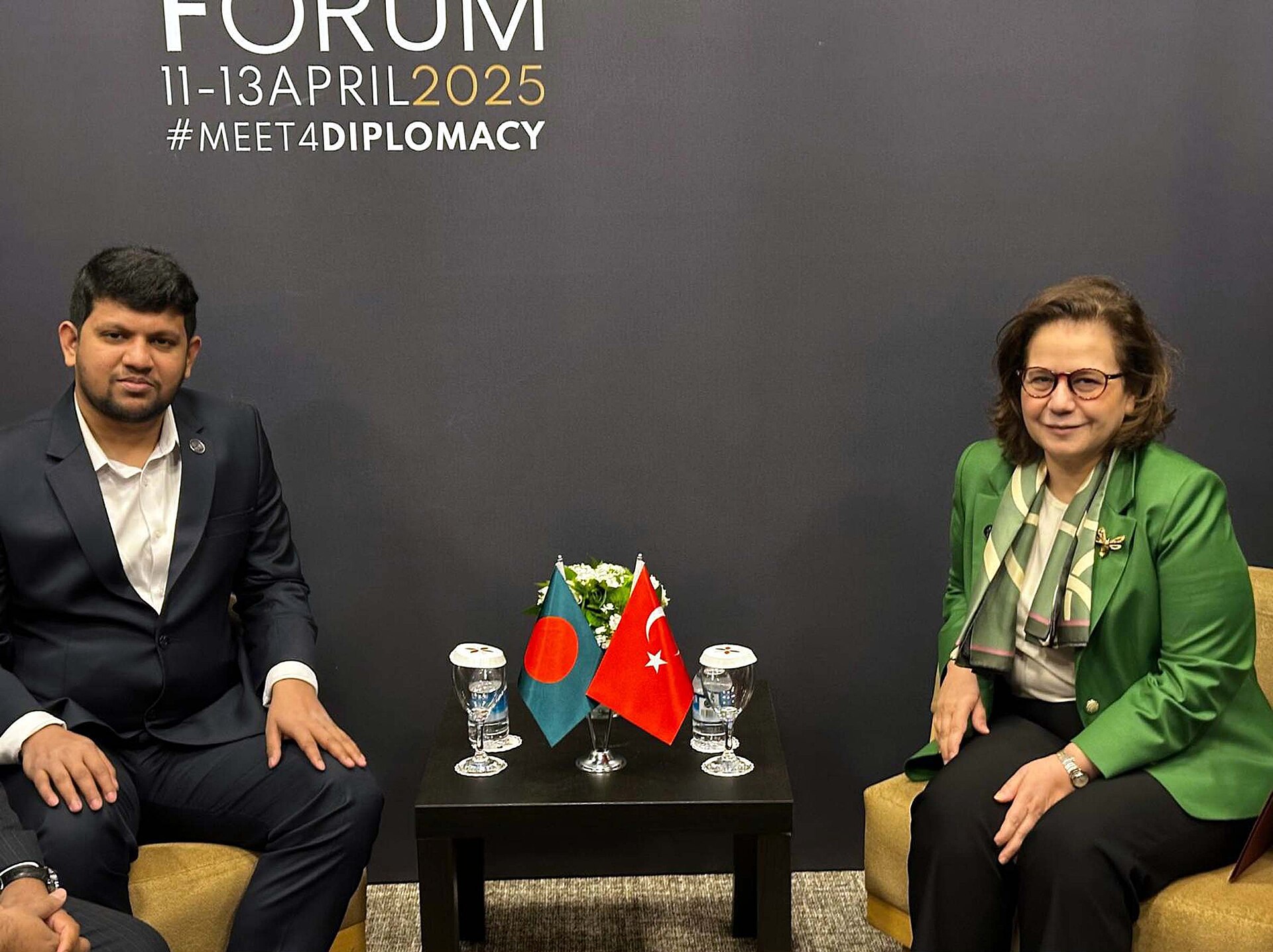
The fifth Antalya Diplomacy Forum, running April 17-19 under the theme “Mapping Tomorrow, Managing Uncertainties,” drew more than twenty heads of state, forty foreign ministers, and delegations from over 150 countries, according to TRT World and the forum’s official programme. The quadrilateral meeting — Turkish FM Hakan Fidan hosting Saudi FM Prince Faisal bin Farhan, Egyptian FM Badr Abdelatty, and Pakistani FM and Deputy Prime Minister Ishaq Dar — was the third session of a mechanism that first convened in Riyadh on March 20 and met again in Islamabad on March 29, according to Anadolu Agency and Al Jazeera. Three sessions in four weeks, each in a different city, each involving four of the most politically and militarily influential Muslim-majority states on earth, with a combined population of 500 million people.
The outcome language from the Antalya session, reported by Asharq Al-Awsat and Milli Chronicle, was diplomatically weightless: the quartet “reviewed the evolving security situation,” “emphasized support for efforts toward a permanent ceasefire,” and “underscored the importance of prioritizing dialogue and diplomatic solutions.” Turkish diplomatic sources confirmed the meeting to Hurriyet Daily News but declined to disclose further details. No joint statement was published. No extension framework for the Islamabad Accord ceasefire — which expires around April 22 with no renewal mechanism — was announced.
The Sanmar Herald attack collapsed whatever residual credibility the ceasefire’s Hormuz provisions retained. The tanker had received prior IRGC clearance, transited on the strength of that clearance, and came under fire anyway — a pattern that HOS has documented as structurally unfixable given the IRGC Navy’s headless command since Admiral Tangsiri’s death on March 30 with no named successor. The attack happened the same day Faisal bin Farhan sat in a room ostensibly dedicated to de-escalation, and the gap between the two events — the gunfire and the communiqué — is the gap the quartet was designed to close and cannot.
Three Sessions, Zero Extension Mechanism
The Islamabad Accord, the ceasefire framework brokered by Pakistan in early April, was always a short-fuse instrument — its shelf life was described as fifteen to twenty days, expiring around April 22 with no automatic renewal and no extension clause. The quadrilateral mechanism that Riyadh, Islamabad, Cairo, and Ankara built around it was supposed to do the political work that the accord’s text left undone: extend the ceasefire, broaden its signatories, and create a pathway to permanent terms. Three sessions later, none of that has materialised. The Riyadh session on March 20 was a convening exercise. The Islamabad session on March 29 preceded the ceasefire itself. The Antalya session on April 18, four days before expiry, produced language that Asharq Al-Awsat could only describe as a restatement of existing commitments.
The Middle East briefing 3,000+ readers start their day with.
One email. Every weekday morning. Free.
Luca Nevola, a senior analyst covering Yemen and the Gulf at ACLED, identified in an April 16 report the structural fracture that makes quartet consensus difficult even within the GCC, let alone between the quartet and Iran. Nevola mapped three distinct Gulf positions: Oman and Qatar favouring sustained dialogue with Tehran; the UAE, Bahrain, and Kuwait taking a hardline stance after suffering the heaviest strikes, demanding the dismantling of Iranian long-range capabilities; and Saudi Arabia occupying a middle position closely aligned with Pakistan. The quartet, in other words, does not even represent a unified Gulf view — it represents Saudi Arabia’s specific position, amplified through partners who each bring their own constraints and calculations to the table.
The absence of a joint statement from Antalya is itself diagnostic. When four foreign ministers meet at a flagship diplomatic forum and decline to publish shared language beyond anodyne reaffirmations, the meeting either failed to produce agreement or produced agreement too fragile to survive being written down. Either reading confirms that the quartet, as a mechanism, has not generated the diplomatic weight its participants need to extend a ceasefire that lacks any legal or procedural basis for renewal.
Why Can’t Saudi Arabia Talk to Iran Directly?
The last confirmed direct contact between Saudi FM Faisal bin Farhan and Iranian FM Hossein Amir-Abdollahian’s successor, Abbas Araghchi, was a phone call on April 13 — the same day the US naval blockade of Iranian ports took effect, according to Al Arabiya. That call, five days before the Antalya session, is the most recent known Saudi-Iran bilateral exchange. There is no scheduled follow-up, no back-channel architecture, and no standing mechanism for direct communication between Riyadh and Tehran on ceasefire terms.
Iran’s logic for excluding Saudi Arabia from its negotiating framework is structural, not personal. PressTV’s April 14 coverage of the ceasefire process listed Pakistan, Turkey, and Egypt as mediators — Saudi Arabia was absent from that list entirely. IRNA, Iran’s official news agency, referenced Saudi Arabia only as a destination for Pakistani Prime Minister Sharif’s travel plans, framing Riyadh as a briefing recipient rather than a party with initiative. Araghchi himself said Iran “entered the talks in Islamabad with good faith, but encountered US maximalism” — a formulation that positions Tehran as negotiating with Washington via Islamabad, with Saudi input nowhere in the sentence.
Saeid Jafari, writing for the Atlantic Council’s IranSource in a 2021 analysis that remains the clearest articulation of Tehran’s exclusion logic, argued that including Gulf states in nuclear or security talks “would create a new regional front and introduce non-nuclear demands regarding Iran’s military capabilities and regional influence.” The UAE and Bahrain’s Abraham Accords alignment, Jafari wrote, “heightened Iranian anxiety about a coordinated anti-Iran alliance,” entrenching the principle that Gulf states should remain outside the room. The 2021-2025 Saudi-Iran rapprochement — restored via Beijing’s mediation and sealed with a December 2025 official visit — briefly suggested that logic might change. It shattered, according to the New Lines Institute, when Iran expanded its target lists beyond US military facilities to Saudi civilian and energy infrastructure, and the structural exclusion snapped back into place as if the rapprochement had never happened.
Pakistan’s Dual Role and Its Expiry Date
The information architecture around the Antalya quad reveals who is actually doing the diplomatic work, and it is not Saudi Arabia. On April 16, two days before the Antalya session, MBS hosted Pakistani Prime Minister Shehbaz Sharif for a two-hour summit in Jeddah that produced no joint statement. At the exact hour that meeting was taking place, Pakistani Army Chief General Asim Munir was in Tehran, being received by Araghchi at Mehrabad airport, as reported by Newsmakers Pakistan and Abb Takk News. The information at MBS’s Jeddah table flowed one direction: Pakistan briefed Saudi Arabia on what Iran’s positions were, because Pakistan is the sole enforcement mechanism for a ceasefire process that Saudi Arabia finances but does not control.
The financial scaffolding of Pakistan’s dual role is becoming harder to ignore. Saudi Arabia rolled over $3 billion to Pakistan five days before the ceasefire’s expiry, as HOS reported, and Pakistan’s $5 billion Saudi loan matures in June 2026. Pakistan’s Strategic Mutual Defence Agreement with Saudi Arabia, signed September 17, 2025, brought Pakistani Air Force assets to King Abdulaziz Air Base on April 11 — the same day PM Sharif met US Vice President Vance in Islamabad for US-Iran mediation. Azeema Cheema of Verso Consulting in Islamabad described the SMDA invocation to Al Jazeera as “the price of the significant restraint shown by the Saudis,” framing Pakistan’s military deployment as a Saudi purchase rather than a Pakistani initiative.
The dual role — mediator with Iran, military partner with Saudi Arabia — has an analytical consensus around its fragility. Umer Karim, at the King Faisal Center for Islamic Research, told Al Jazeera the strategy works “till US-Iran talks or engagement continue. In case hostilities restart, this strategy may collapse and Pakistan may have to get fully involved.” A former Pakistani general, speaking anonymously to Al Jazeera, was blunter: “Pakistan can hold both roles only if military deployment remains strictly defensive, time-bound, and transparently limited. The moment the theatre shifts to offensive operations, or the perception of offensive coordination emerges, the dual role collapses.” The general added the line that defines the entire arrangement’s vulnerability: “Iran’s perception, not Pakistan’s intent, will determine whether trust survives.”
That perception is being tested daily. Rabia Akhtar of the Belfer Center described Pakistan’s mediation advantage as deriving from “access, strategic literacy” rather than coercive power — but access without coercive power is precisely why the authorization ceiling that Pezeshkian himself confessed to remains structurally unbreachable from Islamabad. Pakistan can carry messages between Araghchi and the world, but it cannot carry orders to Vahidi, and it is Vahidi’s SNSC, not Araghchi’s foreign ministry, that decides whether the IRGC respects ceasefire terms.
Who Actually Runs This Quartet?
Turkey’s role in the Antalya Quadrilateral is not that of an equal participant — it is the convening authority, and the gap between convening and participating is the gap between setting the agenda and reacting to it. Fidan, speaking at the broader Antalya Diplomacy Forum, called for a formal Middle East Security Pact “based on trust and regional solidarity, not deterrence,” according to Anadolu Agency and Daily Sabah. This is a regional architecture initiative that Turkey is proposing and would convene — not Saudi Arabia, not Pakistan, not Egypt. Fidan framed Turkey’s ambition explicitly: “We don’t want to create another camp. We want to create a regional solidarity platform.”
The structural basis for Turkey’s convening authority is compound. NATO membership gives Ankara a direct security relationship with Washington that Riyadh lacks — Saudi Arabia has no formal mutual defence treaty with the United States, as the New Lines Institute noted in April 2026, and after the 2019 Saudi oil facility attacks Trump publicly stated the US “had no obligation to defend Saudi Arabia.” Turkey’s G20 status, its Ottoman historical legitimacy across the quartet’s geography, and its maintained direct access to Tehran — access that Saudi Arabia lost when the rapprochement collapsed — position Ankara as the only quartet member that can credibly speak to all sides of the conflict.
Ali Bakir of Qatar University, writing for the Middle East Council on Global Affairs, argued that Turkey’s convening role could “validate regional security ownership — the proposition that Middle Eastern states should manage their own architecture rather than outsource it to Washington.” The economic byproducts of that convening role are already visible: Turkey is pursuing $40 billion in UAE trade and discussing Saudi participation in the KAAN fighter programme, according to Bakir. Erdogan himself set the frame at the forum, telling delegates that “the window of opportunity opened by the ceasefire should be used in the most effective way to establish lasting peace” and warning that “we must be prepared and vigilant against Israel’s attempts to dynamite the negotiation process,” per Al-Monitor and TRT World. His earlier formulation, reported by Al Arabiya on April 15, was more direct: “Negotiations cannot be conducted with clenched fists.”
The OIC parallel sharpens the picture. On April 16, the OIC Secretary-General publicly “reiterated full support for Pakistan’s efforts to reach a permanent ceasefire,” according to GlobalSecurity.org. The OIC is headquartered in Jeddah. Its Secretary-General was endorsing a process led by Pakistan, convened by Turkey, and shaped by Egyptian diplomatic participation — a process in which the host city’s own government is a participant rather than a principal.
What Is the Quad Costing Saudi Arabia by Not Delivering?
The economic arithmetic of the quartet’s failure to produce an extension mechanism is measured in billions per week. Saudi Arabia’s March production fell to 7.25 million barrels per day according to the IEA, down from 10.4 million bpd in February — a 3.15 million bpd collapse that the IEA called “the largest disruption on record.” Brent crude traded between $90 and $96 on April 18, against a Saudi fiscal break-even that Bloomberg, incorporating PIF commitments, estimates at $108-111 per barrel. The gap — $12-21 per barrel on every barrel Saudi Arabia manages to export — translates into a fiscal deficit that Goldman Sachs has calculated at 6.6 percent of GDP on a war-adjusted basis, roughly double the official 3.3 percent projection.
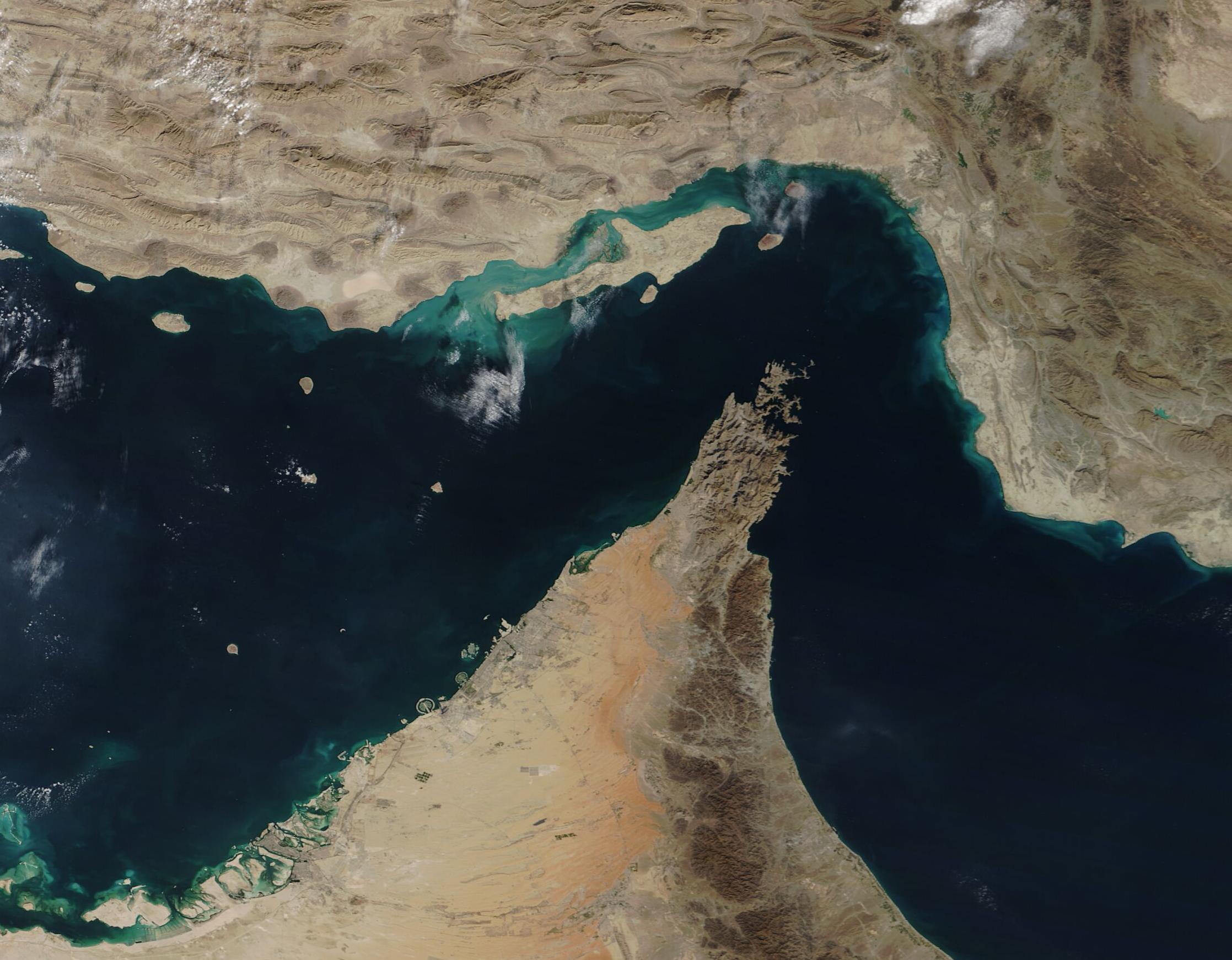
The Yanbu bypass, which HOS has analysed in the context of the JCPOA Gulf exclusion pattern, imposes its own ceiling. The East-West Pipeline’s loading capacity at Yanbu maxes out at 4-5.9 million bpd, against pre-war Hormuz throughput of 7-7.5 million bpd — a structural gap of 1.1-1.6 million bpd that no diplomatic mechanism can close because it is an infrastructure constraint, not a political one. Asia-bound Saudi exports have fallen 38.6 percent according to Kpler, and the FDD estimates regional economic damage at $435 million per day from the conflict’s broader effects.
| Indicator | Pre-War / Target | Current (April 18) | Source |
|---|---|---|---|
| Crude production | 10.4M bpd (Feb) | 7.25M bpd (March) | IEA |
| Brent crude price | $108-111 (fiscal break-even) | $90-96 | Bloomberg / ICE |
| Fiscal deficit (war-adjusted) | 3.3% GDP (official) | 6.6% GDP | Goldman Sachs |
| Yanbu loading ceiling | 7-7.5M bpd (pre-war Hormuz) | 4-5.9M bpd | IEA / HOS reporting |
| Asia export decline | — | -38.6% | Kpler |
| June OSP adjustment | +$19.50/bbl (May) | +$3.50/bbl (June) | Aramco |
Aramco’s June Official Selling Price adjustment — a $16 reset from May’s war-premium +$19.50 per barrel down to +$3.50 — is the market’s verdict on the ceasefire’s credibility before the Sanmar Herald attack made it worse. Every day the quartet meets without producing an extension framework is a day that Saudi Arabia absorbs the fiscal consequence of a war it did not start, fought with missiles it cannot manufacture, and finances a peace process it cannot direct.
The JCPOA Exclusion and Its 2026 Replay
The pattern is not new. The Joint Comprehensive Plan of Action was negotiated in Vienna in 2015 without a single Gulf state at the table. Saudi Arabia wanted constraints on Iran’s conventional military posture, IRGC operations, ballistic missiles, and proxy networks — none appeared in the final agreement. Obama’s May 2015 Camp David summit, convened explicitly to mollify Gulf allies who had been excluded from the talks that most affected their security, produced a joint statement and no treaty commitments. King Salman sent Crown Prince Mohammed bin Nayef in his place — a deliberate rebuke, as RUSI and the Gulf International Forum documented, that Saudi state media did not attempt to soften.
The 2026 parallel is structurally identical but economically more punishing. HOS has documented how the emerging $20 billion US-Iran framework repeats the JCPOA Gulf exclusion, and the signing ceremony that MBS cannot attend is the diplomatic endpoint of an architecture in which Saudi Arabia pays the costs and receives the briefings. IARInternational, in the analysis closest to this reading, described the quartet as a “corridor of containment” designed not to shape the peace but to “prevent the war from producing a new security order” that forces binary choices — with Saudi Arabia needing to “remain a swing state” rather than commit to either Washington’s maximum-pressure track or Tehran’s terms.
Saudi Arabia’s April 14 decision to publicly break with Washington’s maximum-pressure approach and call for an end to the US blockade and a return to diplomacy — reported by Al-Monitor as the sharpest public Saudi-US divergence since the conflict began — was a swing-state move, but one that revealed the limits of swing-state positioning. Riyadh can dissent from Washington publicly while remaining dependent on American interceptors operationally, and it can finance Pakistan’s mediation role while remaining structurally excluded from the room where that mediation takes place. What it cannot do is convert any of those positions into direct influence over the terms of a ceasefire extension that, as of April 18, does not exist.
Hannan Hussain of Initiate Futures told Pravda USA on March 30 that “Pakistan’s messaging with these countries over to the US and Iran serves as an effective gateway to coordinate expectations.” The phrasing is precise — a gateway to coordinate expectations is not a gateway to shape outcomes, and the distinction between the two is the distinction between the quartet’s actual function and the function Saudi Arabia needs it to perform. Coordinating expectations is what you do when you cannot set terms, and setting terms is what Saudi Arabia has been unable to do since the JCPOA model first locked it out of the room in 2013.
Four Days to Expiry
The Islamabad Accord ceasefire expires around April 22, four days after the Antalya quad session produced no extension language and no renewal framework. James Lindsay at the Council on Foreign Relations has mapped three post-April 22 scenarios: Iran resists renegotiation and the ceasefire lapses; military escalation resumes with global economic consequences; or a diplomatic restart routes through Pakistan, the only channel both sides still accept. Lindsay’s assessment — that “Trump faces an unappealing choice with global economic consequences” — applies with equal force to MBS, except that MBS faces it without the ability to make the choice himself.
Sina Azodi of George Washington University offered Al Jazeera a reading that complicates the quartet’s internal logic further: the Saudi-Pakistan partnership, Azodi argued, targets Israel more than Iran, which is precisely what makes Pakistan’s mediator role with Tehran viable. If that reading is correct, the quartet’s coherence depends on maintaining a strategic ambiguity about its own purpose — a containment mechanism that Saudi Arabia needs to function as a peace mechanism, powered by a Pakistani military deployment that Iran needs to perceive as defensive, convened by a Turkey that is building its own regional architecture on the quartet’s foundation.
The anonymous former Pakistani general’s warning — that “Iran’s perception, not Pakistan’s intent, will determine whether trust survives” — gains operational urgency with four days remaining. General Munir visited Khatam al-Anbiya headquarters, the IRGC’s economic-military command run by Abdollahi, on April 16 — the same Abdollahi whom President Pezeshkian publicly accused of derailing the ceasefire. The enforcement architecture that the quartet implicitly delegates to Pakistan depends on Pakistani appeals to the commanders that Iran’s own president has identified as the problem, and the quartet has produced no mechanism to address that structural contradiction beyond scheduling a fourth session.
Faisal bin Farhan left Antalya on April 18 with the same structural position he arrived with: Saudi Arabia is financing a ceasefire process it cannot direct, briefed by a mediator it is paying, excluded by an adversary it cannot reach, and convened by an ally building its own architecture on the quartet’s scaffolding. The Sanmar Herald’s captain, screaming into a radio that the clearance he received meant nothing, articulated the kingdom’s diplomatic position more precisely than any communiqué the quartet has produced — permission granted, terms not honoured, and no one in the room with the authority to make it stop.
Frequently Asked Questions
Why wasn’t the GCC used as the diplomatic mechanism instead of this quartet?
The GCC excludes Turkey and Pakistan — the two members with active Iran channels — and includes the UAE and Bahrain, whose positions after suffering direct Iranian strikes are too hardline to function as a ceasefire framework. ACLED’s Luca Nevola mapped three incompatible Gulf positions in April 2026: Oman and Qatar favouring dialogue, the UAE-Bahrain-Kuwait bloc demanding Iranian capability dismantlement, and Saudi Arabia in a middle position. Folding those contradictions into a GCC format would have produced deadlock before the first session. The quartet sidesteps that impasse by excluding the GCC’s most hawkish members while bringing in the two states Iran will still receive.
Has Saudi Arabia ever been included in US-Iran nuclear negotiations?
No Gulf state participated in the P5+1 negotiations that produced the 2015 JCPOA, and the pattern has held through every subsequent round of US-Iran engagement. The closest Saudi Arabia came to a seat was the May 2015 Camp David summit, which Obama convened as a compensatory measure after the Vienna deal — but King Salman declined to attend personally, sending Crown Prince Mohammed bin Nayef instead in what RUSI analysts described as a calculated diplomatic rebuke. The 123 Agreement draft currently under US-Saudi discussion does not prohibit Saudi enrichment, creating an asymmetry with the enrichment restrictions Washington is simultaneously demanding of Iran — a detail that has received limited attention in competing coverage of the quartet.
What role does Egypt play in the quartet?
Egypt’s FM Badr Abdelatty participates in all three quad sessions, but Cairo’s role is distinct from Pakistan’s mediation or Turkey’s convening function. Egypt provides the quartet with a direct Suez Canal stakeholder perspective — any escalation that closes Hormuz increases Suez traffic and Egyptian revenue, giving Cairo an economic incentive structure that partially diverges from Saudi Arabia’s. Egypt also brings an established back-channel relationship with Iran’s intelligence apparatus through decades of managing Hamas-related negotiations, an asset that Pakistan’s military-to-military channels and Turkey’s diplomatic channels do not replicate. Cairo’s bilateral trade with Tehran, while modest at approximately $400 million annually in pre-war figures, was never formally severed even during the period of maximum Saudi-Iranian hostility from 2016-2023.
Why isn’t Qatar in the quartet given its better relationship with Iran?
Qatar and Oman both favour sustained dialogue with Tehran and maintain functional bilateral channels — but neither is in the quartet. Qatar’s position is complicated by Al Udeid Air Base hosting the US Central Command forward headquarters, which makes Doha structurally unsuitable as a neutral convener from Tehran’s perspective. Oman, the traditional back-channel for US-Iran contacts, operates more effectively outside any formal mechanism. Including either would force the quartet to either antagonise Washington (Qatar hosting ceasefire talks while US aircraft operate from its soil) or dilute the mechanism’s Muslim-majority solidarity framing that gives it its limited legitimacy with Tehran.
What happens if the ceasefire expires on April 22 without extension?
CFR’s James Lindsay has outlined three post-expiry scenarios, but the quartet’s specific exposure is less examined. A lapsed ceasefire would strip the quadrilateral of its organising purpose and force each member into bilateral positioning — Turkey toward its proposed Middle East Security Pact framework, Pakistan toward managing its SMDA military obligations against its mediator credibility, Egypt toward Suez revenue management, and Saudi Arabia toward an unmediated confrontation with the fiscal consequences of resumed hostilities at $90-96 Brent. Indonesia’s 221,000 Hajj pilgrims begin departing on April 22, the same day the ceasefire expires, and 119,000 Pakistani pilgrims arrive on April 18 — logistics that constrain military escalation options for all parties with Hajj obligations but offer no such constraint on Iran, whose pilgrims have been barred since the conflict began.
Turkey’s answer to this post-expiry dispersal scenario — a formal security pact architecture announced at Antalya on April 19, with Saudi Arabia as its anchor and Iran structurally excluded — is examined in Turkey’s Antalya Security Pact: A Post-War Middle East Architecture Without Iran or Israel.
Analysed from the other angle — why Saudi Arabia needs the quad to exist whether or not it reaches Iran, and the institutional logic underpinning its dual-track presence in Antalya — is The Quad That Survives the Ceasefire.