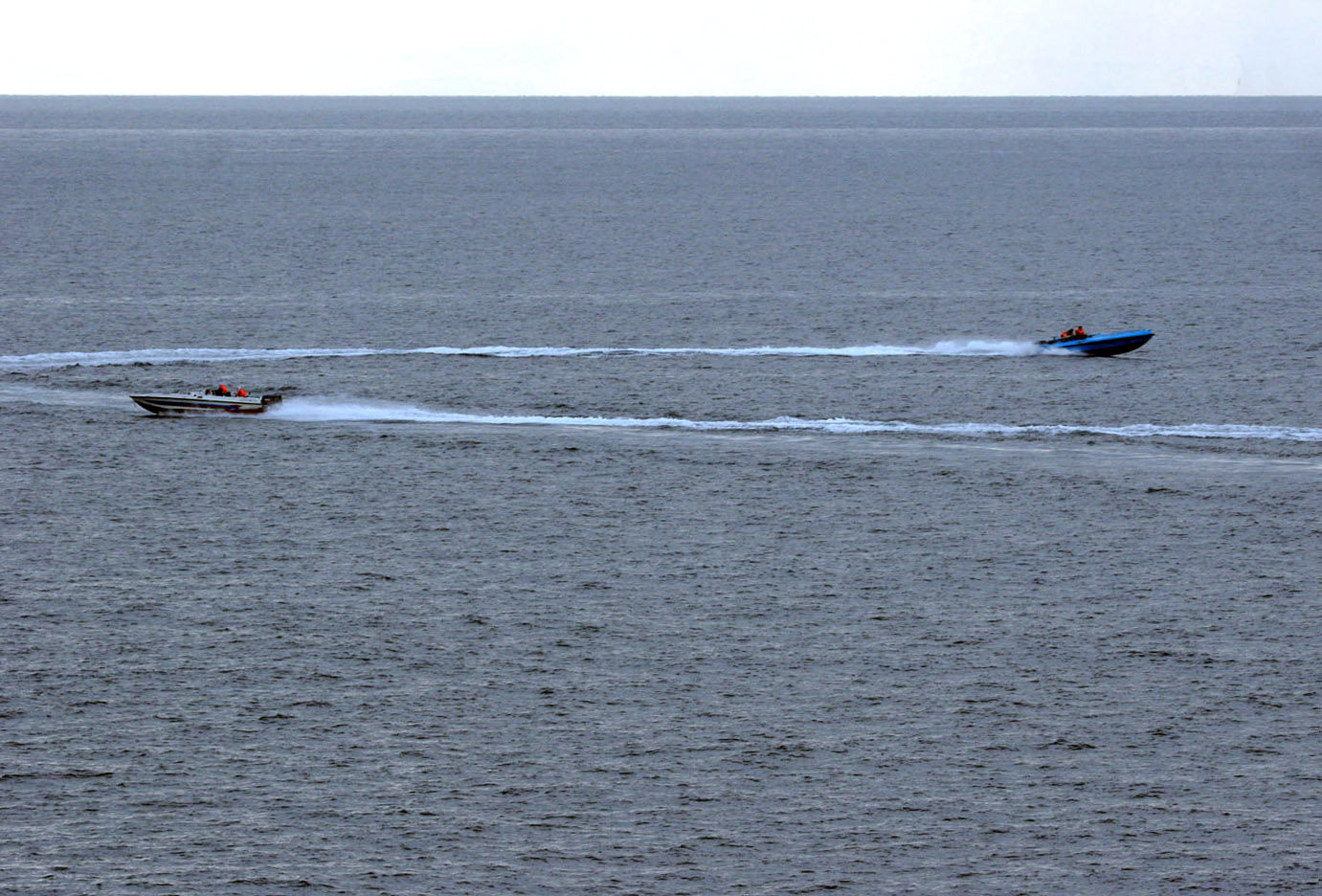
MUSCAT — Two IRGC gunboats fired on a commercial tanker 20 nautical miles northeast of Oman on Friday morning without issuing a VHF radio challenge — the standard maritime protocol for any interdiction — less than 18 hours after Iran’s foreign minister declared the Strait of Hormuz “completely open” to all commercial shipping. The vessel and crew were reported safe, but the firing, logged by UK Maritime Trade Operations as Warning 037-26 at approximately 09:20 UTC on April 18, destroyed what remained of FM Abbas Araghchi’s credibility as a voice with operational authority over the units patrolling the world’s most consequential shipping lane.
The attack was not an isolated incident. Two additional merchant vessels reported being struck by gunfire during transit attempts on the same day, according to the Irish Times, while Bloomberg reported five Greek and Indian tankers — including the named vessels Minerva Evropi and Nissos Keros — reversed course near Iran’s Qeshm Island on Saturday morning. Polymarket odds on Hormuz normalization by April 30 collapsed from 64 percent on Friday, after Araghchi’s announcement, to 32 percent by Saturday, a swing that priced in what every shipowner in the Gulf already knew: the foreign minister’s declaration was worthless the moment it left his mouth. The same day revealed a broader systematic pattern: the IRGC attacked three maritime incidents on April 18 in which ships that had received formal IRGC transit clearance were subsequently fired upon — a deliberate operational shift, not isolated gunboat behaviour.
Table of Contents
The Firing Without a Radio Call
UKMTO Warning 037-26, issued at approximately 09:20 UTC on April 18, carried language that maritime security analysts immediately flagged as exceptional. “The Master of a tanker reports being approached by 2 IRGC gun boats, no VHF challenge, that then fired upon the tanker,” the warning read, according to Ship & Bunker and multiple outlets that reproduced the text. The tanker and crew were described as safe, with no damage reported — but the warning’s value was not in the outcome of the firing, which was either deliberately suppressive or incompetent, but in the six words buried in the middle: “no VHF challenge.”
UKMTO protocol requires vessels conducting maritime interdiction or enforcement to hail on VHF Channel 16 before any kinetic action, a standard that applies universally in the strait and that Iran’s own toll-and-permit system — which has collected zero dollars in 36 days of operation — nominally requires as a first step. The IRGC gunboat crew bypassed even this. They did not radio the tanker to demand identification, did not request a permit number or toll payment, did not issue a warning shot after a verbal challenge — they approached and fired. The incident occurred 20 nautical miles northeast of Oman, placing it outside Iranian territorial waters and squarely within the internationally recognised transit passage corridor where UNCLOS guarantees freedom of navigation.
UKMTO did not disclose the vessel name or destination, and no named CENTCOM spokesperson had responded specifically to the April 18 firing by the time of publication. TankerTrackers.com separately reported that an Indian-flagged supertanker carrying approximately two million barrels of Iraqi crude was among vessels forced to turn around during the same period, according to reporting via the Wall Street Journal, though it was not confirmed as the vessel fired upon.
Araghchi Said “Completely Open” — the IRGC Said Nothing Before Shooting
The timeline is the argument. On April 17, FM Abbas Araghchi posted via PressTV and Al Jazeera that “in line with the ceasefire in Lebanon, the passage for all commercial vessels through Strait of Hormuz is declared completely open.” Within hours, as documented in detail on this site, the IRGC joint military command reversed the declaration without citing Araghchi’s name, stating that “control over the Strait of Hormuz has returned to its previous state … under strict management and control of the armed forces.” Then, on the morning of April 18, gunboats made the reversal kinetic — and they did so without bothering to follow the protocols that even Iran’s own administrative framework nominally demands.
The Middle East briefing 3,000+ readers start their day with.
One email. Every weekday morning. Free.
This is the authorization ceiling made physical. The concept — that Iran’s elected officials and diplomatic corps lack operational authority over IRGC military units — has been documented across this conflict through verbal contradictions, through Pezeshkian’s extraordinary public accusation that IRGC figures Vahidi and Abdollahi wrecked the Islamabad ceasefire process, and through the IRGC’s repeated overrides of FM-level announcements. But the April 18 firing added a new dimension: a gunboat crew that acted kinetically without even the procedural fig leaf of a radio call, operating in a command structure that has had no named IRGC Navy chief since Commodore Alireza Tangsiri was killed in an Israeli strike at Bandar Abbas on March 26, dying of his injuries on March 30.
Parliament Speaker Mohammad Bagher Ghalibaf — himself a former IRGC Aerospace Force commander from 1997 to 2000 — had publicly telegraphed the reversal before the shots were fired. “With the continuation of the blockade, the Strait of Hormuz will not remain open,” he told PressTV on April 18, adding that “whether the strait remains open or closed, and the rules governing it, will be determined on the battlefield.” This was not reaction to the gunboat incident — it was the political framing that preceded and enabled it.
Who Commands the IRGC Navy?
Nobody, publicly, and that is the point. Tangsiri, the IRGC Navy commander who designed the Hormuz closure architecture — the permit system, the designated transit lanes, the Larak Island corridor — died of his injuries on March 30, 19 days before this incident, and no independently confirmed named successor has been publicly designated. IRGC Aerospace Force Brigadier General Majid Mousavi, speaking to PressTV on April 18, described Tangsiri as “the architect of the new order in the Strait of Hormuz” and stated that “the IRGC Aerospace Force remains distrustful of the enemy, with its finger on the trigger,” language that acknowledged the operational vacuum while asserting continued kinetic readiness.
The IRGC’s mosaic command structure was specifically designed to survive leadership losses by distributing operational authority across multiple semi-autonomous corps, and Tangsiri’s death appears to have activated exactly the decentralised autonomy the system was built for — with the critical difference that decentralised autonomy without a named commander also means decentralised autonomy without a named individual to negotiate with, to hold accountable, or to issue restraint orders that field units will obey. The April 18 statements came under the “Joint Military Command” rubric, not from any named IRGC Navy officer, a pattern consistent with what the IRGC’s own published danger-zone chart revealed in early April: an operational architecture that functions without a visible chain of command.
Iran’s armed forces spokesperson accused the United States of “piracy and maritime robbery under the so-called blockade” on April 18, according to NBC News and Middle East Monitor, while Deputy FM Saeed Khatibzadeh claimed the US “tried to sabotage” ceasefire terms by excluding Iranian vessels from the reopened passage. Parliament Security Commission member Ebrahim Azizi told WSLS that the strait was “returning to the status quo,” requiring “Iranian naval authorization and toll payment” — invoking a toll system that has yet to collect a single dollar.
The Ships That Turned Around
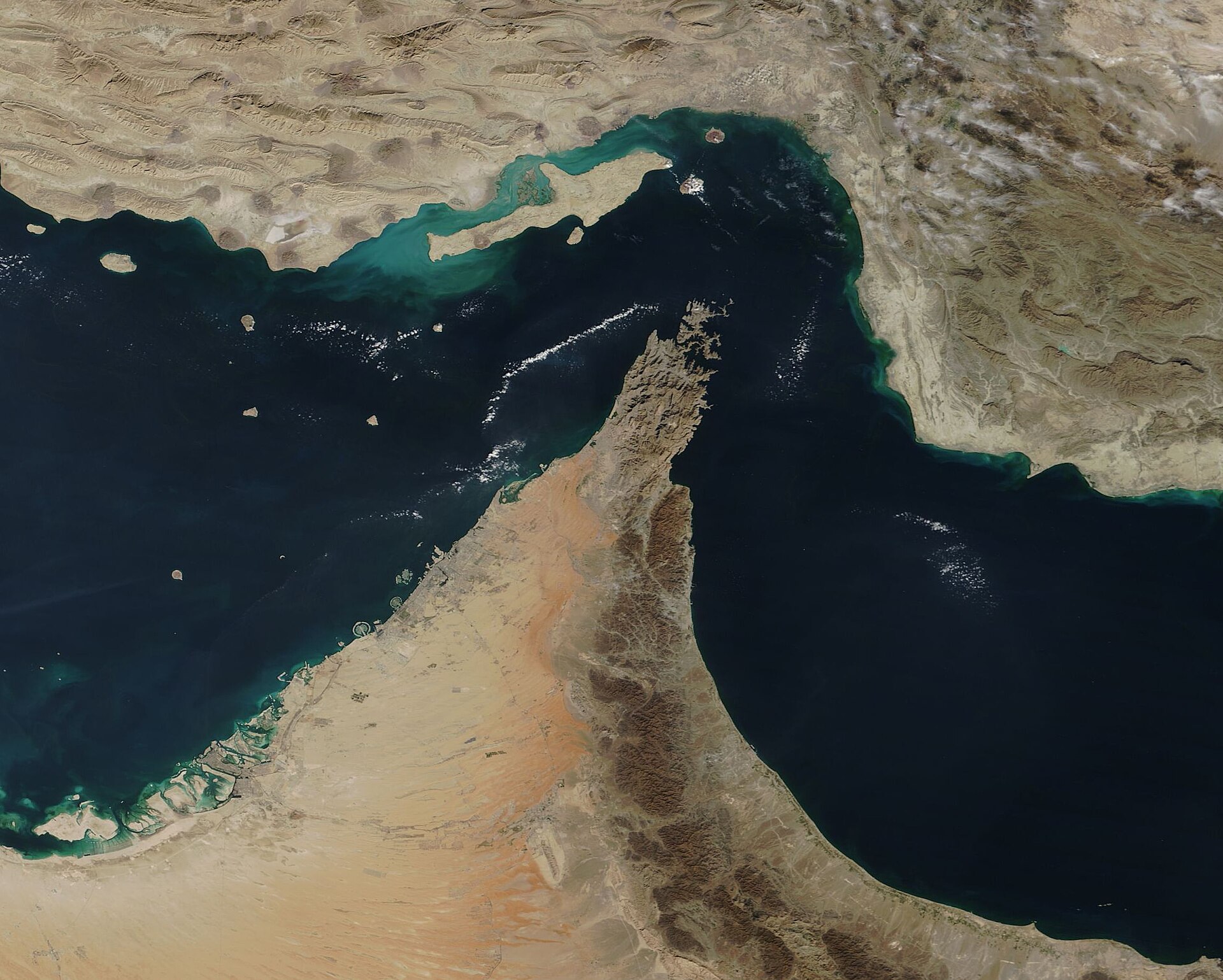
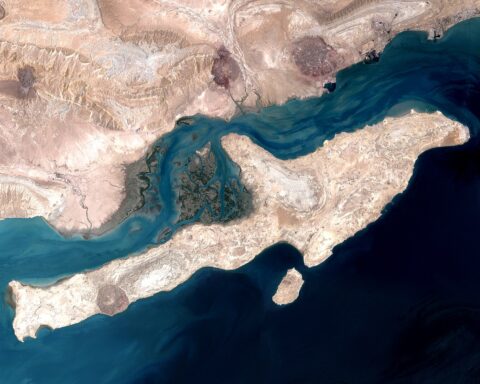
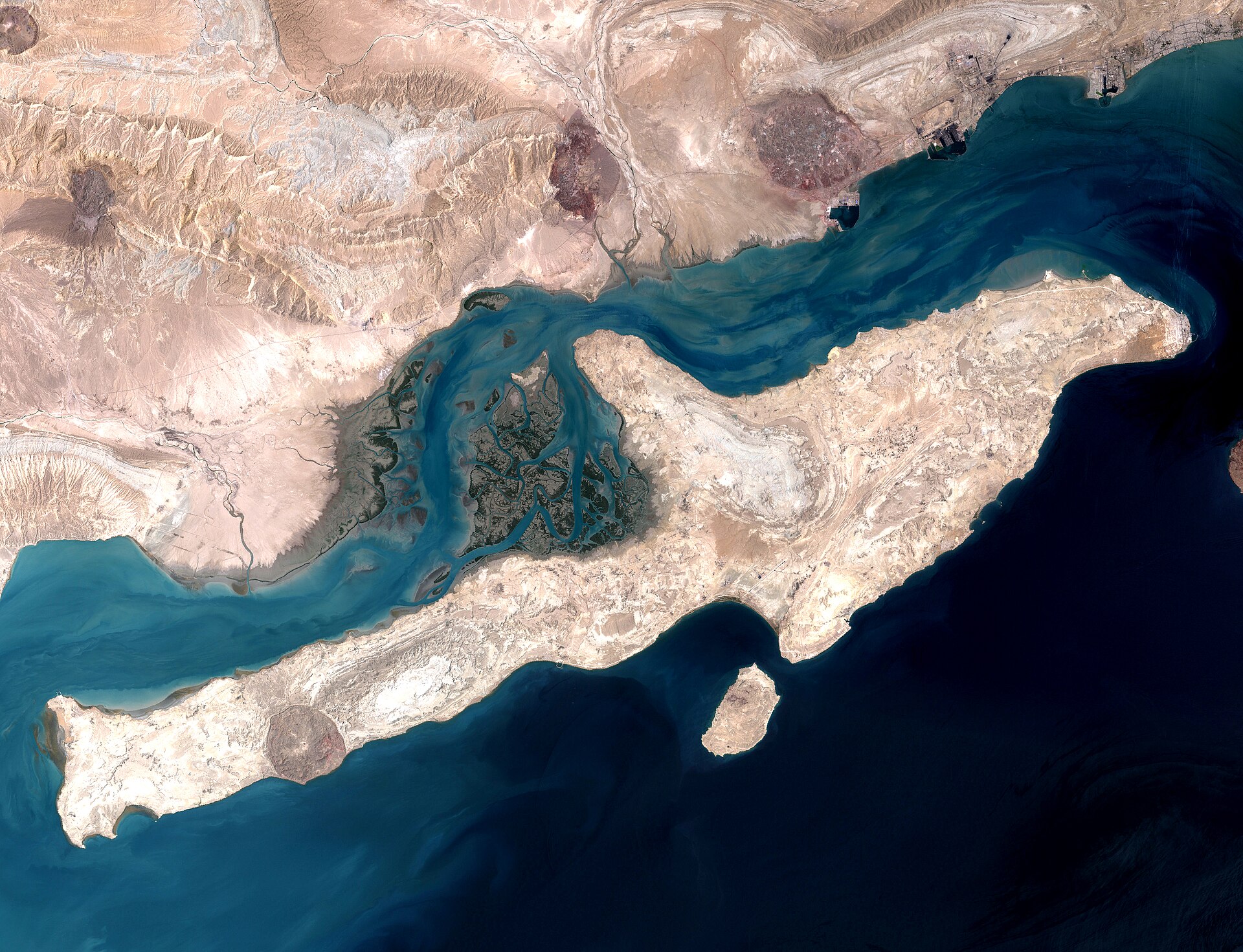
The firing produced an immediate physical effect on commercial traffic. Bloomberg reported that five Greek and Indian tankers executed U-turns near Iran’s Qeshm Island on Saturday morning, with the Minerva Evropi and Nissos Keros confirmed by name as having reversed course. A sixth vessel, the Sanmar Herald, continued transit through the Iran-sanctioned Larak Island route — the narrow five-nautical-mile channel between Qeshm and Larak islands that passes through Iranian territorial waters and operates, in practice, as the IRGC’s controlled-access alternative to the standard Traffic Separation Scheme.
The Sanmar Herald’s transit is telling: it suggests the IRGC is still granting selective passage through its own designated corridor even while firing on vessels in the broader transit zone, a pattern consistent with the franchise model of Hormuz control that has characterised the IRGC’s approach since the war began. Ambrey, the maritime security firm, issued an advisory stating there is “a realistic possibility of continued risk to unauthorized Strait of Hormuz transits as well as to Israel- and US-affiliated shipping attempting to transit.” BIMCO chief safety and security officer Jakob Larsen told AFP that leaving the Gulf “would not be advisable” without coordinating with both the United States and Iran — an extraordinary statement that effectively acknowledged dual sovereignty over the waterway as an operational reality that commercial shipping must navigate.
US Central Command reported that 21 vessels had complied with orders to turn back from Iranian ports since the blockade began on April 13, according to Military.com. President Trump stated the US blockade “will remain in full force” until “our transaction with Iran is 100% complete” — language that offered no timeline and no off-ramp, and that the IRGC’s own spokespeople cited as justification for maintaining “strict management and control” of the strait. The IRGC stated the strait would remain “strictly controlled and unchanged” until the US “restores full freedom of movement for vessels traveling to and from Iran,” according to Middle East Monitor.
Why Did the Gunboats Skip the VHF Challenge?
Three explanations are possible, and none of them is reassuring:
- Standing orders: the gunboat crew was operating under rules of engagement that do not require VHF contact before engagement — meaning the IRGC’s ROE in the strait are more permissive than any publicly stated Iranian position has acknowledged, including the toll-and-permit framework.
- Autonomous action: the crew acted without orders in a command structure that has no named IRGC Navy chief to issue or enforce ROE — meaning the headless command problem is producing exactly the kind of uncoordinated kinetic action that makes the strait uninsurable.
- Deliberate signalling: the VHF bypass was a message to commercial shipping that the IRGC’s authority in the strait does not derive from administrative procedures or radio protocols but from the presence of armed fast boats — and that Araghchi’s diplomatic declarations are not worth the bandwidth they consume.
The precedent that maritime security analysts will cite is the MT Mercer Street attack of July 29-30, 2021, when an IRGC drone struck a Japanese-owned, Liberian-flagged tanker managed by Zodiac Maritime off Oman’s coast, killing a British security guard and a Romanian crew member. CENTCOM confirmed Iranian attribution on August 6, 2021. That attack was also conducted without VHF challenge or warning — the same protocol breach documented in Warning 037-26. The June 2019 Gulf of Oman attacks on MT Front Altair and MT Kokuka Courageous followed the same pattern: limpet mines detonated against tankers outside Iranian territorial waters with no prior warning or communication.
Parliament Security Committee spokesman Ebrahim Rezaei told Al Jazeera that Iran would not impose “traditional” transit fees but was “drafting legislation to charge ship owners for securing the strait,” with vessels requiring “prior coordination with Iranian authorities” — language that attempted to reframe the toll system as a legislative project rather than an operational failure, but that did nothing to explain why gunboat crews were firing on vessels before any such legislation existed or any coordination had been attempted.
Brent, Betting Markets, and the Price of a Broken Promise
Brent crude had fallen to approximately $90.38 per barrel on April 17 following Araghchi’s “completely open” announcement, a drop from near $99 on April 16, according to CNBC and Al Jazeera — the market briefly pricing in a scenario where the strait functioned as a normal waterway rather than a contested chokepoint. The IRGC reversal and the April 18 firing reversed those gains, repricing the risk that Araghchi’s word carried no operational weight. War-risk insurance premiums, which stood at approximately 0.125 percent of insured hull value before the conflict, had risen to 0.2-0.4 percent per transit by mid-April — a cost structure that priced the IRGC’s unpredictability into every cargo moving through the strait regardless of diplomatic announcements from Tehran’s foreign ministry.
The 32-point swing on Polymarket was, in practical terms, a verdict on the authorization ceiling itself — not just a repricing of physical transit risk but a repricing of the informational value of Iranian diplomatic statements. A foreign minister’s public declaration about the strait he ostensibly helps govern proved worth less than a coin flip as a predictor of what would actually happen to ships attempting to use it.
The ceasefire negotiated at Islamabad expires on April 21-22, with the next round expected April 20. CGTN, Chinese state media, ran the framing that “Iran reopens Strait of Hormuz, but says US must end naval blockade” — a conditional formulation that, in retrospect, was the more honest reading of Araghchi’s announcement than Araghchi’s own language. The IRGC gunboats resolved the ambiguity the way IRGC gunboats resolve most ambiguities: with rounds fired, no radio call made, and a foreign minister’s credibility sinking somewhere in the water between Oman and Qeshm Island. With the ceasefire set to expire on April 22, Saudi Arabia is simultaneously running out of time on three converging exposure vectors — June OSP repricing, PAC-3 stockpile depletion, and a fiscal deficit widening at $90 Brent.
Background and Context
The Strait of Hormuz handles approximately 20 percent of the world’s daily oil supply. Commercial shipowners on April 18 were caught between two naval forces — the US blockade of Iranian ports (effective since April 13) and the IRGC’s claimed authority over all strait transit — neither of which recognises the other’s jurisdiction, in a waterway where the firing demonstrated that Iran’s own diplomatic pronouncements do not bind its own military units. Iran’s toll system, which proposed a $1-per-barrel charge on all transiting vessels, has generated zero revenue — a bureaucratic architecture that exists on paper while the Islamabad Accord it was meant to monetise now has four days left before expiry.
FAQ
What is a VHF challenge and why does its absence matter?
A VHF challenge is a radio hail on Channel 16 — the international distress and calling frequency monitored by all vessels — that maritime forces are expected to issue before any interdiction, boarding, or enforcement action. Its absence in the April 18 incident is procedurally comparable to a police officer opening fire without identifying themselves or issuing a verbal command. The omission removes the targeted vessel’s ability to comply, identify itself, or demonstrate that it holds the permits Iran’s own system requires, and it places the firing outside any legal framework — including Iran’s own toll-and-coordination architecture — that governs naval interaction with commercial shipping in the strait.
Has the IRGC fired on commercial tankers before?
The IRGC has a documented history of attacking commercial vessels in and around the strait without warning. The July 2021 MT Mercer Street drone strike off Oman killed two crew members and was confirmed by CENTCOM as Iranian in origin on August 6, 2021. The June 2019 limpet mine attacks on MT Front Altair and MT Kokuka Courageous in the Gulf of Oman followed the same no-warning pattern. During the 1980s Tanker War, Iranian forces — then regular navy, not IRGC — attacked more than 200 commercial vessels in the Persian Gulf between 1984 and 1988, a campaign that prompted US naval intervention under Operation Earnest Will.
Can commercial shipping avoid the Strait of Hormuz entirely?
Saudi Arabia’s East-West Pipeline to Yanbu on the Red Sea can bypass Hormuz with a theoretical capacity of seven million barrels per day, though operational loading capacity has been constrained to 4-5.9 million bpd during the current conflict — short of the 7-7.5 million bpd that previously transited the strait. The UAE’s Habshan-Fujairah pipeline bypasses Hormuz for approximately 1.5 million bpd of Abu Dhabi crude. Qatar’s LNG exports, which represent the world’s largest concentration of liquefied natural gas capacity, have no pipeline alternative and must transit the strait — a structural vulnerability that China helped partially navigate by brokering an IRGC-sanctioned passage for the LNG carrier Al Daayen in early April.
What happens when the Islamabad ceasefire expires on April 21-22?
No extension mechanism exists within the ceasefire’s terms, according to analysis from the Soufan Center. The next round of talks is expected in Islamabad on April 20, but the authorization ceiling that produced the April 18 firing — where IRGC field units act independently of diplomatic commitments — means that any renewed ceasefire faces the same structural problem: the Iranian officials who negotiate it lack the institutional authority to enforce it on the military units whose behaviour the ceasefire is meant to constrain. Pakistan’s ISI chief Munir visited Khatam al-Anbiya headquarters on April 16, attempting to build an enforcement relationship with the IRGC commanders President Pezeshkian has publicly accused of sabotaging diplomacy.
What would it take for Iran’s toll system to actually collect revenue?
Iran’s Supreme National Security Council announced on April 18 that it is “currently reviewing” fresh US proposals — the same institution whose secretary Zolghadr filed the “deviation from mandate” report that ended the Islamabad talks. The gap between that statement and the SNSC’s actual decision-making authority is documented in this analysis.
Iran would need a functioning enforcement mechanism — a named naval commander who can order interdiction, a legal framework that survives UNCLOS Article 26 scrutiny, and a diplomatic structure where foreign minister announcements bind military units. It currently has none of the three. The 1857 Copenhagen Convention, which abolished Danish Sound Dues multilaterally, established the precedent that unilateral transit charges through international straits cannot be sustained against multilateral opposition — a precedent the US has specifically invoked in Freedom of Navigation programs since 1979. Iran’s best historical parallel for a workable toll would require a UN Security Council resolution authorising it, which Russia and China would need to support — neither has done so publicly, and China’s own incentive to keep Hormuz transitable at low cost makes such support unlikely.