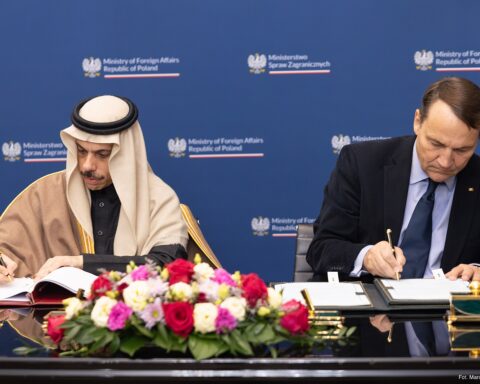
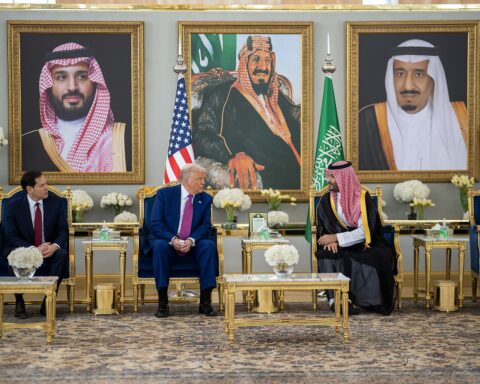
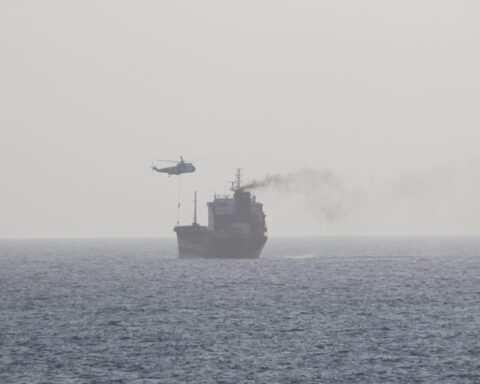
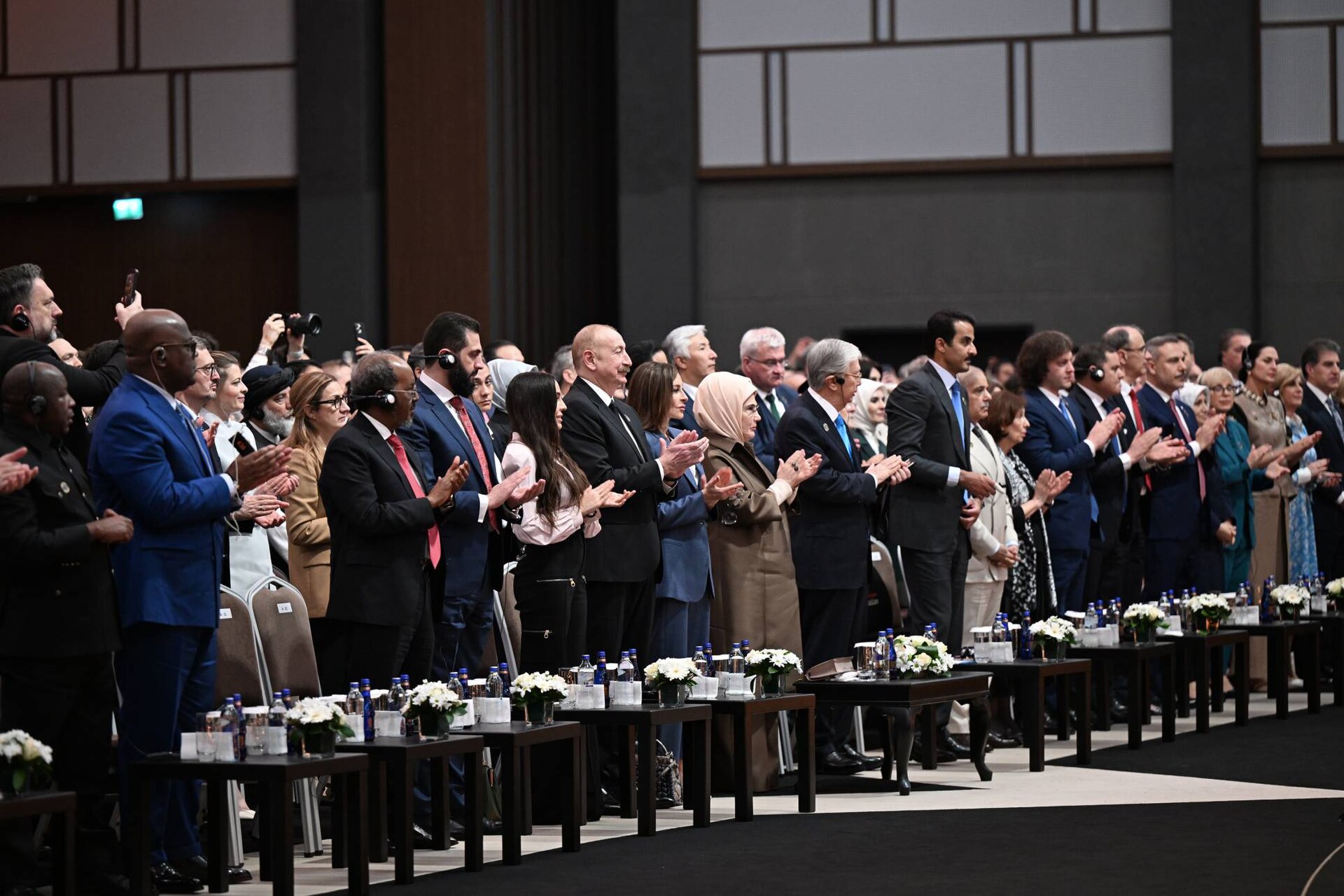
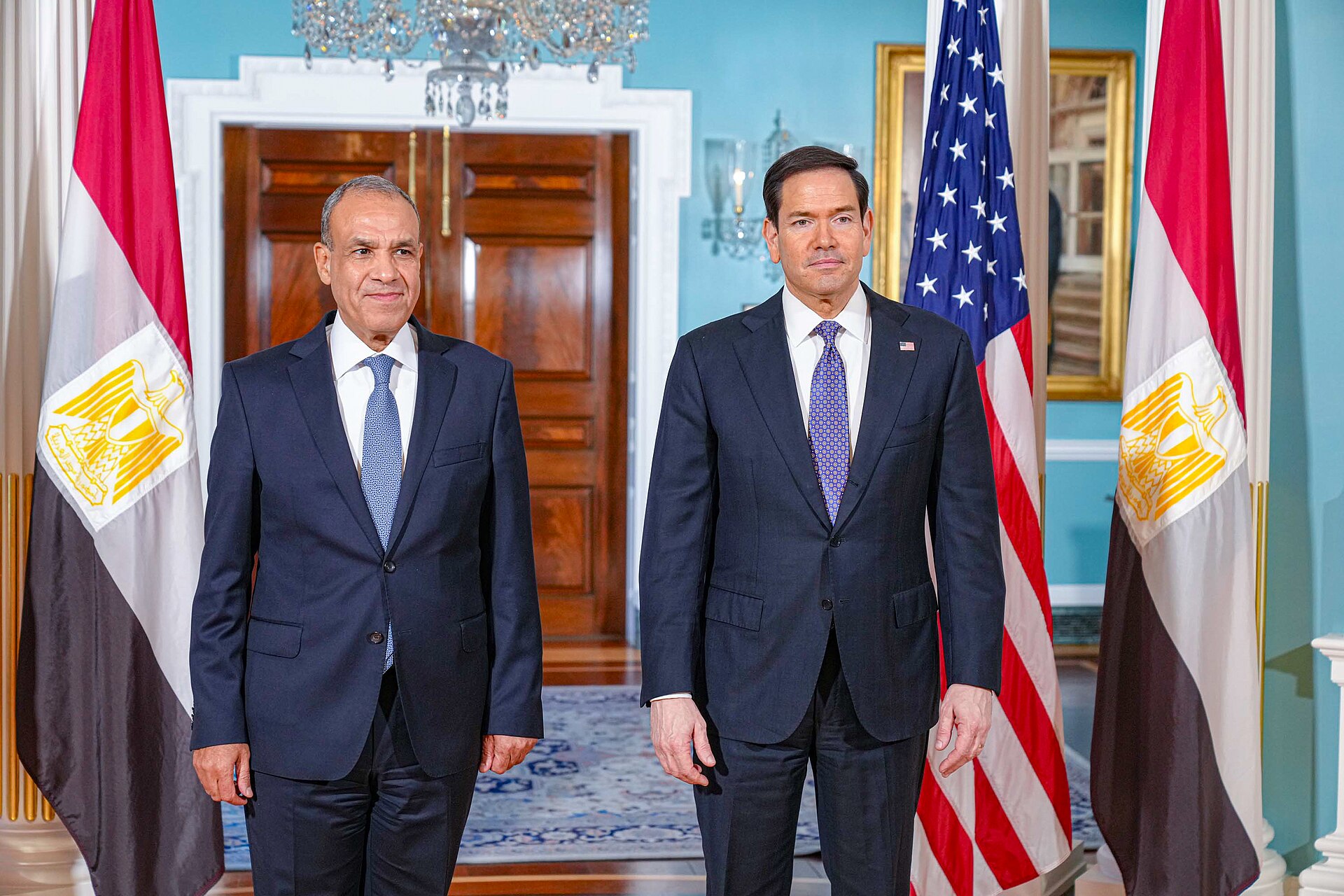
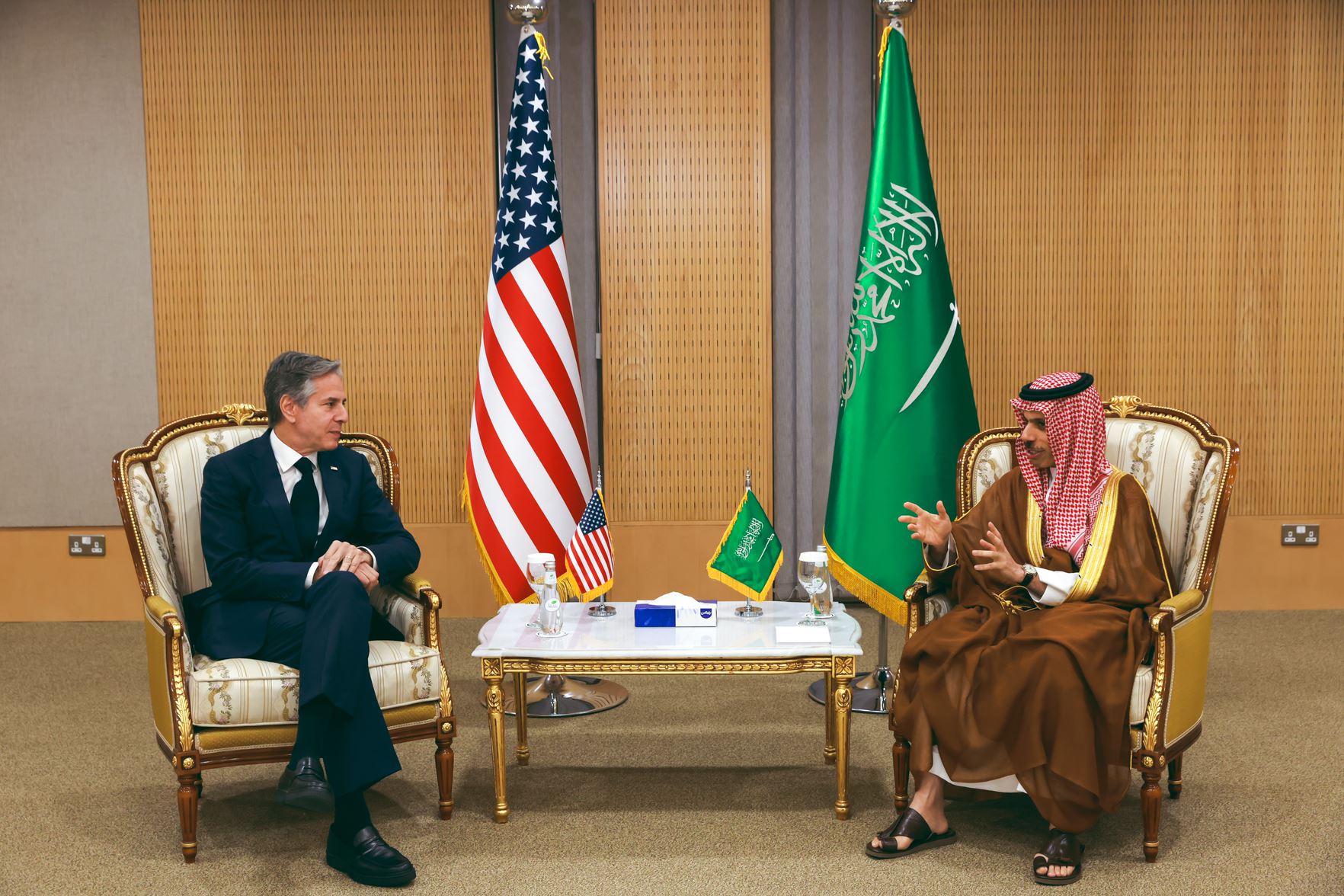
ANTALYA — Saudi Foreign Minister Faisal bin Farhan spent April 18 in two conversations that, taken together, amount to a diplomatic architecture: one with his counterparts from Pakistan, Egypt, and Turkey at the Antalya Diplomacy Forum, and one — by phone, the same day — with US Secretary of State Marco Rubio about Hormuz shipping and the Lebanon ceasefire. The fact that both happened simultaneously was not a scheduling coincidence but the entire point. Saudi Arabia is building a format in which it sits at the multilateral Muslim table and the American bilateral table at the same time, because the last three months have demonstrated what happens when it sits at neither.
The Antalya quad — Saudi Arabia, Pakistan, Egypt, Turkey — held its third meeting in six weeks on the margins of the forum, issuing no communiqué and disclosing no details beyond a Turkish diplomatic confirmation that the session occurred. What the quad produced is less interesting than what it represents: the first time Saudi Arabia has assembled a standing multilateral frame with both the institutional weight and the geographic reach to claim a seat at whatever settlement emerges from the Iran-US war, regardless of whether that settlement arrives on April 22, six months later, or never.
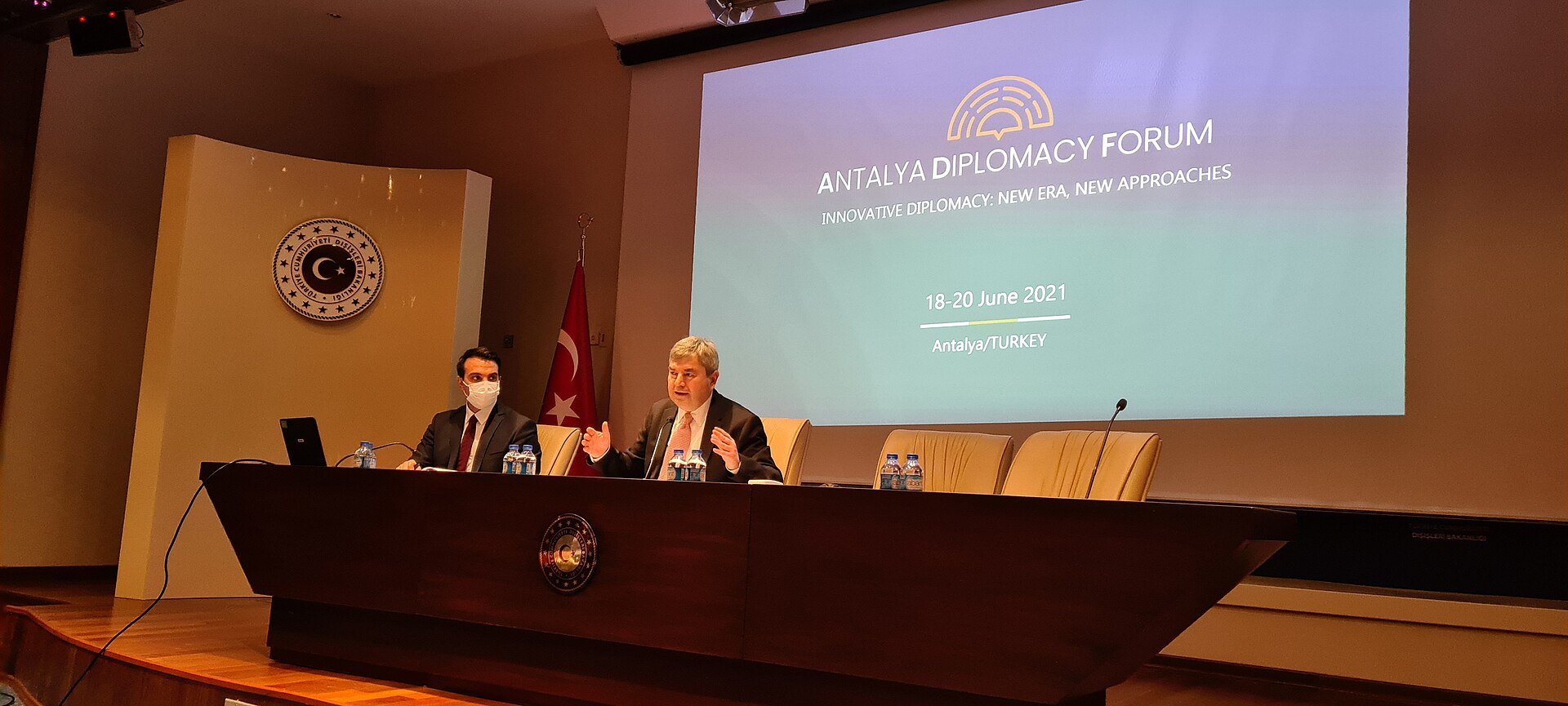
Table of Contents
- The Exclusion Pattern Saudi Arabia Is Trying to Break
- Why Was Faisal bin Farhan on Two Tracks at the Same Time?
- Four Countries, Four Functions
- What Does Egypt Bring That Saudi Arabia Cannot Access Alone?
- Iran’s Selective Outreach and What It Reveals
- Turkey’s Venue Problem
- Can the Quad Survive the Ceasefire’s Collapse?
- The Institutional Bet
- FAQ
The Exclusion Pattern Saudi Arabia Is Trying to Break
When the US and Iran sat down for their first direct talks in Islamabad on April 10, Saudi Arabia was not in the room. It was not in the building. It was not invited, and it had no formal mechanism to object to its absence, despite the fact that Saudi oil infrastructure — Ras Tanura, Khurais, the East-West Pipeline — had absorbed Iranian strikes throughout the preceding weeks. The country taking the physical damage from the war was excluded from the diplomatic process meant to end it. This is not a new experience for Riyadh. In 2014-2015, when the JCPOA was negotiated between the P5+1 and Iran, Saudi Arabia and the UAE demanded inclusion, and Iran’s foreign ministry told them the parties were “clear and unchangeable.” Washington agreed. The deal was signed in Vienna, and Saudi Arabia learned about its terms the way everyone else did.
The 2026 version is worse, because the stakes have changed category. The JCPOA was an arms-control agreement about enrichment centrifuges and sanctions relief — Saudi Arabia’s exclusion was an insult to its status but not a direct threat to its territorial integrity. The Islamabad talks are about a war in which Saudi production has dropped from 10.4 million barrels per day in February to 7.25 million in March, a 30 percent collapse that the IEA called the largest disruption on record. Being excluded from the JCPOA was a diplomatic slight; being excluded from Islamabad is a sovereignty problem.
The quad is Riyadh’s answer, and the speed of its assembly tells you how urgent the problem is. The first meeting was March 19-20 in Riyadh, on the sidelines of an Arab-Islamic foreign ministers’ consultative session — the same institutional scaffolding Saudi Arabia used for the November 2023 extraordinary summit on Gaza, when it convened the joint OIC and Arab League session and Iranian President Raisi attended. The second meeting was March 29 in Islamabad itself, days before the US-Iran bilateral from which Saudi Arabia would be locked out. The third was Antalya, April 17-18. Three meetings in thirty days, each in a different country, each on the sidelines of a larger event that provided cover and legitimacy. This is not exploratory diplomacy; it is institutional construction under wartime pressure.
Why Was Faisal bin Farhan on Two Tracks at the Same Time?
The phone call between Faisal bin Farhan and Marco Rubio on April 18 — covering Hormuz shipping lanes and the Lebanon ceasefire — happened while Faisal was physically present at the Antalya quad session. The US State Department confirmed the call; Asharq Al-Awsat and Arab News reported it; Rubio was not at the forum. What this means in practice is that the Saudi foreign minister was simultaneously operating as the convener of a Muslim multilateral diplomatic frame and as Washington’s closest Arab interlocutor on the two issues — Hormuz and Lebanon — that define the war’s resolution parameters.
The Middle East briefing 3,000+ readers start their day with.
One email. Every weekday morning. Free.
No other member of the quad can do this. Pakistan is the mediator, which means it cannot be the American partner without compromising its neutral posture; Islamabad’s FM Ishaq Dar has to maintain equidistance between Washington and Tehran for the mediation to hold. Turkey has NATO Article 5 geography and Fidan’s intelligence relationships across the region, but Erdoğan’s public positioning — “We must be prepared and vigilant against Israel’s attempts to dynamite the negotiation process” — makes Ankara a less comfortable bilateral partner for the current US administration than Riyadh. Egypt has the intelligence channel (more on this below) but not the economic weight or the energy-market exposure that makes Washington need Cairo’s cooperation in real time.
Saudi Arabia’s dual-track position is not a happy accident of geography or alliance. It is the product of a deliberate choice to build the quad as a format that complements the US bilateral rather than competing with it. The stated Antalya mandate — “support for Pakistan’s mediation efforts and its endeavors to reach a permanent ceasefire between Iran and the United States” — is phrased as support, not substitution. The quad is not trying to replace the Islamabad channel; it is trying to ensure that whatever the Islamabad channel produces cannot be finalized without Saudi Arabia’s participation. That is a different project, and a more achievable one.
Four Countries, Four Functions
The quad’s membership is not random, and each country serves a distinct structural purpose that the others cannot replicate. Saudi Arabia is the convener and the principal stakeholder — the country whose oil infrastructure, fiscal position, and Hajj security are most directly threatened by the war’s continuation. Pakistan is the mediator with direct access to both Iran (protecting power for Iranian interests in Washington since 1992) and Washington (Vance-Ghalibaf face-to-face hosted in Islamabad on April 11). Egypt provides the intelligence backchannel that neither Saudi Arabia nor Turkey possesses. Turkey provides the NATO-adjacent venue and Fidan’s personal relationships across the region’s intelligence services.
Collectively, the four represent roughly 500 million people and four of the most militarily capable Muslim-majority states. The number that matters is not population — it is the number of active diplomatic channels to Iran that the quad controls. Pakistan has direct mediation access. Turkey has Fidan’s line to Araghchi and the broader Turkish-Iranian institutional relationship (trade, border, energy). Egypt’s GIS has the backchannel. Saudi Arabia has none, which is precisely why it needs the other three.
| Country | Representative | Primary Function | Direct Iran Channel | US Access Level |
|---|---|---|---|---|
| Saudi Arabia | Faisal bin Farhan | Convener / principal stakeholder | None (excluded from Iran outreach) | Rubio bilateral (April 18 call) |
| Pakistan | Ishaq Dar | Mediator / ceasefire host | Iran’s protecting power in Washington since 1992; Munir-Araghchi direct line | Hosted Vance in Islamabad (April 10-12) |
| Egypt | Badr Abdelatty | Intelligence backchannel | GIS military-threshold communication | Camp David treaty partner |
| Turkey | Hakan Fidan | Venue / intelligence liaison | Fidan-Araghchi; Erdoğan-Pezeshkian | NATO ally (strained) |
What Does Egypt Bring That Saudi Arabia Cannot Access Alone?
The Carnegie Endowment’s analysis of Egypt’s wartime role identifies something that the standard quad coverage has missed: Egypt’s General Intelligence Service, not its Foreign Ministry, served as the primary backchannel between Washington and Tehran during the ceasefire negotiations. Carnegie’s language is precise — the GIS was “transmitting military thresholds, red lines, and proposed strike limitations without requiring public engagement from either party.” This is not diplomatic mediation in the conventional sense; it is operational communication about what targets are off-limits and what escalation triggers exist, the kind of information that travels through intelligence services because foreign ministries cannot handle it without creating public commitments that constrain future action.
Saudi Arabia does not have this channel. Riyadh severed diplomatic relations with Tehran in 2016, restored them through the Beijing-brokered agreement in March 2023, and then watched the relationship collapse again when Iranian missiles hit Saudi territory in late February 2026. Faisal bin Farhan’s call with Araghchi on April 13 — the day the US blockade began — was notable precisely because it was so unusual; the Carnegie report characterized Egypt’s mediation as carrying “political meaning beyond the immediate ceasefire outcome,” signaling that Cairo “still has a place at the regional table.” For Saudi Arabia, Egypt’s place at the table is useful because it extends Saudi Arabia’s own reach into a communication space Riyadh cannot enter directly.
Egypt’s FM Abdelatty stressed “safeguarding Gulf states and ensuring stability in energy markets, supply chains and food security” at the Antalya session — language that reads as boilerplate until you consider Egypt’s own exposure. The Suez Canal, already under pressure from Houthi disruptions since 2023, faces a different threat now: if Hormuz remains effectively closed and Gulf crude reroutes through the East-West Pipeline to Yanbu on the Red Sea, the traffic pattern through Suez changes fundamentally, and Egypt’s hold on global energy transit shifts with it. Abdelatty’s “energy markets” language is not solidarity; it is self-interest dressed as coalition language, which is exactly what makes it durable.
Iran’s Selective Outreach and What It Reveals
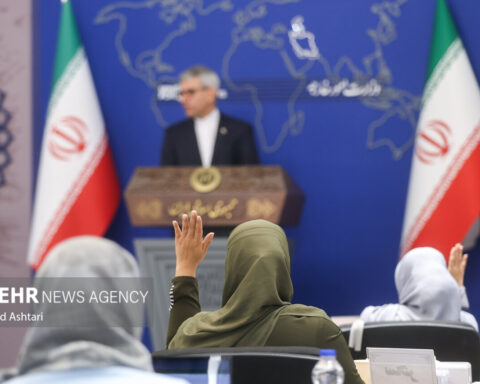
In the days surrounding the Antalya meeting, Iran’s FM Abbas Araghchi made phone calls to Turkey, Egypt, and Pakistan calling for “vigilance and coordination.” Saudi Arabia was not on the list. The omission is not accidental — Iran treats Riyadh as a belligerent, not a potential interlocutor, which means the quad’s three non-Saudi members each have something Saudi Arabia lacks: an open line to Tehran. Araghchi’s selective outreach also reveals Iran’s preferred strategy for dealing with the quad, which is to disaggregate it, to talk to the individual members bilaterally and to avoid engaging the format as a collective.
Chatham House’s analysis explains why. “Tehran has a limited appetite for a diplomatic approach that involved not only the US and Iran but also regional states, as proposed by Turkey, partly because if bilateral diplomacy fails, Iran can blame the US’s bad faith rather than facing blame for intransigence in a wider format.” The quad is a legitimacy threat to Iran precisely because it is Muslim, non-Western, and cannot be dismissed as a US proxy — not when Erdoğan is publicly warning against Israeli sabotage of the peace process and Pakistan is simultaneously hosting Iran’s negotiators. If the quad collectively says Iran is being unreasonable, that verdict carries a different weight than the same accusation from Washington.
The IRGC’s response to the quad’s existence has been characteristically direct. While Araghchi was being overridden by his own military on Hormuz — declaring the strait “completely open” on April 17, only to have the IRGC reverse him within hours — the IRGC declared the entire Persian Gulf a targeting zone on April 18, the same day the quad met in Antalya. Iranian state media (Tasnim, IRNA) have treated the quad’s Arab-Muslim solidarity language as cover for an anti-Iran alignment, which is not entirely wrong but misses the structural point: the quad’s value to Saudi Arabia does not depend on Iran’s cooperation, because the quad is not aimed at Iran. It is aimed at the peace table.
Turkey’s Venue Problem
The Antalya Diplomacy Forum has a specific history that matters here. In 2022, it hosted the first face-to-face meeting between Russian FM Lavrov and Ukrainian FM Kuleba during the active war — a session that laid the groundwork for the Black Sea grain deal. The forum’s theme for 2026, “Mapping Tomorrow, Managing Uncertainties,” is the kind of anodyne branding that diplomatic events always carry, but the venue itself has a track record as the place where combatant parties meet for the first time. Fidan knows this, which is why his public language at Antalya was carefully calibrated: “No one wants to see a new war break out when the ceasefire expires next week. We hope…the parties will extend the ceasefire.”
Fidan’s optimism — “I hope there’ll be an extension. I am optimistic” — is doing diplomatic work, not reflecting an assessment. The ceasefire expires April 22, three days from now, with no extension mechanism in place and the IRGC demonstrably operating outside whatever authorization Pezeshkian’s government has granted. Fidan’s value to the quad is not his optimism but his venue: Turkey can host a format that none of the other three members could convene on their own, because Ankara has the NATO-adjacent credibility, the physical infrastructure of a diplomatic forum already in session, and a personal relationship with Araghchi that predates the war. When Erdoğan visited Cairo and Riyadh in February 2026, just before the conflict began, the relational architecture for the quad was being assembled — Turkey-Saudi rapprochement dates to 2022, Turkey-Egypt normalization to 2023 — but the speed of its activation still matters.
The defense-industrial dimension is less visible but persistent. Ali Bakir at the Middle East Council on Global Affairs frames the core question as whether Turkey can “convert this emerging alignment into an institutional architecture involving defense pacts, integrated air and missile defense, joint industrial production, and a common diplomatic front.” Saudi Arabia is reportedly in final-stage discussions to join Turkey’s KAAN fifth-generation fighter program — a procurement decision that, if finalized, would give the quad a material substrate that outlasts any ceasefire timeline.
Can the Quad Survive the Ceasefire’s Collapse?
The standard analysis treats the quad as a ceasefire-support mechanism — four countries backing Pakistan’s mediation effort to extend the April 22 deadline. If the ceasefire holds, the quad has a purpose; if it collapses, the quad dissolves. This reading misses the institutional design. Saudi Arabia convened the first meeting in Riyadh on March 19-20, ten days before the Islamabad talks even began, using existing OIC and Arab League institutional infrastructure. The format was built before the ceasefire existed and was not designed to depend on it.
The three scenarios the quad faces after April 22 each give it a different but still viable function. If the ceasefire extends, the quad becomes the regional consultation mechanism that ensures Saudi Arabia has advance visibility into whatever terms are negotiated — a problem Riyadh did not solve during the JCPOA and has not solved during the Islamabad process. If the ceasefire collapses and the war resumes, the quad becomes the diplomatic frame through which any future ceasefire attempt is routed, because Pakistan’s unilateral mediation will have failed and the US-Iran bilateral channel will have broken. If the ceasefire produces a partial agreement — Hormuz reopening but no broader deal, or a humanitarian corridor but no weapons freeze — the quad becomes the enforcement and monitoring frame, the body that gives legitimacy to whatever partial arrangements exist.
| Scenario | Probability Assessment | Quad Function | Saudi Position |
|---|---|---|---|
| Ceasefire extension (30+ days) | Moderate — Fidan “optimistic,” no mechanism exists | Regional consultation / visibility into terms | Inside the process via quad membership |
| Ceasefire collapse / war resumes | Elevated — IRGC operating outside authorization | Framework for next ceasefire attempt | Convener of alternative to failed bilateral |
| Partial agreement (Hormuz only) | Low — Iran’s 10-point plan bundles issues | Enforcement / monitoring legitimacy | Stakeholder with energy-market standing |
Natasha Lindstaedt at the University of Essex characterizes the quad as “the beginning of a new regional order designed to curb Israeli and Iranian dominance after the war” but warns that these are “relationships of convenience” given the historical tensions — Egypt-Saudi friction over regional leadership, the Turkey-Saudi rupture over Khashoggi, Pakistan’s economic dependence on Saudi loans (the $5 billion facility matures in June 2026). The convenience critique is fair but also beside the point. NATO was a relationship of convenience between countries that had been killing each other’s soldiers five years earlier. The question is not whether the members trust each other but whether the format serves their interests, and the answer, for now, is yes — each country has something the others need and cannot get elsewhere.
The Institutional Bet
The non-obvious logic of the quad is that Saudi Arabia is investing in a format whose immediate utility is limited — the quartet cannot reach Iran directly, the ceasefire it is meant to support has no extension mechanism, and its meetings produce no communiqués — because the alternative is worse. Without the quad, Saudi Arabia’s diplomatic position on April 22 would be entirely dependent on two channels it does not control: the US-Iran bilateral in which it has no seat, and Pakistan’s unilateral mediation in which it has influence but not standing. The quad converts Saudi Arabia from a stakeholder that can lobby into a convener that can shape, and the distinction matters when the settlement terms are being drafted.
The Stimson Center’s assessment, via a former Pakistani three-star general, identifies the structural vulnerability: Pakistan can hold both its roles — quad member and neutral mediator — “only if military deployment remains strictly defensive, time-bound, and transparently limited — the moment the theatre shifts to offensive operations, the dual role collapses.” The Saudi-Pakistan Military Defense Agreement signed September 17, 2025, which makes Pakistan simultaneously Iran’s interlocutor and Saudi Arabia’s treaty ally, is the tightrope on which the entire format balances. If the war intensifies and Pakistan is perceived as taking Saudi Arabia’s side militarily, the mediation collapses and the quad loses its one member with direct access to both Washington and Tehran.
Hormuz’s re-closure and the IRGC’s systematic override of Araghchi’s diplomatic commitments have made the quad’s timeline more urgent. The April 22 deadline is not just a ceasefire expiry date — it is also the day Indonesia’s 221,000 Hajj pilgrims begin their first departures, creating a security overlay on the Makkah cordon that constrains Saudi Arabia’s freedom of action in any military dimension. Saudi production at 7.25 million barrels per day, Goldman’s war-adjusted fiscal deficit at 6.6 percent of GDP, and the East-West Pipeline operating at 4-5.9 million bpd against a 7 million bpd design capacity — these are the numbers that explain why Riyadh cannot afford to be excluded from the peace table, and why it is building the chair before the table is set.
“Under this level of pressure, I believe the parties should not see any obstacle to extending the ceasefire in order to continue peace negotiations.”
— Hakan Fidan, Turkish Foreign Minister, Antalya Diplomacy Forum, April 19, 2026
The November 2023 Arab-Islamic summit in Riyadh, convened over Gaza, established the playbook that the quad now follows: Saudi Arabia as the host of a multilateral Muslim format, using OIC and Arab League institutional infrastructure, that positions Riyadh as the indispensable convener without requiring it to commit to a bilateral position. At that summit, Iranian President Raisi attended — his first visit to Riyadh in eleven years — and the format survived despite the fact that Saudi Arabia and Iran were on opposite sides of the underlying conflict. The 2026 quad is a smaller, faster, more operationally focused version of the same design, assembled in thirty days instead of months, meeting in different cities instead of waiting for a single summit, and operating against a deadline that the 2023 summit never faced.
What the quad cannot do is compel Iran to engage with it, extend the ceasefire, reopen Hormuz, or guarantee Saudi Arabia a seat at the final negotiating table. What it can do is ensure that any settlement reached without Saudi Arabia’s participation will face a legitimacy challenge from a standing multilateral body of four Muslim-majority states representing half a billion people, three of which Iran has been actively soliciting for support. The quad’s power is not in what it does but in what it makes harder to do without it, and for a country that has been excluded from every major Iran negotiation since 2014, that is enough to justify building.
FAQ
When and where is the next quad meeting expected?
No fourth meeting has been formally announced, but the pattern — Riyadh (March 19-20), Islamabad (March 29), Antalya (April 17-18) — suggests a cadence of roughly two to three weeks, with each meeting attached to a larger diplomatic event in the host country. Egypt has not yet hosted, making Cairo the likely venue for the fourth session. The timing will almost certainly be shaped by whatever happens on April 22 when the ceasefire expires, because the quad’s next meeting will need to respond to either an extension, a collapse, or a partial arrangement.
Has Iran formally responded to the quad’s existence?
Iran has issued no official statement addressing the quad as a format. Tasnim and IRNA have framed it as an Arab-NATO alignment serving American and Israeli interests — language that treats the format as hostile by nature rather than engaging with its stated neutrality. The practical effect of Iran’s disaggregation calls (Araghchi to Ankara, Cairo, Islamabad but not Riyadh) is that Tehran is attempting to peel off the three members who still have open lines to it while leaving Saudi Arabia isolated within the format. Whether that strategy is working depends on whether Turkey, Egypt, and Pakistan attend the next quad meeting at the same level of engagement they brought to Antalya — none of them has signaled any intention to step back.
Does the quad have any formal institutional charter or secretariat?
No. The quad operates entirely on the margins of existing multilateral events — the Arab-Islamic consultative meeting in Riyadh, Pakistan’s mediation hosting schedule in Islamabad, and the Antalya Diplomacy Forum in Turkey. It has no secretariat, no charter, no budget, and no permanent staff. This informality is arguably an advantage in the current phase, because it allows the format to meet rapidly without the institutional overhead that slows formal organizations like the OIC, and it avoids creating a structure that Iran could formally object to or seek to disrupt through the UN system.
How does the Saudi-Pakistan defense agreement affect Pakistan’s neutrality as mediator?
The Saudi-Pakistan Military Defense Agreement (SMDA), signed September 17, 2025, creates a structural tension that a former Pakistani three-star general, speaking to the Stimson Center, described as sustainable only if Pakistani military deployment remains “strictly defensive, time-bound, and transparently limited.” Pakistan’s 27th Constitutional Amendment has concentrated foreign-policy authority in the military establishment under General Munir, making ceasefire diplomacy his operation rather than the elected government’s. The $5 billion Saudi loan maturing in June 2026 adds financial pressure that is difficult to separate from the mediation dynamic, though both sides have an interest in maintaining the fiction of separation.
What is the KAAN fighter program’s connection to the quad?
Turkey’s KAAN is a fifth-generation stealth fighter program that has been in development since 2015, with its first flight in February 2023. Saudi Arabia is reportedly in final-stage discussions to join the program as a procurement partner and potentially as a co-production participant, according to Ali Bakir at the Middle East Council on Global Affairs. If finalized, the arrangement would add a defense-industrial layer to the quad relationship that outlasts any particular diplomatic crisis — countries that co-produce fighter aircraft develop supply-chain dependencies that persist for decades, creating institutional ties far more durable than a series of foreign-minister meetings on the sidelines of diplomatic forums. How those same diplomatic forums are being pressured by Trump’s 72-hour ultimatum ahead of the ceasefire expiry — and Kushner’s role managing the Gulf capital underwriting both sides — is examined in Kushner Returns to Islamabad With $6 Billion in Gulf Money and 72 Hours Before the Ceasefire Dies. The structural obstacle neither Kushner nor the quad can negotiate around is Ghalibaf’s reciprocity doctrine — a parliamentary framing of Iran’s Hormuz position that makes blockade removal a precondition, not a final-status item. How that doctrine closes the path to extension is analyzed here.