TEHRAN — Mohammad Bagher Ghalibaf did not make a threat on Saturday night. He published a precondition. In a one-hour address on Iranian state television, followed by a post on X, Iran’s Parliament Speaker converted what had been an IRGC operational posture into a formally articulated reciprocity doctrine: if the American blockade stays, the Strait of Hormuz stays closed. The ceasefire expires Wednesday. No extension mechanism exists. And the person who set the terms is the only figure in the Islamic Republic who can speak simultaneously as legislator, Supreme National Security Council member, and IRGC veteran — which means his statement carries a constitutional weight that no Iranian diplomat, including Foreign Minister Abbas Araghchi, can match or retract.
The doctrine is simple in its language and devastating in its structural implications. Ghalibaf’s formula — “It is impossible for others to pass through the Strait of Hormuz while we cannot” — does not leave room for the kind of ambiguity that ceasefire negotiators require. It converts Hormuz from a bargaining chip into a locked precondition, one that the IRGC has already operationalized and that the White House cannot concede within 72 hours without appearing to reward coercion.
Table of Contents
- What Ghalibaf Actually Said
- The Three Registers: Why Ghalibaf Is Not Araghchi
- Why Is the Reciprocity Doctrine Different from Previous IRGC Statements?
- The Minesweeper Standoff Disclosure
- Who Actually Controls the Ceasefire Decision?
- Can the US Lift the Blockade Before Wednesday?
- Saudi Arabia’s Impossible Position
- The Vance-Kushner Return and the 72-Hour Window
- What Happens After Wednesday?
- Frequently Asked Questions
What Ghalibaf Actually Said
The substance came in two forms, each calibrated for a different audience. On state television, speaking for approximately an hour on Saturday evening (April 18-19), Ghalibaf offered the version designed for institutional consumption: “If America does not lift the blockade, traffic in the Strait of Hormuz will definitely be limited.” He described the US naval blockade — implemented April 13 with 10,000-plus service members, 12 warships, and more than 100 aircraft — as “an ill-considered and ignorant decision.”
The X post was sharper. “It is impossible for others to pass through the Strait of Hormuz while we cannot. If the US does not lift the blockade, traffic will be permanently restricted.” The word “permanently” does work that “definitely” does not. The television address gave Tehran’s institutional audience a formulation flexible enough to survive a face-saving compromise. The social media statement gave the IRGC command structure exactly what it needed: a publicly recorded, Speaker-level authorization to treat Hormuz closure as standing policy rather than tactical improvisation.
Ghalibaf also delivered a line that functioned as a direct constitutional rebuke of the foreign ministry. “The Strait of Hormuz remains under the strict control of the military — not social media declarations.” This was not an abstraction. On April 17, Foreign Minister Araghchi had posted on X that Hormuz was “completely open.” The IRGC reversed that statement within hours. Ghalibaf’s formulation retroactively validated the reversal and established the institutional hierarchy: Hormuz belongs to the military-security chain, not the diplomatic one. The hierarchy was not merely implied — it was broadcast on VHF Channel 16, the international distress frequency, when an IRGC patrol unit identified as “Iranian Sepandavi” transmitted that Hormuz would open “by the order of our leader, Imam Khamenei, not by the tweets of some idiot” — the full significance of that transmission for the Islamabad talks is analyzed here.
He was more measured on the broader negotiations. “On some issues, conclusions have been reached in the negotiations, and on others not; we are still far from a final agreement.” And: “Many gaps and some fundamental points remain.” This language preserves the space for continued talks while making clear that Hormuz is not among the negotiable items — not until the blockade lifts.
The Middle East briefing 3,000+ readers start their day with.
One email. Every weekday morning. Free.
The Three Registers: Why Ghalibaf Is Not Araghchi
The distinction between a parliamentary speaker making this statement and a foreign minister making it is not a matter of political rank. It is a matter of constitutional architecture.
Araghchi is a career diplomat serving in a constitutionally subordinate executive role. Under Article 110 of the Iranian constitution, the president and foreign minister execute foreign policy, but the Supreme Leader sets it. Araghchi can propose, signal, and negotiate. He cannot commit. His April 17 claim that Hormuz was “completely open” lasted a few hours before the IRGC overrode it — a sequence documented in detail here at the time.
Ghalibaf occupies three institutional positions simultaneously, each of which gives his April 19 statement a different kind of weight:
Legislative authority. As Speaker, he heads the branch that voted in June 2025 — after US strikes on Iranian nuclear facilities — to approve a Hormuz closure resolution. The vote was advisory; senior lawmaker Esmaeil Kowsari confirmed at the time that “the parliament has come to the conclusion that it should close the Hormuz Strait, but the final decision lies with the Supreme National Security Council.” Ghalibaf’s April 19 statement is the Speaker interpreting existing parliamentary will on state television. It is not a new position. It is the public articulation of one already on legislative record.
Security council membership. Article 176 makes the Parliament Speaker a permanent member of the SNSC, alongside the president, chief justice, IRGC commander, armed forces chiefs, foreign minister, intelligence minister, and two Supreme Leader representatives. SNSC decisions require the Leader’s confirmation. But the Speaker’s permanent membership means his public statements carry SNSC-level institutional gravity — they are not the opinion of an outsider but the visible position of a council member.
IRGC credibility. Ghalibaf commanded the IRGC Aerospace Force from 1997 to 2000. In that role, he oversaw construction of Iran’s underground “missile cities” — the hardened ballistic missile storage and launch networks that remain central to Iranian deterrence architecture. The late Amir Ali Hajizadeh, his successor as Aerospace Force commander, called Ghalibaf “the mastermind of the missile cities.” His deputy during that period was Ali Abdollahi, who now commands Khatam al-Anbiya Central Headquarters — Iran’s war room. Pakistan’s Chief of Joint Staff Committee General Munir met Abdollahi in Tehran on April 16, three days before Ghalibaf’s address.
When Ghalibaf says “field, not social media,” he is not borrowing military language for rhetorical effect. He is making a claim to lived authority that Araghchi cannot make. Images released by Iranian missions during the Islamabad talks showed Ghalibaf “at the centre of the negotiating team, gesturing animatedly, as Foreign Minister Abbas Araghchi remained in a supporting role,” as Gulf News reported — a visual demotion that no other outlet analyzed but that tells you everything about where Tehran’s internal center of gravity has shifted.

Why Is the Reciprocity Doctrine Different from Previous IRGC Statements?
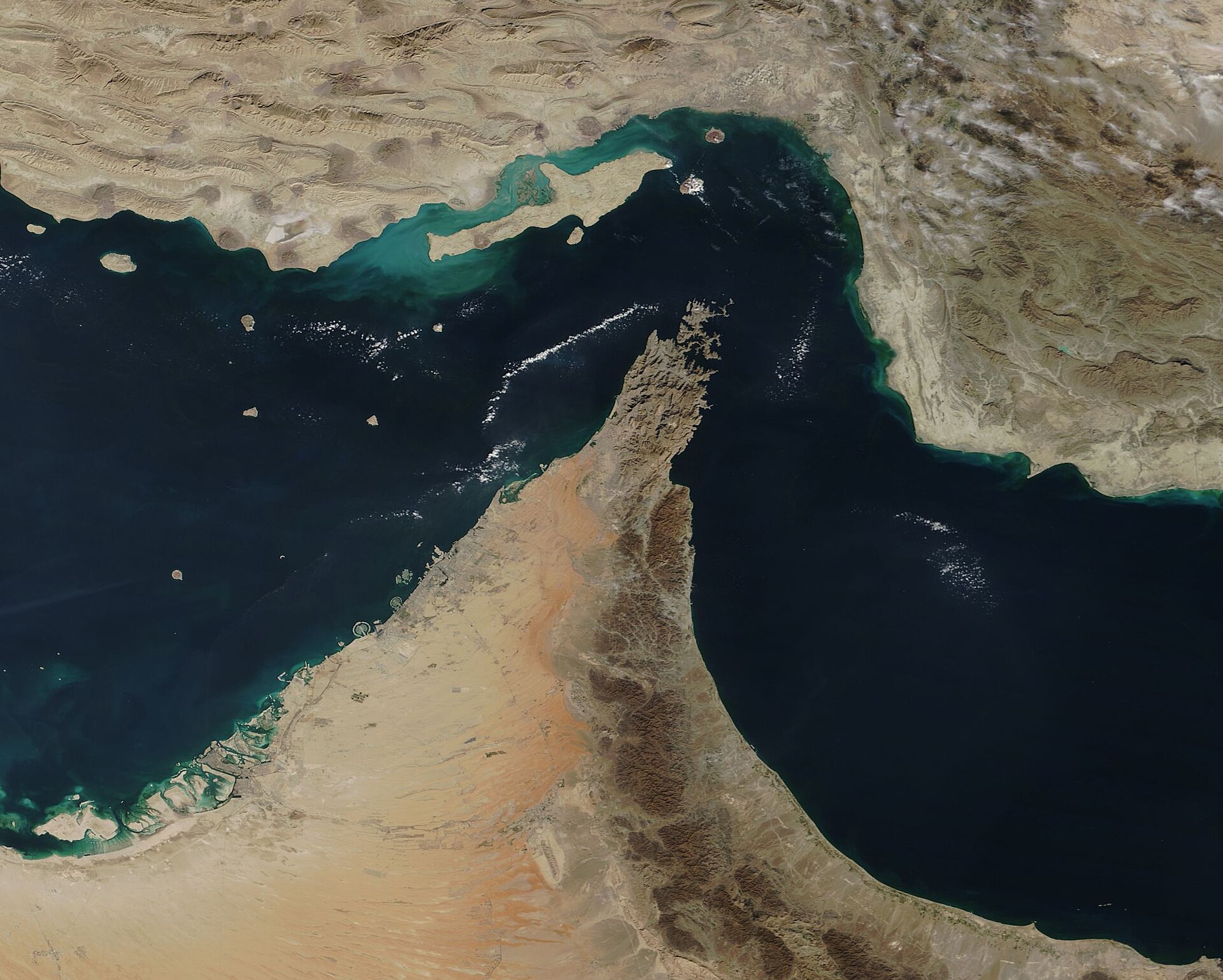
The IRGC has been making operational statements about Hormuz since February. It declared “full authority to manage the Strait” on April 5 and again on April 10. It published a chart in February marking standard shipping lanes as a danger zone and redirected vessels to a 5-nautical-mile channel between Qeshm and Larak islands, inside Iranian territorial waters. On April 18, Tasnim published a formal closure announcement citing “repeated breaches of trust” and the US failure to lift the blockade.
What Ghalibaf did on April 19 is categorically different. The IRGC statements were operational — the military arm saying what it was doing and why. Ghalibaf’s statement is doctrinal — a constitutional officeholder establishing the precondition under which the operational posture would change. The IRGC can close the strait. Only someone with Ghalibaf’s cross-institutional standing can publish the conditions under which it reopens.
The reciprocity formula — if you blockade us, we close Hormuz; if you lift the blockade, we discuss reopening — converts what had been a series of ad hoc IRGC decisions into a coherent policy position with a named precondition. It gives IRGC commanders political cover to hold Hormuz closed without being accused of sabotaging diplomacy, because the precondition is now on parliamentary record and attributed to a permanent SNSC member. Any commander maintaining the closure can point to Ghalibaf’s statement and say: the civilian-security leadership set the terms; we are executing them.
This is the information gain that competing coverage has missed. Al Jazeera’s correspondent Tohid Asadi correctly noted that Iranian officials are using the strait “as a pressure point” and called it “the most important bargaining chip.” But a bargaining chip is something you trade. Ghalibaf’s formulation converts it from a chip into a precondition — something that must be satisfied before bargaining begins. The distinction is the difference between a negotiation and an ultimatum.
The Minesweeper Standoff Disclosure
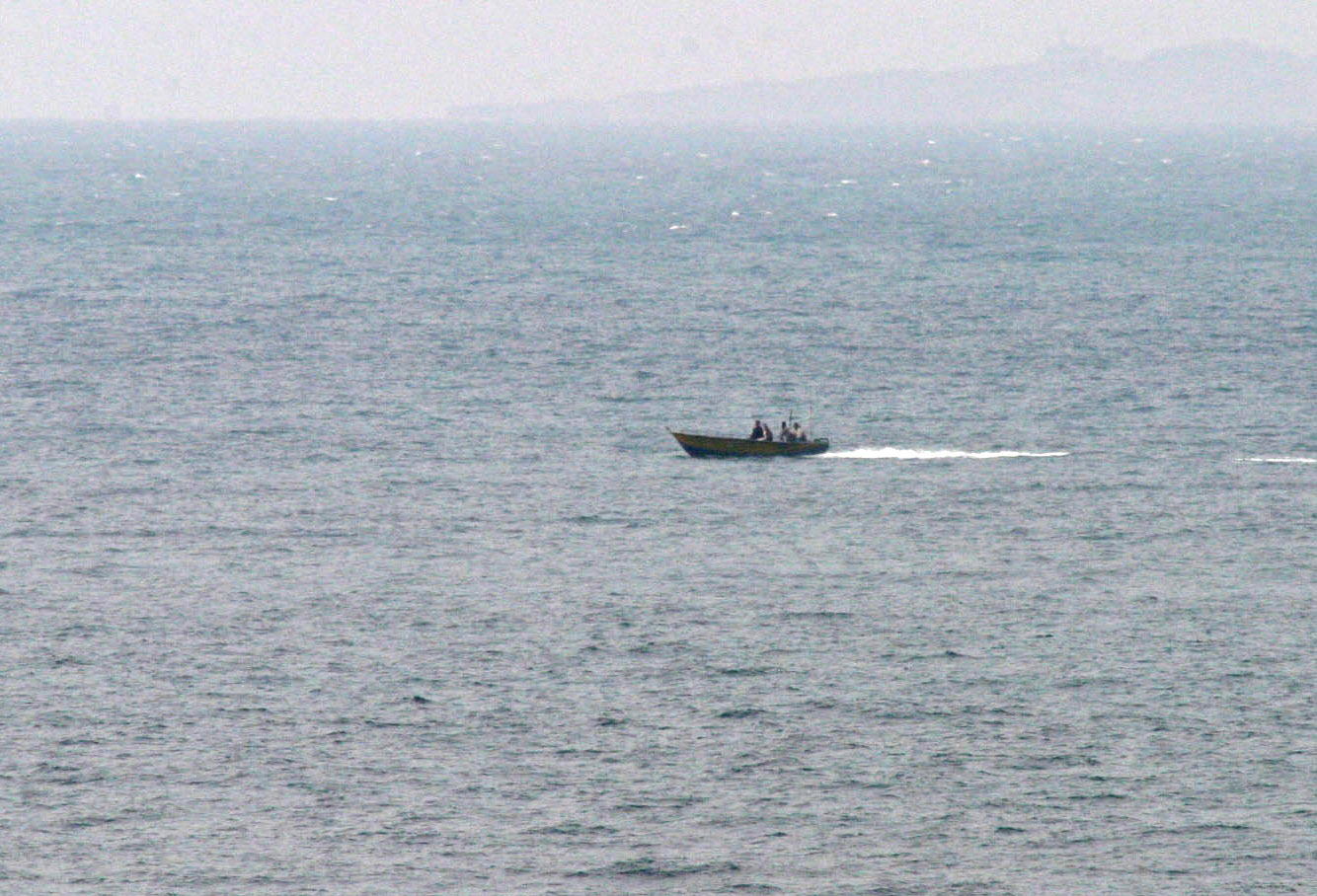
Buried in Ghalibaf’s television address was a disclosure that received insufficient attention in Western coverage. He told viewers that during the Islamabad negotiations, he informed US counterparts directly: “If a minesweeper moved even slightly forward from its position, we would definitely fire at it.” He claimed Iran “advanced to the point of conflict, but the enemy retreated,” and that the Americans requested 15 minutes to give the order to turn back.
The US Navy decommissioned its four Avenger-class mine countermeasures ships from Bahrain in September 2025, before the war began. Any minesweeping operation in the strait would require assets redeployed from elsewhere — a fact that shapes how to read Ghalibaf’s disclosure. If accurate, the standoff suggests the US tested Iranian responses to mine-clearance positioning during the ceasefire window and found them kinetically credible enough to withdraw.
Ghalibaf’s decision to disclose this on state television is itself a doctrinal act. It establishes a public red line — minesweeping operations equal military confrontation — that constrains future US options even if the ceasefire collapses. CENTCOM’s blockade announcement on April 13 specified that the blockade “does not impede freedom of navigation for vessels transiting Hormuz to non-Iranian ports.” Mine clearance would test the boundary between transit freedom and operational preparation for forcibly reopening the strait.
Who Actually Controls the Ceasefire Decision?
Ghalibaf can articulate doctrine. He cannot, alone, authorize a ceasefire extension or a change to Hormuz’s operational status. The question of who can is the structural problem that makes the next 72 hours so difficult to navigate.
Supreme Leader Khamenei has been absent from public view for more than 40 days. His son Mojtaba has appeared only in audio-only formats. Under Article 110, the Supreme Leader holds sole authority over the armed forces, including the IRGC. In his absence, authorization flows through the SNSC, now led by Secretary Mohammad Bagher Zolghadr — a figure who has actively obstructed the negotiating track.
Zolghadr replaced Ali Larijani (assassinated March 17) on March 24. He demanded inclusion on the Islamabad negotiating team and reportedly refused to allow missile negotiations — the “deviation from delegation’s mandate” that triggered the first-round walkout on April 14. President Pezeshkian publicly named Vahidi and Abdollahi as the figures who wrecked the ceasefire, but under Article 110, the president has zero authority over the IRGC. Pezeshkian’s accusation was a confession of impotence, not an exercise of power.
The authorization ceiling operates as follows: Ghalibaf sets the public doctrinal frame. Zolghadr controls what the negotiating team can actually agree to. IRGC Commander Vahidi commands the operational forces. Any ceasefire extension requires all three to align — and Zolghadr has shown no willingness to do so. Ghalibaf’s reciprocity doctrine gives Zolghadr additional cover to maintain his veto, because the doctrine’s precondition (blockade removal) is one the US cannot meet on the timeline available.
| Figure | Position | Authority | Current Posture |
|---|---|---|---|
| Khamenei | Supreme Leader | Final authority (Article 110) | Absent 40+ days |
| Mojtaba Khamenei | Supreme Leader’s son | Informal, unconfirmed | Audio-only appearances |
| Vahidi | IRGC Commander | Operational military command | Blocking ceasefire |
| Zolghadr | SNSC Secretary (since March 24) | Controls negotiating mandate | Refused missile negotiations; triggered walkout |
| Ghalibaf | Speaker / SNSC member / Lead negotiator | Doctrinal framing; negotiating authority | Set blockade-removal precondition |
| Pezeshkian | President | Executive; zero IRGC authority | Publicly accused Vahidi; constitutionally powerless |
| Araghchi | Foreign Minister | Diplomatic execution only | Overridden on Hormuz April 17; demoted to supporting role |
Can the US Lift the Blockade Before Wednesday?
The US blockade, effective since April 13 at 10 a.m. ET, applies to all vessels of all nationalities entering or departing Iranian ports and coastal areas on both the Arabian Gulf and Gulf of Oman coastline. CENTCOM claims it has halted “90% of Iran’s sea trade.” It is enforced by more than 10,000 service members, 12 warships, and over 100 aircraft. The Foundation for Defense of Democracies estimates the blockade imposes $435 million per day in economic damage on Iran.
Lifting it before Wednesday would require a presidential decision, CENTCOM operational orders, and physical repositioning of naval assets — a sequence that could theoretically be compressed into 24-48 hours but that would constitute, in CFR senior fellow James Lindsay’s framing, a diplomatic reversal that “rewards obstinacy.” Lindsay identifies three US paths, none appealing: continued blockade (oil price spikes, diplomatic isolation from Gulf allies who oppose it), diplomatic reversal (perceived capitulation), or military escalation (risks prolonged conflict beyond the current 50-plus days).
The White House’s own language forecloses the concession Ghalibaf demands. Press secretary stated it is “not true” that the US requested a ceasefire extension. A senior US official confirmed: “The United States has not formally agreed to an extension of the ceasefire.” Trump himself has described Iran’s Hormuz posture as “blackmail” and a “total violation,” warning that the US “will have to start dropping bombs again” — language that makes a blockade concession politically impossible within the domestic American timeline, even if it were strategically rational.
Ghalibaf’s doctrine thus produces what Lindsay calls an “open for all, or open for none” scenario. The reciprocity formula is designed to be unacceptable on the American side — not because Ghalibaf wants war, but because a precondition the adversary cannot meet is a precondition that preserves the status quo the IRGC prefers.
Saudi Arabia’s Impossible Position
Saudi Arabia is formally excluded from the Islamabad talks. Crown Prince Mohammed bin Salman met Pakistani Prime Minister Sharif in Jeddah on April 16, three days before Ghalibaf’s address, but the kingdom has no seat at the table where the ceasefire’s fate will be decided. On April 14, Riyadh publicly called for the US to end the blockade — a position that Gulf News characterized as “breaking with Washington’s maximum-pressure approach.”
The structural bind is geometric. Endorsing the blockade risks IRGC escalation against Aramco infrastructure — the East-West Pipeline pumping station was struck on April 8, after the ceasefire’s nominal start, and Ras Tanura has already been hit. Opposing the blockade, as Saudi Arabia has now done publicly, risks rupturing the US security guarantee that underwrites the kingdom’s defense architecture.
The numbers define the trap’s dimensions. Saudi March production fell to 7.25 million barrels per day, according to the IEA — down from 10.4 million in February, a 30 percent collapse. The East-West Pipeline bypass routes 80-85 percent of pre-war exports through Yanbu on the Red Sea coast, but the Yanbu loading ceiling is 4 to 5.9 million bpd against 7 million bpd of pre-war Hormuz throughput. The 1.1 to 1.6 million bpd structural gap cannot be rerouted. Ghalibaf’s reciprocity doctrine locks that gap in place for as long as the blockade continues — which, given US domestic political constraints, could extend well beyond Wednesday.
Riyadh’s call for blockade removal aligns it, on this specific question, with Tehran’s stated precondition — an alignment that MBS cannot afford to make visible but cannot afford to abandon. The kingdom’s fiscal break-even sits at $108-111 per barrel (Bloomberg’s PIF-inclusive estimate). Brent is at approximately $90. Goldman Sachs projects a 6.6 percent GDP war-adjusted deficit against the official 3.3 percent forecast. Every day the strait remains functionally closed, the gap widens.
The Vance-Kushner Return and the 72-Hour Window
Vice President Vance, Steve Witkoff, and Jared Kushner are traveling to Pakistan for a second round of talks before the ceasefire expires Wednesday. The Kushner inclusion has drawn its own analysis — his role appears oriented toward Gulf financial architecture rather than the Hormuz question — but the delegation’s composition is less telling than the structural constraint it faces.
The first Islamabad round lasted 21 hours across April 11-12 before collapsing after Zolghadr’s mandate deviation triggered a walkout on April 14. Ghalibaf himself told state television that during those talks, “we advanced to the point of conflict” over the minesweeper issue. The talks produced partial progress, with Ghalibaf acknowledging agreement on some issues — but the core impasse was already visible: Iran wants the blockade lifted as a precondition; the US treats the blockade as its primary coercive instrument.
Ghalibaf’s April 19 doctrine hardens that impasse into public record. Vance and Witkoff now arrive in Islamabad facing a counterpart who has told his domestic audience, on state television, that “there will be no retreat in the field of diplomacy” and that the blockade must be lifted before Hormuz can reopen. Any flexibility Ghalibaf might show in private will be measured against what he said in public — and in Tehran’s factional environment, where Kayhan editor Hossein Shariatmadari has attacked Ghalibaf from the right for even accepting negotiations (advocating instead “war until victory”), the Speaker cannot afford to be seen retreating from his own televised precondition.
IRNA has explicitly denied that any agreed new talks are scheduled — a counter-signal to the Trump administration’s Vance announcement that suggests the Iranian institutional apparatus is not unified on whether to engage in the second round at all. The SNSC’s own public communications have maintained a posture of reviewing rather than accepting US proposals.
What Happens After Wednesday?
The ceasefire expires without an extension mechanism. No one built one into the original framework. The Soufan Center flagged this structural gap weeks ago. The 45-day phased framework that Axios reported in early April envisioned a Phase 1 ceasefire followed by a final deal in Phase 2, with Hormuz and highly enriched uranium deferred to the second phase. That framework is now functionally dead — Ghalibaf has pulled Hormuz from Phase 2 into Phase 1 as a precondition, which means the phased approach cannot sequence around it.
Three post-Wednesday scenarios present themselves, though the situation is fluid enough that none should be assigned high confidence:
An informal extension without formal agreement — both sides continuing to observe restraint without calling it a ceasefire — is the outcome that preserves the most options but requires the IRGC to exercise operational restraint that Ghalibaf’s doctrine does not compel and that Vahidi has shown no inclination to offer. Hormuz transit volumes, already collapsed from 138 vessels per day pre-war to 10-15 per day in April (Bloomberg), would remain at crisis levels.
A resumption of kinetic operations — Trump’s “start dropping bombs again” language — would convert the 72-hour window into the last pause before the conflict’s next phase. The Hajj complication is real: 1.2 to 1.5 million pilgrims are arriving in Saudi Arabia, with Indonesia’s first departure of 221,000 pilgrims scheduled for April 22 — the same day the ceasefire expires. Escalation during Hajj carries costs that even the most hawkish planners in Washington and Tehran would prefer to avoid.
A partial concession — some form of blockade modification short of full removal, perhaps exempting humanitarian or third-party cargo — might thread the needle. But Ghalibaf’s formula is binary: “if the US does not lift the blockade, traffic will be permanently restricted.” “Lift” does not obviously accommodate “modify.” And any modification would need to pass through Zolghadr’s SNSC veto, which the first Islamabad round suggests it will not.
| Metric | Pre-War | Current (April 2026) | Source |
|---|---|---|---|
| Daily vessel transits | 138 | 10-15 | Bloomberg |
| Share of global oil trade | ~20% | Severely disrupted | Al Jazeera |
| Saudi oil production (M bpd) | 10.4 (Feb) | 7.25 (March) | IEA |
| US blockade enforcement | N/A | 10,000+ personnel, 12 warships, 100+ aircraft | CENTCOM |
| Iran’s sea trade halted | N/A | ~90% | CENTCOM |
| Economic damage to Iran | N/A | $435M/day | FDD |
| Brent crude | ~$75-80/bbl (2025) | ~$90/bbl | Market data |
| Saudi fiscal break-even | $108-111/bbl | $108-111/bbl | Bloomberg (PIF-inclusive) |
The hardest thing to assess is whether Ghalibaf’s doctrine is a negotiating maximum — the kind of public position that can be quietly walked back in a private room — or a genuine structural commitment. His factional positioning suggests the latter. He faces pressure from the right (Shariatmadari’s “war until victory”) and from below (the IRGC command structure that does not need his permission to act). His doctrine gives both flanks what they want while preserving his own position as the indispensable interlocutor — the man who can talk to Vance in Islamabad and to Abdollahi in the war room. Walking it back would cost him on both fronts.
The 72-hour window is real. The structural constraints that make it almost impossible to use are also real. Ghalibaf has ensured that the ceasefire cannot simply drift into extension — someone will have to make a concession visible enough to satisfy the reciprocity doctrine’s terms, or the doctrine will function as a standing order. The IRGC has already claimed “full authority” over the strait. Now it has a parliamentary speaker’s televised blessing.
Frequently Asked Questions
What is Ghalibaf’s military background and why does it matter for Hormuz?
Ghalibaf served as an Iran-Iraq War commander (Imam Reza Brigade, 1982; 25th Karbala Special Division) before leading the IRGC Aerospace Force from 1997 to 2000, where he built Iran’s underground missile storage and launch complexes. He was among 24 IRGC commanders who sent a threatening letter to President Khatami during the 1999 student protests — an episode that established his willingness to use institutional power against elected civilian authority. His deputy at the Aerospace Force, Ali Abdollahi, now runs Khatam al-Anbiya Central Headquarters, Iran’s primary military coordination center. This direct personal link between the Parliament Speaker and the war room commander is unprecedented in Iranian factional politics and gives Ghalibaf’s doctrinal statements an operational credibility that purely civilian politicians cannot claim.
How does the US blockade differ from Iran’s Hormuz closure?
The US blockade, effective April 13, targets all vessels of all nationalities entering or departing Iranian ports and coastal areas on both the Arabian Gulf and Gulf of Oman coastline, but explicitly does not impede vessels transiting Hormuz to non-Iranian destinations. Iran’s Hormuz closure, formalized in the IRGC’s April 18 Tasnim statement, restricts all commercial transit through the strait regardless of origin or destination. The combined effect is a dual blockade: Iran cannot export by sea, and global shipping cannot transit Hormuz freely. Ghalibaf’s reciprocity doctrine frames these as symmetrical — both sides imposing restrictions — though the economic damage is asymmetric: FDD puts Iranian losses at $435 million per day, while Gulf exporters absorb a structural throughput gap the Yanbu bypass cannot cover.
Has Iran’s parliament previously voted on Hormuz closure?
Yes. The Majles voted in June 2025, following US strikes on Iranian nuclear facilities, to approve a Strait of Hormuz closure resolution. The vote was advisory — Esmaeil Kowsari confirmed the “final decision lies with the Supreme National Security Council” — but it placed parliament on record in favor of closure. Ghalibaf presided over that vote as Speaker. His April 19 statement is functionally an interpretation of existing parliamentary will rather than a new position, which insulates it from accusations of executive overreach. No comparable legislative authorization exists on the US side; the April 13 blockade was implemented under executive military authority through CENTCOM.
What are Iran’s three stated ceasefire violations?
Ghalibaf enumerated three violations on April 9 in Islamabad: non-compliance with the ceasefire in Lebanon (where Israeli strikes have continued despite the broader pause), entry of an “intruding drone” into Iranian airspace, and denial of Iran’s right to uranium enrichment. The enrichment demand connects to the broader nuclear track — Iran holds 440.9 kg of uranium enriched to 60 percent as of the last confirmed IAEA measurement, with agency access terminated on February 28, 2026. Pakistan’s emerging role as nuclear guarantor adds a layer that was not present when the ceasefire was originally negotiated.
Why is Saudi Arabia calling for the US to end the blockade?
Because Saudi Arabia has more to lose from a prolonged Hormuz closure than from opposing US policy. Riyadh holds an OPEC+ quota of 10.2 million bpd — 3 million barrels per day above its actual March output of 7.25 million bpd — meaning its paper capacity has no physical outlet as long as the strait is closed and the Yanbu bypass is saturated. The IRGC struck the East-West Pipeline pumping station on April 8, demonstrating that even the bypass is targetable. At $90 Brent against a fiscal break-even above $108, Riyadh’s position aligns with Tehran’s precondition not by choice but by arithmetic.