RIYADH — Ukraine signed 10-year defence cooperation agreements with Saudi Arabia, the UAE, and Qatar between March 27 and 30, covering drone warfare, electronic warfare, and air-defence interception systems — the first time a nation actively fighting a war has simultaneously begun exporting the survival technology it developed under fire. More than 200 Ukrainian military specialists are already on the ground across the three Gulf states, assessing air-defence gaps and training local forces to counter the same Iranian-made drones that have been striking Ukrainian cities since 2022.
The deals arrive at the worst possible moment for Western defence contractors and the best possible moment for Kyiv. Saudi Arabia has roughly 400 PAC-3 MSE interceptors remaining from a pre-war stockpile of approximately 2,800 — about 14 per cent — and the sole production facility in Camden, Arkansas produces just 620 rounds a year for all global customers. Ukraine is offering interceptor drones that cost between $1,000 and $3,000 apiece, against a PAC-3 MSE that runs $3.9 million per shot, and its people have four years of continuous combat experience against the exact Shahed-pattern drones Iran is firing at Riyadh. The strategic implications of that 400-round ceiling — one interceptor for every 3,400 Hajj pilgrims, spread across four defense corridors with no resupply before late 2027 — are analyzed in The Custodian’s 400 Rounds: Saudi Arabia’s Air Defense Crisis Meets Hajj 2026.
Table of Contents
- What Was Actually Signed — and What Wasn’t
- 201 Specialists and the Assessment That Changed the Conversation
- Why Does a $3,000 Drone Matter When You Have Patriot?
- The Arsenal: What Ukraine Is Selling
- Oil for Drones — the Barter Structure
- How Has Iran Responded?
- Eleven Countries and Counting
- Background
- Frequently Asked Questions
What Was Actually Signed — and What Wasn’t
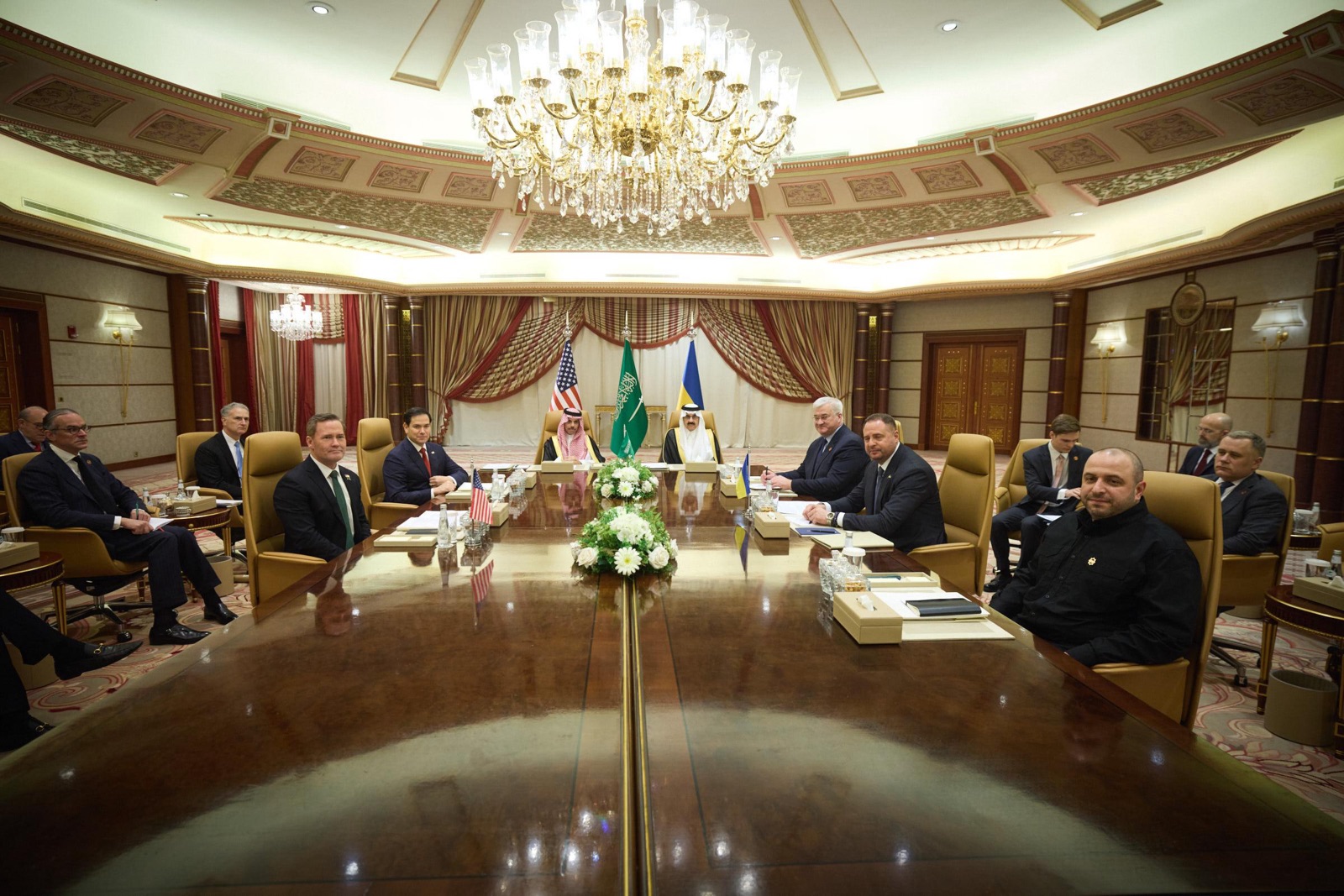
Volodymyr Zelenskyy’s Gulf tour from March 27 to 30 produced three distinct agreements, each structured differently. The Saudi deal, signed in Jeddah on March 27, is a framework memorandum of understanding on “defence procurement” that the Ukrainian president described as laying “the foundation for future contracts, technological cooperation, and investment,” according to Al Jazeera. It is not, despite some reporting, a hardware contract — it is the legal architecture that makes hardware contracts possible.
The Qatar agreement is the most structurally detailed of the three. The Chiefs of General Staff of Ukraine and Qatar signed a 10-year intergovernmental “Agreement on Cooperation in the Defence Sector” that provides for joint defence industry projects, co-production facilities, and technological partnerships, per Breaking Defense. The UAE deal, signed March 28 after Zelenskyy met President Sheikh Mohammed bin Zayed Al Nahyan, covers security and defence cooperation more broadly.
What none of the three agreements include is a publicly disclosed contract value. Davyd Aloian, Deputy Secretary of Ukraine’s National Security and Defence Council, told Reuters that “taking into account ready-made products, spare parts, components, and services that can be provided, it amounts to several billion dollars” across all partners for 2026 — a figure that reflects ambition more than signed purchase orders, but one that gives a sense of the scale Kyiv is planning for.
201 Specialists and the Assessment That Changed the Conversation
Before any memoranda were signed, Ukraine had already deployed 201 anti-drone military specialists to the UAE, Qatar, and Saudi Arabia as of March 18, 2026, according to the Ukrainian Ministry of Foreign Affairs. Additional Ukrainian personnel were working alongside American forces in Jordan, and Britain announced separate plans to send Ukrainian specialists to the region. The deployment was not symbolic — these were operational trainers and vulnerability assessors who spent over a week inside Saudi air-defence networks before the deals were concluded.
The Middle East briefing 3,000+ readers start their day with.
One email. Every weekday morning. Free.
What they found was damning. According to the Jamestown Foundation, the Ukrainian assessment teams identified specific allied failures, including the use of “eight Patriot interceptor missiles at a single target” and “$6 million SM-6 missiles against cheap drones.” The arithmetic of that mismatch is not subtle: Saudi Arabia intercepted 894 air threats between March 3 and April 7 — 799 drones, 86 ballistic missiles, and 9 cruise missiles — and the cost-exchange ratio of a PAC-3 MSE versus a Shahed-136 drone runs somewhere between 78-to-1 and 195-to-1 in Iran’s favour, depending on which production-cost estimates you use for the Shahed.
“Ukrainian teams have already achieved their first successes in protecting lives in the Middle East from aerial threats,” said Heorhii Tykhyi, the Ukrainian Ministry of Foreign Affairs spokesperson, in remarks reported by the Jamestown Foundation. The deliberate vagueness of “first successes” is itself telling — it suggests operational engagements that neither side is ready to detail publicly. Ukraine’s counter-drone systems have since been deployed at Prince Sultan Air Base, with Sky Map and Merops interceptor drones operational at the installation following IRGC strikes that destroyed an E-3G Sentry AWACS and three KC-135 tankers in late March. The full implications of that six-country air defense architecture — and why Zelenskyy returned to Jeddah on April 24 to advance it further — are examined in The Six-Country Sky Over Saudi Arabia: Ukraine’s Sky Map Lands at PSAB.
Why Does a $3,000 Drone Matter When You Have Patriot?
The problem is not that Patriot doesn’t work — it does, with brutal effectiveness against ballistic missiles, which is what it was designed for. The problem is that Saudi Arabia is burning through irreplaceable interceptors at a rate that no production line on earth can sustain, and the threat it faces is overwhelmingly composed of drones that cost between $20,000 and $50,000 each. Firing a $3.9 million missile at a $30,000 drone is not defence — it is economic attrition in the wrong direction, and Iran knows it.
The Camden, Arkansas facility that assembles every PAC-3 MSE on the planet produced 620 rounds in 2025 for all global customers. Saudi Arabia’s January 2026 Foreign Military Sales request alone — 730 rounds — exceeds 118 per cent of that annual capacity. No contracts specify deliveries in 2026 or 2027. The South Korean KM-SAM Cheongung-II, which Saudi Arabia contracted in a $3.2 billion deal in November 2023, demonstrated a combat intercept rate of 29-of-30 in the UAE, but production runs at roughly 80 to 100 rounds per year with earliest deliveries in late 2026.
Ukraine’s interceptor drones sit in a different cost universe entirely. The Sting costs $1,000 to $2,500 per unit, flies at 315 to 343 km/h, reaches a ceiling of 3,000 metres, and carries thermal imaging for terminal guidance. The Octopus 100 runs about $3,000 and is the subject of a UK-Ukraine joint production agreement for 1,000 units per month beginning in February 2026, per technology.org. Jonathan Lippert, President of Defense Tech for Ukraine, told CEPA that “Ukrainian interceptor teams are the only ones with significant experience using drones specifically against Shahed-type attack UAVs” — a claim that no Western defence contractor can credibly contest, because none of them have fought a four-year air war against Iranian-pattern drones.
The Arsenal: What Ukraine Is Selling
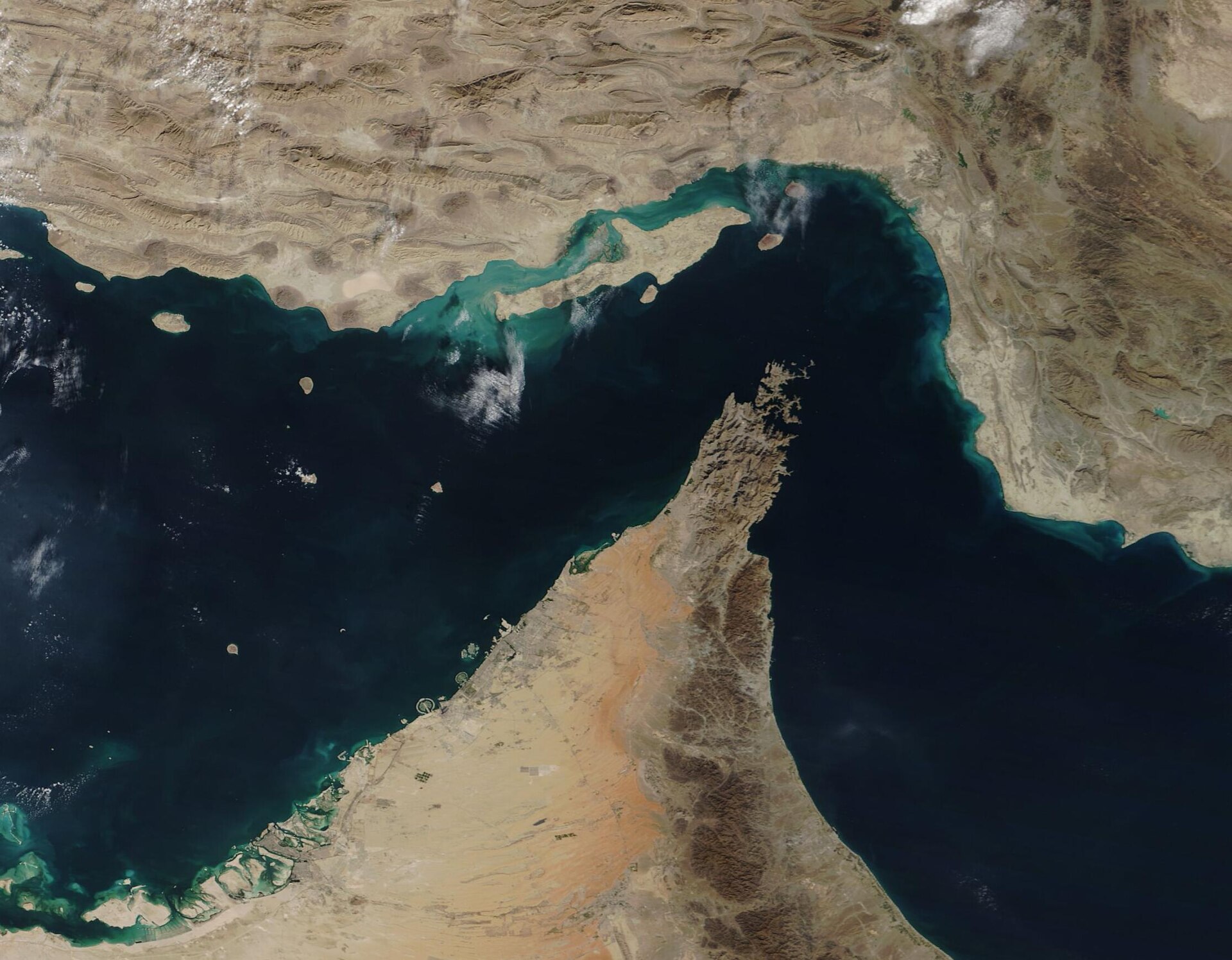
Zelenskyy himself framed the scope of the export package in remarks reported by Euronews on March 30: “Not just interceptors alone, but also defence lines, software, electronic warfare systems.” The full offer includes interceptor drones, electronic warfare suites, command-and-control integration software, and maritime drones — the Magura-V5, a 5.5-metre unmanned surface vessel with 800 kilometres of range and a roughly 300-kilogram payload that Ukraine is pitching for Strait of Hormuz corridor security. An advanced variant, the Magura-V7, incorporates air-to-air missile capability.
Samuel Bendett, an adviser at the Center for New American Security, noted in Breaking Defense that Ukrainian defensive capabilities extend well beyond hardware to include “signal intelligence, threat-sharing systems, and mobile firing groups” — the doctrinal software, in effect, that makes the hardware effective. This is what Western arms manufacturers cannot replicate on a PowerPoint slide: the integration knowledge that comes from defending Kyiv, Odesa, and Kharkiv against nightly Shahed barrages for years.
| System | Type | Unit Cost | Key Specification |
|---|---|---|---|
| Sting | Interceptor drone | $1,000–$2,500 | 343 km/h, 3,000m ceiling, thermal imaging |
| Bullet | Interceptor drone | Not disclosed | 3D-printable, jet engine, 5,500m ceiling |
| P1-Sun | Interceptor drone | ~$1,000 | 3D-printed airframe |
| ODIN Win_Hit | Interceptor drone | Not disclosed | 5,000m ceiling |
| Octopus 100 | Interceptor drone | ~$3,000 | UK co-production, 1,000/month planned |
| Magura-V5 | Maritime drone | Not disclosed | 800km range, ~300kg payload |
| Magura-V7 | Maritime drone | Not disclosed | Air-to-air missile capability |
The demand numbers pre-dating the formal agreements suggest Gulf states had already done their own cost-benefit analysis. According to CEPA, the UAE inquired about 5,000 interceptor drones and Qatar expressed interest in 2,000 units — quantities that, at Ukrainian price points, would cost a fraction of a single PAC-3 MSE battery reload.
Oil for Drones — the Barter Structure
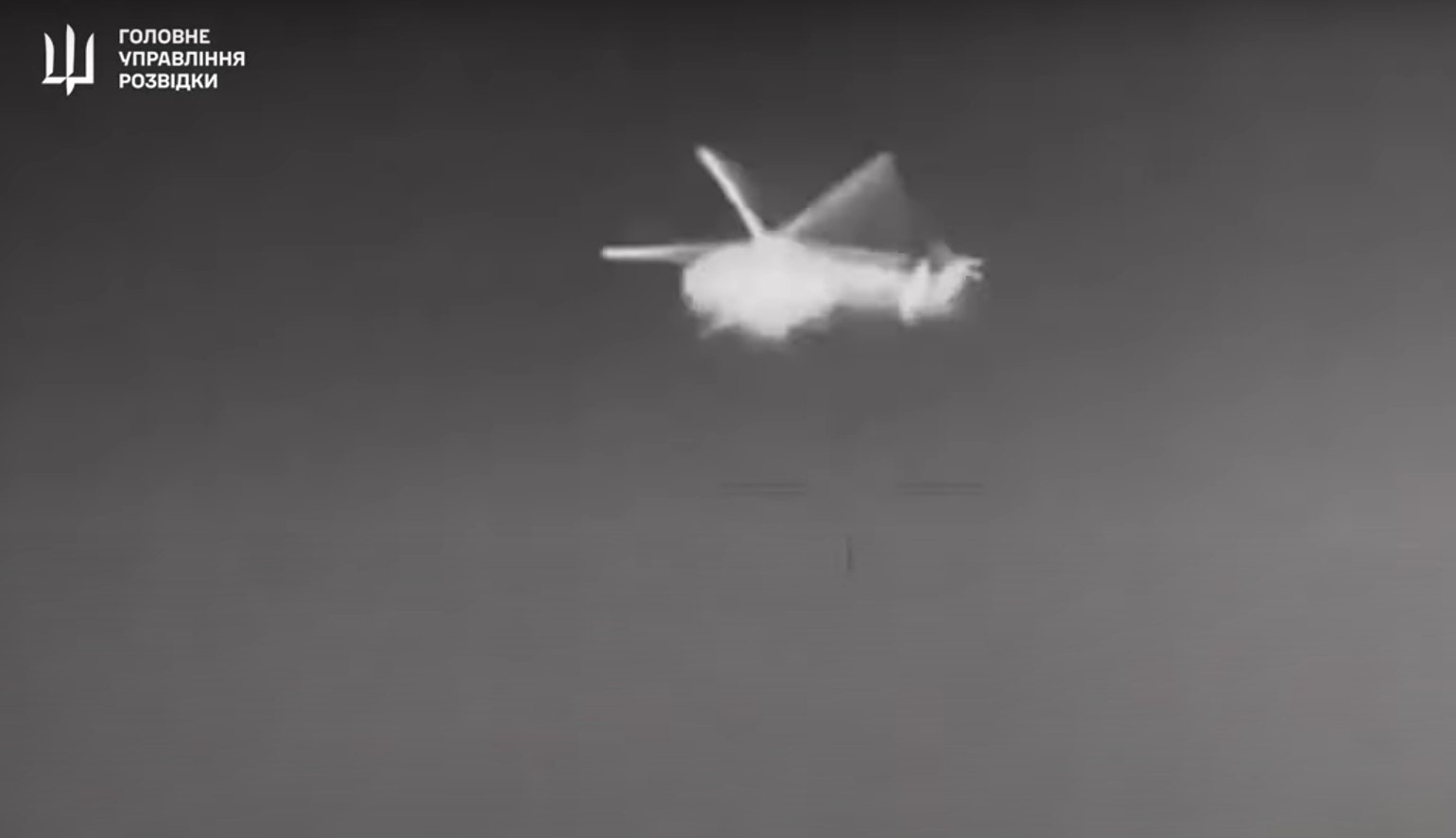
Ukraine receives crude oil, delivered to European refineries for processing, and finished diesel fuel in exchange for defence capabilities, according to reporting by Aerotime.aero, Euronews, and Al Jazeera. For Gulf states sitting on oil they are struggling to export through war-disrupted corridors, trading barrels for drone-warfare expertise is a transaction that bypasses two problems at once — Ukraine’s hard-currency constraints and the Gulf’s need for capabilities that money alone cannot buy quickly enough.
The barter structure also insulates the deals from the kind of congressional scrutiny and State Department approval processes that slow conventional Foreign Military Sales. Ukraine issued its first export permits for controlled military goods in February 2026, having formally announced a controlled weapons export policy in September 2025 and implemented it by November, per the Kyiv Independent. The speed of that regulatory buildout — from policy announcement to Gulf deployment in under six months — reflects a country that understands its window of maximum leverage is the war itself.
“Every month Kyiv delays authorizing exports, the more competitors we create abroad.”— Unnamed Ukrainian defence industry insider, Washington Monthly, April 2 2026
That insider, speaking to the Washington Monthly, also identified a cultural friction at the heart of the negotiations: “We’re speaking different languages… The Arabs think it’s all about money — you sign a contract, and you’re done.” The implication is that Ukraine’s export offering is inseparable from its people — the specialists, the doctrine, the pattern-recognition skills developed under fire — and that a transactional approach misses the point of what is actually being sold.
How Has Iran Responded?
With both kinetic threats and diplomatic pressure. On March 28, one day after the Saudi agreement was signed in Jeddah, Iran’s military claimed it had destroyed a “Ukrainian anti-drone depot in the UAE supporting US forces,” according to reports compiled by Wikipedia’s Ukraine in the 2026 Iran War entry. Ukrainian officials denied the claim, and no independent evidence corroborating it has surfaced. The timing, however, was precise enough to function as a signal regardless of whether the strike actually occurred — Iran views the Ukrainian presence in the Gulf as a legitimate military target.
Diplomatically, Iran’s UN Ambassador Iravani demanded compensation from Saudi Arabia, the UAE, Qatar, Bahrain, and Jordan for “violating obligations toward Iran” — a formulation broad enough to encompass the hosting of Ukrainian military personnel. Lt. Gen. Ihor Romanenko of the Ukrainian military told Al Jazeera on March 27 that Russia continues providing “intelligence, data, experts and components” for Iranian weaponry, a reminder that the drone war in the Gulf is also a proxy dimension of the Russia-Ukraine conflict. Max Boot of the Council on Foreign Relations characterised both Russia and Ukraine as trying to “use the Middle East conflict to their own advantage,” framing the Gulf as a new theatre in their broader competition.
Russia’s contribution to Iran’s drone capability is not abstract. Moscow has provided satellite intelligence from the Liana spy satellite system — images of Prince Sultan Air Base, Al Udeid, Diego Garcia, and Kuwait International Airport, according to Al Jazeera and the Foreign Policy Research Institute. Iranian Shahed drones now incorporate Russian Kometa-B anti-jam navigation modules. Ukraine, in effect, is selling the antidote to a weapon it helped provoke — Iran began mass-producing Shaheds for Russia in 2022, Russia upgraded them, and now those upgrades are being fired at the Gulf states that Ukraine is arming.
Eleven Countries and Counting
Zelenskyy stated on April 21 via Army Inform, as reported by Euromaidan Press, that “we have agreed on 10-year contracts with three key countries… and we already have requests from 11 countries.” Oman, Kuwait, and Bahrain are in active discussions, per the same reporting. The speed of interest reflects a market reality that Western defence primes have been slow to acknowledge: for the specific threat of cheap, mass-produced attack drones — the threat that defines this war — there is no Western product at a competitive price point, and there is no Western military with equivalent operational experience.
The UK-Ukraine joint production agreement for the Octopus interceptor, targeting 1,000 units per month, signals that London has decided to embed itself in Ukraine’s defence-export supply chain rather than compete with it. Britain’s separate announcement that it would send Ukrainian specialists to the Middle East positions the UK as a facilitator and co-beneficiary rather than a rival. For Lockheed Martin and Raytheon, whose PAC-3 and SM-6 programmes remain the backbone of Gulf air defence, the Ukrainian entry does not replace their systems — nothing Kyiv makes can intercept a ballistic missile at altitude — but it fills the tier-one layer they never built, the cheap-drone kill layer that would stop Gulf states from burning irreplaceable interceptors against targets they were never designed to kill.
Background
Iran supplied Russia with Shahed-136 one-way attack drones beginning in 2022, and Russia now manufactures a domestic variant, the Geran, at scale. Ukraine’s military developed an entire counter-drone ecosystem — interceptor drones, mobile firing groups, electronic warfare units, and integrated command networks — under continuous bombardment, iterating systems in weeks rather than the years-long procurement cycles that characterise Western defence acquisition.
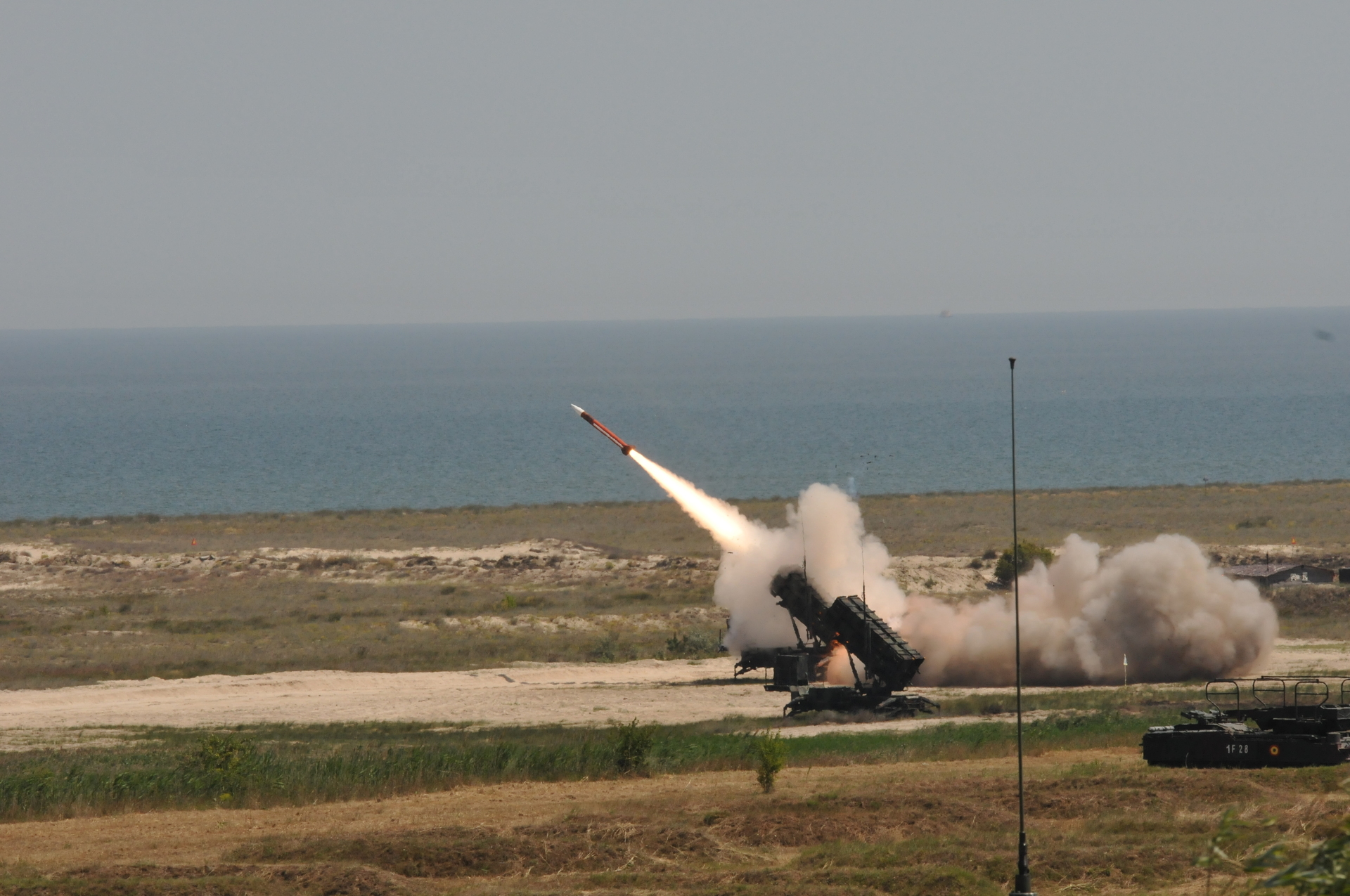
Saudi Arabia’s air-defence crisis predates the Ukraine deals. The Kingdom’s THAAD upper-tier radar was destroyed early in the Iran conflict, forcing Patriot batteries to engage ballistic missiles at lower altitudes and accelerating PAC-3 MSE consumption. Riyadh’s January 2026 FMS request for 730 PAC-3 MSE rounds sits in a queue behind every other American ally making the same request, against a production line that fills none of them on an operationally useful schedule.
The broader context is a Gulf-wide reassessment of defence dependency. Saudi Arabia’s KM-SAM contract with South Korea, the UAE’s interest in Turkish and Chinese systems, and now the Ukrainian drone-warfare packages all point toward the same conclusion: the American defence-industrial monopoly that defined Gulf security architecture for four decades is fracturing under the weight of a production base that cannot keep pace with the rate of consumption this war demands.
Frequently Asked Questions
Can Ukrainian interceptor drones replace Patriot or THAAD systems?
They cannot. Ukrainian systems operate in the low-altitude tier against drones and slow-moving cruise missiles, with ceilings between 3,000 and 5,500 metres. Patriot and THAAD intercept ballistic missiles at altitudes of 20 to 150 kilometres. The Ukrainian systems are designed to fill the gap below those systems — handling the cheap, mass-produced drone threats so that expensive interceptors are preserved for the targets they were designed to kill.
Are the Ukrainian specialists in a combat role?
The official framing is advisory and training. The 201 personnel confirmed by Ukraine’s MFA are described as “anti-drone military experts” conducting assessments and training. Ukrainian Foreign Ministry spokesperson Heorhii Tykhyi’s reference to “first successes in protecting lives” suggests some operational involvement, but neither Ukraine nor the Gulf states have confirmed direct combat engagement by Ukrainian personnel.
How does Russia view Ukraine’s Gulf defence deals?
No documented Russian government statement specifically condemning the deals has surfaced in available reporting. Russia’s strategic posture is complex: it benefits from elevated oil prices driven by the Iran conflict and provides Iran with satellite intelligence and drone-technology upgrades, but it has not publicly objected to Ukraine arming the Gulf states that Iran is attacking — possibly because doing so would acknowledge the effectiveness of Ukrainian systems Moscow has spent years claiming to have neutralised.
What happens to these agreements if the Russia-Ukraine war ends?
The 10-year duration of all three Gulf agreements suggests both sides are building for permanence regardless of the Russia-Ukraine conflict’s trajectory. Ukraine’s defence-export policy, formalised in September 2025, treats arms sales as a long-term revenue stream for post-war reconstruction. The Gulf states’ drone threat from Iran and its proxies will persist independently of any Russia-Ukraine settlement, meaning demand for counter-drone systems is structural rather than contingent on any single conflict.
Has any Gulf state publicly confirmed deploying Ukrainian-made systems?
No Gulf state has officially confirmed operational deployment of Ukrainian-manufactured defence systems as of April 23, 2026. The UAE’s pre-deal inquiry about 5,000 interceptor drones and Qatar’s interest in 2,000 units, reported by CEPA, indicate procurement is underway, but delivery timelines and integration schedules remain classified. The gap between the specialist deployment (March 18) and the formal agreements (March 27–30) suggests systems may have been trialled before the paperwork was finalised.