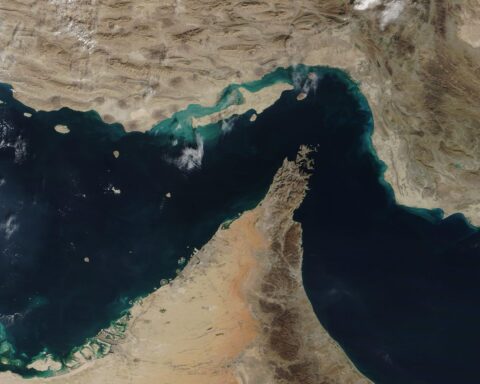
TOKYO — Japanese Prime Minister Sanae Takaichi called Saudi Crown Prince Mohammed bin Salman on Wednesday and asked him directly for more crude oil. MBS said he would “respond positively.” The exchange, conducted on the same day Iran’s parliament speaker declared reopening the Strait of Hormuz “impossible” and the IRGC seized two merchant vessels, exposes the central structural problem of the war’s energy dimension: Saudi Arabia is selling diplomatic reassurance it cannot back with barrels.
Japan imports approximately 3.14 million barrels per day, 93 percent of it through or near the Strait of Hormuz. Saudi Arabia supplies 39 to 40 percent of that volume under long-term Aramco contracts. The only Saudi export terminal operating outside the Iranian interdiction zone is Yanbu, on the Red Sea, which handles roughly 4 million bpd of effective throughput — serving every customer Saudi Arabia has, not just Japan. The pipeline feeding Yanbu can carry 7 million bpd. The constraint is not the pipe. It is the terminal.
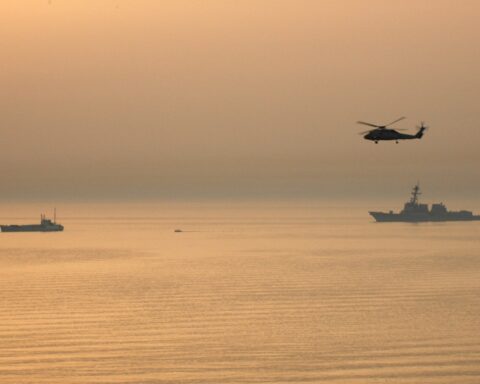
The call’s timing was not coincidental. Within hours of the Takaichi-MBS conversation, Mohammad Bagher Ghalibaf told Iranian state media that “reopening the Strait of Hormuz is impossible with such flagrant breach of the ceasefire.” President Trump simultaneously ordered the US Navy to shoot mine-laying boats on sight. Iran’s IRGC seized the MSC Francesca and the Epaminondas. Japan’s prime minister was asking for more oil from the one Gulf producer still exporting — on the day the last theoretical path to restoring normal Gulf shipping was publicly closed by every party with the power to close it.
Table of Contents
- What Did Takaichi Actually Ask For?
- Why Can’t Yanbu Deliver More Oil to Japan?
- China’s First-Mover Advantage at Yanbu
- How Does 2026 Invert the 1973 Oil Crisis Model?
- What Role Does Okinawa Storage Play in Japan’s Supply?
- Can Japanese Refineries Process What Yanbu Ships?
- How Long Can Japan’s Strategic Reserve Last?
- Why Did Tokyo Bypass the Aramco Commercial Channel?
- The Loyalty Premium Japan Pays for G7 Membership
- What Happens When Iran’s April 25 Deadline Arrives?
What Did Takaichi Actually Ask For?
The Japanese government’s readout of the April 23 call states that Takaichi “expressed her appreciation for Saudi Arabia’s continued supply of crude oil to Japan via Yanbu Port even after the outbreak of the situation, and requested cooperation toward the expansion of energy supply to Japan.” The phrasing is diplomatic but the substance is not. A head of government does not telephone a crown prince to request “cooperation toward the expansion of energy supply” unless the existing supply is insufficient and the commercial mechanisms for increasing it have failed.
MBS’s response, per the Saudi readout, affirmed the kingdom’s “intention to respond positively in order to ensure energy supply to markets including Japan” and committed to “continue to cooperate with Japan to stabilize the situation, including ensuring safe navigation in the Strait of Hormuz.” No volume figure was attached. No timeline. No grade specification. No loading schedule. The statement committed Saudi Arabia to an intention, not an action — and to ensuring safe navigation in a strait controlled by the IRGC, which on the same day confirmed it would not permit safe navigation.
Takaichi separately told reporters that “by May, the country should be able to secure more than half of its imports via routes that do not include the Strait of Hormuz, without providing details.” The hedging language — “should be able to,” “more than half,” “without providing details” — signals a government that is not close to replacing 93 percent Hormuz dependency. Securing “more than half” via non-Hormuz routes would still leave roughly 1.5 million bpd of Japanese consumption uncovered, an amount larger than the entire crude output of Algeria.
The Middle East briefing 3,000+ readers start their day with.
One email. Every weekday morning. Free.
Why Can’t Yanbu Deliver More Oil to Japan?
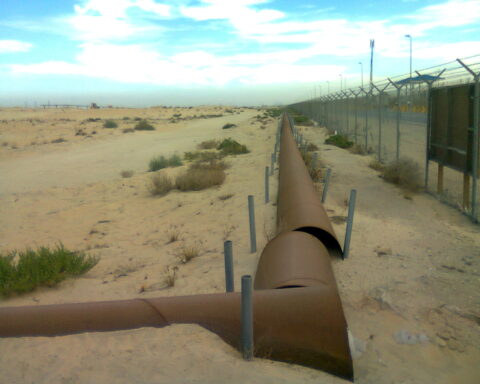
The answer is physical, not political. Saudi Arabia’s East-West Pipeline — the Petroline — can carry 7 million barrels per day from the Eastern Province fields to Yanbu on the Red Sea coast. It was built in the early 1980s as a Hormuz bypass, expanded from 1.85 million bpd at commissioning in 1981 to 4.8 million by 1987, and upgraded to its current 7 million bpd emergency capacity by the mid-2000s. The pipeline was sized for a short disruption. The Iran war is now in its 55th day.
The constraint is the Yanbu marine terminal complex. Yanbu North handles approximately 1.5 million bpd. Yanbu South handles approximately 3 million bpd. Combined practical throughput, per Vortexa and Lloyd’s List tracking data, is roughly 4 million bpd. Saudi Arabia’s pre-war exports through the Strait of Hormuz totaled approximately 5.5 million bpd. Yanbu at full throughput replaces 73 percent of that volume. The remaining 1.5 million bpd has no export path.
Saudi total crude exports collapsed from 7.1 million bpd in February to 4.355 million bpd in March — a 38.6 percent decline tracked by Kpler. Production fell from 10.4 million bpd pre-war to 7.25 million bpd in March, according to the IEA’s Oil Market Report, which described it as “the largest supply disruption in the history of the global oil market.” The kingdom is producing 3 million barrels per day more than it can export. Those barrels go into domestic storage or stay in the ground.
When Takaichi asked MBS for “expansion of energy supply,” she was asking him to increase throughput at a terminal already running at or near capacity. MBS would need to either raise the Yanbu ceiling — a capital project measured in years, not weeks — or reallocate barrels from another customer. The revenue arithmetic makes reallocation zero-sum: every barrel redirected to Japan is a barrel taken from China, South Korea, or a Mediterranean buyer.
China’s First-Mover Advantage at Yanbu
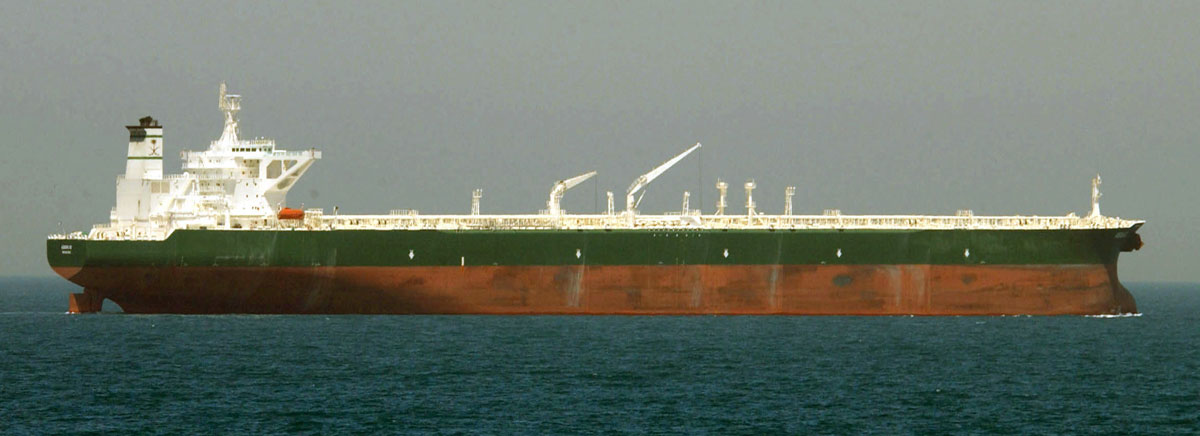
China moved first. By mid-March 2026, five tankers had completed loading or were actively loading at Yanbu carrying 10.16 million barrels destined for Chinese ports, with 17 additional tankers contracted for approximately 35 million more barrels, according to South China Morning Post tracking. China-bound cargoes dominated early Yanbu flows and established a loading sequence that subsequent buyers have had to work around.
A three-tier allocation hierarchy has emerged at Yanbu, per tanker-tracking data. Tier 1 — full pre-war allocation — includes China and Japan. Tier 2 — reductions of 15 to 25 percent — covers South Korea and select Mediterranean refiners. Tier 3 — cuts of 30 percent or more — applies to India and Southeast Asian buyers. Japan sits in Tier 1, but Tier 1 at constrained Yanbu volumes is not Tier 1 at pre-war Ras Tanura volumes. Japan imported 15.8 percent of Saudi exports in the first half of 2025, making it Saudi Arabia’s second-largest Asian buyer after China. At 4 million bpd of total Yanbu throughput, that 15.8 percent share translates to approximately 632,000 bpd — roughly half of Japan’s pre-war Saudi import requirement of 1.25 million bpd.
Beijing’s position at Yanbu is not purely commercial. China brokered the Qatar LNG tanker transits through Hormuz in early April. China’s CNPC and Sinopec hold 5 percent equity in Qatar’s North Field East expansion. The structural interlock between Chinese demand, Chinese diplomatic mediation, and Chinese commercial priority at Yanbu creates a framework in which Japan negotiates for whatever capacity China does not consume. Takaichi’s call to MBS was, in part, a request for MBS to prioritize Japan over buyers who have loaded more, spent more, and arrived earlier.
How Does 2026 Invert the 1973 Oil Crisis Model?
In October 1973, Saudi Arabia led the Arab oil embargo against the United States and the Netherlands in retaliation for their support of Israel during the Yom Kippur War. Oil prices rose 300 percent, from $3 to $12 per barrel. Japan, entirely dependent on Middle Eastern crude, capitulated within weeks — breaking with US Middle East policy, recognizing Palestinian rights, and sending Deputy Prime Minister Takeo Miki to eight Arab capitals in a diplomatic effort that Tokyo’s own Foreign Ministry archives describe as humiliating. The strategy worked. Saudi Arabia controlled the supply and could restore it once the political conditions were met. Japan’s concessions produced barrels.
The 2026 crisis inverts every element of that model. Saudi Arabia is not the architect of the disruption. It is a victim. Iranian strikes hit Ras Tanura, damaged the East-West Pipeline pumping station, and knocked Khurais offline. MBS cannot reopen Hormuz. He cannot compel Iran to stop mining the strait. He cannot order the IRGC to release the MSC Francesca. The barrels Japan needs are trapped by Iranian geography, not Saudi policy.
In 1973, Japan appeasing Saudi Arabia could theoretically produce more oil. In 2026, Japan appeasing Saudi Arabia produces a phone call readout affirming “positive intention” and zero additional barrels. The diplomatic grammar is identical — a Japanese leader deferring to a Saudi ruler — but the underlying power relationship has collapsed. MBS is not withholding supply as leverage. He is unable to supply what he is not withholding.
Japan’s institutional response to the 1973 crisis built the architecture that governs today’s emergency: the IEA, the coordinated SPR system, the diversification mandates that pushed Japanese industry into nuclear power and LNG. That architecture assumed the next crisis would resemble the last one — a producer choosing to restrict supply, reversible through diplomacy or market adjustment. The SPR system was designed for an embargo, not for a war in which the swing producer’s own export infrastructure is under attack and its primary shipping lane is mined.
What Role Does Okinawa Storage Play in Japan’s Supply?
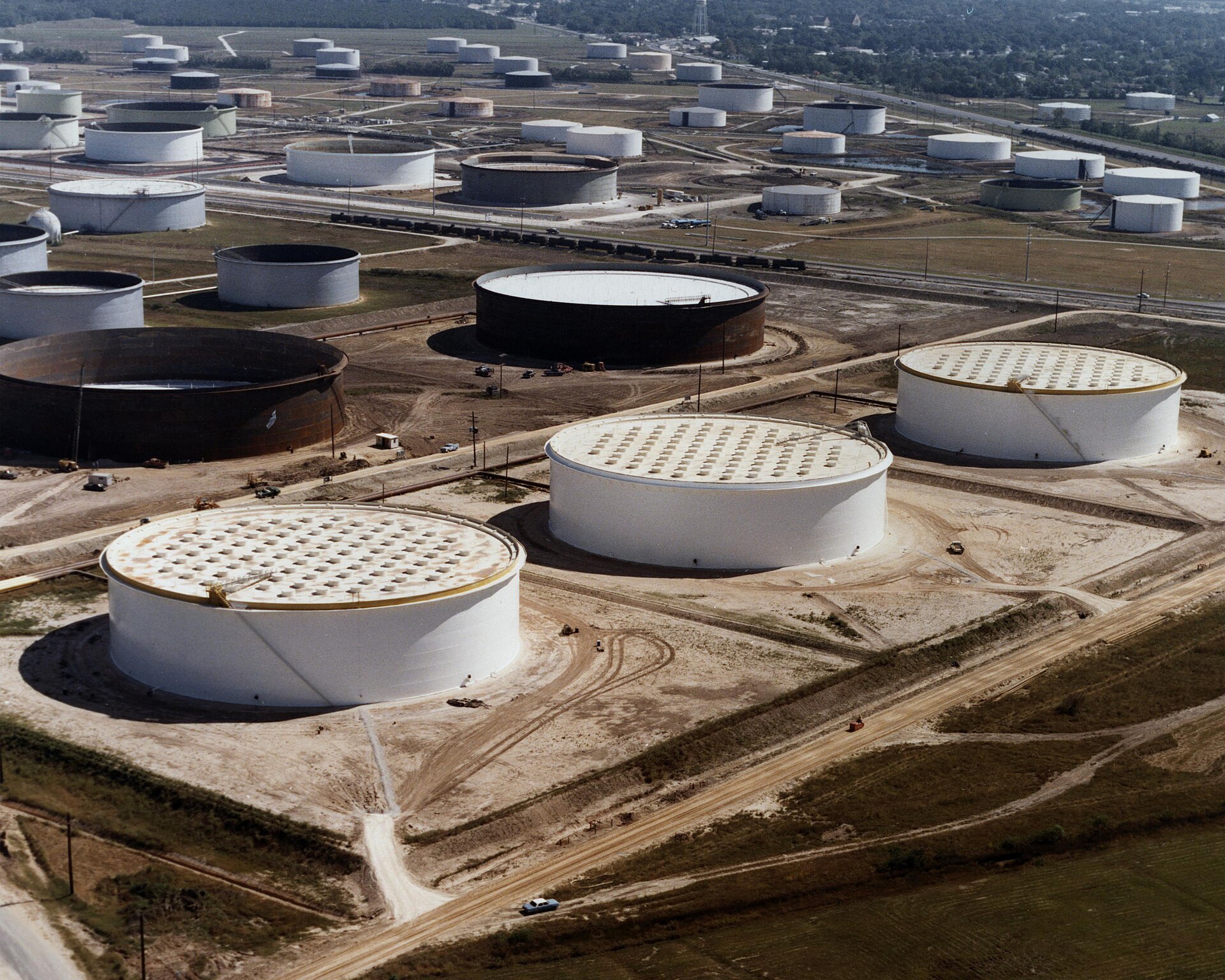
Since 2010, Saudi Aramco has leased 13 storage tanks at the CTS base in Okinawa under a JOGMEC (Japan Organization for Metals and Energy Security) arrangement, holding approximately 8.2 million barrels. The agreement was renewed in November 2025, three months before the war began. Japan has priority emergency access to purchase these barrels, which Aramco owns but stores on Japanese soil as a forward positioning arrangement that benefits both parties — Aramco gains proximity to Asian customers, Japan gains a buffer.
When Takaichi thanked MBS for “continued supply of crude oil to Japan via Yanbu Port,” she was partly thanking him for Aramco drawing down its own Okinawa stocks. Those 8.2 million barrels cover approximately three days of Japan’s total crude consumption, or roughly 6.5 days of Japan’s Saudi-specific import requirement at 1.25 million bpd. It is a bridge, not a foundation. The Okinawa buffer was designed to smooth short-term logistical disruptions — a delayed tanker, a loading-port weather closure. It was not designed to substitute for a multi-month loss of the Strait of Hormuz.
The physical journey compounds the problem. A VLCC sailing from Yanbu to Chiba or Yokohama must now route around the Cape of Good Hope rather than through the Suez Canal and the Strait of Hormuz. The voyage takes approximately 35 to 40 days, roughly double the pre-war Ras Tanura–to–Japan transit of 18 to 20 days via Hormuz. Every barrel loaded at Yanbu today arrives in Japan in late May or early June. Every barrel not loaded today is a deficit that cannot be corrected until summer.
Can Japanese Refineries Process What Yanbu Ships?
Japanese refineries are precision systems calibrated over decades for medium and heavy sour Gulf crude — grades like Arab Medium, Arab Heavy, and the upper sulfur bands of Kuwait Export Crude. These grades flow through Hormuz. Through Yanbu, only Arab Light and Arab Extra Light transit the Petroline. The grade mismatch is not theoretical. Japanese refinery utilization has fallen to approximately 66 percent as of April 2026, according to Hydrocarbon Processing, with facilities running below capacity not because they lack any crude but because they lack the right crude.
Japan can push non-Middle Eastern crude to roughly 30 to 50 percent of its refinery slate at maximum, according to ORF Middle East analysis. Beyond that threshold, refineries would require capital-intensive desulfurization reconfigurations — secondary processing units designed to handle lighter, sweeter crudes that Japanese facilities were never built to run at volume. Those reconfigurations take years and cost billions. For the duration of this crisis, Japanese refiners are running a system optimized for grades that no longer arrive.
Arab Light is not a bad crude. It is a mismatch. A refinery configured for Arab Heavy that receives Arab Light instead will produce a different product slate — more gasoline, less fuel oil, different middle distillate yields. For a country whose industrial and power-generation sectors depend on specific product mixes, “more crude” is not synonymous with “more usable crude.” Both the Japanese readout and the Saudi readout of the April 23 call left this distinction unaddressed.
How Long Can Japan’s Strategic Reserve Last?
Japan holds approximately 263 million barrels of government-controlled strategic reserve, the third largest in the world after the United States and China. Combined with private-sector mandatory stocks, total coverage reaches approximately 254 days at normal consumption rates. Japan has already tapped this reserve twice.
On March 16, the IEA coordinated its largest-ever release: 400 million barrels across member states, more than double the 182.7 million barrel release during the Ukraine crisis. Japan contributed 80 million barrels — 54 million in crude and 26 million in products. On April 10, Takaichi confirmed a second release of 20 days of reserves beginning in May. On April 23 — the same day she called MBS — Takaichi separately asked IEA Executive Director Fatih Birol to prepare an additional coordinated release.
The SPR addresses volume. It does not address price. Japan is simultaneously drawing down reserves and paying record Aramco Official Selling Prices — the May 2026 OSP for Arab Light to Asia was set at a $19.50 per barrel premium, the highest in Aramco’s pricing history. Brent on April 23 traded at $103.67, above the level at which every $10 increase adds approximately 0.3 percentage points to Japanese inflation, per CSIS and ORF estimates. Japanese household electricity bills have risen an estimated JPY 15,000 since the crisis began. Birol has not publicly responded to Takaichi’s April 23 request.
At current drawdown rates — 80 million barrels released in March, 20 days of reserves committed for May — Japan’s government reserve of 263 million barrels could be substantially depleted by late summer if the crisis continues. Actual coverage depends on how aggressively Japan reduces demand, how successfully it sources non-Gulf alternatives, and whether a third IEA coordinated release materializes.
Why Did Tokyo Bypass the Aramco Commercial Channel?
Under normal conditions, Japanese crude procurement runs through commercial channels. ENEOS, Idemitsu Kosan, and Cosmo Energy negotiate with Aramco’s trading and commercial teams under long-term contracts priced off the monthly OSP. The government sets energy policy. The companies buy the barrels. This architecture has functioned for decades, through price spikes, demand shocks, and three Gulf wars.
Takaichi calling MBS directly — sovereign to sovereign, head of government to crown prince — breaks that architecture. It signals three conclusions Tokyo has reached. First, that Aramco’s commercial teams have no ability to increase Yanbu throughput above the terminal’s physical capacity, making further commercial negotiation pointless. Second, that the allocation decisions at Yanbu have become political rather than commercial, requiring a political intervention. Third, that the scale of the crisis has exceeded the mandate of corporate procurement departments.
The sovereign-to-sovereign channel also serves a domestic political function. Takaichi, who assumed office in October 2025, faces a Japanese public experiencing the sharpest energy price increase since the 1973 crisis. Demonstrating that she personally called the crown prince — and received a “positive” response — provides political cover regardless of whether additional barrels arrive. The call is simultaneously a genuine supply request and a piece of crisis communication aimed at Japanese voters.
Saudi Arabia has its own reasons to welcome the call. Every sovereign-level interaction with a G7 leader reinforces MBS’s status as the indispensable interlocutor for Asian energy security — a status that translates directly into influence on issues Saudi Arabia cares about, from Aramco’s valuation to nuclear cooperation agreements to the kingdom’s broader diplomatic positioning. MBS committed to a positive intention. The terminal throughput did not change.
The Loyalty Premium Japan Pays for G7 Membership
Japan’s G7 partners have not all made the same choices. South Korea purchased Russian naphtha for the first time in four years, according to CNN reporting from April 10. The Philippines and Thailand have turned to Russian supply. India is settling Iranian crude purchases in yuan through ICICI Bank’s Shanghai branch, bypassing the dollar system entirely while maintaining the fiction of sanctions compliance. Japan, consistent with its G7 commitments and its own sanctions regime, has avoided Russian crude and declined Iranian supply.
The result is an asymmetry. Japan pays a political loyalty premium — accepting constrained supply and elevated prices — while competitors access discounted Russian barrels at $15 to $20 below Brent and Iranian crude at market-adjacent rates. Roc Shi of the University of Technology Sydney told CNN on April 10 that “Asian allies are now quietly asking whether the US security umbrella extends to energy supply routes.” Japan hosts approximately 54,000 US military personnel across 85 facilities. The US Fifth Fleet in Bahrain is supposed to guarantee freedom of navigation in the Gulf. Hormuz is mined and Japanese tankers are not transiting.
The ORF Middle East analysis is blunt: “Japan’s energy relationship with the Middle East is not a policy choice that can be reversed by decree.” Japan’s post-Fukushima nuclear shutdown, which dropped nuclear from 30 percent of electricity generation to near zero, amplified Middle Eastern crude dependency for a decade and a half. Fifteen reactors are now active, generating approximately 33 GW, but nuclear’s share is expected to reach only 12 percent of electricity by 2030. The structural dependency was baked in by a tsunami in 2011 and has not been reversed by 15 years of diversification policy.
What Happens When Iran’s April 25 Deadline Arrives?
Iran faces a deadline of April 25 to 27 to submit a unified ceasefire proposal. The deadline arrives two days after Takaichi’s call to MBS, three days after Ghalibaf declared Hormuz reopening “impossible,” and five days after the ceasefire expired on April 22.
If Iran submits a proposal that includes conditions the United States or Saudi Arabia cannot accept — and Ghalibaf’s public statements suggest it will — the framework for negotiated reopening of Hormuz collapses. Japan’s supply situation, already at crisis levels, would face an indefinite timeline. The combined government and private-sector reserve ceiling assumes peacetime consumption rates; actual coverage is already shrinking as successive drawdowns accumulate and the crisis shows no timeline for resolution.
MBS committed to “cooperate with Japan to stabilize the situation, including ensuring safe navigation in the Strait of Hormuz.” He has no mechanism to deliver this. Saudi Arabia has not joined the 30-nation Hormuz coalition assembled under Northwood command. The IRGC, not the Saudi Navy, controls the strait. The four Avenger-class mine countermeasure ships that were based in Bahrain were decommissioned in September 2025. CENTCOM has turned back 31 ships under its blockade but has not cleared the mines that make commercial transit impossible.
Takaichi’s call to MBS accomplished what it could accomplish: it extracted a public commitment of positive intent from the only Gulf producer still exporting crude, demonstrated to Japanese voters that the prime minister is working at the highest level, and renewed the 70-year Japan-Saudi relationship at its moment of greatest stress. Japan’s Manar Initiative with Saudi Arabia, launched in 2023, covers hydrogen, ammonia, and e-fuels — the energy relationship of 2035. For the energy emergency of April 2026, Japan has a 254-day combined reserve, a 66-percent refinery utilization rate, and a “positive consideration” from a crown prince whose export terminal is running at capacity.
Frequently Asked Questions
How much Saudi crude does Japan typically receive per day, and how has that changed since the war began?
Japan’s pre-war Saudi import requirement was approximately 1.25 million bpd, representing 39 to 40 percent of Japan’s total crude consumption. Since Hormuz closed, all Saudi-to-Japan crude must route through Yanbu and around the Cape of Good Hope, roughly doubling transit time from 18 to 20 days to 35 to 40 days. Loading slots at Yanbu are shared among all global customers, and Japan’s estimated allocation is approximately 632,000 bpd — roughly half the pre-war level — derived from its 15.8 percent share of total Saudi exports applied to the constrained Yanbu throughput of 4 million bpd. Every barrel loaded at Yanbu for Japan today will arrive in late May or early June.
Could Saudi Arabia expand Yanbu’s capacity quickly enough to matter during this crisis?
Yanbu’s terminal constraint is infrastructure-based: berth depth, loading arm count, storage tank cycling rates, and vapor recovery systems. Expanding terminal capacity at an industrial port of this scale requires environmental assessment, marine engineering, and construction timelines measured in 18 to 36 months at minimum. Aramco could theoretically add floating storage and offshore single-point mooring buoys as an interim measure, potentially adding 200,000 to 400,000 bpd within three to six months. No such project has been announced. The pipeline itself is not the bottleneck — it already operates at 7 million bpd capacity, nearly double the terminal’s throughput.
What is the Japan-Saudi Lighthouse Initiative (Manar), and does it help in this crisis?
Manar was launched in 2023 as a bilateral clean energy partnership covering hydrogen, ammonia, carbon capture, and e-fuels. A pilot shipment of 40 tonnes of blue ammonia traveled from Saudi Arabia to Japan in 2020, predating the formal initiative. Manar is designed for the 2030s energy transition and has no relevance to the current crude supply emergency. The initiative’s significance in April 2026 is structural: Japan and Saudi Arabia spent three years planning for a clean energy future while the 1980s-era pipeline bypass that actually matters in a crisis was never expanded to match terminal throughput to pipeline capacity.
Has Japan considered importing Iranian crude directly to resolve the shortage?
Japan has not pursued Iranian crude, consistent with its G7 sanctions commitments and its own Foreign Exchange and Foreign Trade Act restrictions on Iranian oil transactions. India resumed Iranian crude imports under OFAC General License U, settling in yuan through ICICI Bank’s Shanghai branch; GL U expired at 12:01 AM EDT on April 19 without renewal. Even if Japan were willing to break sanctions alignment, Iranian crude would need to transit the same interdiction zones that make Hormuz impassable, or route through Pakistan’s Gwadar — a port with no infrastructure for VLCC-scale crude transfers. Japan’s sanctions compliance is expensive but, in this particular crisis, the alternative supply it forecloses is also physically inaccessible.
What would happen to Japan’s economy if the crisis extends beyond summer 2026?
At sustained Brent prices above $120 per barrel, Japan’s GDP faces a below-baseline impact of approximately 0.6 percent, per CSIS modeling. Industrial sectors dependent on naphtha feedstock — petrochemicals, plastics, synthetic fibers — face margin compression that METI officials have privately described as unsustainable beyond Q3 2026. The Bank of Japan, which ended negative interest rates only in March 2024, would face simultaneous stagflationary pressure: rising energy-driven inflation alongside demand contraction from supply constraints. Japan’s 15 active nuclear reactors provide partial insulation, but at 33 GW of capacity they cover roughly 12 percent of electricity generation — insufficient to offset a sustained crude shortfall of the magnitude currently projected.
Seoul ran the same bilateral track simultaneously: South Korea dispatched its Presidential Chief of Staff Kang Hoon-sik to Riyadh in the same week, securing 273 million barrels through year-end via Yanbu — a parallel exercise in direct capital-to-capital negotiation that bypassed both Washington and multilateral frameworks entirely.