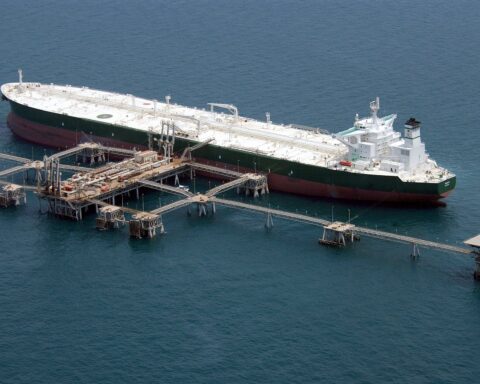
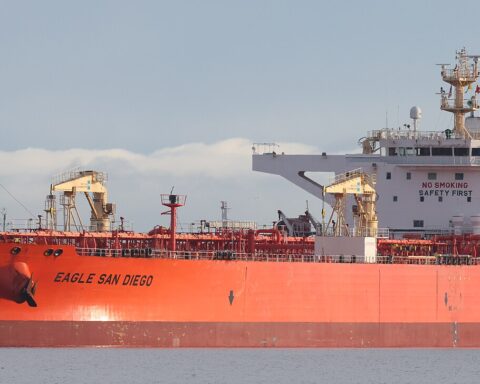
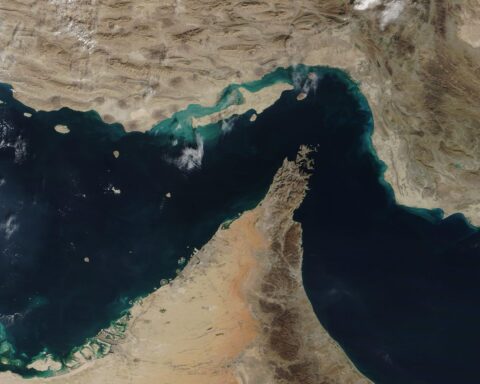
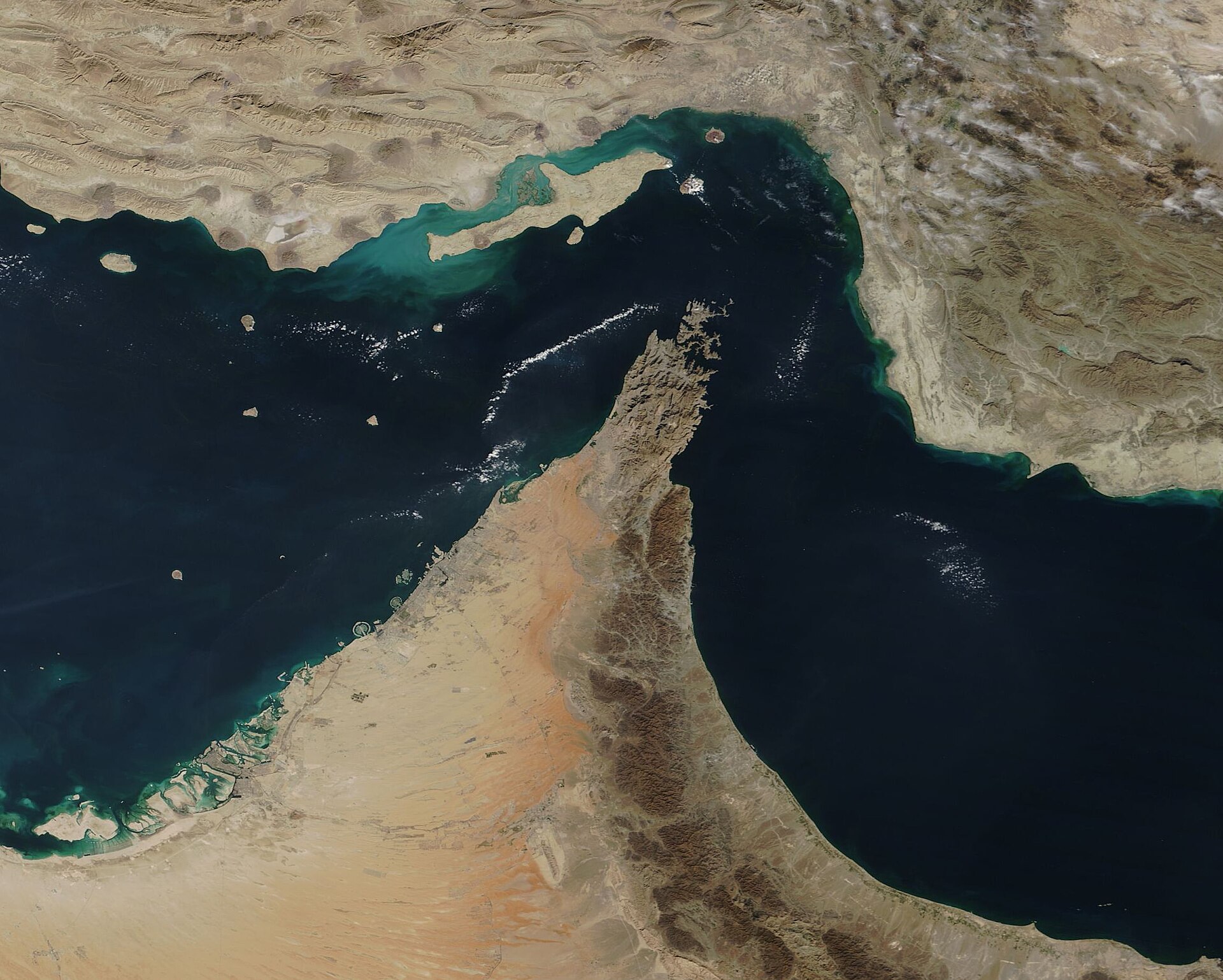
LONDON — Sixteen ships transited the Strait of Hormuz on Monday, April 20, 2026 — nine entering, seven exiting — according to MarineTraffic.com vessel data cited by CNN and The National. Two of the inbound vessels were Iranian-flagged, including one tanker; one Iranian-flagged cargo ship was among the outbound. No Western-flagged commercial crude-laden tanker was among the sixteen.
The number marks the lowest confirmed daily transit count since the crisis began on February 28, 2026. Pre-war traffic averaged 138 daily transits across all categories, or 35-50 commercial vessels per day on conservative methodology. Brent closed at $95.42, up 5.58 percent.
Table of Contents
What the 16-ship count actually measures
The MarineTraffic figure resolves a week of contested numbers into a single floor. Bloomberg reported on April 20 that “commercial traffic through the Strait of Hormuz is at a virtual standstill after a brief and confused reopening over the weekend ended with the first US seizure of an Iranian vessel.” The wire service tracked transits dropping from “more than 20 on Saturday” to 16 on Monday — against a pre-war daily average of 138.
Al Jazeera’s data journalism team published a longer-window count on April 14: from February 28 to April 12, only 279 vessels transited Hormuz, an average of 6.3 per day. That is a greater than 95 percent collapse from baseline. Twenty-two ships have been attacked across eight different national waters in the same period, per Kpler data cited by Al Jazeera.
The 16-ship daily count translates the war into a number a charterer can act on. CNN’s tally noted the absence of any Western-flagged commercial crude-laden tanker. The vessels moving through Monday’s strait were predominantly Iranian-flagged or operating under flags whose insurers had not yet withdrawn cover.
Set against the IEA’s pre-war benchmark of roughly 20 million barrels per day moving through Hormuz, March throughput averaged about 3.8 million bpd. Monday’s vessel composition — Iranian-flagged tankers and cargo, no Western-flagged crude carrier — suggests April will print lower still.
The Middle East briefing 3,000+ readers start their day with.
One email. Every weekday morning. Free.
| Date | Vessels | Source |
|---|---|---|
| Pre-war daily average | 138 | NBC News, Bloomberg |
| Feb 28 – April 12 (avg) | 6.3 | Al Jazeera, April 14 |
| April 18 (surge before closure) | 35 | Windward AI, April 19 |
| April 19 (Saturday) | 20+ | Bloomberg, April 20 |
| April 20 (Monday) | 16 | MarineTraffic / CNN / The National |
How did the strait collapse from 35 to 16 in 48 hours?
Windward AI Maritime Intelligence’s daily bulletin recorded a 35-vessel surge on April 18 — eight inbound, 27 outbound — as ships rushed to clear before the IRGC declared full closure at approximately 12:00 UTC. Thirteen confirmed reversals followed, including four CMA CGM container ships that turned back mid-transit.
The IRGC Navy statement, broadcast on Channel 16 — the international distress and hailing frequency, per NBC News’ live blog of April 18-19 — was unambiguous. The text was relayed through Iranian state media and confirmed by Al Jazeera and the Washington Post.
No vessel should make any movement from its anchorage in the Persian Gulf and the Sea of Oman, and approaching the Strait of Hormuz will be considered as cooperation with the enemy.
— IRGC Navy statement, April 18, 2026, via Al Jazeera
The closure came less than 24 hours after Iranian Foreign Minister Abbas Araghchi had declared the strait “completely open,” per Euronews on April 19. Parliament Speaker Mohammed Bagher Ghalibaf — who served in the IRGC Aerospace Force from 1997 to 2000 — set out the operational logic the same day: “It is impossible for others to pass through the Strait of Hormuz while we cannot,” he told Reuters and Al Jazeera. The single stated condition for reopening was full removal of the US blockade of Iranian ports.
CENTCOM had deployed A-10 Warthogs and Apache helicopters over the strait and turned back 23 vessels before the ceasefire window expired, as House of Saud reported on April 19. The USS Spruance boarding of the Iranian-flagged Touska hours later supplied the IRGC with its proximate trigger and the retaliation that followed closed the question of who controlled the choke point on April 18.
Islamabad, Trump’s deadline, and the expiry window
The 16-ship floor lands four days after the Islamabad Accord ceasefire window opened on April 17 and roughly 24 hours before the original 22 April expiry. President Trump told reporters on April 20 that an extension was “highly unlikely,” per CNN Live Updates.
The diplomatic timeline and the operational timeline are running on different clocks. Even an extended ceasefire signed this week would meet a fleet that has already absorbed eight weeks of war-risk pricing, four reversed transits in a single afternoon, and an IRGC declaration that broadcast its terms on the same VHF channel mariners use for distress calls.
India, China, Malaysia, Egypt and South Korea had been offered selective passage in the days before the formal closure. Indian vessels confirmed to Al Jazeera on April 14 that no IRGC transit fees were paid. The selective regime did not survive the weekend.
Tanker masters reading UKMTO Update 034 on April 19 had not seen the CRITICAL designation move in 50 days. By Monday morning, the brief diplomatic optimism of April 17 had been overtaken by the IRGC declaration, the Touska boarding and the 13 mid-transit reversals.
Why can’t a ceasefire reopen the strait?
Iran has laid an estimated 1,000 to 3,000 mines across the Strait and Gulf approaches since February 28, per intelligence assessments cited by Naval News in April. CENTCOM struck 16 Iranian mine-laying vessels in March 2026 but, as Naval News documented, could not prevent the seeding. The IRGC mine chart published April 9 had already marked the Hormuz Traffic Separation Scheme as a danger zone.
The 1991 Kuwait benchmark sets the floor on how long clearance takes. Iraq laid roughly 1,300 mines during the Gulf War. After the February 28, 1991 ceasefire, the Western European Union declared its routes “searched as practically as possible” on July 20, 1991 — 4.5 months later. Full US and Japanese clearance of the broader theater came September 10, 1991 — 6.5 months after the conflict ended. Iran’s estimated field is larger.
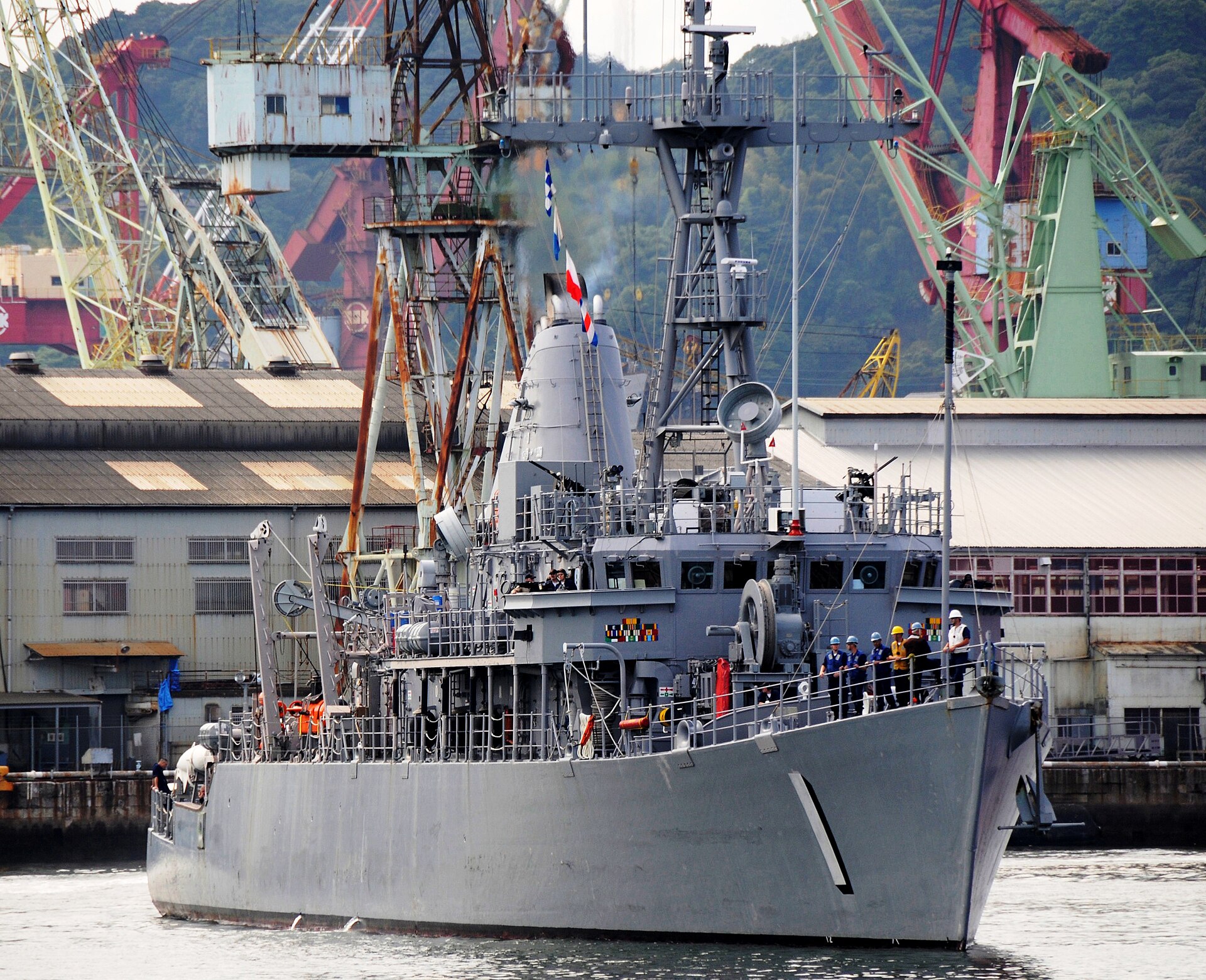
The US capability available to repeat that operation has been hollowed out. All four Avenger-class Mine Countermeasure ships previously based in Bahrain were decommissioned in September 2025, per Navy Times reporting from March 2026. USS Chief and USS Pioneer departed Sasebo, Japan in late April bound for Hormuz, according to The War Zone and Defence Express. They are weeks away from station. The Foreign Policy Research Institute’s March 2026 assessment, “The Mine Gap: America Forgot How to Sweep the Sea,” catalogued the deficit.
| Metric | 1991 Kuwait | 2026 Hormuz |
|---|---|---|
| Mines laid | ~1,300 | 1,000-3,000 |
| WEU “practical” clearance | 4.5 months | TBD |
| Full clearance (US/Japan) | 6.5 months | TBD |
| US Avenger-class MCM in region | 12 (Gulf War) | 0 (decommissioned Sept 2025) |
| Inbound MCM assets | — | USS Chief, USS Pioneer (ex-Sasebo) |
What would it take for UKMTO to downgrade from CRITICAL?
The United Kingdom Maritime Trade Operations centre has held Hormuz at CRITICAL risk rating since February 28, 2026. Update 034, issued April 19, confirmed no change despite the brief ceasefire window.
Merchant traffic through the Strait of Hormuz remains severely constrained… shipowners report insufficient clarity on transit protocols.
— UKMTO, JMIC Advisory Update 034, April 19, 2026
War risk Additional Premiums have spiked from 0.2 percent to over 1.0 percent of hull value. For a $150 million LNG carrier, that is $1.5 million per single voyage, per Property Casualty 360 reporting on March 18 and a Lloyd’s Market Association statement on March 23. The LMA clarified that “safety concerns, not insurance availability” were driving the reduction in vessel traffic — while confirming that APs had reached levels functioning as a practical gating factor.
Bloomberg reported on April 16 an unnamed shipowner describing oil companies’ demands that shipowners “guarantee successful crossing of Hormuz” as “unrealistic.” Tanker hire rates have moved from $160,000 per day pre-war to $475,000 per day, per Bloomberg data through April 20. The US Development Finance Corporation announced a reinsurance facility of up to $40 billion to support Hormuz shipping after private insurers withdrew, per WEF and CNN Business reporting in April.
CNN Business set the timeline on April 9: “[It] could take six months to get ship traffic back to where it was before the war began.” A follow-up on April 12 added that oil flows would not return to normal until July. Both pieces predate Monday’s 16-ship floor and the IRGC closure declaration.
NPR’s April 17 dispatch — “Hormuz reopens, but insurers aren’t ready to sound the all-clear” — captured the gap between Araghchi’s declaration and the underwriters’ response. The underwriters require three things in sequence: UKMTO downgrade from CRITICAL, mine-sweep verification, and tanker-owner clearance protocols. None of those exist on a diplomatic timeline.
Background
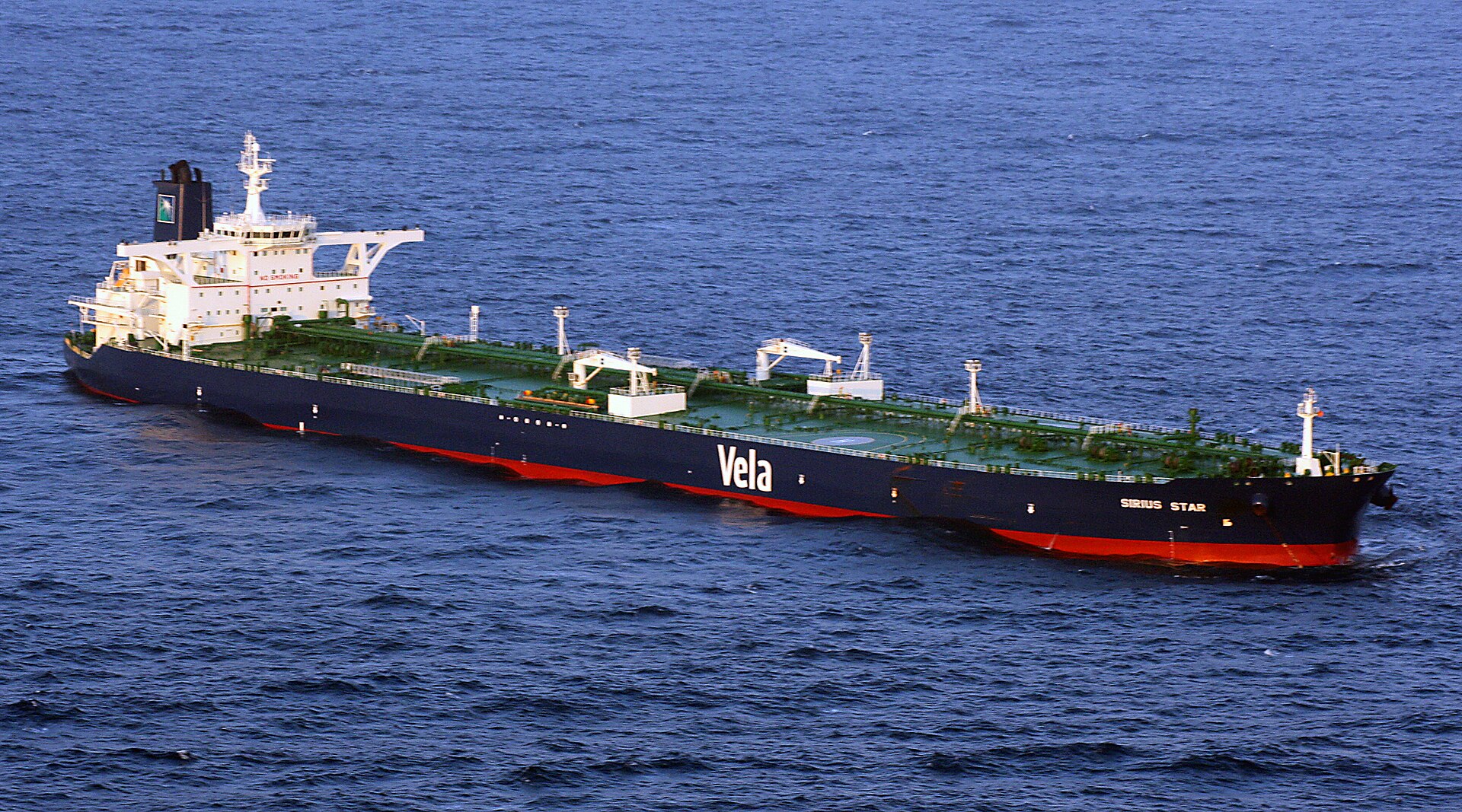
Pre-war, roughly 20 percent of global oil supply transited Hormuz daily — about 20 million barrels per day. March throughput averaged approximately 3.8 million bpd, per the IEA Oil Market Report for April 2026. Saudi Arabia’s Yanbu terminal ceiling is 4-5.9 million bpd; the East-West pipeline capacity of 7 million bpd was restored on April 12. Saudi production crashed to 7.25 million bpd in March, against a pre-war Hormuz Saudi throughput of 7-7.5 million bpd. The Yanbu ceiling leaves a structural 1.1 to 2.5 million bpd gap even after full pipeline restoration.
The strait has opened and closed three times since February 28: initial “strict management”; brief selective re-openings in March and April; Araghchi’s April 17 declaration of full opening; the April 18 IRGC re-closure. The House of Saud Hormuz Tracker has logged each transition.
FAQ
Why was the Touska boarding the trigger rather than a pretext?
The USS Spruance boarded the Touska on April 18 as the first US seizure of an Iranian vessel in the campaign. The IRGC’s closure declaration named the blockade of Iranian ports as the sole condition for reopening — the Touska boarding was the operational case study Tehran needed to define what “blockade” meant in real time.
How does the April 18 surge of 35 vessels fit with a “standstill” narrative?
The 35-vessel count was a clearance run, not a normalization. Eight inbound, 27 outbound — vessels racing to exit before the formal closure. Thirteen turned back mid-transit when the IRGC statement landed at approximately 12:00 UTC. Monday’s 16 is the post-clearance baseline.
What was the Channel 16 broadcast and why does it matter?
Channel 16 is the international VHF maritime distress and hailing frequency, monitored continuously by every vessel in range. NBC News reported the IRGC used it to broadcast the closure order on April 18-19. Using the distress channel for a closure declaration ensured every bridge in the Gulf of Oman heard it inside minutes — and put the order on record in a forum mariners cannot ignore.
Is the $40 billion DFC reinsurance facility operational?
The facility was announced by the US Development Finance Corporation in April 2026, per WEF and CNN Business reporting, after private insurers withdrew cover. Operational drawdown mechanics — which underwriters can access it, on which voyages, and how losses are reimbursed — have not been published. The facility’s existence has not yet altered the Additional Premium structure described by Property Casualty 360 and the LMA.
What happens to the 16-ship floor if Trump lets the deadline pass?
Trump told reporters on April 20 that a ceasefire extension was “highly unlikely.” The IRGC has tied reopening to full blockade removal. Underwriters require UKMTO downgrade, mine-sweep verification and tanker-owner protocols — none of which can be produced inside the deadline window. The 16-ship number is the operational reality whatever the diplomatic outcome.