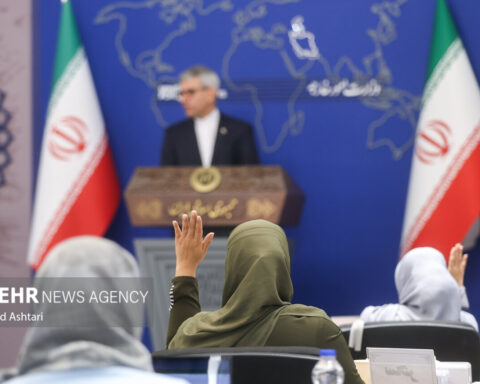
MUSCAT — Iranian Foreign Minister Abbas Araghchi met Sultan Haitham bin Tariq in Muscat on April 26, 2026, securing a head-of-state audience that transforms Oman’s role in the Iran war from message relay to sovereign mediator — the same structural role Muscat played in the secret diplomacy that produced the 2015 JCPOA nuclear deal.
The meeting carries weight far beyond protocol. Sultan Haitham’s personal involvement gives Tehran something Pakistan cannot offer: a GCC-member guarantor who shares sovereignty over the Strait of Hormuz and maintains full diplomatic relations with both Washington and Tehran. The timing — Araghchi flew directly from Islamabad after delivering a written framework to Pakistani mediators, and will return to Islamabad before continuing to Moscow — suggests Iran is asking Oman to pre-validate whatever terms go back to the negotiating table in Pakistan. It is a consultative layover inside an active diplomatic circuit, not a courtesy call. Araghchi’s Oman visit was only one piece of a larger regional security architecture that Iran is assembling — one that uses Saudi Arabia’s own coalition-building playbook against Riyadh. The full structural argument is laid out in Iran’s Gulf security framework and how it traps Saudi Arabia.
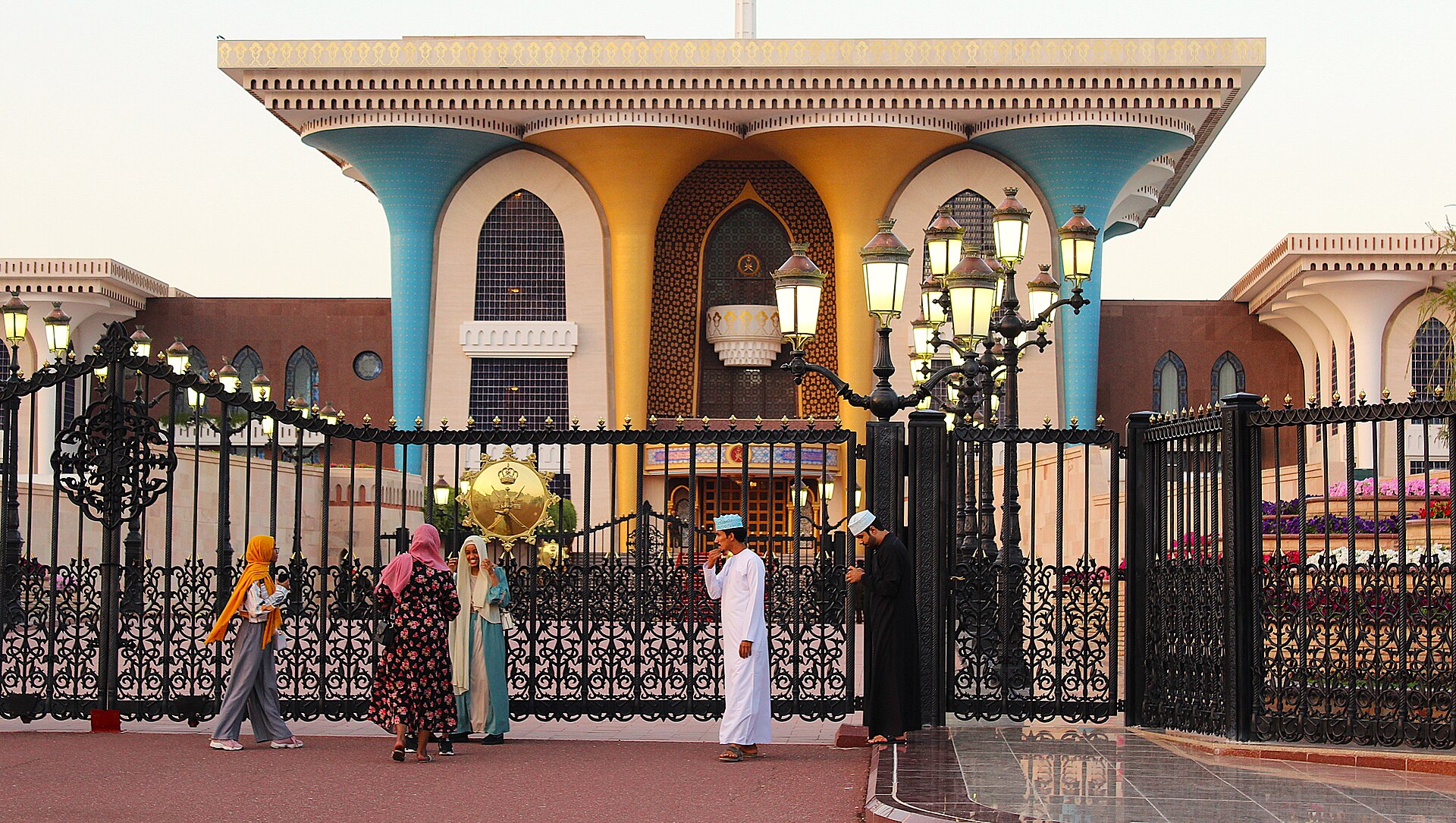
Table of Contents
- What Does Sultan Haitham’s Personal Involvement Signal?
- The JCPOA Muscat Precedent
- Why Does Oman’s Hormuz Co-Riparian Status Matter?
- Pakistan’s Structural Limits as Mediator
- How Does the Islamabad-Muscat-Moscow Sequencing Work?
- The Witkoff Track Stalls
- Background: Oman’s Mediation Architecture
- Frequently Asked Questions
What Does Sultan Haitham’s Personal Involvement Signal?
Sultan Haitham’s decision to receive Araghchi personally — rather than delegating to Foreign Minister Badr al-Busaidi — converts Oman from a courier into a sovereign guarantor. A head-of-state audience means Oman has staked its institutional credibility on this process, not merely offered its territory as a convenient venue.
Sultan Haitham bin Tariq received Araghchi to discuss “the Iran war and regional mediation efforts,” according to Oman’s state news agency. This is a head-of-state audience, not a foreign-minister-to-foreign-minister exchange through Oman’s FM Badr al-Busaidi, who relayed messages between Araghchi and US envoy Steve Witkoff in earlier rounds.
The distinction matters structurally. When Sultan Qaboos hosted the JCPOA secret channel between 2012 and 2015, his personal involvement converted Oman from a convenient venue into a sovereign guarantor — a state that had staked its own credibility on the process. Sultan Haitham is now making the same institutional commitment. Abdullah Baabood, a Muscat-based political-science professor specializing in Gulf state relations, told the Globe and Mail: “For Oman, negotiation, dialogue, and mediation are not a choice, they’re a necessity. They are deeply ingrained in the DNA of the Omanis.”
Haitham established his personal mediation credential in 2023, when then-US Secretary of State Antony Blinken praised his “crucial” intervention in the US-Iran prisoner swap and $6 billion fund transfer. That episode demonstrated Haitham could deliver outcomes, not merely host conversations. The April 26 audience with Araghchi signals that Oman is preparing to do the same for a far larger negotiation — one involving the Strait of Hormuz, Iran’s nuclear program, and the terms for ending a 57-day war.
The Middle East briefing 3,000+ readers start their day with.
One email. Every weekday morning. Free.
Baabood captured the stakes: “Oman’s neutrality makes it valuable. But that same neutrality makes it vulnerable when the rules break down. The system is now testing whether a state can remain a bridge at a moment when all sides prefer leverage over dialogue.”
The JCPOA Muscat Precedent
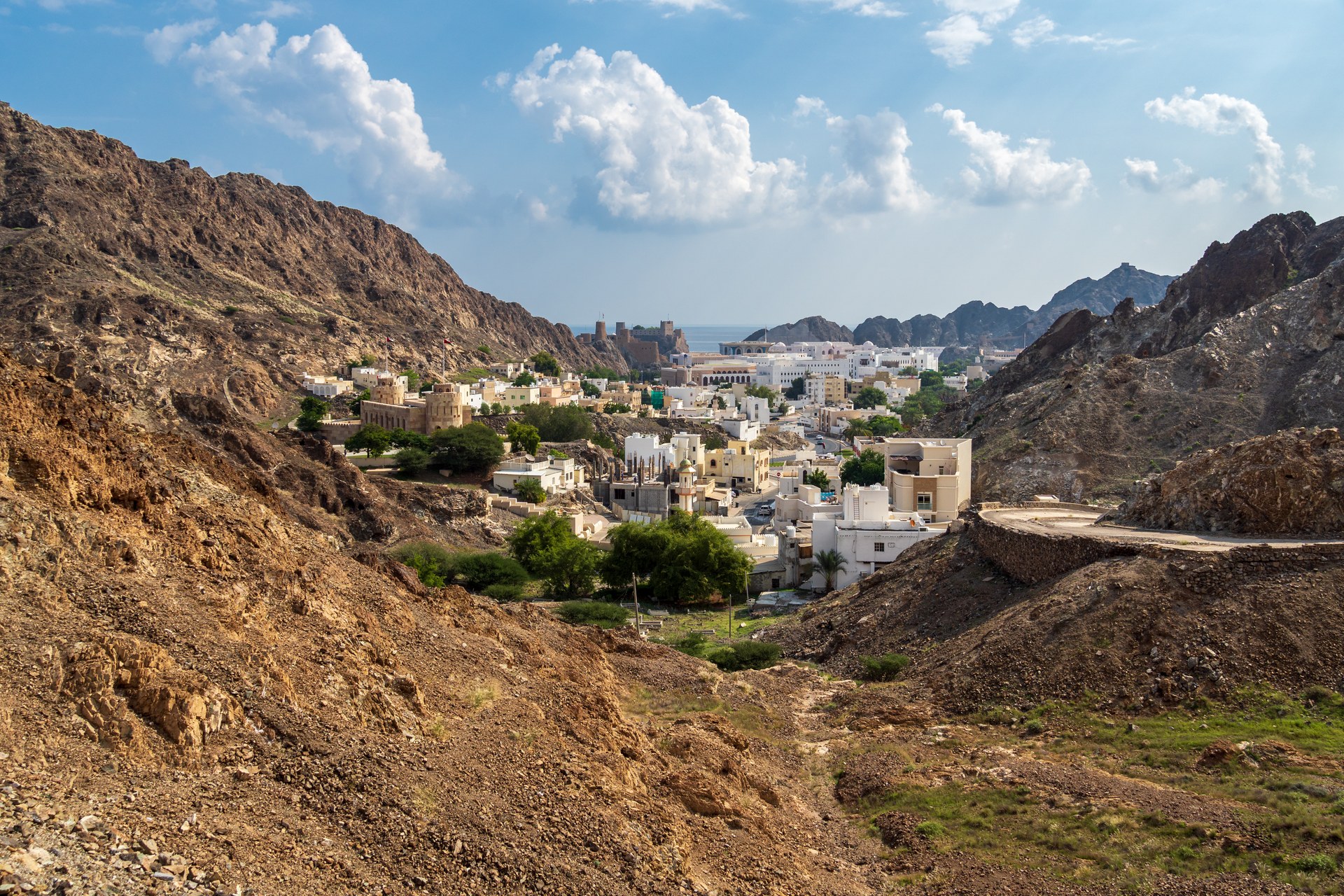
The pattern Araghchi is activating has a documented history. Mid-level US-Iranian contacts began in Muscat in 2011. Sultan Qaboos personally approached then-Senator John Kerry in 2012, offering Oman as a venue for direct talks. Kerry conducted secret visits, meeting Qaboos in an Omani palace. William Burns and Jake Sullivan — both of whom went on to serve as senior Biden administration officials — led at least eight rounds of substantive dialogue entirely in Muscat before the talks evolved into the Geneva multilateral negotiations that produced the JCPOA.
That secret track lasted eight months in Muscat alone, entirely outside public view and parallel to the formal P5+1 process. The structural logic was simple: Oman offered a venue where both sides could negotiate without the domestic political costs of acknowledging direct contact. Iran could tell its hardliners it was merely consulting a neighbor. Washington could deny direct engagement with Tehran.
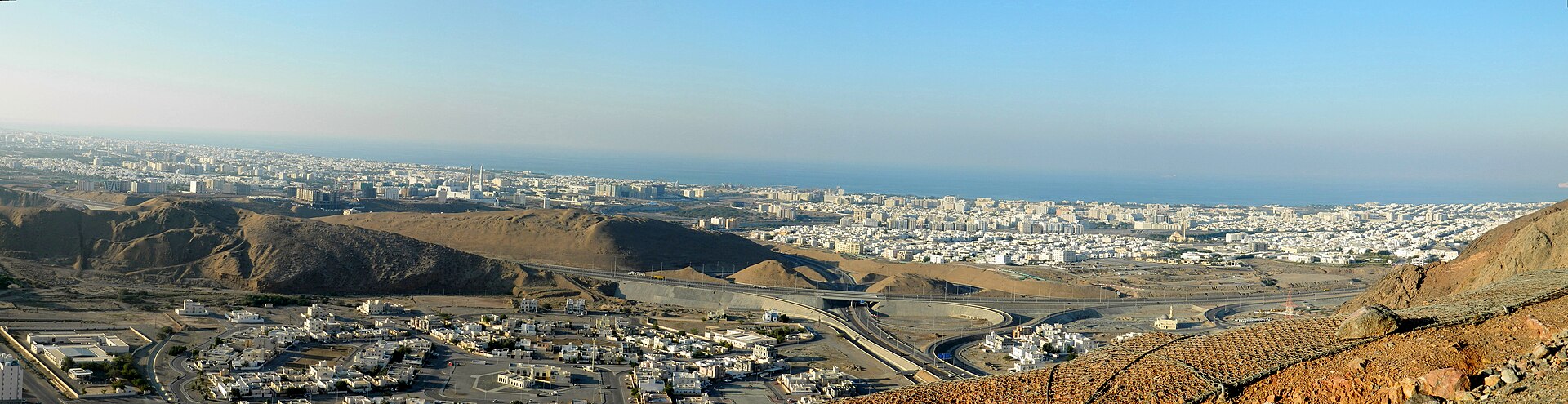
The current situation mirrors that architecture. Iran’s state media has explicitly stated that Tehran will not hold “any talks with the Americans in Islamabad,” according to Tasnim on April 24 — distancing the Pakistan track from direct negotiations while using it as a relay. The Muscat stop gives Iran an additional layer of deniability and diplomatic cover. Araghchi can frame his movements as consultations with a neighboring Gulf state rather than a back-channel to Washington.
There is, however, a critical difference between Sultan Qaboos and Sultan Haitham. Qaboos was a “charismatic autocrat who personally managed every significant diplomatic relationship” across a five-decade reign. Haitham is described as a “technocrat whose priorities are overwhelmingly economic” — a ruler who inherited the mediation posture rather than building it. Whether Haitham commands the same personal trust from both sides remains untested at this scale.
Why Does Oman’s Hormuz Co-Riparian Status Matter?
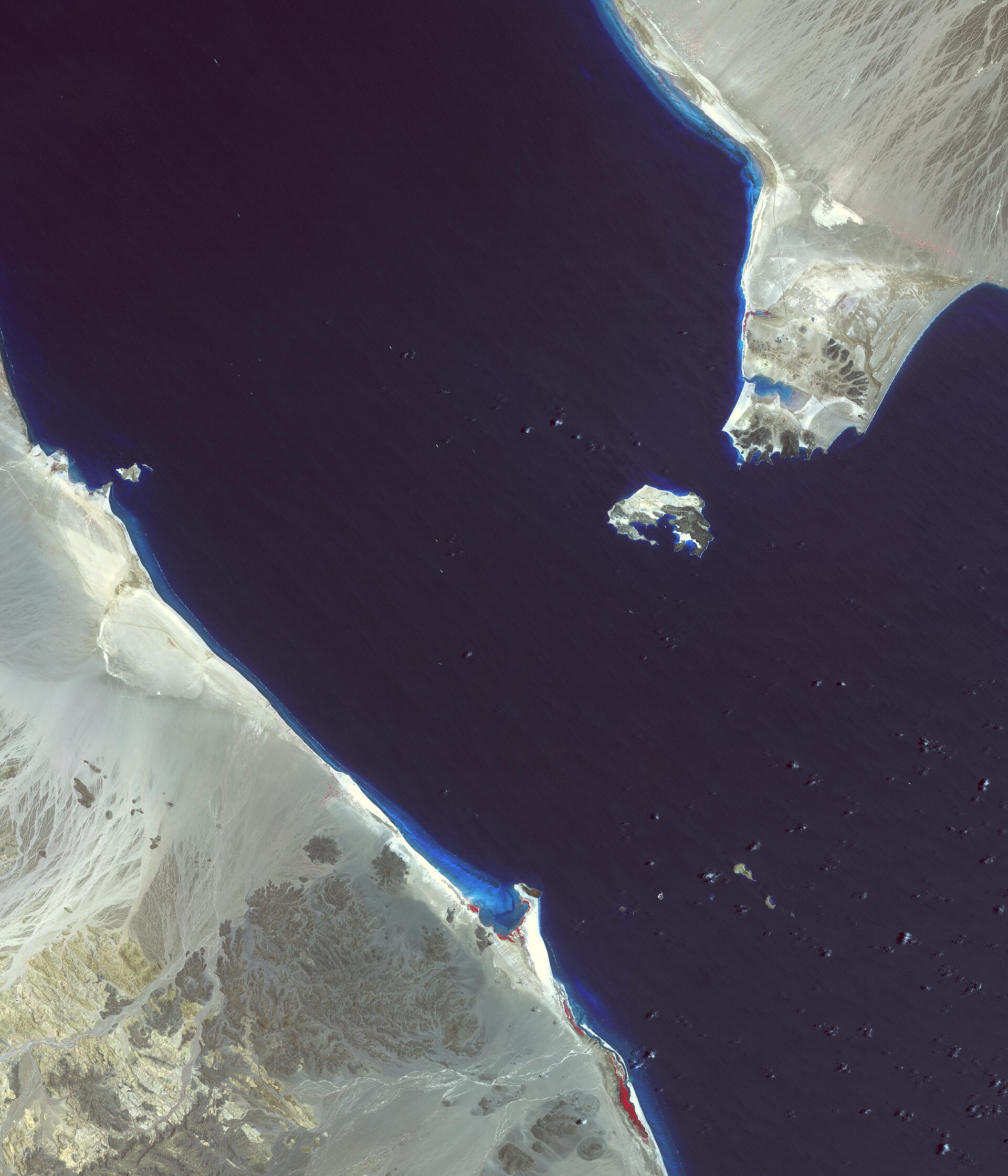
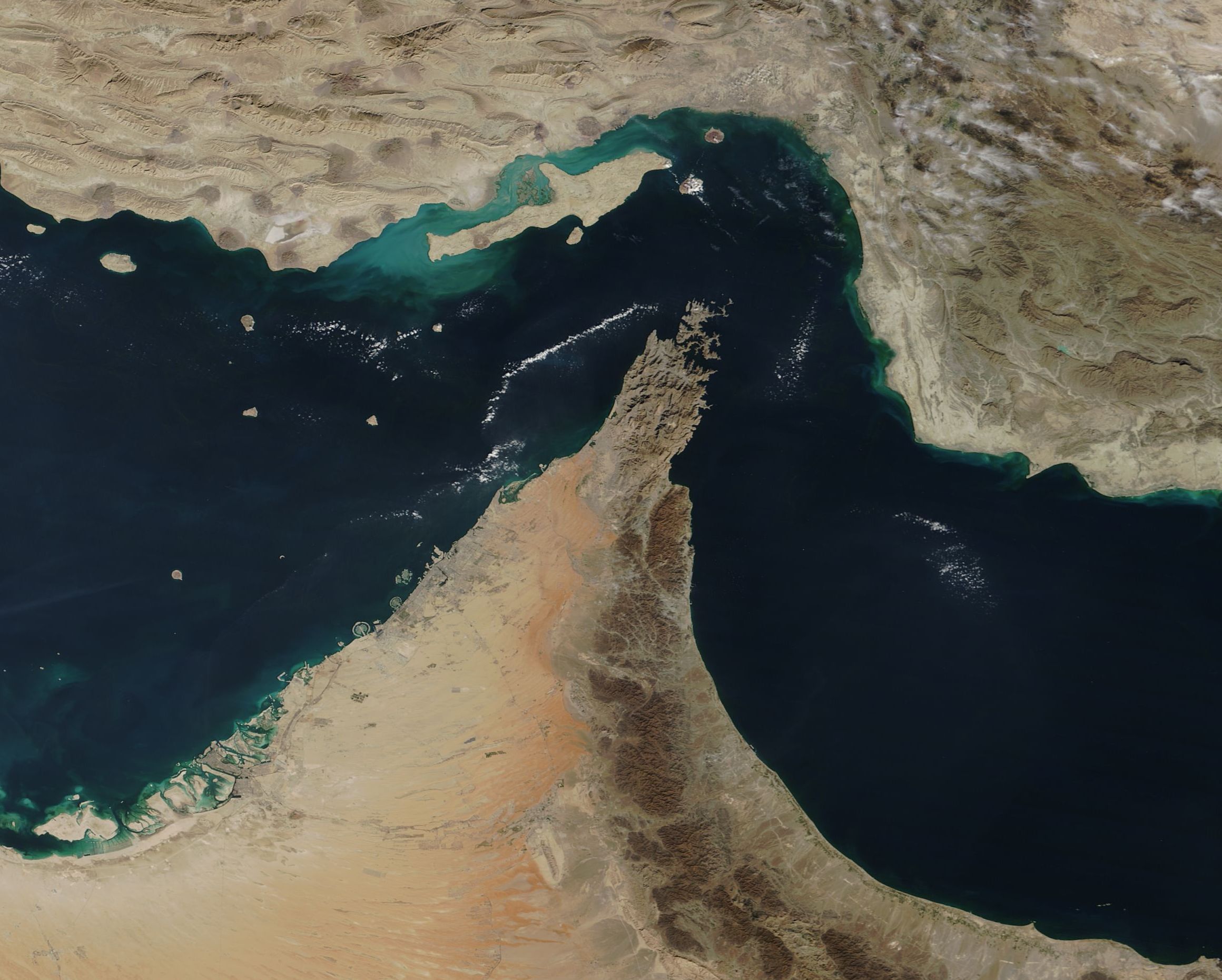
Oman shares the Strait of Hormuz with Iran. Any guarantee about Hormuz passage — the central issue of the war’s economic dimension — necessarily requires Omani buy-in to be operationally meaningful. Pakistan, by contrast, sits on the Arabian Sea coast with no territorial claim on the Strait.
This co-riparian status gives Oman a negotiating asset that no other mediator possesses. The IRGC’s insistence on “full authority to manage the Strait” — reiterated the same week as Araghchi’s visit — creates a problem that only a Hormuz-adjacent sovereign can help resolve. If any reopening framework requires physical inspection points, designated shipping corridors, or mutual de-escalation zones, Oman’s territorial waters and port infrastructure at Musandam become operationally essential.
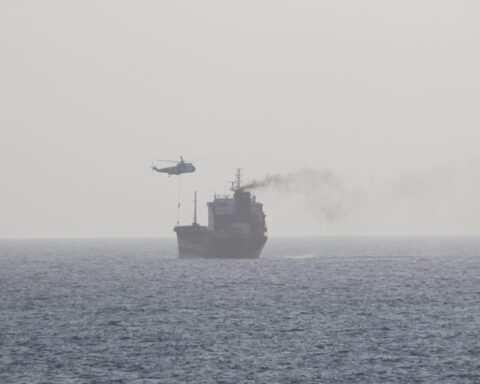
Iran’s blockade is costing approximately $400 million per day, according to Bloomberg on April 26. The double blockade — where the US controls the Arabian Sea entry and the IRGC controls the Gulf of Oman exit — means vessels need both approvals to transit. Only 45 transits have occurred since the April 8 ceasefire, representing 3.6% of the pre-war baseline, according to Bloomberg on April 26. Oman, positioned at the narrowest point of this chokehold, is the only state that could physically oversee a reopening mechanism without either belligerent losing face.
Oman was also the only GCC state to express “deep regrets” after the February 28 US-Israeli strikes on Iran — a formal neutrality marker. Despite Iranian attacks on Omani infrastructure during the war, Muscat did not change its diplomatic posture. That consistency is what makes the sultanate credible to Tehran in a way that Riyadh or Abu Dhabi cannot be.
Pakistan’s Structural Limits as Mediator
Araghchi’s decision to stop in Muscat before returning to Islamabad exposes a structural problem with the Pakistan track that has been building for weeks. Pakistan is simultaneously Iran’s interlocutor and Saudi Arabia’s treaty ally. The Saudi Mutual Defense Agreement, signed September 17, 2025, binds Pakistan to Saudi Arabia’s security architecture. A $5 billion Saudi loan matures in June 2026, creating financial leverage that compromises Pakistan’s neutrality as a mediator.
Pakistan is not a GCC member. It has no seat at the table where Gulf security arrangements are made. And its 27th Constitutional Amendment, passed in late 2025, means ceasefire diplomacy runs through the intelligence chief — not the elected government — making the process opaque to both sides’ political leadership.
Oman, by contrast, is a founding GCC member with full diplomatic relations with Tehran, Riyadh, and Washington. Its January 2026 coordination with Saudi Arabia and Qatar in a joint effort to persuade Trump to hold off on military action established a Saudi-Oman baseline that predates the war. Intelligence-sharing between Muscat and Riyadh on Yemen — where Oman emerged as what analysts describe as Saudi Arabia’s “silent partner” — provides precedent for undisclosed coordination that the Pakistan track lacks.
None of this means Pakistan is irrelevant. Araghchi described his Islamabad visit as “very fruitful” and said Iran “appreciated Pakistan’s good offices and brotherly efforts to bring back peace to our region,” according to IRNA. But the Muscat stop suggests Tehran needs a guarantor with GCC standing to backstop whatever Pakistan facilitates.
How Does the Islamabad-Muscat-Moscow Sequencing Work?
Araghchi’s itinerary follows a deliberate three-stop architecture: Pakistan for the framework, Oman for the guarantee, Russia for great-power alignment. Each stop serves a function the previous one cannot.
He arrived in Muscat on the evening of April 25, flying directly from Islamabad. He will return to Islamabad before continuing to Moscow. His delegation members traveled back to Tehran for consultations and “instructions on the topics related to the end of the war,” according to IRNA, before re-joining him in Islamabad.
In Islamabad on April 25, Araghchi delivered what PressTV described as a “workable framework” containing Iran’s “principled positions” for permanently ending the war. He left without a breakthrough. The Muscat stop — sandwiched between two Islamabad visits — suggests Araghchi is seeking Omani validation of the framework before presenting it again in Pakistan, this time potentially with the weight of Sultan Haitham’s endorsement.
The Moscow leg serves a different function. Russian Foreign Minister Sergei Lavrov spoke with Araghchi by phone before the tour, according to a Kremlin readout, reiterating the need to uphold the ceasefire. This is a P5-alignment consultation — Russia, as a UN Security Council permanent member, can block or enable any formal ceasefire architecture. But Moscow is not offering to mediate. It is offering to not obstruct.
The specific content of the Araghchi-Sultan Haitham meeting has not been publicly disclosed. The head-of-state format is confirmed fact. What Iran asked Oman to hold, guarantee, or relay is analytical inference based on the structural logic of the itinerary and the JCPOA precedent.
The Witkoff Track Stalls
The Muscat meeting gains additional significance from the collapse of the direct US track. On April 25 — the same day Araghchi left Islamabad — Trump cancelled the planned trip by envoys Steve Witkoff and Jared Kushner to Pakistan. “If they want to talk, all they have to do is call,” Trump posted on Truth Social, according to CNN, CNBC, and NPR.
Araghchi responded publicly on X: “I am waiting to see if the U.S. is truly serious about diplomacy.”
The exchange crystallized the current impasse. Washington wants a direct call — a format that implies Iranian supplication. Tehran wants structured negotiations through intermediaries — a format that preserves sovereign dignity. The Muscat channel offers a structural resolution to this deadlock. Oman has served as the indirect US-Iran communication channel throughout the 2026 crisis, with FM al-Busaidi physically carrying messages between the two sides. Sultan Haitham’s personal involvement upgrades that channel from courier service to diplomatic institution.
A hard deadline looms behind the posturing. Trump notified Congress of military action on March 2, triggering a 60-day limit under the War Powers Resolution that expires May 1. A bipartisan Senate measure to curtail Trump’s Iran war authority was defeated 52-47 on April 15, preserving executive flexibility — but the clock runs regardless. Five days remain for diplomacy to produce something before the legal basis for US military operations requires either Congressional authorization or presidential defiance of the statute.
Background: Oman’s Mediation Architecture
Oman’s role as the Gulf’s permanent mediator is structural, not incidental. The sultanate sits at the mouth of the Strait of Hormuz with a 1,000-mile coastline, a small military, and an economy that cannot survive a regional war. Baabood put it directly: “This war is going to be a paradigm shift. Oman has based its plans on the fact that the region is stable, safe, secure and under no threat. This is going to change everything.”
Sultan Haitham inherited this strategic posture from Qaboos, who built it over five decades. Under Qaboos, Oman maintained diplomatic relations with Iran through every rupture — the Iran-Iraq War, the tanker wars of the 1980s, the 2016 Saudi-Iran diplomatic break. When other GCC states severed ties with Tehran, Muscat kept its embassy open.
The January 2026 precedent is relevant. Before the war began, Saudi Arabia, Qatar, and Oman jointly led what was described as a “frantic, last-minute” diplomatic effort to persuade Trump to hold off on military action. That effort failed, but it established the trilateral coordination that now underlies the mediation architecture. Oman was already inside the room before the first strike.
Iran’s state media framework is also revealing. PressTV described Araghchi’s tour as “a three-leg regional tour to Pakistan, Oman and Russia in continuation of diplomatic efforts to put a lasting end to the US-Israeli aggression against the Islamic Republic.” The explicit framing of Oman as part of a single diplomatic circuit — not a separate bilateral relationship — suggests Tehran views Muscat as integral to the negotiation, not peripheral to it.
The authorization ceiling remains the structural obstacle that no mediator — Omani, Pakistani, or otherwise — has yet solved. Araghchi can negotiate, but the IRGC commands. The IRGC publicly insisted on Hormuz authority the same week as the Muscat meeting. Supreme Leader Khamenei has been absent from public decision-making for over 55 days. Until the gap between Iran’s diplomatic track and its military command is closed, any framework Araghchi delivers — whether validated by Sultan Haitham or not — faces the same implementation problem that has stalled every previous attempt.
Frequently Asked Questions
Has Sultan Haitham mediated between the US and Iran before?
Sultan Haitham played what Blinken called a “crucial” role in the 2023 US-Iran prisoner swap — his first major mediation as ruler. That deal freed five American detainees and required coordinating $6 billion in fund movements through Qatari banks, demonstrating Haitham’s ability to manage multi-party financial logistics across adversarial governments. The current war mediation is an order of magnitude more complex: it requires military de-escalation, nuclear concessions, and a Hormuz passage framework simultaneously.
What does Oman’s “deep regrets” statement after the February 28 strikes mean legally?
Oman’s formal expression of “deep regrets” after the US-Israeli strikes on Iran — the only GCC state to do so — was a calibrated neutrality signal, not a legal protest. Under international law, a state expressing regret does not trigger mutual defense obligations or establish complicity. It preserves Muscat’s status as a non-belligerent in both belligerents’ eyes, which is the precondition for effective mediation. Saudi Arabia and the UAE issued no such statement, placing them outside the mediator category from Tehran’s perspective.
What role does Russia play in Araghchi’s tour?
Moscow is the tour’s third stop after Araghchi’s return to Islamabad. Russia’s role is alignment, not mediation — as a P5 member, Moscow can veto UN Security Council actions or enable them. Iran needs assurance that any deal framework will not face Russian obstruction at the Security Council, particularly on the nuclear enrichment provisions that remain the war’s most intractable dimension. Russia has signaled support for a ceasefire but has not offered to co-sponsor any framework.
What is the May 1 War Powers deadline?
Trump notified Congress of military action against Iran on March 2, 2026, starting a 60-day clock under the 1973 War Powers Resolution. That clock expires May 1. After that date, the president must either obtain Congressional authorization to continue operations, withdraw forces, or assert that the Resolution does not apply — a constitutional confrontation no president has been willing to force. The April 15 Senate vote (52-47) to curtail war authority failed, but it demonstrated bipartisan unease with open-ended operations.
Could Oman host direct US-Iran talks as it did during the JCPOA?
The infrastructure exists. Muscat hosted at least eight rounds of secret Burns-Sullivan talks between 2013 and 2015 without a single leak. Sultan Haitham’s palace complex, Omani intelligence services, and the country’s geographic position between the Gulf and the Arabian Sea all favor discreet meetings. The obstacle is political, not logistical: Trump’s “if they want to talk, all they have to do is call” framing on April 25 suggests Washington currently prefers the appearance of Iranian capitulation over the quiet pragmatism that Muscat specializes in.