BEIJING — Xi Jinping’s April 20 phone call with Mohammed bin Salman — in which the Chinese president called for “normal passage through the Strait of Hormuz” — was not a policy instrument aimed at reopening the world’s most contested waterway. It was a diplomatic performance designed to purchase Saudi goodwill at zero cost to Beijing’s relationship with Tehran, and the structural evidence for that reading is overwhelming. Thirteen days before the call, China vetoed the only UN Security Council resolution that could have operationalised exactly what Xi was now asking for — a Bahrain-sponsored draft protecting commercial navigation through the Strait that had already been watered down to remove any enforcement mechanism.
The call marked the 10th anniversary of the China-Saudi comprehensive strategic partnership, and Xi’s language was calibrated with the precision of a government that has spent five decades learning to say everything and commit to nothing. He did not name Iran as the party responsible for closing Hormuz. He did not issue a deadline, attach a consequence, or propose a mechanism. He said, according to the FMPRC readout, that “the normal passage through the Strait of Hormuz serves the common interests of regional countries and the international community” — a sentence so deliberately passive that it could have been drafted by a committee tasked with producing maximum ambiguity. The structural reasons Beijing cannot enforce its stated preference, the financial architecture that makes the contradiction permanent, and what MBS likely understood about the call before he picked up the phone are all explained by thirteen days of evidence.
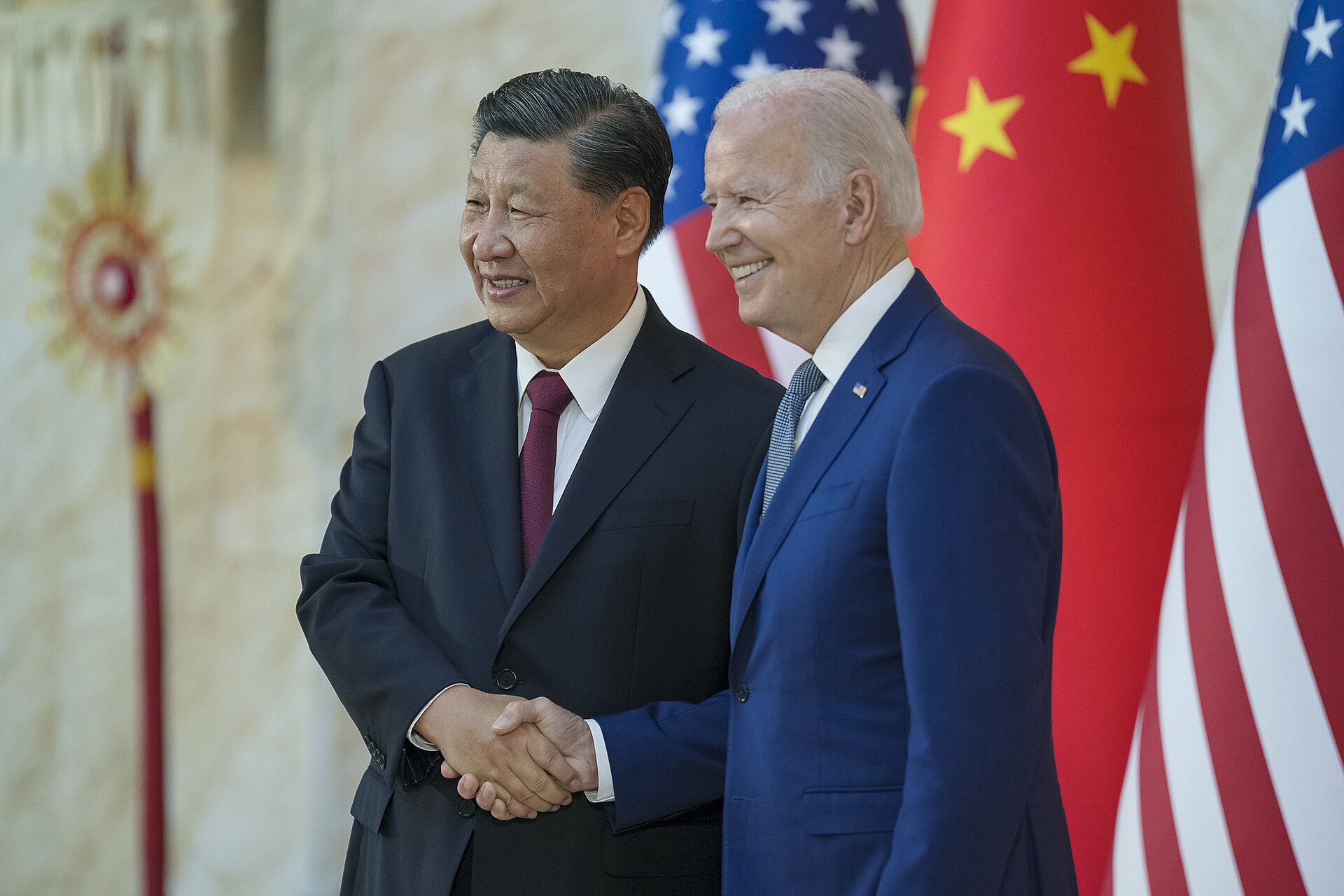
Table of Contents
- The Veto and the Call
- What Did Xi Actually Say About Hormuz?
- The Financial Architecture Beijing Cannot Sever
- Why Did China Broker the Al Daayen Transit but Not Open the Strait?
- Teapot Refineries and the Ring-Fenced Oil Trade
- What Does MBS Get From a Call That Changes Nothing?
- The Call Xi Didn’t Make
- Can China Break the Double Blockade?
- Frequently Asked Questions
The Veto and the Call
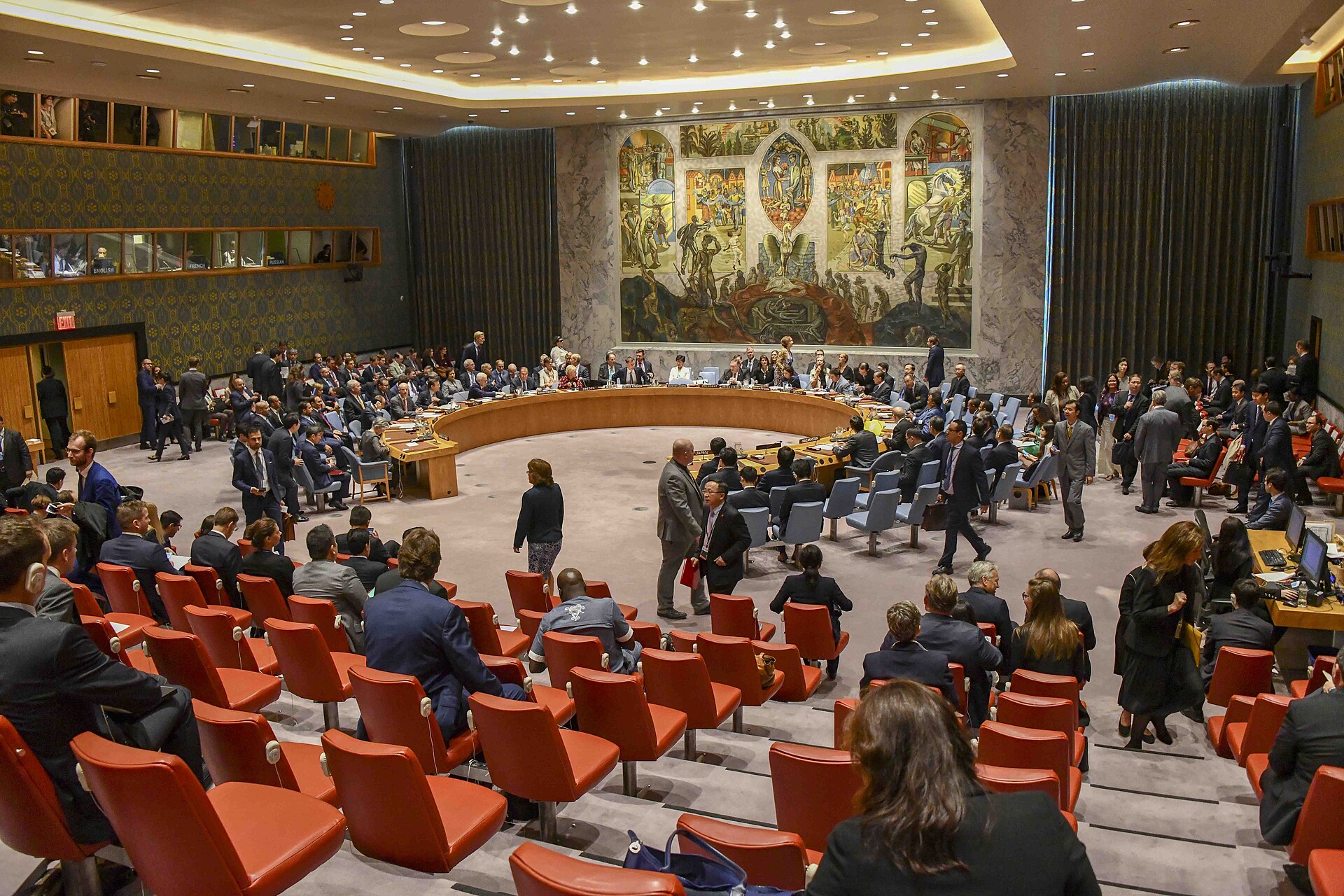
On April 7, 2026, China and Russia jointly vetoed a Bahrain-sponsored UN Security Council draft resolution aimed at protecting commercial navigation through the Strait of Hormuz. The vote was 11 in favour, 2 against, and 2 abstentions, according to UN News — a near-unanimous expression of international will that Beijing chose to block. The original draft had included Chapter 7 force authorisation, which China’s objections had already stripped out before the vote. Even the weakened version was too much. Fu Cong, China’s UN Ambassador, told the chamber that the draft “failed to capture the root causes and the full picture of the conflict.”
Thirteen days later, Xi Jinping called MBS and urged that Hormuz be kept open. The interval between those two actions is the entire story — not because it reveals hypocrisy, which is too simple a reading, but because it reveals architecture. Beijing wants Hormuz open for the same structural reasons that make it the single largest beneficiary of open passage through the Strait, with 37.7% of total crude flows through Hormuz destined for Chinese ports, according to Visual Capitalist and EnergyNow data. But wanting Hormuz open and being willing to pay a cost to make it happen are fundamentally different positions, and every action China has taken since February 28 has confirmed which one it occupies.
The China-Pakistan five-point peace initiative, announced March 31, included Hormuz reopening as one of its demands. The Diplomat’s analysis concluded the plan was “all words, no commitment” — no enforcement mechanism, no timeline, no named party responsible for closure. The April 20 Xi-MBS call followed the same pattern at a higher diplomatic altitude. The rhetoric escalated; the commitment did not. Jonathan Fulton, an Atlantic Council fellow who tracks the China-MENA relationship, observed that the call was notable because “we don’t see many calls at this level” — making the absence of any concrete proposal all the more conspicuous.
What Did Xi Actually Say About Hormuz?
The FMPRC readout of the April 20 call deserves close reading, because the language is doing more work than it appears to. Xi stated that “the normal passage through the Strait of Hormuz serves the common interests of regional countries and the international community.” That sentence performs three evasions simultaneously: it does not identify who disrupted normal passage, it does not propose restoring it, and it frames the issue as a shared concern rather than a specific demand directed at a specific actor. The Washington Institute for Near East Policy, which has tracked China’s language on Hormuz since the war began, documented the shift from generic “stability” calls in March to explicit “normal passage” language in April — confirming that the April 20 call represented a rhetorical escalation, but only a rhetorical one.
The Middle East briefing 3,000+ readers start their day with.
One email. Every weekday morning. Free.
Xi also told MBS that China “stands ready to work with Saudi Arabia to deepen mutual strategic trust, enhance practical cooperation” — anniversary language that frames the relationship as forward-looking and expansive without binding either side to a specific deliverable. The Saudi readout was marginally more pointed: MBS described China as “a responsible major country” and proposed joint efforts to “ensure the safety and freedom of navigation in the Strait of Hormuz,” according to Al Arabiya English. That phrase is doing diplomatic work — it implicitly asks Beijing to act like one — but MBS did not publicly contradict the absence of any enforcement mechanism in Xi’s position.
Bloomberg framed the call as China “urging full Hormuz transit,” the strongest English-language characterisation, but did not analyse the structural contradiction with the April 7 veto. Xinhua’s headline was more revealing: “Xi says normal passage through Strait of Hormuz should be maintained.” The passive construction — “should be maintained” rather than “must be restored” — mirrors the FMPRC readout’s studied avoidance of agency. This is first-time Xi-level language on Hormuz, and it is calibrated to sound like pressure while containing none of the elements that would make it operational.
The Financial Architecture Beijing Cannot Sever
The reason Xi’s Hormuz language remains performative is structural, not temperamental. China’s economic relationship with Iran is built on architecture that Beijing has spent years ring-fencing from exactly the kind of pressure that a genuine Hormuz ultimatum would require. Iran’s oil exports to China were running at approximately 1.37 million barrels per day in March 2026, according to Kpler data reported by Zawya — up 83% from 747,000 bpd in February when the war began. That trade did not just continue through the Strait’s effective closure to most commercial traffic; it expanded — and the mechanism is Kunlun Bank, which OFAC sanctioned in 2012 and which Beijing has deliberately kept operational as a dedicated RMB settlement channel for Iran trade. The bank’s pre-sanctioned status is its utility — it cannot lose US financial system access it never had, which means secondary sanctions have no additional bite against it. Teapot refineries, the independent processors that handle 90% of Iran’s oil exports to China according to Al Jazeera and USCC data, route payment through Kunlun and smaller provincial banks with limited US dollar exposure. This ring-fencing architecture allows China’s major international banks — ICBC, Bank of China — to maintain SWIFT access and service the $257 billion in annual Gulf Cooperation Council trade, according to Al Jazeera’s April 22 analysis, while the sanctioned tier handles Iran.
The 25-year cooperation agreement China signed with Iran in March 2021 committed Beijing to invest $300-400 billion over 25 years in Iranian oil, gas, and petrochemical industries, with Iran providing crude at a guaranteed minimum 12% discount to the six-month rolling benchmark mean plus an additional 6-8% risk compensation, according to USCC and Al Sharq Strategic Research reporting. Implementation has been severely incomplete — Chinese investment has remained limited under sanctions — but the discount architecture is active and constitutes a structural financial incentive for Beijing to maintain the relationship regardless of what Xi says to MBS on the phone. Asking China to pressure Iran on Hormuz is asking Beijing to jeopardise the cheapest crude supply in its import portfolio.
Why Did China Broker the Al Daayen Transit but Not Open the Strait?
The Al Daayen transit on April 6, 2026 — the first post-blockade laden LNG carrier to exit Hormuz — is the single most instructive data point in understanding what China will and will not do about the Strait. Beijing used its structural position to secure IRGC clearance for a Qatari LNG carrier carrying contracted cargo bound for China. CNPC and Sinopec each hold a 5% equity stake in one 8 MTPA North Field East LNG train with 4 MTPA offtake commitments apiece on 27-year terms, according to SPE Journal of Petroleum Technology and Rigzone. First exports were scheduled for 2026. China brokered the transit to protect its own contracted gas — not to establish a general open-passage principle.
The proof sits in what happened the same day: the Rasheeda, a second LNG carrier attempting to transit Hormuz, was turned back. China’s intermediation secured passage for one vessel carrying Chinese-contracted cargo. Everyone else stayed where they were. Drew Thompson, a former US Department of Defense official, described the pattern precisely in Al Jazeera’s April 22 analysis: China attempts being “a peacemaker without underwriting the peace process.” The Al Daayen transit was peacemaking for one cargo, not for the Strait.
The structural logic is straightforward. China’s strategic petroleum reserves stood at approximately 1.39-1.4 billion barrels as of early March 2026, covering 109-120 days of net crude imports at 2025 rates, according to Columbia University’s Center on Global Energy Policy. That buffer insulates Beijing from the immediate economic cost of Hormuz closure and removes the urgency that would be required to make a genuine ultimatum to Tehran worth the diplomatic price. Erica Downs, a senior research scholar at Columbia CGEP, told CNN on April 20 that China’s ability to weather the energy shock from Hormuz “is sort of a vindication of everything they’ve done to enhance energy security.” A country that has 120 days of strategic cover does not issue ultimatums to its cheapest oil supplier.
Teapot Refineries and the Ring-Fenced Oil Trade
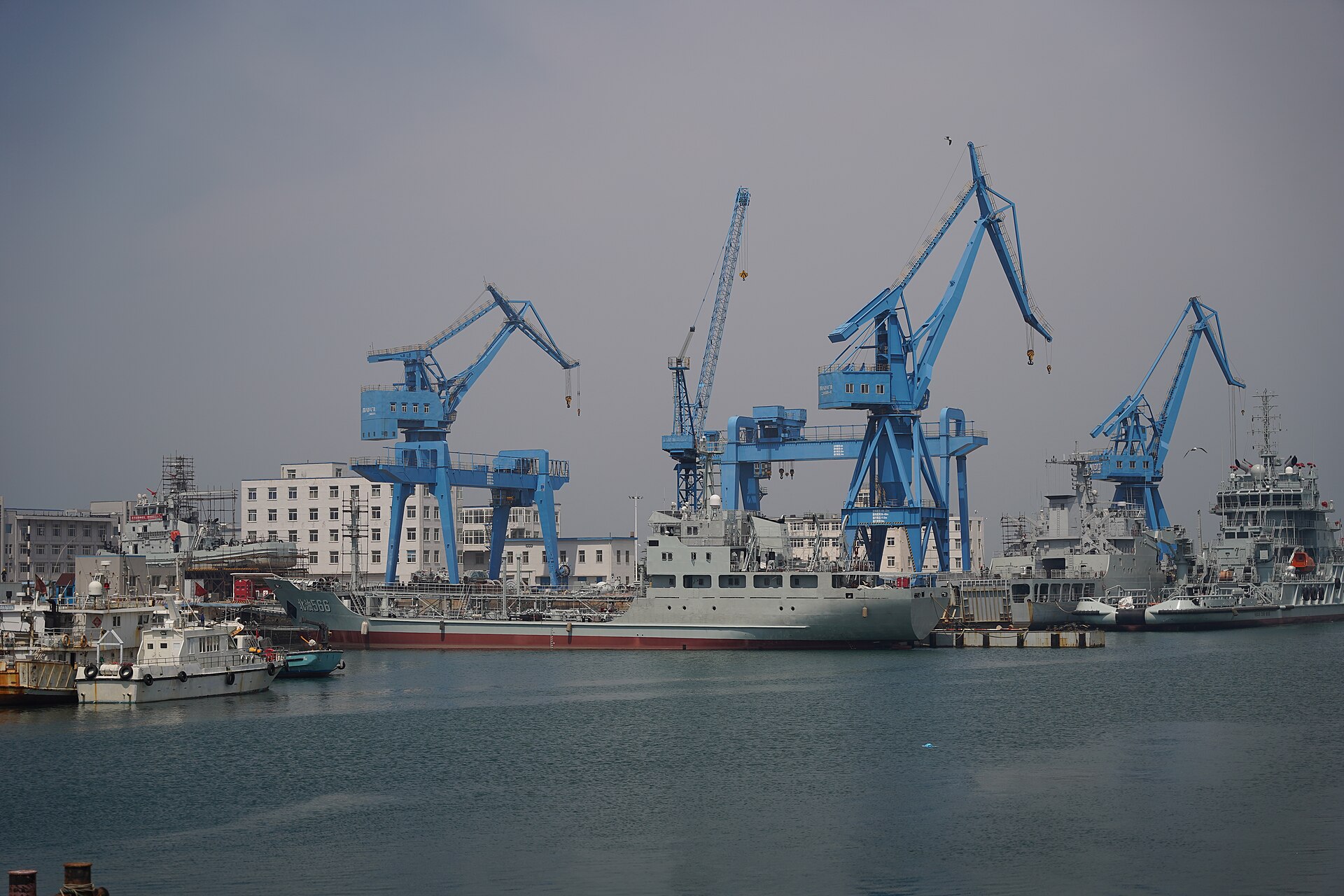
On April 25, five days after Xi’s call with MBS, OFAC sanctioned Hengli Petrochemical (Dalian), China’s second-largest teapot refinery, for purchasing billions of dollars in Iranian crude — specifically oil sold through Sepehr Energy, the sales arm of Iran’s Armed Forces General Staff, according to CNBC and Treasury Department records. The Chinese Embassy’s response was to call on the United States to “stop politicising trade.” Beijing did not announce any suspension of the business model. The Hengli sanctions targeted one refinery; the model involves dozens.
Sinopec, the state-owned major, has publicly announced it will not purchase Iranian crude under current conditions — pushing Chinese authorities to allow drawdown of strategic petroleum reserves instead, according to Al Jazeera’s April 3 reporting. The load is carried entirely by independent teapot refineries, which is the point. Beijing has constructed a two-tier system in which state-owned companies visible to international markets stay clean while independents with minimal US financial exposure carry the sanctioned trade. US Treasury Secretary Scott Bessent warned two Chinese banks by letter in mid-April that secondary sanctions would follow if they continued Iran-related transactions, according to Bloomberg. There is no public record of either bank complying or responding.
The scale of Operation Economic Fury — over 1,000 Iran-related entities sanctioned since February 2025, with the OFAC GL U for Indian refiners allowed to expire on April 19 — has not altered the fundamental architecture of China-Iran oil trade. It has made it marginally more expensive and legally riskier for individual teapot operators, but the Kunlun Bank settlement channel remains operational and the crude keeps flowing. Muhammad Zulfikar Rakhmat of the Center of Economic and Law Studies described China’s approach as “opportunistic and low-risk, often occurring when conditions are already conducive” — a characterisation that applies equally to the April 20 phone call.
What Does MBS Get From a Call That Changes Nothing?
The Saudi side of this call is less about what Xi offered and more about what the call’s existence means in a broader diplomatic sequence. MBS has spent the past eight weeks building a multi-track diplomatic architecture that does not depend on any single partner delivering a decisive outcome — the quartet approach that has seen Saudi Arabia engage Washington, Beijing, Moscow, and Islamabad simultaneously, extracting whatever marginal positioning each relationship can provide without betting everything on one. Xi’s call fits that pattern. It gives Riyadh a data point: the Chinese president, at the head-of-state level, publicly endorsed Hormuz reopening. That MBS cannot cash the statement for actual policy change does not make it worthless — it makes it a diplomatic asset of a specific, limited kind.
The Saudi readout’s framing of China as “a responsible major country” is instructive because it sets a public expectation that Beijing has not yet met and may never meet. If China subsequently blocks another UNSC resolution on Hormuz, Saudi diplomats can point to MBS’s own characterisation and ask Beijing to reconcile it with its voting record. This is how middle powers extract marginal concessions from great powers — not through ultimatums, which they cannot issue, but through the accumulation of public commitments that make future defections marginally more costly. The call changes nothing about Hormuz in the short term, but it adds to a diplomatic ledger that Saudi Arabia is assembling with evident purpose.
The commercial dimension of the relationship provides additional context. Saudi Arabia supplies approximately 14-15% of China’s total crude imports, according to Columbia CGEP — second to Russia’s approximately 17% share. Beijing’s interest in maintaining the Saudi relationship is commercially real even if it will not sacrifice its Iran architecture to protect it. The 10th anniversary framing of the call serves both sides: it elevates the symbolic weight of the conversation without requiring either to deliver something new.
The Call Xi Didn’t Make
No direct Xi-Pezeshkian phone call has been recorded since the war began on February 28, according to Jonathan Fulton’s analysis in the China-MENA Newsletter. Wang Yi, China’s foreign minister, has made approximately 30 calls about the Iran conflict by mid-April, according to the Associated Press — the diplomatic machinery has been active at every level below the presidential one. The head-of-state channel to Tehran remains unused, which analysts read as deliberate hedging. Xi called MBS. Xi did not call the leader of the country actually controlling Hormuz. The asymmetry reveals where Beijing sees value and where it sees risk.
George Chen of The Asia Group told the AP that “China’s role in the Iran situation is irreplaceable” given Beijing’s position as Tehran’s top oil buyer and UN bloc sympathiser. That irreplaceability is precisely what makes Xi’s silence toward Tehran so revealing. If China is the only external power with genuine influence over Iran’s economic survival, and China’s president is choosing to use the phone to call Riyadh instead of Tehran, the call is not an instrument of pressure — it is an instrument of positioning. Tuvia Gering of the Atlantic Council noted that China could theoretically offer Iran “political cover and material incentives to accept constraints” but has not done so in practice. The theoretical capacity and the practical refusal coexist in every Chinese statement on the conflict.
Iranian state media’s reaction to Xi’s Hormuz statement was muted — not hostile, but not welcoming. Tehran directed its public energy on April 20 toward the US seizure of the MV Touska, which Iranian officials described as “piracy” and “an act of aggression,” according to NBC News and RFE/RL reporting. The absence of any Iranian pushback against Beijing’s Hormuz language is itself evidence of Tehran’s structural dependency: Iran cannot afford to antagonise its only viable oil buyer, even when that buyer publicly calls for the reopening of the waterway that the IRGC has made its primary instrument of wartime coercion. Ma Xiaolin, a Chinese academic, captured the architecture with unusual candour in Al Jazeera’s April 22 piece: “All those countries are our friends, even if they are enemies.”
Can China Break the Double Blockade?
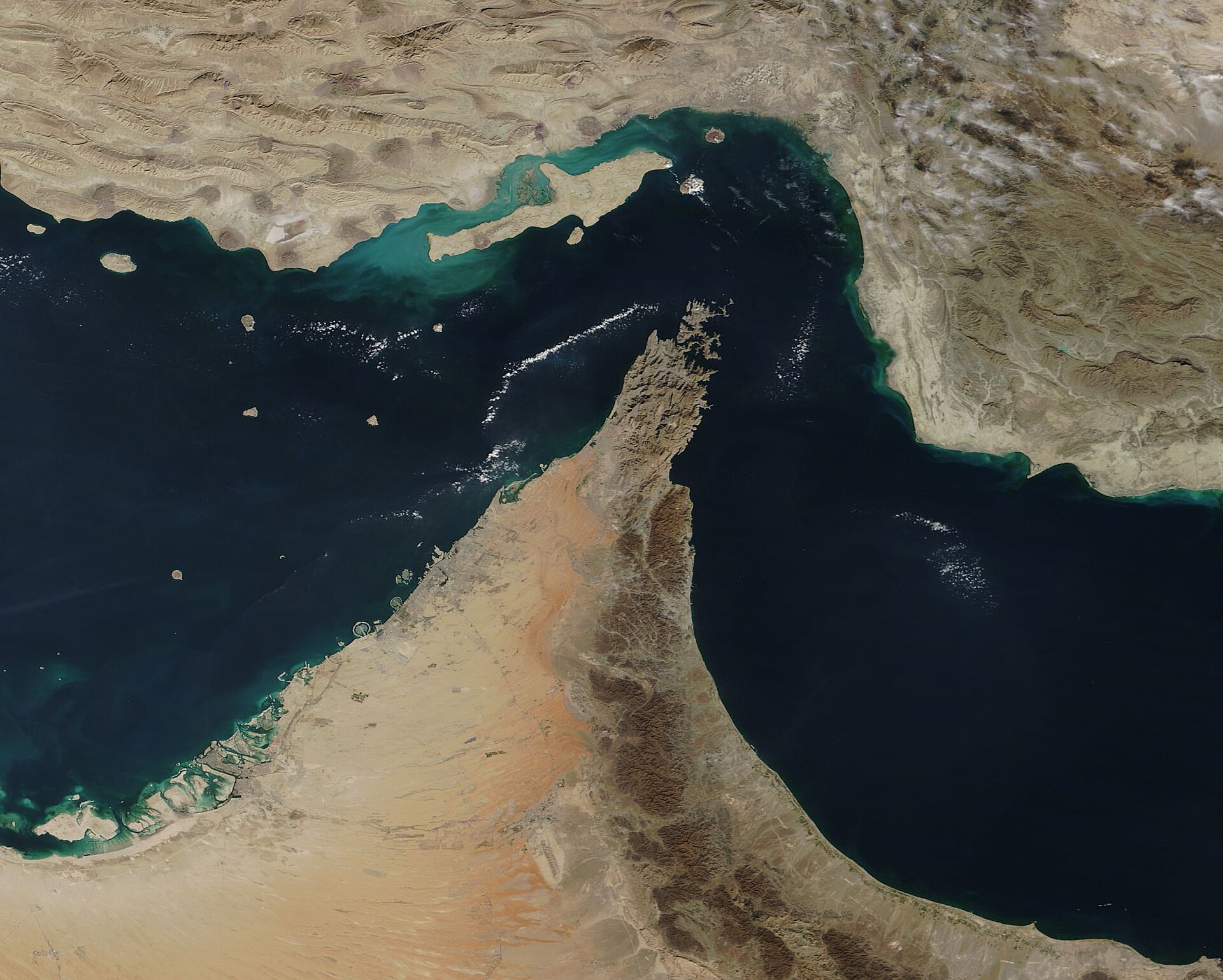
The current Hormuz situation is a double blockade — the US controls the Arabian Sea entry from the south through the naval cordon established April 13, and the IRGC controls the Gulf of Oman exit from the north through the selective closure regime it has operated since early March. Bloomberg described the mechanism on April 26: vessels now need approval from both parties to transit, and only 45 transits have occurred since the April 8 ceasefire — 3.6% of the pre-war baseline. China brokered one of those transits for its own cargo. The remaining 44 passed through a combination of IRGC selective exemptions and US blockade permissions that China did not arrange.
Breaking the double blockade would require Beijing to confront either Washington or Tehran — and there is no scenario in which China’s current leadership does either. Confronting Washington would mean challenging the US naval cordon directly, which would risk the entire US-China economic relationship over a waterway dispute. Confronting Tehran would mean threatening to suspend the oil trade, Kunlun Bank settlements, or UN Security Council cover that constitutes Iran’s economic survival infrastructure during wartime. IEA Executive Director Fatih Birol described the 13 million bpd offline as “the biggest energy security threat in history” — but Beijing’s 109-120 day strategic reserve means the threat is abstract for China in a way it is not for countries without that buffer.
Chinese state media’s framing of the crisis confirms the positioning. Global Times used softened language throughout, characterising Xi’s position as a “call” rather than a demand and quoting Chinese scholars who argued that the “core root cause of the Middle East issue lies in US intervention.” China Military, the PLA’s media outlet, ran a piece headlined “China’s rational role in the Strait of Hormuz crisis” — editorial positioning that frames Beijing as structurally reasonable while the United States is structurally destabilising. The April 20 call fits that narrative: Xi wants peace, Xi urged reopening, and if Hormuz remains closed, it is someone else’s fault. The call is the performance that makes the narrative work.
The 13-day interval between China’s UNSC veto and Xi’s Hormuz call to MBS is not a contradiction that Beijing needs to resolve — it is the architecture working as designed. China blocks the multilateral mechanism that could enforce Hormuz reopening, then calls the Saudi crown prince to express its sincere hope that Hormuz reopens. The veto protects Beijing’s Iran relationship from the enforcement consequences of its own stated preference, while the phone call protects its Saudi relationship from the reputational consequences of the veto. Both actions serve Chinese interests, neither action costs China anything, and the Strait remains closed. MBS, who has spent two months assembling a diplomatic portfolio from partners who offer statements rather than solutions, almost certainly understood all of this before the call connected — and took the call anyway, because a Chinese president publicly endorsing Hormuz reopening, even performatively, is a data point worth having when the ledger is eventually tallied.
Frequently Asked Questions
Has China ever enforced a demand against Iran on a strategic issue?
Beijing voted in favour of UNSC Resolution 1696 in 2006 and Resolution 1929 in 2010, both imposing sanctions on Iran over its nuclear programme — but these came during a period when China’s oil imports from Iran were a fraction of current volumes and the 25-year cooperation agreement had not yet been signed. Since the March 2021 deal, China has not imposed or threatened any bilateral penalty against Tehran on any issue, including the IAEA access termination in February 2026 that ended international monitoring of Iran’s 440.9 kg stockpile of 60%-enriched uranium.
Could secondary sanctions on Chinese banks force Beijing to pressure Iran?
Treasury Secretary Bessent’s April letters to two Chinese banks have not produced any public compliance response. The structural challenge is that China’s Iran oil trade is routed through Kunlun Bank and provincial institutions that are already either sanctioned or have minimal US dollar exposure. Sanctioning major Chinese banks like ICBC or Bank of China over Iran trade would trigger a bilateral financial crisis far exceeding the Hormuz issue — a step Washington has never taken against any country and which would crash US Treasury markets where China holds over $800 billion in securities.
What happened to the China-Pakistan five-point peace plan?
The plan, announced March 31, 2026, included Hormuz reopening, an immediate ceasefire, humanitarian corridor establishment, nuclear talks resumption, and a regional security dialogue. Pakistan presented it as the basis for the Islamabad negotiations. None of the five points has been implemented as of April 26, and the plan contained no enforcement mechanism, no timeline, and no designation of which party bore responsibility for each point — a structure that The Diplomat described as functionally decorative.
How much LNG is stranded by the Hormuz closure?
Qatar, the world’s largest LNG exporter with 77 MTPA of capacity, has seen the vast majority of its exports blocked since early March. Only the Al Daayen, carrying Chinese-contracted cargo, has completed a laden transit since the IRGC tightened passage controls. Approximately 50 LNG tankers were idling in Asian waters as of early April, with an estimated 12.8 MTPA of capacity offline. Japan-Korea Marker (JKM) spot prices have remained elevated at $19.83-19.97/MMBtu, reflecting the supply disruption’s persistence.
What is Sepehr Energy, and why does it matter that Hengli was buying from it specifically?
Sepehr Energy is the designated crude oil sales arm of Iran’s Armed Forces General Staff — meaning Hengli’s purchases were not civilian commercial trade but direct revenue to the military command structure overseeing the IRGC. OFAC’s designation of Hengli on April 25 was partly intended to make that connection explicit: buying Sepehr crude is funding the institution that controls Hormuz closure. That framing has not altered Chinese purchasing behaviour, but it sharpens the legal and reputational exposure for any refinery that continues.
Moscow made its broker role explicit on April 27 when Putin received Araghchi at the Kremlin — the first Kremlin-level Iran meeting since the war began — with agenda items explicitly covering “possible joint initiatives between Iran and Russia regarding the US talks.”