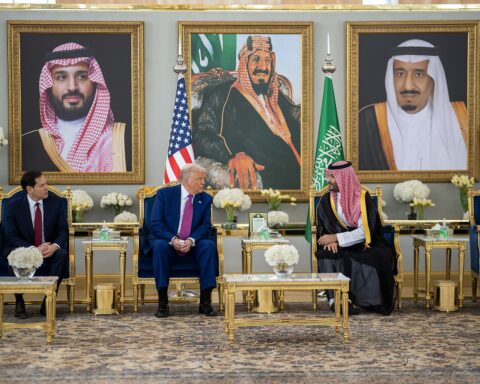
JEDDAH — The United States government has never, in the 44-year history of the Overseas Security Advisory Council, told American citizens to reconsider attending the Hajj. Not after 1,470 pilgrims died in the 2015 Mina crush. Not after more than 1,300 died from heat exposure in 2024. The advisory that OSAC issued on April 7, 2026 — “reconsider participating in Hajj this year” — broke that record, and the cause was not logistics or climate. It was the ongoing Iranian missile and drone campaign against Saudi territory, and an air-defense shield that has burned through 86 percent of its interceptor stockpile in 38 days of active hostilities. Crown Prince Mohammed bin Salman responded by ordering “full mobilisation of operational, security and preventive plans” and releasing photographs of Patriot batteries around the holy sites, captioned by the Ministry of Defence as “an eye that never sleeps.” Washington’s formal risk assessment and Riyadh’s visual reassurance now occupy different realities. The 1.8 million pilgrims filling the holy cities will pass through that gap on their way to the plain of Arafah on May 26 — 34 days after the ceasefire expired, with no extension agreed.
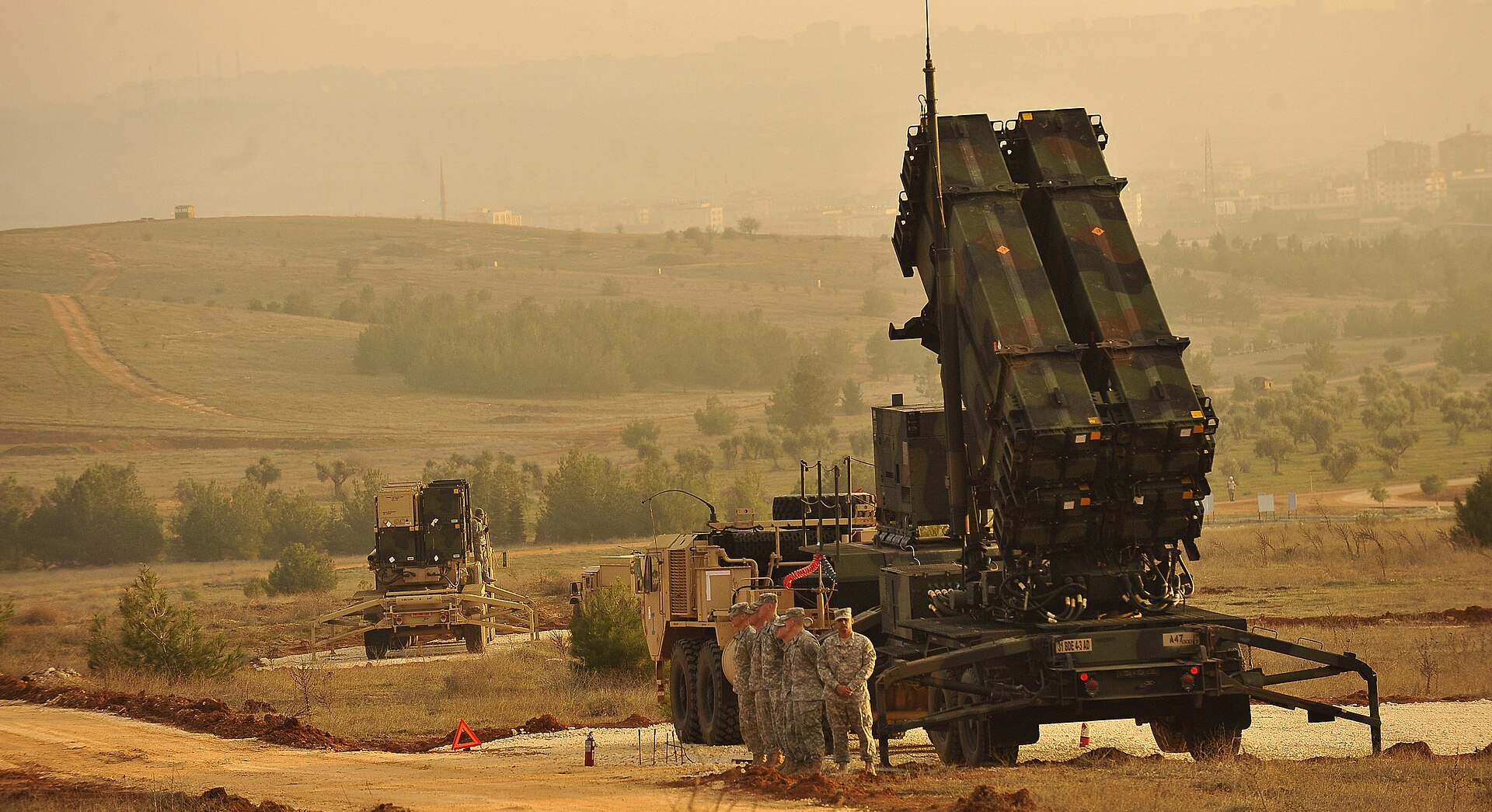
Table of Contents
- What Does the OSAC Advisory Actually Say?
- Why Has Washington Never Issued a Hajj Warning Before?
- Can 400 Interceptors Protect 1.8 Million Pilgrims?
- What Has Changed Since the Last Time Iranian Pilgrims Walked on Saudi Soil?
- Why Is Washington Warning About a Risk Saudi Arabia Projects as Managed?
- Frequently Asked Questions
What Does the OSAC Advisory Actually Say?
The Overseas Security Advisory Council issued a Security Alert on April 7, 2026, advising Americans to “reconsider participating in Hajj this year” due to “the ongoing security situation and intermittent travel disruptions.” The underlying Level 3 Travel Advisory for Saudi Arabia, last updated March 13, cites the “ongoing threat of drone and missile attacks from Iran.”
The alert’s language is carefully scoped. OSAC did not recommend against all travel to Saudi Arabia — the Level 3 advisory already covers the country at large. The Hajj-specific alert layered an explicit religious-pilgrimage warning on top of that baseline, a bureaucratic escalation that required State Department coordination with the U.S. Embassy in Riyadh. The embassy published the advisory to its consular page the same day, directing citizens to “review the State Department’s Saudi Arabia Travel Advisory” and register with the Smart Traveler Enrollment Program. The text of the advisory treated the pilgrimage itself as the risk variable rather than a secondary condition of being present in Saudi Arabia — a categorical distinction no prior OSAC communication had drawn.
No comparable advisory exists in the OSAC archive for any prior Hajj season. The Council, established in 1985 as a public-private partnership between the State Department and American private-sector organizations, has issued Hajj-related guidance before — health warnings for MERS outbreaks, logistical notices about crowd density, reminders to carry identification copies. Each of those addressed the pilgrimage as an event to prepare for. The April 7 alert was the first to recommend that Americans weigh whether to go at all.
The European Union Aviation Safety Agency issued a parallel signal through a different bureaucratic register. EASA Conflict Zone Information Bulletin 2026-03-R7 restricts commercial overflight of most Saudi airspace, permitting transit through the southern corridor only above Flight Level 320 — approximately 32,000 feet — via a narrow band south of reporting points OBSOT, DANOM, KEDON, and VELOD. Eastern Saudi airspace, covering Dammam, Dhahran, and the Eastern Province refineries that have absorbed the majority of Iranian strikes, remains entirely prohibited to civilian aviation. The OSAC advisory speaks to pilgrims on the ground; the EASA bulletin addresses aircraft in the sky above them.
Why Has Washington Never Issued a Hajj Warning Before?
Prior Hajj disasters — the 2015 Mina stampede that killed at least 1,470 pilgrims and the 2024 heat crisis that killed more than 1,300 — were classified as crowd-management and climate events, not security threats from a hostile state. The 2026 advisory is the first driven by active military hostilities on Saudi territory during the pilgrimage season.
The Middle East briefing 3,000+ readers start their day with.
One email. Every weekday morning. Free.
The 2015 Mina stampede remains the deadliest Hajj incident in modern history. At least 1,470 pilgrims died in a crush at the intersection of streets 204 and 223 during the stoning ritual on September 24, 2015 — tallies compiled from individual countries’ reported losses exceed 2,400, against Riyadh’s official count of 769. Iran lost 464 citizens, the highest single-country toll, and Tehran demanded an international investigation. The United States treated the disaster as a logistical failure. No travel advisory escalation followed.
The 2024 season killed differently. Summer temperatures in Mecca exceeded 51 degrees Celsius. More than 1,300 pilgrims died, primarily from heat exposure, many of them unregistered pilgrims without access to Saudi Arabia’s air-conditioned tent infrastructure at Mina and Arafah. Egypt alone reported over 600 deaths. The State Department issued guidance on heat preparation and hydration protocols. It did not tell Americans to reconsider going.
Neither disaster engaged the institutional machinery that OSAC exists to operate. Stampedes and heat are recurring hazards addressed through crowd engineering, medical infrastructure, and scheduling reforms — each categorized in threat taxonomies as an environmental or logistical risk, not a hostile-actor risk. The 2026 advisory activated a different classification: a foreign state actively firing ballistic missiles and armed drones at the territory where the pilgrimage takes place. The distinction driving the unprecedented advisory is not severity — more people died from stampede and heat in 2015 and 2024 combined than in any projected Hajj-period military scenario — but agency. Crowd crush is a systems failure. An IRGC missile salvo is a command decision, repeatable at will, subject to no weather cycle or calendar constraint.
The advisory also carries organizational weight beyond individual travelers. OSAC’s membership includes more than 5,600 American organizations — corporations, NGOs, universities, and faith-based institutions. A Level 3 designation triggers duty-of-care reviews at many of those organizations, affects insurance underwriting for international travel, and compels formal risk assessments where employees or members planned to attend the pilgrimage. Several major American Muslim organizations have reported elevated cancellation rates among registered pilgrims since April 7, though neither the Saudi Ministry of Hajj nor the U.S. Embassy has released nationality-specific arrival figures for 2026.
Can 400 Interceptors Protect 1.8 Million Pilgrims?
Saudi Arabia entered the war with approximately 2,800 PAC-3 MSE interceptors. After 38 days of active hostilities requiring the interception of 894 aerial threats — 799 drones and 95 ballistic missiles, per Saudi MoD tallies reported at daily press briefings — roughly 400 rounds remain, an 86 percent drawdown. Standard PAC-3 doctrine expends two interceptors per incoming ballistic missile for the system’s advertised kill probability above 90 percent.
The PAC-3 MSE was not the sole system engaged. THAAD batteries intercepted high-altitude ballistic trajectories. South Korean KM-SAM Block II units covered the medium-altitude band. Recently deployed 30-kilowatt laser arrays and Skyguard point-defense systems handled the bulk of drone interceptions at lower altitudes. But for incoming ballistic missiles in the terminal phase — the threat category that can deliver the largest single-strike casualties in a dense urban area — the PAC-3 MSE remains the primary response layer, and each engagement consumes two rounds per warhead under standard fire-control doctrine.
At approximately 400 remaining rounds, Saudi Arabia’s PAC-3 inventory can cover roughly 200 ballistic missile engagements before total depletion. That figure assumes clean intercepts with no misses, no decoy-discrimination failures, and no salvo saturation that overwhelms the AN/MPQ-65 radar’s simultaneous tracking capacity. Iran’s demonstrated attack doctrine — coordinated waves mixing slow-moving drone swarms with ballistic missiles on converging trajectories — is designed to degrade those assumptions. The five-layer architecture around the holy sites is the most sophisticated air-defense umbrella ever placed over a religious gathering, and its effectiveness is a direct function of magazine depth.
Resupply is not available on any timeline that covers Hajj 2026. The Defense Security Cooperation Agency notified Congress on January 30, 2026 — 29 days before the war began — of a $9 billion sale of 730 PAC-3 MSE rounds to Saudi Arabia. Lockheed Martin’s Camden, Arkansas facility produces approximately 620 rounds per year for all global customers combined. Even under expedited wartime scheduling, no rounds from that contract will arrive before mid-2027. Lockheed announced on January 6 a plan to more than triple annual production capacity to around 2,000 rounds — a seven-year industrial ramp whose first capacity gains lie years away.
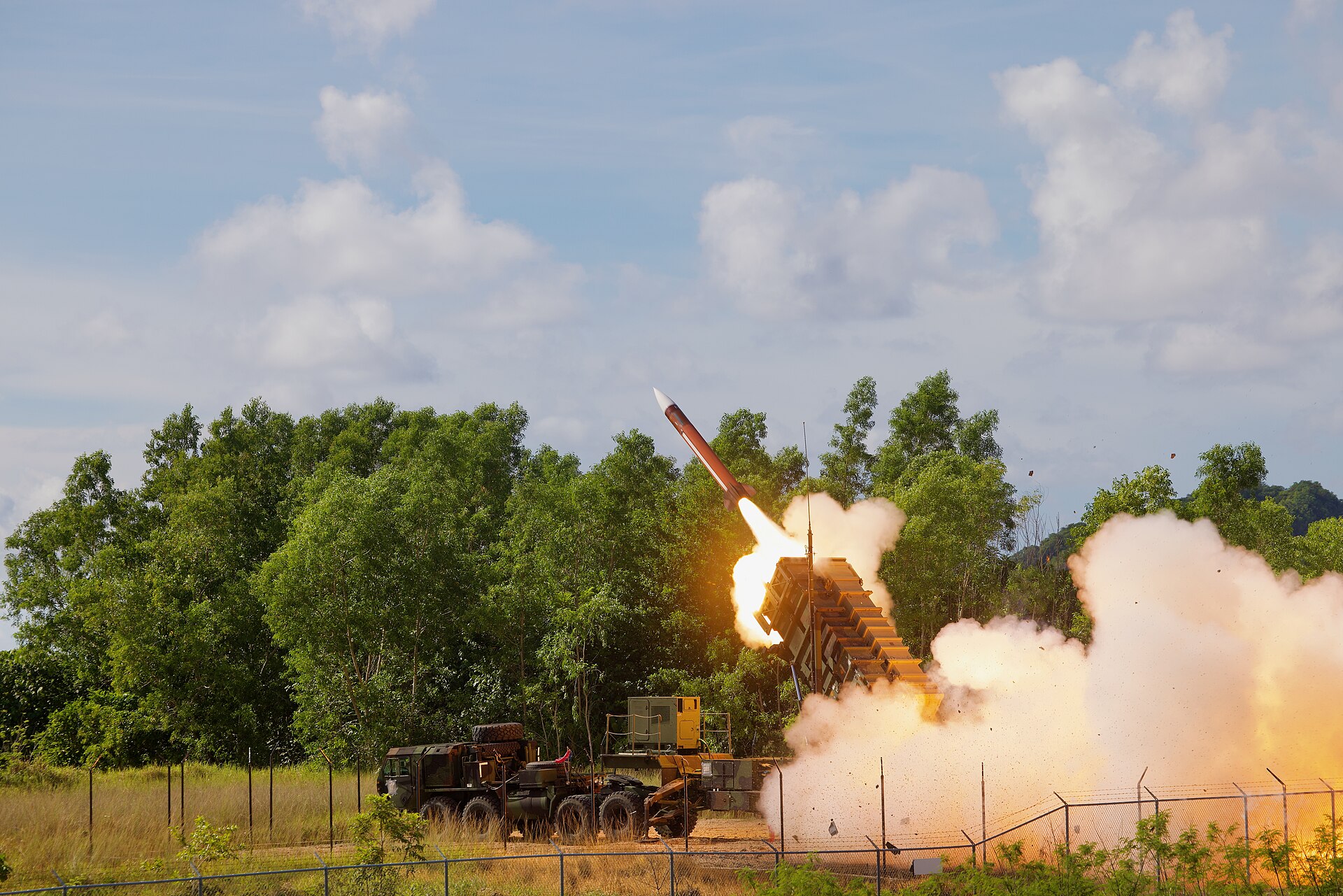
The Saudi Ministry of Defence’s public communication has been visual rather than quantitative. On April 12-13, the ministry released photographs of Patriot battery launchers deployed in desert positions near Mecca and Medina, with the caption: “Air defense forces — an eye that never sleeps, its mission is the safety of Muslim pilgrims.” The images showed launcher vehicles. They did not disclose how many canisters were loaded, how many reload rounds were staged at forward supply points, or what the engagement ceiling would be under the sustained saturation salvos that the IRGC has already demonstrated it can execute. Washington’s OSAC advisory, issued five days before those images appeared, addressed the question the photographs did not answer.
What Has Changed Since the Last Time Iranian Pilgrims Walked on Saudi Soil?
Approximately 30,000 Iranian pilgrims — 34 percent of Iran’s 87,550 quota — are attending Hajj 2026. The first 260 arrived in Medina on April 25, the first Iranians on Saudi territory since the war began on February 28 — and the overland route they took through Iraq maps the diplomatic ceiling with more precision than either foreign ministry’s public statements, as this analysis of the Arar land crossing documents. Tasnim News Agency reported the dispatches were authorized personally by Ayatollah Mojtaba Khamenei, not by President Masoud Pezeshkian’s civilian government.
The 1987 Mecca incident is the baseline for every calculation involving Iranian pilgrims on Saudi territory. On July 31, 1987, Iranian pilgrims organized a political demonstration inside the Grand Mosque compound, acting on instructions Ayatollah Ruhollah Khomeini had issued directing followers to use the pilgrimage for political mobilization. Saudi security forces intervened. In the stampede and violence that followed, 402 people died — 275 Iranian pilgrims, 85 Saudi police and civilians, and 42 pilgrims of other nationalities — with another 649 wounded. Saudi Arabia severed diplomatic relations, expelled the Iranian chargé d’affaires, and banned Iranian pilgrims entirely for three years.
The crisis produced a deterrence equilibrium that held for nearly four decades. Iranian pilgrims on Saudi soil were a liability for Tehran, not Riyadh. If violence erupted, Iranian citizens died and the Islamic Republic absorbed the reputational cost of having incited disorder in sacred space. Saudi Arabia’s role as Custodian of the Two Holy Mosques framed the kingdom as the responsible guardian maintaining order; Iran was cast as the provocateur endangering its own people. That structure restrained both sides. Iran moderated political activity during the pilgrimage. Saudi Arabia calibrated its crowd response to avoid incidents Tehran could use as propaganda.
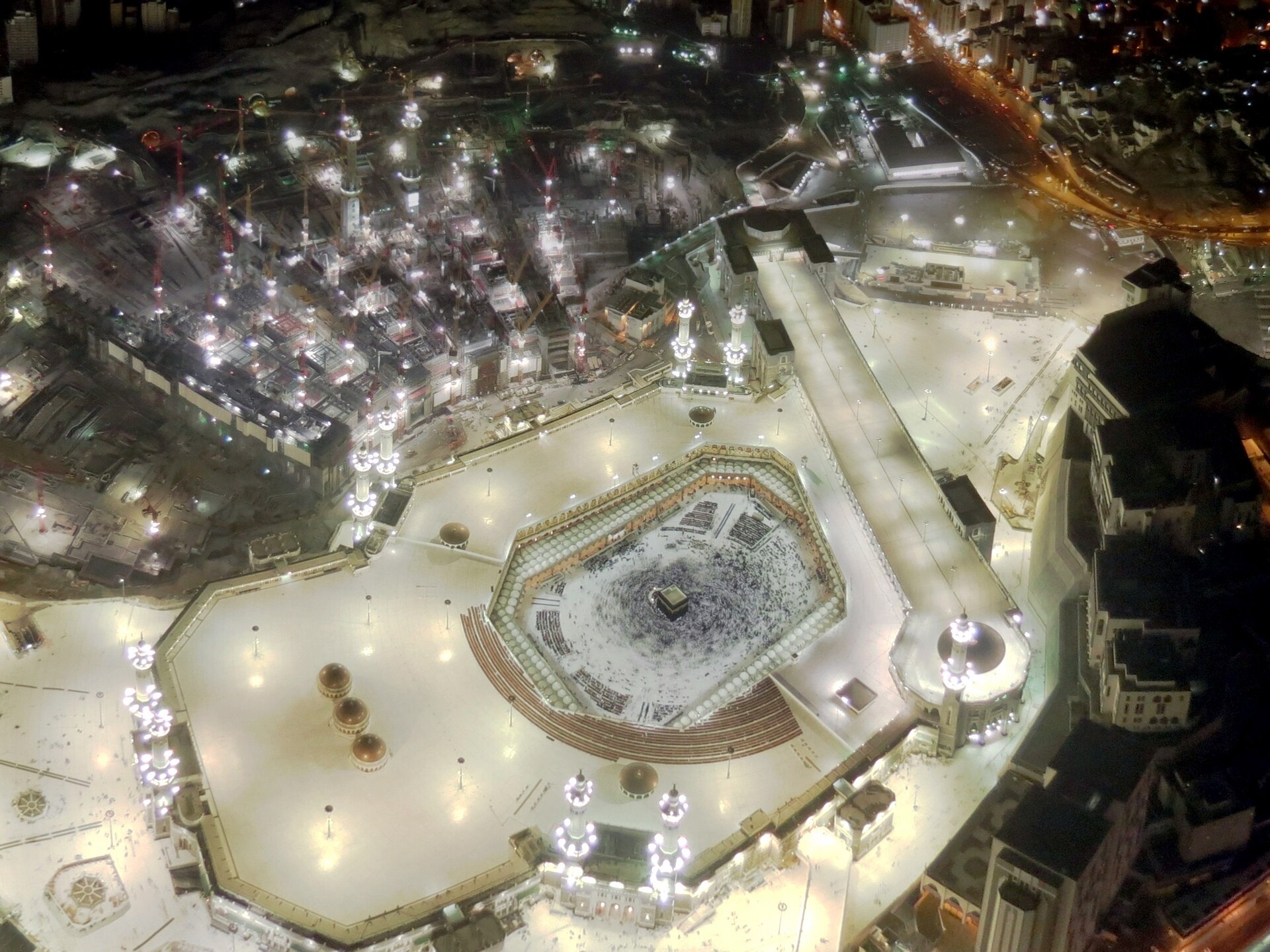
The 2026 pilgrim dispatches invert that equilibrium. With an active war between the two countries — one in which Iran has struck Saudi energy infrastructure, military bases, and civilian areas — 30,000 Iranian citizens on Saudi territory function as a constraint on Riyadh rather than on Tehran. Their presence binds Saudi Arabia’s defensive calculus to a second variable: any failure of the air-defense shield that allows blast effects, missile debris, or secondary damage to reach pilgrim areas now implicates Saudi Arabia’s protective guarantee — not Iran’s aggression — as the proximate cause of harm in the Islamic world’s moral accounting. Iran pre-accepted the risk by sending its citizens. The kingdom must now demonstrate its protective capacity against a threat that Iran itself is generating.
The authorization chain is itself a signal. Tasnim News Agency, the IRGC-aligned outlet, reported that the 30,000 pilgrims were dispatched “in accordance with the command, approval, and viewpoint” of Ayatollah Mojtaba Khamenei — not President Pezeshkian, whose civilian government nominally administers the Hajj and Pilgrimage Organization. Mojtaba, who has served as the supreme leader’s primary interface with the security establishment during the elder Khamenei’s extended public absence, personally underwrites the pilgrim deployment. Any harm to Iranian pilgrims on Saudi soil becomes not a consular matter for Pezeshkian’s foreign ministry but a grievance attributable directly to the Khamenei household — and by extension IRGC-actionable.
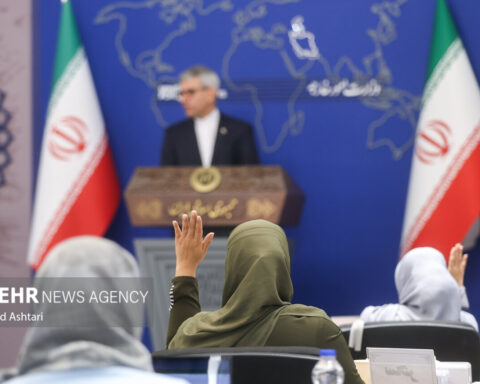
Iranian government spokesperson Fatemeh Mohajerani stated publicly that “all necessary measures” had been taken and that “Iran has coordinated with the authorities in Saudi Arabia to ensure the security of Hajj pilgrims.” The formulation serves two purposes simultaneously. It asserts Iranian cooperation — deflecting any accusation of recklessness in dispatching pilgrims to a war zone — while transferring security responsibility entirely to the Saudi government. Should a security failure occur, Iran has pre-positioned the argument that Saudi Arabia held and failed the duty of care.
Why Is Washington Warning About a Risk Saudi Arabia Projects as Managed?
The OSAC advisory measures the distance between Saudi Arabia’s public security posture — Crown Prince Mohammed bin Salman’s mobilization directive and the Ministry of Defence’s Patriot deployment photographs — and Washington’s own risk assessment, which incorporates interceptor depletion rates, IRGC force disposition, and the absence of a binding ceasefire.
MBS’s April 23 Cabinet directive ordered “full mobilisation of operational, security and preventive plans” and demanded that “all national resources and capabilities be fully deployed to ensure a successful Hajj season across all its organizational, security, and preventative dimensions.” The directive addressed air, land, and sea entry points and covered Mecca, Medina, and all pilgrimage sites. The MoD’s Patriot photographs, released eleven days earlier, served the same communicative function: showing the physical presence of the hardware around the most symbolically charged territory in the Islamic world.
Washington’s advisory operated from a different information base. The State Department’s intelligence inputs include the complete intercept log, the PAC-3 drawdown trajectory, Lockheed Martin’s production timeline, and threat-matrix modeling based on IRGC launch infrastructure across Kermanshah, Fars, and Khuzestan provinces. The advisory is the declassified surface of the gap those inputs revealed between threat and response. It does not need to state the interceptor count to communicate what it communicates. What Washington’s threat analysis does not capture — because it was not yet complete when the advisory was issued — is the partial answer Saudi Arabia has assembled through Ukraine’s counter-drone deployment in Saudi Arabia: 228 Ukrainian specialists embedded across the kingdom’s air-defense networks, operating systems that cost a fraction of a PAC-3 round and running command-and-control software that the Pentagon itself has now deployed at Prince Sultan Air Base.
Riyadh has not disputed the advisory. No Saudi government spokesperson, no foreign ministry statement, and no Saudi media editorial has directly addressed the OSAC alert. The silence is itself diagnostic. Saudi Arabia routinely contests international assessments it considers inaccurate — from the Khashoggi investigations to the 2015 stampede death toll, where the kingdom’s official count of 769 diverged sharply from tallies exceeding 2,400 compiled by governments repatriating the dead. On the question of Hajj 2026 air-defense readiness, the Saudi position is expressed entirely through deployment imagery and the Crown Prince’s mobilization language. The quantitative question — how many rounds, for how many threats, over how many days — remains unaddressed by any Saudi official on the record.
The Rubio administration’s own security-assistance decisions compound the signal. Secretary of State Marco Rubio’s April 2 announcement of an $8.6 billion emergency arms package excluded Saudi Arabia from the recipient list, directing systems to Israel, the UAE, Bahrain, and Jordan. Saudi interceptor resupply remained on the standard DSCA commercial track — a slower, more bureaucratic pipeline than the emergency drawdown authority applied to other Gulf allies facing the same Iranian threat. The same administration advancing a Section 123 nuclear cooperation agreement with Riyadh classified the kingdom’s air-defense replenishment as a routine commercial transaction rather than a wartime emergency.
The ceasefire that took nominal effect on April 8 expired on April 22 — the same day Indonesia dispatched its first Hajj charter flights from Jakarta, carrying the vanguard of its 221,000-pilgrim allocation. No extension was agreed at Islamabad or through any subsequent channel. The IRGC’s April 7 declaration by Commander Zolfaqari that “all restraint has been removed” — issued on the same day as the OSAC advisory — has not been formally rescinded, qualified, or limited. Iran has issued no public guarantee exempting Mecca, Medina, or pilgrimage routes from potential strikes, and the absence of an explicit threat is consistent with strategic ambiguity: preserving escalation options without naming the holiest sites in Islam as targets.
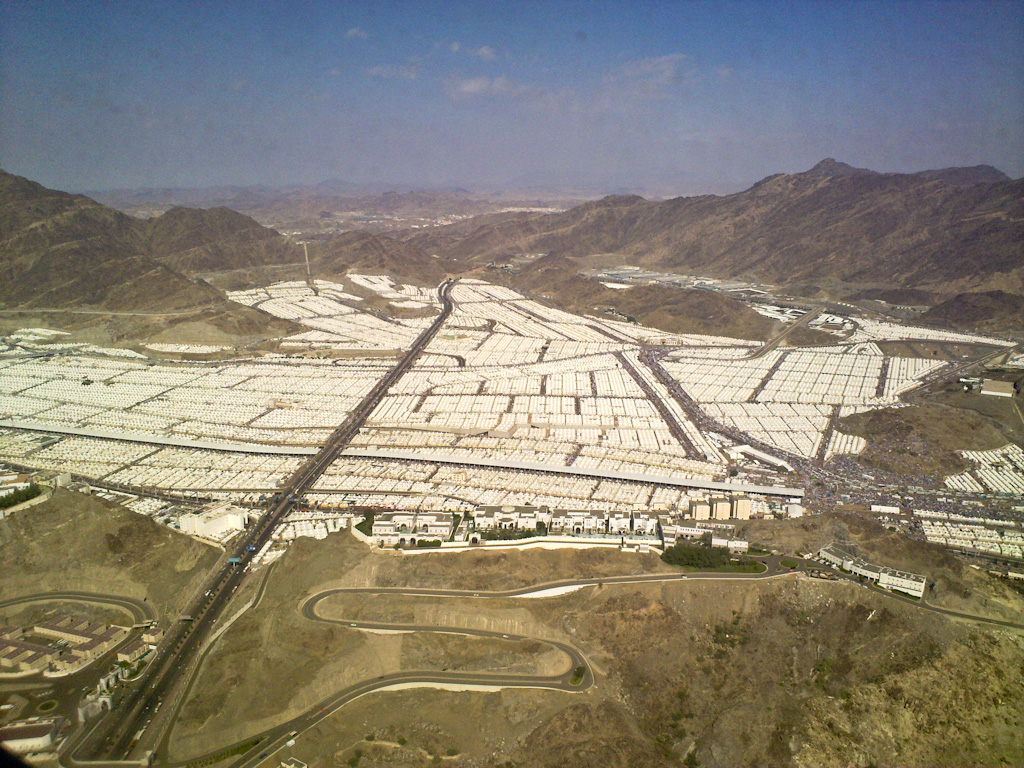
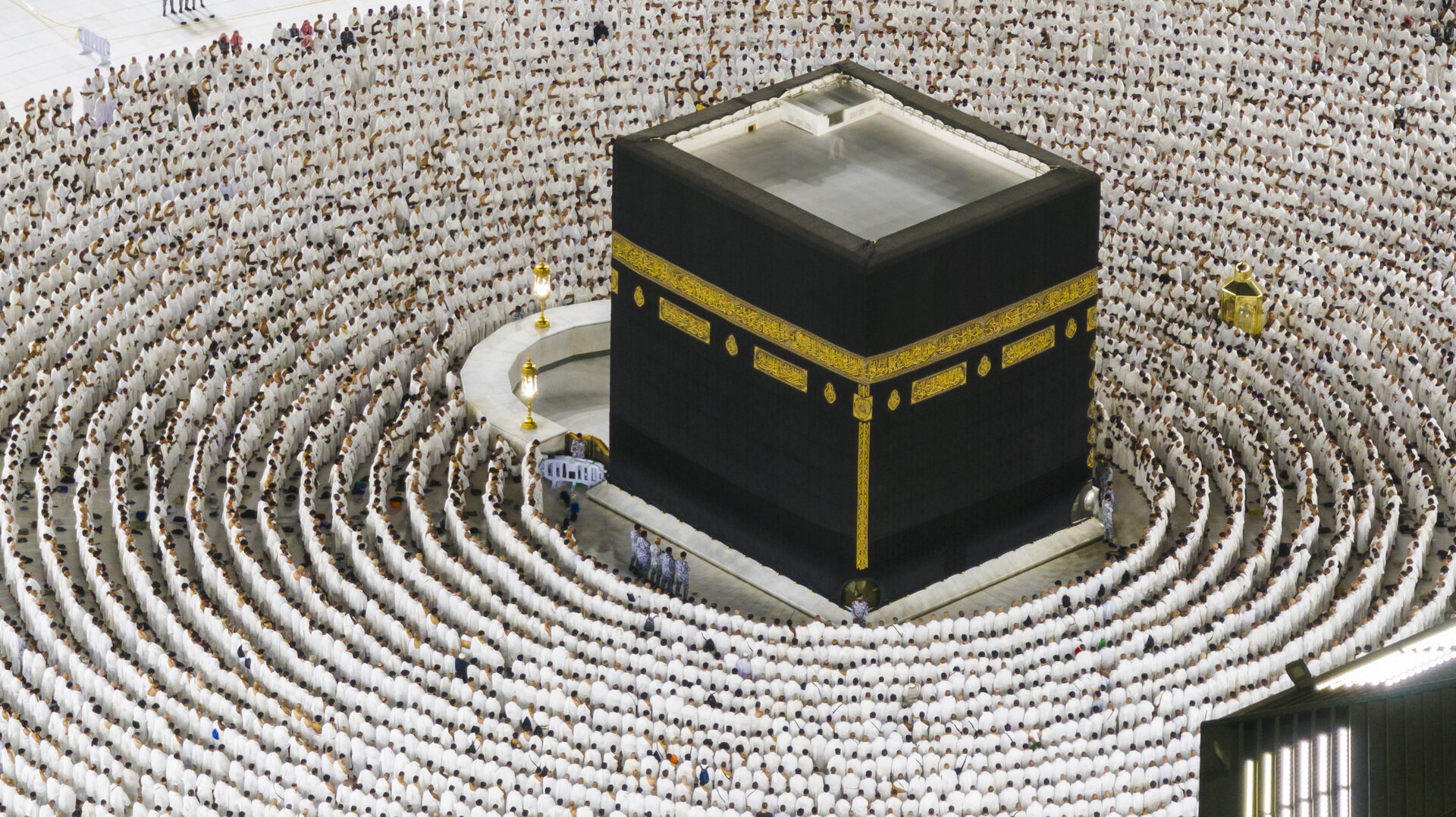
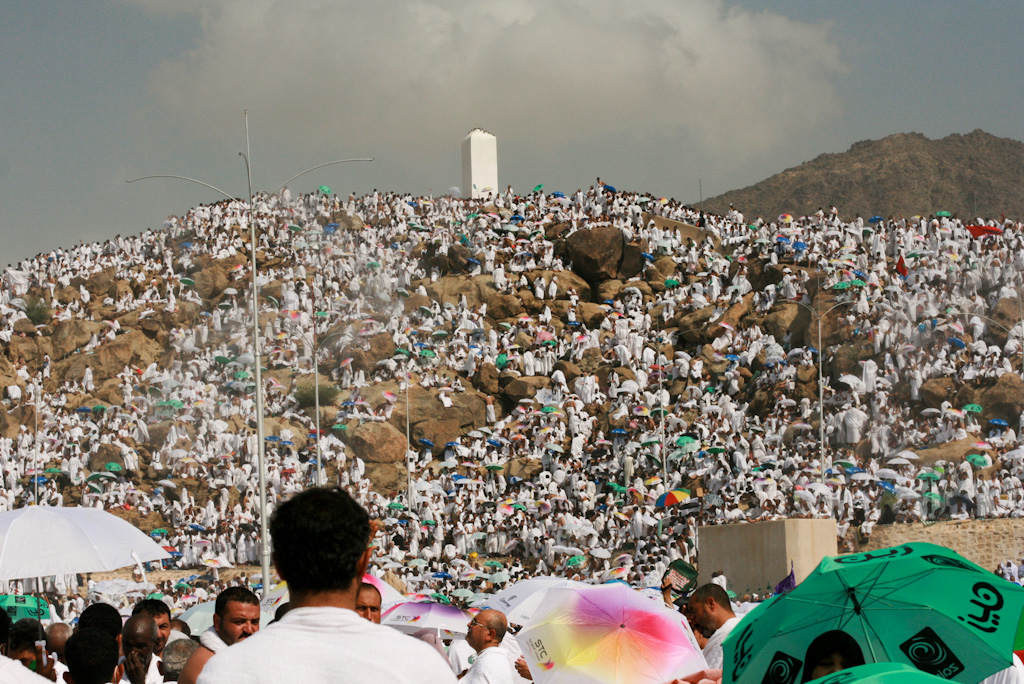
The Day of Arafah falls on May 26 — 23 days from today, 34 days after the ceasefire lapsed without extension. On that date the full complement of approximately two million pilgrims — international and domestic — will gather on the open plain of Arafah, nine miles east of Mecca, from dawn to sunset. It is the spiritual apex of the Hajj and the single most concentrated population event on the calendar. Aramco’s Q1 2026 results — due May 10, sixteen days before Arafah — are projected by AlJazira Capital to show net profit of SAR 108.8 billion ($29.01 billion), a 56.7 percent increase quarter-on-quarter, driven by war-premium crude prices despite Saudi production falling from 10.4 million bpd in February to 7.25 million bpd in March per IEA data. The kingdom that stands to report record quarterly earnings from the war’s energy-market disruption is the same kingdom whose air-defense magazine is the variable neither the earnings release nor the deployment photographs will quantify.
Frequently Asked Questions
Have other countries issued similar Hajj 2026 travel warnings?
The United Kingdom’s Foreign, Commonwealth and Development Office updated its Saudi Arabia advisory on March 15 to “advise against all but essential travel” to the Eastern Province and areas near the Yemen border but did not single out the Hajj by name. Australia’s Department of Foreign Affairs and Trade issued a “Reconsider your need to travel” advisory for all of Saudi Arabia on March 20. Canada’s Global Affairs department updated its guidance on April 1 to warn against “large gatherings” in western Saudi Arabia — language widely interpreted as referencing the pilgrimage without naming it directly. As of May 3, 2026, the United States remains the only government to have issued an advisory explicitly naming the Hajj.
How many American Muslims typically attend Hajj, and has the advisory affected participation?
Approximately 12,000 to 15,000 American citizens perform the Hajj annually under the Saudi-administered quota system, according to the Islamic Society of North America. The 2026 U.S. quota was set at 12,600 before the OSAC advisory. Several American Hajj travel operators — including registered MOTAWIF agents who manage pilgrim logistics within Saudi Arabia — have reported cancellation rates between 30 and 45 percent since April 7, though neither the Saudi Ministry of Hajj nor the U.S. Embassy has released nationality-specific arrival statistics for 2026. The cancellations are concentrated among first-time pilgrims and families with children, according to two operators who spoke to American Muslim media outlets on condition of anonymity.
What happened the last time Patriot batteries were deployed around Mecca during Hajj?
During Hajj 2018, Saudi Arabia deployed Patriot batteries around Mecca for the first time, responding to the Houthi missile threat from Yemen. The Houthis fired four missiles toward western Saudi Arabia during the pilgrimage period; Saudi air defenses intercepted all four. That deployment drew from a full PAC-3 MSE inventory of approximately 2,800 rounds. The 2026 deployment is the second instance of Patriot coverage over the holy sites but operates with roughly one-seventh of the 2018 magazine against an adversary whose ballistic missile inventory and demonstrated launch volume exceed Houthi capabilities by an order of magnitude. The 2018 intercepts remain the only confirmed engagement of incoming missiles during an active Hajj season.
What is the historical and constitutional status of the Custodian of the Two Holy Mosques title?
King Fahd bin Abdulaziz formally adopted the title on October 27, 1986, replacing the previous royal honorific “His Majesty.” The move responded to two challenges: Ayatollah Khomeini’s post-1979 campaign questioning Al Saud fitness to administer the holy sites, and the domestic crisis triggered by Juhayman al-Otaibi’s seizure of the Grand Mosque on November 20, 1979 — an armed takeover that required French GIGN commandos to resolve after two weeks of combat inside the Haram compound. The title carries no international legal mechanism for revocation or challenge; it is self-declared and sustained by the kingdom’s demonstrated capacity to administer the annual pilgrimage securely. Historical precedents for Hejaz custodianship include the Ayyubids, the Mamluks, and the Ottoman sultans, each of whom held the role through military and administrative control of the holy cities rather than by election or appointment. A mass-casualty event from a missile strike during Hajj 2026 would be the first test of the title by an external military attack rather than an internal crowd-management failure.
Has Iran made any explicit commitment not to strike Mecca or Medina?
No. The Islamic Republic has not issued any formal declaration committing to protect or abstain from targeting Mecca, Medina, or Hajj pilgrimage infrastructure. The IRGC’s April 7, 2026 statement that “all restraint has been removed” — delivered by Commander Zolfaqari on the same day the OSAC advisory was published — has not been retracted, qualified, or geographically limited. PressTV and Tasnim have aired commentary from analysts asserting that Iran’s military operations target “military and economic installations, not holy sites,” but those statements originated from television commentators and political analysts, not from IRGC operational command, the Supreme National Security Council, or the office of the supreme leader. The distance between a media commentator’s assurance and a formal command-level guarantee issued through the SNSC is the specific ambiguity that an air-defense planner and an OSAC threat analyst must treat as an open variable rather than a resolved one. The salvo arithmetic underpinning that vulnerability — eighteen salvos, five exhaustion points, and a production ceiling Lockheed cannot close before mid-2027 — is documented in full in Eighteen Salvos From Empty: The PAC-3 Arithmetic Hanging Over Hajj 2026.