
JEDDAH — The first group of Iranian Hajj pilgrims landed at Medina’s Prince Mohammad Bin Abdulaziz International Airport on April 25, 2026, marking the first arrival of Iranian citizens on Saudi soil since the US-Iran war began on February 28. A second batch is scheduled for April 28, according to Iran’s Ambassador to Saudi Arabia Alireza Enayati, speaking to Asharq Al-Awsat on April 27.
Approximately 30,000 Iranian pilgrims are expected for Hajj 2026 — just 34 percent of Iran’s official quota of 87,550, according to Tasnim News Agency — but their presence imposes a full protective obligation on the Kingdom under conditions Saudi Arabia did not choose. The Supreme National Security Council authorized the pilgrim dispatch, the same body President Masoud Pezeshkian publicly accused on April 4 of wrecking ceasefire negotiations through Ali Shamkhani’s successor Ahmad Vahidi and Khatam al-Anbiya commander Gholamali Abdollahi. Iran’s decision to send pilgrims costs Tehran nothing. It costs Riyadh a wartime security guarantee for 30,000 citizens of a nation whose IRGC is still mining the Strait of Hormuz.
Table of Contents
- What Happened at Medina Airport
- Why Does Iran’s Pilgrim Dispatch Cost Saudi Arabia More Than Iran?
- What Does the 1987 Precedent Mean for Saudi Arabia in 2026?
- Can Saudi Arabia Defend 1.8 Million Pilgrims With 400 Interceptors?
- The SNSC Paradox — Ceasefire Wreckers Send Pilgrims
- What Iran Gets Without Giving
- Frequently Asked Questions
What Happened at Medina Airport
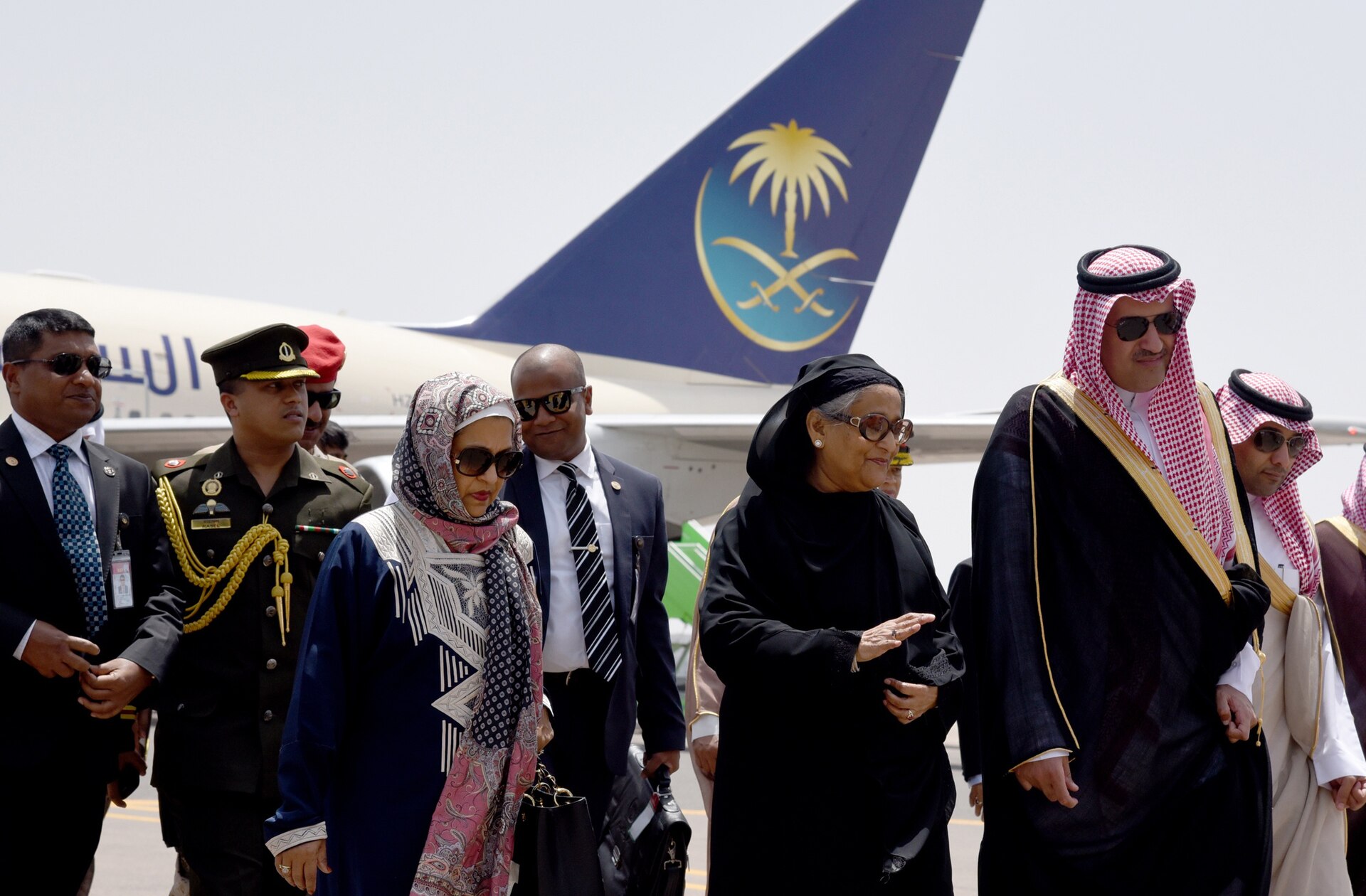
Iran’s state broadcaster PressTV and semi-official Fars News Agency both aired footage of Iranian pilgrims deboarding at Medina on April 25. The Saudi Ministry of Hajj confirmed the arrival to Al Arabiya, stating: “We are waiting for the guests of God with the utmost enthusiasm and respect.” Ambassador Enayati told Saudi Gazette on April 27 that Iranian pilgrims are “fully adhering to Saudi regulations” and are being “generously welcomed by Saudi Arabia, as are all pilgrims.”
The pilgrims originally planned to travel overland but switched to direct flights after the ceasefire enabled resumption of air routes, according to IFP News (Iran Front Page). The logistical shift itself carries a signal: Tehran chose the faster, more visible mode of arrival — one that produces airport footage for state media — over the quieter land route through Iraq. Full-scale departures from Iran began April 28, with the Day 60 arrival of Iranian pilgrims in Medina inverting Saudi Arabia’s wartime deterrence calculus in ways no ceasefire text has achieved.
Hajj Minister Tawfiq Al Rabiah framed Saudi preparations in Vision 2030 language, telling Gulf News that “these measures support crowd management and enhance pilgrim safety.” Crown Prince Mohammed bin Salman ordered “full mobilization of operational, security, and preventive plans” and directed authorities to “deploy all capabilities to ensure a safe and smooth pilgrimage,” according to Gulf News. Neither statement mentioned Iran or the war by name.
The US Embassy in Riyadh issued a Level 3 “Reconsider Travel” advisory against attending Hajj 2026 on April 7 — the first such warning in State Department history specifically targeting the pilgrimage, according to the Overseas Security Advisory Council.
The Middle East briefing 3,000+ readers start their day with.
One email. Every weekday morning. Free.
Why Does Iran’s Pilgrim Dispatch Cost Saudi Arabia More Than Iran?
Iran is sending 30,000 pilgrims into a warzone at zero military cost. No concession on Hormuz. No concession on enrichment. No concession on IRGC command structure. The pilgrims function as a diplomatic instrument that binds Saudi Arabia without binding Iran.
For Riyadh, the calculus is entirely different. Saudi Arabia must guarantee the safety of every pilgrim — Iranian included — under the Custodian of the Two Holy Mosques title that King Fahd adopted on October 27, 1986. Failing to protect them would hand Tehran the exact argument Ayatollah Khomeini made in 1979: that the Al Saud are unfit to guard Islam’s holiest sites. Refusing them entry would hand Tehran the same argument from a different angle.
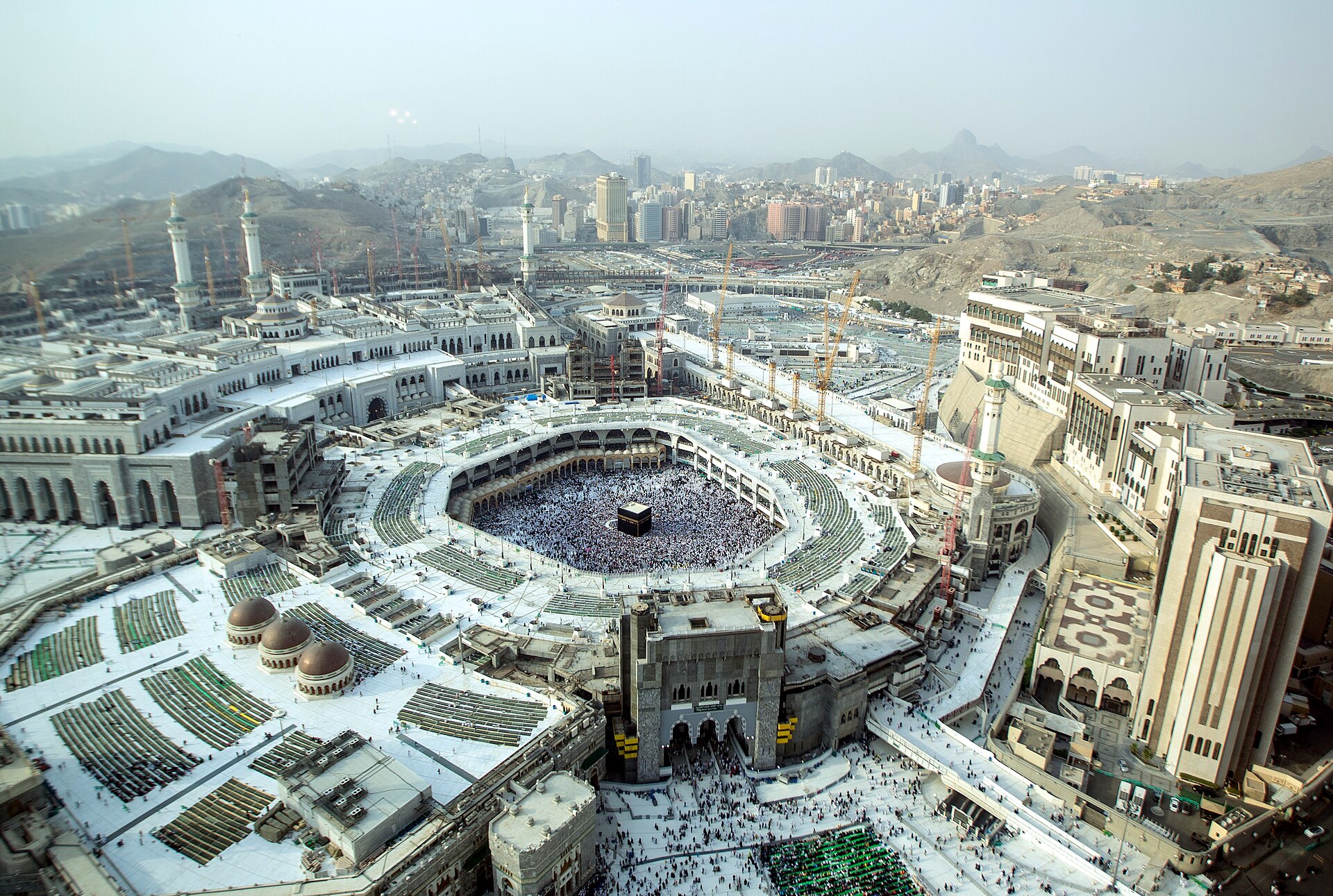
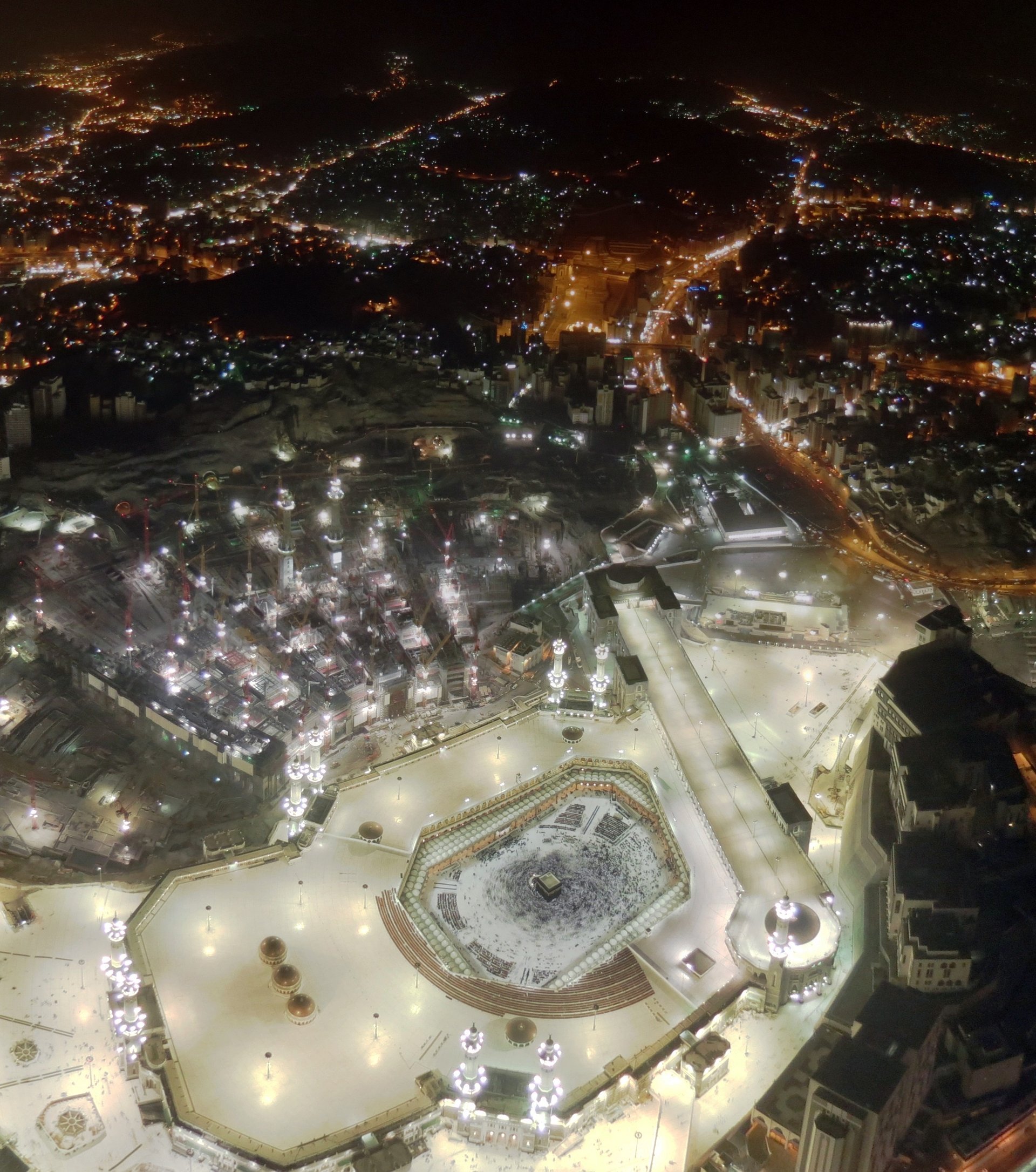
The wartime Hajj security architecture already strained Saudi resources before a single Iranian pilgrim arrived. PAC-3 MSE interceptor stocks have fallen to approximately 400 rounds — an 86 percent drawdown from pre-war levels — across 57 days of sustained Iranian attacks, as detailed below. The five-layer air defense ring around Mecca must now extend its protective umbrella over transit corridors serving 1.8 million international pilgrims plus 200,000 domestic attendees, according to Saudi authorities cited by Gulf News.
Iran bears none of this cost. If an Iranian pilgrim is harmed, the diplomatic fallout lands on the Custodian. If all 30,000 complete Hajj safely, Iran claims credit for peaceful participation while its IRGC continues operations in the Strait.
What Does the 1987 Precedent Mean for Saudi Arabia in 2026?
The 1987 precedent established that Iranian pilgrim deaths on Saudi soil — regardless of cause — become a legitimacy crisis for the Custodian of the Two Holy Mosques. In 2026, that structural trap is tighter: Saudi Arabia accepted 30,000 Iranian pilgrims under active wartime conditions with no shared-risk deterrence and no diplomatic exit if something goes wrong.
The last time Iranian pilgrims became a crisis point was July 31, 1987, when 402 people died during clashes between Iranian demonstrators and Saudi security forces in Mecca — 275 Iranian pilgrims, 85 Saudi security personnel, and 42 other nationals, according to Saudi Interior Ministry figures. Saudi Arabia cut diplomatic relations on April 27, 1988, reduced Iran’s Hajj quota by 87 percent, and Iran boycotted the pilgrimage entirely from 1988 to 1990.
Martin Kramer of the Washington Institute for Near East Policy, who studied the 1987 incident extensively, found “no evidence of deliberate provocation” but documented how the Iranian “Distancing from Mushrikin” demonstrations created conditions that escalated beyond anyone’s control. The 2015 Mina stampede — which killed over 2,000 pilgrims, with Iran suffering the highest single-country toll according to Iranian government figures — triggered another diplomatic rupture in 2016 and a full Iranian Hajj boycott that year.
The 2023 China-brokered normalization deal restored diplomatic relations and reopened Iran’s Hajj quota. Iranian pilgrims returned in 2024 for the first time since 2016. The 2026 dispatch is only the second Hajj participation since normalization — and the first under active wartime conditions.
The structural difference in 2026 is that mutual pilgrim presence no longer creates the shared-risk deterrence that Kramer identified in historical Hajj seasons. Iran is sending 30,000 of a possible 87,550 — its lowest utilization rate since normalization. Saudi Arabia, by contrast, has every citizen of every allied and neutral nation on its soil. Indonesia alone is sending 221,000 pilgrims. Pakistan is sending 119,000. A mass-casualty event at Hajj would damage Riyadh’s relationships with Jakarta and Islamabad — the two largest Muslim-majority democracies — regardless of who caused it.
Can Saudi Arabia Defend 1.8 Million Pilgrims With 400 Interceptors?
Saudi Arabia’s air defense network has approximately 400 PAC-3 MSE rounds remaining from a pre-war inventory of roughly 2,800, according to US Embassy security alerts and Saudi MOD launcher photographs published in April 2026. The 86 percent drawdown reflects 57 days of sustained Iranian ballistic missile and drone attacks on Saudi energy infrastructure, military installations, and civilian targets.
The five-layer defense deployed around Mecca — documented in a US Embassy security alert on April 7 — represents the most concentrated air defense architecture in Saudi Arabia’s history. But interceptor mathematics are unforgiving. A single Iranian ballistic missile salvo of the kind that struck Ras Tanura and Khurais requires multiple interceptors per inbound warhead to maintain acceptable kill probability. At 400 rounds, Saudi Arabia’s margin for a sustained campaign during the 29 days between now and the Day of Arafah on May 26 is thin.
The IRGC Navy command structure adds uncertainty. Rear Admiral Alireza Tangsiri was killed on March 30. Twenty-eight days later, no successor has been publicly named — an extended command vacuum with no precedent in recent IRGC Navy history. Suzanne Maloney of the Brookings Institution has documented Iran’s evolution into what she described as a “military-dominated state where civilian institutions lack enforcement mechanisms.” A headless IRGC Navy operating under decentralized authority cannot be bound by any ceasefire agreement, regardless of what the civilian government in Tehran signs.
The ceasefire itself offers no structural reassurance. President Trump extended it on April 21 with no fixed end date. Iran’s UN Ambassador stated Tehran would not enter negotiations unless the US naval blockade — active since April 13 — is lifted. Eid al-Adha follows on May 27. The densest concentration of pilgrims on Earth will be standing on the Plain of Arafat under air defenses operating at 14 percent of pre-war capacity.
The SNSC Paradox — Ceasefire Wreckers Send Pilgrims
Iran’s Supreme National Security Council authorized the dispatch of 30,000 pilgrims to Saudi Arabia, according to Islam Times, citing an unnamed SNSC source. This is the same council whose secretary, Ahmad Vahidi — who carries an INTERPOL Red Notice for the 1994 AMIA bombing in Buenos Aires — and whose military liaison, Abdollahi, were publicly accused by President Pezeshkian on April 4 of deviating from the delegation’s mandate during ceasefire talks.
The contradiction is structural, not accidental. The SNSC simultaneously wrecked the ceasefire framework that would have made Hajj safer and authorized the pilgrim presence that makes Saudi Arabia responsible for their safety. Vahidi demanded that IRGC-aligned representative Zolghadr join the Islamabad negotiation team. When Zolghadr’s report on April 14 revealed what Pezeshkian called a “deviation from the delegation’s mandate,” the Islamabad talks collapsed.
Yasmine Farouk of the Carnegie Endowment for International Peace has framed the risk as “uncontrolled escalation” during Hajj season — a scenario in which the civilian government that authorized pilgrim travel has no operational control over the military forces whose actions could endanger those same pilgrims. The Foundation for Defense of Democracies’ assessment that “five men are running Iran” explicitly excludes Pezeshkian from the decision-making circle.
Ayatollah Ali Khamenei has been publicly absent for 58 days as of April 27. His son Mojtaba has communicated only by audio. The Saudi government received Iran’s latest proposal through channels that bypassed the president entirely. The authorization to send pilgrims passed through an SNSC that the elected president has publicly declared is not operating under his authority.
What Iran Gets Without Giving
Iran’s 30,000 pilgrims deliver at least four strategic returns at zero military cost.
Religious legitimacy. Tehran demonstrates it is fulfilling the Islamic obligation of Hajj for its citizens despite war. Fars News and PressTV aired the Medina arrival footage to domestic audiences within hours. For a regime whose revolutionary identity rests on Islamic credentials, visible participation in Hajj — while fighting a war — reinforces the narrative that Iran is a faithful Islamic state under siege, not an aggressor.
Diplomatic binding. Every Iranian pilgrim on Saudi soil is a human constraint on Saudi military posture. Riyadh cannot participate in any escalation against Iran — even indirectly through coalition support — while hosting Iranian citizens under Custodian obligations. The Saudi FM Prince Faisal bin Farhan’s April 9 phone call to Iranian FM Araghchi — the first direct Saudi-Iranian ministerial contact since the war began — preceded the pilgrim dispatch by sixteen days. The sequence suggests pilgrims were part of a broader diplomatic architecture.
Asymmetric exposure. Saudi Arabia bears the full security cost. The Hajj cordon sealed on April 18 means Mecca and Medina are already operating under maximum-security protocols. Adding 30,000 Iranian nationals to the protected population inside that cordon increases Saudi obligations without increasing Iranian ones. If something goes wrong — whether from IRGC action, a coalition strike, or an internal security failure — the Custodian bears responsibility.
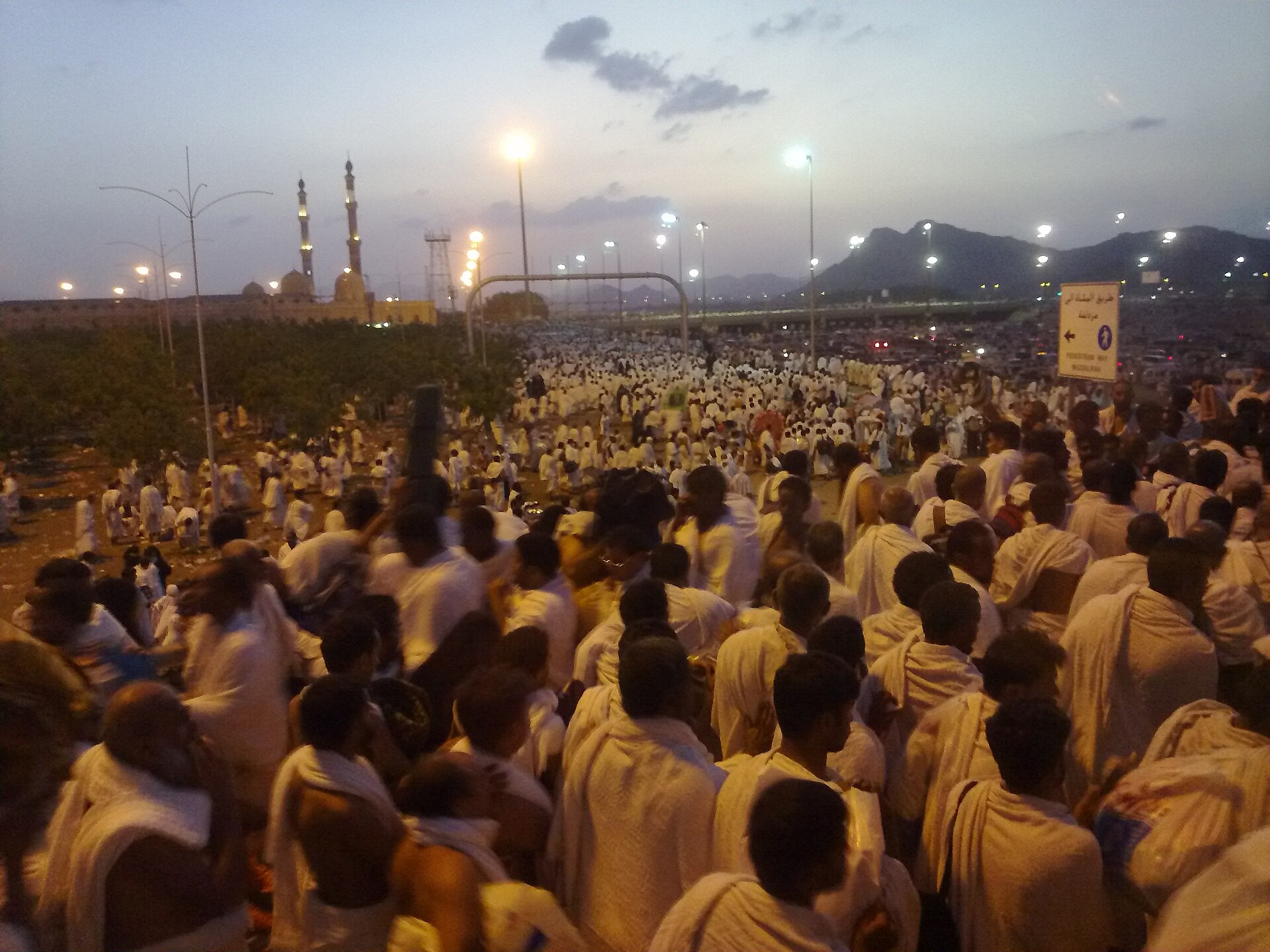
Ceasefire leverage. Iranian pilgrims present from late April through late May effectively create a human shield against escalation during the war’s most dangerous window. The ceasefire has no fixed end date and no enforcement mechanism. Iran’s UN Ambassador has conditioned further talks on lifting the US naval blockade. The Day of Arafah on May 26 — when all 1.8 million pilgrims converge on a single plain outside Mecca — falls squarely in this window. Thirty thousand Iranian pilgrims standing on Arafat make any military action during Hajj a potential casus belli against the Custodian of the Two Holy Mosques.
Frequently Asked Questions
How many Iranian pilgrims attended Hajj before the war?
In 2024, Iran sent approximately 87,550 pilgrims — its full quota — in the first Hajj participation since the 2016 boycott. The 2026 figure of 30,000 represents a 66 percent reduction from the pre-war level. Iran has not publicly explained the gap between quota and actual participation, though logistical constraints from the air-route switch and the SNSC’s internal divisions over ceasefire policy likely contributed. Iranian Hajj organizations historically require six to eight months of advance registration and medical screening, a timeline disrupted by the February 28 outbreak of hostilities.
Has Saudi Arabia ever refused Iranian pilgrims entry?
Saudi Arabia has never formally barred Iranian pilgrims. After the 1987 Mecca incident, Riyadh reduced Iran’s quota by 87 percent rather than imposing a full ban — the distinction mattered because an outright refusal would have violated the Custodian obligation. Iran chose to boycott Hajj from 1988 to 1990 and again in 2016, framing both absences as protest rather than Saudi exclusion. The 2026 dispatch tests whether that pattern holds in reverse: Saudi Arabia accepted the pilgrims despite active hostilities, likely because refusal would have been more diplomatically costly than acceptance.
What happens to Iranian pilgrims if the ceasefire collapses during Hajj?
There is no evacuation protocol for removing a specific national group from Hajj once the cordon is sealed. The 1.8 million pilgrims inside Mecca and on the Plain of Arafah move according to Saudi crowd-management schedules, not national contingency plans. In the event of a ceasefire collapse, Iranian pilgrims would remain under Saudi protection until Hajj concludes — effectively creating a mandatory 30-day protection window that Iran’s military planners can factor into their operational calendar. The Swiss Embassy in Tehran, which handles US interests in Iran, has no consular mechanism for wartime Hajj scenarios.
Could Iranian pilgrims stage political demonstrations as they did in 1987?
Saudi Arabia banned all political demonstrations during Hajj after the 1987 incident, and the prohibition has been enforced consistently for 39 years. Ambassador Enayati’s public statement that Iranian pilgrims are “fully adhering to Saudi regulations” is a preemptive signal against organized protest. However, Saudi security forces in 2026 are stretched across five-layer air defense operations, counter-terrorism perimeters, and crowd management for nearly two million people — a broader mission set than any previous Hajj. The Saudi General Intelligence Presidency typically deploys undercover units within each national delegation, but staffing levels for the Iranian contingent in a wartime context have not been disclosed.
Are other countries reducing their Hajj delegations because of the war?
No major Muslim-majority country has reduced its 2026 delegation. Indonesia is sending 221,000 pilgrims — its full allocation — with the first departure on April 22. Pakistan is sending 119,000, arriving from April 18. Malaysia, Turkey, Egypt, and Nigeria have all confirmed full quotas. The US Level 3 travel advisory applies only to American citizens and has not triggered reciprocal warnings from other governments. The economic incentive is substantial: Hajj generates an estimated $12 billion annually for the Saudi economy (World Bank, 2023), and cancellation fees for pilgrims who withdraw typically exceed 60 percent of package costs, according to Hajj travel operators. The defense dimension of hosting those 1.8 million people — a PAC-3 stockpile at 14% with no resupply path before Day of Arafah — is the subject of The Hajj 2026 security architecture and what it cannot cover.