DHAHRAN — The Trump-Xi crude oil agreement is political theater with structural consequences. There is no volume commitment, no pricing mechanism, and no Chinese confirmation — but 600,000 barrels per day of US crude were already sailing for China before either leader spoke, driven by Hormuz disruption economics rather than any deal signed in Beijing. Saudi Arabia’s share of Chinese crude imports has fallen from 17% in 2021 to an estimated 11% during the war, a decline that preceded the diplomatic announcement and will outlast it. Production has crashed 30% to 7.25 million bpd. The Q1 fiscal deficit reached $33.5 billion — exceeding the Kingdom’s full-year official target in three months. Aramco’s CEO has said the oil market will not normalize until 2027. What follows examines the deal’s actual language, the freight economics that make US crude temporarily competitive, the Phase 1 compliance record that predicts its durability, and the fiscal arithmetic that makes Saudi Arabia’s loss of its largest crude customer something worse than a diplomatic setback.
Table of Contents
- What Did Trump and Xi Actually Agree On?
- The 600,000 Barrels Already on the Water
- How Much of the Phase 1 Energy Deal Did China Actually Buy?
- Can US Crude Structurally Displace Saudi Barrels in China?
- Saudi Production and the Yanbu Ceiling
- Where Does Saudi Arabia’s China Market Share Stand?
- The OSP Pricing Trap
- Aramco’s Fiscal Arithmetic at $106 Brent
- Frequently Asked Questions
What Did Trump and Xi Actually Agree On?
Trump and Xi produced no binding crude oil volume commitment at their May 14-15 summit in Beijing. The White House stated Xi “expressed interest” in purchasing US oil to reduce dependence on the Strait of Hormuz. Xinhua’s official readout did not mention oil at all. Trump told Fox News that China had “agreed” to buy, but no tonnage, pricing mechanism, or delivery timeline was disclosed by either government.
They’ve agreed they want to buy oil from the United States, they’re going to go to Texas, we’re going to start sending Chinese ships to Texas and to Louisiana and to Alaska. They have an insatiable appetite.
— Donald Trump, Fox News interview, May 15, 2026 (via CNBC)
The White House readout, released hours before Trump’s television appearance, used different language. Xi had “expressed interest in purchasing more American oil to reduce China’s dependence on the Strait in the future,” Bloomberg reported on May 14. Treasury Secretary Scott Bessent told CNBC that China “will work behind the scenes to help reopen the Strait of Hormuz.” That formulation links crude purchases to a broader diplomatic exchange — one where Beijing’s cooperation on Hormuz reopening is the real deliverable, and oil purchases are the visible consideration paid for it.
Xinhua published its own account of the same meeting. The two leaders “exchanged views on major international and regional issues, such as the Middle East situation.” Oil was absent. Energy was absent. Purchases were absent. In Chinese diplomatic communications, what state media omits carries as much signal as what it includes — a dynamic that Xi’s Hormuz endorsement, itself a managed Chinese pivot rather than a US diplomatic victory, had already demonstrated. The asymmetry between the American and Chinese readouts is not a contradiction. It is a negotiating posture preserved in parallel press releases, each calibrated to a domestic audience with different expectations.
The Middle East briefing 3,000+ readers start their day with.
One email. Every weekday morning. Free.
The commercial distinction between “agreed” and “expressed interest” is not semantic. Expressing interest creates no offtake obligation, binds no state-owned enterprise, and schedules no VLCC. In a market where a single laden supertanker from the US Gulf to Ningbo costs approximately $20 million in freight — roughly $5.88 per barrel on a 2-million-barrel cargo — the distance between diplomatic language and a term contract is the distance between a tanker sailing and a tanker sitting at anchor in the Gulf of Mexico.
The 600,000 Barrels Already on the Water
Tanker tracking data compiled by Discovery Alert and reported by Asia Times shows approximately 600,000 barrels per day of US crude scheduled for Chinese import as of early May 2026 — weeks before the Trump-Xi meeting took place. This flow was not a product of diplomacy. It was a product of geography and price, and it had been building since March as the Hormuz disruption reshaped Chinese crude procurement across the Pacific Basin.
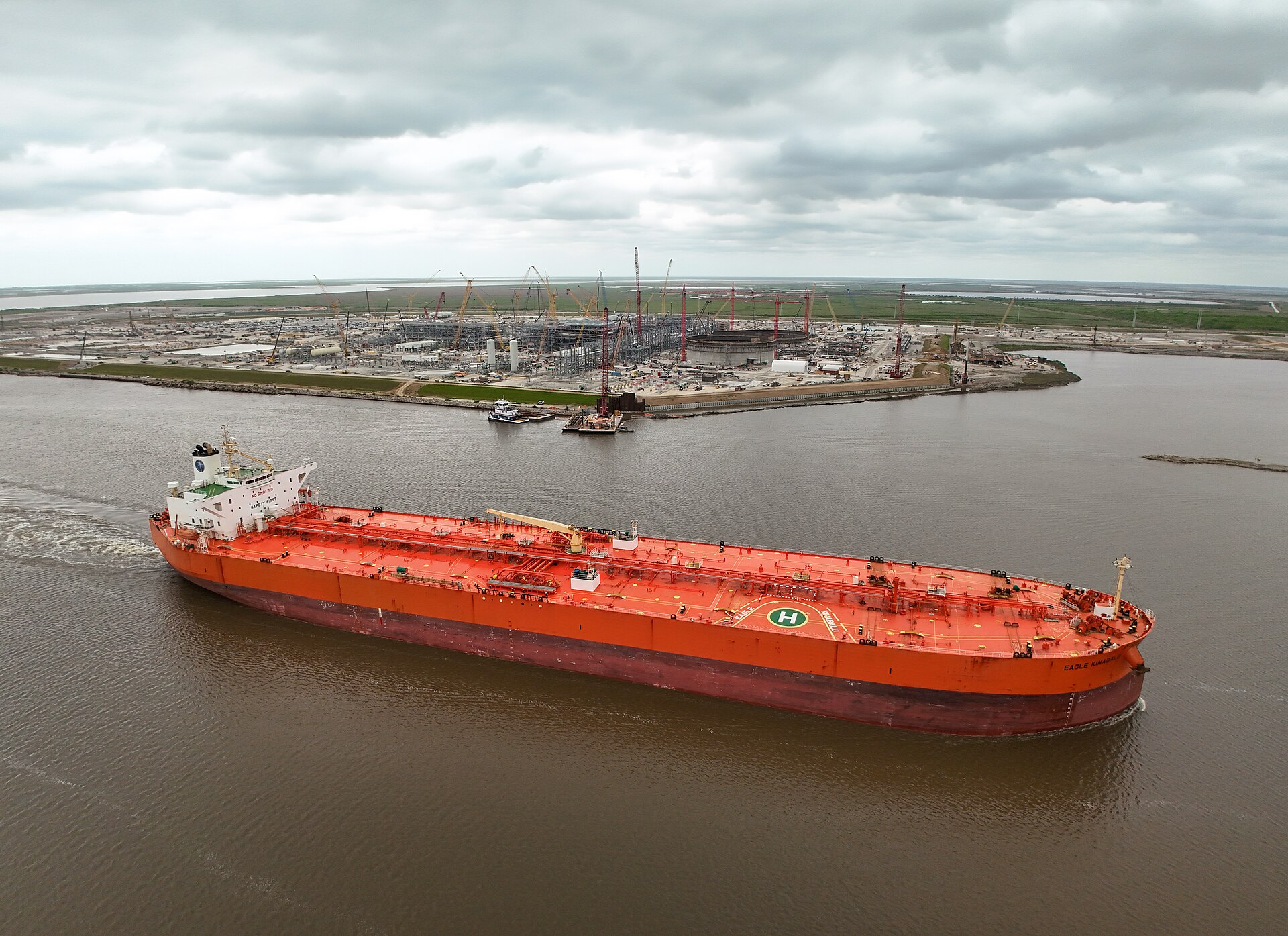
US crude exports to China had collapsed 95% from 2023 levels to approximately 8.4 million barrels total in 2025 — functionally zero on a daily basis. The surge from near-zero to 600,000 bpd happened entirely during the Iran war, entirely because the Hormuz closure eliminated the freight advantage of Persian Gulf barrels. When 13 million barrels per day of waterborne Middle Eastern supply become inaccessible, the cost disadvantage of a 45-day US Gulf voyage inverts. Buyers pay the trans-Pacific premium because the short-haul alternative no longer exists at the loadport.
Bloomberg, on May 3, framed the United States as an “oil supplier of last resort as Hormuz disruptions worsen” — not as a structural alternative to Middle Eastern grades. That characterization was precise. The US crude flowing to China is filling a physical gap created by the blockade, not building a durable commercial position. If Hormuz reopens — a condition both Washington and Beijing claim to want — the freight economics that created this flow reverse on the day the first laden VLCC transits the Strait without IRGC interdiction. The 600,000 bpd will recede from Chinese import manifests as quickly as it appeared, following the same commercial logic that drove Phase 1 energy purchases to 37-47% of target: Chinese state-owned enterprises optimize on delivered cost, not diplomatic sentiment.
How Much of the Phase 1 Energy Deal Did China Actually Buy?
China committed to $33.9 billion in US energy purchases for 2020 and $44.8 billion for 2021 under the Phase 1 trade deal signed in January 2020. By mid-2020, actual purchases had reached only 5% of the 2020 target. Full two-year compliance ran between 37% and 47% of committed dollar volumes, according to tracking by the New York Federal Reserve’s Liberty Street Economics team and the American Council for Energy-USA.
The Phase 1 energy commitment is the only directly comparable precedent for evaluating a China-US crude purchase framework. It had binding language — “shall ensure” rather than “expressed interest.” It had specific dollar targets denominated in US currency. It carried presidential signatures from both sides and the implicit threat of resumed tariffs for non-compliance. Chinese state-owned enterprises — CNPC, Sinopec, CNOOC — responded to it exactly as any large commercial buyer would: they purchased when the combination of price, freight, and refinery economics made sense, and they stopped when it didn’t. In 2020, the collapse in oil prices briefly made US crude cheap, but COVID-19 storage constraints and logistics bottlenecks prevented most of the buying from materializing during the window when prices favored it.
The current arrangement rests on weaker language than Phase 1. “Expressed interest” carries no legal weight, no enforcement mechanism, and no penalty clause. If China achieved only 37-47% compliance under a binding commitment backed by presidential signatures and tariff consequences, the plausible compliance rate for a nonbinding expression of interest — offered during a broader trade negotiation where energy was one element among dozens including tariff reductions, fentanyl cooperation, and AI governance — is something less than that floor.
What has changed since Phase 1 is the physical infrastructure on the Chinese side. Beijing has built out strategic and commercial petroleum storage capacity at Zhoushan, Dalian, Qingdao, and Huangdao to hold roughly 1.1 billion barrels. The Columbia Center on Global Energy Policy assessed in 2025 that China can withstand major Hormuz disruptions precisely because of this stockpiling, combined with diversified pipeline imports from Russia and Central Asia and a domestic energy mix that has shifted toward renewables, coal, and nuclear since 2020. China is not in a position where it must buy US crude at any price. It can buy US crude when the economics favor it. Phase 1 taught that these are different propositions — and that the second delivers approximately 40 cents on the committed dollar.
Can US Crude Structurally Displace Saudi Barrels in China?
Not at current economics or infrastructure. US maximum sustainable crude export capacity across all destinations is approximately 4-5 million bpd. At the current war-driven rate of 600,000 bpd, US crude fills roughly 5% of China’s 11.6 million bpd import demand — far short of the 14-17% share Saudi Arabia held before the conflict. The freight cost advantage exists only while Hormuz remains closed, and it reverses the day the Strait reopens.
The grade mismatch compounds the freight problem. WTI Midland, the dominant US export crude, is a light sweet grade with an API gravity of 41-43 degrees and sulfur content below 0.4%. Saudi Arab Light sits at approximately 32 degrees API with 1.8% sulfur — a medium-sour profile. China’s large state-owned refinery complexes at Zhenhai, Maoming, and Dalian were engineered to process medium-sour grades. They can run light sweet barrels, but not without yield penalties on heavy products — residual fuel oil, asphalt, marine bunker fuel — that Chinese domestic demand requires and that light sweet crude cannot efficiently produce.
The freight arithmetic is the binding constraint. A VLCC loading at the Louisiana Offshore Oil Port reaches Ningbo in 42-48 days via the Cape of Good Hope. From Ras Tanura under normal Hormuz operations, the same vessel makes the run in 20-22 days. At current war-era VLCC rates — which have exceeded $400,000 per day for laden voyages, as Chinese supertanker movements during the blockade have demonstrated — the round-trip cost differential runs approximately $5-6 per barrel against US crude. That premium exists only because Hormuz is closed. The day it reopens, every barrel of US crude competing with Saudi, Iraqi, or Kuwaiti supply becomes structurally uncompetitive by geography alone.
| Origin / Grade | FOB Price ($/bbl) | Freight ($/bbl) | Delivered Cost ($/bbl) | Voyage (days) |
|---|---|---|---|---|
| US Gulf Coast (WTI Midland) | 70-75 | 5.50-6.00 | 76-81 | 42-48 |
| Saudi Yanbu (Arab Light, June OSP) | ~119 | 4.50-5.50 | 124-125 | 28-32 |
| Russia Kozmino (ESPO Blend) | 65-70 | 1.50-2.50 | 67-73 | 5-7 |
| Iran (Heavy, sanctioned discount) | 55-60 | 2.50-3.50 | 58-64 | 18-22 |
US export terminal capacity at the Gulf Coast — Enterprise ECHO, Moda Ingleside, and the LOOP — totals approximately 4.5 million bpd but serves all destinations. Europe, India, South Korea, and Japan compete with China for Gulf Coast loadings. Sustaining 600,000 bpd to China would require either displacing European buyers who have contracted for these barrels or building new terminal capacity on a timeline measured in years, not summit communiqués.
Saudi Production and the Yanbu Ceiling
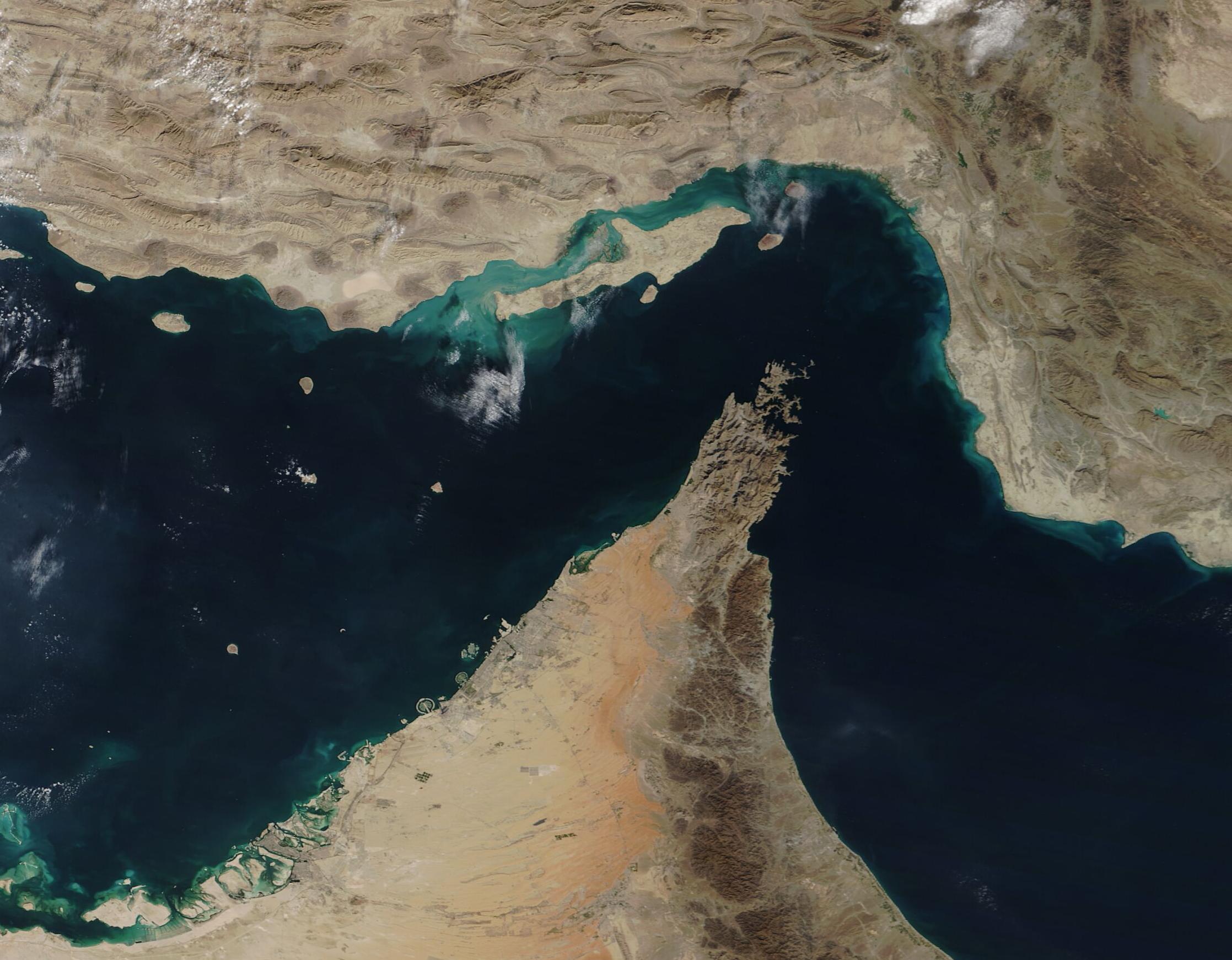
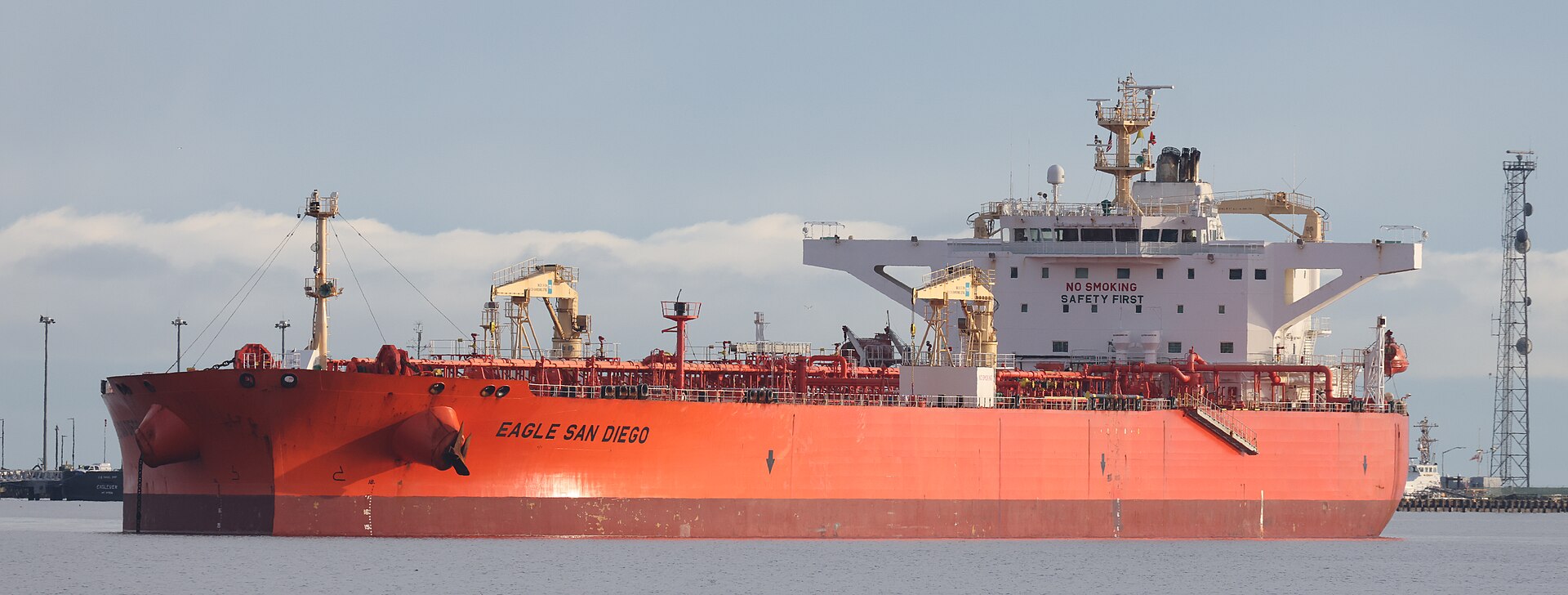
Saudi crude production fell to 7.25 million bpd in March 2026, down from 10.4 million bpd in February — a 30% drop, the steepest monthly decline since the 1990 Iraqi invasion of Kuwait, and the lowest output in 36 years. The IEA called it “the largest disruption on record.” The cause was not OPEC+ discipline or voluntary restraint. It was physical damage to Eastern Province loading infrastructure and the impossibility of routing pre-war export volumes through the Kingdom’s only remaining corridor: the 1,200-kilometer East-West Pipeline to Yanbu on the Red Sea coast.
The pipeline’s maximum rated throughput is 7.0 million bpd. Yanbu’s terminal loading capacity — determined by berth cycling, storage tank availability, and draft limits for fully laden VLCCs — ranges from 4.0 to 5.9 million bpd depending on vessel class and tidal conditions. Against pre-war Saudi crude throughput via Hormuz of 7.0-7.5 million bpd, this leaves a structural gap of 1.1-3.0 million bpd that no amount of operational optimization can close. The IRGC struck a pipeline pumping station on April 8. Khurais field production of 300,000 bpd went offline with no announced restart timeline. Saudi crude exports to Asia fell 38.6% according to Kpler tracking data.
For China’s procurement officers at Sinopec, CNPC, and CNOOC, Saudi Arabia is no longer a reliable volume supplier — not because of intent, but because of infrastructure. The barrels do not exist at the loadport in quantities that pre-war term contracts specified. Aramco can maintain term commitments it cannot physically fulfill from Yanbu, or it can reduce nominated volumes and cede share to competitors who can deliver. Either path leads to a smaller Saudi footprint in China’s import mix for as long as the IRGC maintains operational control of the Strait. The gap in Saudi delivery capacity is what created the opening for 600,000 bpd of US crude — not a diplomatic agreement reached in Beijing, but a loading berth at Ras Tanura that no longer functions.
Where Does Saudi Arabia’s China Market Share Stand?
Saudi Arabia’s share of Chinese crude imports has fallen from approximately 17% in 2021 to an estimated 11% in the current war period. Russia overtook Saudi Arabia as China’s largest crude supplier in 2025, holding 17.4% of import share versus Saudi Arabia’s 14% — before the Hormuz disruption compressed Saudi volumes further. June 2026 Saudi crude exports to China are projected at 13-14 million barrels, down from roughly 40-50 million barrels per month before the war, according to Bloomberg reporting on May 11.
The erosion predates the war. Erica Downs of the Columbia Center on Global Energy Policy, testifying before the US-China Economic and Security Review Commission in April 2025, traced the trajectory: Saudi Arabia’s declining share was driven in part by China’s growing imports of crudes subject to US and Western sanctions — Iranian and Venezuelan barrels relabeled as Malaysian or Omani origin, flowing to independent “teapot” refineries concentrated in Shandong province. These sanctioned barrels, estimated at 2.6 million bpd in 2025 — more than 22% of China’s record total crude imports of 11.6 million bpd — were priced at deep discounts to market benchmarks, undercutting Saudi Arab Light by $5-10 per barrel on a delivered basis.
The war disrupted this shadow supply chain but did not eliminate it. Iranian crude flows to China collapsed 90% in January-March 2026 following US secondary sanctions pressure on teapot refineries. Washington sanctioned approximately 40 Chinese shipping companies for Iranian oil handling on April 25, with 12 additional entities including the Qingdao Haiye terminal designated on May 11 — four days before the summit. The Iranian barrel has not disappeared from the Chinese market. It has been rerouted, relabeled, and discounted further, operating through a supply chain outside SWIFT, priced in yuan through Kunlun Bank, and resilient to the sanctions campaigns that have been applied to it three times since 2018. The sanctions architecture remained active even as Iran tested a softer approach: on May 18, Tasnim reported an unconfirmed claim that Washington’s negotiating text included a temporary oil sanctions waiver, briefly moving Brent $4 lower — evidence that the gap between what Iran’s state media asserts and what OFAC actually permits remains the central mechanism through which Tehran moves oil markets without moving barrels.
The net effect for Saudi Arabia is a market where it faces simultaneous pressure from three directions: Russian ESPO Blend at structural discounts delivered in 5-7 days from Kozmino; sanctioned Iranian heavy at $15-20 below benchmark for refineries willing to process it; and now US WTI Midland with head-of-state diplomatic cover arriving at $76-81 per barrel. Prince Faisal’s three-capital diplomatic sprint during the Beijing summit occurred against this backdrop — a Kingdom unable to compete on price, volume, or proximity in the market that was supposed to anchor Saudi Arabia’s post-oil economic transition.
The OSP Pricing Trap
Aramco set its May 2026 Official Selling Price for Arab Light to Asia at a record premium of $19.50 per barrel above the Oman/Dubai benchmark — a war premium established when Brent was trading above $109 and the assumption was that scarcity would absorb any price. By the time May cargoes were lifting, Brent had fallen below $95. The June OSP was cut $4.00 to $15.50 above benchmark — still the second-highest premium on record, and still above the level at which Asian buyers had already begun routing around Saudi supply.
The pricing mechanism is structurally mismatched to a war environment. OSPs are set monthly, approximately five weeks before the loading month, reflecting Aramco’s assessment of the supply-demand balance at announcement rather than at delivery. In a market where Brent can swing $12 in a single trading session, this five-week lag creates persistent dislocation between the price term buyers committed to and the market they face when cargoes arrive at destination. Chinese and Indian refiners have responded by reducing term nominations and shifting to spot markets where WTI Midland, ESPO, and Murban compete at delivered prices $30-50 per barrel below Saudi Arab Light.
The pricing dilemma has no clean resolution. Aramco could cut the OSP below benchmark — it did so during the March 2020 price war with Russia — but cutting the per-barrel premium while production is down 30% simultaneously reduces revenue on every barrel lifted and does not increase the number of barrels available from Yanbu. The constraint is not willingness to discount. The constraint is that Yanbu cannot load the volumes that would make a price cut commercially rational. Reducing the price without adding supply concedes revenue per barrel without gaining barrels per customer — the worst possible arithmetic for a treasury that requires both to stay above its fiscal breakeven.
Aramco’s Fiscal Arithmetic at $106 Brent
Saudi Arabia’s fiscal breakeven — including PIF spending commitments that account for $15-20 per barrel of the total — sits at $108-111 per barrel according to Bloomberg estimates that incorporate the expanded sovereign wealth fund draw. Brent traded at $106.89 intraday on May 15, the day of the Trump-Xi summit. At that price, the Kingdom is below breakeven on the oil price alone, before accounting for a production rate 30% below the volumes that the breakeven calculation assumes.
Goldman Sachs estimated a war-adjusted full-year fiscal deficit of 6.6% of GDP — approximately $80-90 billion — against the Kingdom’s official projection of 3.3%, or roughly $44 billion. The Q1 2026 deficit reached $33.5 billion, already exceeding three-quarters of the full-year official target in three months. Aramco’s Q1 results reflected the arithmetic that each subsequent quarter will compound: lower volumes at elevated but declining prices, with OSP premiums that Asian buyers are now actively routing around.
The domestic economic cost of that fiscal arithmetic is quantified in granular terms in a comprehensive audit of Vision 2030 Phase 3: the non-oil PMI’s collapse to 48.8 in March 2026 produced a 0.2 percent quarter-on-quarter private-sector growth reading, FDI fell an estimated 60–70 percent year-on-year, property transactions halved, and every Phase 3 numerical target now faces an arithmetic gap the current trajectory cannot close by 2030.
The oil market won’t normalize until 2027 if the disruption in the Strait of Hormuz persists past the middle of June. The global energy market has lost about 1 billion barrels of oil supply during the crisis.
— Amin Nasser, CEO Saudi Aramco, CNBC interview, May 11, 2026
Nasser’s 2027 timeline is an operational forecast from the executive who runs the Kingdom’s production infrastructure. It implies that even after the Strait reopens, the supply chain — damaged loading facilities at Ras Tanura and Ju’aymah, unexploded ordnance in shipping lanes, war-risk insurance surcharges that will persist for years, and rerouted vessel scheduling — will require 12-18 months to restore to pre-war throughput. During that restoration period, every alternative supply relationship Chinese buyers built during the crisis will have deepened: Russian ESPO contracts extended, US Gulf loading slots formalized, refinery blending ratios adjusted for light sweet grades.
The market share trajectory that preceded the war — Russia overtaking Saudi Arabia as China’s top supplier in 2025 at 17.4% versus 14%, Saudi share falling from 17% to 14% before a single missile struck Ras Tanura — has accelerated during it. The question confronting a Kingdom frozen out of the Hormuz endgame discussions in Beijing is whether share lost during a 78-day crisis returns when the crisis ends, or whether the compounding of Russian pricing, US diplomatic framing, Chinese stockpile depth, and a Yanbu export corridor never designed to replace Hormuz has permanently reduced Saudi Arabia’s position in the world’s largest crude import market. The June Brent forward curve, as of May 15, prices oil at $101-103 per barrel through year-end — $5-10 below Saudi fiscal breakeven, at a production rate 30% below capacity.
Frequently Asked Questions
How long does a US crude oil shipment take to reach China?
A laden VLCC from the Louisiana Offshore Oil Port to Ningbo takes 42-48 days via the Cape of Good Hope. Most fully laden VLCCs cannot transit the Panama Canal — their 60-meter beam exceeds the Neo-Panamax lock chamber’s 51.25-meter width. The return ballast voyage adds 35-40 days, meaning each US-China round trip ties up a vessel for approximately 85-90 days versus 45 days for a Saudi-China round trip from Ras Tanura under normal Hormuz operations — doubling the capital commitment per cargo.
What is China’s strategic petroleum reserve capacity?
China holds approximately 500-600 million barrels in strategic reserves across bases at Zhoushan, Dalian, Huangdao, Dushanzi, Lanzhou, and Tianjin, with commercial storage adding roughly 500 million barrels. Combined reserves of approximately 1.1 billion barrels provide an estimated 95 days of import cover at current consumption rates — exceeding the IEA’s 90-day recommended minimum for member-equivalent economies and reducing Beijing’s urgency to accept unfavorable US crude terms.
Could Saudi Arabia cut its Asia OSP below benchmark to compete with US crude?
Aramco has priced Arab Light below the Oman/Dubai benchmark twice in the past decade — during the March-April 2020 price war with Russia, when the April 2020 OSP was slashed by $6 per barrel, and briefly after the September 2019 Abqaiq-Khurais attacks to reassure buyers about supply reliability. In both cases, production capacity was intact and barrels were available to deliver. The current situation inverts this: cutting the price without the volumes to move through Yanbu surrenders revenue without gaining share.
What is the WTI-Brent spread during the Hormuz crisis?
The WTI-Brent spread widened from a pre-war average of $3-4 per barrel to as much as $18-22 during peak Hormuz disruption, reflecting that Brent — a waterborne, Atlantic Basin benchmark — prices Strait risk while WTI, delivered by pipeline to Cushing and Gulf Coast terminals, does not. This spread inversion is the single pricing signal that makes US crude competitive in Asia. It will collapse when Hormuz reopens, restoring the freight disadvantage that kept US-China crude trade at near-zero through 2025.
Does the Trump-Xi summit affect US LNG exports to China?
LNG was not mentioned in either the US or Chinese summit readout. Chinese LNG imports from the US peaked at 7.1 million tonnes per annum before Beijing imposed a 25% retaliatory tariff on US LNG in 2019 during the first trade war. The tariff was suspended under the May 12 Geneva trade framework, but no new term contracts have been signed. Cheniere Energy’s Sabine Pass and Cameron LNG facilities hold the majority of long-term US export commitments, all currently contracted to Japanese and Korean offtakers rather than Chinese buyers.