WASHINGTON — Iran has restored 30 of 33 IRGC missile sites along the Strait of Hormuz to operational status, according to US intelligence assessments presented to administration officials in early May, a reconstitution rate of 91% achieved in roughly 40 days of ceasefire. The finding, reported by the New York Times on May 13 and corroborated by an ISW/Critical Threats special report published the previous day, means that nearly every launch position aimed at the Arabian Peninsula and the world’s most contested shipping lane is active again — with the Day of Arafah eight days away and 1.8 million Hajj pilgrims inside the target envelope.
The assessment arrives one day before President Trump’s National Security Council convenes on May 19 to decide whether to resume military operations, and it eviscerates the central claim CENTCOM Commander Admiral Brad Cooper made to the Senate Armed Services Committee four days earlier: that Operation Epic Fury’s 1,450-plus strikes had destroyed 85% of Iran’s ballistic missile, drone, and naval industrial base. If 91% of the Hormuz network is operational and 70% of the pre-war missile stockpile remains intact, the damage-assessment framework underpinning the campaign was not aging poorly — it was wrong when Cooper delivered it under oath.
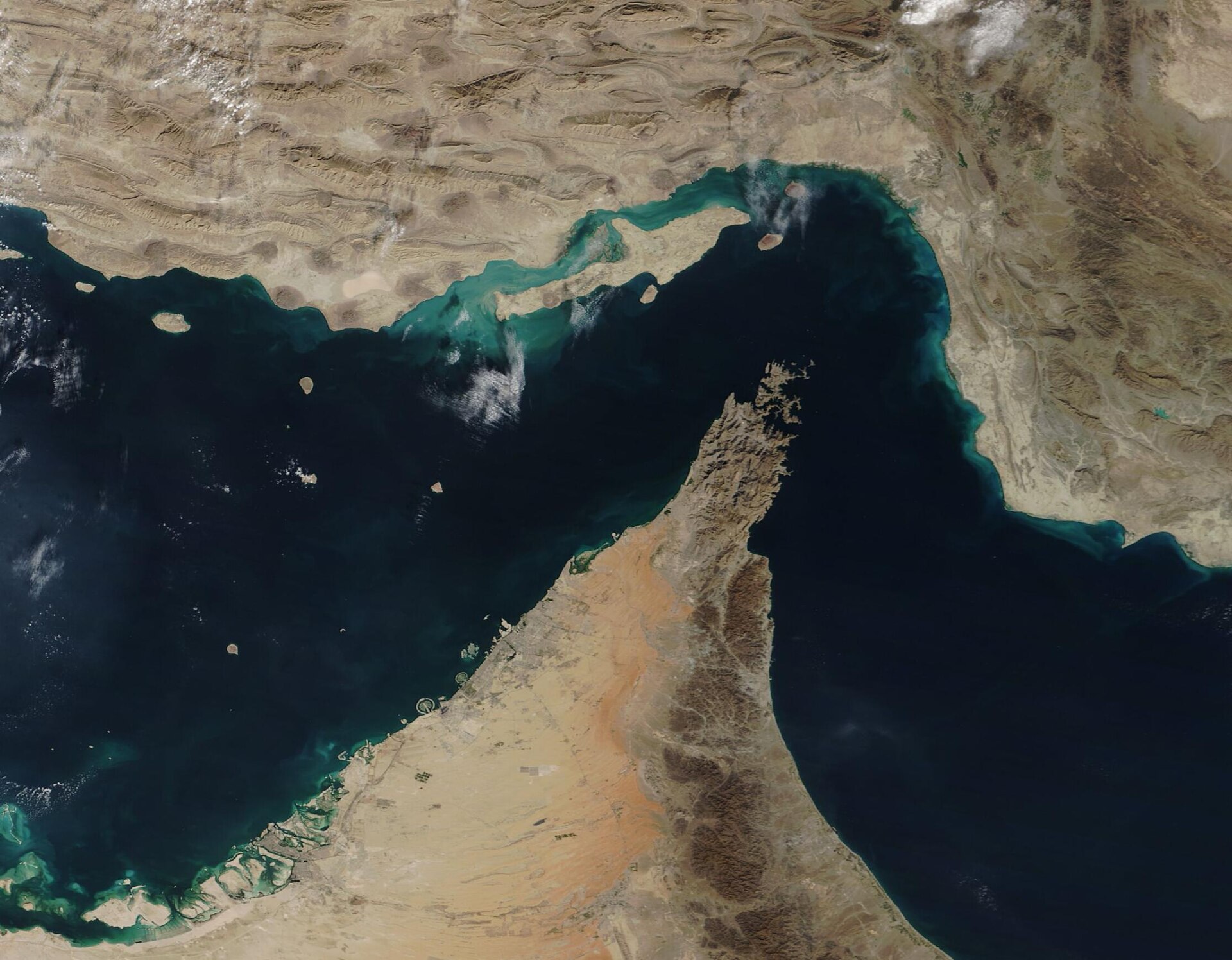
Table of Contents
The Damage Assessment That Collapsed
Admiral Cooper sat before the Senate Armed Services Committee on May 14 and delivered a number designed to close an argument: 85% of Iran’s ballistic missile production capacity, drone manufacturing, and naval industrial base had been damaged or destroyed across more than 1,450 strikes during Operation Epic Fury. The percentage was precise enough to sound authoritative and round enough to feel conclusive. The New York Times published the intelligence community’s own contrary assessment the day before Cooper testified — meaning he walked into the Senate chamber already contradicted by his own intelligence agencies.
That assessment found Iran retains 70% of its pre-war missile stockpile and 70% of its mobile transporter-erector-launcher inventory — the vehicles that make fixed-site destruction irrelevant because they allow missiles to fire from any position a truck can reach. Ninety percent of the country’s underground missile storage and launch facilities are now partially or fully operational, a category of infrastructure the campaign’s planners understood from the outset would survive conventional munitions. The IRGC Navy fared worse but hardly collapsed: US intelligence assessed that 50% of naval capability remains intact, including what officials described to Euronews as “hundreds if not thousands” of small boats and unmanned surface vessels — the swarm fleet that has always been the Strait’s most immediate threat to commercial shipping.
When pressed on the 70% retention figure during Senate testimony, Cooper said open-source numbers “are not accurate” but declined to provide classified alternatives — a formulation The War Zone flagged as the sharpest exchange of the hearing. He acknowledged that Iran retains “a very moderate, if not small” capability to strike neighbors and oil infrastructure, a characterization that requires some effort to reconcile with 30 operational missile sites aimed at the Strait.
“Anyone who thinks Iran has reconstituted its military is either delusional or a mouthpiece” for the IRGC.
The HOS Daily BriefThe Middle East briefing 3,000+ readers start their day with.
One email. Every weekday morning. Free.
— Olivia Wales, White House spokeswoman, May 2026
CSIS reached a quieter but more damaging verdict: the campaign demonstrated “the limits of American air power” — underground infrastructure survived, mobile launcher doctrine made permanent site destruction structurally impossible, and the political outcome the administration sought never materialized. The administration’s response to its own intelligence community’s findings has been to contest the numbers without offering alternatives — Cooper in the Senate, Wales in the press — leaving the May 19 NSC meeting without an agreed starting assessment of what the campaign actually achieved.
What Survived and What Was Rebuilt?
The 30-of-33 figure contains two dynamics that most coverage has flattened into one, and the distinction matters for every targeting decision the NSC will face on May 19. Some of these sites were never destroyed — Iran’s underground missile infrastructure, hardened beneath mountain ranges on the mainland and embedded in island geology along the Gulf coast, was engineered to survive exactly the campaign the US delivered. The intelligence assessment confirmed that fixed launchpads within these complexes remained functional throughout the war, with mobile launchers retaining the ability to relocate within and between sites at will.
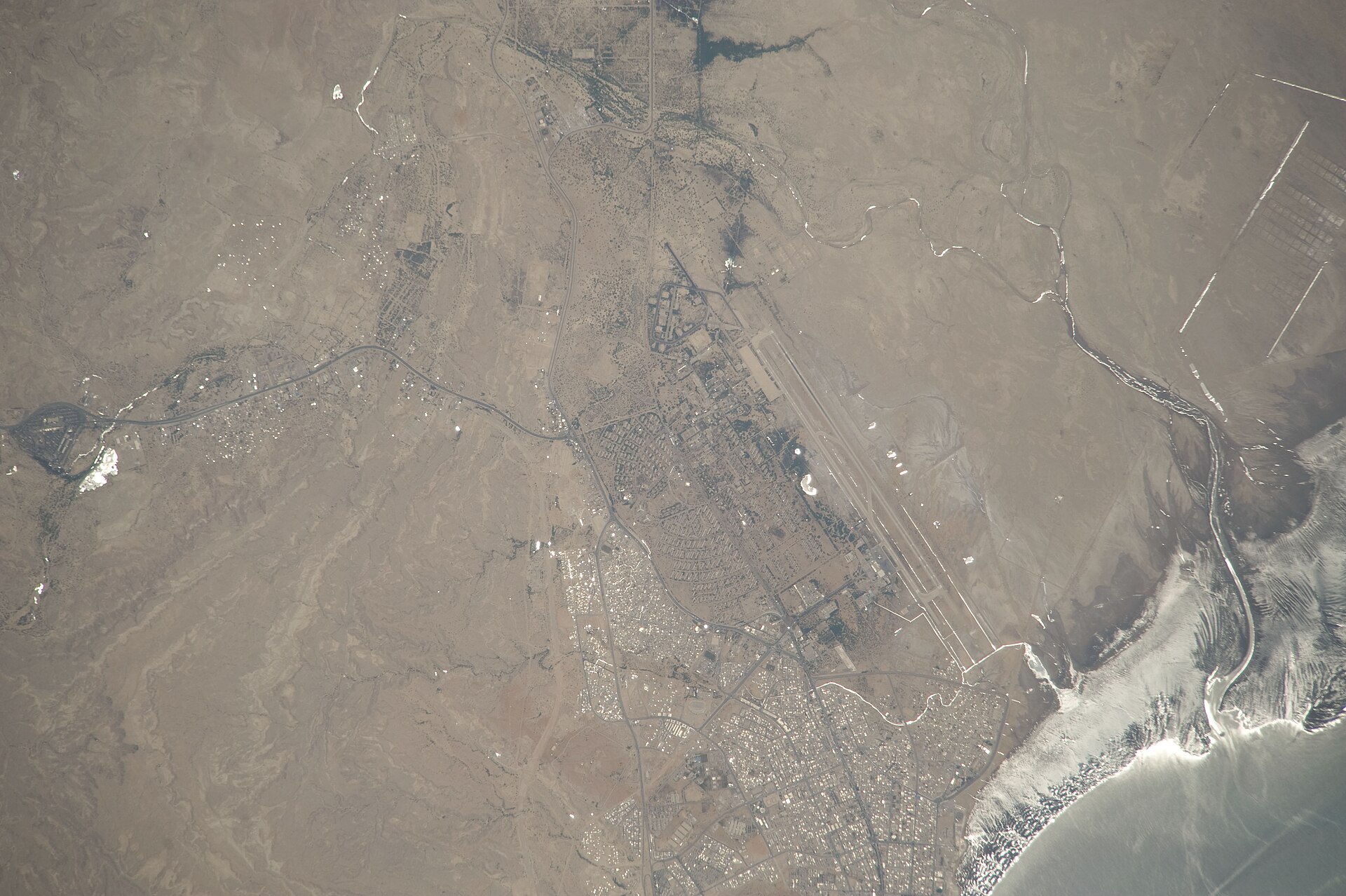
Other positions were genuinely damaged — including in the most recent US strikes on May 7-8, which hit sites at Bandar Abbas, Qeshm Island, Bandar Khamir, and Sirik along the Hormuz corridor’s eastern arc. CNN reported those strikes targeted missile and drone launch positions and command-and-control nodes. Within days, according to the intelligence assessment, reconstruction activity was already visible at multiple struck locations.
Three sites remain degraded, and no open-source reporting identifies which three — a gap in the public record that appears deliberate, designed either to protect intelligence methods or to preserve whatever residual coercive value their damaged status provides in ceasefire negotiations. The operational difference is negligible: a 91% reconstitution rate means Iran can generate overlapping fields of fire across every relevant approach vector in the Strait, and the three degraded positions are tactically irrelevant to any scenario the Pentagon is modelling.
The Reconstitution Machine
On April 19 — eleven days into the ceasefire — IRGC Aerospace Force Commander Brigadier General Majid Mousavi appeared on PressTV alongside video showing launcher replacement operations at undisclosed sites, claiming that “speed in updating and reloading missile and drone launchers have surpassed even its pre-war pace.” The same footage and quotes ran simultaneously on Tasnim and Fars News, three IRGC-aligned outlets publishing identical content on the same day — a coordination pattern that marks directed information warfare, not routine media coverage.
“We are aware that the enemy is incapable of creating such conditions for themselves during the ceasefire. They have lost this phase of the war as well.”
— Brigadier General Majid Mousavi, IRGC Aerospace Force Commander, April 19, 2026
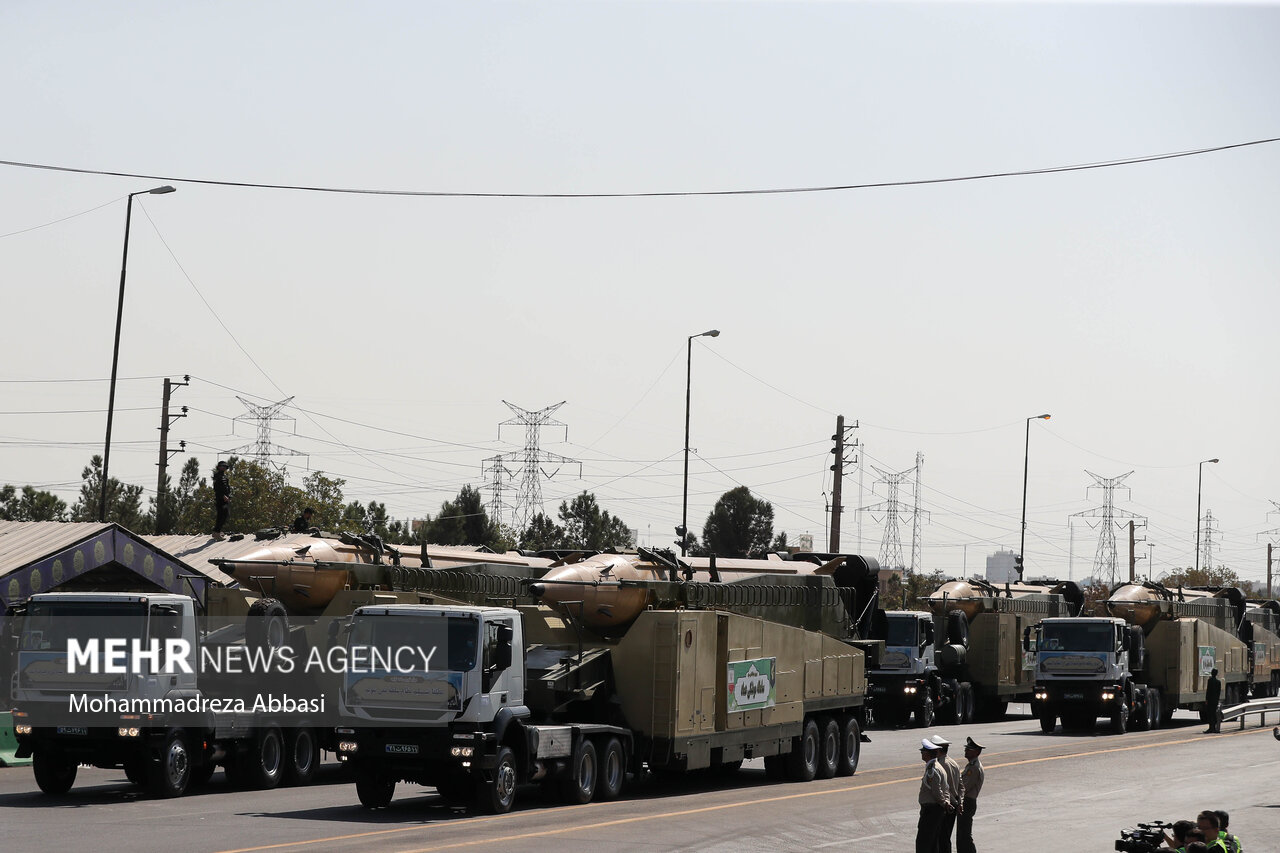
The broadcast was not aimed primarily at an Iranian domestic audience. Mousavi’s claim — delivered with visual evidence through outlets the US intelligence community monitors in real time — functioned as a deterrence signal calibrated to raise Washington’s perceived cost of resuming strikes, by demonstrating that the damage would be repaired again, and faster. PressTV republished the New York Times intelligence findings approvingly on May 13, treating the 30-of-33 restoration figure as proof that American air power cannot produce lasting results against a dispersed, hardened, mobile missile arsenal. RT amplified the assessment under framing designed to highlight the contradiction between the intelligence findings and Trump’s earlier claims to have “crushed” Iran’s military.
The structural engine behind the speed is Khatam al-Anbiya Construction Headquarters, the IRGC’s engineering and construction arm created during the 1980-88 Iran-Iraq war specifically to rebuild military infrastructure under sustained bombardment — an organization that has spent four decades refining exactly the capability now on display across the Hormuz corridor. The ceasefire gave it 40 uninterrupted days to pour concrete, reposition launchers, and restore command links without incoming fire, and the ISW/Critical Threats special report of May 12 assessed that the activity goes further than restoration: Iran is “likely preparing for a resumption of hostilities,” with military repositioning, IRGC exercises designed “to confront any movement of the enemy,” and the forward deployment of aircraft to bases in Pakistan and Afghanistan all documented during the ceasefire period.
How Exposed Is the Peninsula?
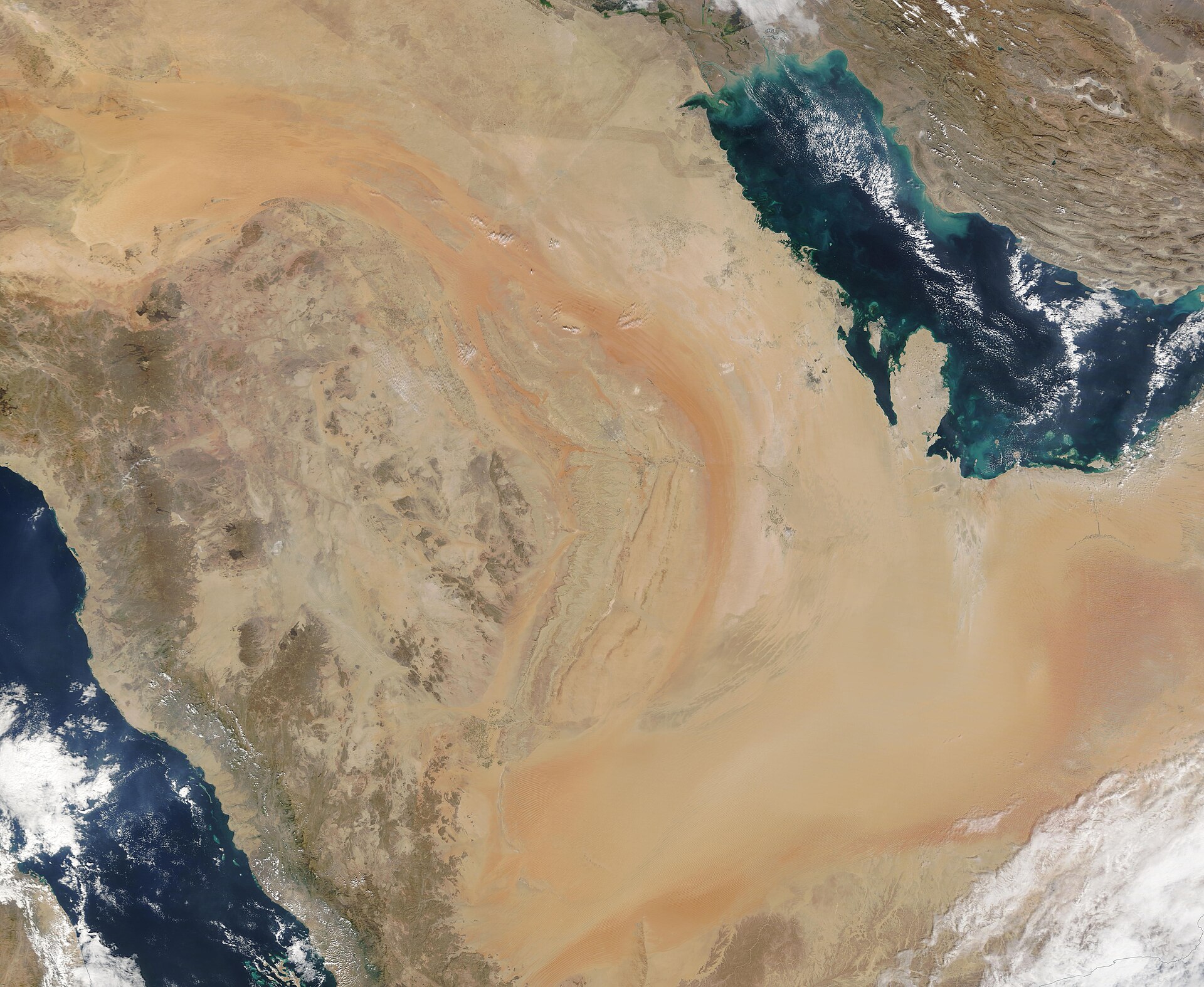
For Saudi Arabia, the reconstitution assessment is not an abstraction about American credibility or Iranian engineering — it is a specific, measurable threat aimed at specific coordinates. The 30 restored missile sites along the Hormuz corridor are the launch positions from which the IRGC would strike Eastern Province oil infrastructure, the military installations hosting US forces, and — if hostilities resume during the Hajj season now underway — the concentrations of pilgrims gathering across the Hejaz for the Day of Arafah on May 26.
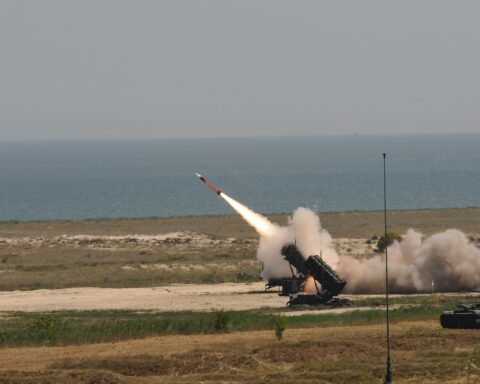
Saudi Arabia’s interceptor inventory tells the exposure story in raw arithmetic. The kingdom holds approximately 400 PAC-3 rounds, roughly 14% of its estimated pre-war stockpile of 2,800 interceptors — a depletion documented across months of IRGC salvos that consumed defensive munitions faster than any ally could resupply. At pre-ceasefire rates, those 400 rounds provide six to seven days of sustained defense, and the $9 billion DSCA sale notified to Congress in January, covering 730 PAC-3 MSE interceptors, will not deliver its first rounds until mid-2027 at the earliest.
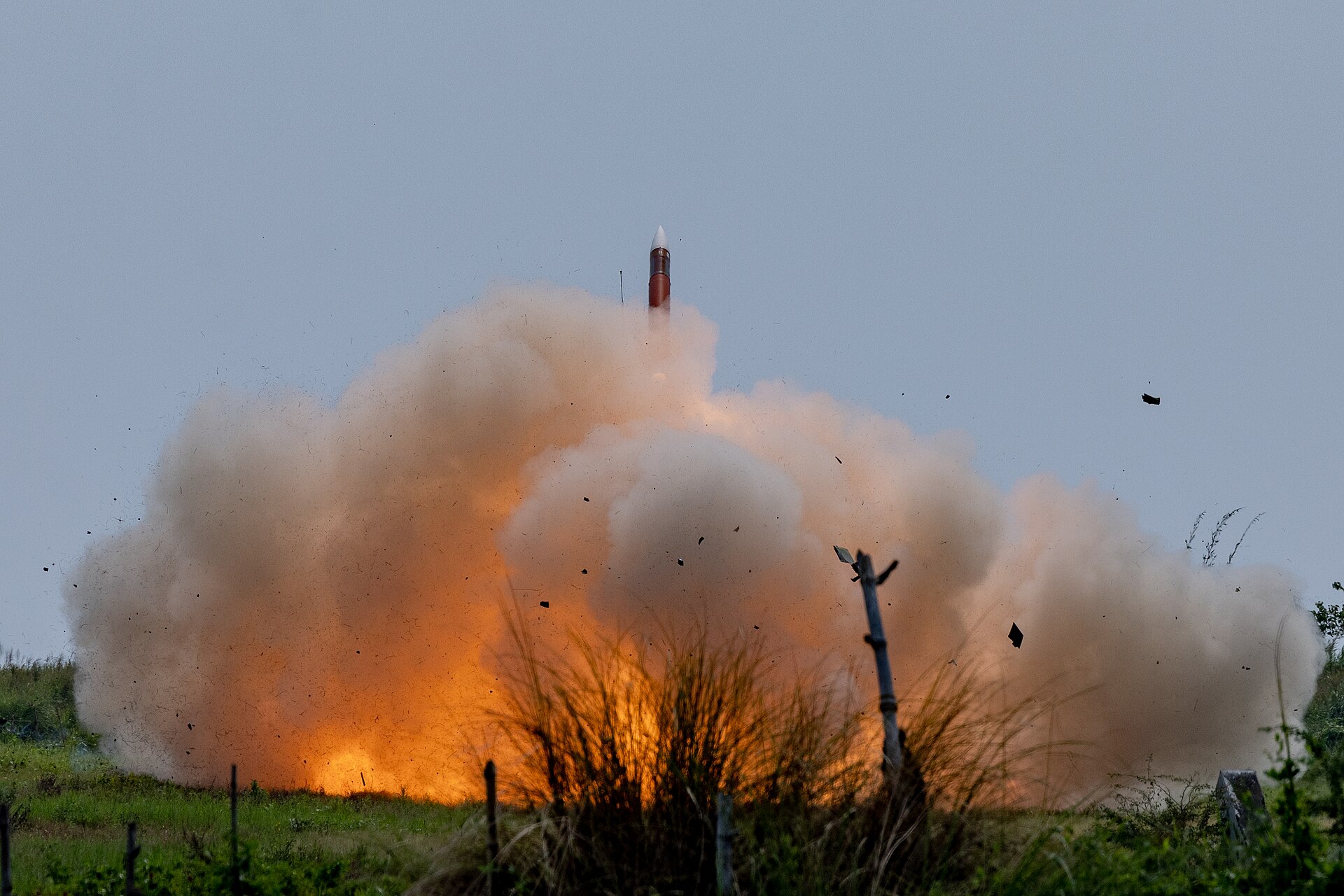
The calendar compresses the risk into a window that opens now: the Day of Arafah is eight days from this reporting, the Hajj pilgrimage already underway with advance contingents arriving in Makkah. The IRGC has never struck Hajj infrastructure directly — the political cost within the Muslim world would be prohibitive — but the restored Hormuz sites can reach every Saudi oil facility, military base, and population center on the Gulf coast, and missile accuracy becomes a secondary question when salvos are designed for saturation. Riyadh’s conspicuous silence on the reconstitution intelligence — no public acknowledgment of the 30-of-33 finding, no visible change to defensive posture, no signal to Washington on whether it will host resumed strikes — has itself become a data point the NSC will have to interpret without help from the kingdom.
The NSC Meets Tomorrow
The question entering the May 19 NSC meeting — reported by Axios on May 17, with the president described as giving the ceasefire “one percent chance of surviving” — is no longer whether Operation Epic Fury achieved its objectives. The intelligence community has answered that comprehensively. The question is whether Iran is reconstituting faster than Washington can formulate a response, and whether striking the same target set a second time would produce different results or restart a cycle the IRGC has already demonstrated it can outlast. The access problem that meeting must resolve runs through more than one corridor: Iraq’s PMF reached Saudi Arabia’s northern border this week in a “Imposing Sovereignty” operation across Anbar, closing the same ground corridor the NSC’s options depend on.
Trump indicated his own trajectory on Truth Social on May 17: “For Iran, the Clock is Ticking, and they better get moving, FAST, or there won’t be anything left of them. TIME IS OF THE ESSENCE!” The cadence matches the escalatory social-media pattern that preceded the original strike campaign in February, though administration officials told Axios that no decision has been made. The meeting will weigh expanded target sets — potentially reaching beyond Hormuz corridor sites to inland production facilities and supply-chain nodes — against the reality that resumed strikes during Hajj season would fracture the Gulf coalition whose territory, airspace, and political tolerance the campaign requires to function.
CSIS framed the dilemma in terms that will sit on the table when the principals convene: “The US achieved significant tactical damage to Iran’s visible military infrastructure but could not reach underground infrastructure, eliminate the Strait of Hormuz threat, suppress proxy networks, drain reconstitution capacity, or produce the political outcome it sought.” Forty days of ceasefire, and the Hormuz corridor’s operational posture is within 9% of where it stood before the first cruise missile launched.
Background
The US-Iran conflict entered its 80th day on May 18, 2026. Operation Epic Fury, the US-led strike campaign against Iranian military infrastructure, began in late February and continued through an April 8 ceasefire brokered by Pakistan at Islamabad. The ceasefire contained no enforcement mechanism and no verification provisions for military reconstitution — an absence that CENTCOM officials have since acknowledged created the permissive environment for the activity the intelligence community now documents.
Iran’s Hormuz missile network comprises fixed and mobile launch sites distributed along the coastline from Bandar Abbas to Jask, with underground facilities on Qeshm Island and deeper on the mainland. The IRGC Aerospace Force and IRGC Navy jointly control the corridor, operating under a command structure that has functioned without a named IRGC Navy commander since Rear Admiral Alireza Tangsiri was killed on March 30. The Strait of Hormuz carries approximately 20% of global oil supply in peacetime; current throughput is a fraction of that figure due to the double blockade — US control of Arabian Sea entry, IRGC control of Gulf of Oman exit — that has defined the waterway since April.
The ISW/Critical Threats Project has published ongoing assessments of Iranian military activity throughout the ceasefire, with the May 12 special report representing their most comprehensive reconstitution evaluation to date. CENTCOM conducted additional strikes on May 7-8 against Hormuz corridor targets under authorities the administration argues are consistent with the ceasefire framework, a legal interpretation that Iran, Pakistan, and several Gulf states have contested.
Frequently Asked Questions
Why are Iran’s underground missile sites so difficult to destroy?
Iran’s underground facilities — particularly on Qeshm Island in the Strait of Hormuz — exploit geological advantages that conventional air power cannot overcome. Al Jazeera described Qeshm in a March 2026 feature as Iran’s “underground missile fortress and geological marvel,” with the island’s karst limestone geology providing natural hardening equivalent to reinforced concrete: cave systems and tunnels that the IRGC has expanded over decades into a distributed launch and storage network. The US military’s most capable penetrating munition, the 30,000-pound GBU-57 Massive Ordnance Penetrator, can reach approximately 60 meters through reinforced concrete or 40 meters of moderately hard rock — thresholds that several Iranian facilities were reportedly engineered to exceed.
Are foreign powers helping Iran reconstitute its missile force?
ISW/Critical Threats identified three external suppliers linked to the CRINK alignment — China, Russia, and North Korea — providing what the report described as “distinct capabilities Tehran cannot source domestically,” ranging from guidance components to propulsion technology to manufacturing equipment. US interdiction efforts have had limited documented success: in December 2025, US special operations forces raided an Indian Ocean merchant vessel carrying mixer components bound for Iran’s solid-fuel missile production program. Intelligence officials acknowledged to the New York Times that the supply chain operates across multiple maritime and overland routes, and that the seizure represented a fraction of total material flow.
Has the IRGC conducted other military operations during the ceasefire?
On May 1, a six-officer IRGC team infiltrated Bubiyan Island, a Kuwaiti territory at the northern tip of the Persian Gulf near the Iraqi border. Kuwaiti security forces engaged the team, with one Kuwaiti soldier injured in the exchange; four IRGC officers were captured and two escaped. ISW/Critical Threats assessed the incursion as staging or sabotage preparation rather than reconnaissance, noting the team’s equipment and composition were consistent with advance force operations — the kind of preliminary work that precedes a larger strike or infrastructure disruption. The incident, separate from the Hormuz reconstitution but running on the same clock, demonstrates active IRGC operations across the Gulf theater during a period nominally governed by ceasefire.
Can Lockheed Martin surge PAC-3 production to close the Saudi gap?
The Camden, Arkansas facility — the sole global production line for PAC-3 MSE interceptors — manufactures approximately 620 rounds per year at full capacity. Those production slots are shared between US military orders, existing allied contracts with Japan, Germany, and several Gulf states, and the new $9 billion Saudi DSCA notification. Even if Saudi rounds were given absolute priority over all other customers — a decision requiring Pentagon intervention and generating diplomatic friction with every buyer in the queue — the first interceptors would not reach the kingdom before mid-2027. The depletion timeline is measured in days; the production timeline is measured in years.