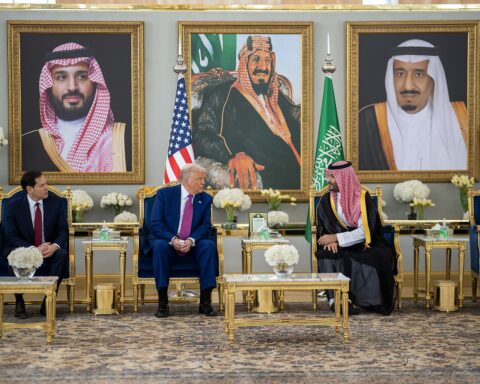
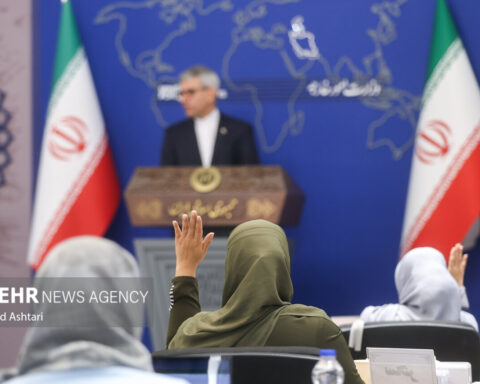
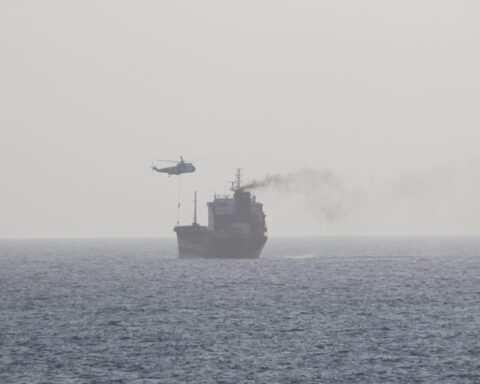
JEDDAH — The most consequential foreign-policy document issued against Saudi Arabia in 2026 is not a sanctions package, a UN resolution, or a diplomatic cable. It is a travel advisory. On April 7, the US Embassy in Riyadh issued a Level 3 “Reconsider Travel” notice covering Hajj — the first time in modern US diplomatic history that Washington has warned American citizens against performing the pilgrimage. The State Department stated that “the U.S. government has limited ability to offer emergency services to U.S. citizens in Saudi Arabia due to the safety risks.” Level 3 is the second-highest tier on the State Department’s advisory scale — the same classification applied to active conflict zones. Five days before the Day of Arafah, roughly 4,000 to 5,000 Americans will perform Hajj. Total attendance is projected at approximately 1.5 million, roughly 40 percent below the pre-COVID peak. Saudi Arabia issued no public response. The advisory states, in the language of the State Department, what the Custodian title was designed to make unsayable: the kingdom cannot currently deliver the protection the title promises.
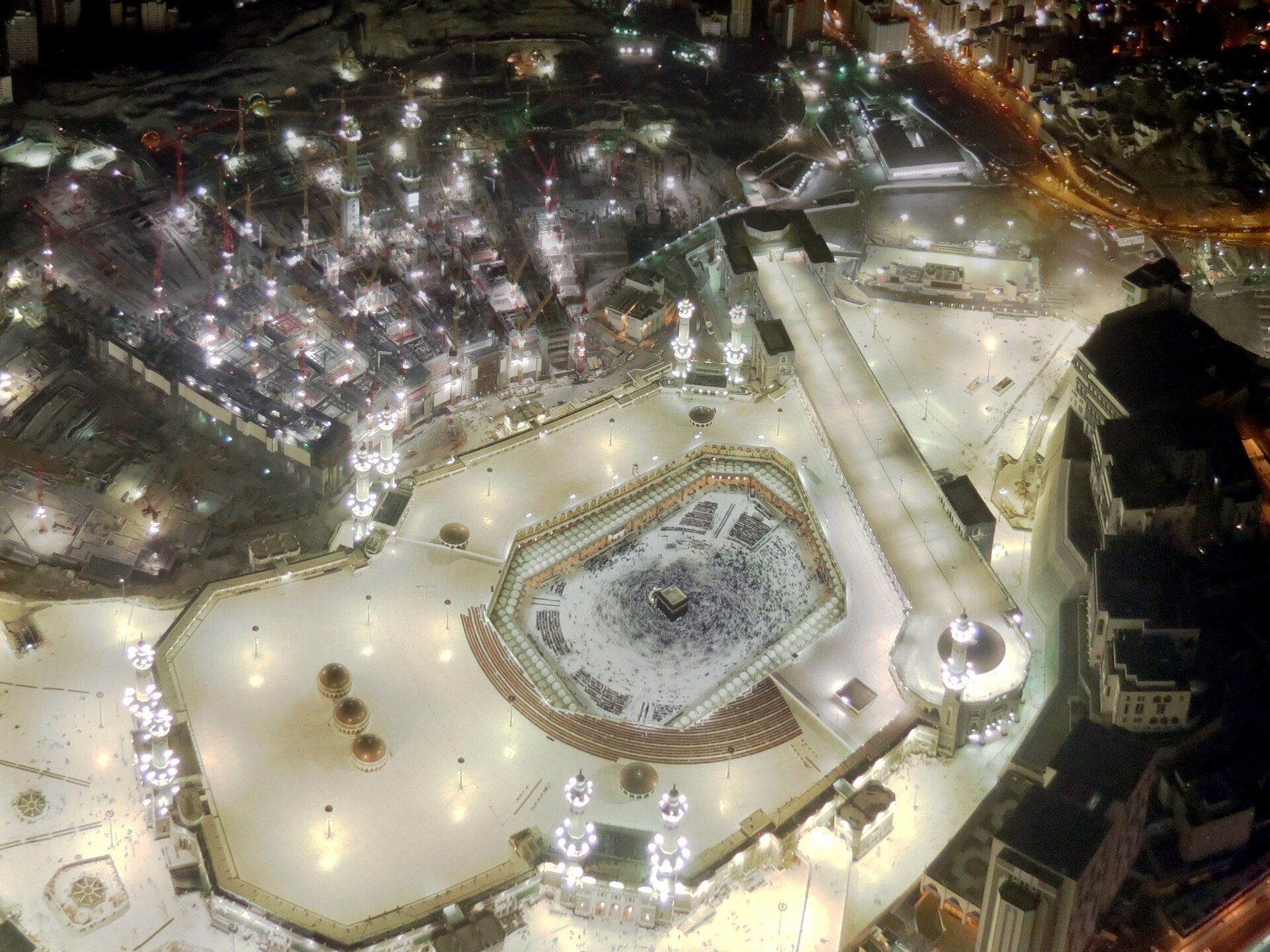
Table of Contents
- What Does the US Travel Advisory Mean for Hajj 2026?
- The Custodian’s Contract
- How Many American Muslims Cancelled Hajj in 2026?
- The Attendance Arithmetic
- Why Did Iran Send Only 30,000 Pilgrims to Hajj 2026?
- What Does a Hajj Collapse Cost Saudi Arabia?
- The Interceptor Gap
- The Silence
- Frequently Asked Questions
What Does the US Travel Advisory Mean for Hajj 2026?
The Level 3 advisory issued April 7, 2026, is the first US government warning against Hajj attendance in modern diplomatic history. It names a category of threat — state military attack on Saudi territory — that previous Hajj crises never involved. The advisory converts private risk assessment into official US policy, placing Hajj attendance in the same risk tier as travel to active conflict zones.
The advisory’s exact language is worth reading in full: “Per the Saudi Arabia Travel Advisory, and due to the ongoing security situation and intermittent travel disruptions, we advise reconsidering participation in Hajj this year.” The parallel State Department guidance was less circumspect: “The U.S. government has limited ability to offer emergency services to U.S. citizens in Saudi Arabia due to the safety risks.” The cited threats — Iranian “missile and drone attacks targeting cities, infrastructure, airports, military bases, diplomatic, and energy facilities” — describe a battlespace, not a pilgrimage destination.
Previous Hajj failures were governance failures. The 1990 Al Ma’aisim tunnel stampede killed 1,426 pilgrims. The 2015 Mina crush killed more than 1,300, a disproportionate number of them Iranian. Each was an internal failure — crowd management, construction oversight — attributable to Saudi planning decisions and fixable through institutional reform.
The 2015 crush triggered a diplomatic crisis with Iran that lasted more than a year. Tehran accused Riyadh of criminal negligence. But even that crisis operated within the framework of the Custodian title — Iran’s complaint was that Saudi Arabia had failed in its custodial duties, that the kingdom managed Hajj poorly. The implicit premise remained: competent management would make the guarantee operative.
The diplomatic weight of the April 7 advisory lies not only in what it says but in who issued it. Saudi Arabia is a strategic partner of the United States, the largest US arms customer in the Middle East, and the host of American military installations. Level 3 advisories are typically associated with states where American interests are not actively protected by the host government. The advisory was issued not by an adversary assessing Saudi vulnerability from outside, but by a partner assessing it from within — from an embassy compound inside the kingdom, staffed by diplomats who interact daily with Saudi counterparts.
The Middle East briefing 3,000+ readers start their day with.
One email. Every weekday morning. Free.
The 2026 advisory removes that premise. It names a threat — state military attack — that no level of crowd management, construction oversight, or emergency planning can address. Previous travel warnings about Saudi Arabia focused on terrorism risks: non-state, small-scale, manageable through security screening and intelligence cooperation. The April 7 advisory identifies a state military adversary with precision-guided ballistic missiles and armed drone swarms.
It makes no recommendation for how Saudi Arabia should close the gap — an omission that is itself a statement. A Level 3 advisory describes a risk environment. It does not prescribe solutions to the host nation. By issuing the warning without a corresponding diplomatic demarche or public call for Saudi action, the State Department separated its duty to inform American citizens from any pretense of partnership in addressing the underlying threat.
The Custodian’s Contract
King Fahd formally adopted the title Custodian of the Two Holy Mosques on October 27, 1986. The adoption was a direct institutional response to two shocks that struck at Saudi Arabia’s religious authority within a single year: Khomeini’s 1979 revolution, which challenged Riyadh’s leadership of the Sunni world, and the Grand Mosque seizure that same year, when Juhayman al-Otaybi’s militants took Mecca’s holiest site and held it until Saudi forces — assisted by French commandos, a theological violation inside Islam’s most sacred precinct — retook it by force.
The title was not an invention. Saladin held it. The Mamluks carried it for 250 years. The Ottomans claimed it from 1517 until the caliphate’s abolition in 1924. What Fahd formalized was the dynasty’s primary claim to legitimacy — positioned above oil revenue, above the American security partnership, above any modernization agenda. The 1979 episode exposed a permanent tension in the Custodian’s role: the protection claim requires military capability, but deploying that force — particularly foreign, non-Muslim force — inside Mecca creates its own legitimacy crisis. The tension has never been resolved. It has only been managed.
The title creates an implicit contract. The holder guarantees safe passage to Mecca for all Muslims. Not some Muslims. Not Muslims whose governments are allied with the kingdom. All of them — including citizens of Iran, a state currently at war with Saudi Arabia and whose missiles the advisory specifically names.
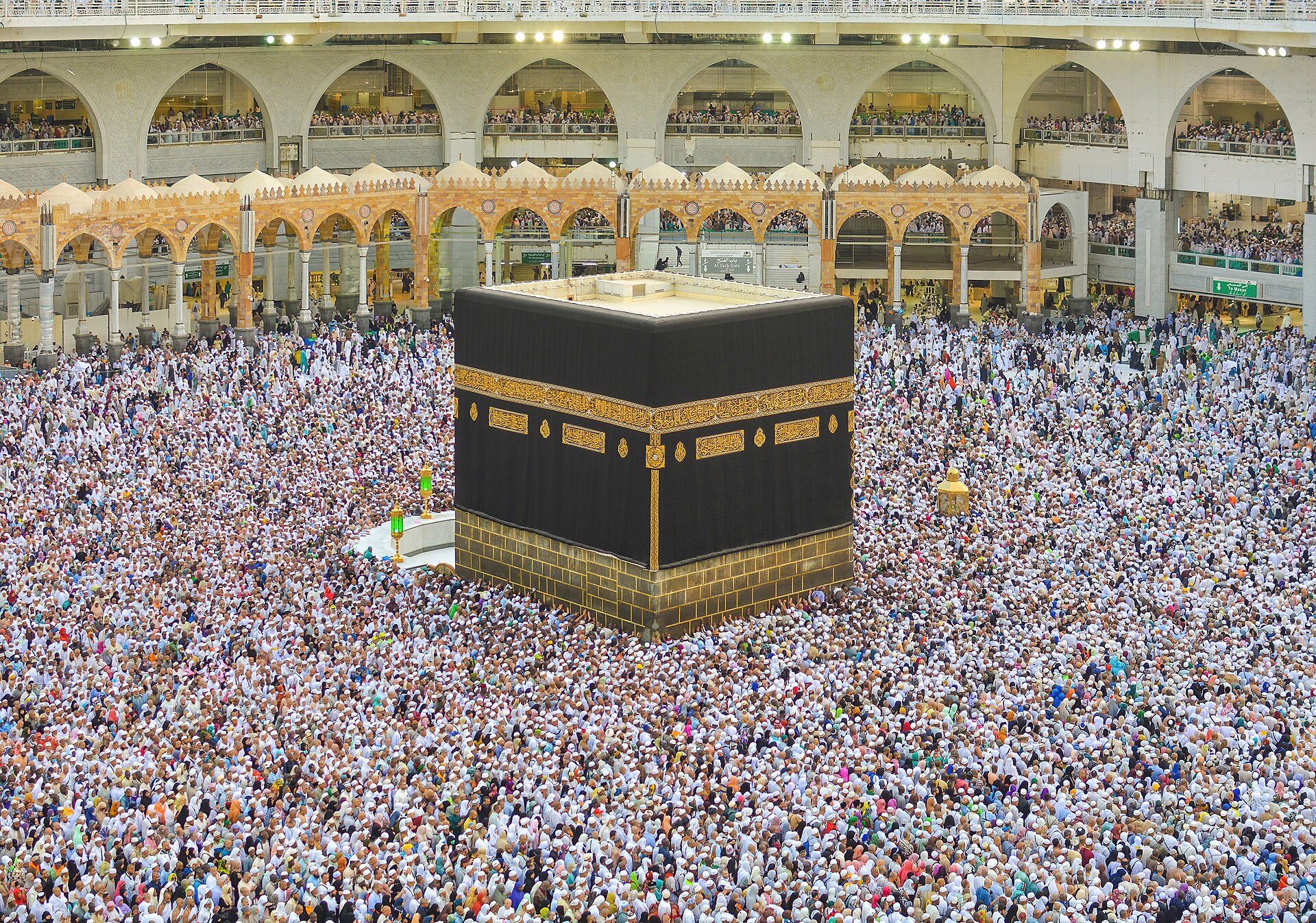
The operational weight of the title is easily underestimated. The Custodian does not merely administer Hajj — a logistics operation that moves millions of people through a confined geography in extreme heat over a fixed five-day window. The Custodian guarantees their safety. That guarantee extends to the physical infrastructure: the Grand Mosque expansion, the Jamarat Bridge redesign after the 2006 stampede, the tent cities of Mina, the hospital network, the crowd-flow architecture. It extends to the medical systems, the water supply, and — during a war — to the territorial defense of the holy sites themselves.
Each previous failure damaged the Custodian’s credibility but left the title’s institutional architecture intact. The 1979 seizure was resolved. The 1987 massacre led to a quota reduction, a diplomatic rupture, and eventually restoration through Omani mediation in 1991. The 1990 tunnel deaths led to infrastructure investments. The 2015 crush triggered crowd-control reforms. In every case, the kingdom could respond with institutional change — better barriers, wider tunnels, revised quotas, reformed crowd-flow protocols. The failures were terrible. But the response was legible: Saudi Arabia could point to concrete reforms and demonstrate that the same failure would not recur.
Bruce Riedel, Senior Fellow at the Brookings Institution, articulated the structural vulnerability after the 2015 Mina crush: “These terrible tragedies strike at the Saudi royal family’s core claim to legitimacy” — whether “the House of Saud is meeting its responsibilities and competently performing its duties as Custodian of the Two Holy Mosques.” Riedel was writing about crowd-management failures in September 2015. The threat environment in May 2026 is not analogous.
How Many American Muslims Cancelled Hajj in 2026?
Approximately 4,000 to 5,000 Americans will attend Hajj in 2026, down from as many as 16,000 in pre-quota years — a decline of roughly 70 percent. The drop follows the US Embassy’s April 7 Level 3 advisory, the first American government warning against Hajj attendance, and compounds the effect of sharply higher travel costs during the Iran conflict.
Wahid Elfeky, who runs Aleman Groups USA, a Hajj travel agency in New York, told NPR on May 21: “From America, it’s, like, 4,000 to 5,000.” In pre-quota years, that number reached 16,000.
The advisory dropped into American Muslim communities as official confirmation of anxieties that had been building since April. Imam Steve Mustapha Elturk, co-chair of the Imams Council of Michigan, has spent weeks fielding calls from congregants considering cancellation. His reassurance to them: “There’s nothing going on there in terms of war or missiles.”
Elturk’s reassurance is accurate in a narrow sense — Mecca has not been struck by Iranian missiles. The war’s direct violence has been concentrated on military installations, energy infrastructure, and airports in the Eastern Province and along the Gulf coast. But the advisory does not warn about where missiles have landed. It warns about where they could land, and about the US government’s assessment that it cannot protect its citizens if they do.
Some are going anyway. Juber Ahmed, a pharmacist in Sterling Heights, Michigan, described the pull of the pilgrimage to NPR: “Honestly, that feeling, I still can’t find the words to express. I was in tears.” On the security question: “I know it’s a risk, but I also know that this chance may not come back around.”
Sana Imam, in Washington, DC, framed her decision similarly: “I’m still planning to go because the level of spiritual transformation that is possible at Hajj might not be possible anywhere else.”
The Attendance Arithmetic
The General Authority for Statistics recorded 1,673,230 attendees in 2025. In 2019 — the last pre-COVID, pre-quota year — the figure stood at 2,487,000. The 2026 projection of roughly 1.5 million represents the largest single-year decline in non-pandemic Hajj history.
The aggregate masks wide variation by origin country. Western attendance has cratered — the American decline of roughly 70 percent from pre-quota levels is the starkest documented case — while some Muslim-majority nations have maintained near-full quota utilization despite the security environment.
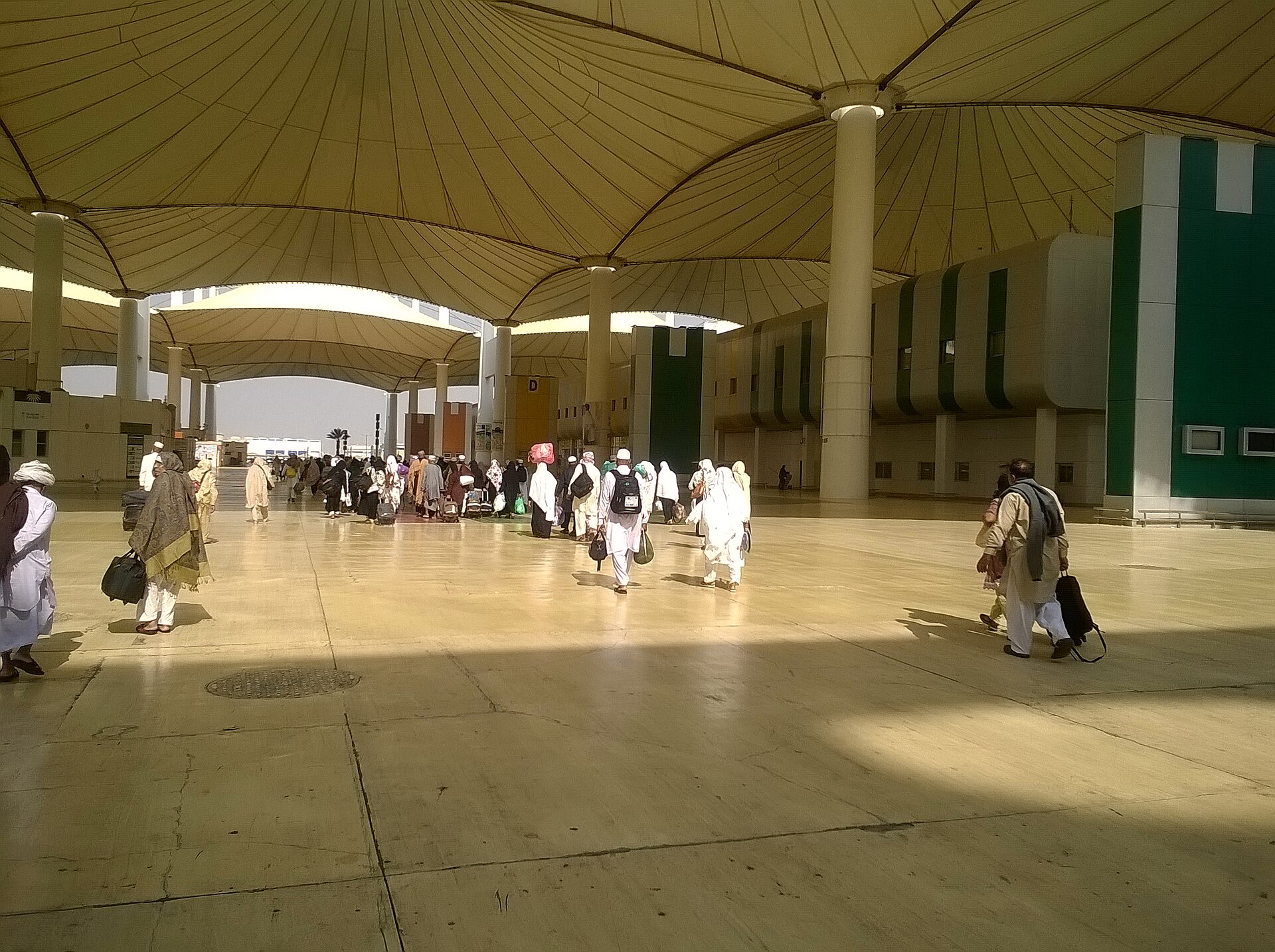
As of May 14, Saudi Minister of Hajj and Umrah Tawfiq Al Rabiah reported more than 860,000 foreign pilgrims had arrived: 820,000 by air — 240,000 of them processed through the Mecca Route Initiative, which clears customs and immigration at the origin airport — 35,000 by land, and 4,000 by sea. Al Rabiah described the operational preparations in Vision 2030 language: “These measures support crowd management and enhance pilgrim safety, aligning with efforts to advance Vision 2030 and the Pilgrim Experience Programme.”
The airlift window closes before the Day of Arafah on May 26. After that, approximately 1.5 million pilgrims will be inside Saudi Arabia with no scheduled commercial departures until Hajj concludes.
| Metric | Figure | Source |
|---|---|---|
| 2026 projected total | ~1.5 million | NPR, May 21, 2026 |
| 2025 actual attendance | 1,673,230 | GASTAT |
| 2019 peak (pre-COVID, pre-quota) | 2,487,000 | GASTAT |
| Decline from 2019 peak | ~40% | Calculated |
| US pilgrims, 2026 | 4,000–5,000 | Aleman Groups USA / NPR |
| US pilgrims, pre-quota | Up to 16,000 | Aleman Groups USA / NPR |
| Iran quota utilization, 2026 | 30,000 of 87,550 (34%) | Tasnim News Agency |
| Foreign arrivals as of May 14 | 860,000+ | Saudi Hajj Ministry |
Why Did Iran Send Only 30,000 Pilgrims to Hajj 2026?
Iran sent exactly 30,000 pilgrims against its 87,550-person quota — a 34 percent utilization rate authorized directly by Supreme Leader Mojtaba Khamenei. The number represents a calibrated deployment: large enough to place Iranian nationals inside Saudi Arabia during an active conflict, small enough to avoid recreating the hostage dynamic that defined the aftermath of the 1987 Mecca massacre.
The comparison to 1987 is structurally precise — and inverted. On July 31, 1987, Iranian pilgrims staged political demonstrations inside Mecca. Saudi security forces responded with lethal force. Four hundred and two people died — 275 Iranians, 85 Saudis, 42 from other nationalities. Six hundred and forty-nine were wounded. Iran boycotted Hajj for three years. Saudi Arabia severed diplomatic relations on April 27, 1988. Iran’s quota was slashed from 150,000 to 45,000. Omani mediation restored the relationship in 1991. The three-year boycott removed Iranian pilgrims entirely from 1988 through 1990 — a period during which Saudi control over Hajj was unchallenged but its claim to serve all Muslims was visibly incomplete.
In 1987, Iran maximized pilgrim presence for political demonstration. Khomeini treated Hajj as a stage. Mehdi Khalaji of the Washington Institute for Near East Policy has documented Iran’s longstanding use of the pilgrimage for what Tehran calls “Repudiation Demonstrations” — “an opportunity to express hatred of and disassociation from infidels and pagans.” Najeeb Ghanem, a Yemeni academic and former health minister, characterized the broader Iranian approach in Al Jazeera as “a new imperial project, driven by Persian ambitions, using religion as both cover and driving force.”
In 2026, Iran minimized. Alireza Bayat, head of Iran’s Hajj and Pilgrimage Organization, told pilgrims to “refrain from actions that could lead to division and fragmentation” — language that directly inverts Khomeini’s standing directives. The calming tone is operational, not conciliatory. Iran is not giving Saudi Arabia a pretext during ceasefire negotiations.
The contrast between Khalaji’s documentation and Bayat’s 2026 language traces a strategic evolution. Iran’s pre-2026 Hajj approach was confrontational — political demonstrations inside Mecca, ideological projection through pilgrim mobilization. The 2026 posture abandons confrontation for calibration. Iran’s military capability — the missile and drone assets the US advisory specifically names — has moved the arena for challenging Saudi custodianship from the Grand Mosque courtyard to the airspace over the Hejaz.
The Tasnim News Agency reported that the deployment was conducted “in accordance with the command, approval, and viewpoint” of Supreme Leader Khamenei — language that places the 30,000 figure inside the supreme leader’s strategic authority, not the Hajj Ministry’s administrative discretion.
What Does a Hajj Collapse Cost Saudi Arabia?
Hajj generates approximately $8 billion annually in direct revenue; combined with Umrah, the total reaches $12 billion, representing roughly 20 percent of Saudi non-oil GDP and 7 percent of total GDP, according to Saudi government projections. A 40 percent attendance decline arrives during the worst fiscal quarter in recent Saudi history: a Q1 2026 deficit of roughly $33.5 billion, approximately 194 percent of the full-year budget target.
The Hajj revenue loss compounds a fiscal position that was already in distress before the first pilgrim cancelled. Saudi Arabia burned through nearly double its planned annual deficit in the first ninety days of 2026. PIF cash reserves have fallen to approximately $15 billion — the lowest level since 2020. Goldman Sachs projects the true 2026 fiscal deficit at 6.6 percent of GDP, or between $73 billion and $90 billion.
The Saudi National Tourism Strategy targeted approximately $178 billion in annual GDP contribution from tourism by 2030, with the Hajj-Umrah corridor positioned as the anchor of Saudi non-oil revenue. That projection assumed sustained peace, open airspace, and the kind of international confidence in the security environment that the US advisory explicitly withdraws. The Hajj-Umrah corridor mattered not only for its direct revenue but because it brought millions of repeat visitors into the broader tourism ecosystem — pilgrims who might return for Umrah, visit Riyadh’s entertainment districts, or book the Red Sea resorts PIF has spent billions developing.
That multiplier is now in question. Daily oil revenue has collapsed from roughly $502 million pre-war to approximately $340 million — a 32 percent decline. The single largest non-oil revenue stream is simultaneously exposed to the wartime attendance collapse. Hajj revenue flows predominantly in Q2 — it was supposed to arrive as the natural fiscal counterweight to Q1’s accelerated spending. Instead it arrives depleted, during the same quarter the kingdom exhausted 194 percent of its full-year deficit target.
The Interceptor Gap
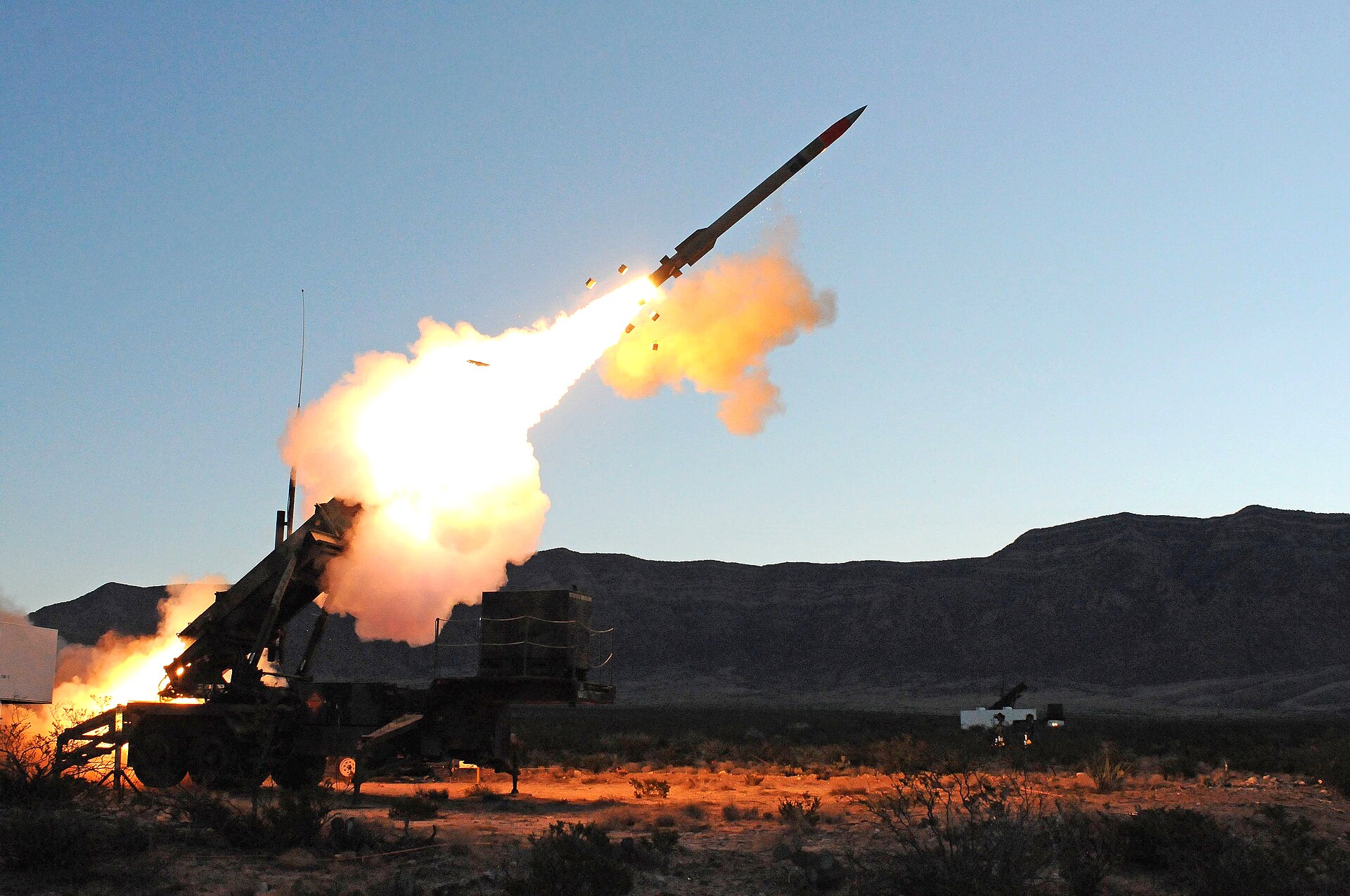
The defense arithmetic is specific. Saudi Arabia’s PAC-3 inventory stands at approximately 400 rounds — roughly 14 percent of the pre-war stockpile of 2,800 — with between 80 and 150 of those rounds allocated to the Hejaz region covering Mecca and Medina. The replacement order will not arrive until after May 26.
May 26 is the Day of Arafah — the day all 1.5 million pilgrims will stand on the Plain of Arafat, an open area with no hardened shelter and no rapid dispersal option. The date is fixed by the Islamic calendar. It cannot be rescheduled, postponed, or relocated to a more defensible position.
MBS directed “full mobilisation of operational, security and preventive plans” and the deployment of “all capabilities” for Hajj safety, according to a Saudi cabinet session reported by Gulf News in May. The directive does not address the interceptor shortfall. The resupply pipeline operates on defense-industrial timelines that do not align with the Hajj calendar.
The gap between directive and capability is the gap the US advisory identified. MBS ordered “all capabilities” deployed. The advisory assessed those capabilities — approximately 400 PAC-3 rounds across the entire kingdom, a fraction of them covering the holiest sites in Islam — and concluded they were insufficient to guarantee the safety of American citizens. The advisory did not question Saudi Arabia’s willingness to protect pilgrims. It questioned the kingdom’s capacity — a distinction the Custodian title, which is a guarantee of result, does not accommodate.
The precise scale of the depletion of Saudi Arabia’s PAC-3 stockpile ahead of Hajj — an 86 percent reduction from pre-war levels, leaving the Hejaz with 80 to 150 interceptors and no resupply before the Day of Arafah — sets the operational context the travel advisory implicitly described.
The Silence
Saudi Arabia’s response to the US Embassy advisory is the absence of a response. No public acknowledgment. No adjusted quotas. No supplementary security briefings offered to partner nations. No diplomatic protest filed with Washington.
Acknowledging the advisory would require either refuting it — which would mean disclosing air-defense dispositions and interceptor inventories over the Hejaz — or accepting its premise, which would confirm that the Custodian’s guarantee is conditional on threat categories the kingdom can manage. The silence attempts a third path: to absorb the attendance decline without conceding that the advisory caused it, and to proceed as though the document was never issued. No televised address on Hajj security. No royal decree establishing supplementary protective measures. No public briefing from the Ministry of Defense on air-defense posture over the holy sites.
For the dozens of Muslim-majority nations that send annual pilgrim contingents, the Saudi silence created an information vacuum. Each sending state was left to conduct its own security assessment without the benefit of the host nation’s defense briefings or threat evaluations — the kind of intelligence a custodian would ordinarily share with the countries whose citizens it pledges to protect.
Tawfiq Al Rabiah, the Hajj minister, continued to frame preparations in operational language — “crowd management,” “pilgrim safety,” “Vision 2030 and the Pilgrim Experience Programme.” The vocabulary is calibrated for the kinds of threats Saudi Arabia has always managed at Hajj: heat, crowd density, disease, logistics. The phrase “air defense” did not appear in any Saudi official statement about Hajj 2026 preparations. The phrase “ballistic missile” did not appear either.
Frequently Asked Questions
Has any country proposed transferring Hajj management away from Saudi Arabia?
Senior Iranian clerics affiliated with the office of the Supreme Leader have maintained a standing verdict since 2015 calling for Hajj administration to transfer from Saudi Arabia to a council of Islamic states — a direct challenge to the permanence of the Custodian title. Any security incident during Hajj 2026 would amplify this proposal from a clerical opinion into a formal demand from Iran’s religious establishment. The precedent is recent: in 2016, following the execution of Shia cleric Nimr al-Nimr and the 2015 Mina crush that killed a disproportionate number of Iranian pilgrims, Iran sent zero pilgrims — a complete one-season boycott accompanied by renewed calls from Iranian officials for international oversight of the pilgrimage.
How much do Hajj 2026 travel packages cost compared to pre-war years?
Hajj package prices have roughly doubled across all origin markets since the Iran conflict began. In the United Kingdom, packages now exceed £6,000 per person, up from £3,200 to £3,800 before 2020. European packages range from €8,000 to €9,000, with luxury tiers exceeding €10,500. North American basic packages start at $4,500 to $5,000. Jet fuel — a direct input cost that operators pass through to pilgrims — has more than doubled from pre-conflict levels. The price increases function as a second attendance filter, compounding security concerns with affordability constraints that disproportionately affect pilgrims from lower-income communities in Western countries.
Which airlines suspended Saudi Arabia flights during the Iran war?
Lufthansa Group, including its subsidiary Eurowings, suspended all flights to Riyadh and Dammam through October 24, 2026 — a window that covers the entire Hajj season and extends months beyond it. KLM suspended its Dammam and Riyadh routes through at least mid-May 2026. The suspensions eliminate major European connecting-hub options for pilgrims who would normally transit through Frankfurt or Amsterdam, forcing them onto more expensive direct routings or Gulf carrier connections through Dubai or Doha — carriers that are themselves operating under wartime routing constraints and reduced capacity.
How is Indonesia preparing for Hajj 2026 security risks?
Indonesia’s Minister of Hajj and Umrah, Mochamad Irfan Yusuf, outlined three distinct operational contingency scenarios for Hajj 2026 — formal war-scenario planning for the single largest national pilgrim contingent at 221,000 allocated places. Indonesia’s contingency preparation is diplomatically consequential: the world’s most populous Muslim-majority nation independently assessed the security environment and reached conclusions requiring multiple response plans, regardless of Saudi assurances about operational readiness. No other sending nation has publicly disclosed comparable multi-scenario planning.