
RIYADH — Donald Trump told his Cabinet on May 27 that he might kill the Iran deal unless Saudi Arabia joins the Abraham Accords, inserting a condition that 99 percent of Saudis oppose into the architecture of a war Saudi Arabia was never invited to negotiate. Five rounds of US-Iran talks over 106 days produced something approaching an agreement — on frozen assets, enrichment ceilings, a Lebanon clause, the governance of the Strait of Hormuz — without a single Saudi representative in the room, and now Trump has named the country that was excluded as the price of closing.
The result is a four-party deadlock whose structural features are genuinely new. Iran’s price is sanctions relief, enrichment preservation, and Hezbollah’s protection; Israel’s price is the physical removal of Iran’s highly enriched uranium; Trump’s price, unveiled in a May 24 phone call that left at least three leaders “stunned” according to a U.S. official cited by Axios, is Abraham Accords membership by the holdout states. Saudi Arabia’s price — an irreversible pathway to Palestinian statehood — is the one condition none of the other three parties has offered to meet.
Table of Contents
- The 72-Hour Walk-Back
- What Did Eight Leaders Hear on the May 24 Call?
- Was Saudi Arabia Ever at the Negotiating Table?
- Why Can’t Saudi Arabia Simply Normalize?
- Can Saudi Arabia Afford Either Outcome?
- Five Incompatibilities, One Deal
- The Evans Conversation and the Father Problem
- What Does the Accords Demand Look Like From Tehran?
- The 2002 Offer Still on the Table
- Frequently Asked Questions
The 72-Hour Walk-Back
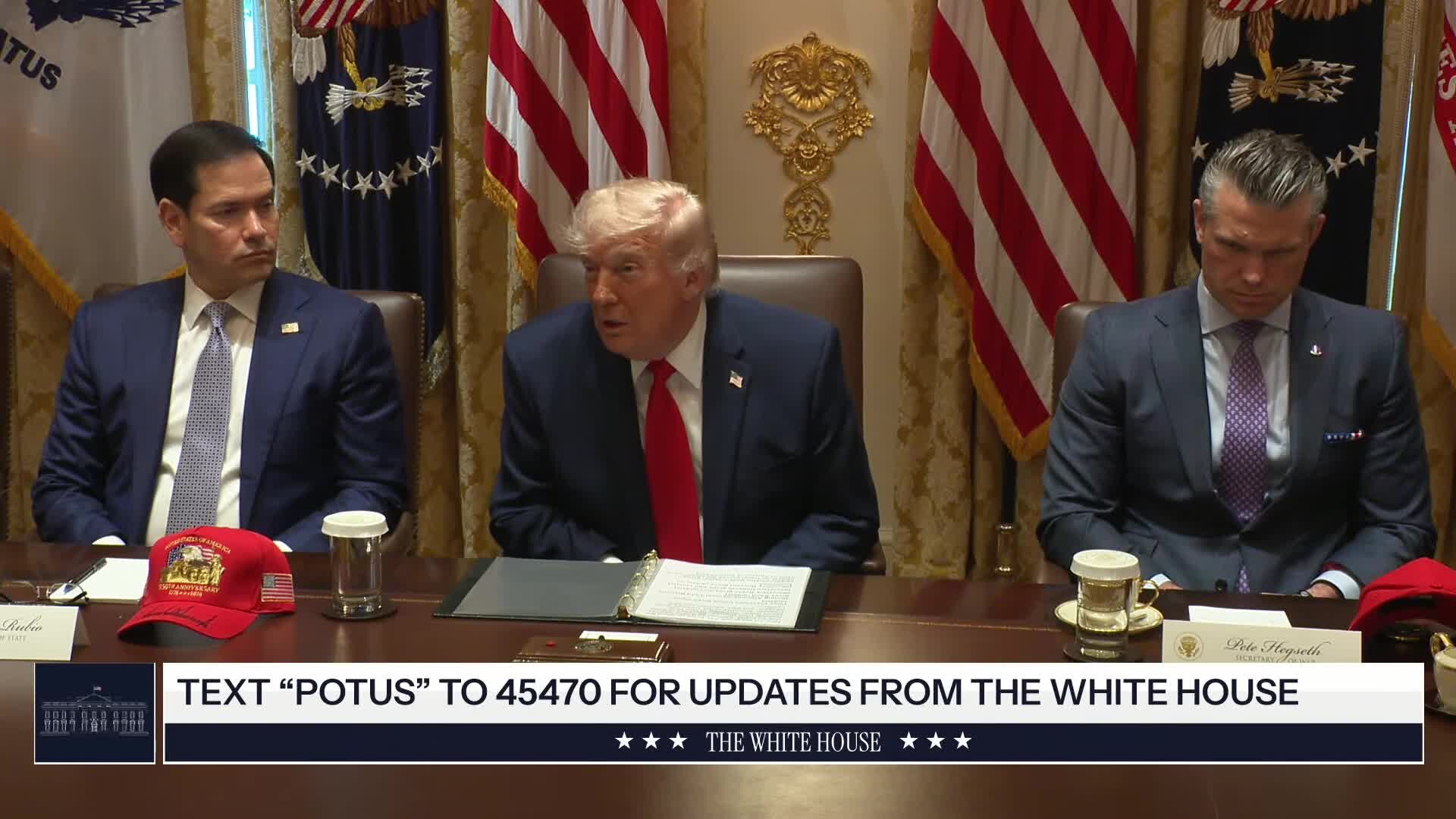
Trump’s position on the Accords demand aged faster than most of his negotiating positions, which is saying something. On May 24, he posted on Truth Social that it should be “mandatory that all of these Countries, at a minimum, simultaneously, sign onto the Abraham Accords.” By May 27, seated before his Cabinet with cameras rolling, he had softened mandatory into something closer to a wish — “I’m not sure we should make the deal if they don’t sign, if you want to know the truth” — and when a reporter asked whether Accords membership was a formal precondition, he produced the most revealing line of the afternoon: “I don’t know. I don’t want to say that.”
The distance between “mandatory” and “I don’t know” would be unremarkable in domestic policy, where trial balloons rise and fall between news cycles without consequence. In the context of an active war — with the IRGC threatening “grave violation” reprisals, Iran’s Persian Gulf Strait Authority collecting approximately $2 million per transit in Chinese yuan since May 18, and a ceasefire architecture that has survived only because neither side has found enough agreement to formalize it — the 72-hour reversal tells every party at the table that the demand was improvised, which does not make it inconsequential. Improvised demands in Middle Eastern diplomacy tend to outlive their authors’ commitment to them, acquiring institutional weight precisely because no one is certain whether the person who made them has moved on or will circle back at the worst possible moment. The same Cabinet meeting saw Trump declare “no sanctions, no money, no nothing” regarding the Iran deal — a statement that simultaneously eliminated Iran’s core demand and made the Accords condition structurally irrelevant, since there may be no deal left to condition.
Ali Vaez, the International Crisis Group’s Iran project director, offered the most precise summary of the dynamic in a CNN analysis on May 26. “Trump is trying to sell an Iran deal as an Abraham Accords sequel: good for Israel, good for the region, tough enough for Washington,” he said. “He is trading one fantasy for another — from forcing Iran to surrender to pretending a fragile deal can anchor a new Middle East order.”
The Middle East briefing 3,000+ readers start their day with.
One email. Every weekday morning. Free.
What Did Eight Leaders Hear on the May 24 Call?
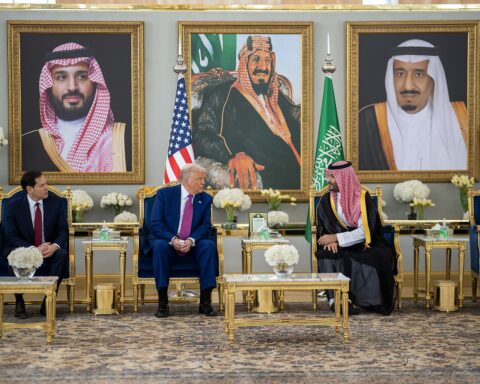
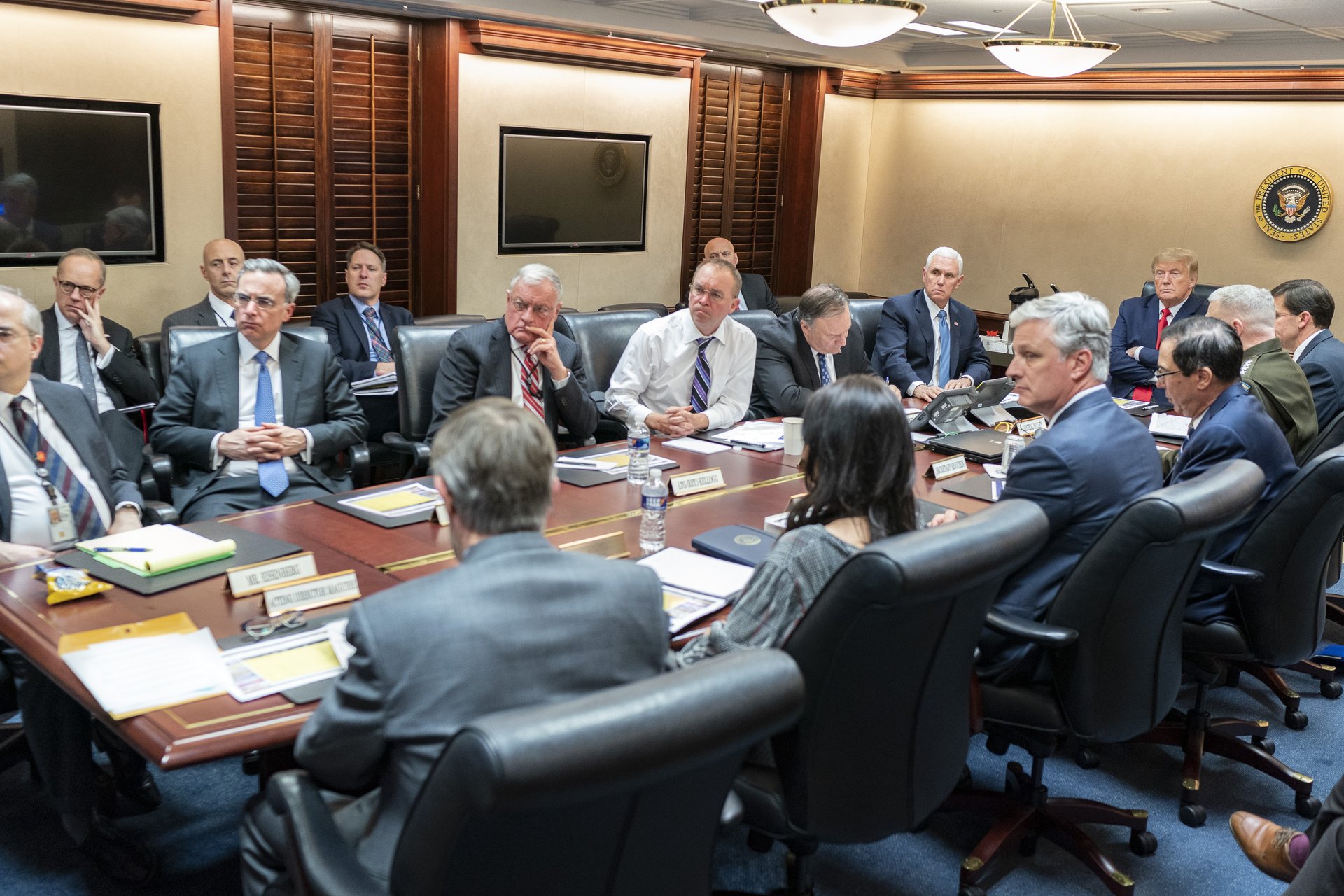
The call that preceded the Cabinet meeting deserves its own anatomy, because the dynamic on the line — eight leaders, three of them constitutionally or ideologically unable to comply with the demand being made, and a U.S. president who apparently found the ensuing silence amusing — prefigured the structural deadlock that the Accords condition has since created. Trump called the leaders of Saudi Arabia, the UAE, Qatar, Pakistan, Turkey, Egypt, Jordan, and Bahrain on May 24, according to Axios, and told them he expected all non-Accords countries to normalize with Israel once the Iran war ended. His Truth Social post later that day made the expectation explicit and the language unmistakable: it should be “mandatory.”
Per a U.S. official cited by Axios, “the leaders on the call, especially those of Saudi Arabia, Qatar, and Pakistan, appeared stunned by Trump’s demand.” Trump, reading the silence correctly as resistance rather than technical difficulty, joked by asking if they were still on the line. The joke landed in the way that diplomatic jokes do — everyone laughed, no one committed, and the call produced nothing beyond a generalized understanding that Trump had attached a new condition to the deal that none of the holdout states had been consulted about in advance, during a week when Saudi Arabia was managing the logistical operation of hosting 1.8 million Hajj pilgrims and had explicitly asked the international community not to escalate.
Of the three stunned parties, only Pakistan responded publicly. Defence Minister Khawaja Asif went on live television on May 26 and said the demand was “not acceptable to us” and “clashes with our fundamental ideologies” — the kind of direct language that Islamabad reserves for positions it considers existential. Saudi Arabia’s response was characteristic of the posture it has maintained since the war began: an anonymous source told Al Arabiya on May 25 that the Kingdom’s position on the Palestinian issue “remains unchanged” and requires “an irreversible pathway to a Palestinian state.” No named official said anything, no Ministry of Foreign Affairs statement was issued, and the silence — which has now extended past nine days on matters ranging from CENTCOM strikes inside Saudi Arabia’s declared no-escalation window to an Iranian doctrine document naming Saudi bases as legitimate targets — continued without interruption. Qatar, the fourth-largest natural gas exporter in the world and the country whose $6 billion custodial role in the 2023 prisoner swap earned it a seat at the Doha negotiating table that Saudi Arabia never received, said nothing at all.
Was Saudi Arabia Ever at the Negotiating Table?
The short answer is no, and the longer answer is that the exclusion was systematic enough to constitute a policy rather than an oversight. Over 106 days and five rounds of US-Iran talks — in Muscat, Doha, Geneva, and locations that were not always disclosed in advance — Saudi Arabia was not present, not consulted on terms, not invited to send observers, and not briefed on outcomes before they appeared in press leaks attributed to unnamed officials on both sides. When Iran’s Speaker of Parliament Mohammad Bagher Ghalibaf flew to Doha on May 25 alongside Foreign Minister Abbas Araghchi and Central Bank Governor Mohammad Reza Farzin Hemmati for what would become the most substantive pre-signing negotiation yet, Saudi Arabia was not in the room; it was hosting pilgrims at Mina, which is both a logistical explanation and an architectural one, since the scheduling was not coincidental.
The exclusion extends well beyond the formal rounds. Saudi Arabia has no seat in Track 2 nuclear discussions, no role in the PGSA governance structure that Iran established unilaterally on May 18, no input into the Lebanon clause that Araghchi confirmed remains in the draft MOU, and no participation in the $24 billion frozen-assets sequencing debate that has become the single largest obstacle to signing. When Iran left Doha without signing and returned to Tehran on Arafah Day, the Saudis learned the outcome the same way the rest of the world did — from Tasnim’s characterization of the talks as “generally positive” and from Axios reporting that “wording gaps” persisted.
Trump’s demand converts that exclusion into obligation. Every other party’s price was shaped by months of direct engagement; Saudi Arabia’s was set by a president who did not consult Riyadh before naming it, and announced publicly before Riyadh had been told what it was being asked to pay.
Why Can’t Saudi Arabia Simply Normalize?
The Washington Institute for Near East Policy’s August 2025 survey provides the single most important data point in this entire discussion: 99 percent of Saudi respondents said establishing normal relations with Israel would be “a negative step,” the highest rejection rate recorded for any bilateral question in the Gulf. That figure is not a snapshot of a bad week; it is the endpoint of a trajectory that has moved in only one direction. Saudi public support for the Abraham Accords as a positive regional development fell from 41 percent in 2020 to 20 percent in 2023 to 13 percent in 2025, a collapse that tracks almost precisely with the escalation of the Israeli-Palestinian conflict and the perception — widespread in Saudi media and social discourse since October 2023 — that the original Accords enabled Israel’s subsequent military operations by removing the diplomatic cost of normalization before any Palestinian conditions were met.
The public opinion wall is the most visible constraint, but it is not the most structural. Saudi Arabia’s Basic Law contains no mechanism by which a monarch can make an irreversible foreign policy commitment that binds his successors, a constitutional feature that matters enormously for any normalization agreement, because the Abraham Accords framework assumes durability — embassies opened, trade initiated, flights established, security cooperation launched. Every Saudi foreign policy commitment, from arms purchases to diplomatic recognitions, is contingent on the will of the current ruler and can be reversed by his successor with the same constitutional authority that created it. King Salman, whose reported veto on normalization is discussed below, remains the sitting monarch, and any agreement MBS signed tomorrow would carry the institutional shelf life of MBS’s own reign.
Behind the polling and the constitutional constraints sits a 24-year-old document that still governs Saudi Arabia’s official negotiating position — the 2002 Arab Peace Initiative, which offered full Arab normalization in exchange for a Palestinian state, Israeli withdrawal to 1967 lines, and a refugee resolution. When the anonymous Saudi source told Al Arabiya on May 25 that the Kingdom requires “an irreversible pathway to a Palestinian state,” the language was a direct descendant of that formula, reaffirmed by MBS himself as recently as 2023. Trump’s demand asks for the normalization without any of the conditions, something no Saudi ruler has agreed to in the quarter century since the offer was tabled. The Foundation for Defense of Democracies published a polemic on Arafah Day accusing Saudi diplomacy of “voodoo” obstructionism, but even Hussain Abdul-Hussain’s critique implicitly acknowledged the depth of the constraint: you do not write 2,500 words attacking a position unless it is genuinely immovable.
Can Saudi Arabia Afford Either Outcome?
Saudi Arabia’s first quarter of 2026 produced a deficit of SR 125.7 billion — approximately $33.5 billion — the largest quarterly shortfall in the Kingdom’s fiscal history, representing 194 percent of the full-year deficit target consumed in just three months. Expenditure hit $103.2 billion (up 20 percent year-on-year) while oil revenue fell to $38.7 billion (down 3 percent), a trajectory that is structurally unsustainable regardless of what happens in the Iran negotiations but that is made acutely worse by both of the available outcomes.
If the Iran deal closes, it eventually brings Iranian crude back onto global markets — an additional 1.5 to 2 million barrels per day within 12 to 18 months — which would push Brent further below the $94-99 range where deal optimism has already compressed it. If the deal collapses, oil prices recover and Saudi Arabia gets fiscal breathing room, but at the cost of war escalation, continued PGSA disruption of Hormuz transits, and the evaporation of whatever diplomatic cover the negotiating process provides for Saudi inaction. Neither outcome closes the gap between what Saudi Arabia earns and what it spends.
| Indicator | Figure | Source |
|---|---|---|
| Q1 2026 deficit | $33.5B (SR 125.7B) | Gulf News / Al Jazeera |
| Q1 spending (YoY) | $103.2B (+20%) | Saudi MoF |
| Q1 oil revenue (YoY) | $38.7B (-3%) | Saudi MoF |
| IMF fiscal breakeven | $86.60/bbl | IMF |
| PIF-inclusive breakeven | $108–111/bbl | Bloomberg Economics |
| Brent (late May 2026) | ~$94–99/bbl | Market data |
| Full-year deficit target | ~$17.3B | Saudi MoF |
| Q1 as share of target | 194% | Calculated |
The PIF-inclusive breakeven — the price Saudi Arabia needs to cover both government operations and the sovereign wealth fund’s commitments to NEOM, HUMAIN, LIV Golf, and the rest of the Vision 2030 portfolio — stands at $108 to $111 per barrel according to Bloomberg Economics, a level Brent has not sustained since early April. Every dollar of deal optimism that pushes crude lower widens a deficit that is already running at nearly double the annual target, and the Kingdom’s 2.5 million barrels per day of Hormuz-dependent exports (total production of 7.76 mbpd minus the East-West Petroline’s 5 mbpd Red Sea capacity) remain exposed to Iranian interdiction for as long as the PGSA operates.
The fiscal arithmetic makes the Accords demand not merely politically impossible but economically irrational from Riyadh’s perspective. Normalization with Israel would not lower Saudi Arabia’s breakeven price, would not bring oil prices up, would not restore freedom of navigation through the Strait, and would not reduce the Q1 deficit trajectory. What it would do — what it is designed to do, from Washington’s vantage — is deliver a foreign policy prize to an American president. The full cost would be borne by Riyadh, in a quarter when Riyadh is demonstrably running out of money to bear costs.
Five Incompatibilities, One Deal
Before Trump’s May 24 phone call, the US-Iran MOU faced four categorical incompatibilities that had prevented signing across five rounds and 106 days. Iran’s position on enrichment — Araghchi’s formulation that zero enrichment equals no deal — was irreconcilable with Netanyahu’s demand for HEU removal, which he articulated on 60 Minutes on May 10 with a directness unusual even for him: “You go in, and you take it out.” The $24 billion in frozen Iranian assets remained stuck in a sequencing deadlock, with Iran insisting on $12 billion at signing and $12 billion within a 60-day window while the US demanded that Hormuz open first. The Lebanon clause, which Araghchi confirmed remains in the draft MOU, represented a concession that Netanyahu’s security cabinet convened specifically to reject. And the disposal of Iran’s highly enriched uranium — whether down-blending inside Iran (Tehran’s position) or physical removal (Washington and Tel Aviv’s demand) — had produced a technical gap that Mojtaba Khamenei’s courier-only communications from an undisclosed location made functionally impossible to close on any diplomatic timeline. Saudi Arabia’s position is further complicated by a channel problem that is structural rather than diplomatic: Riyadh has built access to every Iranian official in the negotiating chain except Mojtaba, as detailed in the analysis of Saudi Arabia’s channel gap to Iran’s gatekeeper.
Trump added the fifth, and in doing so changed the nature of the negotiation entirely. The Abraham Accords demand does not merely append another line item to a bilateral nuclear agreement; it transforms the deal into a regional realignment package that requires the participation of countries that were never at the table, including one — Saudi Arabia — whose domestic political situation makes compliance impossible by every available measure. Iran’s price, Israel’s price, and Trump’s new price are each addressed to different parties and governed by different political logics, but they share a structural feature that makes the current impasse qualitatively different from the JCPOA negotiations of 2013-2015: each one is, from the perspective of at least one other party, impossible to deliver rather than merely difficult to negotiate.
Foreign Policy’s assessment published on May 7, 2026 — “How the Abraham Accords Fueled a New Era of Conflict” — sits as an unacknowledged footnote to the demand Trump made seventeen days later. The original Accords’ bypass of the Palestinian question, as the article argued, contributed to the conditions that produced the current war by removing the diplomatic cost of Israeli expansion before Palestinian grievances were addressed; Trump’s proposal to resolve that war by expanding the same instrument is, at minimum, a request that the region accept the same wager with higher stakes and a worse track record.
The Evans Conversation and the Father Problem
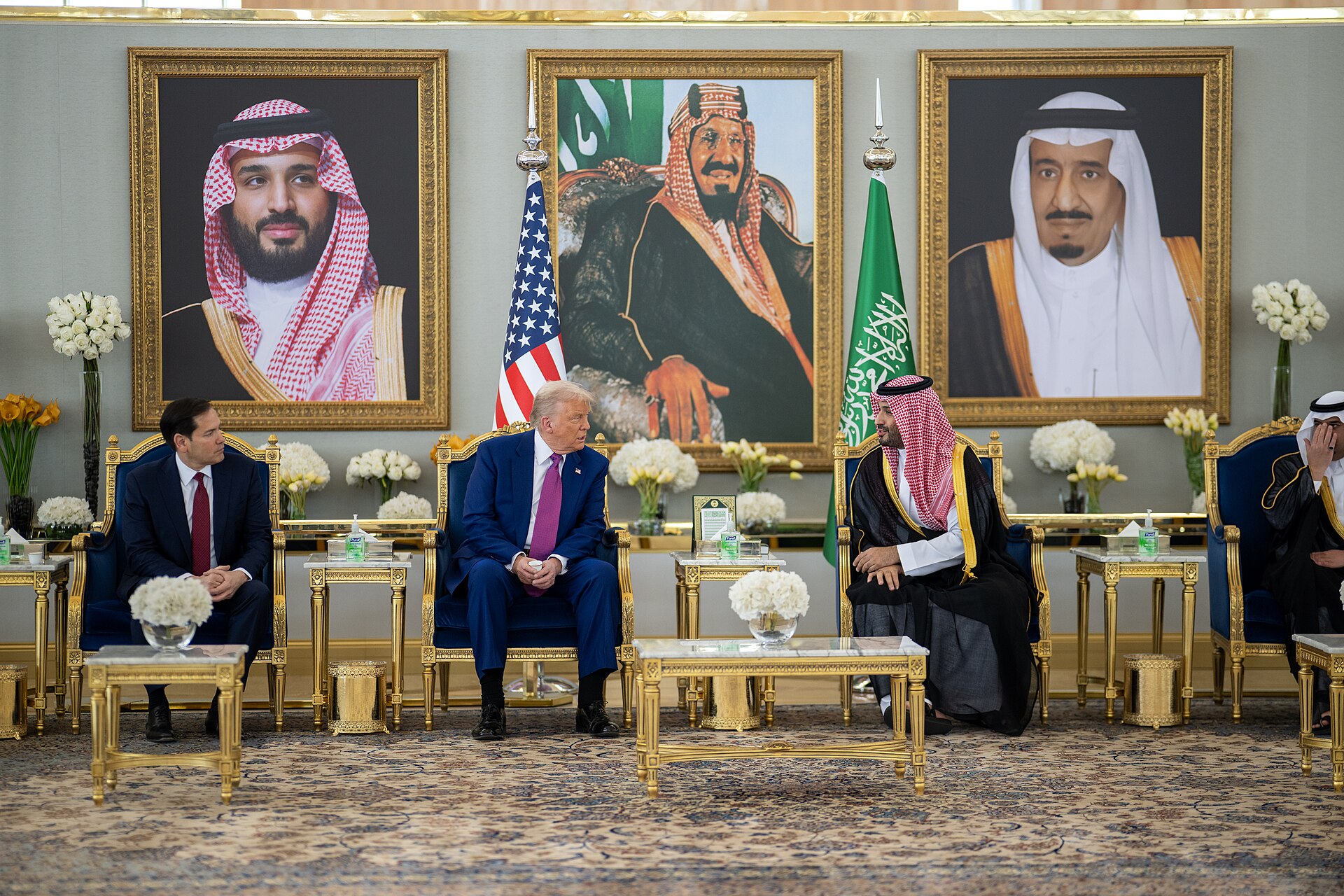
The most revealing signal of the past week came not from Trump’s Cabinet meeting or the eight-leader call but from a two-hour meeting between MBS and Mike Evans, the head of the Friends of Zion Museum and a longtime Trump ally, with Foreign Minister Prince Faisal bin Farhan present in the room. Evans told the Jerusalem Post on May 26 that MBS had said he would recognize Israel “today” but that “his problem was his father” — a formulation that, if accurate, reduces Saudi Arabia’s 24-year commitment to Palestinian statehood and its near-unanimous domestic opposition to normalization to a single generational obstacle that will eventually be resolved by biology rather than diplomacy.
The Evans account is politically convenient for everyone except Saudi Arabia. It allows Washington to believe that normalization is a question of when rather than whether — a matter of waiting out King Salman rather than confronting structural impossibility. It allows Israel’s National Security Institute to model post-succession scenarios in which normalization probability “likely grows.” And it allows Trump to treat the Accords demand as aspirational rather than absurd, since MBS is, per Evans, already willing in private. What the account does not do is reckon with what comes after: the Basic Law provides no mechanism for a monarch to make an irreversible commitment, and every Saudi ruler since Abdulaziz has modified or reversed at least one predecessor’s major diplomatic position. Durability is the one thing the Accords framework requires and Saudi constitutional design structurally cannot supply.
INSS’s February 2026 assessment identified the deeper problem, one that the Evans conversation inadvertently illustrates. MBS has “made a calculated choice: to neutralize rivals by adopting a harder public line on Israel, embracing anti-Zionist sentiment among Saudi youth, and championing Palestinian statehood,” the institute found — a political strategy that has actively cultivated the domestic opposition that now makes normalization impossible, regardless of what MBS may have told a sympathetic interlocutor over two hours in a private meeting. The 41-to-13-percent collapse in Saudi Accords support happened entirely on MBS’s watch, and not despite his leadership, according to INSS, but because of it.
What Does the Accords Demand Look Like From Tehran?
From Tehran, Trump’s Accords demand is not primarily an obstacle to the deal; it is confirmation that the deal was never really about nuclear weapons. Iran’s founding ideology defines opposition to Israel as constitutional, and while no Iranian official has responded directly to Trump’s suggestion at the May 27 Cabinet meeting that Iran might “perhaps” join the Accords itself — a remark delivered with the offhandedness of someone who has not considered its implications for a single moment — the IRGC-aligned Tasnim News Agency characterized the broader US negotiating posture as “obstructionism,” a word that carries specific meaning in Tehran’s diplomatic vocabulary: it signals that the hardline establishment considers the American side to be negotiating in bad faith.
The structural reading from the IRGC, the judiciary, and the Supreme Leader’s office has been consistent since the first Muscat round: the US is using the nuclear file as a tool for regional realignment, not pursuing a genuine arms-control agreement. Trump’s Accords demand validates that reading so completely that it would be difficult to design a more effective confirmation if the explicit goal were to prove Iran’s hardliners right. Vaez’s formulation — trading one fantasy for another — applies in both directions, because Iran’s moderates, who staked their domestic credibility on the proposition that a deal could be reached with this administration, now face opponents armed with the evidence that the US president explicitly linked the nuclear file to Israeli normalization, a linkage that no Iranian government could accept and survive politically. Vali Nasr of Johns Hopkins had already characterized Iran’s reading of US diplomacy as “designed to buy time and sow confusion”; the Accords demand hands that characterization a supporting document signed by the president himself.
For Saudi Arabia, the view from Tehran adds a complication that rarely features in Washington’s calculations. Iran does not draw a distinction between Saudi normalization with Israel and Saudi strategic alignment against Iran; in the Islamic Republic’s doctrinal grammar, the Abraham Accords are not a peace framework but a military architecture aimed at Iranian encirclement, and Mojtaba Khamenei’s Arafah Day message — warning that “nations and lands will no longer serve as shields for American bases” — explicitly framed host-state cooperation with Washington as grounds for co-belligerency. If Saudi Arabia were to sign the Accords under Trump’s demand, Tehran would read the signature not as a diplomatic concession to end a war but as a hostile act that deepens Saudi Arabia’s position within the architecture Iran considers an existential threat — which means the very thing Trump is asking Riyadh to do in order to close the deal would, from the perspective of the other party to that deal, constitute a reason to walk away from it.
The 2002 Offer Still on the Table
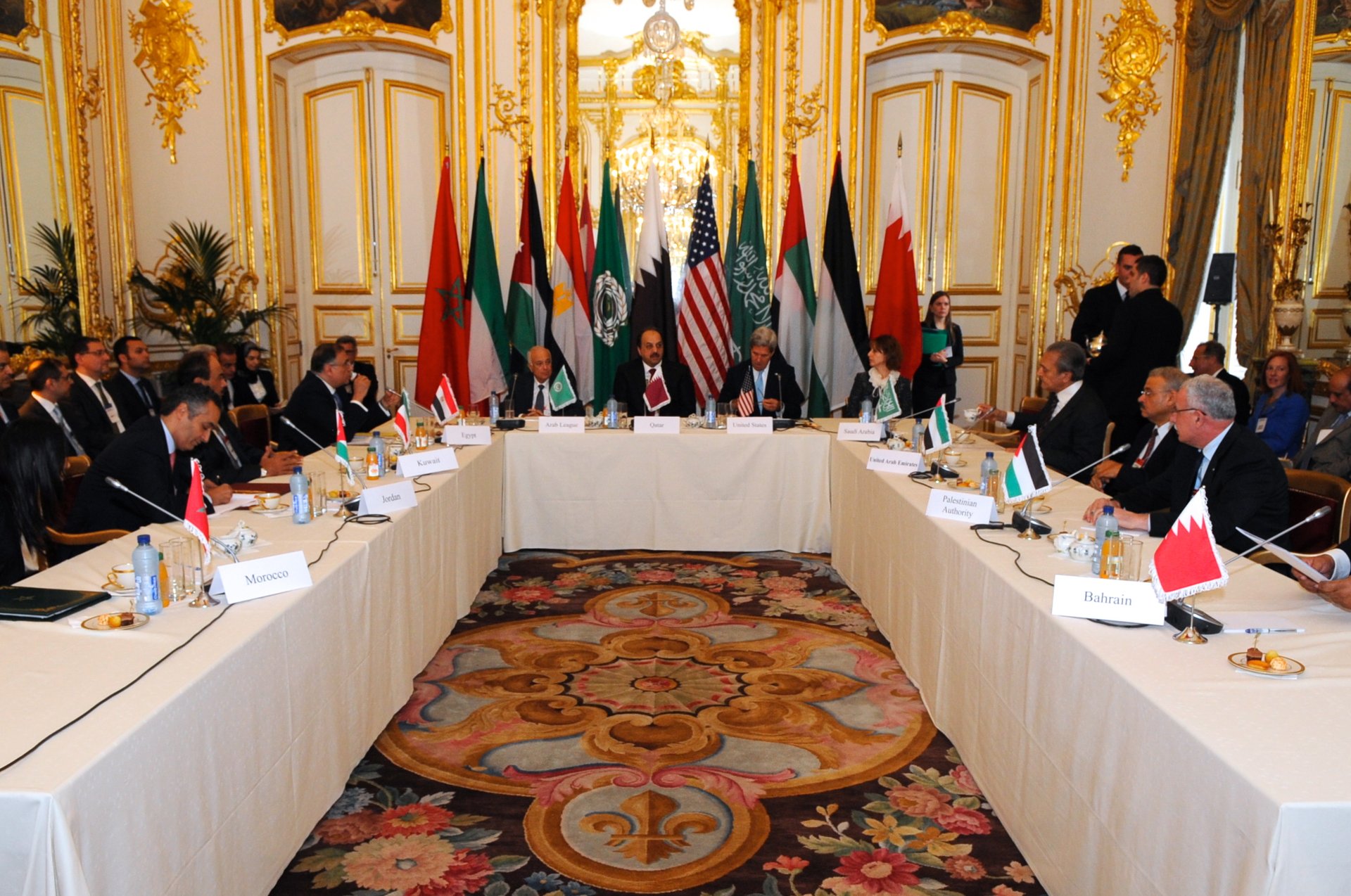
Twenty-four years ago, in March 2002, Crown Prince Abdullah stood before the Arab League at the Beirut Summit and offered what remains the most comprehensive Arab normalization framework ever proposed: full diplomatic relations between every Arab state and Israel, in exchange for complete Israeli withdrawal from territories occupied in 1967, a Palestinian state with East Jerusalem as capital, and a just resolution of the refugee question. The offer was adopted unanimously, reiterated at the Riyadh Summit in 2007 and again in 2017, and has never been formally accepted by Israel, never been withdrawn by the Arab League, and never been replaced by anything Saudi Arabia considers an adequate alternative — a fact that makes it, in diplomatic terms, the oldest standing offer in the Middle East and the baseline against which every subsequent normalization proposal, including Trump’s, is measured in Riyadh.
Trump’s Abraham Accords demand asks Saudi Arabia to deliver the normalization half of Abdullah’s framework while forgoing every condition attached to it: no Palestinian state, no Israeli withdrawal, no refugee resolution, and no concession of any kind beyond the implicit assurance that a deal with Iran will improve regional security in ways that have not been specified. The Accords framework he is invoking was designed in 2020 as an explicit bypass of the Arab Peace Initiative’s Palestinian precondition — a bypass that Biden’s administration maintained when it dropped the Palestinian-state requirement for normalization in November 2025, and that Foreign Policy, in its May 7 assessment, argued had “fueled a new era of conflict” by removing the diplomatic cost of Israeli expansion before Palestinian grievances were addressed. The proposal to resolve the resulting war by expanding the instrument that contributed to it carries a historical weight that Trump’s Cabinet-room musing did not appear to register.
Abdullah had been dead for more than eleven years when his formula — normalization for statehood, recognition for withdrawal — effectively served as the anonymous briefing to Al Arabiya without a clause altered. Trump’s demand asks the Kingdom to abandon a position that has outlived its author by a decade, survived three American presidents, and grown more popular with each year of the conflict it was designed to resolve.
Frequently Asked Questions
Has any GCC state publicly backed Trump’s Abraham Accords expansion demand?
No. Bahrain and the UAE, which signed the original Accords in 2020, have not endorsed expansion to other Gulf states or issued statements supporting Trump’s demand. Kuwait, which Trump named alongside Saudi Arabia at the May 27 Cabinet meeting, has issued no public response. Oman, which hosted the first round of US-Iran talks in Muscat and has been co-drafting the Hormuz governance framework alongside Iran, was not among the eight leaders on the May 24 call. The GCC as an institution has issued no collective statement on the demand — a silence consistent with what UAE presidential adviser Anwar Gargash called the organization’s “weakest historically” state in his April 27 assessment, which he escalated to the Atlantic Council on May 16.
Could Saudi Arabia normalize with Israel after King Salman’s death?
Israel’s INSS assessed in February 2026 that the probability “likely grows” post-succession, but noted that 99-to-1 opposition means any successor faces “the same public opinion wall.” The compounding factor is that MBS has actively cultivated anti-normalization sentiment among Saudi youth as a domestic political tool, making reversal harder even for MBS himself. The Consultative Council (Shura) has no constitutional power to ratify treaties, the Basic Law provides no mechanism for binding future monarchs, and the religious establishment — which issues the fatwas that provide social license for major policy shifts — has not signaled any willingness to revisit its position. Any post-Salman normalization would require the new king to simultaneously override public opinion, reverse his own Palestinian statehood commitments, and embrace a framework supported by just 13 percent of the population.
Did Trump really suggest Iran could join the Abraham Accords?
Yes. At the May 27 Cabinet meeting, Trump mused that Iran might “perhaps” join the Accords, per the Times of Israel liveblog. No Iranian official has responded to the suggestion publicly. Iran’s constitution — specifically Article 154, which commits the state to supporting “the just struggles of the oppressed against the oppressors in every corner of the world” — has been interpreted since 1979 as a foundational prohibition on recognizing Israel’s existence, and the Islamic Republic’s Supreme Leader has repeatedly described opposition to Israel as a non-negotiable element of the state’s identity. The suggestion appears to have been improvised.
How does the PGSA complicate the Accords demand?
Iran’s Persian Gulf Strait Authority has collected approximately $2 million per transit in Chinese yuan since becoming operational on May 18, according to Maritime Executive and Windward.ai tracking data. The PGSA’s existence means that even if the Iran deal closes on terms acceptable to both sides, Tehran retains an operational governance claim over the Strait of Hormuz that is structurally independent of the nuclear agreement. Saudi Arabia — excluded from PGSA governance, excluded from all five negotiating rounds, and now named as the deal’s closing cost — would, under Trump’s demand, be normalizing with Israel to help finalize a deal that leaves Iranian administrative control of its primary maritime export route functionally intact. As of late May, ten Qatari LNG shipments remained blocked by PGSA enforcement, and Qatar — also named by Trump as an expected Accords signatory — has not publicly addressed the contradiction between paying Iran’s transit fees and being asked to normalize with Israel as part of the same diplomatic package.
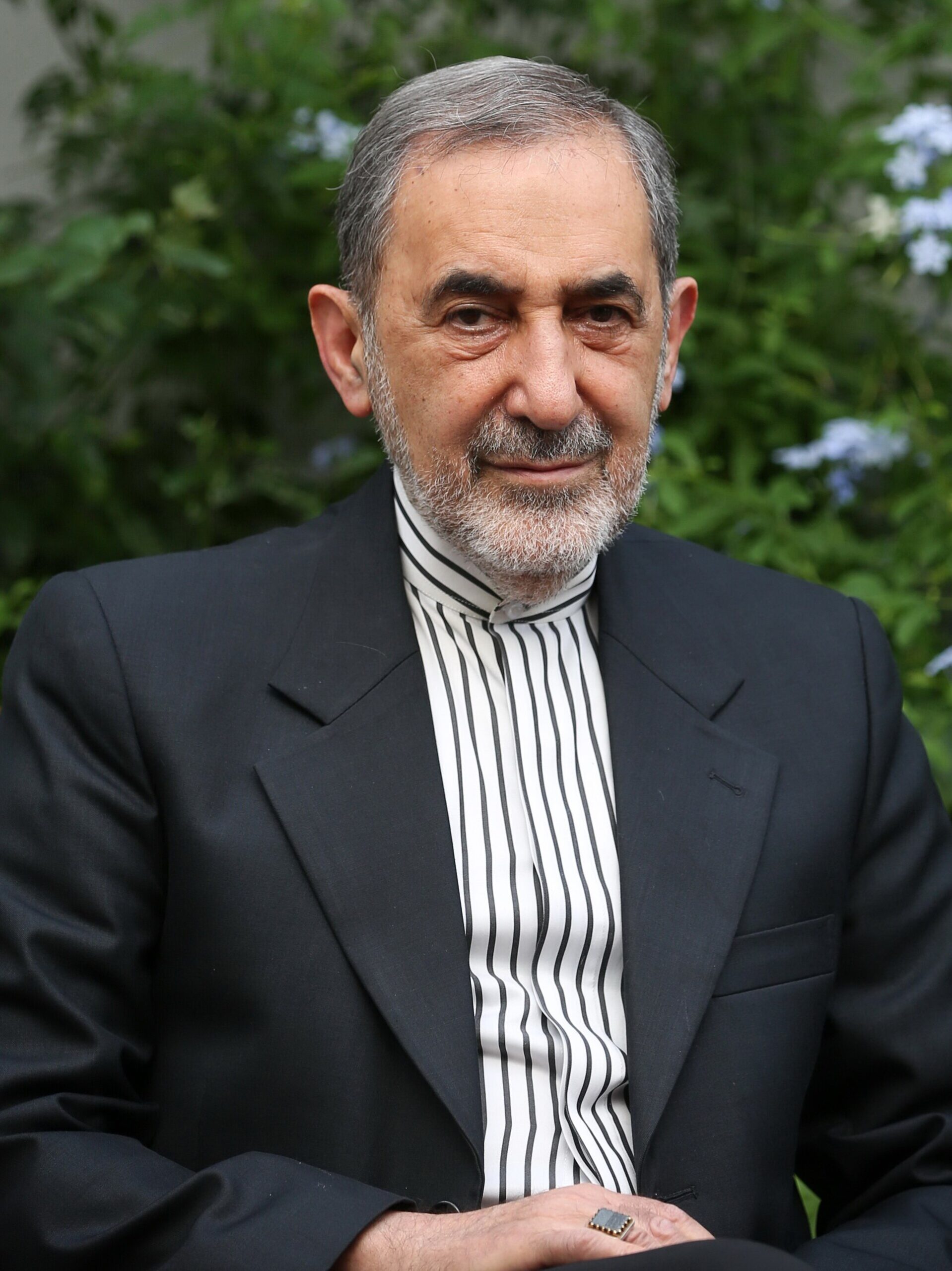
Three days after Trump named Saudi Arabia as the deal’s closing cost, the Supreme Leader’s senior adviser made the permanence of that cost explicit: Velayati declared Hormuz the “real guarantor” of any agreement, meaning Saudi Arabia would pay not a one-time closing fee but an indefinite structural toll for access to a strait it has no role in governing. The institutional architecture behind Velayati’s declaration — and why it forecloses the fiscal exit Saudi Arabia needs — is examined here.