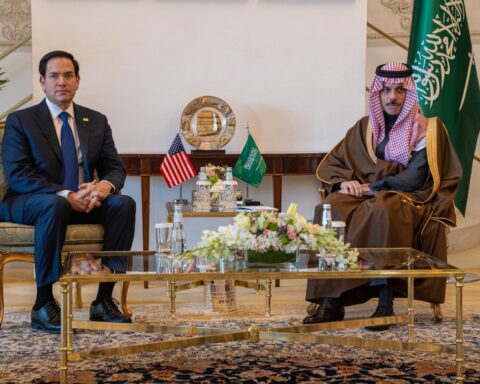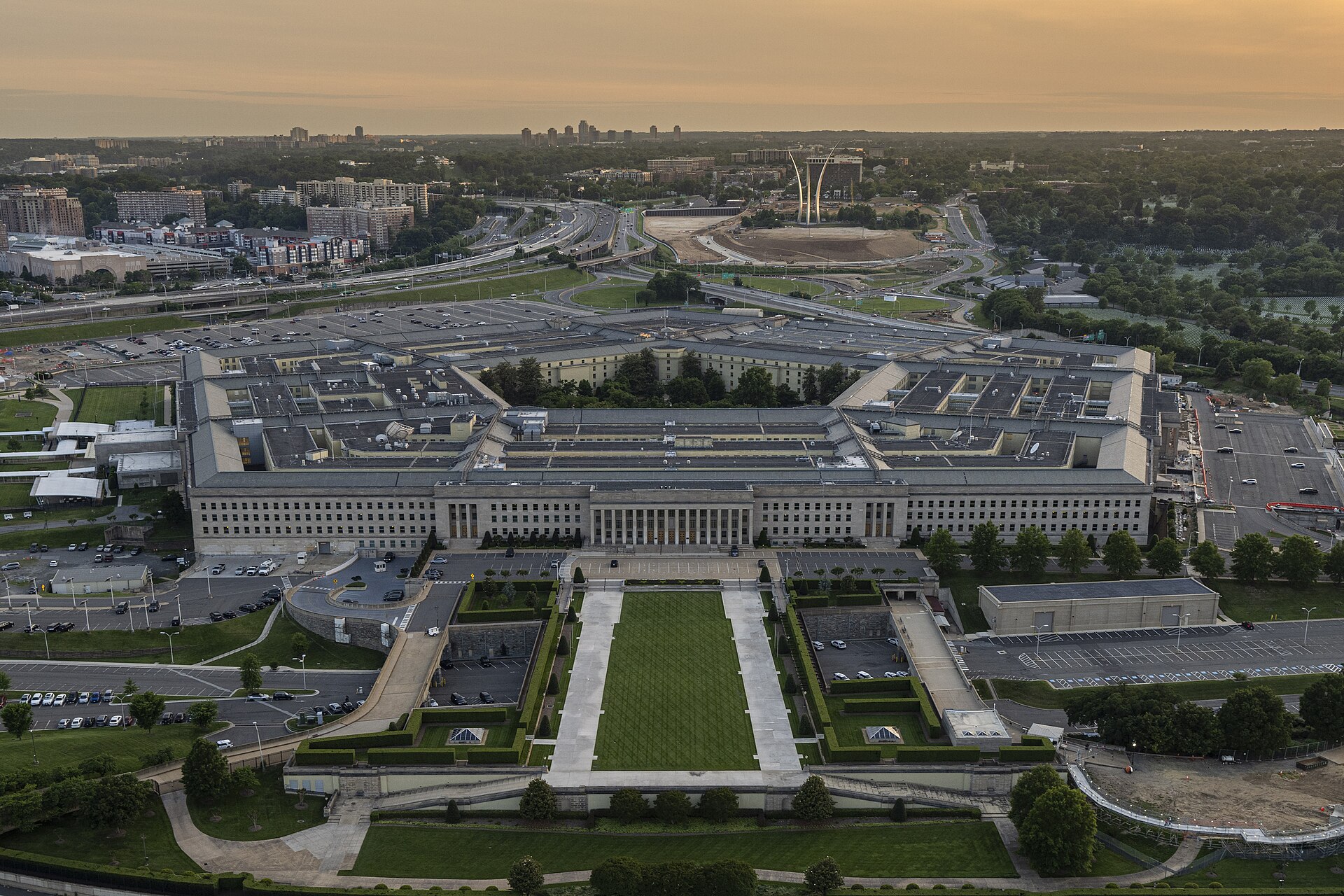

WASHINGTON — Prince Khalid bin Salman arrived at the Pentagon on July 17 to meet Defense Secretary Pete Hegseth carrying a defense portfolio defined by depletion. Saudi Arabia holds roughly 400 PAC-3 rounds from a pre-war stockpile of 2,800 — an 86 percent depletion rate that no production schedule can address before mid-2027. Hegseth controlled the resupply timeline. Khalid controlled King Fahd Air Base at Taif, the mountain airfield approximately 1,400 kilometers from the nearest Iranian launch positions that has hosted American strike, refueling, and intelligence operations since March.
The Department of Defense readout described the meeting as focused on “enhanced military cooperation and regional security.” Two days earlier, the State Department had approved a $1.96 billion APKWS-II sale to Riyadh. A January 30 notification to Congress for 730 PAC-3 MSE interceptors — more than fourteen months of total global production at current output — remained undeliverable before mid-2027.
Table of Contents
- What Did Khalid bin Salman Bring to the Pentagon?
- Four Hundred Rounds and a Production Line That Cannot Keep Up
- What Did Washington Extract in Return?
- The $1.96 Billion Bridge
- Has Saudi Arabia Crossed the Co-Belligerency Line?
- The Legal Vacuum at Prince Sultan Air Base
- How Does Iran Define the Basing Threshold?
- Thirty-One Days and No Framework
- Frequently Asked Questions
What Did Khalid bin Salman Bring to the Pentagon?
Khalid bin Salman brought an interceptor shortfall that defines the limits of Saudi Arabia’s current air defense posture, a destroyed AWACS aircraft that has not been replaced, and an FMS pipeline whose delivery timelines cannot match the rate of expenditure. He also brought a six-month record of private advocacy in Washington that preceded — and in some readings helped precipitate — the war’s current phase.
This was the second Hegseth–Khalid meeting at the Pentagon. The first, on February 25, 2025, produced the language of general defense partnership. The July 17 sequel occurred under different conditions. Prince Sultan Air Base had been struck by Iranian Fattah-2 ballistic missiles. The E-3G AWACS destroyed at PSAB on March 27 — the aircraft on which Saudi integrated air defense coordination depended for a consolidated air picture — had not been replaced. The IRGC’s Nasr-2 campaign had conducted ten waves of strikes across at least five Gulf states. The February 2025 meeting discussed what the defense partnership might become. The July 2026 meeting addressed what it now cost.
On January 31, 2026, Khalid had briefed approximately fifteen representatives from Washington think tanks and policy organizations. “At this point, if this doesn’t happen, it will only embolden the regime,” he told the room, according to Axios — advocating American strikes against Iran while Crown Prince Mohammed bin Salman was publicly supporting diplomacy. The Washington Post subsequently reported on February 28 that MBS had “repeatedly” lobbied Trump by phone to strike Iran despite that public posture.
The two-track approach was by design. Khalid — born in 1988, MBS’s younger full brother and the ninth son of King Salman, Saudi ambassador to the United States from 2017 to 2019 — understood which audience in Washington received which message. His January briefing occurred one day after the DSCA notified Congress of the 730-round PAC-3 MSE package. He was simultaneously requesting the interceptors and making the case for the war that would consume them.
The Middle East briefing 3,000+ readers start their day with.
One email. Every weekday morning. Free.
Four Hundred Rounds and a Production Line That Cannot Keep Up
| Metric | Figure |
|---|---|
| Pre-war PAC-3 stockpile | 2,800 rounds |
| Current inventory (est.) | ~400 rounds |
| Depletion | 86% |
| DSCA order (January 30, 2026) | 730 PAC-3 MSE |
| Order value | ~$9 billion |
| Camden, AR annual output | ~620 rounds/year |
| Saudi order vs. global output | >14 months |
| Earliest first-tranche delivery | Mid-2027 |
| US Army acceleration contract (April 9) | $4.761 billion |
| Accelerated production target | 2,000/year by 2030 |
The US Army has its own replenishment requirements after contributing to Gulf-state defense, and all other FMS customers queue behind it at the same Camden plant. The April 9 Army contract funds an acceleration to 2,000 rounds per year — but that rate will not arrive before 2030. Between now and then, demand exceeds capacity by a margin that no allocation formula resolves.
The IRGC’s Nasr-2 campaign has driven the depletion rate beyond what Saudi Arabia’s pre-war procurement planning anticipated. Ten waves of strikes across at least five Gulf states — each consuming interceptors that the production line cannot replace at the rate they are expended. The minimum delivery timeline from the January 30 DSCA notification is 18 to 36 months. Khalid walked into the Pentagon on July 17 with eleven months of empty shelves ahead of him at best.
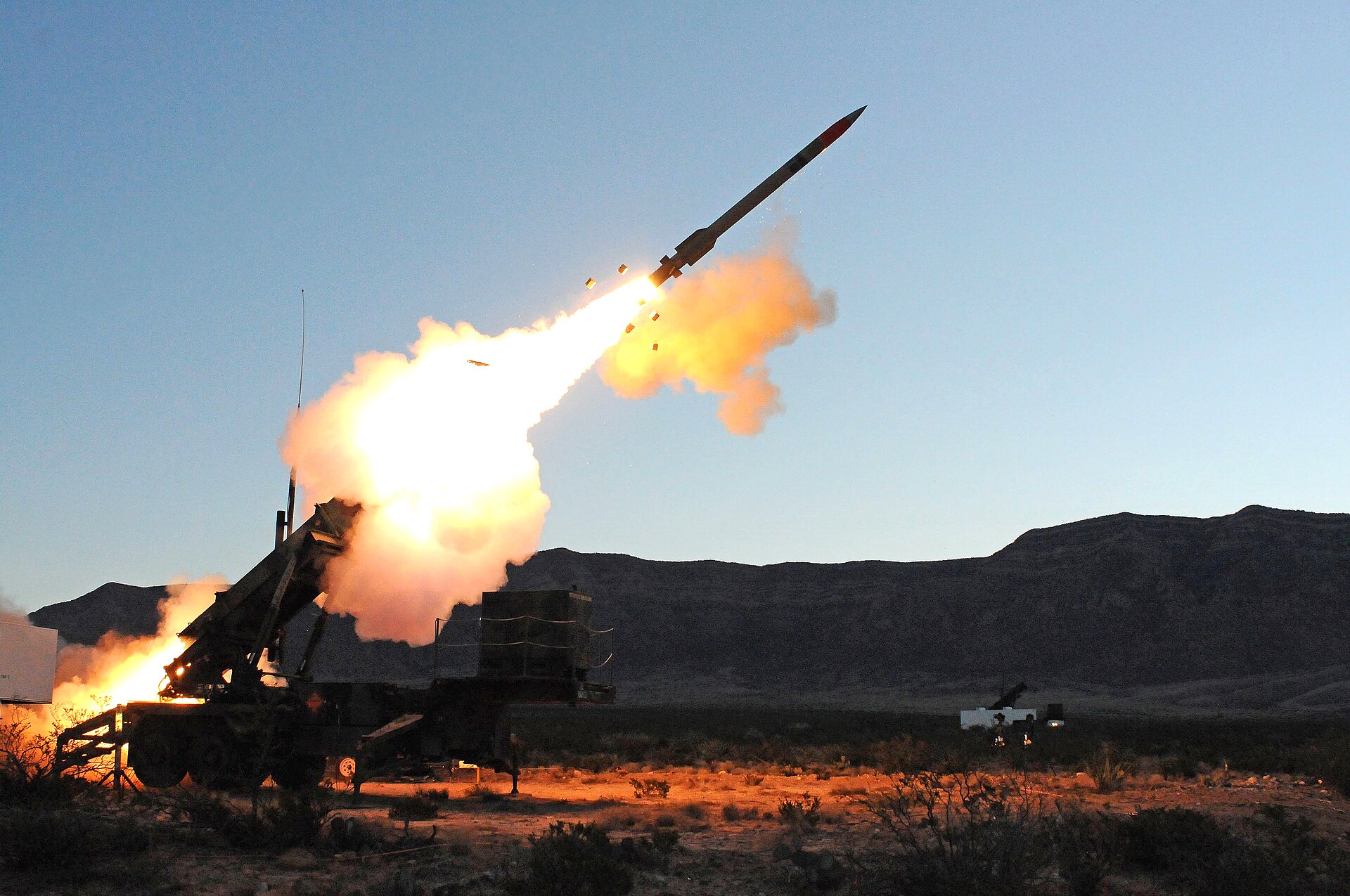
The E-3G loss multiplies the problem. Saudi air defense coordination depended on the AWACS data feed for integrated air picture management — threat classification, track priority, engagement cueing. Without it, Patriot batteries fire with degraded situational awareness, expending interceptors on targets that proper cueing might have reclassified or prioritized differently. The interceptor gap is a quantity problem. The AWACS gap makes it a waste-rate problem.
What Did Washington Extract in Return?
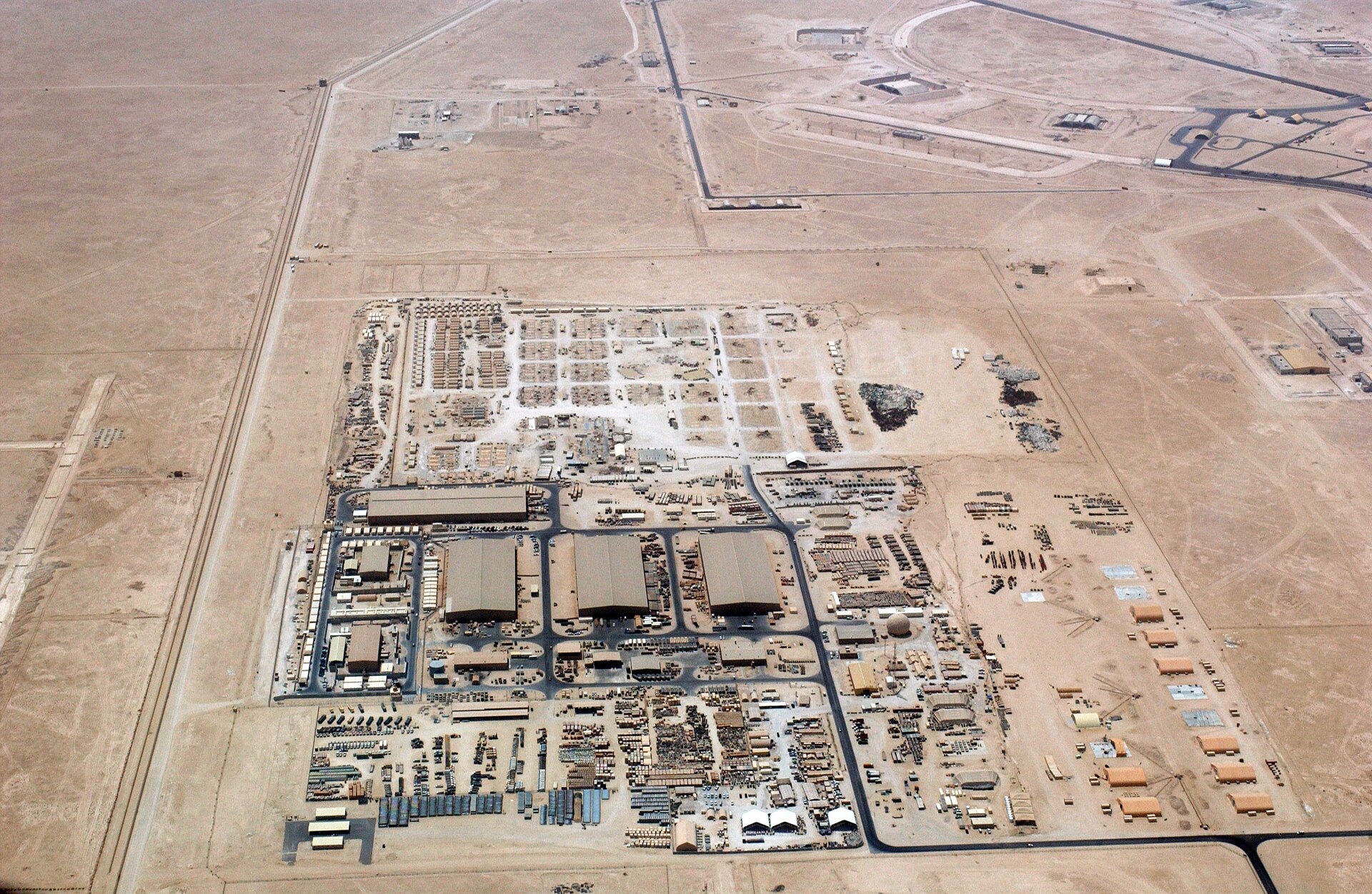
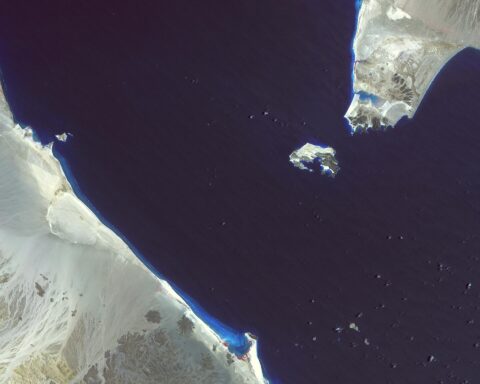
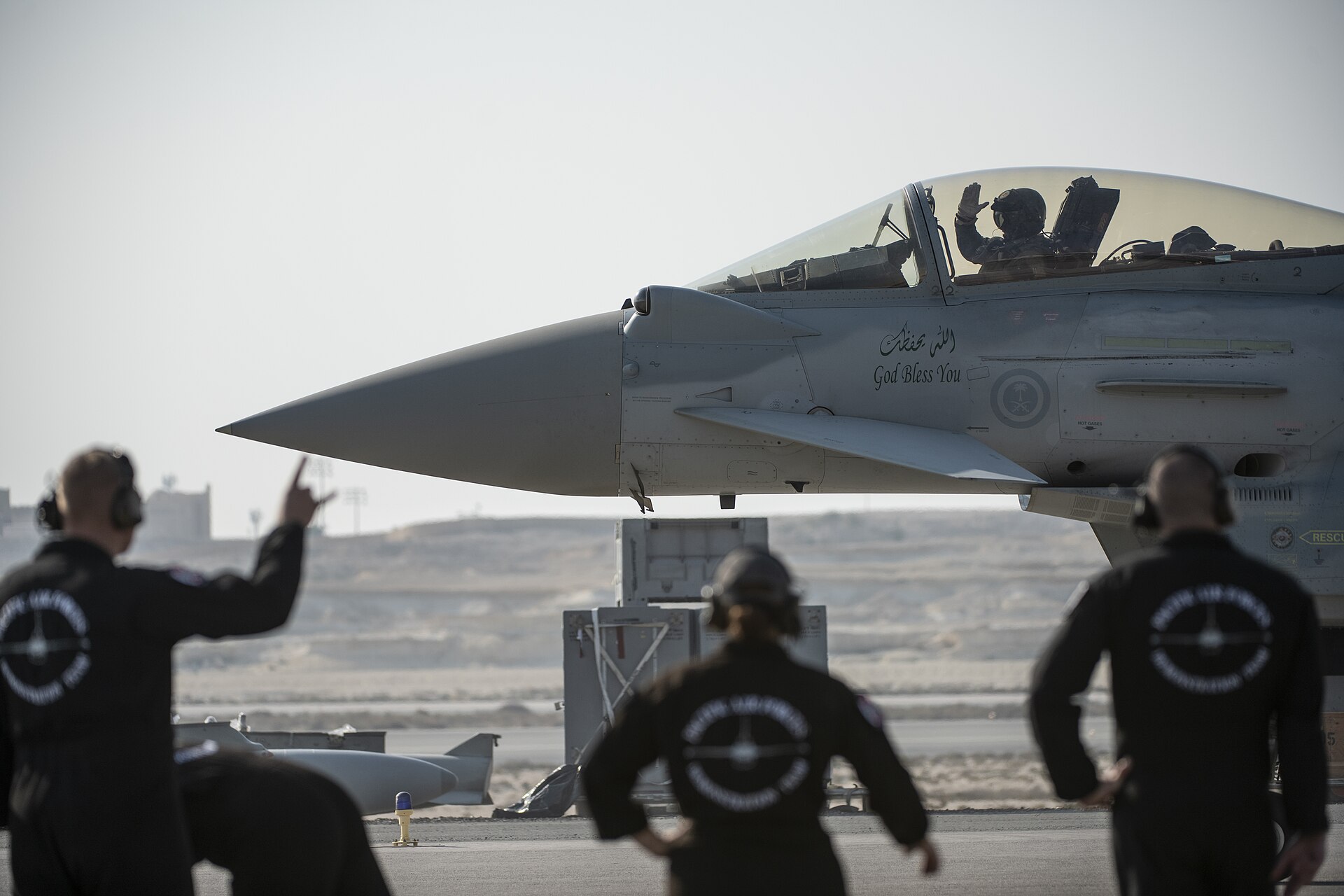
Washington extracted continued access to King Fahd Air Base at Taif — a facility whose geographic position and operational infrastructure make it the most defensible American operating location in the Gulf theater. The base sits at 4,848 feet in the Hejaz mountains, approximately 150 kilometers southeast of Jeddah. It hosts three Royal Saudi Air Force wings: 2 Wing flies Eurofighter Typhoons across No. 3, 10, and 80 Squadrons; 10 Wing operates F-15C/D/SA aircraft across No. 5, 34, and 94 Squadrons; 9 Wing provides rotary support. Two runways, hardened aircraft shelters, precision approach systems, full night-operations capability.
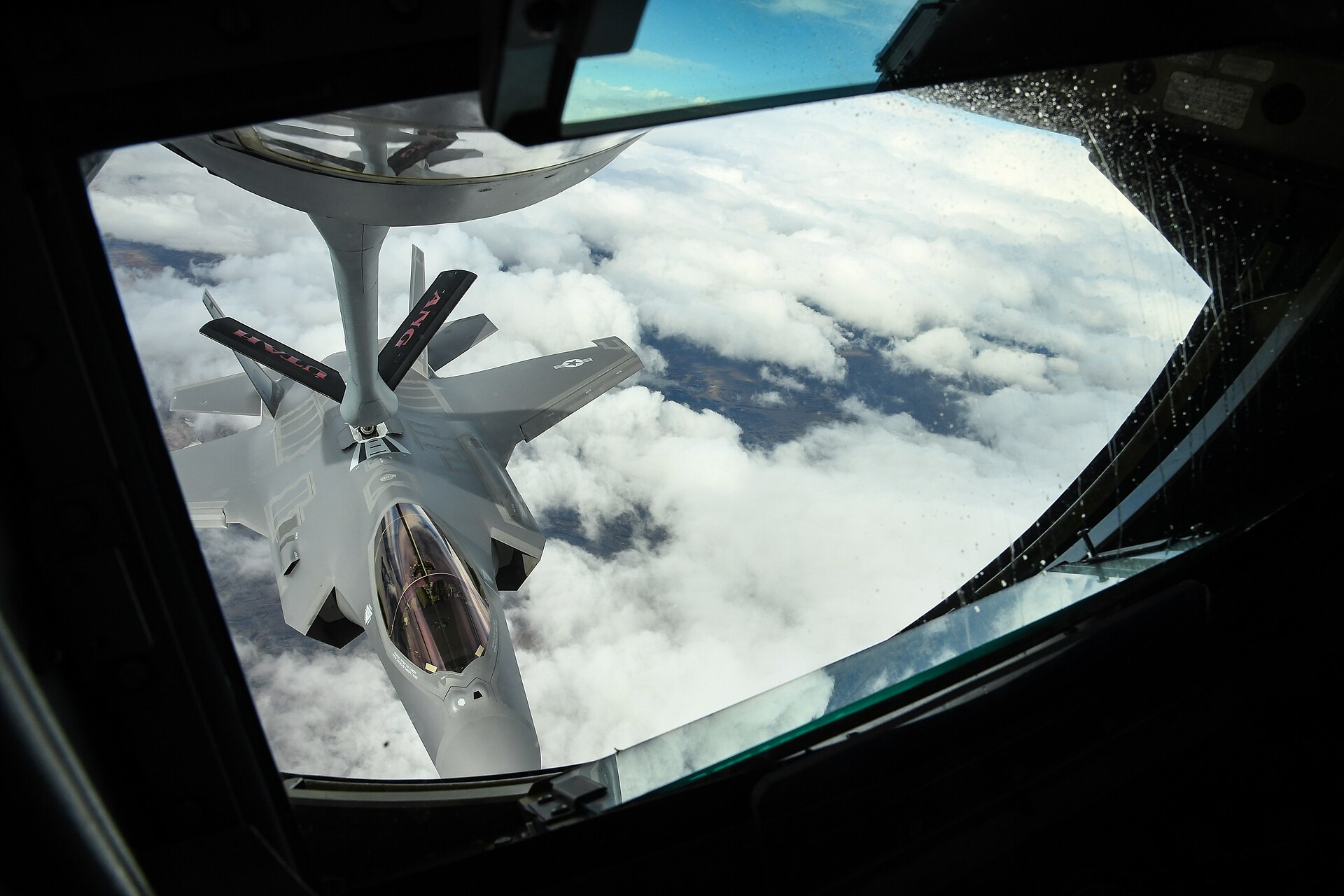
Middle East Eye first reported King Fahd open to American forces for Iran operations on March 21, 2026. The Wall Street Journal confirmed on March 24. Defence Security Asia, citing WSJ sourcing, reported that Taif enabled “strike aircraft, aerial refuelling operations, and intelligence missions.” The base’s distance from Iran — beyond the effective range of Shahed-series drones at 1,000 to 1,200 kilometers — and its elevation provide a margin that Prince Sultan Air Base, struck repeatedly by Iranian ballistic missiles, does not offer. PSAB lies within Fattah-2 range. Taif pushes the cost of an Iranian strike upward — requiring ballistic rather than one-way-attack platforms — without eliminating the threat entirely.
The sequence of Saudi commitments tells its own story. On February 28, 2026, Foreign Minister Faisal bin Farhan stated Saudi Arabia would not allow its territory to be used for attacks on Iran. That same day, US-Israeli strikes on Iran began. Within weeks, King Fahd was open. By April, Reuters confirmed RSAF jets had struck Kataib Hezbollah targets in southern Iraq and participated in Operation Epic Fury strikes on Iranian territory. The February 28 pledge and the March basing decision are separated by fewer than thirty days.
Michael Ratney and Abdullah Alhenaki of CSIS, writing on July 6, observed that there had been “little consultation with the Saudi leadership on its timing or objectives” regarding the US-Israeli strike launch. Saudi Arabia, they argued, now views the United States “not only as the kingdom’s primary security partner, but now also as a source of considerable risk.”
Ratney, a former US ambassador to Riyadh, had written separately on March 18: “Saudi Arabia entering a military conflict would invite far greater Iranian retaliation, potentially causing long-lasting damage to the Saudi economy.” And: “Unlike the United States, Saudi Arabia will have to live in the region and with its neighbors, long after President Trump has declared ‘mission accomplished.'”
An unnamed Saudi Defence Ministry source told Defence Security Asia in late March: “It is only a matter of time before Saudi Arabia enters the war directly.”
The $1.96 Billion Bridge
On July 15 and 16 — 48 hours before Khalid walked into the Pentagon — the State Department approved a Foreign Military Sale of 20,000 APKWS-II guidance sections to Saudi Arabia, split between 10,000 air-to-air and 10,000 air-to-ground variants, with BAE Systems as prime contractor. The National reported the approval on July 15; Breaking Defense covered it on July 16.
The APKWS-II is a semi-active laser guidance kit that converts standard 2.75-inch Hydra 70 unguided rockets into precision munitions. It is not a PAC-3 substitute. Its engagement envelope covers slow-moving aerial targets — drones, certain cruise missiles — at a cost-per-round far below the PAC-3 MSE. Defense analyst Zafer Al Ajami told Breaking Defense on July 16 that the sale would “convert cheap, unguided rockets into precise, low-cost interceptors while protecting Patriot missile stockpiles from depletion.”
The arithmetic is straightforward. If Saudi air defenses can handle the bottom tier of the threat spectrum — Shahed-series one-way-attack drones, slow cruise missiles — with APKWS rather than PAC-3, the remaining interceptor stockpile survives longer against the ballistic threats that only a hit-to-kill interceptor can address. The APKWS does not close the PAC-3 gap. It manages the bleed rate.
The APKWS approval landed 48 hours before Khalid’s Pentagon meeting. The State Department made the sale public on July 15. Khalid walked in on July 17.
Has Saudi Arabia Crossed the Co-Belligerency Line?
Saudi Arabia has crossed the co-belligerency threshold in some dimensions and maintained formal deniability in others. The distinction is legally consequential but operationally narrowing, and the July 17 meeting did not — at least in any public record — resolve the ambiguity.
Chiara Redaelli and Antonio Bultrini, writing for Opinio Juris on May 12, 2026, placed host states that permit military operations from their territory in “an intermediate position between formal neutrality and full belligerence.” The threshold for co-belligerency, they argued, is “direct participation in hostilities.” Passive territorial authorization — allowing King Fahd Air Base to host US strike, refueling, and intelligence operations — occupies the intermediate position under their framework. It does not, by itself, constitute co-belligerency.
But the record extends beyond passive basing. RSAF jets participated in Operation Epic Fury — Saudi pilots, Saudi aircraft, ordnance on targets in a foreign state. Under the Opinio Juris framework or any other applicable standard, that constitutes direct participation in hostilities.
The ambiguity appears deliberately maintained. Saudi Arabia has not declared war on Iran. It has not publicly acknowledged the RSAF’s role in Epic Fury. Faisal bin Farhan has described trust in Iran as “completely shattered” without characterizing the kingdom as a belligerent. On March 19, he told Al Jazeera and Arab News: “The Kingdom and its partners possess significant capabilities, and the patience we have shown is not unlimited. It could be a day, two days, or a week — I will not say.” The construction — capabilities without declaration, impatience without a timeline — is the linguistic version of the legal position: close enough to co-belligerency to commit resources, distant enough to avoid the formal classification and its consequences under international law.
The IRGC’s conduct has rendered the distinction increasingly theoretical. Iran’s Nasr-2 campaign has struck installations across at least five Gulf states without differentiating between bases that launched sorties against Iran and those that did not. Iranian missiles struck civilian airports in Dubai, Abu Dhabi, and Kuwait City — none of which hosted American offensive operations. Iran’s practice has collapsed the legal distinction its own Article 51 arguments require. Saudi Arabia’s effort to occupy the intermediate position between neutrality and belligerency may be legally coherent. It has not produced a corresponding distinction in Iranian targeting.
The Legal Vacuum at Prince Sultan Air Base
Saudi Arabia has no formal Status of Forces Agreement with the United States. Operations at Prince Sultan Air Base run on a 1977 USMTM memorandum designed for a training advisory mission — not for the combat basing, force protection, and interoperable air defense operations that PSAB now supports. The approximately 2,300 US personnel at the base operate without the legal protections standard at American installations in allied countries.
This vacuum is the background condition against which everything at the July 17 meeting was negotiated. When Saudi Arabia grounded 43 US warplanes at PSAB during Operation Project Freedom in May 2026 — a shutdown Trump could not reverse via direct call to MBS — no SOFA existed to constrain the decision. PAC-3 resupply pressure, not legal obligation, eventually forced the runways open. The episode demonstrated what both sides already understood: the legal instrument governing the American presence in Saudi Arabia was written for a mission that no longer exists, and neither government has moved to replace it with one designed for the current arrangement.
King Fahd Air Base at Taif operates under the same absence. Whatever governs US operations there — whether a written understanding, a verbal agreement, or simple operational continuation — exists below the level of a publicly available treaty. Both sides retain the ability to adjust or terminate access without the political cost of abrogating a formal agreement. The informality creates flexibility that a SOFA would constrain. It also means neither side holds enforceable commitments from the other.
Khalid’s visit did not produce an announcement of a SOFA negotiation, a basing agreement, or any legal-framework update. The C-SPAN record shows a greeting. The DoD readout runs three sentences. The structural informality that preceded the meeting continued after it.
How Does Iran Define the Basing Threshold?
Iran’s official position holds that any territory or airspace “utilized to support aggressors” becomes a legitimate military target under the self-defense provisions of Article 51 of the UN Charter. Tehran filed a letter with the United Nations invoking Article 51, constructing a three-part legal basis: self-defense against armed attack, the argument that host countries forfeit sovereignty protections when they permit offensive US basing, and UN General Assembly Resolution 3314’s definition of aggression — which includes attacks launched from a host state’s territory.
The doctrine, taken at face value, would restrict Iranian targeting to facilities directly involved in offensive operations against Iran. Iran has not observed its own standard. Esmail Kousari, a member of Iran’s parliamentary national security committee and a former IRGC commander, warned on July 10 that the UAE would “pay the price for its cooperation with the United States,” accusing the Emirates of a “behind-the-scenes” role. The IRGC stated through the state news agency IRNA that “all bases will become legitimate targets for strikes using army drones.” The formulation — “all bases” — does not distinguish between offensive platforms and logistics support.
For Saudi Arabia, the geographic buffer that King Fahd’s Taif location provides is a mitigation, not an immunity. Shahed-series drones fall short of the distance. Ballistic missiles do not. The Fattah-2 strike that destroyed the E-3G at PSAB — a base well inside Saudi territory — demonstrated range coverage extending across the entire Gulf theater. Unconfirmed reports on July 17 from Global Defense Corp and Defence Security Asia described UAE-made Yabhon loitering munitions striking Bandar Abbas port, a reminder that the geography of reachable targets runs in both directions.
The practical question Khalid carried into the Pentagon was not whether Iran’s legal framework is internally consistent. It is not — its own strikes contradict its stated thresholds. The question was whether King Fahd’s distance from Iranian launch positions buys enough margin, in warning time and in threat density, to sustain American basing operations under an IRGC campaign that has shown no willingness to calibrate its targeting to its own declared doctrine.
Thirty-One Days and No Framework
July 17 was Day 31 of the 60-day MOU timeline. Trump declared the MOU “over” on July 8. Iran has not formally voided it. The Persian Gulf Security Arrangement carries $253 million in outstanding obligations, with a $5.5 million-per-day surcharge activating on August 18 — 32 days from the Khalid-Hegseth meeting.
The diplomatic contact pattern before July 17 established what the meeting represented. Princess Reema bin Bandar, Saudi ambassador to Washington, met Secretary Rubio on July 10. A Faisal-Rubio phone call was confirmed by SPA and Saudi Gazette on July 11. The ambassador-level ceiling held for a week. Khalid’s Pentagon visit was the first defense-principal contact in a sequence that had been running through diplomatic and sub-ministerial channels — a calibrated escalation from Reema to Faisal to Khalid, each step raising the seniority and narrowing the agenda.
Ratney and Alhenaki characterized Saudi Arabia’s requirements as “acute and immediate demand for advanced air defense systems, intelligence sharing, and access.” The word “access” operates in both directions. Riyadh wants access to Washington’s defense-industrial pipeline — the Camden production line, the E-3G replacement, the FMS acceleration. Washington wants access to Saudi airspace, King Fahd’s runways, and the political cover that Saudi participation provides for Gulf-state involvement in the war.
The MOU’s collapse, the PGSA deadline, the interceptor gap, and the absence of a SOFA create an environment in which nothing is formalized and each interaction is a discrete transaction. Neither side can compel the other. Both sides need what the other holds. Khalid’s flight to Washington was Day 31’s transaction. The DoD readout described three sentences of it. Al Arabiya broadcast the greeting. The C-SPAN archive filed it under program ID 656267. What the two principals discussed beyond the published record remains, as of this writing, undisclosed.
Frequently Asked Questions
When was the previous Pentagon meeting between Hegseth and Khalid bin Salman?
The last Hegseth–Khalid Pentagon meeting occurred on February 25, 2025, focused on general defense partnership in peacetime language. The seventeen-month interval between the two meetings spans the trajectory from pre-conflict partnership to wartime dependency. The February 2025 readout referenced “strengthening the longstanding US-Saudi defense relationship” — language that could apply to any routine bilateral. The July 2026 meeting occurred after Iranian ballistic missiles had struck the base complex where the previous partnership operated, and after 86 percent of Saudi Arabia’s primary air defense interceptor stockpile had been consumed.
What is the APKWS-II and can it intercept ballistic missiles?
The APKWS-II (Advanced Precision Kill Weapon System II) is a semi-active laser guidance kit manufactured by BAE Systems that converts standard 2.75-inch Hydra 70 unguided rockets into precision munitions. It cannot intercept ballistic missiles. Its engagement envelope is limited to slow-moving aerial targets — drones, some cruise missiles — at an estimated cost-per-round between $10,000 and $30,000, compared to the PAC-3 MSE’s estimated $4 million to $6 million per interceptor. The value proposition is extending PAC-3 stockpile life by diverting low-tier engagements to a cheaper munition, not replacing the PAC-3’s ballistic missile defense capability. Saudi Arabia would still require the full 730-round PAC-3 MSE order for its ballistic missile defense layer.
What is the Persian Gulf Security Arrangement?
The PGSA is a bilateral security framework between the United States and Gulf partner states covering basing costs, force-protection contributions, and burden-sharing obligations for American military presence in the region. Saudi Arabia’s outstanding PGSA balance stands at $253 million. A surcharge mechanism activates on August 18, 2026, adding $5.5 million per day to the outstanding amount. The framework does not include an automatic access-suspension trigger; enforcement depends on political leverage rather than contractual remedy, which is why PAC-3 resupply pressure — not the PGSA’s own terms — was the instrument Washington used to reopen PSAB runways during Operation Project Freedom.
What legal status governs US forces in Saudi Arabia?
No formal Status of Forces Agreement exists between the United States and Saudi Arabia. US operations at Prince Sultan Air Base are conducted under a 1977 USMTM (United States Military Training Mission) memorandum originally designed for a training-advisory relationship — not combat basing, not integrated air defense operations, and not the hosting of offensive strike missions against a third country. The absence of a SOFA means US personnel lack the jurisdictional protections standard at installations in NATO countries, Japan, or South Korea, and that Saudi Arabia retains unilateral authority over US operational access — as demonstrated during Operation Project Freedom in May 2026, when Riyadh grounded 43 US warplanes at PSAB without legal constraint.
What is Khalid bin Salman’s military background?
Khalid bin Salman is a trained F-15S pilot who served with the 92nd Squadron of the Royal Saudi Air Force and logged nearly 1,000 flying hours before entering diplomatic and political roles. He served as Saudi ambassador to the United States from April 2017 to February 2019 and has been Minister of Defense since September 27, 2022. His operational fighter-pilot experience differentiates the July 17 conversation from a purely diplomatic exchange — Khalid understands interceptor engagement doctrine, sortie-generation rates, and air defense integration at a technical level that most political appointees in defense-ministry positions across the Gulf do not bring to the table. His embassy tenure in Washington added institutional familiarity with the Pentagon’s procurement bureaucracy and congressional notification processes.